Unusual Things To Do In Nantes
Nantes, in the Loire-Atlantique department of western France, rewards visitors who arrive expecting the ordinary and leave having ridden a twelve-metre elephant, descended into a riverside memorial and followed a green painted line across an entire city.
Short answer
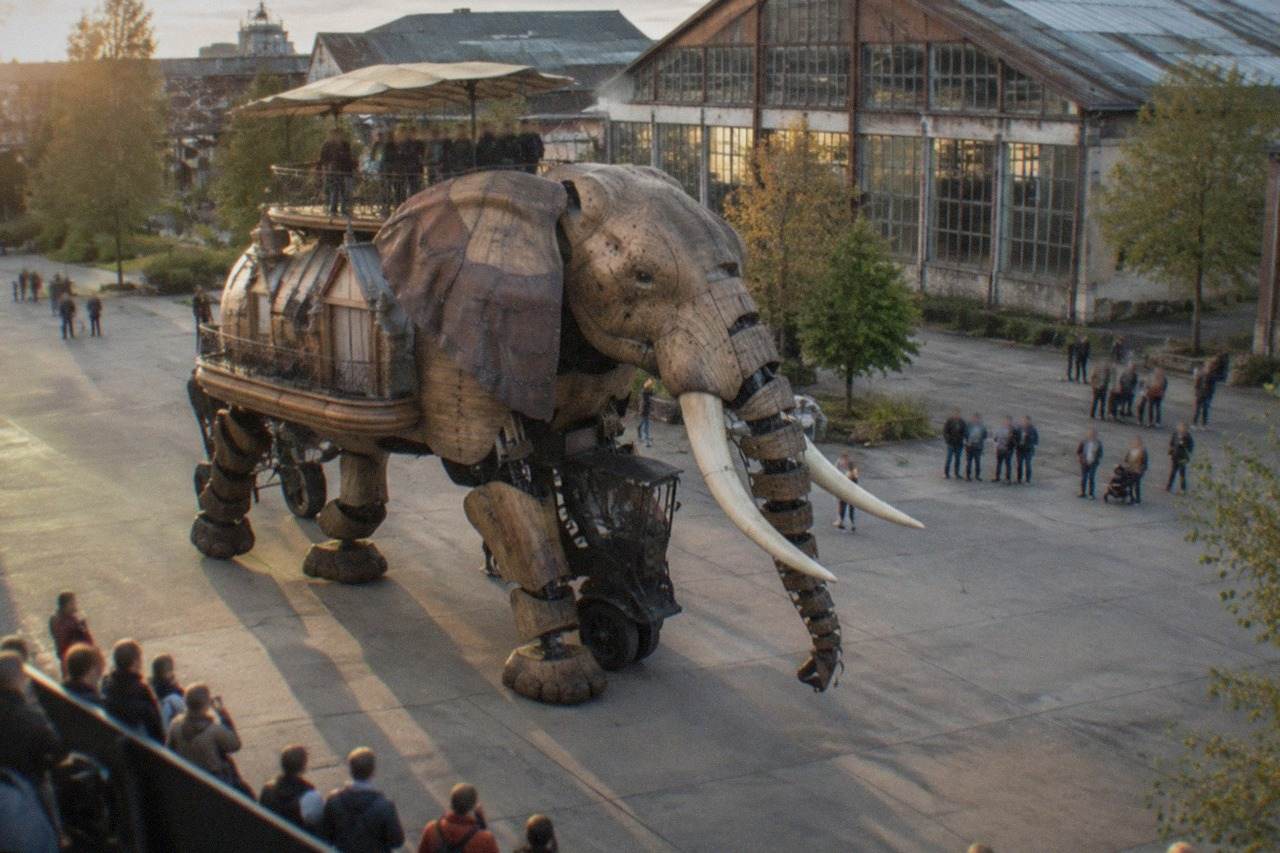
The most unusual things to do in Nantes include riding the Grand Elephants at Les Machines de l'ile, walking the 22 km green line of Le Voyage a Nantes, visiting the underground Memorial to the Abolition of Slavery, exploring the slope-built Passage Pommeraye from 1843, and playing city-wide escape games themed on Jules Verne.
Nantes, in the Loire-Atlantique department of the Pays de la Loire region in western France, has spent two decades deliberately confusing people who arrive expecting a standard French city break. The tourism office itself runs a summer art trail that paints a green line across roughly 22 km of pavement and expects you to follow it. A city that was once the largest slave-trading port in France now memorialises that history in an underground chamber cut into the quay of the Loire. The old LU biscuit factory has become a national theatre, the old shipyards have become a playground of mechanical animals, and the Natural History Museum is closed until 2029 so that it can reopen twice its current size. Nothing about the place is arranged the way the guidebooks arrange Lyon or Bordeaux, and that is precisely the point of this Nantes Travel Guide article.
What Are The Most Unusual Things To Do In Nantes?
The most unusual things to do in Nantes are riding the mechanical Grand Elephants at Les Machines de l'ile, following the green line of Le Voyage a Nantes, descending into the underground Memorial to the Abolition of Slavery, walking the 1843 Passage Pommeraye built on a slope, playing outdoor escape games themed on Jules Verne, and cruising the Erdre river aboard the Na Boa boat. Each of these exists because Nantes rebuilt itself around strange ideas rather than conventional monuments, and several of them are free to see from the street.
The city's unusual streak is not accidental. When the last of the shipyards on the Île de Nantes closed, the planners brought in street-theatre company Royal de Luxe, which had been based in Nantes since 1989, and gave the designers the hangars. When the LU biscuit firm left its Loire-side factory in 1986, the building became Le Lieu Unique, a national theatre that opened over the 1999 to 2000 new year. The pattern repeats: industrial inheritance converted into the strangest possible cultural use. A first-time visitor notices it within an hour of arriving.
Not everything strange costs money, either. The château courtyard and ramparts are free daily from 8:30 to 19:00, the Jardin des douves in the moat is free from 8:00, and the Passage Pommeraye costs nothing to walk through. Even the paid oddities are cheap by attraction standards, as the table below shows. Planning around the free weekend public transport, covered further down, can cut costs further.
| Unusual sight | What makes it strange | Entry price |
|---|---|---|
| Les Machines de l'ile | Mechanical elephant, marine carousel and prototype heron branch on former shipyards | 12 EUR per attraction |
| Memorial to the Abolition of Slavery | Underground gallery cut into the Loire quay | Free |
| Passage Pommeraye | Three-floor 1843 arcade climbing a slope between two streets | Free |
| Le Lieu Unique | National theatre inside the former LU biscuit factory | Free entry, tower visit 2-3 EUR |
| Planétarium | 8-plus sessions a day in the city centre | 7 EUR full, 3 EUR reduced |
| Green line trail | Painted 22 km art route across the city | Free |
If the list above reads like a museum itinerary, it is not meant to. The pages on museums in Nantes and on the best time to visit Nantes cover conventional sightseeing; this one stays on the strange side of the ledger.
Where Can You Ride A Mechanical Elephant In Nantes?
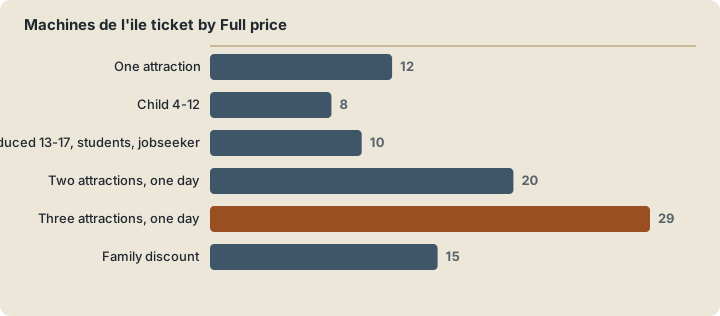
You can ride the Grand Elephants at Les Machines de l'ile on the Île de Nantes, where each attraction costs 12 EUR full price, 8 EUR for children aged 4 to 12, and 10 EUR reduced for visitors aged 13 to 17, students, jobseekers and disabled visitors, with a two-attraction day package at 20 EUR and a three-attraction package at 29 EUR. The site sits on the former shipyards, and the elephant was inaugurated there on 30 June 2007 alongside the Galerie des Machines.
The elephant is the famous half of it. The Carrousel des Mondes Marins, added in 2012, is a three-level marine merry-go-round with mechanical fish, squid and manta rays that riders can set in motion from their seats. The Galerie houses the workshop where the machines are built, visible behind glass, along with the prototype branch of the abandoned Arbre aux Hérons project. Nantes Métropole dropped that tree project in September 2023 after costs climbed from an initial estimate near 52 million euros, and the Compagnie La Machine filed suit against the Métropole in December 2025, but the prototype branch remains visitable and each attraction ticket includes access to it.
Two timing warnings matter more here than anywhere else on this list. There are no elephant rides at all from 2 November 2026 to 28 February 2027, when the machine goes into maintenance, and the Carrousel itself closed for four days in late September 2026 for the same reason. The site's tariff page also states that the Pass Nantes covers the Galerie and Carrousel but not the elephant ride, so pass holders still buy that separately. The elephant's slots in September and early October 2026 ran Tuesday to Friday from 10:15 to 15:45, and last admission everywhere is 45 minutes before closing.
| Machines de l'ile ticket | Full price | Notes |
|---|---|---|
| One attraction | 12 EUR | Elephant ride, Galerie or Carrousel |
| Child 4-12 | 8 EUR | Under 4 free |
| Reduced 13-17, students, jobseekers | 10 EUR | Proof required |
| Two attractions, one day | 20 EUR | Child 14 EUR, reduced 17 EUR |
| Three attractions, one day | 29 EUR | Child 21 EUR, reduced 25 EUR |
| Family discount | Minus 15 percent | Groups of 5, max 2 adults, same day |
Booked-entry options for the Machines, covering the Galerie visit and the Carrousel, are listed on the ticketing page for the site, and the entry product carries its own verified rating and price on the operator's live listing.
What Can You See Underground In Nantes?
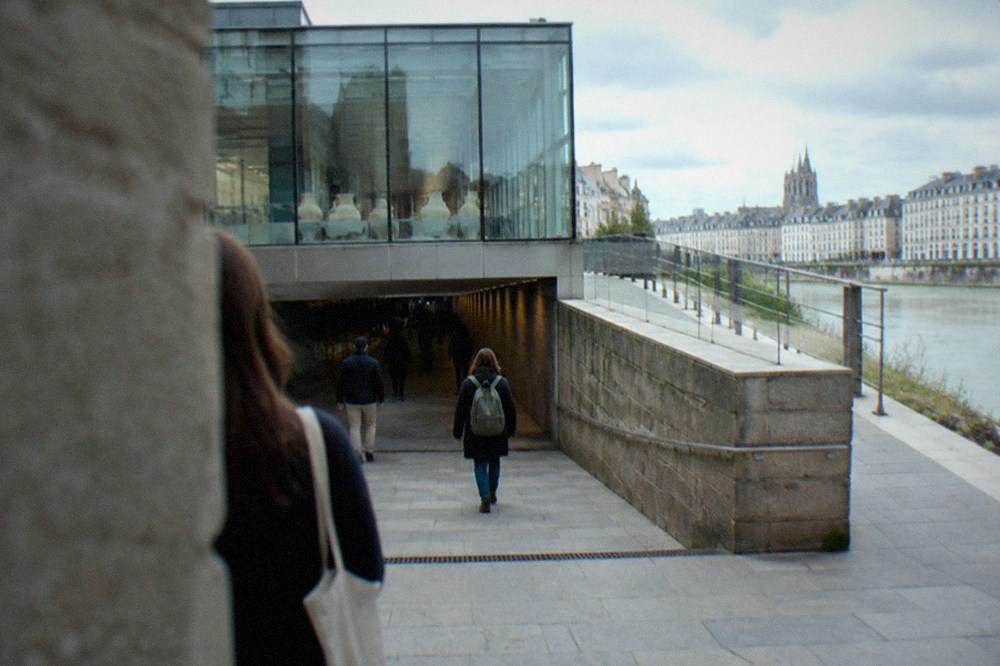
The underground sights in Nantes are the Memorial to the Abolition of Slavery, cut into the quay of the Loire and free to enter daily, and the crypts of the Cathedral of Saint-Pierre-et-Saint-Paul, which hosted video works during the 2026 Voyage a Nantes and reopened to visitors along with the rest of the cathedral on 27 September 2025. The memorial sits at the Quai de la Fosse, the very street from which the trade was conducted, and it is the most sobering unusual visit in the city.
The memorial's location is its entire argument. Nantes fitted out 1,714 slave-trade expeditions between the mid-17th century and 1830, which the memorial's own history page states was 43 percent of the French trade overall, and the city was the last French port to withdraw. The underground passage displays the names of the ships and the colonial outposts involved, and the memorial closes during Loire floods, so check its status in wet winters. Opening hours run 9:00 to 18:00 from mid-September to mid-May and 9:00 to 20:00 through the summer, with last access 30 minutes before closing.
The cathedral crypts are the newer arrival on this list. Full reopening of the building is planned for 2028 after the 2020 arson fire, and the west facade remains under scaffolding roughly 41 m high, but the nave, choir and crypts are accessible again. During the summer 2026 edition of Le Voyage a Nantes, the crypts showed video works by Anne-Charlotte Finel, a first for the festival, and the building's reopening followed five years of restoration funded entirely by the French state at a cost reported in the range of 32 to 35 million euros.
For the deeper history on either subject, the dedicated guides to Nantes history and the slave-trade history of Nantes carry the full chronology, and the Musée d'histoire de Nantes inside the château devotes whole rooms to it with more than 1,150 objects on display.
Is The Passage Pommeraye Really Built On A Slope?
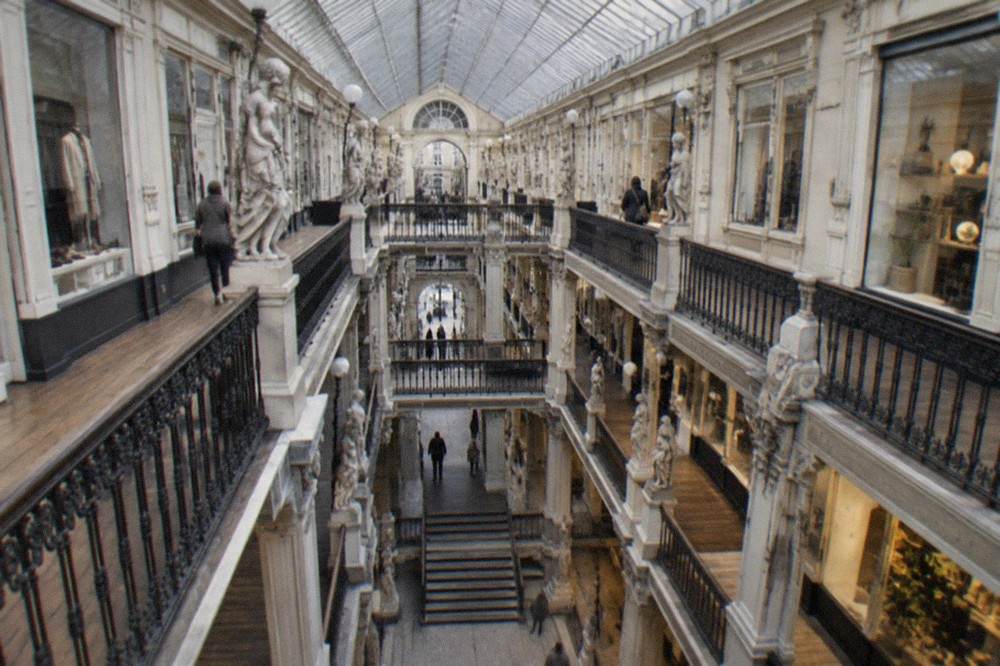
The Passage Pommeraye, opened in 1843, is a three-storey shopping arcade built to climb a real difference in level between two streets, so its staircases, galleries and glass roofs step up the slope rather than sitting level like the arcades of Paris, and entry is free during opening hours that run 8:00 to 20:00 Monday to Saturday and 9:00 to 20:00 on Sunday. The city's tourism office describes the building as unchanged since its construction, which is rare for any 19th-century commercial structure.
The slope is not a curiosity bolted on; it is the reason the passage exists at all. Connecting the rue de la Rousse at the bottom with the rue Santeuil above required the architects to thread three levels of shops, a monumental staircase and a mezzanine into a narrow plot, and the result is an arcade where you look up through two tiers of balconies to a glass roof and then keep climbing. The 1843 date and the "unchanged" description both come from the tourism office's own page on the passage, and the shops inside remain working businesses rather than museum tenants.
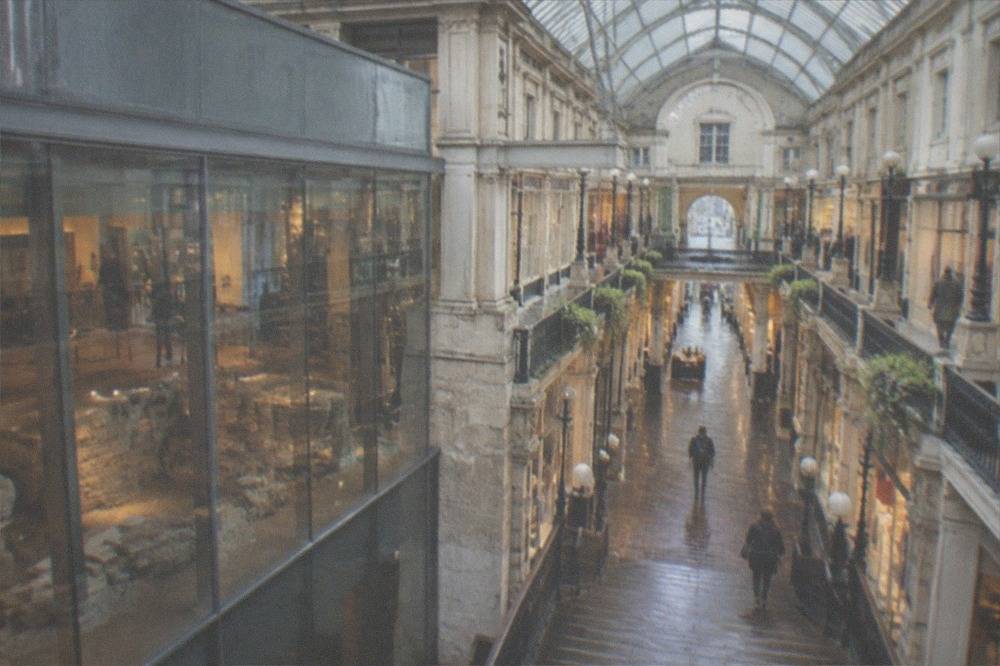
Photographers treat it as the most reliable interior in the city, and it sits inside the Graslin and Commerce quarter, close to the Théâtre Graslin and the place Graslin. The nearby Cigale brasserie and the Jardin des Plantes extend the walk, and the whole quarter is flat enough after the passage's climb to recover.
What Is The Green Line Trail In Nantes?
The green line is a painted trail roughly 22 km long that Le Voyage a Nantes marks on the city's pavements to guide visitors past its permanent and temporary artworks, and following it is free, with the 2026 summer edition running from 4 July to 6 September 2026 under the theme of Earth. The tourism office's own "to see" page states the full 22 km figure, and a 2026 maintenance report measured the line at 20.5 km after repainting, so "about 20 km" is the honest range.
The trail is the most unusual piece of wayfinding in any French city of this size. You find the line, usually starting near the tourism office at 9 rue des États, and you walk where it goes. Some artworks are permanent, such as the Élan by Daniel Buren and Patrick Bouchain near the Île de Nantes and the materials of the Estuaire trail, which places 33 works across 23 sites between Nantes and Saint-Nazaire. Others arrive each July with the festival: the 2026 edition, the 15th, added a 14-metre metal palm tree by Louis Guillaume in the château moats, Théo Mercier's sand installation Fossil Opera on place Graslin, and Barbara Schroeder's six monumental columns at the Jardin Extraordinaire, which were built using cow dung and earth.
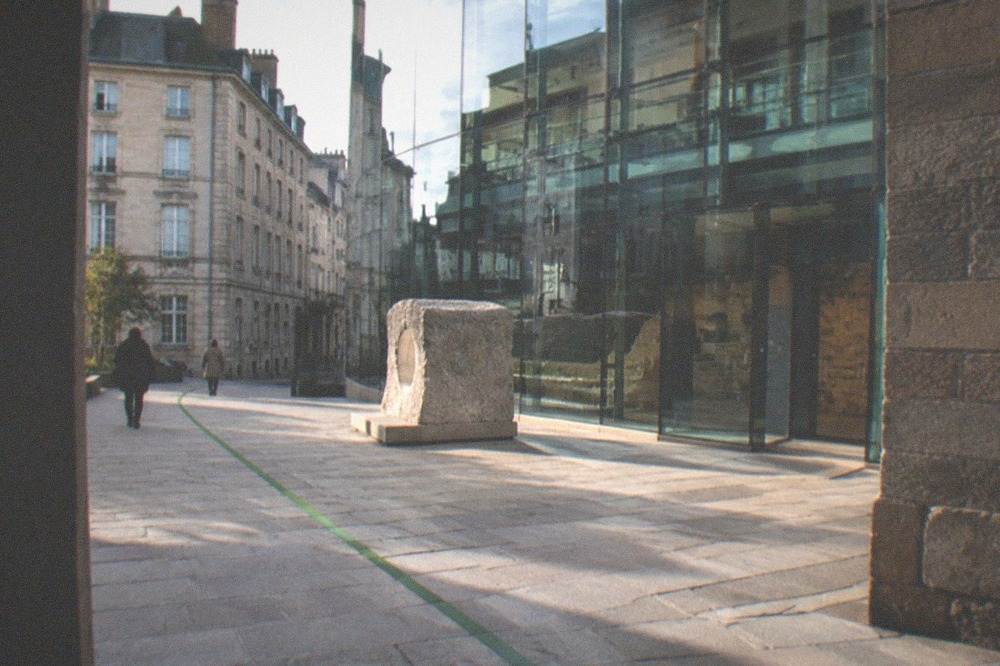
The festival is the first of a four-year cycle on the four elements, so the themes will shift annually, and some 2026 pieces extended beyond the September close. The full detail lives on the Le Voyage a Nantes page, and the green line in Nantes guide walks the route in order.
Can You Play Detective In Nantes?
Yes, Nantes has three outdoor escape-game circuits themed on its own history: the Jules Verne-themed Le Defi de Jules Verne, an urban escape game run with a dedicated game master, and the Elixir of the Alchemist historical city game, each played across real streets and landmarks rather than in a locked room. The alchemist game is the most-reviewed of the three, and all of them turn the Bouffay old town and the Graslin quarter into a puzzle board.
The premise suits the city. Jules Verne was born at 4 rue Olivier-de-Clisson on the Île Feydeau on 8 February 1828, before the island's shipowners' mansions were dismantled and moved stone by stone, so a game that sends you hunting Verne references through the streets is drawing on real biography rather than marketing. The city-game format also solves a real problem on rainy afternoons: it keeps moving between shelters, unlike a gallery visit that traps you in one building. The price, rating and review count of each game render on its live listing rather than being quoted here, since operators change them seasonally. More of these guides are collected on Nantes Travel Guide.
For players who prefer a guided route over a puzzle, the photo-spots walk below covers the strange vantage points, including the Île Feydeau facades and the Anneaux de Buren, with a local leading.
What Weird Museums Does Nantes Have?
The strangest museums in Nantes are the Musée Jules Verne at 3 rue de l'Hermitage on the Butte Sainte-Anne at 4 EUR full and 1.50 EUR reduced, the reopened Musée Dobrée at 9 EUR full and 6 EUR reduced, which reopened in May 2024 after thirteen years of closure, and the Planétarium at 7 EUR full and 3 EUR reduced, which runs more than eight sessions a day. The Muséum d'histoire naturelle, by contrast, is closed for works until 2029 and cannot be visited at all.
The Jules Verne museum matters for the same reason the escape games do: the author's actual birthplace is minutes away, and the museum's collection of scientific objects and editions sits in a house on the hill above the Erdre. A larger Cité des Imaginaires is planned in the former Cap 44 building in Bas-Chantenay, targeted for 2028, which will move and expand the collection. Until then the Butte Sainte-Anne site is the one that exists, and its summer 2026 hours ran daily from 10:00 to 19:00.
| Museum | Full price | Reduced price | Status |
|---|---|---|---|
| Musée Jules Verne | 4 EUR | 1.50 EUR | Open, closed Tuesdays |
| Musée Dobrée | 9 EUR | 6 EUR | Reopened May 2024 |
| Musée d'arts de Nantes | 9 EUR | 4 EUR | Closed Tuesdays, free Thursday evenings |
| Planétarium | 7 EUR | 3 EUR | 8-plus daily sessions |
| Muséum d'histoire naturelle | Closed | Closed | Closed for works until 2029 |
| Musée d'histoire de Nantes, château | 9 EUR | 5 EUR | Closed Mondays |
The Musée d'arts holds its own oddity: free entry every Thursday from 19:00 to 21:00 during the nocturne, with the museum's tariff page giving the standard 9 EUR full and 4 EUR reduced at all other times. The Dobrée, inside a 19th-century building that spent over a decade behind scaffolding, reopened with rotating exhibitions and a policy of free first Sundays in selected months, according to its own practical information page. The full museum landscape, including the Chronographe at Rezé and the annual 15 EUR Pass Musées covering four sites, is covered on the museums in Nantes page.
Where Can You Escape The City Centre In Nantes?
The quickest unusual escapes from central Nantes are the Erdre river, crossed and cruised by the Na Boa boat on three-hour trips and by the Navibus river buses on ordinary Naolib tickets, the fishing village colour of Trentemoult across the Loire in Rezé, and the Italianate town of Clisson, which is only about 23 minutes from Nantes by TER train and whose château opened free for the 2026 European Heritage Days. A Navibus river crossing costs the same as any tram ticket, which makes it the cheapest boat ride in France with a view.
The Erdre is the quiet one. It meets the Loire at Nantes, and the three Naolib Navibus lines use it: N1 from the Gare Maritime to Trentemoult Sablières, N2 between the Hangar à Bananes and Trentemoult via Bas-Chantenay, extended on 12 November 2025, and N3 along the Erdre between Gachet and Grimaudière. The N2 crossing takes in the Anneaux de Buren, the 18 rings by Daniel Buren lighting the quay, and delivers you to the Hangar à Bananes, where bars and the HAB Galerie occupy a former banana warehouse. The Galerie showed the INTERSTELLAR exhibition on reimagining Earth from 23 May to 27 September 2026.
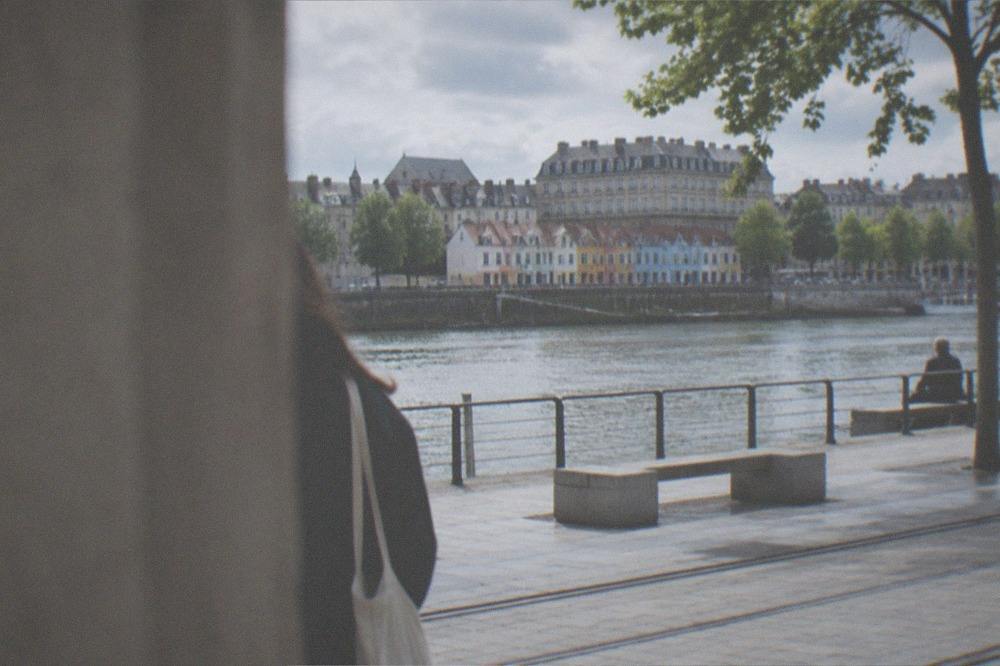
Trentemoult is the village at the other end of that crossing, a former fishing hamlet now inside Rezé, its small coloured houses stacked against the riverbank. The N2 link gave it a new 46 m pontoon and a 140-space park-and-ride in November 2025, running every 20 minutes at peak times, from 7:00 to 20:00 in winter and to midnight in summer, according to the launch reporting. Clisson, further out, looks like nothing else in the region: Italianate architecture, a ruined château and the vineyards of the Muscadet appellation, and a combined day covering Clisson and Trentemoult is bookable through the listing below.
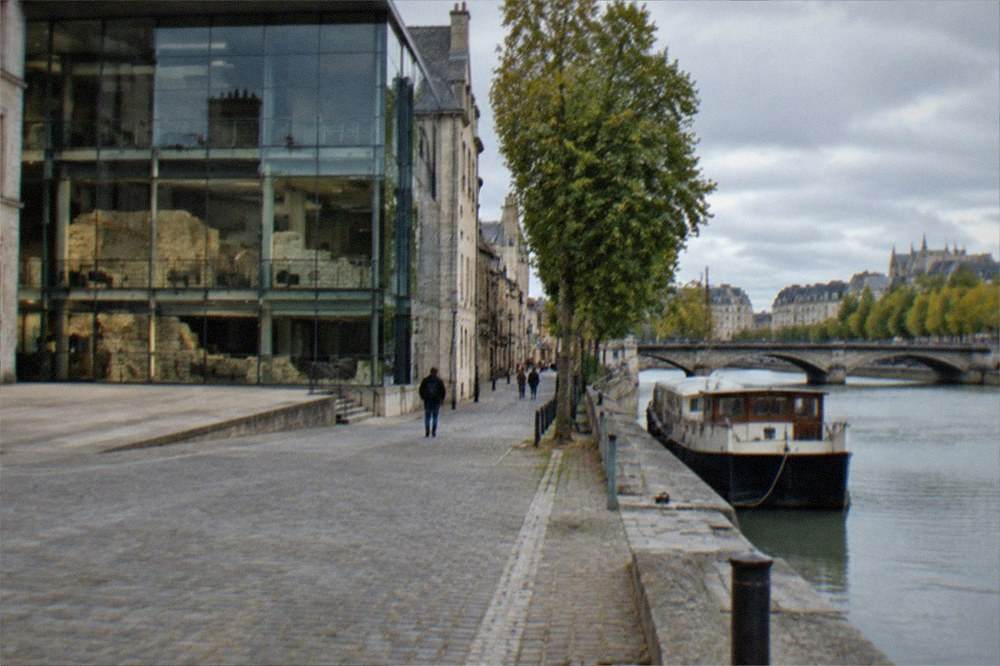
The longer escapes have their own guide on day trips from Nantes, and the salt marshes of Guérande, subject of the tasting visit below, sit about 80 km away by road with an exceptional 2026 harvest reported in early September, with average production around 1.5 tonnes per salt pan and some exceeding 3 tonnes.
What Should You Know Before Chasing The Unusual In Nantes?
Before chasing the unusual in Nantes, know that public transport is free every weekend from Saturday 00:00 to Sunday 23:59 for everyone including visitors, but the airport shuttle is excluded and always costs 10 EUR, that a one-hour Naolib ticket costs 1.80 EUR on weekdays, and that the Pass Nantes from 30 EUR for 24 hours covers the Machines' Galerie and Carrousel but never the elephant ride. These three facts between them decide most itinerary budgets.
The weekend rule deserves emphasis because so few cities offer it. Trams, buses, Navibus river boats and TER trains within the métropole perimeter all run free from Saturday midnight to Sunday midnight, and the park-and-relay car parks are free too when combined with a network validation, up to 24 hours. The airport shuttle alone keeps its 10 EUR fare, bought on board by bank card, and it runs every 20 minutes from April to October, every 30 minutes in winter, taking about 20 minutes between the station and the terminal. The full transport picture, including the shuttle stop's move to the Gare routière quai A in March 2026, is on the getting around Nantes page.
| Pass Nantes duration | Full price | Reduced price | Family, 2 adults plus 2 children |
|---|---|---|---|
| 24 hours | 30 EUR | 20 EUR | 80 EUR |
| 48 hours | 40 EUR | 26 EUR | 106 EUR |
| 72 hours | 49 EUR | 31 EUR | 129 EUR |
| 7 days | 75 EUR | 45 EUR | 195 EUR |
Weather is the other planning input. Nantes has a temperate oceanic climate, and the Météo-France normals for the Nantes-Bouguenais station, series 1991 to 2020, give a mean maximum of 9.3 C in January rising to 25.4 C in August, with 819.5 mm of rain a year spread over 119.7 days of at least 1 mm. June is the wettest month at 79.1 mm in the JMA normals table for the same station, March the driest at 34.1 mm. The 2026 summer rewrote the record book: a new all-time station high of 42.2 C on 24 June 2026, an August record of 40.4 C on 13 August, and 40 days at or above 30 C by late July. The Nantes weather guide carries the monthly breakdown.
Can You Eat And Drink Unusually In Nantes?
The most unusual food experiences in Nantes are tasting the city's own invented products, the berlingot nantais tetrahedron candy from the late 19th century, the gâteau nantais almond and rum cake dating to around 1820, LU's Véritable Petit Beurre biscuit invented in 1886, and beurre blanc, the emulsified butter sauce said to have been created by accident in the region, alongside the oyster and produce stalls of the Talensac market, open Tuesday to Friday 8:00 to 13:00 and Saturday to Sunday 8:00 to 13:30. None of these are imports; each was invented in or around the city.
The back stories carry the strange. LU's founder Jean-Romain Lefèvre set up as a biscuit maker in Nantes in 1846, and 2026 marks the firm's 180th anniversary, with production of around 24,000 tonnes a year now at La Haye-Fouassière near the city. The gâteau nantais, attributed to a Nantes baker around 1820 and made with almond, salted butter and a rum soak, has returned to the city's patisseries after decades as an industrial product. Beurre blanc, a reduction of shallots, white wine and vinegar into which cold butter is whisked, traditionally accompanies Loire fish, and Nantes restaurateurs have been pursuing protected traditional speciality status for it, according to 2025 reporting.
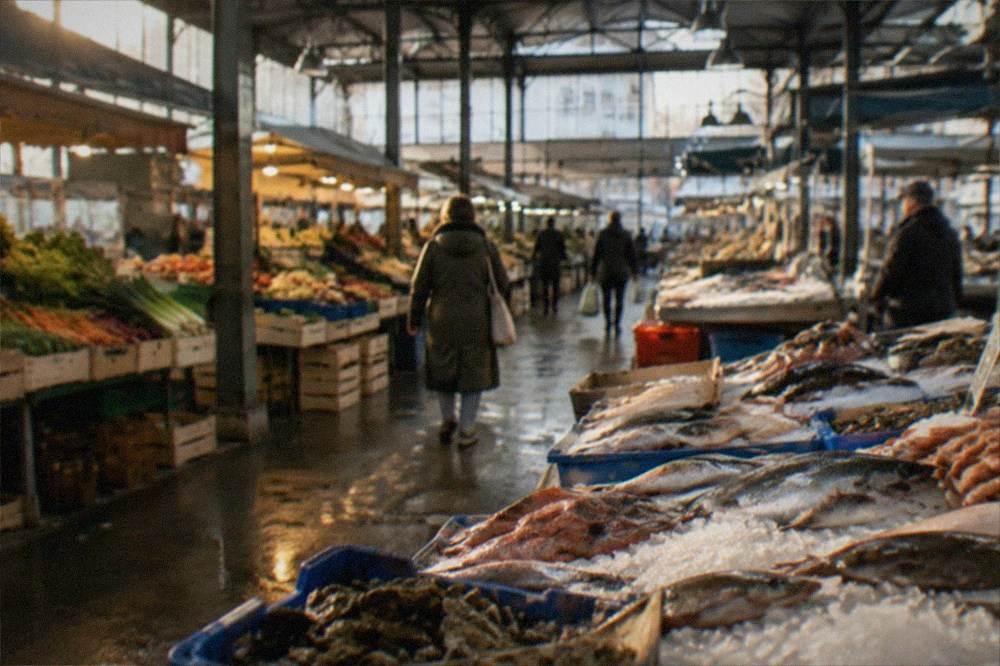
Talensac is where the city actually eats. It is Nantes's main market, closed on Mondays except public holidays, and the surrounding streets fill with the same traders on market mornings. For pairing, the local wine is Muscadet, from the Melon de Bourgogne grape grown in the vineyards of the Sèvre et Maine area south-east of the city, whose Maison des vins sits at Vallet; the Nantes food guide lists where to taste it in town, and the best restaurants in Nantes page covers the sit-down side. The sensory tasting visit below, in the vineyards themselves, is the deeper version of that detour.
Is It Worth Visiting Nantes Just For The Odd Side?
Yes, it is worth visiting Nantes purely for its unusual side, because the concentration of strange attractions, a mechanical elephant on shipyards, an underground memorial, a 22 km painted art line, a slope-climbing arcade and three city-wide escape games, sits within a compact walkable centre served by free weekend transport, and Time magazine called Nantes the most liveable city in Europe in 2004, the year before the first of these oddities opened. The European Commission later named it European Green Capital for 2013.
The honest caveat is capacity. Several of the sights are small, and two of them, the elephant and the Carrousel, close for maintenance windows, while the Muséum d'histoire naturelle is closed entirely until 2029 and the Tour Bretagne has no public access in 2026 pending the belvedere planned for around 2028 to 2029. A weekend is enough to see the strange side properly; a week is more than the oddities alone can fill, though the day trips from Nantes and the Loire valley surroundings absorb the extra days easily.
For the practical spine of a trip, the pages on where to stay in Nantes, on Nantes on a budget and on free things to do in Nantes cover the parts of the itinerary the strange sights do not. What Nantes offers, and what very few cities of its size anywhere offer, is a tourism identity built on the premise that a former industrial port should amuse itself first and visitors second.
Common Questions About Unusual Things To Do In Nantes
What is the most unusual thing to do in Nantes?
Riding the Grand Elephants at Les Machines de l'ile is the most unusual thing to do in Nantes, a mechanical elephant that walks the former shipyards of the Île de Nantes. Each attraction there costs 12 EUR full price, with a three-attraction package at 29 EUR, though rides pause from 2 November 2026 to 28 February 2027.
Can you visit the Machines de l'ile in Nantes?
Yes, Les Machines de l'ile is open on the Île de Nantes, reached by tram to the Chantiers navals stop, though that stop was affected by tram works from mid-June to the end of August 2026. The Galerie, Carrousel and elephant each carry separate tickets, and last admission is 45 minutes before closing.
Is the underground memorial in Nantes free?
Yes, the Memorial to the Abolition of Slavery on the Quai de la Fosse is free to enter, open daily from 9:00 to 18:00 outside summer and 9:00 to 20:00 from 15 May to 15 September, with last access 30 minutes before closing. It closes during floods of the Loire.
What is the green line in Nantes?
The green line is a painted trail about 22 km long, stated by the tourism office at 22 km and measured at 20.5 km in a 2026 maintenance report, that guides visitors past the artworks of Le Voyage a Nantes. The 2026 summer edition ran from 4 July to 6 September under an Earth theme, the first of four annual element themes.
Are there escape games in Nantes?
Yes, Nantes has three outdoor city-game circuits: the Jules Verne-themed Le Defi de Jules Verne, an urban escape game with a dedicated game master, and the Elixir of the Alchemist historical game. All are played across the real streets and landmarks of the historic centre rather than in a locked room.
Is the Nantes Natural History Museum open?
No, the Muséum d'histoire naturelle in Nantes has been closed for major works since 3 November 2025 and is scheduled to reopen in 2029, roughly doubling its public space from about 2,200 to about 3,900 square metres. It is excluded from the Pass Musées while closed.