Ile Feydeau
The Ile Feydeau is the small quarter of central Nantes where the writer Jules Verne was born in 1828, a grid of merchants' townhouses pressed between the place Graslin and the line of the old Loire quays.
Short answer
The Ile Feydeau is a walkable historic quarter in central Nantes, France. It was born an island in the Loire, gave the city Jules Verne in 1828, and today pairs grand merchants' townhouses with the Graslin quarter, Talensac market and the Jules Verne museum within a few minutes on foot.
The Ile Feydeau is a compact historic quarter in the centre of Nantes, in the Loire-Atlantique department of the Pays de la Loire region of western France, sitting just south of the place Graslin and a few minutes on foot from the Bouffay old town. Its name records a time when it really was an island in the Loire, though the branch of water that once separated it from the north bank no longer flows, and today the quarter reads as one of the most quietly elegant corners of the city. This guide covers what the Ile Feydeau is, why it matters, how to reach it by tram, bus and on foot, what to see on and around it, where to eat, when to come, and how it compares with Nantes's other old quarters.
What Is The Ile Feydeau In Nantes?
The Ile Feydeau is a small, mostly residential historic quarter of central Nantes, in the Loire-Atlantique department of the Pays de la Loire region of western France, laid out between the place Graslin to the north and the line of the old Loire quays to the south. It takes its name from its past as an island in the Loire, though the branch that once cut it off from the north bank has long since been reclaimed, and the quarter now reads as part of the surrounding city.
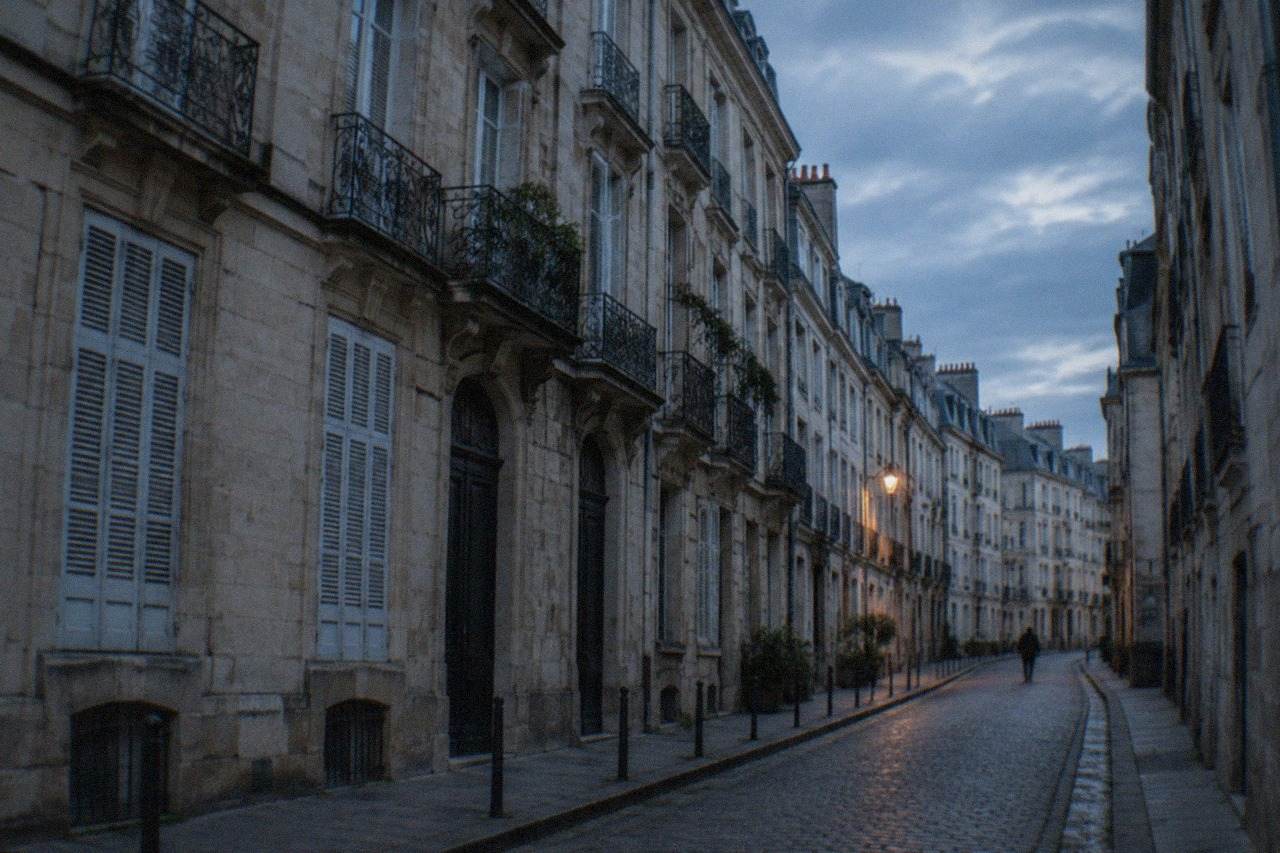
None of that is obvious when you arrive, and that is rather the point. The quarter announces itself through architecture rather than water. Walk south from the place Graslin, past the theatre and the Passage Pommeraye a little further on, and the streets narrow into a dense grid of tall stone townhouses, some raised on vaulted ground floors, many with carved stone faces and marine ornament worked into their facades. The buildings were raised during the centuries when Nantes grew rich as a French Atlantic port, and the wealth that built them had a dark backbone: the Mémorial de l'abolition de l'esclavage records that Nantes ran 1,714 slave-trade expeditions out of at least 4,220 French ones, 43% of the French total, before withdrawing in 1830.
The island's most famous address is modest in the extreme. At 4 rue Olivier-de-Clisson, on 8 February 1828, the writer Jules Verne was born; he died on 24 March 1905 in Amiens. There is no grand monument on the street itself, but the birthplace anchors the quarter's place in the city's story, and the dedicated Jules Verne museum across the river expands on his life for anyone who wants the full account.
For orientation, think of the Ile Feydeau as the hinge between three better-known neighbours: the Graslin and Commerce quarter immediately north, the Bouffay old town a short walk beyond that, and the Loire's modern southern bank, the Ile de Nantes, across the pont Anne-de-Bretagne line to the south. You can cross the whole Feydeau grid on foot in a quarter of an unhurried hour, which makes it less a destination you travel to than a texture you pass through, and remember, on the way from one Nantes landmark to another.
Why Is The Ile Feydeau In Nantes Famous?
The Ile Feydeau is famous for three things: it is the birthplace of Jules Verne, born at 4 rue Olivier-de-Clisson on 8 February 1828; it holds the densest concentration of grand merchants' and shipowners' townhouses in Nantes, raised during the port's trading centuries; and it stands at the centre of the city's reckoning with the Atlantic slave trade, which the Mémorial de l'abolition de l'esclavage documents as 1,714 Nantes expeditions, 43% of the French total, ended only in 1830.
The Verne connection is the one many visitors arrive with. The author of "Twenty Thousand Leagues Under the Sea" and "Around the World in Eighty Days" spent only his earliest years in Nantes before the family moved, but the city has never let go of the association, and the museum on the Butte Sainte-Anne side of the river keeps his manuscripts, objects and scientific curios on display for an entry fee of 4 EUR full tariff and 1.50 EUR reduced.
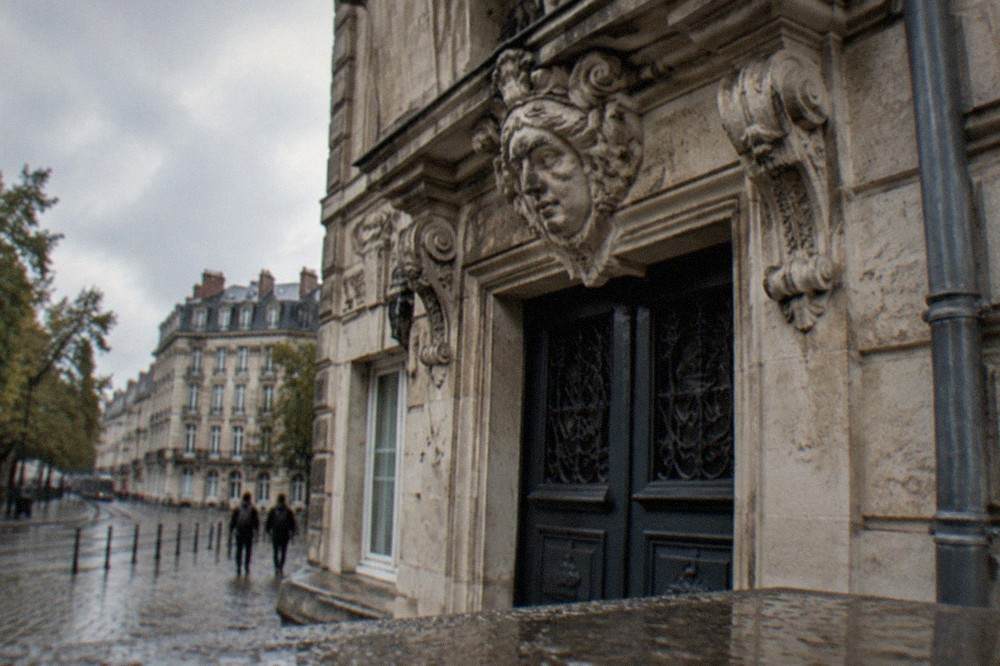
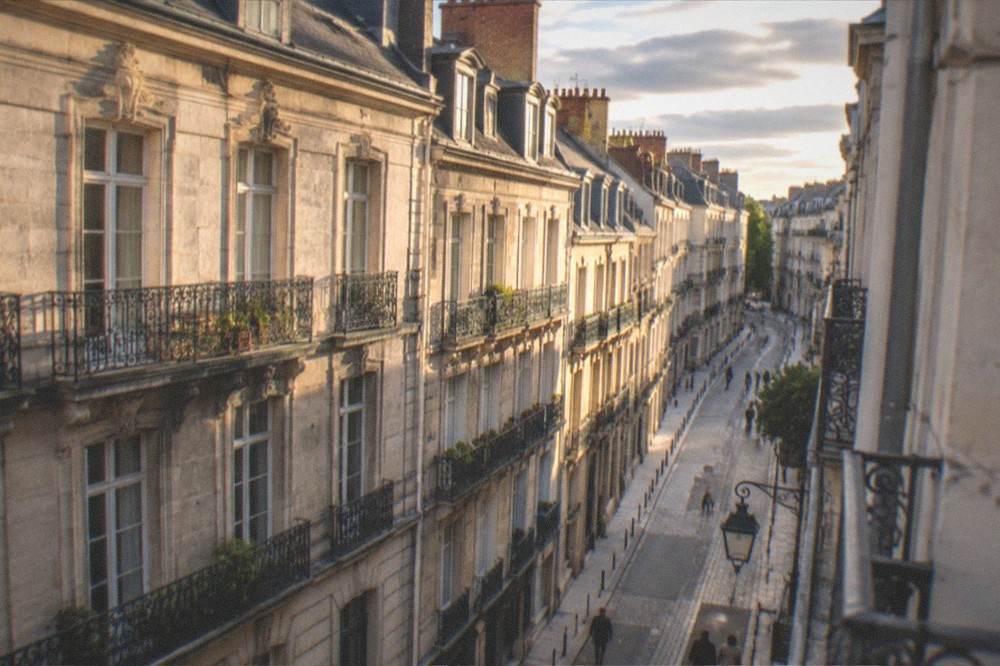
The architecture is the second draw. The townhouses of the Feydeau grid are tall, formally composed and richly detailed, with the carved faces and marine motifs that the port's shipowners favoured. Because the quarter was built as one island enclave rather than patchwork by patchwork, the streets keep a consistency of scale that the busier parts of central Nantes lack. Photographers tend to find it early in the day, when the light comes down the cross streets at a low angle and the shutters are still closed.
The third layer is harder and worth facing honestly. The money that raised these facades came in significant part from the Atlantic trade, including the slave trade. The Mémorial de l'abolition de l'esclavage on the quai de la Fosse, a short walk west along the river, is free to enter and presents the documented record without euphemism. Reading the quarter after visiting the memorial changes what the carved doorways look like, and most thoughtful visitors do the two in that order.
A short timeline sets the island in the city's chronology:
| Year | Event connected to the Ile Feydeau |
|---|---|
| 8 February 1828 | Jules Verne born at 4 rue Olivier-de-Clisson on the Ile Feydeau |
| 1830 | Nantes withdraws from the slave trade, after 1,714 expeditions and 43% of the French total |
| 1843 | The Passage Pommeraye opens a short walk north of the island's grid |
| 1846 | Jean-Romain Lefèvre sets up as a biscuit maker in Nantes, the start of LU |
| 24 March 1905 | Jules Verne dies in Amiens |
| 1986 | LU's Nantes factory closes, the former site later becoming Le Lieu Unique |
If the quarter's combination of literary history, walkable streets and dark memory sounds like it deserves a guide rather than an improvised wander, there are options worth weighing before you set out.
Each of these can be reserved with a cancellation window, so there is little reason to leave the decision to the morning of.
How Do You Get To The Ile Feydeau In Nantes?
The Ile Feydeau sits in the hypercentre of Nantes, so almost every tram and bus line in the Naolib network passes within a few minutes' walk of it, and a one-hour Naolib ticket costs 1.80 EUR, with a 24-hour ticket at 6.80 EUR and a 24-hour ticket for four people at 15 EUR.
The whole network, trams, buses and Navibus river shuttles included, is free for everyone from 00:00 Saturday to 23:59 Sunday, with the sole exception of the 10 EUR airport shuttle, which is never free.
Those fares come from Naolib's own tariff pages, and they make the quarter about as accessible as any place in the city can be. The tram stops around the place Graslin and the Cours des 50 Otages flank the island on its northern edge, and the stops further south serve the quays. Validate or tap as the network requires, and the same ticket carries across trams, buses, the Navibus river crossings and even TER trains inside the metropole's perimeter for the ticket's validity window.
For visitors planning a fuller stay, the Pass Nantes deserves a look, because it bundles transport with entries. Prices valid from 1 April 2026 are set out below.
| Pass Nantes duration | Full | Reduced (ages 4 to 17, students under 26, disability card) | Family (2 adults + 2 children) |
|---|---|---|---|
| 24 hours | 30 EUR | 20 EUR | 80 EUR |
| 48 hours | 40 EUR | 26 EUR | 106 EUR |
| 72 hours | 49 EUR | 31 EUR | 129 EUR |
| 7 days | 75 EUR | 45 EUR | 195 EUR |
The pass includes unlimited Naolib travel, one airport shuttle return, a TER return between Nantes and Clisson, and one entry per partner site, including the château museum, the Galerie des Machines and the Carrousel des Mondes Marins; the Grand Éléphant ride is not included. Note also that the Grand Éléphant pauses entirely for maintenance from 2 November 2026 to 28 February 2027, so anyone combining the Feydeau with a Machines visit across the river should plan around that window.
On foot, the quarter needs no ticket at all. From the Bouffay old town you walk south past the cathedral's reopened nave, from Graslin you simply keep going downhill, and from the Ile de Nantes you cross back over the river bridges. The one paid help worth considering is a self-guided option that works on the same streets: the 35-stop app-based walking tour of Nantes covers the central quarters at your own pace, and it slots neatly into a morning that begins on the island. You can Check availability alongside reading our broader guide to Nantes tours.
Cyclists and river crossings round out the options. The Navibus lines cross the Loire and the Erdre on normal Naolib tickets, and the river shuttle network now links the Hangar à Bananes, Bas-Chantenay and Trentemoult, which makes a Feydeau-to-Trentemoult itinerary possible without ever touching a road vehicle.
What Should You See On And Around The Ile Feydeau?
The essential sights on the Ile Feydeau itself are architectural rather than ticketed: the townhouse grid with its carved facades, the birthplace of Jules Verne at 4 rue Olivier-de-Clisson, and the old quay lines along the quarter's edges, all free to wander at any hour.
The paid and timed sights cluster just beyond, with the Musée d'arts de Nantes at 9 EUR full and 4 EUR reduced, the Jules Verne museum at 4 EUR and 1.50 EUR, and the Passage Pommeraye, free to enter, within an easy walk north. The wider set of guides lives on Nantes Travel Guide.
Start with the streets themselves. The island's grid rewards aimlessness: turn off the busier approach roads and the blocks become quiet, with courtyards glimpsed through archways and stonework that rewards a raised eye. Morning is the best time for photographs, both for the light and because delivery traffic has usually cleared. The Verne birthplace on the rue Olivier-de-Clisson is a pause-and-read plaque rather than a museum, but the streets around it are among the most intact on the island.
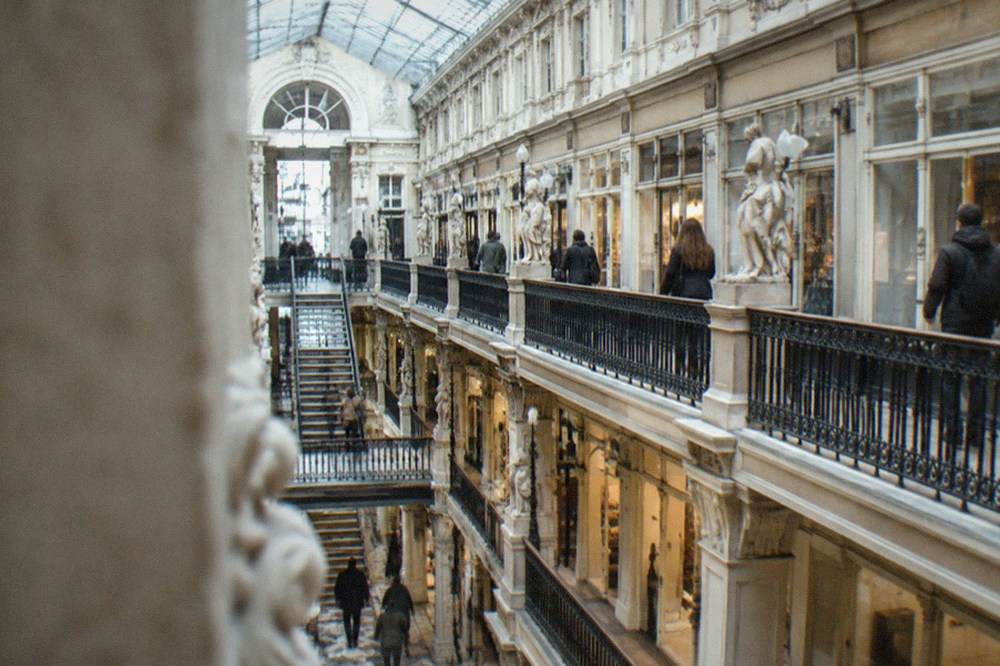
From there, work outward. North brings you to the place Graslin, the theatre and the Passage Pommeraye, the 1843 shopping gallery that the tourism office describes as unchanged, open Monday to Saturday 8:00-20:00 and Sunday 9:00-20:00 as reported. North-east lies the cathedral, which partially reopened to visitors on 27 September 2025 after the 2020 fire, with full completion of the works planned for 2028; entry is free, though you should expect scaffolding on the western facade. West along the river you reach the free Mémorial de l'abolition de l'esclavage, open daily with seasonal hours and last access 30 minutes before closing.
The headline entries and hours within easy reach of the island:
| Sight | Entry | Hours and notes |
|---|---|---|
| Musée d'arts de Nantes | 9 EUR full, 4 EUR reduced | 11:00-19:00, closed Tuesday, Thursday until 21:00, with free entry 19:00-21:00 on Thursdays |
| Jules Verne museum | 4 EUR full, 1.50 EUR reduced | Afternoon hours most days, closed Tuesday; not air-conditioned |
| Passage Pommeraye | Free | Monday to Saturday 8:00-20:00, Sunday 9:00-20:00, as reported |
| Nantes cathedral | Free | Partially reopened 27 September 2025; works continue toward 2028 |
| Château des ducs de Bretagne museum | 9 EUR full, 5 EUR reduced | 10:00-18:00, closed Monday; courtyard free daily 8:30-19:00 |
| Mémorial de l'abolition de l'esclavage | Free | Daily 9:00-18:00 in the cooler season, 9:00-20:00 in summer, as listed |
Two museums deserve special mention for trip planning. The Muséum d'histoire naturelle is closed for major works until 2029 and must not be counted on as a sight on any Nantes itinerary, rainy day included. And the Musée d'arts sits close enough to the island's northern edge that its Thursday nocturne pairs naturally with an evening on the Feydeau grid: an afternoon of facades, a free last-two-hours gallery visit, then dinner.
Families will find the quarter manageable with children, since it is compact, traffic-calmed in parts and within reach of the Jardin des Plantes further east; our Nantes with kids and one day in Nantes pages build the full circuit. For something louder than stone carving, the Loire itself offers a contrast: a jet-ski session on the water near the city is a pricier outing, a reminder that the river which once isolated this island is now its playground.
For a structured introduction to the streets rather than the water:
Where Do You Eat And Drink Near The Ile Feydeau?
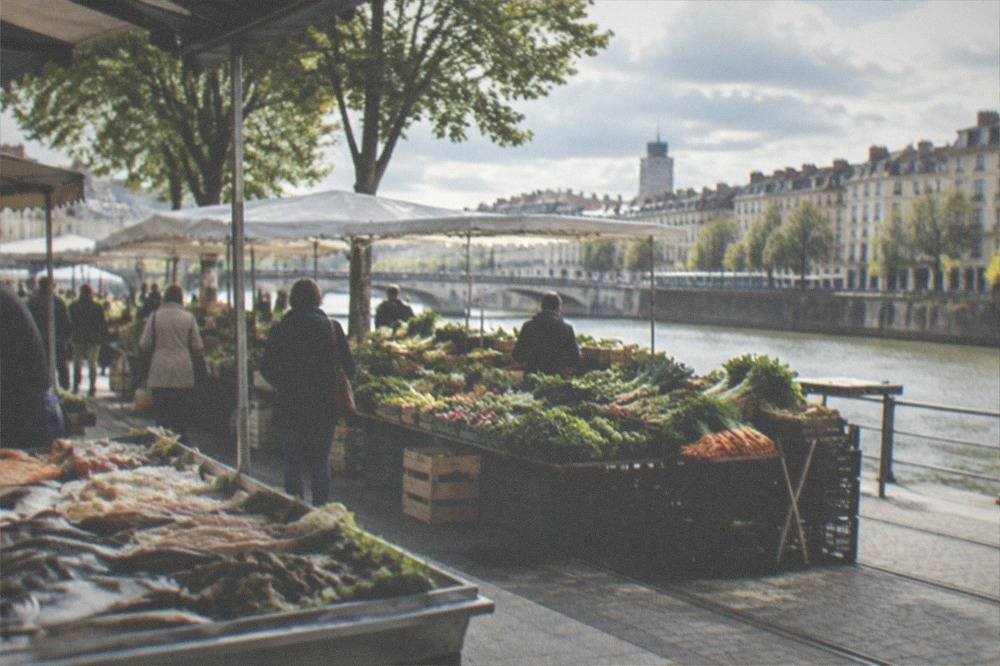
Eating around the Ile Feydeau means two things above all: the Talensac market, Nantes's principal covered and open-air market, open Tuesday to Friday 8:00-13:00 and Saturday and Sunday 8:00-13:30, closed Monday; and the classic Nantes table dishes, beurre blanc, the emulsified butter sauce traditionally served with river fish, and Muscadet, the local white wine pressed from the Melon de Bourgogne grape. An inexpensive meal here is easy to find, while a mid-range dinner for two runs noticeably more.
Talensac lies a short walk north-west of the island's grid, and it is the honest engine of the local food scene. Go on a Saturday morning and you get the full theatre of a French city market, fish, cheese, vegetables, bread, with the crowd thinning sharply after 13:00, so arrive early. The market's own listed hours are the ones to trust rather than any guide's promise, and the Monday closure catches out visitors every week.
The dishes to know are Nantes institutions rather than restaurant inventions. Beurre blanc is a reduction of shallots, white wine and vinegar into which cold butter is whisked, classically paired with pike, and Nantes restaurateurs have been pursuing protected traditional-specialty status for the recipe. Muscadet, from the vineyards south and east of the city, is its natural partner; the 2026 harvest was declared historically early, with the picking ban set on 11 August 2026, eight days ahead of the previous record, with lower yields reported. Sweet tooths are covered too: LU's Véritable Petit Beurre biscuit was born in Nantes, the company dating from 1846, and the gâteau nantais, an almond and rum cake, has staged a strong revival in the city's patisseries.
| Eating around the Ile Feydeau | What to know |
|---|---|
| Talensac market, Tuesday to Friday | 8:00-13:00 |
| Talensac market, Saturday and Sunday | 8:00-13:30 |
| Talensac market, Monday | Closed |
| Inexpensive restaurant meal | varies by venue, typical range 12 to varies by venue |
| Mid-range dinner for two, three courses, no drinks | varies by venue, typical range 35 to varies by venue |
| Draft beer, one pint | varies by venue |
| Cappuccino | varies by venue |
For a sit-down experience rather than a market graze, the Graslin and Bouffay quarters ringing the island hold the densest selection of restaurants, crêperies and wine bars, deep enough that a companion planning page is the better place to dig. One honest note on guided eating: an all-inclusive food tour of the Nantes old town runs 3.5 hours with a local guide, though the operator has not published a price; the compiler card below carries what the live listing shows.
In the evening the island itself quietens, and the action drifts two directions: toward the Graslin theatre quarter for pre- and post-show drinks, and across the water to the Hangar à Bananes on the Ile de Nantes for bars and clubs in the old banana warehouses. The Navibus river crossings make the second of those a small adventure rather than a trek.
When Is The Best Time To Visit The Ile Feydeau?
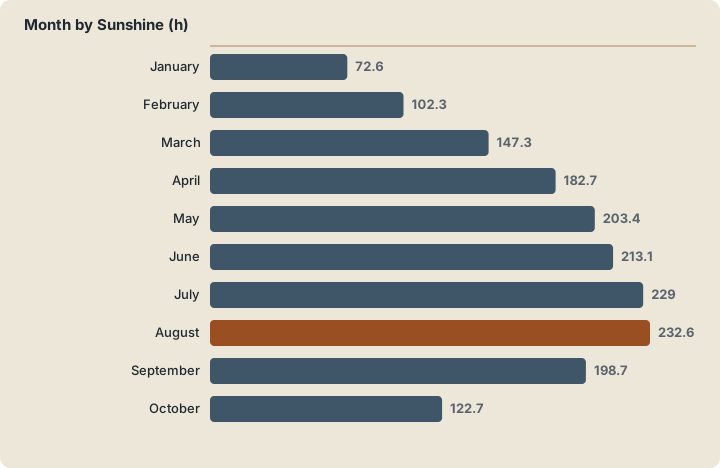
The best time to visit the Ile Feydeau is late spring through early autumn, with May to September offering mean daily maxima between 19.6 and 25.4 degrees Celsius at the Nantes-Bouguenais station and the most reliable dry days, while the shoulder months of April, May and September to October balance pleasant temperatures of roughly 16 to 22 degrees with thinner crowds. July is the warmest month at a 25.1 degree mean maximum, August the sunniest at 232.6 hours.
Those figures are the 1991-2020 Météo-France normals for the Nantes-Bouguenais station, and they describe a temperate oceanic climate, not a Mediterranean one: rain falls somewhere in Nantes on 119.7 days a year, totalling 819.5 mm, so a compact umbrella is not pessimism here, it is arithmetic. The table below gives the month-by-month picture.
| Month | Mean max (C) | Rain (mm) | Sunshine (h) |
|---|---|---|---|
| January | 9.3 | 87.9 | 72.6 |
| February | 10.5 | 67.5 | 102.3 |
| March | 13.5 | 58.4 | 147.3 |
| April | 16.2 | 58.3 | 182.7 |
| May | 19.6 | 61.0 | 203.4 |
| June | 23.0 | 48.5 | 213.1 |
| July | 25.1 | 44.2 | 229.0 |
| August | 25.4 | 50.3 | 232.6 |
| September | 22.4 | 59.5 | 198.7 |
| October | 17.6 | 88.8 | 122.7 |
| November | 12.9 | 94.1 | 91.3 |
| December | 9.8 | 101.0 | 77.6 |
Winter visits have their own case: the Nantes Christmas market runs from 19 November to 27 December 2026 on the place Royale and place du Commerce, both within an easy walk of the island, and the Feydeau facades photograph well under the season's low light. The trade-off is the wettest quarter of the year, with December's 101.0 mm the highest monthly normal of all, and short days.
Whenever you come, the island itself asks nothing of your calendar. No entry times, no queues at a ticket desk, no closure days beyond those of its neighbours. That makes it the perfect filler between two booked activities, and the reason locals treat it as a shortcut worth taking slowly.
How Does The Ile Feydeau Compare With Nantes's Other Old Quarters?
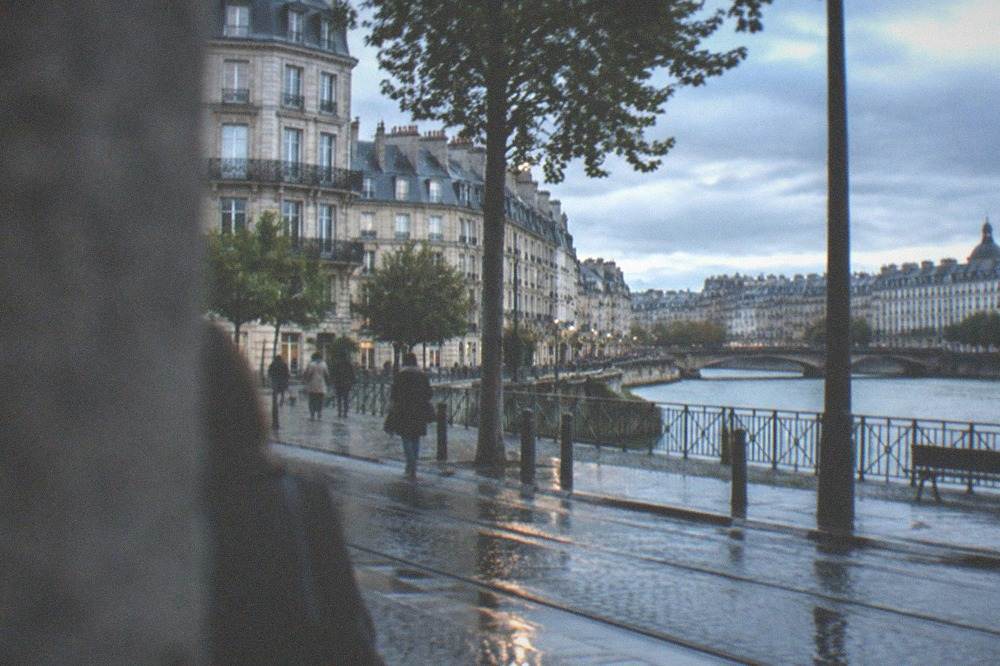
The Ile Feydeau is the quietest and most architecturally uniform of Nantes's central quarters: grander in its stonework than the medieval Bouffay old town, more intimate and residential than the shopping and theatre district of Graslin, more historic and less futuristic than the Ile de Nantes across the river with its Machines and converted warehouses, and entirely different in register from the fishing-village colour of Trentemoult on the south bank. It suits travellers who want to read a city through its facades rather than through its headline attractions.
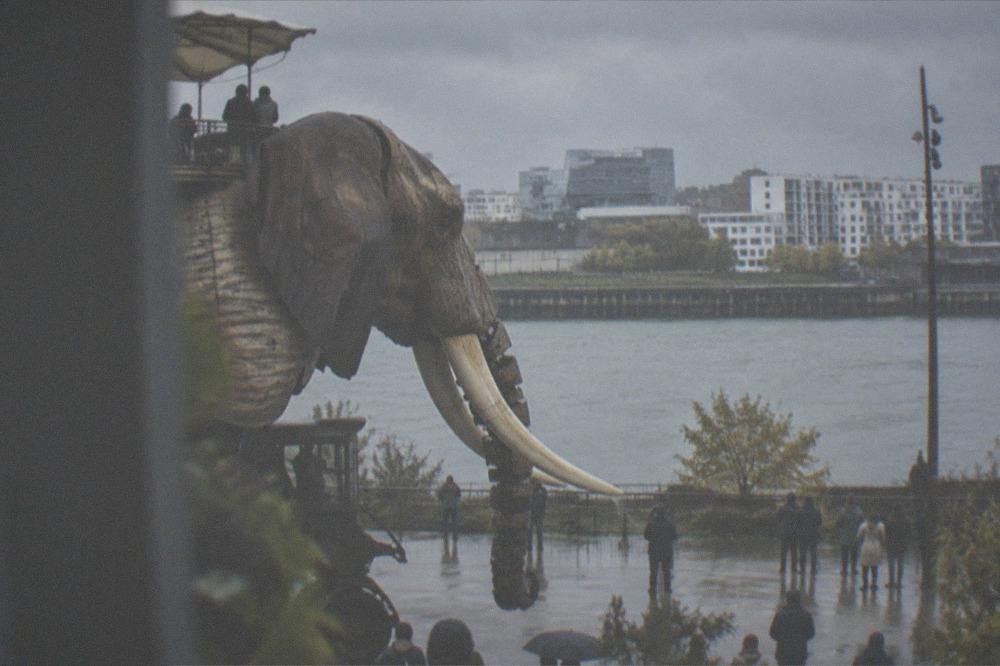
The comparison matters because visitors with two or three days will walk through all of these quarters whether they plan to or not. The Bouffay old town is the medieval core around the cathedral and the château, all half-timber and narrow lanes, and it absorbs most of the restaurant trade. Graslin, immediately north of Feydeau, is the theatre and shopping showpiece: the theatre, the Passage Pommeraye, the place Graslin and the fine dining. The Ile de Nantes is the contemporary flip side, where the former shipyards now host the Machines de l'île, the Galerie and Carrousel each at 12 EUR full price with the elephant ride excluded from the Pass Nantes, and the Hangar à Bananes nightlife strip.
A quick way to place the island among its neighbours:
| Quarter | Character | Signature sight | Typical first stop |
|---|---|---|---|
| Ile Feydeau | Quiet residential grid of grand stone townhouses | Jules Verne birthplace, rue Olivier-de-Clisson | Street wander, free at any hour |
| Bouffay | Medieval old town, liveliest at meal times | Cathedral, partially reopened 27 September 2025 | The cathedral nave, free |
| Graslin and Commerce | Theatre, galleries and shopping, 1843 Passage Pommeraye | Passage Pommeraye, free to enter | The gallery, then the place Graslin |
| Ile de Nantes | Reclaimed shipyards, contemporary art and Machines | Galerie des Machines, 12 EUR full | Galerie or Carrousel, both on the Pass Nantes |
| Trentemoult | Former fishing village, painted houses, river commute | The quays and the Navibus crossing itself | Arrive by Navibus, normal ticket |
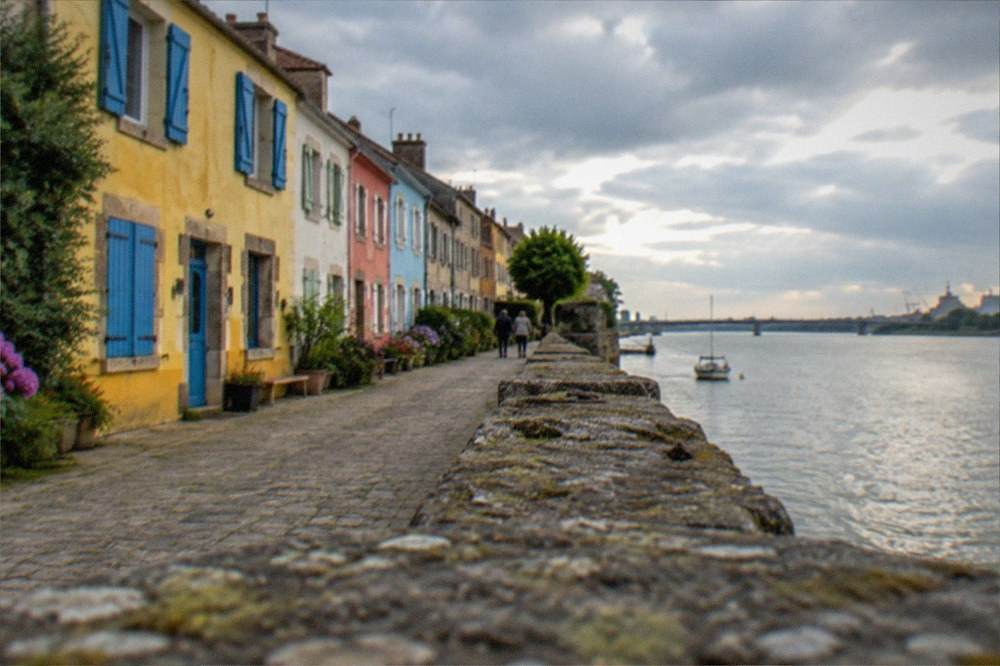
Trentemoult deserves its line in the table because the contrast is extreme and the crossing is part of the pleasure: a normal Naolib ticket puts you on the river between the two, and the painted fishermen's houses sit barely fifteen minutes from the Feydeau grid by water. For a fuller account of the modern island, see our Ile de Nantes guide, and for the green waterside spaces that offset all this stone, the Ile de Versailles and its Japanese garden on the Erdre.
If any single visit pattern holds, it is this: travellers book the big ticketed sights, on the Ile de Nantes or at the château, then discover that the walk between them through the Feydeau was the part they describe to people back home. That is the island's role, and it plays it well.
For a second look at the city with a guide in the lead, these are the experiences often paired with a Feydeau wander:
Whatever you book, keep a free afternoon for the island itself. It costs nothing, it closes for nothing except ordinary city life, and it is the part of Nantes that most rewards knowing a little history before you walk it.
Common Questions About The Ile Feydeau
Is the Ile Feydeau still an island in Nantes?
No. Its name records its past as an island in the Loire, but the branch of the river that once separated it from the north bank no longer flows, and today the quarter is a fully integrated part of central Nantes between the place Graslin and the old quays.
Was Jules Verne born on the Ile Feydeau?
Yes. Jules Verne was born at 4 rue Olivier-de-Clisson on the Ile Feydeau on 8 February 1828, and died in Amiens on 24 March 1905. The Jules Verne museum, on the Butte Sainte-Anne side of the river, expands on his life and work.
How much does it cost to visit the Ile Feydeau?
Nothing. The quarter is a public residential grid with no ticket office and no entry charge; the paid sights around it, the Musée d'arts at 9 EUR full, the Jules Verne museum at 4 EUR, are separate institutions within walking distance.
How do I get to the Ile Feydeau by public transport?
Almost every Naolib tram and bus line passes close by. A one-hour ticket costs 1.80 EUR, a 24-hour ticket 6.80 EUR, and the whole network is free for everyone from Saturday 00:00 to Sunday 23:59, except the 10 EUR airport shuttle, which is never free.
What food is the Ile Feydeau area known for?
The Talensac market a short walk away anchors the local table, open Tuesday to Friday 8:00-13:00 and weekends to 13:30. Classic dishes include beurre blanc, the Nantes butter sauce served with fish, paired with Muscadet, plus LU Petit Beurre biscuits and gâteau nantais from the city's patisseries.
Is the Ile Feydeau worth visiting with limited time in Nantes?
Yes, precisely because it takes so little time. You can cross the quarter on foot in about fifteen minutes, it sits on the natural walking route between Graslin, Bouffay and the cathedral, and it pairs easily with the free Mémorial de l'abolition de l'esclavage on the nearby quays.
The Ile Feydeau will never head a Nantes bucket list, and that is exactly its value: a free, walkable, history-dense quarter that turns the walk between the city's bigger sights into the part of the trip you remember. Go early for the photographs, face the memorial honestly for the context, and let the island's quiet grid do the rest. For everything that surrounds it, start with our things to do in Nantes planning page, or browse the full range of Nantes tours before you travel.