Passage Pommeraye
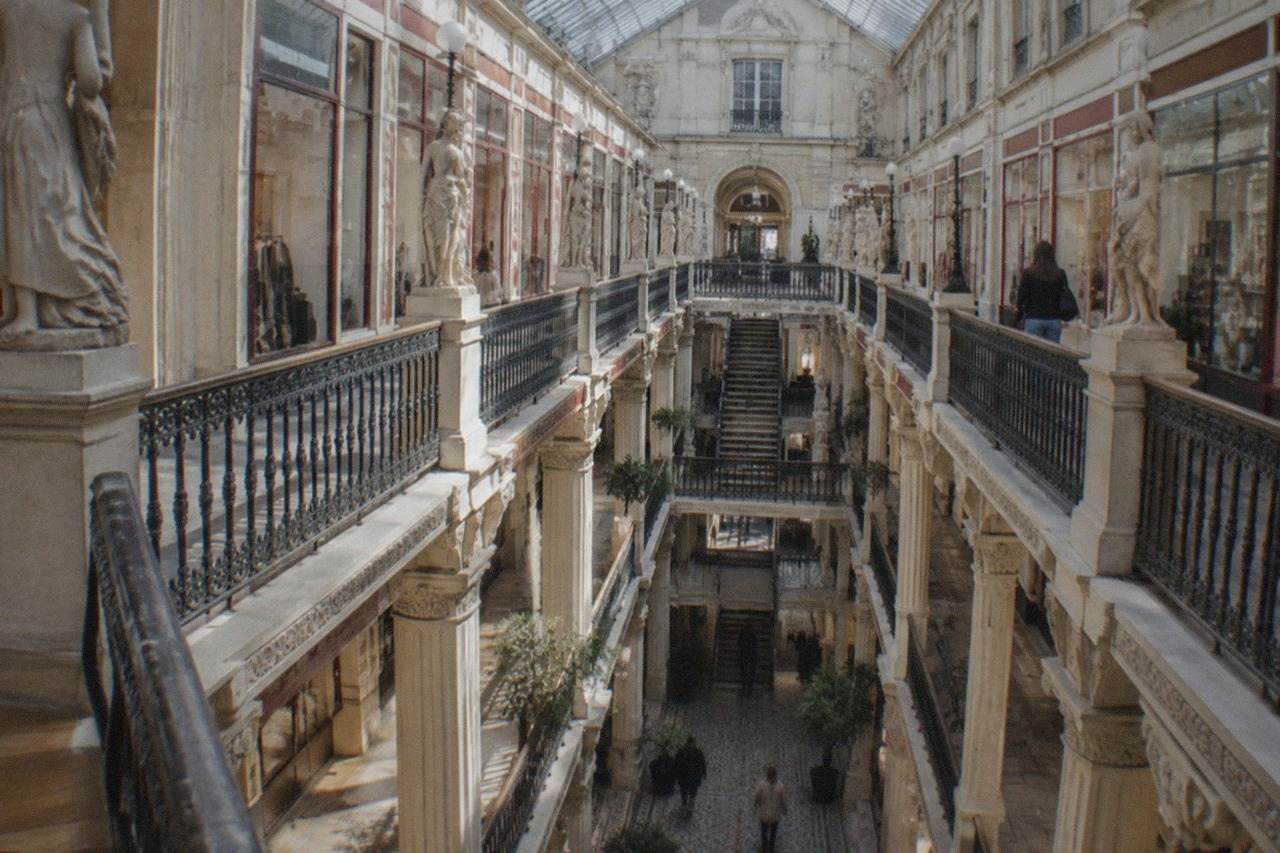
The Passage Pommeraye is a three-floor covered shopping gallery built in 1843 in the Graslin quarter of central Nantes, France, and it remains one of the finest examples of a nineteenth-century arcade anywhere in the country.
Short answer
The Passage Pommeraye is a covered shopping gallery in central Nantes, France, opened in 1843. Entry is free and the gallery runs three floors up a slope between the Graslin and Place Royale areas. It is celebrated for its glass roof, marble staircases and Renaissance-style decoration, and the building has remained essentially unchanged since the nineteenth century.
The Passage Pommeraye is a nineteenth-century covered shopping arcade in the heart of Nantes, a city in the Loire-Atlantique department of the Pays de la Loire region in western France. Built in 1843 and essentially unchanged since, it stacks three floors of shops up a slope between the Graslin district and Place Royale, under a glazed roof that floods the whole interior with daylight. Few buildings in the city compress so much history, architecture and commerce into so short a walk, which is why the arcade anchors a route through the centre and why this guide covers it in full: what it is, when to go, what to look at inside, and how to fold it into a day built around the surrounding Graslin quarter.
What Is The Passage Pommeraye In Nantes?
The Passage Pommeraye is a covered, glass-roofed shopping gallery in central Nantes, France, opened in 1843 and built on three floors that climb a natural slope between two of the city's streets. Entry costs nothing, the interior has stayed essentially unchanged since the nineteenth century, and the arcade is widely treated as one of the most beautiful passages of its kind in France. It functions today as a working shopping destination, not a museum piece.
That last point matters. Many covered passages elsewhere in Europe survive as heritage curiosities with a gift shop and a café. The Pommeraye is different: it is a living piece of the city's commercial fabric, the sort of place Nantes residents cut through on their way between errands, duck into for shelter from Atlantic drizzle, or use as a shortcut that happens to be gorgeous. The gallery is one of a family of passages built across France in the first half of the nineteenth century, when glazed iron-and-glass roofs were the newest technology merchants could buy, and it is one of the few that never needed to be reconstructed or reinterpreted.
The building sits in the Graslin quarter, the elegant district that also holds Place Royale and the Théâtre Graslin. Le Voyage à Nantes, the city's tourism organisation, lists the passage among its key places and describes it as unchanged since it opened, a remarkable claim for any commercial building 180 years old. Its survival owes much to the fact that the whole structure, from shopfronts to staircase balustrades, was designed as one coherent piece rather than assembled piecemeal.
Why Was The Passage Pommeraye Built In 1843?
The Passage Pommeraye opened in 1843, built to link two parts of the Graslin quarter across a steep slope in the centre of Nantes, France. Its three floors step down the hill so each level can open onto street level at its own end, a solution to the site's topography that gave the arcade its distinctive stacked layout. The passage has remained unchanged since its construction in the 1840s.
The date is worth pausing on. 1843 places the Pommeraye squarely in the great era of the Parisian passages, the covered arcades that transformed shopping in France by giving merchants a dry, lit, secure street under glass. Nantes in 1843 was one of France's wealthiest commercial ports, flush with trade along the Loire and out to the Atlantic, and its merchant class wanted the same comforts as the capital. The result was an arcade engineered around a problem Paris rarely faced: serious slope. Rather than fight the gradient, the architects made it the whole concept, so shoppers descend (or ascend) through the gallery's levels and land at grade at both ends.
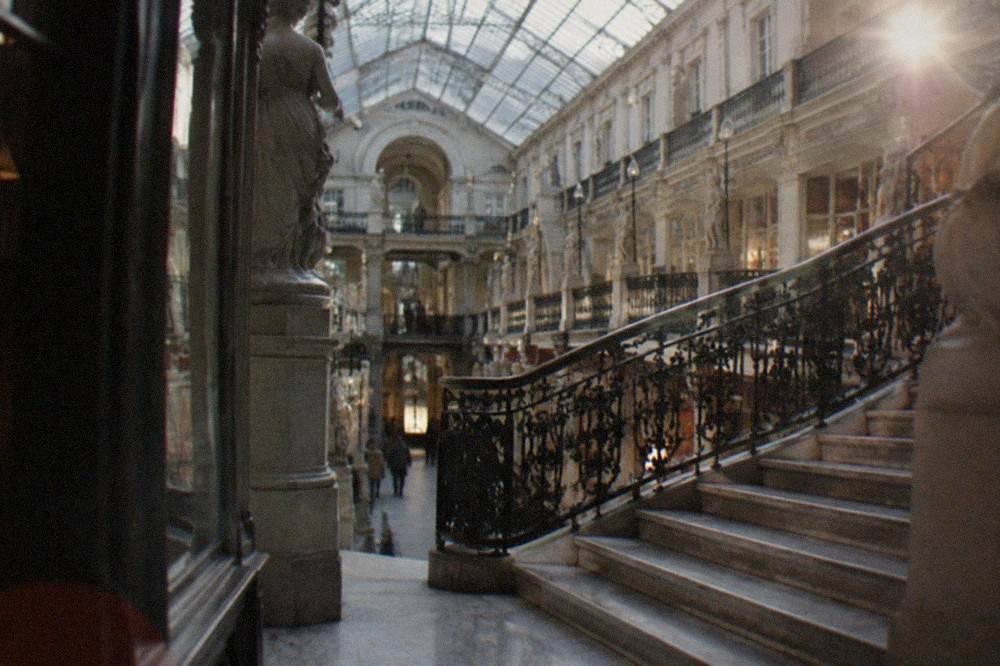
Everything about the interior was built as a single composition. The glass roof does the heavy lifting of the lighting, the staircases carry people between levels with balustrades and decoration treated as architecture rather than pure utility, and the shopfronts follow a unified rhythm along both flanks. When Le Voyage à Nantes says the passage is unchanged, that is what it means: the visitor of its opening era and the visitor of today walk the same floors, under the same roof, past the same structural bones.
For visitors planning a wider route through the city, the passage sits conveniently close to Place Royale and its fountain and the Théâtre Graslin, so the arcade is usually crossed naturally rather than sought out. That is the honest way to experience it: the Pommeraye works best as the connective tissue of a Graslin walk rather than a destination you exhaust in twenty minutes.
What Are The Opening Hours And Prices At The Passage Pommeraye?
Entry to the Passage Pommeraye is free, because it is a public gallery through a block rather than a ticketed monument in Nantes, France. The arcade's published hours run Monday to Saturday from 8:00 to 20:00 and Sunday from 9:00 to 20:00, though individual shops inside keep their own opening times, which may be shorter than the passage itself. Treat the gallery hours as the window, not the shopping hours.
That distinction is the single most practical thing to know. The passage, as a piece of public street under a roof, can stay open longer than the businesses inside it. A visitor arriving at 19:30 on a weekday will find the gallery open, the light lovely and the glass roof glowing, but many shop shutters may already be down. The opposite also applies: the arcade is at its quietest and most photogenic early in the morning, before the boutiques have fully opened and while the first daylight is still low across the glass.
| What | Hours | Cost |
|---|---|---|
| Gallery passage (walk through) | Mon-Sat 8:00-20:00, Sun 9:00-20:00 | Free |
| Individual shops inside | Set by each shop | Prices vary by shop |
| Guided tour products | Vary by product | Price and availability on the operator's live listing |
For visitors who like the security of a booked experience, a ticketed visit product for the Passage Pommeraye exists on the operator's live listing; its price is not published by the operator, so the current figure is best checked directly rather than quoted here.
A useful alternative angle on the arcade is a guided walk. A private walking tour with a professional guide can route the passage together with the surrounding Graslin quarter, the Bouffay old town and the riverside, with the city's history narrated as you go. The price of that tour is likewise not published by the operator, so check the live listing for the current rate and calendar before booking.
What Shops And Architecture Will You Find Inside Passage Pommeraye?
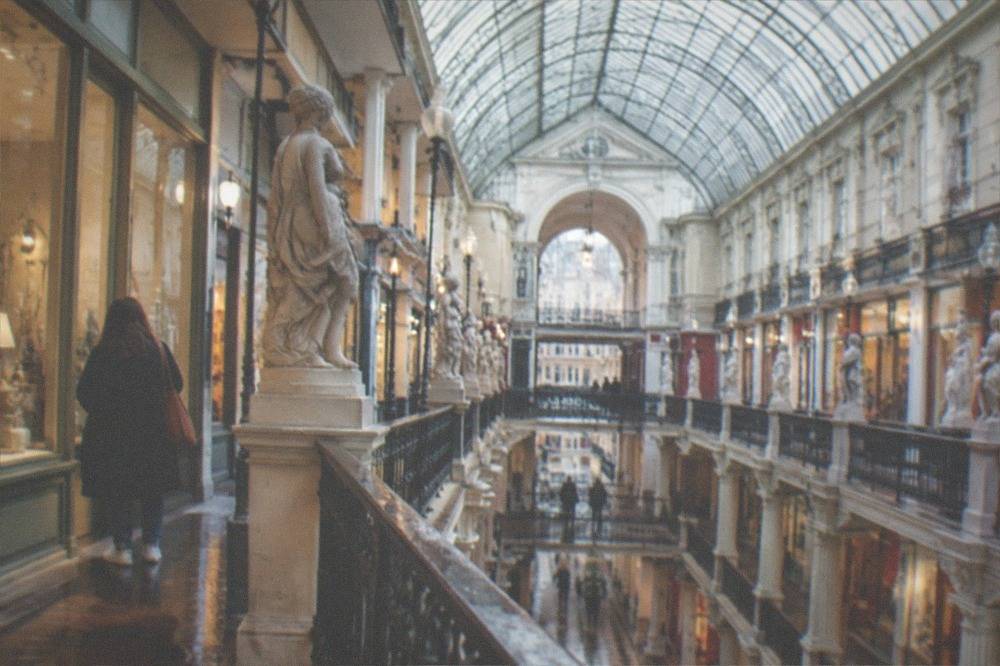
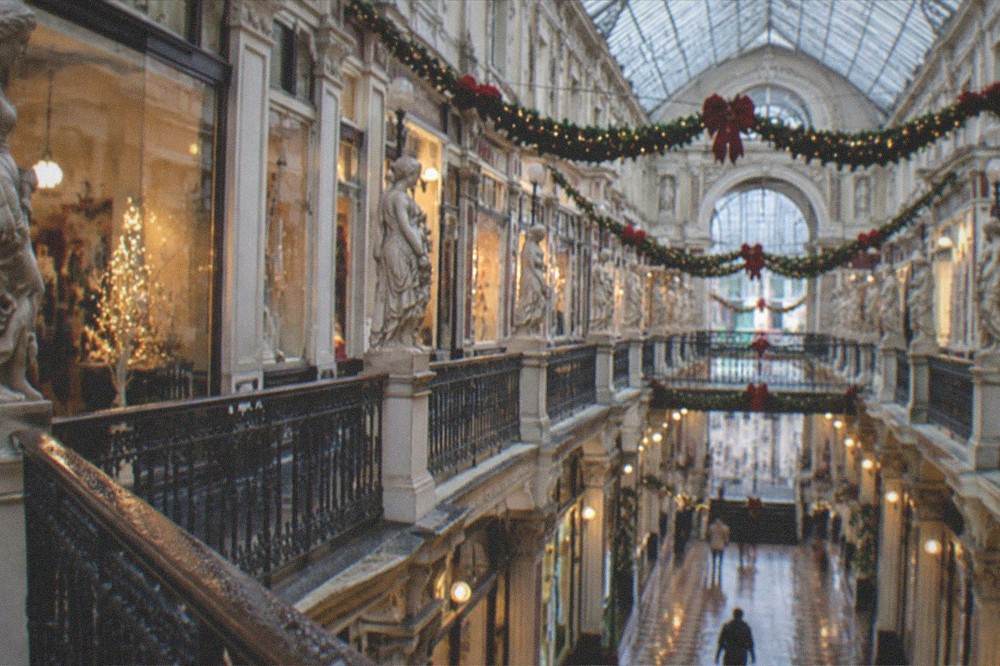
Inside the Passage Pommeraye you will find a mix of independent boutiques, concept stores, jewellers, confectioners and cafés arranged over three floors, all framed by the 1843 architecture of Nantes, France: the vaulted glass roof, the grand connecting staircase, polished stone floors and period shopfronts. The architectural ensemble, not any single shop, is the main attraction, and the interior remains unchanged from its nineteenth-century state.
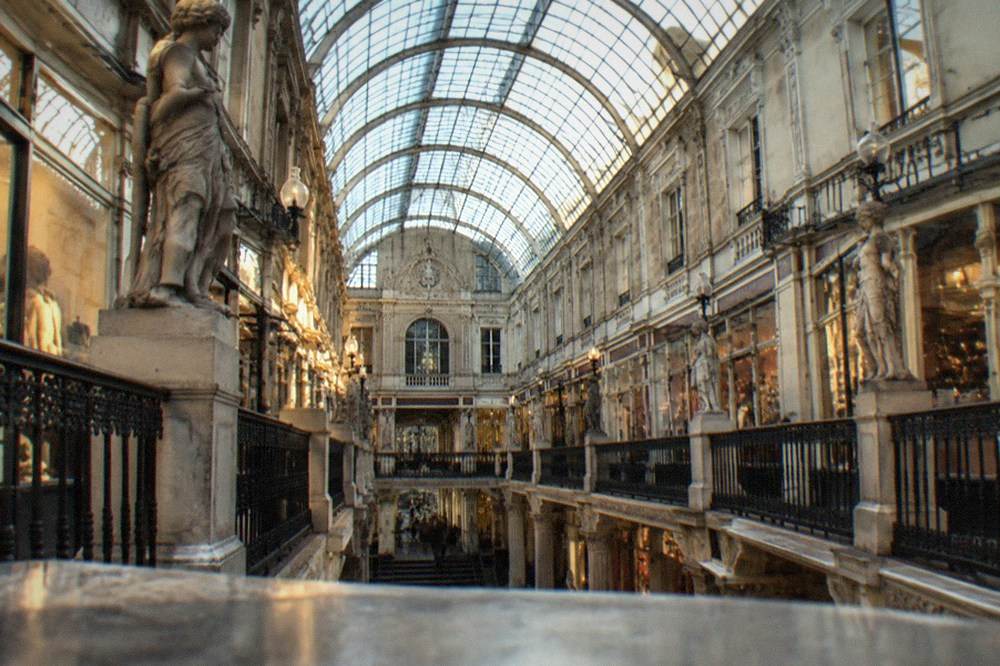
The architectural reading comes first, because it is what the passage is genuinely famous for. The roof is the signature piece: a long ridge of glass panels supported on iron ribs, angled to pull daylight deep into a block that would otherwise be dark. On a bright day the interior needs no artificial lighting at all, and on a grey Nantes afternoon, of which the Loire-Atlantique climate supplies plenty, the roof turns the gallery into the warmest-feeling street in the city centre.
The staircase is the second set piece. Because the three levels step down the slope, the connecting stair is both circulation and ornament, with a balustrade and surround treated as carefully as the shopfronts. It is the spot where nearly every visitor stops to look up and down the full height of the composition. The materials throughout, stone, glass, iron and wood, were all chosen when the arcade was built to read as a single composition, and the shopfronts still follow the original unified rhythm rather than the visual chaos of a modern mall.
| Feature | What To Look For |
|---|---|
| Glass roof | Iron ribs carrying glazed panels that light the passage without lamps |
| Grand staircase | Period balustrade linking the three floor levels |
| Shopfront rhythm | Uniform shopfront design along both flanks, unchanged since 1843 |
| Floor levels | Three floors stepping down the slope, each level exiting at grade |
| Decoration | Renaissance-inspired ornament on the upper levels |
On the retail side, the mix leans independent and premium rather than chain-heavy: fashion and accessory boutiques, jewellers, a confectioner or two, and cafés that make the arcade a legitimate coffee stop rather than just a corridor. Stock changes and shops come and go, so treat any specific name as a snapshot rather than a permanent fixture; the constant is the setting, not the tenants. If shopping in the arcade is part of your plan, the wider shopping and market scene in Nantes gives the fuller picture, including the open-air markets where the city actually buys its food.
The arcade also earns its place on photographers' routes through Nantes. The combination of directional roof light, long perspective and period detailing makes it one of the most reliably photogenic interiors in the city, which is why the passage shows up on nearly every city image search for Nantes and why a photo walk naturally routes through it.
How Do You Get To The Passage Pommeraye In Nantes?
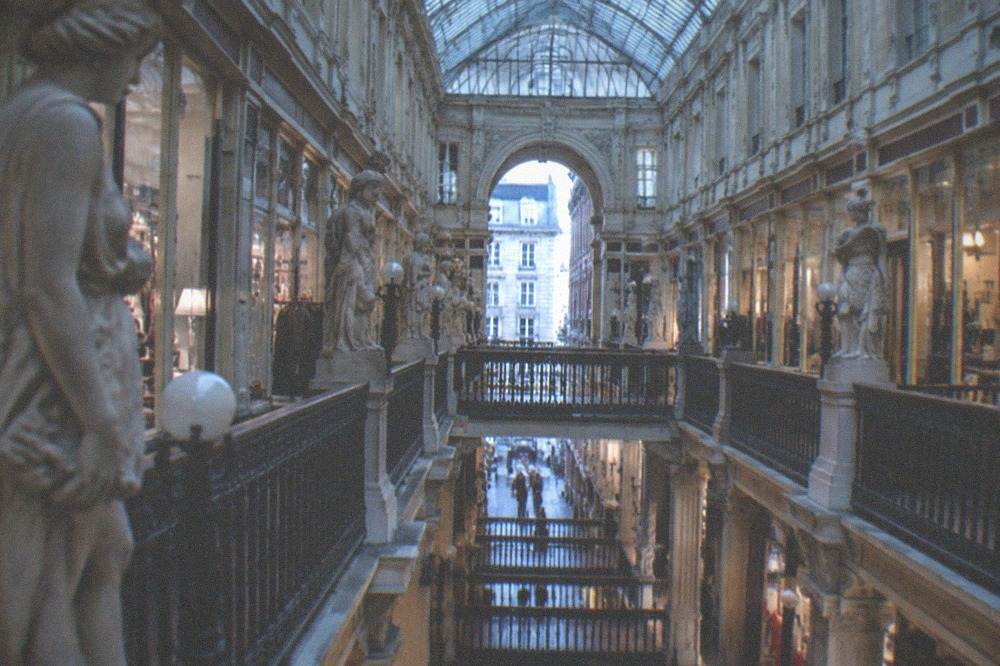
The Passage Pommeraye sits in the Graslin quarter of central Nantes, France, within comfortable walking distance of Place Royale, the Théâtre Graslin and the Bouffay old town. Nantes's Naolib network runs trams, buses and the Navibus river shuttle, a single one-hour ticket costs 1.80 euro, and the entire network is free for everyone from Saturday midnight to Sunday 23:59.
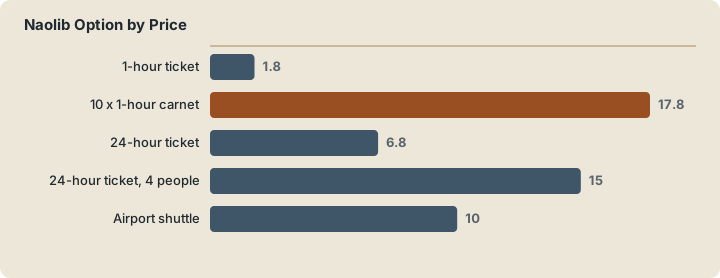
For a city of its size, Nantes is unusually easy to move around. The tram network is one of the finest in France, and the Graslin area is served by stops a short walk from the arcade. The single one-hour Naolib ticket at 1.80 euro covers trams, buses and the Navibus river crossings, and a carnet of ten costs 17.80 euro. A 24-hour ticket is 6.80 euro, and a 24-hour ticket for four people travelling together is 15 euro, which is often the better arithmetic for families. The full index of guides sits on Nantes Travel Guide.
| Naolib Option | Price | What It Covers |
|---|---|---|
| 1-hour ticket | 1.80 euro | Any tram, bus or Navibus within the network |
| 10 x 1-hour carnet | 17.80 euro | Ten single journeys |
| 24-hour ticket | 6.80 euro | Unlimited network travel for 24 hours |
| 24-hour ticket, 4 people | 15 euro | Group travel for up to four |
| Weekend travel | Free | Saturdays 00:00 to Sundays 23:59, everyone |
| Airport shuttle | 10 euro | Always paid, excluded from weekend free travel |
Two cautions apply. The airport shuttle is excluded from the free weekend network travel and always costs 10 euro, a detail that catches out plenty of arriving visitors who have read that weekends are free. And if you are driving in, be aware that the city centre is largely given over to pedestrians and limited-traffic zones, especially around Bouffay and the cathedral, so park at the periphery or at a park-and-ride and use the tram for the last leg.
Once in the Graslin quarter, everything is on foot. The passage's position between the Place Royale end of the district and the Théatre Graslin side makes it the natural hinge of a walking loop that can take in the theatre, the arcade, Place Royale and then descend toward the Loire, all without needing transport at all.
What Is Near The Passage Pommeraye In Nantes?
Within a short walk of the Passage Pommeraye in Nantes, France, you can reach Place Royale, the Théâtre Graslin, the historic brasserie La Cigale, the Musée d'Arts de Nantes, the Bouffay old town and the Château des ducs de Bretagne, making the arcade the natural midpoint of a day in the city centre. Entry to the passage itself is free, and several nearby museums charge 4 to 9 euro.
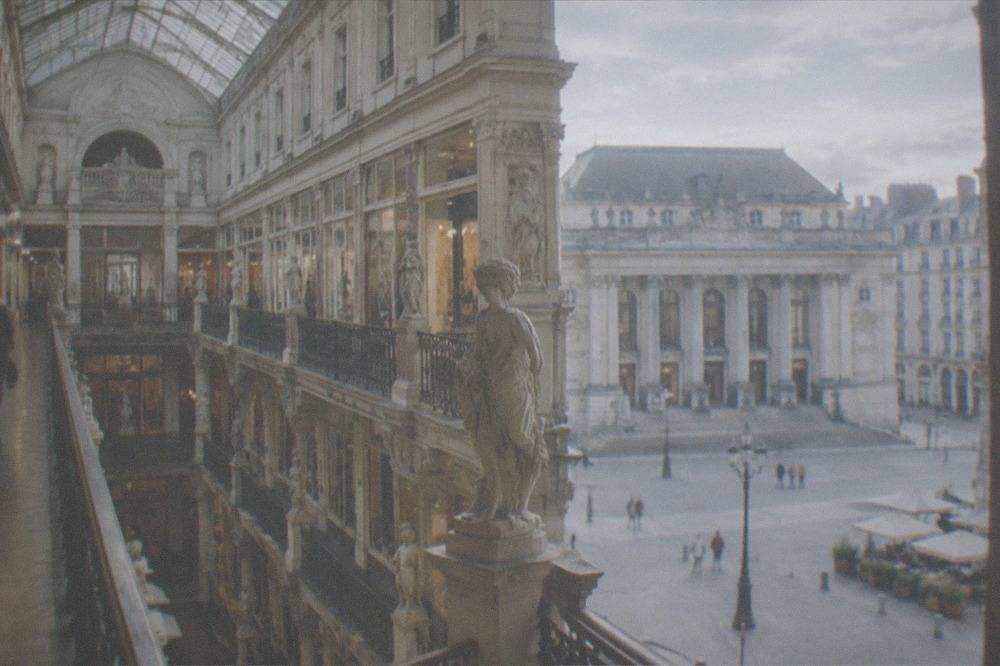
The Graslin quarter is the densest concentration of elegance in the city, and the passage sits at its commercial heart. Place Royale, with its fountain and regularised stone facades, is the formal centrepiece; the Théâtre Graslin anchors the cultural end of the district; and La Cigale, the celebrated historic brasserie, holds down the corner where the city goes to eat and be seen. All three are within a couple of minutes of the arcade's exits.
| Nearby Attraction | Entry Cost | Closures To Know |
|---|---|---|
| Château des ducs de Bretagne, museum | 9 euro full, 5 euro reduced | Closed Mondays |
| Musée d'Arts de Nantes | 9 euro full, 4 euro reduced | Closed Tuesdays, late on Thursdays |
| Musée Jules Verne | 4 euro full, 1.50 euro reduced | Closed Tuesdays |
| Musée Dobrée | 9 euro full, 6 euro reduced | Closed Mondays and Tuesdays |
| Planétarium | 7 euro full, 3 euro reduced | Sessions daily |
| Mémorial de l'abolition de l'esclavage | Free | Check hours, closes during Loire floods |
| Cathédrale Saint-Pierre-et-Saint-Paul | Free | Partially reopened, works to 2028 |
The pattern to notice is the alternating closure days. Monday knocks out the château museum, Tuesday knocks out the Musée d'Arts and the Musée Jules Verne, and this is why a Monday visitor's plan should lean on the Château's free courtyard and ramparts or the cathedral while scheduling museums for another day. The cathedral itself partially reopened on 27 September 2025 after the 2020 fire, with full reopening planned for 2028, so it is again a legitimate stop, scaffolding and all.
For a fuller sweep of the centre's sights, the complete things-to-do-in-Nantes page lists everything in one place, and the Jardin des Plantes makes a calm green counterpart to a morning of commerce and stone.
What Local Food Should You Try Around Passage Pommeraye?
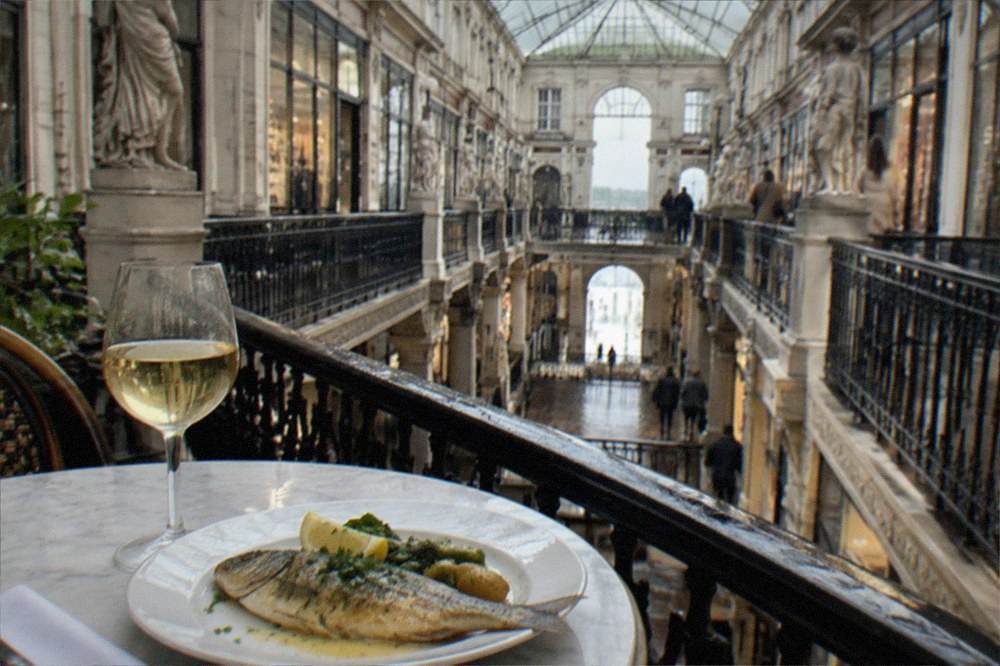
Around the Passage Pommeraye in Nantes, France, the local things to eat and drink are beurre blanc, the emulsified Muscadet-and-butter sauce invented in the region, LU Petit Beurre biscuits first produced in 1886, gâteau nantais, an almond-and-rum cake dating to around 1820, berlingot nantais candies, and a glass of Muscadet, the Melon de Bourgogne white wine of the surrounding vineyards. All sit within the local food tradition the Graslin quarter celebrates.
The beurre blanc story is the region's proudest culinary claim: a reduction of shallots and white wine, classically Muscadet, finished by whisking in cold butter to make a silken sauce traditionally served with river fish. Nantes restaurateurs have been pursuing protected traditional specialty status for it, a campaign reported in 2025, precisely because they consider the recipe theirs. Any decent restaurant near the Graslin quarter will serve it, and ordering a Loire fish with beurre blanc in the city of its birth is the correct move.
| Local Speciality | What It Is | Local Pedigree |
|---|---|---|
| Beurre blanc | Shallot, Muscadet and butter emulsion for fish | A Nantes-region creation, restaurateurs seek protected status |
| Petit Beurre LU | The scallop-edged butter biscuit | Created 1886 by Nantes firm Lefèvre-Utile |
| Gâteau nantais | Almond and rum quatre-quarts cake | Origins around 1820, now a patisserie staple |
| Berlingot nantais | Tetrahedral hard candy, seven flavours | Late 19th-century Nantes confectionery tradition |
| Muscadet | Dry white from Melon de Bourgogne | The vineyards begin at the city's edge |
For a sit-down experience near the arcade, La Cigale is the historic brasserie of the district, an institution with a gilded interior that draws as many visitors for the room as for the food. For a market experience, the Marché de Talensac is the city's principal covered market, open Tuesday to Friday from 8:00 to 13:00 and weekends to 13:30, closed Mondays except public holidays.
Wine deserves its own paragraph. The Muscadet vineyards run out from Nantes along the Loire, and the Maison des vins de la region sits at Vallet, the heart of the appellation. The 2026 harvest began with a ban declared on 11 August, a record eight days earlier than the previous mark, because of heat and drought, and producers report lower yields. None of that changes the pleasure of a chilled glass in the arcade quarter, but it does tell you the wine in your glass in 2027 comes from an unusual vintage.
If you want to go further than a glass, a half-day vineyard tour by van from the city reaches the Muscadet estates directly.
When Is The Best Time Of Year To Visit The Passage Pommeraye?
The Passage Pommeraye can be visited in any season in Nantes, France, because it is covered and free, but the sweet spots are the shoulder months of April to May and September to October, when temperatures sit around 17 to 22 degrees and city crowds thin. Mid-June to mid-September is the warm window, with July and August averaging 25 degrees, and December brings the Christmas market season to the adjacent squares.
The honest weather picture is oceanic, not Mediterranean. Météo-France normals for the Nantes-Bouguenais station give mean maximums from 9.3 degrees in January to 25.4 degrees in August, with 819.5 mm of rain spread over the year and the wettest months in late autumn and winter. The arcade, being roofed, is the one central Nantes attraction whose visitor experience is completely immune to that: a rainy Tuesday in November dims nothing inside, and in some ways the roof light is at its most atmospheric when the streets outside are grey.
| Season | Typical Conditions | Why It Suits The Passage |
|---|---|---|
| Spring, April-May | Mean max 16-20 degrees, moderate rain | Dry shortcut between Graslin and Place Royale |
| Summer, July-August | Mean max 25 degrees, sunniest months | Cool arcade between outdoor sights |
| Autumn, September-October | Mean max 17-22 degrees, rain rising | Shoulder-season quiet, shopfronts unhurried |
| Winter, December | Mean max around 10 degrees, wettest stretch | Christmas market on the adjacent squares |
December deserves a specific mention. The Nantes Christmas market, the Marché de Noël, runs from 19 November to 27 December 2026 on Place Royale and Place du Commerce, which puts its chalets and lights directly at the arcade's two ends. The combined effect, a lit market outside and a glazed nineteenth-century gallery inside, is one of the city's best winter scenes.
One seasonal caveat for the wider city plan: the record high for Nantes is now 42.2 degrees, set on 24 June 2026, part of a June heatwave that broke the previous record of 42.0 from 2022. Summer visits are warm rather than dangerous, but a mid-afternoon arcade stroll in un-air-conditioned 1843 architecture is best balanced against parks and riverside time.
What Tours Include Passage Pommeraye In Nantes?
Guided tours that include the Passage Pommeraye in Nantes, France, are mainly walking tours of the city centre, since the arcade lies on the natural route between Place Royale, the Théâtre Graslin and the Bouffay old town. Options range from a one-hour local-led walk to longer private custom tours of two to eight hours, alongside self-guided app tours with 35 stops and themed experiences across the city's product roster.
The arcade appears on city walking tours for the same reason it appears on every visitor's route: it is unmissable, free and photogenic, and any competent guide routing the Graslin quarter will bring a group through it. A one-hour explore-with-a-local walk is the lightest option, covering the headline sights at pace, while a private custom walking tour allows the route, pace and depth to be tailored, from a quick orientation to a full-day immersion in the city's history.
For travellers who prefer to move at their own tempo, a self-guided app tour of the city with 35 stops removes the guide altogether and works well in a compact centre like Nantes. Beyond walking, the roster branches out: the Jules Verne outdoor escape game threads the city's most famous literary son into a puzzle route, and the sensory Muscadet tasting experience covers the wine side of the region indoors.
The pairing that suits the passage best, though, is the vineyard half-day. Nantes is unusual among French cities in having a major appellation begin essentially at the tram stops, so a morning in the arcade and old town converts naturally into an afternoon among the Muscadet cellars, and back again in time for dinner in the Graslin quarter.
However you book, the practical advice holds: the arcade itself needs no ticket, no reservation and no timing beyond its opening hours, so any tour is a layer of interpretation on top of something you can also simply walk into, free, on any day of the week.
Common Questions About The Passage Pommeraye
Is the Passage Pommeraye free to enter?
Yes. Entry to the gallery is free; it is a public covered passage, not a ticketed monument. You only pay for anything you buy in the shops inside.
What are the Passage Pommeraye opening hours?
The published hours are Monday to Saturday from 8:00 to 20:00 and Sunday from 9:00 to 20:00. Individual shops inside may open shorter hours than the gallery itself.
When was the Passage Pommeraye built?
The passage opened in 1843. Le Voyage à Nantes, the city's tourism organisation, describes the arcade as unchanged since its construction.
Where is the Passage Pommeraye located?
The arcade is in the Graslin quarter of central Nantes, France, linking the area toward Place Royale and the Théâtre Graslin across three floors that step down a slope.
How long does a visit to the Passage Pommeraye take?
Walking through takes only a few minutes, though many people spend 30 to 60 minutes browsing, photographing the glass roof and staircase, and pausing in a café. As part of a Graslin walking loop, budget an hour comfortably.
Is the Passage Pommeraye worth visiting?
Yes. It is widely regarded as one of the most beautiful covered passages in France, entry is free, it sits directly on the walking route between the city's main central sights, and its 1843 interior is intact.
The Passage Pommeraye rewards exactly the kind of unhurried visit its 1843 builders intended: come for the shortcut, stay for the glass roof, the staircase, and the pleasure of shopping under daylight in the middle of a block.