Is Nantes Expensive
Nantes is one of the cheaper major cities in France for visitors. A one-hour tram ticket costs 1.80 euro, the cathedral and most memorials are free, and weekend public transport charges nothing at all. This guide breaks down what a trip to the Loire-Atlantique capital actually costs in 2026.
Short answer
Nantes is not expensive by French big-city standards. Public transport is cheap and free on weekends, entry to the cathedral and the slavery memorial costs nothing, museum tickets are inexpensive, and an inexpensive restaurant meal is easy to find. Paris is noticeably dearer on every one of those lines.
Nantes, in the Loire-Atlantique department of the Pays de la Loire region in western France, has a reputation as one of the country's most liveable cities, and liveability tends to travel with reasonable prices. The city sits on the Loire and Erdre rivers, roughly two hours from Paris by train, and it rewards travellers who plan around its quirks: free weekend trams, a museum pass that costs less than two single admissions, and a food culture rooted in the Talensac market rather than tourist-trap dining rooms. This guide sets out what a visit actually costs in 2026, figure by figure, using the current tariffs published by Naolib, the city's museums and its tourist office.
Is Nantes Expensive To Visit Compared To Other French Cities?
Nantes sits firmly on the affordable end of France's large cities. Local transport costs 1.80 euro per hour by tram or bus, and on Saturdays and Sundays the entire Naolib network is free for everyone, a policy in place since 2021. Major museums charge modest admission fees, the cathedral and the slavery memorial cost nothing, and an inexpensive restaurant meal remains easy on the wallet. Comparable lines in Paris run noticeably higher across the board.
The comparison that matters most is with Paris, because visitors arrive from there or benchmark against it. A one-hour Nantes transport ticket at 1.80 euro, a 9 euro museum ticket and a 15 euro casual meal describe a city priced for residents as much as for tourists. Add the free weekend transport and the first-Sunday museum freebies (September to June, excluding July and August) and a careful two-day visit can absorb almost nothing in fixed costs beyond food and a bed.
The weather also plays into the budget. Météo-France's 1991-2020 normals for the Nantes-Bouguenais station give a mean maximum of 25.4 C in August and 9.3 C in January, with 819.5 mm of rain spread across the year. This is temperate oceanic climate, not Mediterranean, so the outdoor city, the riverside walks and the green line cost nothing for many months of the year, but packing a rain layer matters in every season. For more detail, see the Nantes weather month-by-month guide.
What Does A Trip To Nantes Cost Per Day?
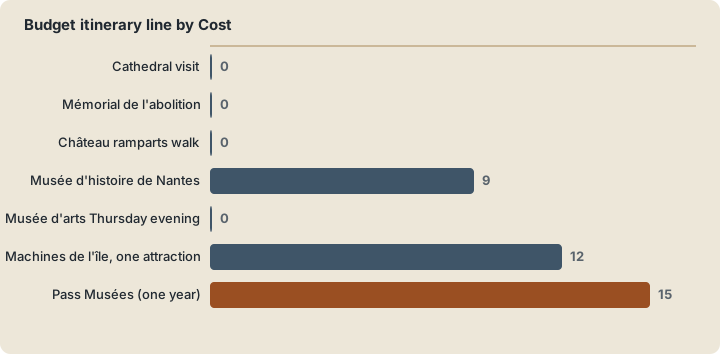
A budget day in Nantes can run on transport of 0 to 6.80 euro, one paid museum at 9 euro or less, and food bought from markets and bakeries rather than sit-down dinners. The genuinely fixed costs are few: only the Machines de l'île attractions, at 12 euro full price each, push a single activity into double figures. Everything else on a standard itinerary is free or under 10 euro.
The city's headline sights split cleanly by price band. The cathedral, which partially reopened on 27 September 2025 after the 2020 fire with full restoration targeted for 2028, is free. The Château des ducs de Bretagne courtyard, ramparts and moat garden are free; only the history museum inside costs 9 euro. The Mémorial de l'abolition de l'esclavage is free. The Jardin des Plantes is free.
| Sight | Full price | Free conditions |
|---|---|---|
| Nantes Cathedral | Free | Always free; open since 27 Sept 2025 |
| Château courtyard, ramparts, moat garden | Free | Daily 8:30-19:00 (to 20:00 Jul-Aug) |
| Musée d'histoire de Nantes (in the château) | 9 EUR, 5 EUR reduced | Under 18s; first Sunday Sept-June |
| Musée d'arts de Nantes | 9 EUR, 4 EUR reduced | Under 18s; Thursdays 19:00-21:00 |
| Musée Jules Verne | 4 EUR, 1.50 EUR reduced | First Sunday Sept-June |
| Machines de l'île (each attraction) | 12 EUR full, 8 EUR ages 4-12 | Under 4s |
| Mémorial de l'abolition de l'esclavage | Free | Daily, seasonal hours |
One planning note that catches visitors out: the Muséum d'histoire naturelle has been closed for major works since November 2025 and will not reopen until 2029, so it belongs on no itinerary and no budget for now. The Planétarium, at 7 euro full price, is the alternative rainy-day stop. If the question is whether the city as a whole justifies the spend, the is Nantes worth visiting guide works through that in detail.
For travellers who would rather pay once and be done with orientation, the walking products below are the budget-friendly picks: an app-led self-guided tour, an all-inclusive food tour and a city game that doubles as a history walk.
How Much Is Public Transport In Nantes?
A one-hour Naolib ticket covering trams, buses, the Navibus river shuttles and TER trains inside the métropole costs 1.80 euro, a 24-hour ticket costs 6.80 euro, and a 24-hour ticket for four people travelling together costs 15 euro. On Saturdays from 00:00 to Sundays at 23:59 the whole network, except the airport shuttle, is free for absolutely everyone, resident or visitor.
Naolib's tariff page gives the working numbers. A carnet of ten one-hour tickets sells for 17.80 euro. The Navibus lines across the Loire and along the Erdre, including the N1 to Trentemoult and the N2 to the Hangar à Bananes, run on ordinary Naolib tickets, which makes a river crossing one of the cheapest sightseeing moves in France.
| Naolib ticket | Price | Coverage |
|---|---|---|
| 1 hour | 1.80 EUR | Tram, bus, Navibus, TER in métropole |
| 10 x 1 hour | 17.80 EUR | Same, pre-paid carnet |
| 24 hours | 6.80 EUR | Whole network, one person |
| 24 hours, 4 people | 15 EUR | Group travelling together |
| Weekend | Free | Sat 00:00 to Sun 23:59, everyone |
| Airport shuttle (one way) | 10 EUR | Excluded from weekend free travel |
The airport shuttle deserves its own sentence because it is the one tariff that contradicts the general generosity. It costs 10 euro each way, is bought on board by bank card, and never becomes free, even on a free-travel weekend. It runs every 20 minutes from April to October and every 30 minutes from November to March, taking roughly 20 minutes between the station and the airport, with the city stop at the Gare routière quai A since 30 March 2026, as reported by the airport's access page. The full picture, including the P+R car parks at 4.50 euro for 24 hours of parking plus transport for up to five people, is in the getting around Nantes guide.
Getting to Nantes in the first place is its own cost question, and the Paris to Nantes train guide and the flights to Nantes guide cover it in detail.
Where Are The Free Things To Do In Nantes?
Nantes gives away an unusual share of its best material for free: the cathedral, the slavery memorial, the Jardin des Plantes, the Île de Versailles Japanese garden, the Passage Pommeraye and the green line art trail all cost nothing. The Voyage à Nantes summer trail, which ran 4 July to 6 September 2026 for its 15th edition, lays temporary artworks along roughly 20 km of painted green line with no ticket at all.
The free list is long enough to build a whole weekend on. Beyond the headline names, the Château's ramparts walk is free daily, the Loire riverbanks on the Île de Nantes are free, and the Butte Sainte-Anne viewpoint over the river in Chantenay costs only the bus fare to get there, or nothing at all on a Saturday. The free things to do in Nantes guide carries the full inventory.
| Free sight | What it is | Practical note |
|---|---|---|
| Cathedral Saint-Pierre-et-Saint-Paul | Gothic interior, reopened 27 Sept 2025 | Facade scaffolding until 2028 |
| Mémorial de l'abolition de l'esclavage | Underground memorial on the quay | 9:00-18:00 (to 20:00 in summer) |
| Jardin des Plantes | One of France's notable botanical gardens | Seasonal closing hours |
| Île de Versailles | Japanese garden on the Erdre | Seasonal closing hours |
| Passage Pommeraye | 1843 shopping arcade, three floors | Free to walk through |
| Green line trail | Painted route linking city artworks | About 20 km, self-guided |
| Château ramparts and courtyards | Renaissance fortress walk | Daily 8:30-19:00 |
The trick with the paid headline sights is timing. The Machines de l'île costs 12 euro per attraction for an adult, but a day package covering two attractions is 20 euro and three is 29 euro, with a 15 percent family discount for groups of five (maximum two adults) valid the same day. Two attractions plus a walk among the Heron Tree prototype branch, which every ticket includes, is a full afternoon on the Île de Nantes.
For visitors who prefer to move at their own pace and skip guide fees entirely, the app-based option below is the cheapest paid way to get oriented:
Is Food Expensive In Nantes?
Eating in Nantes runs cheaper than in Paris or Lyon. Aggregator cost-of-living data updated in 2026 puts an inexpensive restaurant meal at the budget end, a three-course dinner for two at a mid-range restaurant at a middling level, a domestic draft beer and a cappuccino at the cheap end of the scale. Market food from Talensac and the city's bakeries undercuts all of that comfortably.
The budget eating strategy in Nantes is simple: shop where the city shops. The Marché de Talensac, open Tuesday to Friday from 8:00 to 13:00 and Saturday to Sunday from 8:00 to 13:30, closed Mondays, is the historic covered market where locals buy Muscadet-region produce, seafood from the Atlantic coast and cheeses from the surrounding Pays de la Loire. The Nantes food guide maps the regional specialities, from beurre blanc to gâteau nantais, and the best restaurants in Nantes guide covers where they are worth paying a kitchen to cook.
| Eating option | Typical 2026 cost | Budget note |
|---|---|---|
| Inexpensive restaurant meal | ~15 EUR (range 12-23 EUR) | Aggregator data, mid-2026 |
| Mid-range dinner for two, three courses | ~varies by venue (range 35-varies by venue) | No drinks included |
| Draft domestic beer | ~7 EUR | Per pint |
| Cappuccino | ~varies by venue | Café prices |
| Soft drink | ~varies by venue | Café prices |
| Market lunch from Talensac | Cheaper than restaurant meals | Stalls close by early afternoon |
Two local products cost almost nothing to try. LU's Véritable Petit Beurre biscuit, invented in Nantes in 1886, is stocked in every supermarket in France, and the berlingot nantais sweet survives at confiseries in the city. Neither needs a tour, a booking or a queue. The one food splurge that earns its price for many visitors is a guided tasting, because Muscadet, the local Melon de Bourgogne white, is difficult to read without help; the 2026 harvest began on 11 August, a record-early ban, with lower yields reported by producers. Other pages covering the same trip are gathered on Nantes Travel Guide.

Do The Nantes Passes Save Money?
The Pass Nantes, priced from 30 euro for 24 hours to 75 euro for seven days at full rate as of 1 April 2026, pays off only for packed itineraries. It bundles unlimited transport, one airport shuttle return, a TER return to Clisson and one entry per partner site, including the château museum and two Machines attractions. The Grand Éléphant ride is excluded, which is the detail most buyers miss.
The arithmetic is straightforward. A 48-hour pass at 40 euro breaks even against roughly a museum a day, transport daily tickets and a river shuttle or bike rental. Against a weekend visit with free transport, it almost never pays, because the transport component, the single biggest chunk of the pass's value on weekdays, drops to zero on Saturday and Sunday. The full tariff set and inclusions are worked through in the Pass Nantes guide.
| Pass Nantes (from 1 April 2026) | Full | Reduced | Family |
|---|---|---|---|
| 24 hours | 30 EUR | 20 EUR | 80 EUR |
| 48 hours | 40 EUR | 26 EUR | 106 EUR |
| 72 hours | 49 EUR | 31 EUR | 129 EUR |
| 7 days | 75 EUR | 45 EUR | 195 EUR |
The reduced rate covers children aged 4 to 17, students under 26 and disability card holders, and the family rate covers two adults and two children with the second child's pass free. Under-4s need no pass at all.
The other pass, and the better deal for anyone staying longer than a weekend, is the Pass Musées at 15 euro for a year of unlimited entry to the Musée d'arts, the château's Musée d'histoire, the Musée Jules Verne and the Chronographe in Rezé. Two 9 euro museum visits already cover it. It does not include the Muséum d'histoire naturelle, which is closed for works until 2029 anyway.
How Much Does Accommodation Cost In Nantes?
No official nightly hotel rate for Nantes appears in any verified source for this site, so this page quotes none. The measurable accommodation cost is the tourist tax, reported by Nantes Métropole's 2026 schedule at 2.86 euro per person per night in a 4-star hotel, 1.87 euro in a 3-star and 1.10 euro in a 2-star, with unclassified rentals charged at 5.5 percent of the nightly price, capped at 5.39 euro.
That tax is small but worth budgeting, because it applies per person, per night, and is collected by the host. A family of four staying five nights in a 3-star property adds a modest but real amount to the bill in tax alone, on top of whatever the room rate is.
The location decision matters more than the star rating for total spend, because transport in Nantes is so cheap that staying one or two tram stops out of the centre costs little in time and saves real money. The where to stay in Nantes guide works through the districts: Bouffay for the historic core, Graslin and Commerce for the shopping heart, the Île de Nantes for the modern side, and Trentemoult across the river for a village alternative reached by Navibus.
One genuinely new budget option opened on 12 January 2026: the Eklo hotel on the Île de Nantes, an eco-concept property with 86 rooms including dorms, adding 273 beds to the city's low-cost supply. It sits on boulevard de la Prairie-au-Duc, within walking distance of the Machines de l'île.
When Is The Cheapest Time To Visit Nantes?
The cheapest months to visit Nantes are November through March, excluding the Christmas market period from 19 November to 27 December, when hotel demand rises. The trade-offs are real: December is the wettest month at 101 mm of rain on the 1991-2020 normals, January averages a 9.3 C mean maximum, and the Machines site closes annually in January. April, May, September and October split the difference at lower crowd levels.
The shoulder logic in Nantes is unusually kind to budgets. September still averages a 22.4 C mean maximum with 59.5 mm of rain, the summer artworks from the Voyage à Nantes trail sometimes extend into autumn, and the first-Sunday museum free days (September to June) are running again after the August break. October's 88.8 mm of rain is the price of the quietest streets of the autumn.
| Month | Mean max C | Rain mm | Budget read |
|---|---|---|---|
| January | 9.3 | 87.9 | Cheapest stays; Machines closed annually |
| April | 16.2 | 58.3 | Shoulder sweet spot |
| July | 25.1 | 44.2 | Peak season, driest midsummer month |
| September | 22.4 | 59.5 | Post-summer quiet, warm |
| December | 9.8 | 101.0 | Wettest month; Christmas market pulls demand |
Summer visitors should also weigh a 2026 lesson: the June heatwave set a new station record of 42.2 C on 24 June 2026, and 2026 has already logged a record count of days at or above 30 C. Heat does not raise prices directly, but it moves the value of what is free: garden and riverside time shrinks in a heatwave, while the free museums and the Passage Pommeraye, an 1843 arcade that happens to be air-cooled by its marble, carry more of the day. The best time to visit Nantes guide takes the question month by month.
Are The Museums And Attractions Worth Their Prices?
Every major paid sight in Nantes charges 12 euro or less at full price, and several of the best are free. The Musée d'arts at 9 euro, the château's history museum at 9 euro, the Musée Jules Verne at 4 euro and the Machines at 12 euro per attraction are all in the range a visitor would pay for a cinema ticket and a drink in any French city. The 15 euro Pass Musées beats them all for a longer stay.
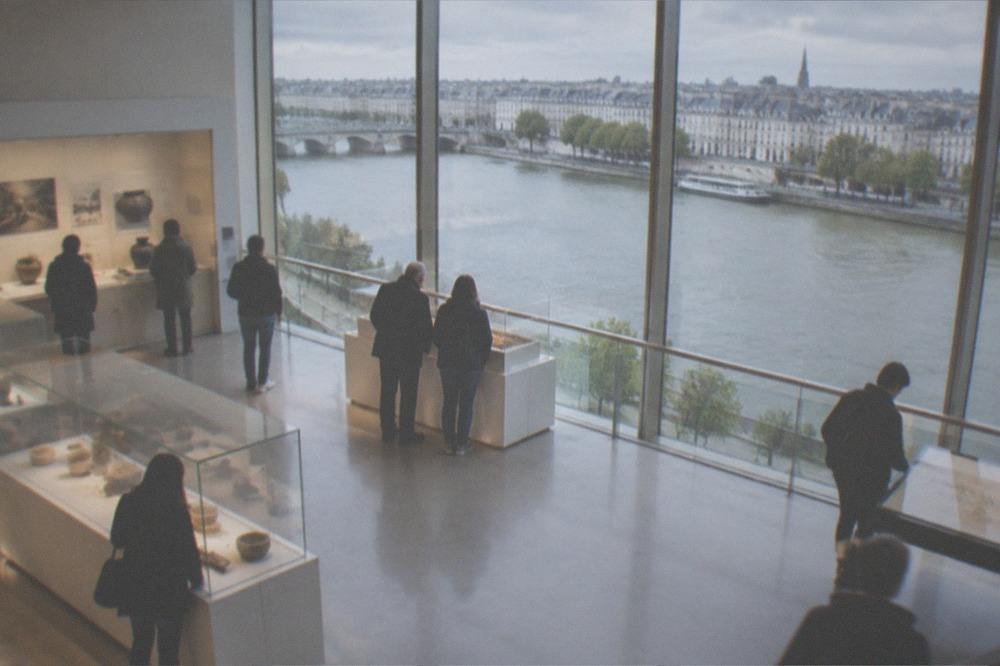
The château museum deserves a specific mention because it is the one sight that prices its subject honestly. Its permanent collection of more than 1,150 objects covers the city's whole history, including the slave trade in which Nantes ran 1,714 of at least 4,220 French expeditions, 43 percent of the French total, before withdrawing in 1830. That history, and the free Mémorial on the quay, cost a combined 9 euro or nothing at all depending on the day.
| Budget itinerary line | Cost | Notes |
|---|---|---|
| Cathedral visit | 0 EUR | Free, open daily except Monday |
| Mémorial de l'abolition | 0 EUR | Free, seasonal hours |
| Château ramparts walk | 0 EUR | Free daily |
| Musée d'histoire de Nantes | 9 EUR | Free first Sunday Sept-June |
| Musée d'arts Thursday evening | 0 EUR | Free 19:00-21:00 Thursdays |
| Machines de l'île, one attraction | 12 EUR | Day packages 20/29 EUR |
| Pass Musées (one year) | 15 EUR | Four museums, unlimited |
The museums in Nantes guide carries the full current status of every collection, including the Dobrée at 9 euro, reopened in May 2024 after thirteen years of closure, and the Planétarium at 7 euro.
For travellers who want more than self-guided wandering but not a private guide's fee, the three products below are the value picks among the city's bookable experiences:
The city-game format in particular turns a history walk into something a group can share, which is why it earns a solo mention here:
Can You Do Nantes On A Zero-Spend Day?
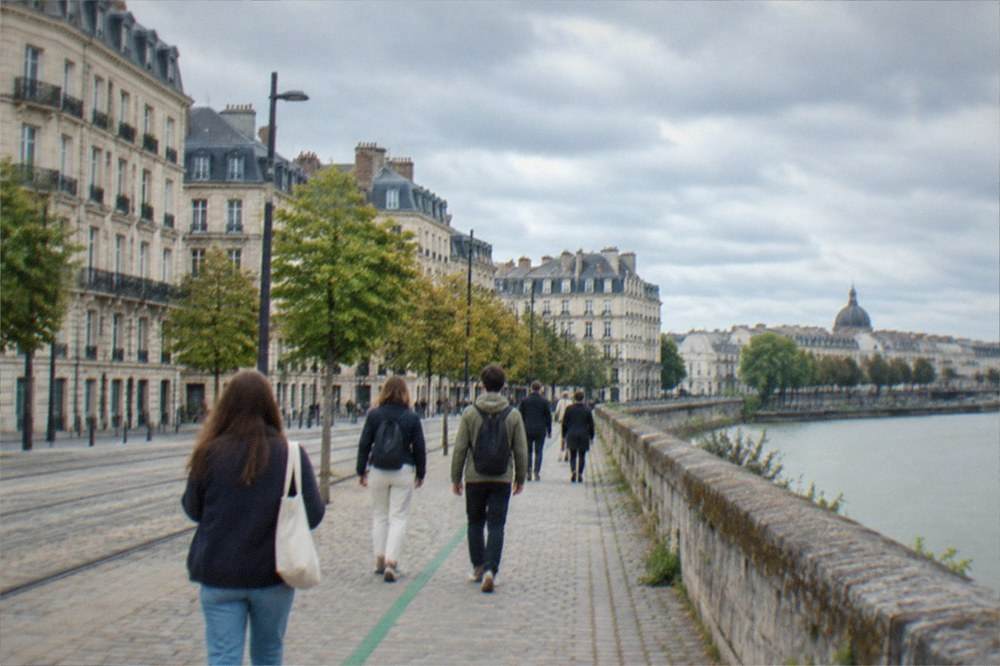
A zero-spend day in Nantes is entirely realistic on a Saturday, when transport is free, because the cathedral, the Mémorial, the Jardin des Plantes, the Île de Versailles, the Passage Pommeraye and the green line trail are all free to enter or walk. Add the free Musée d'arts evening on a Thursday, or a first-Sunday museum in season, and the only unavoidable spend becomes food, which a bakery run can hold to loose change.
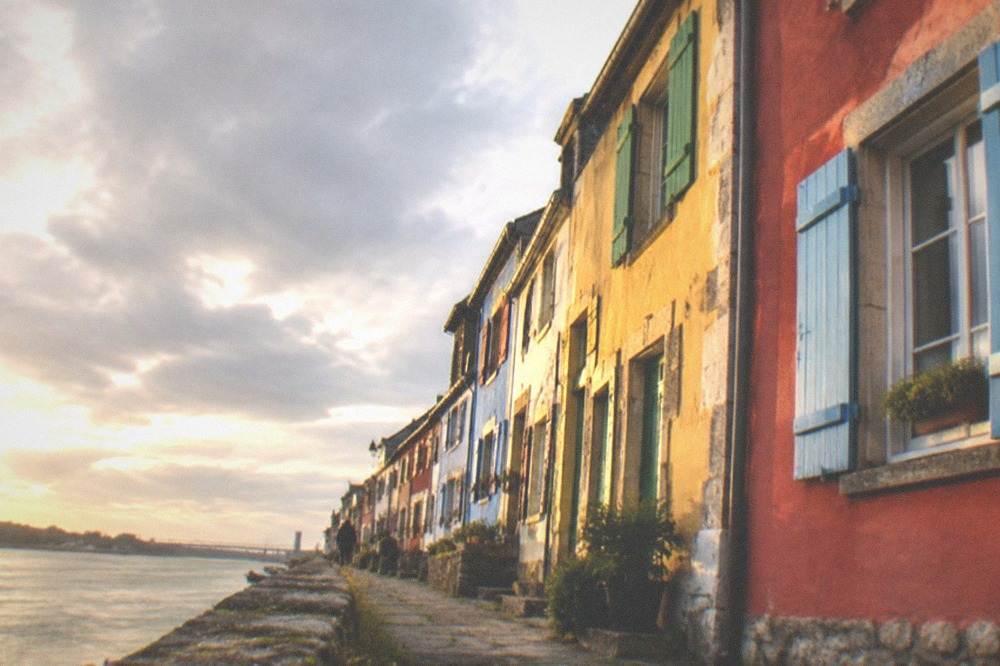
The shape of such a day: start at the cathedral, walk the Bouffay old town to the Château ramparts, follow the green line wherever it leads, cross to the Île de Nantes on foot or by free Navibus, and end on the Trentemoult side of the Loire where the coloured fishermen's houses face the city at sunset. The walk costs nothing and the views cost nothing.
A zero-spend day is not a stunt in Nantes; it is close to the default for residents. That is the honest answer to the question this page targets. The city was European Green Capital in 2013, was called the most liveable city in Europe by Time Magazine in 2004, and its pricing reflects a place built for people who live in it. The history behind that, from the Edict signed by Henri IV in April 1598 to the post-war rebuilding, is traced in the Nantes history guide, and the question of which side of the Brittany border the city sits on, a budget-irrelevant but perennial puzzle, is settled in is Nantes in Brittany?.
Common Questions About Nantes On A Budget
Is Nantes expensive for tourists?
No, not by French big-city standards. Transport is cheap and free on weekends, museums charge modest entry fees, the cathedral and several major sights are free, and inexpensive restaurant meals keep costs low. Paris is dearer on every comparable line.
How much does a tram ticket cost in Nantes?
A one-hour Naolib ticket costs 1.80 euro and covers trams, buses, Navibus river shuttles and TER trains inside the métropole. A 24-hour ticket is 6.80 euro, and a 24-hour ticket for four people travelling together is 15 euro. On Saturdays and Sundays the network is free for everyone.
Is public transport free in Nantes on weekends?
Yes. Naolib transport is free from 00:00 on Saturday to 23:59 on Sunday for everyone, including visitors, and this has applied since 2021. The 10 euro airport shuttle is the one exception and always charges.
Is the Nantes CityPass worth buying?
Only for a packed itinerary. The pass covers transport, partner-site entries and extras, but the Grand Éléphant ride is excluded and weekend transport is already free. For stays longer than a weekend, the 15 euro Pass Musées is usually the better buy.
What is free in Nantes?
The cathedral, the Mémorial de l'abolition de l'esclavage, the Jardin des Plantes, the Île de Versailles, the Passage Pommeraye, the Château ramparts and courtyards, the green line trail and the Musée d'arts on Thursday evenings from 19:00 are all free.
How much is a meal in Nantes?
An inexpensive restaurant meal, a mid-range three-course dinner for two without drinks, and a cappuccino all remain affordable, with the dinner for two sitting a step up in price from the everyday options. Market and bakery food from Talensac and neighbourhood boulangeries costs less.
The honest summary: Nantes prices itself like a French regional capital that people actually live in, not like a resort. Plan around the free weekend transport, the first-Sunday museum entries and the Thursday-evening free hours at the Musée d'arts, and the budget question answers itself.