Theatre Graslin
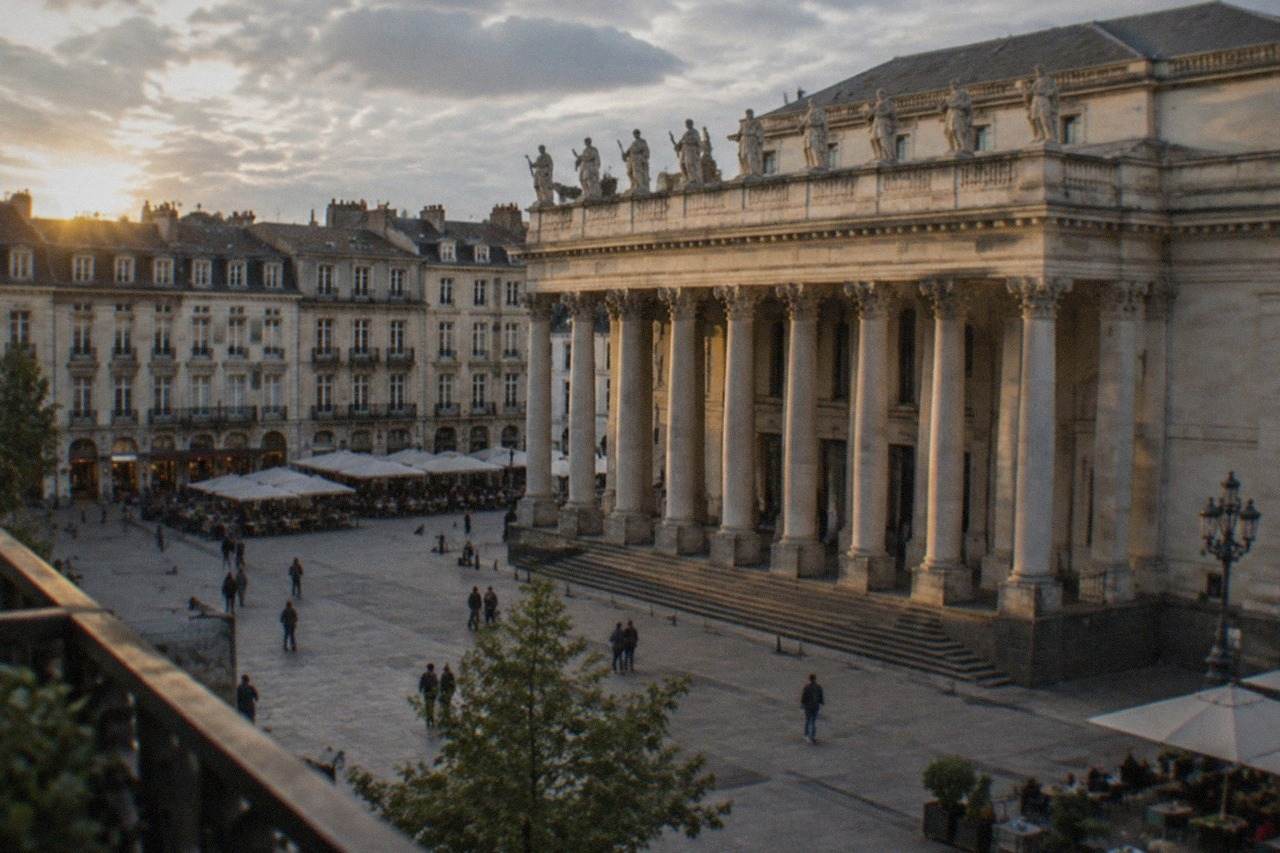
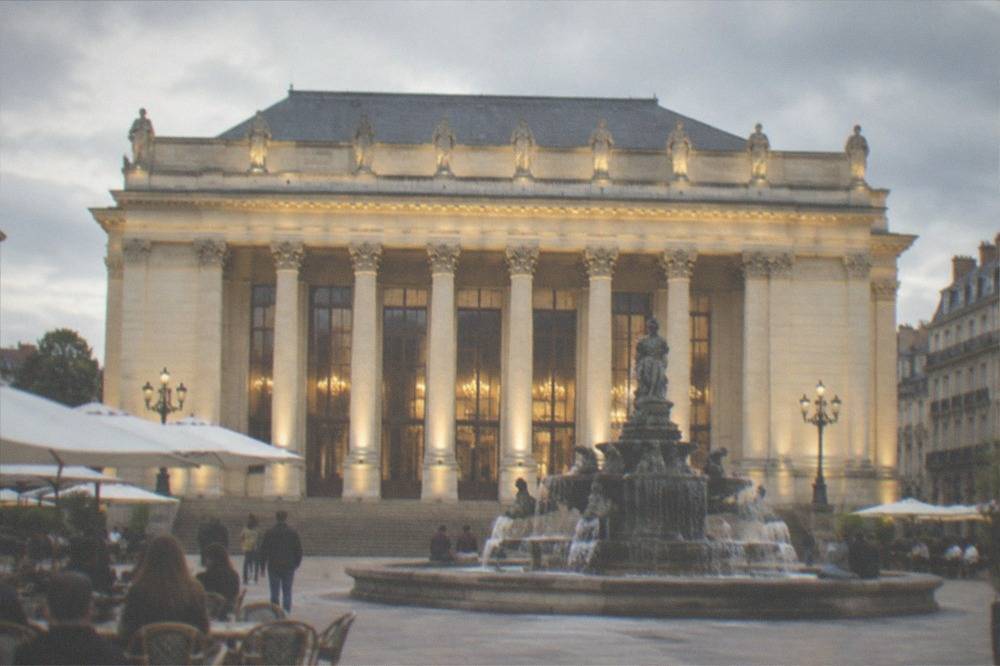
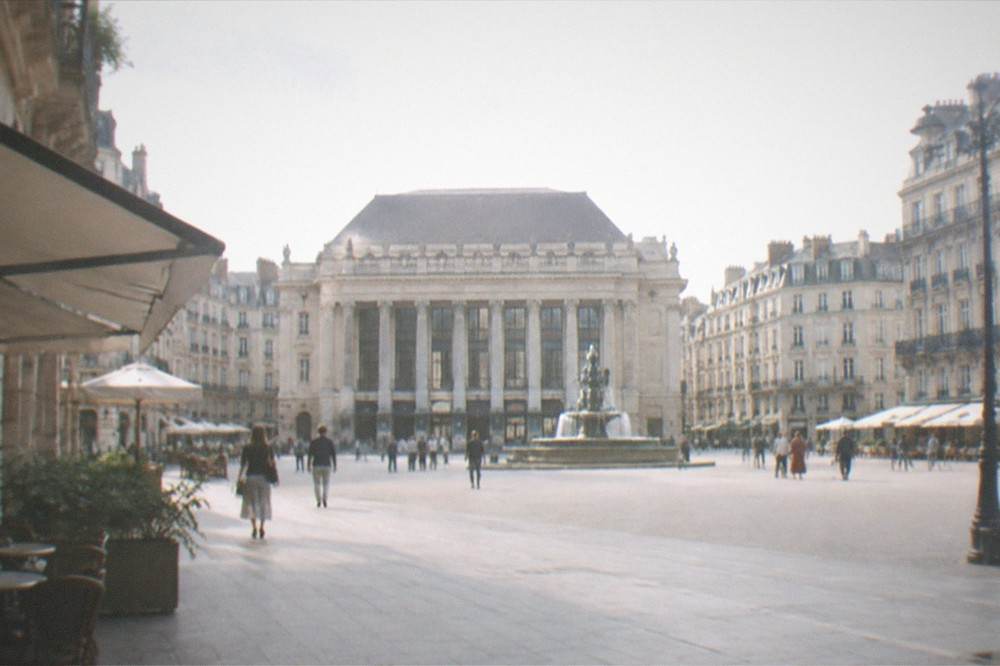
Theatre Graslin is the opera house that closes the view down rue Crebillon in Nantes, in the Loire-Atlantique department of western France, and the square it stands on is one of the most formally composed ensembles of urban design in the Pays de la Loire region.
Short answer
Theatre Graslin is Nantes's opera house, standing on Place Graslin at the heart of the Graslin quarter. The square and its fountain are free to visit at any time, the surrounding streets hold the Passage Pommeraye and some of the city's most famous dining rooms, and the theatre itself hosts performances whose tickets are sold through its own box office.
Theatre Graslin stands on Place Graslin in Nantes, the largest city of the Loire-Atlantique department in the Pays de la Loire region of western France, and it gives its name to the whole quarter around it. This is the city's opera house, a building of columns and stone that anchors one end of a deliberately composed ensemble: a wide square, a fountain, and the streets of the Graslin district running down toward the commerce heart of the city. The theatre is a working venue rather than a museum, so the square itself, the fountain, and the streetscape are what you experience here, and they repay a slow hour at almost any time of day. The surrounding Graslin and Commerce area is one of the two historic cores of central Nantes, and everything in this guide sits within a short walk of it. For the full picture of the city, Nantes Travel Guide covers every quarter, sight and day trip from this one base.
The page below covers what the theatre and its square are, how to reach them using Nantes's tram and bus network, what to see within a few minutes' walk, how performances and ticketing work, where to eat nearby, and how the seasons change the experience. Prices and practical figures for the city's transport, museums and tourist passes come from the official sources gathered on this site's facts file, and anything that is a reported or approximate figure is flagged as such in the text.
What Is Theatre Graslin In Nantes?
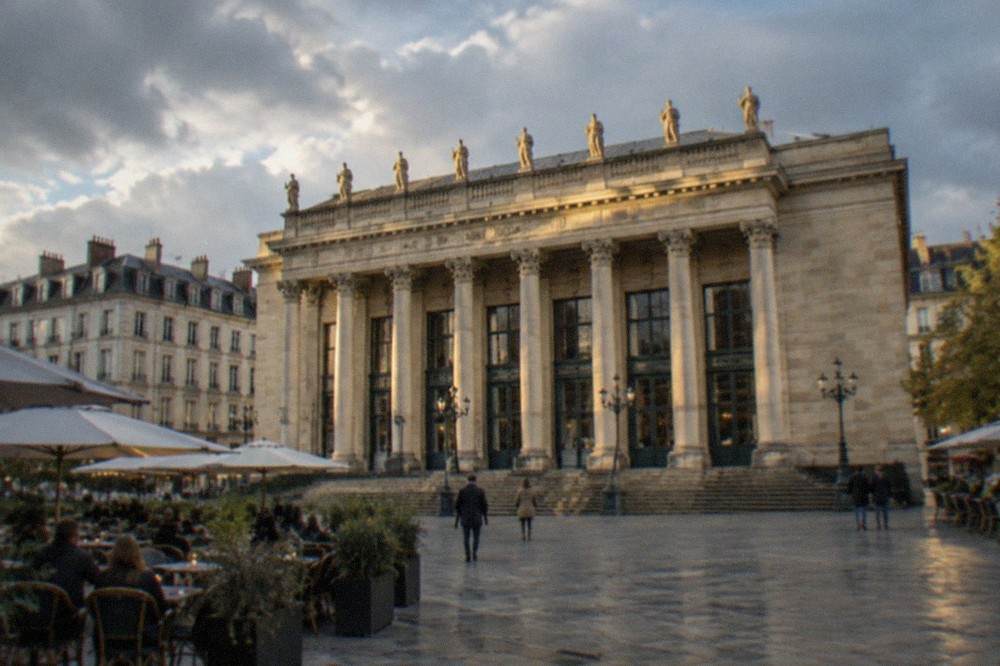
Theatre Graslin is the opera house of Nantes, standing at the head of Place Graslin in the Graslin quarter, a district of theatres, grand staircases and shopping streets laid out west of the medieval centre for developer Jean-Graslin. The theatre presents opera, dance and concerts, and its box office sells tickets directly. The square in front of it, with its fountain, is a public open space, free to walk through at any hour, and it functions as the formal front door to the whole Graslin and Commerce district.
The ensemble works as a piece of city planning because it was designed as one. The quarter takes its name from Jean-Graslin, the developer whose project gave Nantes a new theatre quarter when the medieval streets around the château could no longer host the city's cultural life. The layout that resulted, with the theatre as its focal point and formal squares threaded between straight streets, is still the geometry visitors walk through today. Unlike the Bouffay old town, where streets curve and crowd, the Graslin quarter is built on axes and perspectives: you see buildings at the end of streets, and the theatre is the payoff at the head of the main one.
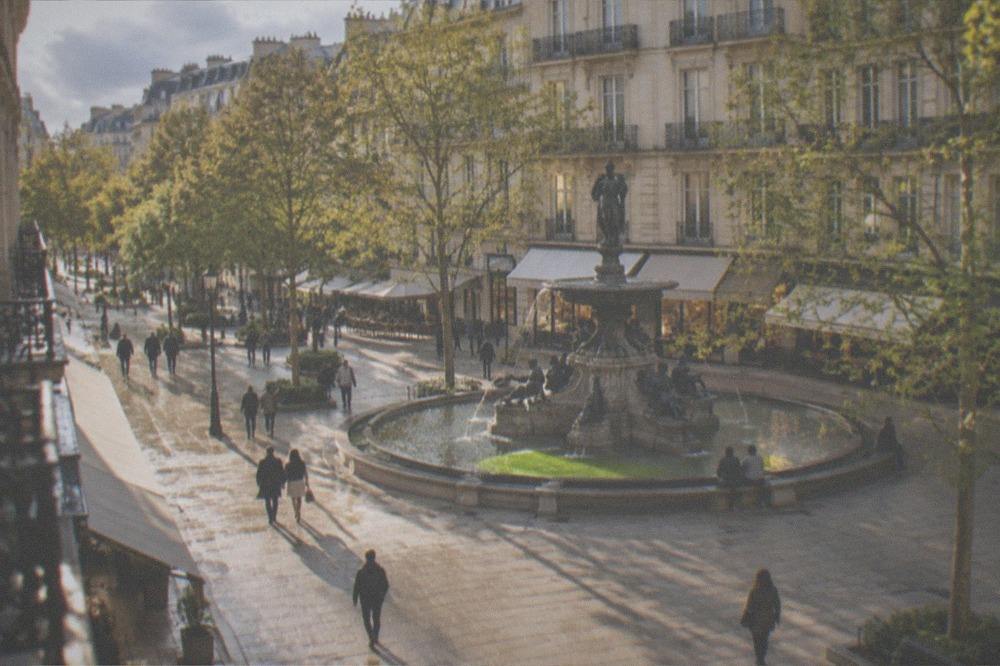
What that means in practice is that Place Graslin is less a destination you arrive at and more a view you walk into. Coming up from rue Crébillon, the shopping street that links the quarter to Place Royale, the theatre facade appears framed by the buildings either side, and the fountain anchors the middle of the square. Coming the other way, from the direction of the Loire, the square is the last grand gesture before the streets narrow toward the river. Photographers get the best of it in the early morning, before the cafe terraces fill, and in the evening when the facade is lit.
The theatre is not the only cultural building in the quarter, but it is the one that gives the district its name and its landmark. For planning purposes, treat Place Graslin as a hub: from it you can reach the Passage Pommeraye in a few minutes on foot, the Cigale district's famous dining rooms around the corner, and the whole chain of museums and sights along the tram lines that pass close by.
Where Is Theatre Graslin And How Do You Get There In Nantes?
Theatre Graslin sits on Place Graslin, at the western edge of central Nantes, roughly five minutes on foot from Place Royale and ten from the Passage Pommeraye. The Naolib network serves the area with its tram and bus lines, a one-hour ticket costs 1.80 EUR, and the whole network is free on Saturdays and Sundays for everyone, from 00:00 Saturday to 23:59 Sunday, with the airport shuttle excluded from that free travel.
The square sits inside the hyper-centre, so walking is genuinely the best approach for anyone staying downtown. From the château and cathedral side of the city, the route runs through the pedestrian streets of the Bouffay quarter and out at Place Royale, from which rue Crébillon climbs gently to the theatre. From the Loire and the Île de Nantes, the approach crosses the river and rises through the Graslin streets. The tram lines along the centre of the city stop within a few minutes' walk of the square, and because the quarter's heart is pedestrianised, the last stretch is always on foot.
For the fare side, the Naolib tariff pages give the figures that matter to a visitor. A single one-hour ticket is 1.80 EUR and covers trams, buses, the Navibus river shuttles and even regional TER trains inside the metropole perimeter. A 24-hour ticket is 6.80 EUR, and a version for four people travelling together is 15 EUR. A carnet of ten one-hour tickets is 17.80 EUR. At the weekend the rules change completely: every Saturday and Sunday, the whole network is free for all passengers, and that has been the case since 2021. The one exception is the airport shuttle, which always costs 10 EUR, valid for one hour on the rest of the network once you are on it. The shuttle's stop moved on 30 March 2026 to the Gare routière at Gare Sud, quai A, according to the airport's own access pages.
| Naolib ticket | Price | What it covers |
|---|---|---|
| 1-hour ticket | 1.80 EUR | Tram, bus, Navibus and TER inside the metropole |
| 10 × 1-hour carnet | 17.80 EUR | Ten single journeys |
| 24-hour ticket | 6.80 EUR | One person, unlimited network journeys |
| 24-hour ticket, 4 people | 15 EUR | A group of four travelling together |
| Airport shuttle | 10 EUR | Always charged, even on free weekends |
| Weekend travel | Free | Saturday 00:00 to Sunday 23:59, shuttle excluded |
Anyone planning a dense two or three days of sightseeing should also weigh the Pass Nantes, which bundles transport with entries. The prices below are the ones valid from 1 April 2026 on the official tourism office's FAQ page, and they include one airport shuttle return, the château museum, the Galerie des Machines and the Carrousel des Mondes Marins, among other partners.
| Pass Nantes | Full | Reduced (4-17, students under 26, disability card) | Family (2 adults + 2 children) |
|---|---|---|---|
| 24 hours | 30 EUR | 20 EUR | 80 EUR |
| 48 hours | 40 EUR | 26 EUR | 106 EUR |
| 72 hours | 49 EUR | 31 EUR | 129 EUR |
| 7 days | 75 EUR | 45 EUR | 195 EUR |
For a first visit built around the Graslin quarter, the walking tours below cover the theatre's square and the surrounding district with a local host, and they are the most efficient way to absorb the geometry of the place rather than just its postcard view.
What Can You See Around Place Graslin In Nantes?
The five-minute walk radius around Theatre Graslin contains the Passage Pommeraye, a three-floor 1843 shopping gallery built on a slope; Place Royale with its fountain; the Cigale quarter's celebrated historic brasseries; and the top of rue Crébillon's shopping axis. Within fifteen minutes on foot the list extends to the Château des ducs de Bretagne, the cathedral, and the Musée d'arts de Nantes. Everything in that inner circle is on the free weekend-transport network or walkable.
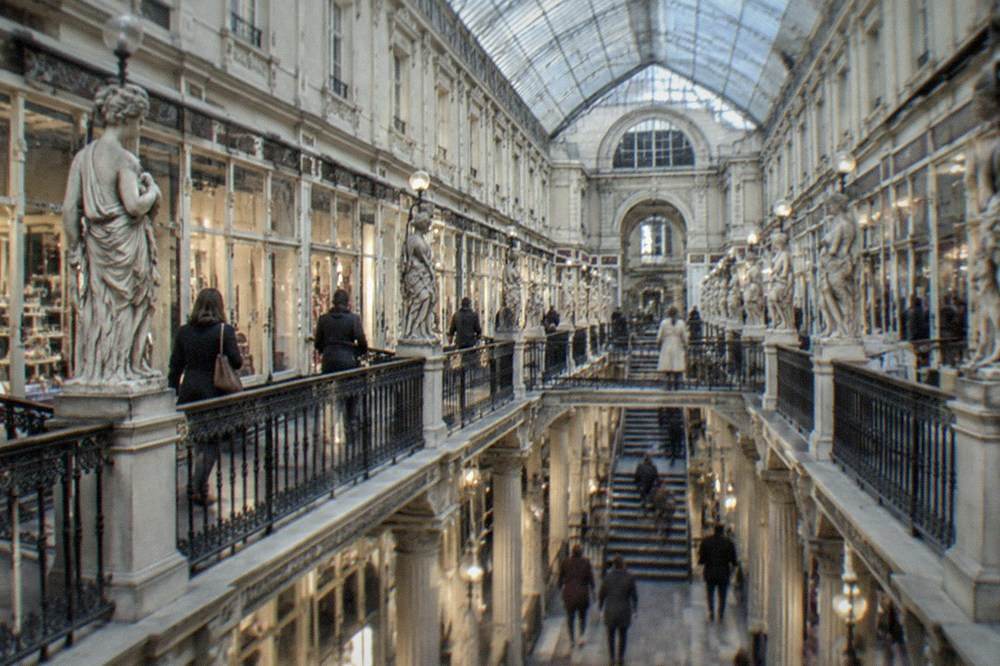
Start with the Passage Pommeraye, because it is the quarter's second landmark and the one you can walk through. Built in 1843, three floors of shops stacked on a slope and linked by a grand staircase, it is listed by the tourism office as unchanged since its construction, a detail that is hard to believe: the gallery feels like a set piece precisely because nobody has remodelled it. It is free to enter, and its own listed hours run Monday to Saturday 8:00 to 20:00 and Sunday 9:00 to 20:00. The Passage Pommeraye guide covers it in depth.
From the Passage's lower exit you are at Place Royale, the other formal square of the district, and from there the medieval streets of Bouffay lead to the Château des ducs de Bretagne. The château's courtyard and ramparts are free and open daily 8:30 to 19:00, and the Musée d'histoire de Nantes inside costs 9 EUR full, 5 EUR reduced, free for under-18s, closed Mondays. North of the château stands the cathedral of Saint-Pierre-et-Saint-Paul, free to enter, which partially reopened on 27 September 2025 after the 2020 fire with full reopening planned for 2028. Both are covered in this site's château and cathedral pages.
Back in the theatre's own block, the Cigale quarter wraps around the streets just off the square. Its historic dining rooms, including the tile-and-brasserie splendour of the Cigale itself, sit within two minutes of the theatre steps, and they are covered on the La Cigale page. Further out but still walkable, the Musée d'arts de Nantes offers a 9 EUR permanent collection, free for under-18s, closed Tuesdays, with a free Thursday nocturne from 19:00 to 21:00. The Jules Verne museum and the Jardin des Plantes make a good paired visit a short ride east. Be aware that the natural history museum is closed for works until 2029 and is not a current stop on any Nantes itinerary.
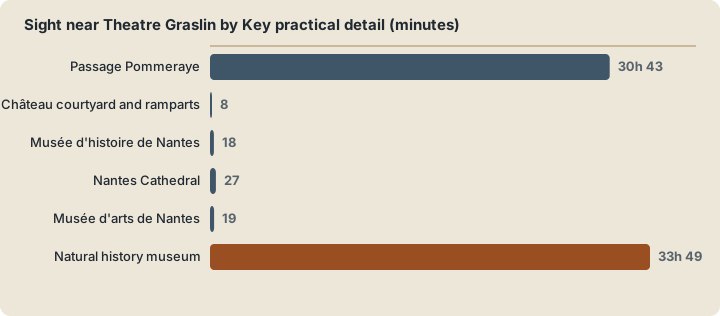
| Sight near Theatre Graslin | Entry cost | Key practical detail |
|---|---|---|
| Passage Pommeraye | Free | Built 1843; listed hours Mon-Sat 8:00-20:00, Sun 9:00-20:00 |
| Château courtyard and ramparts | Free | Daily 8:30-19:00 |
| Musée d'histoire de Nantes | 9 EUR full, 5 EUR reduced | Closed Mondays; free under 18 |
| Nantes Cathedral | Free | Reopened 27 Sept 2025; full reopening planned 2028 |
| Musée d'arts de Nantes | 9 EUR full, 4 EUR reduced | Closed Tuesdays; free nocturne Thu 19:00-21:00 |
| Mémorial de l'abolition de l'esclavage | Free | Seasonal hours; closed during Loire floods |
| Natural history museum | Closed | Closed for works until 2029 |
One seasonal layer sits over all of this: the green line. Every summer, Le Voyage à Nantes paints a roughly 20 km trail through the city linking its artworks and sights, and the theatre's square has hosted editions of the programme directly. In 2026, the summer edition ran from 4 July to 6 September under the theme of Earth, and one of its signature pieces, Théo Mercier's sand sculpture installation Fossil Opera, stood on Place Graslin itself, an artwork named for the opera the square carries. If you visit in summer, check the programme: the green line makes the Graslin quarter a gallery as much as a district, and it costs nothing to follow. The site's Le Voyage à Nantes page has the year-by-year detail.
A guided walk is the most reliable way to catch these layers if your time is short. The custom private walk below lets you set the pace and the theme with a local guide, and pairs naturally with an afternoon at the theatre square.
If a half-day in the city turns into a full exploration, a first-timer's natural route runs the theatre square in the morning, the Passage and Place Royale before lunch, the château museum in the afternoon and the Machines de l'île across the river to finish, with timings and ticket choices already worked out in this site's itinerary pages.
Can You See A Performance At Theatre Graslin In Nantes?
Yes, Theatre Graslin is a working opera house and attending a performance is the only way to see its interior on a normal basis, with tickets sold through the theatre's own box office and its own channels. The square and exterior are free to enjoy at any time, and no booking is needed for those. Because programmes and prices change production by production, this site does not print a ticket figure for the venue, and the theatre's own listings are the authority on what is playing.
The practical approach is simple: check the current season on the theatre's own programme pages, decide the night, and buy from the box office or its official channels. Opera, dance and orchestral performance are the core of the house, and because the building is a historic auditorium, seats genuinely differ in view and price, so the seating plan matters more here than in a modern venue. Booking ahead is wise for anything that is part of a festival weekend, particularly during the January classical music festival period when the city fills up, and during the Christmas market season from late November through December.
For visitors who do not attend a performance, the exterior and square remain a full experience. The facade is at its best lit in the evening, when the terraces around it are open and the quarter feels like the set piece its designers intended. The fountain in the square makes the classic photograph, and the view down rue Crébillon toward Place Royale frames the theatre's columns between the street's facades. If your interest is architecture rather than performance, the nearby Le Lieu Unique, the national theatre housed in the former LU biscuit factory across the city, is a different register of venue altogether and worth pairing on a culture-heavy day.
Where Should You Eat Near Theatre Graslin In Nantes?
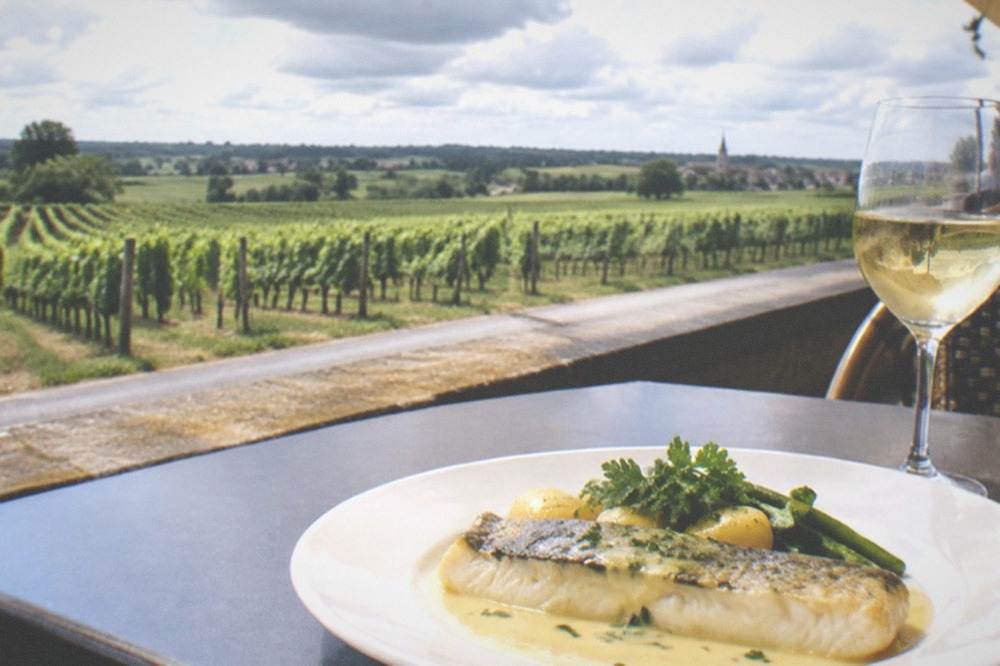
The streets around Place Graslin hold the historic brasseries of the Cigale quarter, seafood rooms, wine bars and classic French bistros, and the specialities to order are the Nantes ones: beurre blanc sauce with river or sea fish, Muscadet white wine from the vineyards just south of the city, gâteau nantais, and LU Petit Beurre biscuits, whose maker set up in Nantes in 1846. No individual venue's menu prices or opening hours were verified for this guide, so treat any specific room's details as something to confirm on arrival.
The food identity of this city is unusually specific for a French regional capital, and the Graslin quarter is where much of it gets served. Beurre blanc, the emulsified butter sauce made with a shallot, white wine and vinegar reduction, was born in the Nantes region and is traditionally paired with fish. Local restaurateurs have been campaigning for protected traditional speciality status for the recipe, which tells you how seriously it is taken here. The wine to drink with it is Muscadet, made from the Melon de Bourgogne grape in the vineyards south of the city, an area covered in this site's Muscadet vineyards guide. The 2026 harvest was historically early, with the official picking ban declared on 11 August, a full eight days ahead of the previous record, and yields lower than usual, so the vintage story is worth asking about at the table.
For sweets, gâteau nantais, an almond and rum cake whose origins are traced to around 1820, has had a strong revival in the city's patisseries, and berlingots nantais, the multicoloured hard candies dating to the late 19th century, are the classic box to carry home. LU's Véritable Petit Beurre biscuit, invented in 1886 according to the standard account, is the industrial-era icon: the company began with Jean-Romain Lefèvre setting up as a biscuit maker in Nantes in 1846, and 2026 marks the brand's 180th anniversary.
| Nantes classic | What it is | Where it fits near the theatre |
|---|---|---|
| Beurre blanc | Emulsified butter, shallot and Muscadet reduction with fish | Historic brasseries around the Cigale quarter |
| Muscadet | Dry white, Melon de Bourgogne grape, vineyards south of the city | Wine lists across the quarter's bistros |
| Gâteau nantais | Almond, rum and salted-butter cake, circa 1820 | Patisseries in and around the centre |
| Berlingots nantais | Tetrahedron hard candies, seven flavours, late 19th century | Confectioners and gift shops |
| Petit Beurre LU | The 1886 butter biscuit of the Nantes-founded maker | Supermarkets and the brand's own outlets |
To eat rather than dine, the Talensac market is the city's main food hall, open Tuesday to Friday 8:00 to 13:00 and Saturday to Sunday 8:00 to 13:30, closed Monday, and it is covered in the Talensac market guide. As budget planning, the price aggregates gathered for this site put an inexpensive restaurant meal at the cheap end, a mid-range three-course dinner for two a step up without drinks, and a draft beer at the inexpensive end, all as market-level ranges rather than any single venue's prices.
The most efficient way to eat your way through the Old Town's food culture, and the option this site recommends most often for first-time visitors, is a guided food tour with a local host. The all-inclusive Old Town food walk below is the natural pairing with an evening at the theatre, and its current price and availability render directly in the booking panel.
The food walk is also the most practical answer to the timing question a theatre evening raises: performances start after the dining rooms around the square have filled and emptied, and a guided tasting walk finishes with enough margin to reach your seat without rushing through the courses that matter.
When Is The Best Time To Visit Theatre Graslin In Nantes?
The best months to visit Place Graslin and Nantes generally are the shoulder seasons, April to May and September to October, when the Météo-France normals show mean daily highs of roughly 16 to 20 C, crowds are thinner and the terraces are still running. Summer, mid-June to mid-September, is the warmest window with mean highs around 23 to 25 C, and it is also when the green line and the festivals run, but it is the busiest.
December brings the Christmas market and the wettest weather of the year.
The climate here is temperate oceanic, and the numbers from the Nantes-Bouguenais station normals for 1991 to 2020 are worth reading before you pick dates. January mean highs sit at 9.3 C and August at 25.4 C, with the coldest mean lows around 3 C in January and February. Rain totals 819.5 mm a year spread across 119.7 days with at least 1 mm, and the wettest months are November and December, the driest July. The useful nuance is that summer rain arrives in fewer, heavier days, while winter is a steady drizzle regime, so a July downpour can pass in an hour while a December day can stay grey.
| Month | Mean high C | Mean low C | Rain mm |
|---|---|---|---|
| January | 9.3 | 3.4 | 87.9 |
| April | 16.2 | 6.6 | 58.3 |
| July | 25.1 | 14.3 | 44.2 |
| September | 22.4 | 11.8 | 59.5 |
| December | 9.8 | 3.7 | 101.0 |
Two seasonal events bear directly on a theatre-square visit. First, the Christmas market: the 26th edition runs from 19 November to 27 December 2026, centred on Place Royale and Place du Commerce, both an easy walk from the theatre, open Monday to Saturday 11:00 to 21:30 and Sunday 11:00 to 20:00. The square's terraces and the market together make early evening the best hour of the day in December. Second, the January classical music festival, whose 2027 edition runs 27 to 31 January with a Beethoven anniversary theme, fills the city's venues and pushes hotel demand up; note that the main Cité des Congrès auditorium is entering a works period, with the full site closed from February to December 2027, so check where each concert actually plays before booking around it.
One weather caveat that matters in this city: the Loire floods. In February 2026 the river reached 8.18 m at the Pont Anne-de-Bretagne, the first time above 8 m in about fifteen years, with evacuations and closures along the banks. The riverside sites, including the Mémorial, close during such events, though the Graslin quarter sits high enough that its attractions are unaffected. The site's Nantes weather page tracks the patterns in detail.
How Much Does A Visit To Theatre Graslin Cost In Nantes?
The square, the fountain and the exterior of Theatre Graslin cost nothing and are open at all times. The costs that attach are optional: a performance ticket from the theatre's own box office, transport at 1.80 EUR per single journey or 6.80 EUR for a 24-hour ticket, free at weekends, and the nearby museums at 9 EUR each, or 15 EUR for a year-long Pass Musées covering four of them.
A full sightseeing day typically pairs one paid museum with the free squares, churches and the Passage Pommeraye.
The Pass Musées is the detail worth knowing for museum-heavy plans: 15 EUR buys a year of unlimited access to the Musée d'histoire de Nantes at the château, the Musée d'arts, the Jules Verne museum and the Chronographe at Rezé. Against single 9 EUR adult entries it pays for itself quickly, though the natural history museum is excluded because it is closed until 2029. The Jules Verne museum alone is the cheapest of the set at 4 EUR full, 1.50 EUR reduced, which makes it an easy add-on for families.
For the broader budget, two city-level figures are reported rather than official: the tourist tax, charged per person per night on accommodation, is tiered by star rating, reported at 2.86 EUR for a four-star property, 1.87 EUR for three stars and 1.10 EUR for two stars for 2026, and unclassified rentals pay a percentage of the nightly rate capped at 5.39 EUR. At the restaurant level, the same aggregate sources used above hold: an inexpensive meal, a mid-range two-course dinner for two, and a three-course dinner in a good restaurant each sit a step apart in cost, with the good restaurant option the priciest of the three, all ranges, never promises. Free entry points in the quarter, the square, the Passage, the cathedral, the château courtyard and the Mémorial, mean a genuinely good day here can be close to costless.
For visitors who want the tasting and vineyard side of the region without renting a car, the vineyard tours below run from the city into the Muscadet country south of Nantes, and the shorter van option fits neatly between a morning at the theatre square and an evening performance.
Is Theatre Graslin A Good Stop For Families In Nantes?
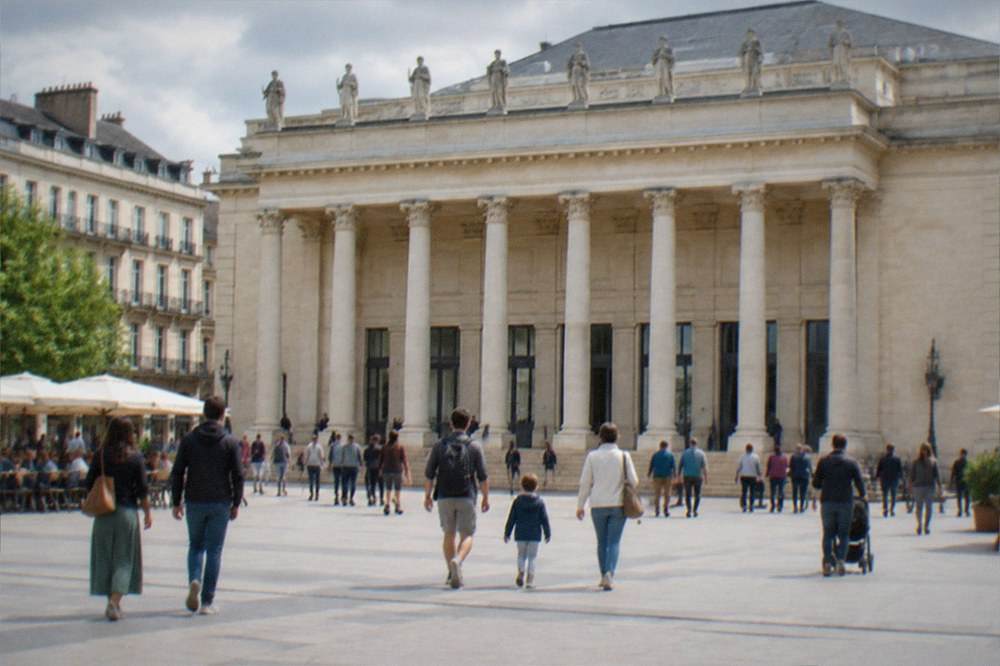
Theatre Graslin works for families mainly as a square and a stopping point rather than an attraction in itself: children enjoy the fountain, the space to run and the ice cream stops, and the quarter around it supplies easy wins in the Passage Pommeraye and the Cigale brasseries. The Machines de l'île, the Jardin des Plantes and the Jules Verne museum are the deeper family anchors, each 10 to 20 minutes away by tram, with the Machines' individual attractions at 8 EUR for children aged 4 to 12.
The honest framing is that a performance at the opera house suits older children with an evening's patience more than toddlers, and the square itself is the family-friendly part: open, traffic-light and surrounded by cafes that are used to strollers. The Passage Pommeraye's escalator-free stack of floors is the kind of architectural toy children navigate happily, and it ends in shops that sell berlingots nantais in every colour. For a fuller family day, the site's Nantes with kids page builds the route around the Machines de l'île, where a ride on the Grand Éléphant costs 12 EUR full and 8 EUR for ages 4 to 12, with a family discount of 15 percent for groups of five, capped at two adults. Note the scheduled maintenance: there are no elephant rides from 2 November 2026 to 28 February 2027.
| Family option near the quarter | Cost | Notes |
|---|---|---|
| Machines de l'île, per attraction | 12 EUR full, 8 EUR ages 4-12 | Family -15% for five people, max two adults |
| Jules Verne museum | 4 EUR full, 1.50 EUR reduced | Closed Tuesdays |
| Jardin des Plantes | Free | Free-roaming garden, seasonal hours |
| Planétarium | 7 EUR full, 3 EUR reduced | Session-based visits |
| Passage Pommeraye | Free | Built 1843, open daily |
Transport makes the family case easy. Trams and buses are free every weekend for everyone including visitors, and the 24-hour group ticket at 15 EUR for four people covers a family's weekday movement for less than the price of a single museum entry. Strollers ride the trams without a second thought, and the flat geometry of the Graslin quarter between the theatre and Place Royale is pushchair-friendly in a way the medieval Bouffay streets are not.
Common Questions About Visiting The Theatre Graslin Quarter In Nantes
Is Theatre Graslin free to visit?
The square, fountain and exterior are free and open at any time. Only performance tickets, bought through the theatre's own box office, carry a cost, and this site does not print a figure for them because they change production by production.
How do I get to Theatre Graslin from Nantes train station?
The theatre sits in the hyper-centre, roughly ten minutes by tram from the station side and then a short walk, or about twenty-five minutes entirely on foot through the city centre. A one-hour Naolib ticket is 1.80 EUR, and weekend travel on the whole network is free, with the airport shuttle excluded.
What is the closest tram stop to Place Graslin?
The square is served by the central tram corridor a few minutes' walk away, on the lines that run through the Graslin and Commerce district. Because the site sits inside the pedestrian heart, the last stretch is always on foot, which is part of the quarter's character.
Can you visit the interior of Theatre Graslin without a ticket?
On normal days the practical way to see the auditorium is to attend a performance. The theatre's own programme and visitor information are the authority on whether guided visits of the building are offered in a given season, and this site prints no unverified schedule for them.
Is the Theatre Graslin area safe at night?
The Graslin quarter is part of the historic hyper-centre, repeatedly characterised in 2026 neighbourhood reporting as among the liveliest and best-patrolled parts of the city, with theatres, brasseries and terraces keeping the streets active into the evening. Normal city care applies, as anywhere.
What else is within walking distance of Theatre Graslin?
The Passage Pommeraye, Place Royale, the Cigale quarter, the Château des ducs de Bretagne, the cathedral and the Musée d'arts are all within about fifteen minutes on foot. The Machines de l'île and the Île de Nantes sit across the river, a short tram ride away.
The last word on planning: treat Theatre Graslin as the fixed star of the quarter and build outward. An evening performance is the deepest experience of the building, but a morning coffee on the square, a walk through the Passage Pommeraye, a beurre blanc lunch in the Cigale streets and a late-afternoon tram to the Machines de l'île is the version of the day that most first-time visitors end up wishing they had planned, and every piece of it is described in the linked guides above.