Ligne Verte Nantes: Walking The Green Line Through The City
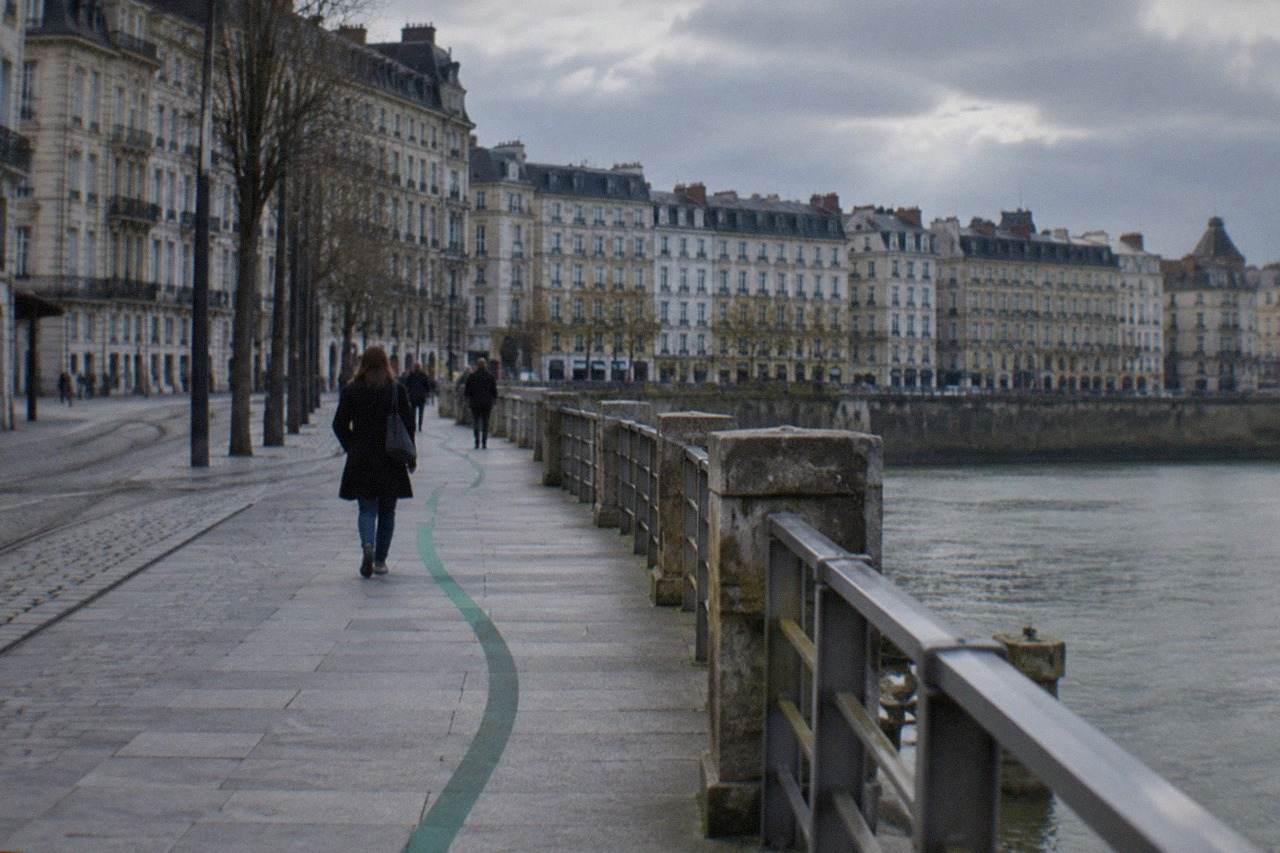
The ligne verte in Nantes, France is a painted green trail of roughly 20 to 22 kilometres that threads the city's landmarks, artworks and gardens into one free walk.
Short answer
The ligne verte in Nantes is a continuous green line painted on the city's pavements, about 20 to 22 km long, that guides walkers past the major sights and the public artworks of the summer Le Voyage à Nantes festival. Following it costs nothing and you can join or leave it anywhere.
The ligne verte in Nantes, in the Loire-Atlantique department of the Pays de la Loire region in western France, is one of the most quietly clever ideas in European city tourism: a continuous green line painted directly onto the pavement, tying the old town, the Île de Nantes, the riverside and the parks into a single self-guided route. The official Voyage à Nantes "to see" page describes "all 22 kilometres" of it, while a 2026 maintenance report measured the painted network at 20.5 km, so the honest answer is about 20 km of line. You do not need a ticket, a guide or an app to use it, which is exactly the point.
What Is The Ligne Verte In Nantes?
The ligne verte is a green line painted on the streets of Nantes, France, roughly 20 to 22 kilometres long, created to guide visitors through the city's permanent sights and the temporary artworks of the summer Le Voyage à Nantes festival. It was introduced when the festival began in 2011, with the summer event running every year since 2012, and it stays on the ground year-round whether or not artworks are installed.
The line is the signature device of Le Voyage à Nantes, the cultural programme that turns the whole city into an open-air exhibition each summer. The 2026 edition, the fifteenth, ran from 4 July to 6 September 2026 and was themed "Earth", the first in a planned four-year cycle on the elements. During those two months, the green line leads you past a scattering of new artworks, some permanent, some ephemeral, installed by French and international artists. Once summer ends, the paint remains, and the line becomes a plain, free wayfinding trail through the city's permanent attractions.
What makes it unusual is the way it mixes registers. One moment the line is walking you through the medieval lanes of the Bouffay quarter, the next it is crossing the Loire onto the Île de Nantes toward the mechanical elephant of Les Machines de l'île. Contemporary art, history, gardens and industrial heritage all sit on one continuous trail. If you are planning a trip around the festival itself, our Le Voyage à Nantes guide covers the event in depth; this page is about the line you can follow on foot at any time of year.
The concept has been widely copied since, but Nantes did it first and at a scale few cities match. The line is repainted and adjusted each spring: the 2026 maintenance pass covered 6.3 km of fresh paint on the network, which tells you how seriously the city takes what is, on the face of it, just a stripe of green on the pavement.
Where Does The Green Line Start And End In Nantes?
The green line in Nantes has no official start or end point: you can join it anywhere along its roughly 20 to 22 km route and follow it in either direction. It loops through the historic centre, crosses to the Île de Nantes, runs along the Loire quays and reaches into the gardens, including the Jardin des Plantes and, for the first time in 2026, the Jardin Extraordinaire and the cathedral crypts.
That "no official start" point deserves emphasis, because it is the line's best feature. Tourists often hunt for the trailhead and miss the fact that the line is a loop, not a route. Because it is painted continuously, you can step onto it outside your hotel, follow it for an hour, and peel off for lunch. The line will still be there after your coffee. Walkers who want a longer outing follow it in one direction for the whole day and let the line decide the itinerary.
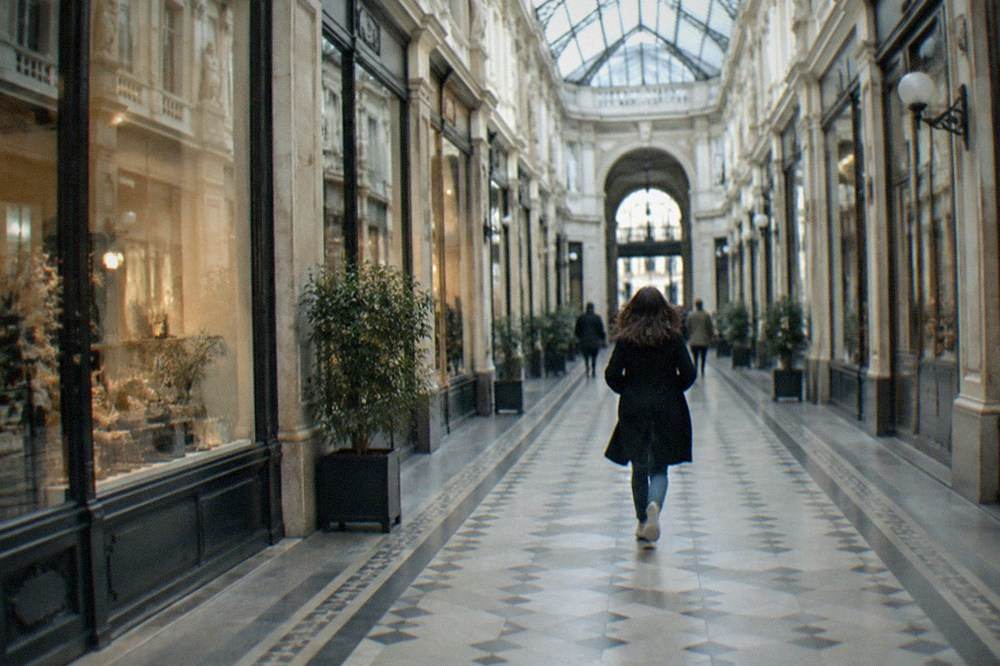
Geographically, the line's spine is the historic centre: the Bouffay old town, the cathedral, the Château des ducs de Bretagne and the Passage Pommeraye all sit on or immediately beside it. From there it crosses the Loire to the Île de Nantes, home of Les Machines de l'île and the Hangar à Bananes, runs along the river quays past the Mémorial de l'abolition de l'esclavage, and threads north and east through the green spaces. The exact path shifts slightly from summer to summer as the festival moves its artworks, so treat any description of it, including this one, as an outline rather than a survey map.
One practical note for planning: the 2026 edition used the crypts of the Cathédrale Saint-Pierre-et-Saint-Paul for the first time, so the line's reach extended into spaces that normally sit outside the tourist circuit. The cathedral itself partially reopened on 27 September 2025 after the 2020 fire, with full reopening planned for 2028, and entry is free, so following the line through that quarter costs nothing at all.
What Can You See Along The Green Line In Nantes?
Along the green line in Nantes you pass the Château des ducs de Bretagne, the Cathédrale Saint-Pierre-et-Saint-Paul, the Passage Pommeraye from 1843, the Jardin des Plantes, Les Machines de l'île on the Île de Nantes, the Hangar à Bananes and the Mémorial de l'abolition de l'esclavage, plus the temporary artworks of each summer's edition, all for free unless you step inside a paid attraction.
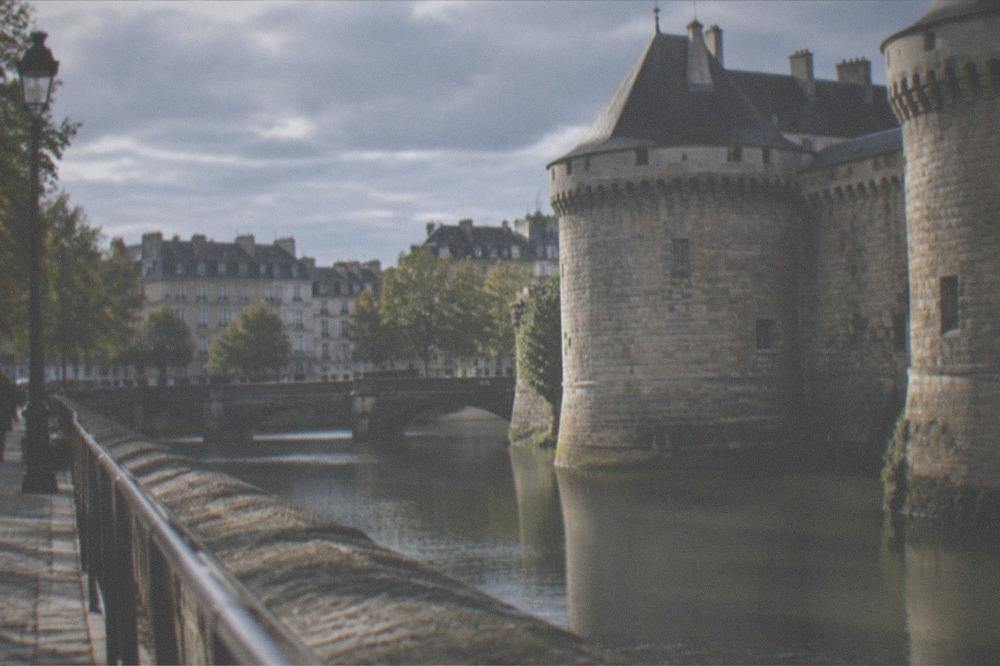
The permanent anchors are the reason the line works in February as well as in July. The château's courtyard and ramparts are free and open daily 8:30 to 19:00 (to 20:00 in July and August), with the Musée d'histoire de Nantes inside charging 9 EUR full tariff. The Passage Pommeraye, the three-storey 1843 shopping arcade built on a slope, is free to walk through and remains, in the tourism office's own word, "unchanged" since the nineteenth century. The Machines de l'île, where the Grand Éléphant sprays along the old shipyard quays, is the big-ticket stop: each attraction there costs 12 EUR full price, 8 EUR for children aged 4 to 12, with a 3-attraction day package at 29 EUR. Note that the elephant pauses for its annual maintenance, with no rides from 2 November 2026 to 28 February 2027.
The temporary layer is what people travel for in summer. The 2026 "Earth" edition installed roughly nine to fourteen new or site-specific pieces along the line. The table below shows the ones reported by the French press during the summer.
| 2026 artwork | Artist | Location on the line |
|---|---|---|
| Fossil Opera | Théo Mercier | Place Graslin |
| La Machine du Sacré | Ali Cherri | Place Félix Fournier |
| Notre dit pays | Louis Guillaume | Château moats, a 14-metre metal palm tree |
| Les Mistériennes | Barbara Schroeder | Jardin Extraordinaire, six monumental columns |
| Atlantique and other videos | Anne-Charlotte Finel | Cathedral crypts |
| Sound and video works | Caroline Le Méhauté, Pierrick Sorin, Dominique Petitgand and others | Passage Sainte-Croix, Jardin des Plantes aviary, Square Daviais |
Parallel exhibitions also cluster on the line's territory. INTERSTELLAR: Ré-imaginer la Terre ran at the HAB Galerie on the Hangar à Bananes from 23 May to 27 September 2026 with around twenty artists, and Expression(s) décoloniale(s) #4 ran at the château and the Mémorial from 8 May to 8 November 2026. The Estuaire art trail between Nantes and Saint-Nazaire, with 33 works on 23 sites, shares the same organisational DNA and starts where the city meets the river.
If you would rather have someone else read the line for you, the cathedral stop is the most popular place to hand over the navigation. Check availability for a cathedral-focused visit, or read our detailed Nantes Cathedral guide before you go.
How Long Does It Take To Walk The Ligne Verte In Nantes?
There is no single official walking time for the ligne verte in Nantes, because the line is roughly 20 to 22 km long and it is rarely walked in full. A comfortable full-circuit day covers the central sections with long museum stops, while a half day on foot reaches the old town, the château and the Île de Nantes. The pace you choose, and how many paid attractions you enter, sets the duration.
The honest framing matters here: nobody saunters 22 km of city pavement at museum-going speed in a single day and enjoys it. The line rewards splitting. Most people treat the central loop, from the cathedral through Bouffay, the Passage Pommeraye, Place Graslin and back past the château, as a half-day walk of easy distance. The island section, from the quays across to Les Machines de l'île and the Hangar à Bananes, works as a second half-day, especially with children in tow, because the elephant and the Carrousel des Mondes Marins each take a ticket and a queue slot.
For orientation rather than statistics: Nantes is a genuinely walkable city, compact between the Loire, the Erdre and the old ramparts, and the line deliberately keeps to human-scale streets rather than fast boulevards. Public transport makes bailouts easy. Naolib runs three tram lines plus the busway and the Navibus river shuttles, a one-hour ticket costs 1.80 EUR and a 24-hour ticket 6.80 EUR, and the whole network is free to everyone on weekends from Saturday 00:00 to Sunday 23:59 (the airport shuttle excepted, which always costs 10 EUR). If your legs give out mid-line, a tram is rarely more than a few minutes away.
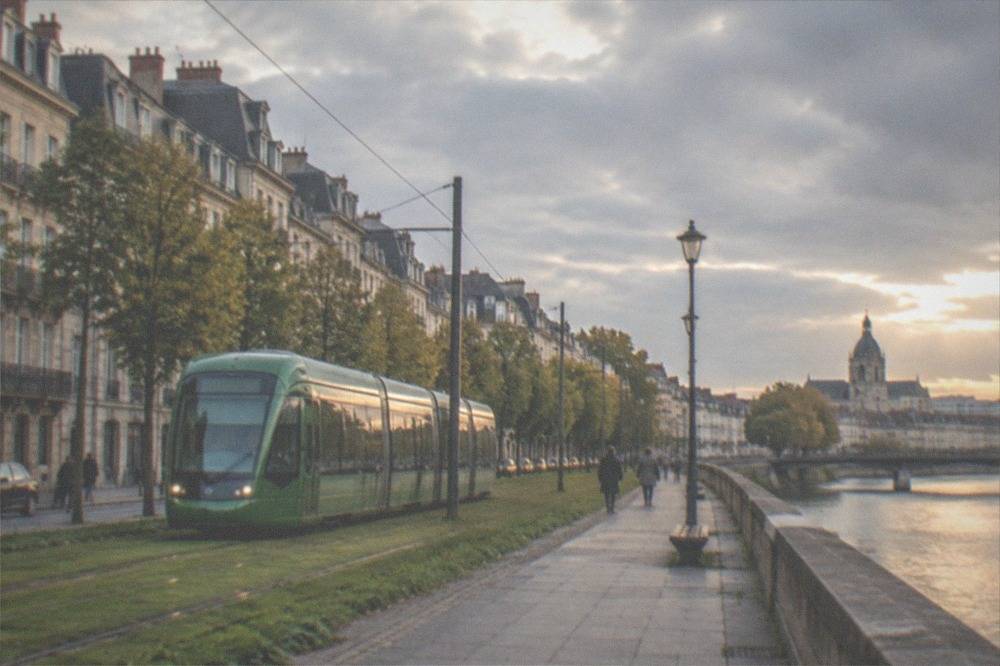
The river crossings are the scenic high points rather than obstacles. The Navibus N1 links the Gare Maritime to Trentemoult Sablières, and the N2 links the Hangar à Bananes to Trentemoult and Bas-Chantenay, all on ordinary Naolib tickets, so a ferry ride is a legitimate way to skip a stretch of pavement while staying on the water the line celebrates.
When Is The Best Time To Follow The Green Line In Nantes?
The best time to follow the ligne verte in Nantes is during the summer Le Voyage à Nantes edition, which in 2026 ran from 4 July to 6 September, because that is when the temporary artworks are installed along the line. Outside the festival the paint remains and the permanent sights stay open, so spring, early autumn and even winter visits still work, with shorter daylight and some closures to plan around.
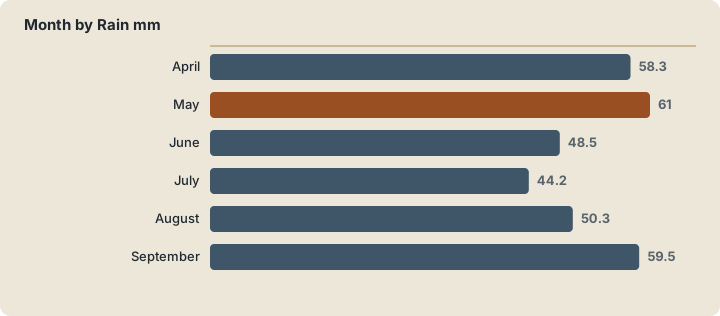
Summer is the full experience: artworks in place, the Cantine du Voyage and the riverside guinguettes open, long evenings on the quays. The trade-off is July heat. Nantes has a temperate oceanic climate, not a Mediterranean one: Météo-France's 1991-2020 normals for the Nantes-Bouguenais station give a mean maximum of 25.4 C in August against 9.3 C in January, and 819.5 mm of rain spread over the year. Recent summers have been hotter still. June 2026 set a new all-time station record of 42.2 C on 24 June, and the summer delivered a record 40 days at or above 30 C, so a midsummer walk wants an early start, a hat and a bottle of water. The wider set of guides lives on Nantes Travel Guide.
| Month | Mean max C | Mean min C | Rain mm | Notes for line walkers |
|---|---|---|---|---|
| April | 16.2 | 6.6 | 58.3 | Spring flowers in the Jardin des Plantes |
| May | 19.6 | 9.8 | 61.0 | Warm, long evenings |
| June | 23.0 | 12.7 | 48.5 | Festival opens early July |
| July | 25.1 | 14.3 | 44.2 | Festival season, hottest weeks |
| August | 25.4 | 14.2 | 50.3 | Peak heat, Rendez-vous de l'Erdre jazz |
| September | 22.4 | 11.8 | 59.5 | Festival closes 6 Sept, mild air |
The shoulder seasons are the connoisseur's choice. September in Nantes is regularly mild, with a mean maximum around 22 C, thin crowds and the last days of the festival artworks, some of which ran into autumn extensions. Our best time to visit Nantes guide and the Nantes weather guide break the seasons down month by month if you are choosing dates around the walk.
Winter has its own argument: the Nantes Christmas market, the 26th edition of which runs 19 November to 27 December 2026 on Place Royale and Place du Commerce, sits squarely on the green line's central territory, and the painted line makes a ready-made route between the chalets, the illuminations and the cathedral. Daylight is short and rain more frequent (December averages 101 mm), but the line itself never closes.
What Does Following The Green Line Cost In Nantes?
Following the ligne verte itself in Nantes costs nothing: the line is painted on public pavement and is free to walk year-round, and many of the sights it passes, including the cathedral, the château courtyard, the Jardin des Plantes and the Mémorial de l'abolition de l'esclavage, are free to enter. Paid stops are optional and priced individually, from 9 EUR museum entries to 12 EUR Machines attractions.
The line is one of the anchors of free sightseeing in the city, and our free things to do in Nantes guide leans on it heavily. The paid layer is modular. You decide, stop by stop, whether to buy a ticket, and the table below shows the published 2026 prices for the attractions the line actually touches or passes.
| Stop on or beside the line | Entry cost | Free conditions |
|---|---|---|
| Cathédrale Saint-Pierre-et-Saint-Paul | Free | Works ongoing until 2028 |
| Château courtyard and ramparts | Free | Daily 8:30 to 19:00, later in summer |
| Musée d'histoire de Nantes (château) | 9 EUR full, 5 EUR reduced | Under 18s; first Sunday Sept to June |
| Machines de l'île, each attraction | 12 EUR full, 8 EUR ages 4-12 | Under 4s; 3 attractions 29 EUR |
| Musée d'arts de Nantes | 9 EUR full, 4 EUR reduced | Under 18s; Thursday 19:00 to 21:00 |
| Musée Jules Verne | 4 EUR full, 1.50 EUR reduced | First Sunday Sept to June |
| Mémorial de l'abolition de l'esclavage | Free | Daily, longer summer hours |
Two cautionary notes from the 2026 sources. First, the Muséum d'histoire naturelle, which older guides list as a stop, is closed for major restructuring works until 2029, so it is not on any current walking route. Second, if you plan a museum-heavy day along the line, the Pass Nantes covers the château museum, the Galerie des Machines and the Carrousel plus transport, at 30 EUR and 40 EUR from 1 April 2026, but the Grand Éléphant ride is excluded from the pass. The Pass Nantes guide works out when it pays off.
For travellers who prefer company on the trail, a Surprise Walk with a local is a paid alternative to solo navigation, and the operator's live listing carries the current price and availability.
Is The Green Line In Nantes Suitable For Families And Casual Walkers?
The green line in Nantes is well suited to families and casual walkers because it is flat for most of its central and island sections, free, endlessly interruptible, and studded with child-friendly stops such as the Jardin des Plantes, the Carrousel des Mondes Marins and the Grand Éléphant. The caveats are summer heat, the fact that the elephant pauses from 2 November 2026 to 28 February 2027, and ordinary city kerbs and crowds.
Families rarely walk the line as a line. They walk it as a chain of bribes: one artwork, one garden, one crêpe, one machine. That works beautifully here. The Jardin des Plantes, one of France's finest botanical gardens and a stop on the line's northern reach, is free and open seasonally from roughly 8:30 to 18:00, with late closing to 21:30 in high summer. The Machines site sells a family discount of 15 per cent for groups of five, capped at two adults, valid the same day, which is one of the better family deals in French attractions. Our Nantes with kids guide expands on this route in detail.
For accessibility, the central sections are pavement walking on flat ground, with the usual Parisian-and-beyond caveat of French kerbs, cobbled lanes in Bouffay and busy crossings at rush hour. The Mémorial de l'abolition de l'esclavage, on the quays, closes during Loire floods, as February 2026 demonstrated when the river reached 8.18 m at the Pont Anne-de-Bretagne, the first time above 8 m in about fifteen years, so flood season can genuinely move a stop. Rain days are covered in our rainy day in Nantes guide.
Casual walkers should also know what the line is not. It is not a nature trail: the middle kilometres are thoroughly urban, and the quieter, leafiest stretches sit toward the gardens and the Erdre. And it is not a heritage plaque tour: the line says almost nothing aloud. The interpretive layer, the slave-trade history of the quays, the dukes of Brittany, Jules Verne, is carried by the museums and memorials it links, which is a good reason to step inside at least two of them. The Nantes history guide is the primer.
What Do Locals And Guides Say About The Green Line?
Local commentary on the ligne verte in Nantes, reflected in the festival's own communications and press coverage, treats the line as the city's defining wayfinding gesture rather than a gimmick: the Voyage à Nantes organisers describe the green line as the thread that turns the city into a museum, and the 2026 edition's move into the cathedral crypts and the Jardin Extraordinaire was framed as the line colonising new territory each year.
The festival's director, Sophie Lévy, told Le Journal des Arts in May 2026 that the Voyage à Nantes translates the city "in its diversity", and the line is the practical instrument of that ambition: one paint stroke that connects a medieval castle, a nineteenth-century arcade, a working-class river district and a former shipyard. The 2026 maintenance contract, which repainted 6.3 km of the network in a single spring pass, is the unglamorous proof of how much operational effort sits under the idea.
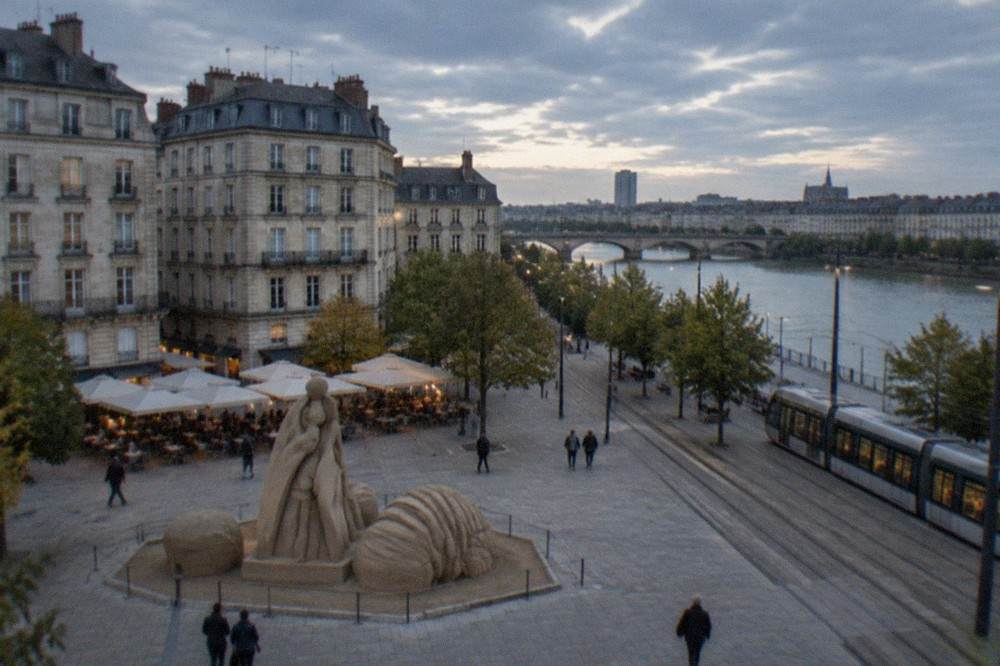
Coverage of the 2026 artworks was broadly positive, with French press highlighting Théo Mercier's Fossil Opera on Place Graslin, a vast sand sculpture part-buried in the square like an archaeological dig, and Louis Guillaume's 14-metre metal palm tree planted in the château moats. The Earth theme, first of a four-year cycle on the elements, gave the pieces a common register: soil, sand, dung and riverbank. Barbara Schroeder's Les Mistériennes at the Jardin Extraordinaire used cow dung and earth, and Caroline Le Méhauté worked with soil at the Passage Sainte-Croix.
The line also has its critics, as any fifteen-year-old institution does: some locals find the summer programme's closures and crowd surges tiresome, and the ephemeral works divide opinion the way public art always does. But the painted line itself is beloved precisely because it makes no demands. It is there in January as in July, and it asks nothing of the walker except a direction. For a longer look at whether the city rewards the trip at all, read is Nantes worth visiting.
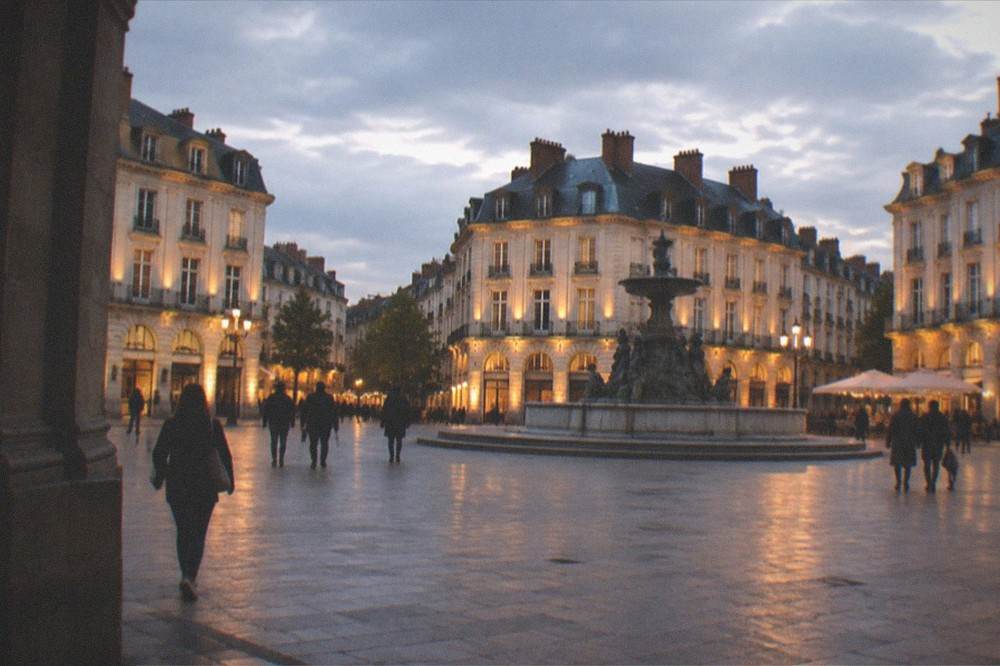
How To Walk The Green Line In Nantes: A Practical Plan
A practical way to walk the ligne verte in Nantes is to split it into three half-day legs: the old town leg from the cathedral through Bouffay, the Passage Pommeraye and Place Graslin; the château and gardens leg taking in the Jardin des Plantes and the Musée d'arts; and the river and island leg crossing to the Île de Nantes, Les Machines and the Hangar à Bananes, with the whole plan adjustable to energy, weather and how many paid entries you want.
Leg one is the classic. Start at the cathedral, which partially reopened on 27 September 2025 after the 2020 arson fire and stays free to enter while restoration of the west facade continues toward 2028. From there the line dives into Bouffay, the medieval quarter around the Place du Bouffay, and climbs to the Passage Pommeraye, the 1843 arcade on three levels. Place Graslin and the Théâtre Graslin follow, then the line turns back toward the château and its free ramparts.
Leg two is the museum leg. The Château des ducs de Bretagne holds the Musée d'histoire de Nantes, open 10:00 to 18:00 and closed Mondays (daily in July and August), with the permanent collection in 32 rooms and more than 1,150 objects on the city's history, including its shipowning past and the Atlantic slave trade, on which the 43 per cent French share carried by Nantes is documented at the memorial on the quays. The Musée d'arts de Nantes, on the line's western reach, is closed Tuesdays and runs a free Thursday nocturne from 19:00 to 21:00.
Leg three is the fun one. Cross the Loire to the Île de Nantes, where the line delivers you to Les Machines de l'île, inaugurated 30 June 2007, and the Grand Éléphant, the 12-metre-tall flagship that carries riders along the old shipyard quays. Book the elephant ahead: slots from September to mid-October 2026 ran Tuesday to Friday from 10:15 to 15:45, and it sells out. End at the Hangar à Bananes, the banana warehouse converted into bars, restaurants and galleries on the west quay, with the Anneaux de Buren lighting the night sky.
If the planning above sounds like work, a private custom walking tour absorbs the navigation and the history into one guided outing.
Whatever legs you choose, the discipline is the same: follow the green paint, stop when something interests you, and use the tram, busway or Navibus to bail out when it does not. The line does not mind. It will still be there tomorrow.
Common Questions About The Ligne Verte In Nantes
How long is the green line in Nantes?
The Voyage à Nantes "to see" page states "all 22 kilometres" of green line, while a 2026 maintenance report measured the network at 20.5 km, so about 20 km is the honest summary. The exact length shifts slightly each year as the festival adjusts the route.
Does the green line in Nantes cost anything?
No. The line is painted on public pavement and is free to follow year-round. Paid stops along it, such as the Musée d'histoire de Nantes at 9 EUR or the Machines de l'île attractions at 12 EUR each, are optional and ticketed individually.
When does Le Voyage à Nantes run?
The 2026 summer edition, the fifteenth, ran from 4 July to 6 September 2026 with the theme "Earth", the first of a four-year cycle on the elements. The painted green line itself is on the ground all year.
Can you join the green line anywhere?
Yes. The line has no official start point, so you can join it anywhere along the route and follow it in either direction, leaving and rejoining as often as you like.
Is the green line in Nantes family friendly?
Yes. The central sections are flat, the Jardin des Plantes is free, and the Machines de l'île offers a 15 per cent family discount for groups of five (maximum two adults) on the same day. Note there are no elephant rides from 2 November 2026 to 28 February 2027 during maintenance.
Is the green line open in winter?
Yes. The line is permanent, and in winter it doubles as a route between the Christmas market chalets on Place Royale and Place du Commerce, which in 2026 run from 19 November to 27 December, and the city's free sights.