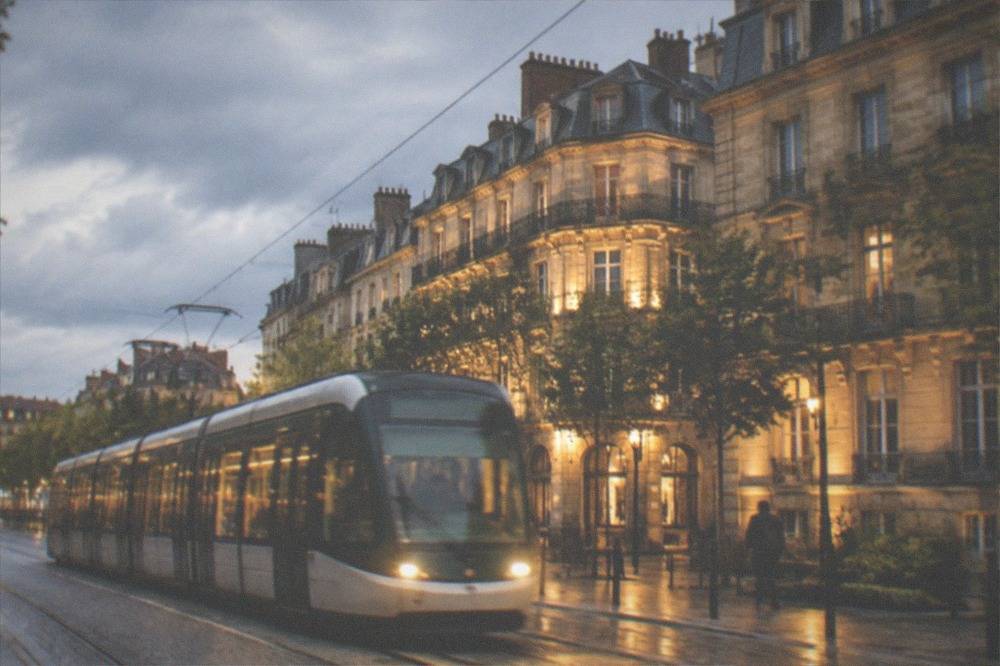
Nantes, in the Loire-Atlantique department of western France, keeps some of the liveliest evenings in the Pays de la Loire region: warehouse clubs on the Île de Nantes, café terraces around Graslin, river shuttles to Trentemoult and a free summer art trail that keeps the streets busy long after dark.
By Nantes Travel Guide, Research and reporting
Short answer
Nantes nightlife clusters around three zones: the Bouffay old town and Graslin for bars and café terraces, the Île de Nantes and the Hangar à Bananes for clubs and riverside drinking, and Trentemoult across the Loire for sunset-facing terraces reached by river shuttle. Trams and buses are free all weekend, a 24-hour Naolib ticket costs 6.80 EUR, and the city's summer art trail runs into September.
Nantes, in the Loire-Atlantique department of the Pays de la Loire region in western France, is a city that treats the evening as seriously as the day. The Loire and the Erdre frame a centre where café terraces fill at dusk, a former banana warehouse on the Île de Nantes hosts clubs and galleries, and a river shuttle crosses to the painted fishermen's houses of Trentemoult. Summer adds a free public art trail that keeps thousands of people wandering the streets after dark, and the tram network is free to everyone from Saturday midnight to Sunday night. This guide covers the areas, the costs, the transport and the questions that matter when planning a night out.
What Is Nantes Nightlife Actually Like?
Nantes nightlife is a compact, student-heavy, early-evening scene spread across a walkable centre, anchored by the Bouffay old town, the Graslin quarter and the Île de Nantes, with clubs concentrated in the Hangar à Bananes warehouse complex rather than one single strip. The city holds a large student population and a national theatre in a former biscuit factory, and drinking culture leans towards café terraces, wine bars and riverside guinguettes rather than megaclubs. Summer evenings are transformed by the free Voyage à Nantes art trail.
The character of the city explains the evenings. Nantes was France's European Green Capital in 2013, and the city has spent the years since pushing life towards its rivers: the former LU biscuit factory became Le Lieu Unique, a national theatre and arts centre with a bar that draws a mixed crowd of theatregoers and students, and the Hangar à Bananes, a row of warehouses once used for ripening bananas imported through the port, now holds bars, restaurants and club nights. The Warehouse club in that complex runs a continuing events programme through 2026.
Two things catch visitors out. First, the rhythm is French: apéritif hours on terraces from early evening, dinner from around 20:00, and clubs filling well after midnight. Second, the summer art trail means that on a July or August evening, the streets themselves are the main event. The 2026 edition of Le Voyage à Nantes, its fifteenth, themed around Earth, scattered temporary works along a green line painted on the pavement running roughly twenty kilometres through the city. Some 2026 pieces had autumn extensions, so parts of the trail survive beyond the summer. For the full picture of that programme, see the Le Voyage à Nantes guide.
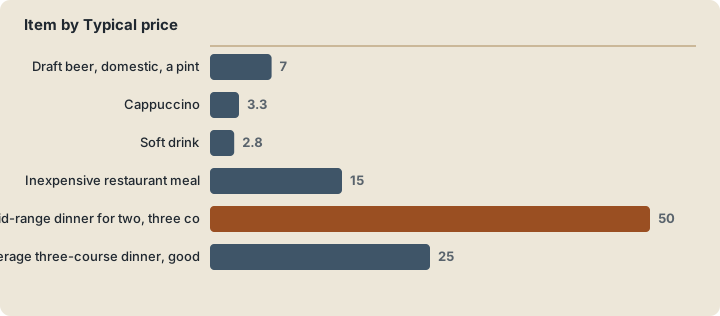
Item by Typical price. Figures as stated in this article.
Where Should You Go Out In Nantes?
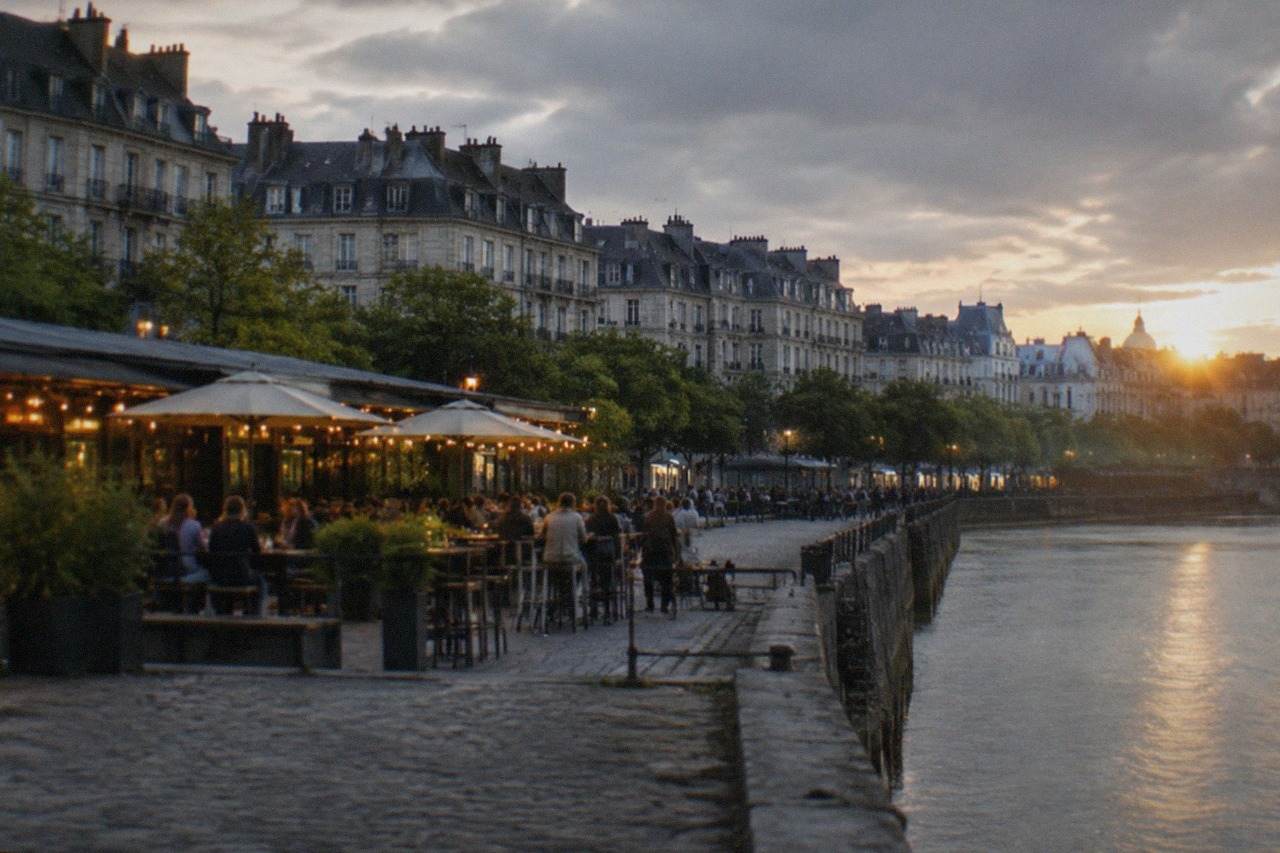
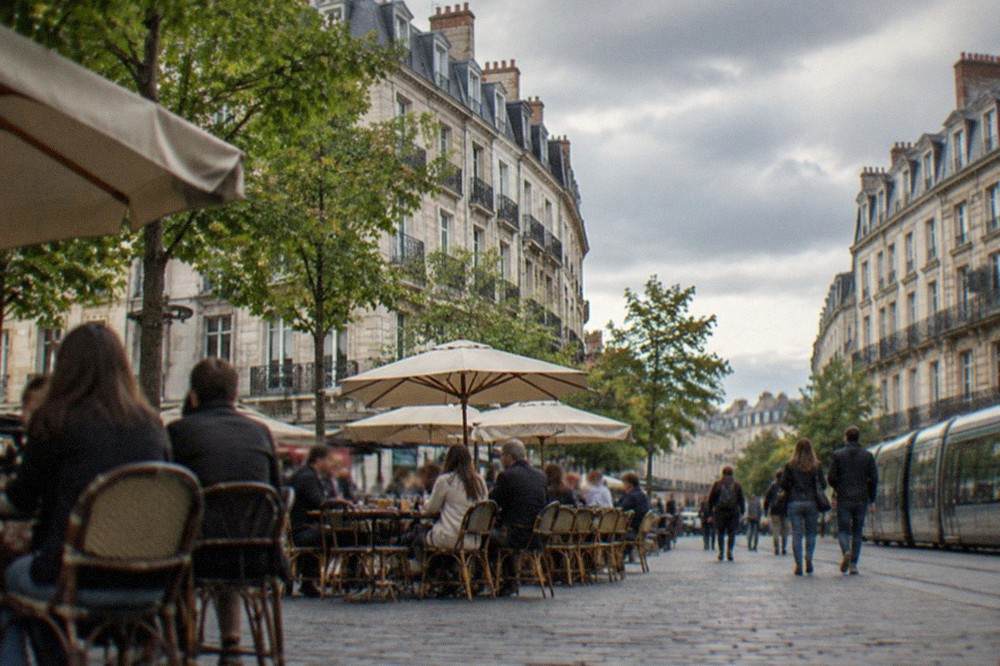
The five zones that matter are Bouffay for old-town bars in medieval streets, Graslin and the Cours des 50 Otages for café terraces and wine bars around the opera house, the Île de Nantes for the Hangar à Bananes club strip and the Machines de l'île, Trentemoult across the Loire for sunset terraces reached by river shuttle, and the Erdre riverbanks for guinguetes and floating bars in summer. Each has a different peak hour and a different crowd, from students to theatre audiences to families at an outdoor table.
Bouffay is the medieval core around the cathedral and the Château des ducs de Bretagne. Its lanes carry the highest density of bars, crêperies and fast-food spots, and the city has progressively pedestrianised more of the district, with extensions to the traffic-limited zones around rue de l'Hôtel de Ville and the cathedral's south side completed in phases through 2025. That makes it the default first stop for a bar crawl on foot. The cathedral itself partially reopened on 27 September 2025 after the 2020 fire, with full reopening planned for 2028, so the square in front is once again part of an evening walk rather than a construction site to detour.
Graslin sits immediately south-west, around the Théâtre Graslin opera house and the Passage Pommeraye, the 1843 shopping gallery. Evenings here are more polished: pre- and post-theatre crowds, wine bars and the city's classic brasseries. Note one recent local-news caveat rather than a safety rule: central Nantes saw isolated incidents in September 2026, including a brawl near place Graslin in mid-September, and police remain visible in the hyper-centre. The area is repeatedly characterised as among the livelier and better-patrolled zones, but the Is Nantes Safe guide covers the detail.
The Île de Nantes is where the late crowd ends up. The Hangar à Bananes strip runs clubs and bars in the old warehouses: the Warehouse club runs ongoing events through 2026, a new bar, club and comedy-club spot called DOSES opened around June 2026, and Hangar 24 offers padel courts, food and a large terrace for a sportier crowd. The HAB Galerie in the same complex ran the INTERSTELLAR exhibition on re-imagining Earth until 27 September 2026, which gave the strip an art-audience spill-over on late-opening evenings.
Trentemoult, the former fishing village on the south bank in Rezé, is the sunset option. The Navibus N2 river shuttle, extended on 12 November 2025, links Trentemoult to Bas-Chantenay and the Hangar à Bananes, with a 46-metre pontoon and a 140-space park-and-ride at the Trentemoult end. Its coloured houses and terrace bars face the Loire, and the crossing itself is part of the evening out. For where to sleep near each zone, the Where To Stay In Nantes guide breaks the neighbourhoods down for visitors.
A good way to learn the geography before your first night out is on two wheels or on foot. The city is flat, the tram runs late into the night, and an evening loop from Graslin across to the island takes in nearly every zone above. For a fuller sweep of the city's sights beyond the night hours, start with things to do in Nantes and the Getting Around Nantes guide, which explains the tram, busway and Navibus lines that matter after dark.
Which Bars And Venues Define The Nantes Night Scene?
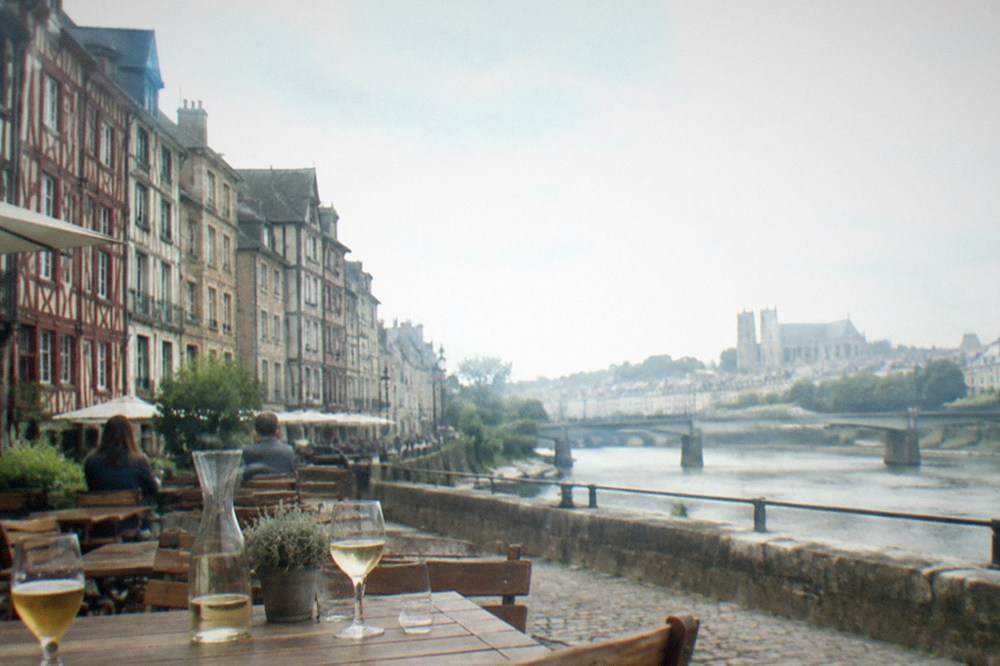
Four venue types define it: Le Lieu Unique in the former LU biscuit factory, which mixes a bar with a national theatre programme; the Hangar à Bananes warehouse strip with its clubs and event spaces; the guinguettes, open-air summer bars on the riverbanks that run roughly April to October; and the historic brasseries such as La Cigale near the theatre, where the evening starts with oysters and a Muscadet rather than a dance floor.
Le Lieu Unique opened on 30 December 1999 and 1 January 2000 inside the former LU factory, the biscuit maker founded in Nantes in 1846 whose Petit Beurre became a national icon. Entry to the building is free and the bar is the city's default crossroads of artists, students and visitors; a tower visit costs a few euro. It is the clearest single illustration of how Nantes nightlife works: a cultural institution with a bar attached, rather than a bar with entertainment bolted on.
The guinguettes are the seasonal heart of the scene. Le Voyage à Nantes lists enchanted guinguettes along the banks of the Loire, Erdre and canal each summer, with 2026 seasons for the three flagship riverside spots running from late March or early April through mid-September to mid-October. These are family-friendly by day and turn to live music and natural wine by night, and they are mostly free to enter. The Station Nuage, a floating structure, ran 1 April to 20 September 2026, and the Cantine du Voyage, a canteen of guest chefs, ran 2 April to 13 September 2026.
The historic brasseries anchor the early evening. La Cigale, the ornate brasserie near the Théâtre Graslin, is the famous one, and it sits in a district where pre-theatre dinner runs on the French clock. No individual venue's prices or hours were verified, so treat any specific figure you read elsewhere with care: what is verified is the pattern, and the Nantes Food guide covers the dishes, from beurre blanc to gâteau nantais, that appear on the plates around you.
If you would rather arrive already oriented, a guided evening eat through the old town is the efficient option, and the related tour below covers it.
How Late Does Transport Run In Nantes At Night?
The Naolib network of trams, buses and river shuttles is the backbone of Nantes nightlife transport, and the single most useful fact is that it is completely free for everyone from Saturday 00:00 to Sunday 23:59, airport shuttle excepted. A 24-hour ticket costs 6.80 EUR, a single one-hour ticket 1.80 EUR, and a 24-hour ticket for four people travelling together 15 EUR. The Navibus river shuttles take ordinary Naolib tickets, so the crossing to Trentemoult costs no more than a tram ride.
The network is unusually good for a city of this size: three tram lines over 45.6 km with 84 stations, a busway line, Chronobus routes and the three Navibus river lines. Lines 6 and 7 of the tram and line 8 of the busway are under construction with service expected at the end of 2027, which means roadworks in some nightlife zones in the meantime, but no existing line has been cut. The network carried 154 million trips in 2024.
The airport shuttle is the one exception worth flagging. It costs 10 EUR and is excluded from the weekend free travel, every day of the year; it runs about every 20 minutes from April to October and every 30 minutes from November to March, taking roughly 20 minutes between the airport and the station, and since 30 March 2026 it departs from the Gare routière at quai A. Its ticket is valid for an hour on the whole network, so a late arrival can still connect onwards. The Nantes Airport To City Centre guide has the detail.
The table below sets out what an evening's transport actually costs, using the verified Naolib fares:
Ticket
Price
What it covers
1-hour ticket
1.80 EUR
Any tram, bus, busway or Navibus within the métropole
10 x 1-hour ticket
17.80 EUR
Carnet of ten single journeys
24-hour ticket
6.80 EUR
Unlimited travel for one day, ideal for a heavy night out
24-hour ticket, 4 people
15 EUR
A group of four travelling together
Weekend travel
Free
All Naolib modes, Saturday 00:00 to Sunday 23:59, everyone
Airport shuttle
10 EUR
Airport to station, every day, excluded from weekend free travel
One planning note: the N2 Navibus link from Trentemoult to the Hangar à Bananes runs to about 20:00 in winter and to midnight in summer, with departures roughly every 20 minutes at peak times, so late return crossings from Trentemoult are a summer privilege. Check the live timetable on the day, because seasonal schedules shift.
What Does An Evening Out In Nantes Cost?
Beyond transport, crowd-sourced aggregates for Nantes suggest that drinks and everyday meals stay inexpensive, that a three-course dinner for two at a mid-range restaurant is a step up, and that the Pass Nantes covers museums and transport for a 24-hour period. These are city-level planning ranges from pricing sites, not promises from any named bar.
The aggregates come from cost-of-living trackers whose Nantes data was last refreshed around September 2026, and they show a wide band: an inexpensive meal stays cheap depending on the venue, while a mid-range dinner for two is a step up in price. A three-course dinner in a good restaurant in Nantes sits at a mid-range cost per person, with inexpensive options available and pricier choices a step up depending on the venue. Fine-dining tasting menus sit well above that, at considerably more per person. The full index of guides sits on Nantes Travel Guide.
Want To Eat Your Way Through The Old Town First?
Bookings usually come with free cancellation up to 24 hours ahead, so you can lock in a slot now and adjust your evening plans later.