Tour Bretagne In Nantes: The Tower, The Lost Rooftop Bar And The Belvedere To Come
The Tour Bretagne is the tallest structure in Nantes, a 32-storey concrete tower inaugurated in 1976 whose rooftop bar, Le Nid, closed in 2020 and whose conversion promises a free public belvedere at 107 metres by around 2028.
Short answer
The Tour Bretagne is a 32-floor tower in central Nantes, 120 metres to the roof and 144 metres to the antenna tip, inaugurated on 18 November 1976. Its rooftop bar Le Nid closed on 30 June 2020, so there is no public access in 2026 while the building is rehabilitated. A free panoramic belvedere at 107 metres is planned, with delivery expected around 2028 to 2029.
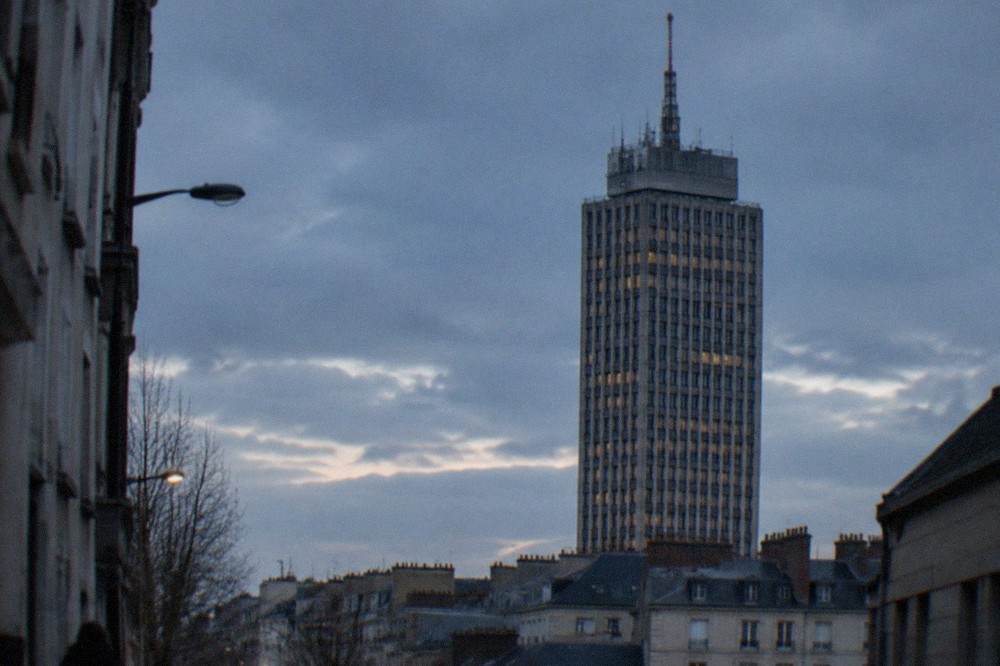
The Tour Bretagne is the tallest building in Nantes, in the Loire-Atlantique department of the Pays de la Loire region in western France, a 32-floor concrete tower whose roof stands 120 metres above the Place Bretagne and whose antenna reaches 144 metres. For fourteen years its 32nd floor held one of the most loved rooftop bars in France, Le Nid, a bar styled around a giant lounging bird. The bar closed for good on 30 June 2020, and the tower is now a construction site: a full rehabilitation will add a hotel, a cultural floor and, most significantly for visitors, a free public belvedere at 107 metres that Nantes Métropole expects to deliver around 2028 to 2029. That promise has made this otherwise ordinary office block one of the most watched buildings in the city.
What Is The Tour Bretagne In Nantes?
The Tour Bretagne is a 32-floor office tower in central Nantes, France, standing 120 metres to the roof and 144 metres to the antenna tip, which makes it the tallest building in the city. It was inaugurated on 18 November 1976 and spent most of its life as offices rather than a visitor attraction. Its one tourist era ran from the opening of the Le Nid rooftop bar on its top floor until the bar closed on 30 June 2020, since when there has been no public access.
The figures matter here because they are so often misstated. The 144-metre figure that circulates in most guides is the antenna tip, not the building: the roof itself is 120 metres up. The tower has 32 floors. Those three numbers, published on the French Wikipedia page for the building and echoed by Nantes Métropole, are the only reliable measurements of the structure, and any guide that gives a different height is repeating an error.
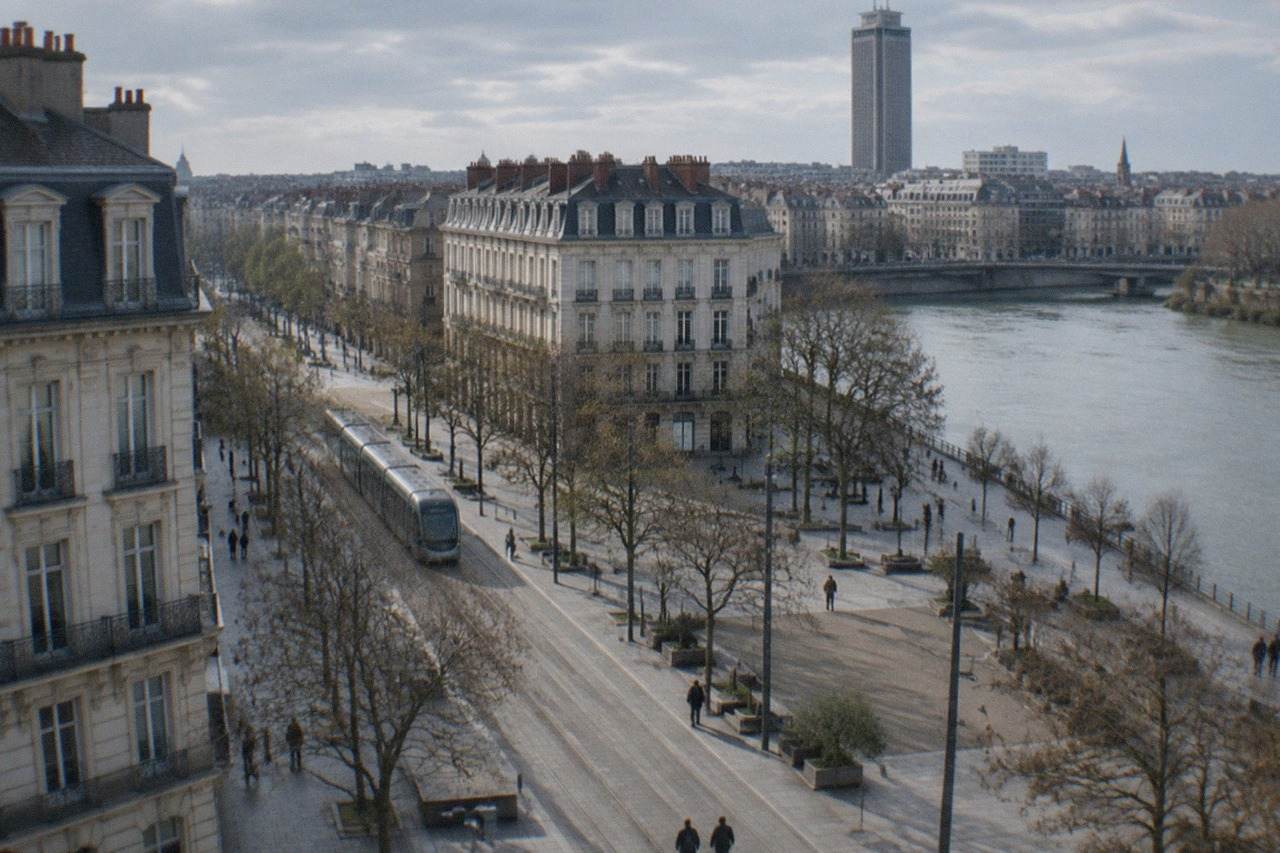
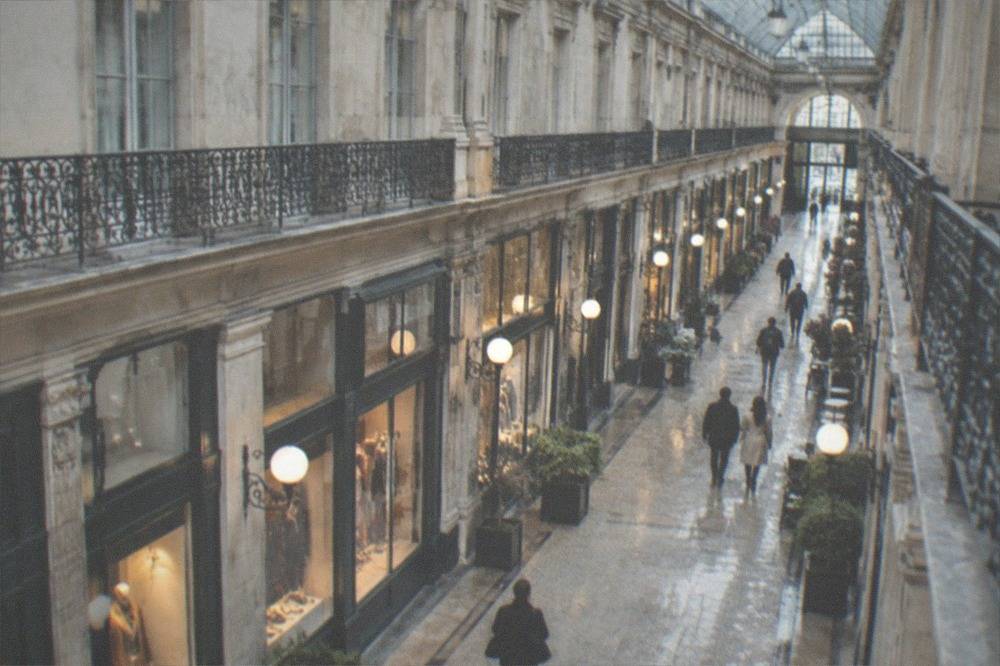
The tower sits at the top of the rue de Calais and marks the northern edge of the city centre, just beyond the ring of historic quais and squares that make up old Nantes. It is a short walk from the Passage Pommeraye, the 1843 shopping arcade that slopes down three floors toward the rue de la Fosse, and from the Château des ducs de Bretagne, the castle that anchors the other end of the historic core. In a city whose centre is mostly five and six storeys of old stone, the tower reads as a deliberate statement of the urban ambition of its era.
Why Can You Not Go Up The Tour Bretagne In 2026?
You cannot go up the Tour Bretagne in 2026 because its rooftop bar, Le Nid, closed permanently on 30 June 2020, and the whole building entered a multi-year rehabilitation that is still under way. The tower has no public viewing floor, no observation deck and no rooftop access of any kind while the works continue. The rehabilitation includes asbestos removal, which began around 2025, and full delivery is expected around 2028 to 2029.
Le Nid deserves its own paragraph because so many international guides still list it as a Nantes highlight. The bar occupied the 32nd floor and was furnished with the lounging body of a giant white bird, wings folded across the floor. It served drinks at modest prices with a 360-degree view over the Loire, the Erdre and the rooftops of the old city. The town hall's own communication about the tower's "10 surprising figures" confirms the belvedere plan, and the closure date of 30 June 2020 comes from the same body of reporting that tracks the building's fate. Any source that tells you to drink at Le Nid is at least six years out of date.
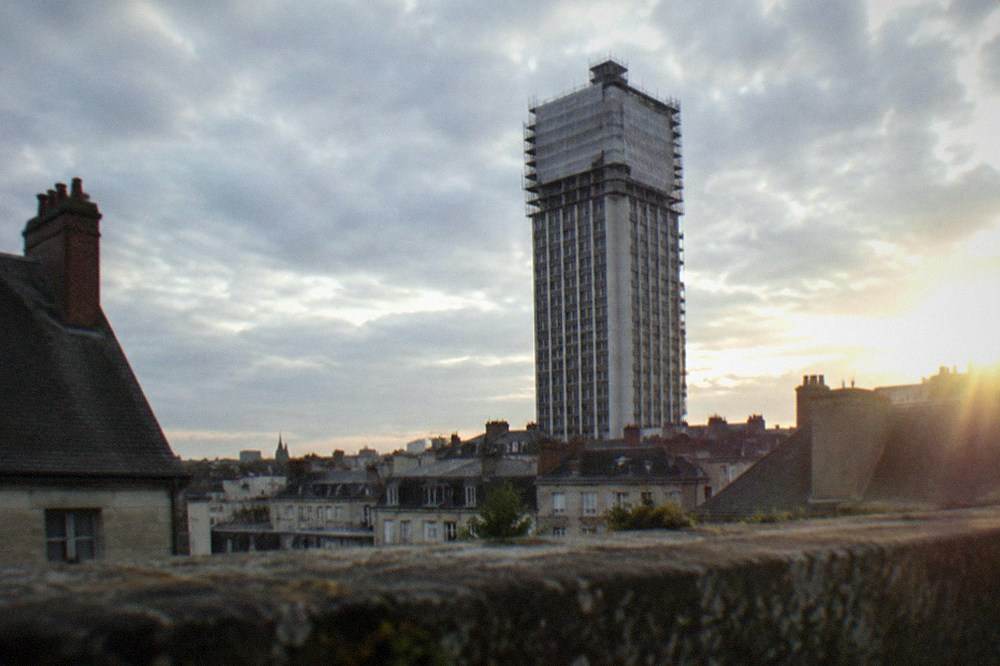
The closure is not a temporary one. The tower's concrete frame required full asbestos removal before any conversion work could begin, and the rehabilitation project revealed in November 2024 reorganises the building from top to bottom. Nantes Métropole's project pages describe decontamination phases running from 2025 onward, with the new tower delivered in the 2028-2029 window. Until then, the honest advice is to admire the Tour Bretagne from the street and save your skyline views for the end of a walk along the Erdre or the quais of the Loire.
What Will The New Tour Bretagne Look Like After 2028?
After the rehabilitation, due around 2028 to 2029, the Tour Bretagne will gain a free public panoramic belvedere at 107 metres on level 34, a rooftop cultural and conviviality space on level 33, and a new base building with a 4-star hotel of roughly 100 rooms plus a restaurant with a public terrace. The project was revealed in November 2024 by Nantes Métropole and PCA-STREAM, the design practice behind it. The belvedere will be free to enter, which is the detail that matters most to visitors.
The most striking reversal is the free access. Le Nid was a bar: you went up to buy a drink, and the view was the by-product. The planned belvedere at 107 metres, with a full 360-degree panorama, will be a public facility, closer in spirit to the free viewing platforms of other French cities than to a commercial rooftop. Nantes Métropole presents it as the return of public life to the tower rather than the return of a business.
The conversion also rethinks the base. The 1976 tower famously turned its back on the street, with a podium and blank walls at pavement level. The new scheme adds a lower base building containing the hotel, around 100 rooms in a 4-star category, and a restaurant opening onto a public terrace. The design intent, as the métropole's questions-and-answers page puts it, is to stitch the tower back into the quartier rather than leave it as an object to look at from a distance.
For now, treat all of this as planned rather than open. The delivery window is approximate, the belvedere is a promise on paper, and this site flags it exactly that way: a free public belvedere at 107 metres is planned, with delivery expected around 2028 to 2029, and no public rooftop access exists in the meantime. Visitors booking trips for 2026 or 2027 should plan around the tower being a construction site, visible and photographable but not enterable.
What To Do Near The Tour Bretagne In Nantes
The best things to do near the Tour Bretagne in 2026 are all at street level: the Passage Pommeraye five minutes downhill, the Graslin quarter with its théâtre and the brasserie La Cigale, the Nantes Cathedral with its partial reopening since 27 September 2025, and the Jardin des Plantes further east. None of them depends on the tower, and several are free. The table below gathers what each one costs and its current status.
The tower marks the boundary between the hyper-centre and the northern districts, so a walk that starts at its base and drifts south covers some of the best of Nantes. The Passage Pommeraye, built in 1843 on three floors that step down the slope, is free to enter and open every day. Graslin brings the théâtre, the place Graslin and the famous Art Nouveau interior of La Cigale, and the Nantes Cathedral, which partially reopened on 27 September 2025 after the 2020 fire and aims for a full reopening in 2028, sits a few streets east.
| Attraction near the tower | Entry cost | Status in 2026 |
|---|---|---|
| Passage Pommeraye | Free | Open, unchanged since 1843 |
| Nantes Cathedral | Free | Partially reopened 27 Sept 2025, works to 2028 |
| Théâtre Graslin and place Graslin | Free to see the square | Active performance venue |
| La Cigale brasserie | Menu prices apply | Open, historic interior |
| Château des ducs de Bretagne, courtyard | Free | Open daily, 8:30-19:00 |
| Château museum (Musée d'histoire) | 9 EUR full, 5 EUR reduced | Open, closed Mondays |
| Jardin des Plantes | Free | Open, seasonal hours |
If the tower's closure leaves a gap in your plans, the two biggest paid sights in the city fill it easily. The château's museum of Nantes history covers 32 rooms and more than 1,150 objects, including the city's difficult slave-trade history, and its courtyard and ramparts cost nothing at all. On the Île de Nantes, Les Machines de l'île runs the Grand Éléphant, the Galerie des Machines and the Carrousel des Mondes Marins, each at 12 EUR full price, with a pause on elephant rides from 2 November 2026 to 28 February 2027 for maintenance.
How Tall Is The Tour Bretagne Compared With The Rest Of Nantes?
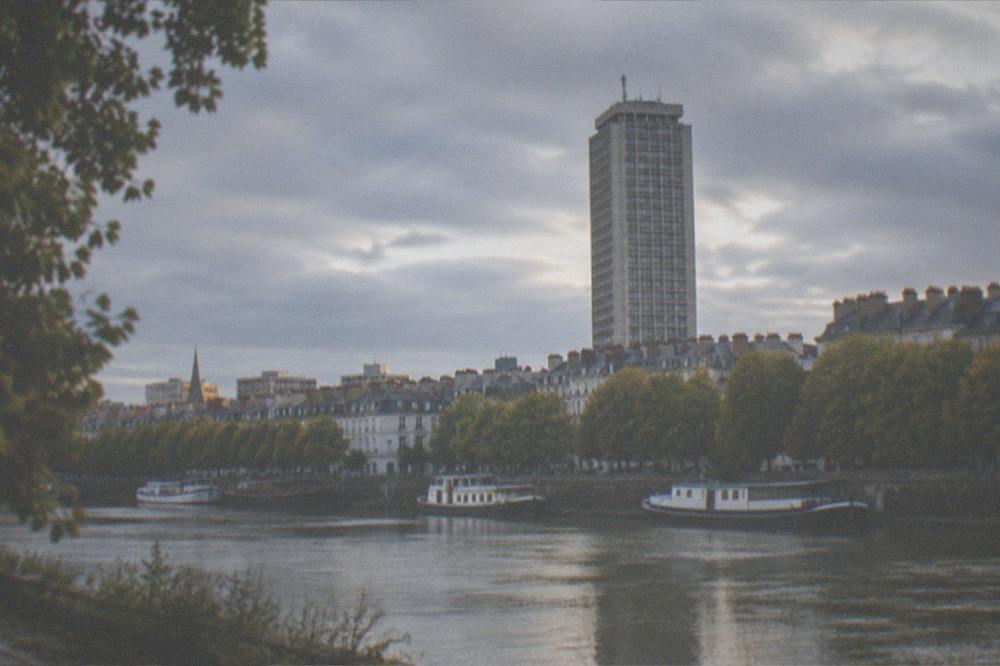
The Tour Bretagne stands 120 metres to the roof and 144 metres to the antenna tip, with 32 floors, and nothing else in Nantes comes close. It is the tallest building in the city by a wide margin over the cathedral and the stone blocks of the centre, which mostly top out at six storeys. The two numbers are often confused: 144 metres is the antenna, 120 metres is the building, and a guide that gives one for the other is wrong.
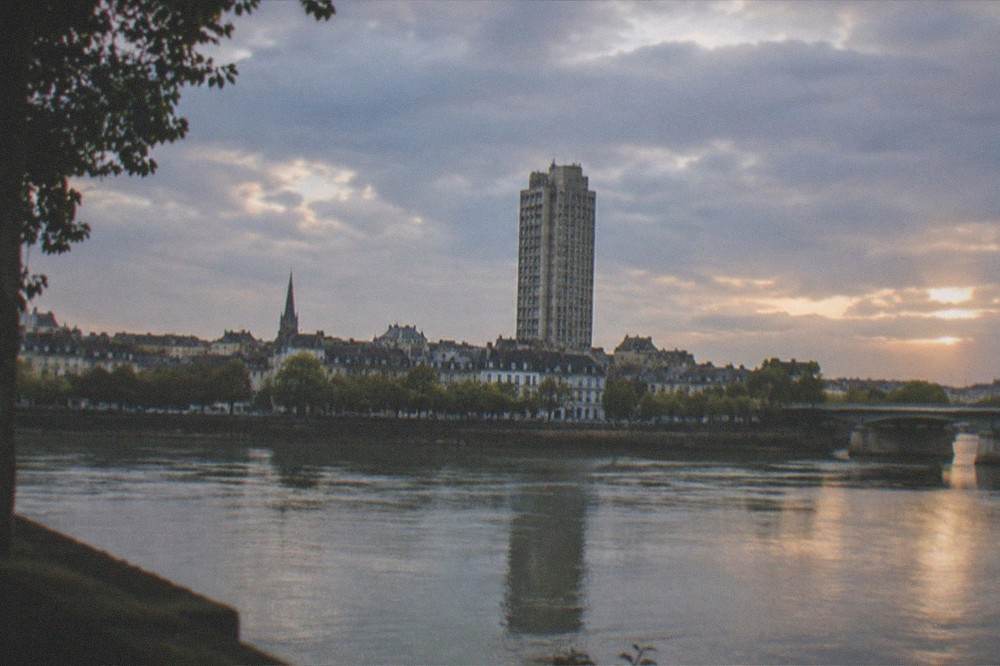
The height contrast is the whole visual point of the tower. Central Nantes is a low city of stone and slate, its skyline ruled by the spire and towers of the cathedral rather than by glass. The Tour Bretagne breaks that skyline deliberately, the way planning fashions of its period did across France, and because the surrounding streets are so low the tower is visible from an unusually long way off, from the quais of the Loire and from parts of the Île de Nantes.
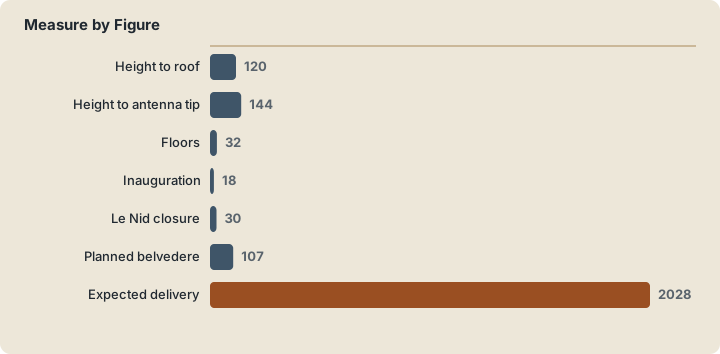
| Measure | Figure | Note |
|---|---|---|
| Height to roof | 120 m | The building itself |
| Height to antenna tip | 144 m | Includes the antenna, often misquoted as the building height |
| Floors | 32 | Counted above the base |
| Inauguration | 18 November 1976 | Date given by Nantes Métropole |
| Le Nid closure | 30 June 2020 | Rooftop bar, level 32 |
| Planned belvedere | 107 m | Free public access, level 34, planned |
| Expected delivery | 2028 to 2029 | Approximate, project under way |
The 107-metre figure for the future belvedere is worth pausing on. The viewing level will sit slightly below the roof height, which means the panorama will be genuine but not the absolute summit: the machine rooms and technical floors of the top of the tower stay above it. Anyone picturing a mountain-top platform should recalibrate to a high, glazed gallery circling the building at three-quarters height.
A Short History Of The Tour Bretagne In Nantes
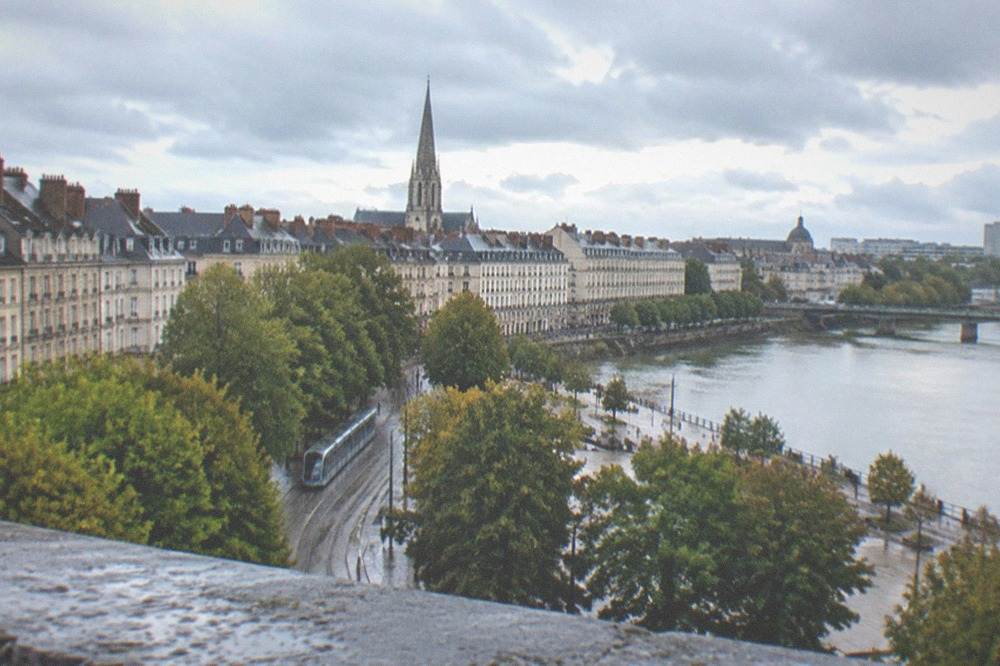
The Tour Bretagne was inaugurated on 18 November 1976 as part of the post-war redevelopment of central Nantes, and it held offices for most of its first four decades. Its rooftop bar Le Nid opened on the 32nd floor and became one of the city's signature attractions, then closed permanently on 30 June 2020. The rehabilitation project was revealed in November 2024, decontamination began around 2025, and the converted tower with its free belvedere is expected around 2028 to 2029.
The 1976 date places the tower squarely in France's grandes ensembles era of urban renewal, when city centres were cut through with ring roads and office towers. Nantes was no exception, and the Place Bretagne district around the tower's base reflects that thinking. What saved the building's public reputation was not its architecture but Le Nid, which turned the top floor into a destination in its own right, with a giant bird stretched across the furniture and the whole Loire basin laid out beneath the windows.
The story since 2020 has been one of slow reinvention. The closure of the bar coincided with the pandemic year, which made the date easy to forget in the wider upheaval, but it was a planned closure tied to the tower's condition, not a casualty of lockdown. The November 2024 project reveal by Nantes Métropole and the PCA-STREAM practice, confirmed on the métropole's own pages, gave the building a second act: hotel at the base, culture on level 33, the free belvedere on level 34 at 107 metres. In February 2026 the surrounding works were still the visible face of the project.
| Year | Event in the tower's history |
|---|---|
| 18 November 1976 | Tour Bretagne inaugurated in central Nantes |
| 30 June 2020 | Le Nid closes permanently; tower loses public access |
| November 2024 | Conversion project revealed: hotel, culture floor, free belvedere |
| 2025 onward | Asbestos removal and decontamination phases |
| 2028 to 2029 | Expected delivery of the rehabilitated tower and 107 m belvedere |
The wider city that grew up around the tower deserves a sentence of its own history. Nantes was the first French port of the Atlantic slave trade, running 1,714 of at least 4,220 French expeditions, about 43 percent of the national total, before withdrawing in 1830, a history documented at length at the free Mémorial de l'abolition de l'esclavage on the quais. Jules Verne was born on the Île Feydeau in 1828, LU baked its first Petit Beurre here in 1886, and the tram returned in 1985 as France's first modern network. The Tour Bretagne, at barely fifty years old, is one of the youngest things in that story.
Where To Get The Best Views Of Nantes While The Tower Is Closed
With the Tour Bretagne closed, the best views of Nantes in 2026 come from the river rather than from any building: the quais of the Loire, the banks and cruise boats of the Erdre, and the riverbus crossing to Trentemoult. None of these is a tower, and none charges anything close to a skyscraper ticket, because the Navibus river crossings use ordinary Naolib tickets at 1.80 EUR for a single hour of validity across the network.
The Erdre, the river that meets the Loire at Nantes and that the city likes to call its most beautiful avenue, offers the most distinctive perspectives. A cruise on the Erdre passes under the bridges of the Île de Versailles and along the wooded banks, and the cruise product in the site's roster runs three hours aboard the Na Boa boat. The three Navibus lines, N1 to Trentemoult, N2 to the Hangar à Bananes since its November 2025 extension, and N3 on the Erdre itself, all take standard Naolib tickets, and the network is free on weekends from 00:00 Saturday to 23:59 Sunday for everyone, with the airport shuttle the one standing exception.
| Way to see Nantes from above or across the water | Cost | Why it works |
|---|---|---|
| Quais of the Loire between the château and Trentemoult crossing | Free | Low, open sightlines across the river to the old port |
| Navibus N1 to Trentemoult | 1.80 EUR standard Naolib ticket | River-level crossing with the old town behind you |
| Navibus N2 to the Hangar à Bananes | 1.80 EUR standard Naolib ticket | Links Bas-Chantenay with the Île de Nantes |
| Three-hour cruise on the Erdre | Price on the operator's listing | The wooded upper river and the Île de Versailles |
| Rue Crébillon and place Graslin on foot | Free | The tower visible over the historic rooftops |
The weekend-free rule is worth its own line of planning: on Saturdays and Sundays the whole Naolib network, trams, buses and Navibus included, costs nothing for everyone, visitors included, though the 10 EUR airport shuttle is excluded from that generosity. For a view-hunting day built around the river, that single fact can carry an entire afternoon of crossings.
When To See The Tour Bretagne And The Nantes Skyline
The best months to photograph the Tour Bretagne and the Nantes skyline are April to September, when the Météo-France normals for the Nantes-Bouguenais station give mean daily maxima from 16.2 C in April to 25.4 C in August. July is the driest month at 44.2 mm against an 819.5 mm annual total, and December the wettest at 101.0 mm. Nantes has a temperate oceanic climate, not a Mediterranean one.
The normals, measured over the 1991-2020 period at the Nantes-Bouguenais station, tell the real story of the city's weather. Sunshine runs from 72.6 hours in January to 232.6 hours in August, which means the classic postcard shot of the tower above sunlit rooftops is overwhelmingly a summer phenomenon. Frost days, 7.8 in January, fall to zero from May to October, so winter photography means grey light but also empty streets and bare plane trees along the Erdre.
| Month | Mean max C | Rain mm | Sunshine h |
|---|---|---|---|
| January | 9.3 | 87.9 | 72.6 |
| April | 16.2 | 58.3 | 182.7 |
| July | 25.1 | 44.2 | 229.0 |
| August | 25.4 | 50.3 | 232.6 |
| September | 22.4 | 59.5 | 198.7 |
| December | 9.8 | 101.0 | 77.6 |
One caution for the current climate: the old record figures have been rewritten. The all-time record high for the station is now 42.2 C, set on 24 June 2026, which beat the previous 42.0 C record of 18 July 2022, and February 2026 brought a Loire flood to 8.18 metres at the Pont Anne-de-Bretagne, the first time above 8 metres in about 15 years. A trip planned around the river quais should keep an eye on conditions in wet winter months, and the free Mémorial on the quais closes during Loire floods.
How The Tour Bretagne Fits Into Modern Nantes
The Tour Bretagne fits into modern Nantes as the city's most visible piece of 1970s planning now being repurposed for a post-industrial, culture-led city, alongside the Machines de l'île on the old shipyard island, Le Lieu Unique in the former LU biscuit factory, and the Hangar à Bananes on the quais. Each of these projects took a working structure and gave it a public second life, and the tower is simply the last and tallest of them to reach that stage.
The pattern is unmistakable once you see it. The former LU factory on the Île Feydeau became Le Lieu Unique, the national theatre that opened over the 1999-2000 new year and now anchors the city's contemporary arts scene. The Dubigeon shipyard land on the Île de Nantes became Les Machines de l'île, inaugurated on 30 June 2007 with the Grand Éléphant, whose rides pause from 2 November 2026 to 28 February 2027 for maintenance. The banana warehouse on the old port became the Hangar à Bananes, now a strip of bars and galleries with a riverbus link since November 2025. The Tour Bretagne's conversion, hotel below and free belvedere above, is the same instinct applied to an office block.
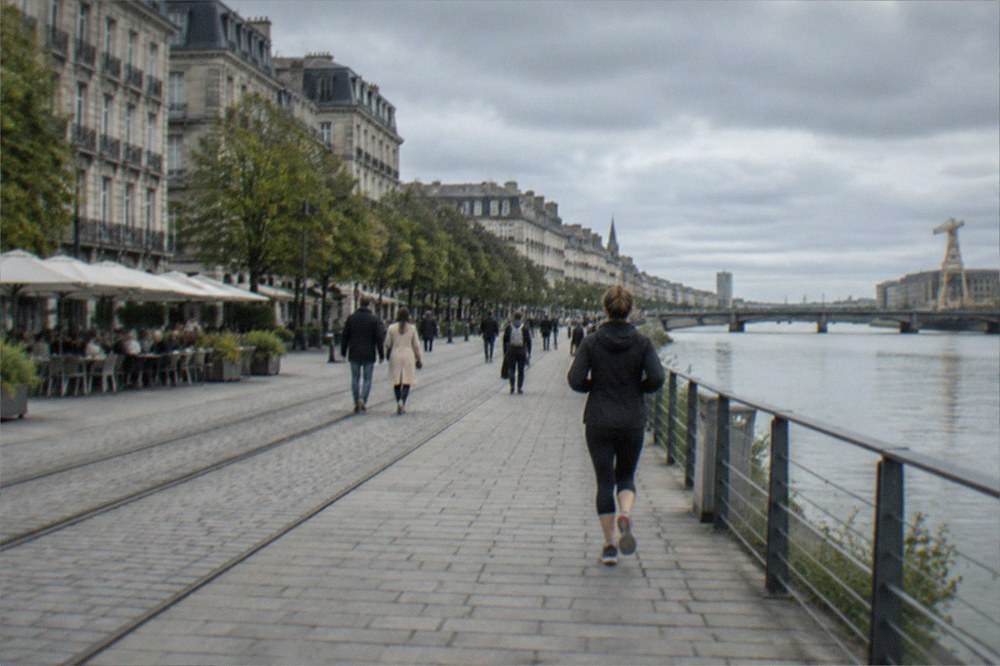
That context also explains why the tower's future matters to locals more than its past. Nantes was European Green Capital in 2013, and Time Magazine had already called it the most liveable city in Europe in 2004, as the European Commission's own award page records. A city with that self-image cannot leave its tallest building as a sealed asbestos site forever, and the free belvedere is framed as giving the skyline back to the people who live below it. The Jules Verne Museum is heading toward its own move to the Cité des Imaginaires by 2028, so the tower's rebirth will land in a city already mid-way through a decade of cultural construction.
The green line painted along the city's pavements, about 20 kilometres of it according to Le Voyage à Nantes, threads past many of these sites each summer, and the 2026 edition ran from 4 July to 6 September with installations reaching into the cathedral crypts for the first time. A visitor following the line will pass beneath the Tour Bretagne's scaffolded flank at some point on the northern loop, which is currently the only way to "visit" it.
Common Questions About The Tour Bretagne In Nantes
Can you go up the Tour Bretagne in Nantes?
No. The rooftop bar Le Nid closed on 30 June 2020 and the tower has had no public access since, while rehabilitation works continue. A free public belvedere at 107 metres is planned, with delivery expected around 2028 to 2029, but until then the tower is a construction site with no visiting floor of any kind.
Is Le Nid still open in Nantes?
No. Le Nid closed permanently on 30 June 2020. The tower is being converted, and its top floors will become a cultural space on level 33 and a free panoramic belvedere on level 34, but nothing is open to the public in 2026. Any guide listing Le Nid as a current Nantes attraction is several years out of date.
How tall is the Tour Bretagne?
The Tour Bretagne stands 120 metres to its roof, 144 metres to the tip of its antenna, and has 32 floors. The 144-metre figure is often quoted as the building's height, but it includes the antenna; the roof itself is 120 metres up. It remains the tallest building in Nantes by a wide margin.
What will replace Le Nid at the top of the tower?
A free public panoramic belvedere at 107 metres on level 34, with a rooftop cultural and conviviality space on level 33 below it, according to the project revealed by Nantes Métropole in November 2024. The belvedere will be free to enter, unlike the bar it replaces, and delivery is expected around 2028 to 2029.
What is there to see near the Tour Bretagne?
The Passage Pommeraye, the 1843 glass-roofed arcade, is a short walk downhill, and the Graslin quarter with its théâtre and the historic La Cigale brasserie sits just beyond it. The Nantes Cathedral, partially reopened on 27 September 2025, and the Château des ducs de Bretagne with its free courtyard are both within easy walking distance of the tower's base.
When was the Tour Bretagne built?
The Tour Bretagne was inaugurated on 18 November 1976, in the post-war redevelopment of central Nantes. It spent most of its first four decades as an office tower, with the Le Nid rooftop bar as its only public attraction, and entered full rehabilitation after the bar closed in 2020.
What To Remember About The Tour Bretagne Before You Visit Nantes
The essentials are simple: the Tour Bretagne is the tallest building in Nantes at 120 metres to the roof and 144 metres to the antenna, it was inaugurated on 18 November 1976, its Le Nid rooftop bar closed on 30 June 2020, and it will not be visitable until a free belvedere at 107 metres opens, expected around 2028 to 2029. In 2026 you look at it, you do not go up it, and you should plan your skyline moments on the quais and the Erdre instead.
Every visit to Nantes eventually brushes against the tower, whether you come for the Machines de l'île, the château or the food, because its scaffolded bulk is visible from half the city. Treat it as a piece of the skyline rather than a destination, photograph it from the rue Crébillon or the quais of the Loire, and keep an eye on Nantes Métropole's project pages as the delivery window approaches. When the belvedere finally opens, free and 107 metres above the Place Bretagne, the queue will tell its own story, and this Nantes Travel Guide will be here to tell you what to expect at the top.