Gateau Nantais
Gâteau nantais is the almond and rum cake that carries the name of Nantes, the capital of the Loire-Atlantique department in the Pays de la Loire region of western France. This guide covers where the cake came from, how it is built, and where to find the best slice in the city today.
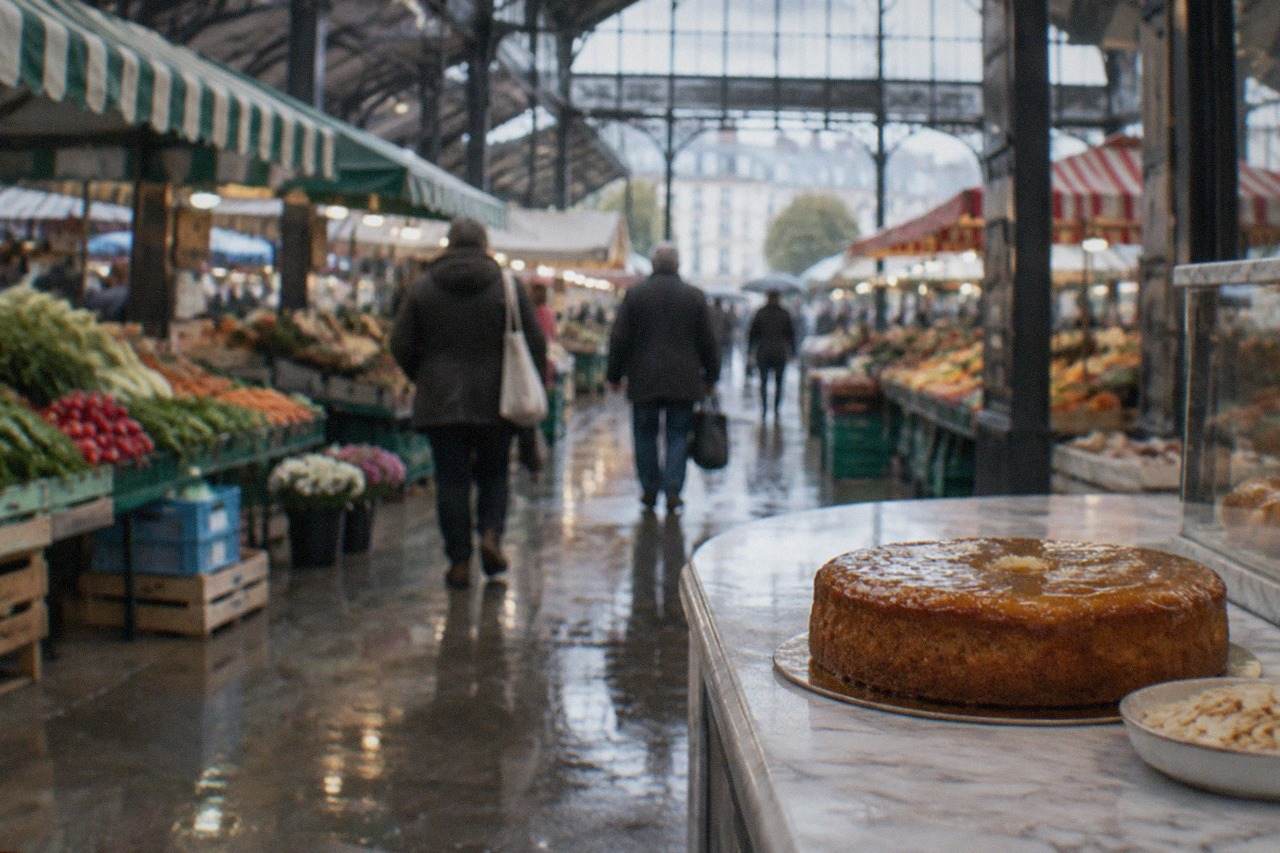
Short answer
Gâteau nantais is a quatre-quarts style almond cake soaked in rum and lemon syrup, glazed with rum and sugar, and best eaten after resting for a day. Its origins are attributed to around 1820 and a Nantes baker, it was produced industrially by LU for much of the 20th century, and it is now an artisanal patisserie specialty.
Gâteau nantais is the almond and rum cake of Nantes, a city on the Loire in the Loire-Atlantique department of the Pays de la Loire region of western France, and it remains one of the most distinctive sweets in the whole French west. It is a rich, buttery construction: a quatre-quarts base built on salted butter, eggs, flour and almond meal, soaked in a rum and lemon syrup, sometimes finished with an apricot gelée, and sealed with a rum-and-sugar glaze. The cake has had a clear retour en force in recent years, as patisseries across the city have taken it back into their windows after decades in which it lived mostly in the industrial shadow of the LU brand. This guide from the Nantes Travel Guide editorial desk sets out what the cake is, where its story sits in the wider history of Nantes food, how to read a patisserie counter with confidence, and how to track down an honest slice.
What Is Gateau Nantais?
Gâteau nantais is a traditional Nantes cake in the quatre-quarts family, meaning it is built from roughly equal weights of salted butter, sugar, eggs and flour, with a generous proportion of ground almonds folded through the batter. After baking it is soaked in a syrup of rum and lemon, sometimes layered with an apricot gelée, and finished with a glaze of rum and sugar. The cake is at its best after resting for a day or more, which lets the syrup settle through the crumb.
That resting period is the detail that separates a proper gâteau nantais from a rushed imitation. The rum needs time to work its way from the edges into the centre, softening the crumb and mellowing the alcohol into something closer to a warm, rounded sweetness. A cake cut on the day it was baked tastes of separate parts, cake here, syrup there. A cake cut on the second day tastes of one thing. Patience is the ingredient that costs nothing, and it is the one most home cooks try to skip.
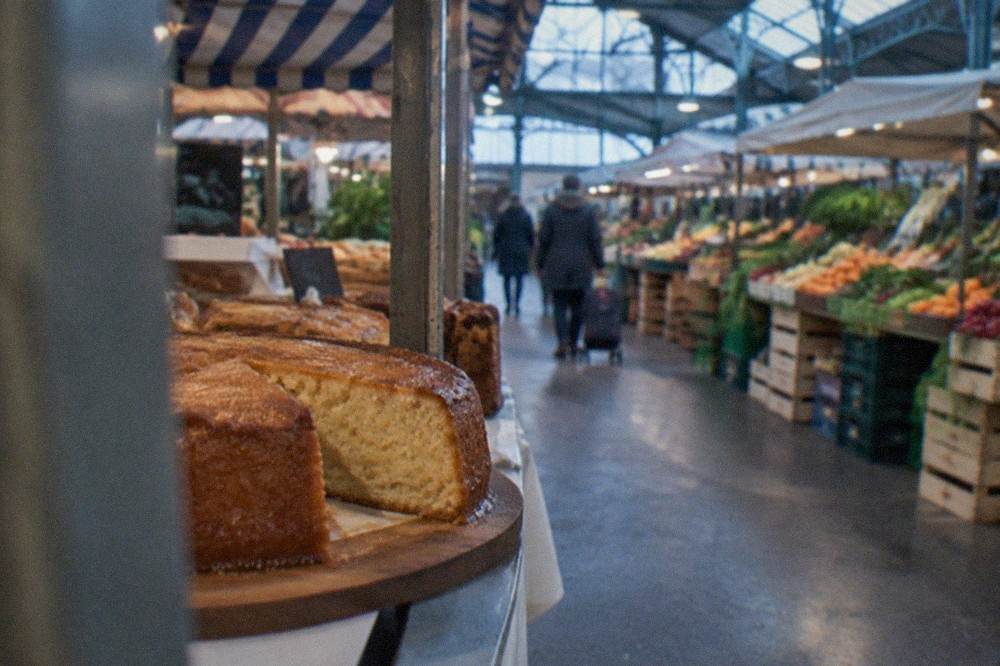
The salted butter matters too. This is the Loire-Atlantique, the borderland of Brittany where beurre salé is a way of life rather than a novelty, and the salt in the butter pushes back against the sweetness of the syrup and glaze. The almond meal gives the cake its characteristically dense, slightly grainy-then-melting texture, quite unlike a light sponge, and it is the almond rather than the rum that most first-time tasters comment on. The rum is the scent of the cake; the almond is its body.
The quatre-quarts label is worth pausing on, because it tells you how to read the recipe. A quatre-quarts takes its name from four quarters, butter, sugar, eggs, flour, in equal weight, and the gâteau nantais takes that plain, homely structure and layers two luxuries onto it: the almond meal in the batter and the rum in the soak. In other words it is a farmhouse method with a port's ingredients, which is a fair description of Nantes cuisine in general.
Where Did Gateau Nantais Come From?
The cake's origins are linked to around 1820 and attributed to a baker in Nantes. For much of the 20th century it was produced industrially by LU, the biscuit maker founded in the city in 1846, which carried it far beyond the Loire. In recent years production has shifted back to artisanal makers, and the cake has made a noted return, a retour en force, in Nantes patisseries.
The LU connection is central to the story. Jean-Romain Lefèvre set up as a biscuit maker in Nantes in 1846, married Pauline-Isabelle Utile in 1850, and the Lefèvre-Utile firm grew into one of France's most famous food brands, with production moving in 1886 to the Loire-side factory facing the château. A cake carrying the city's name, made with the port's imported sugar, rum and almonds, was a natural product for a firm like that to take to a national audience, and for decades it did exactly that.
The 1820 date matters for another reason: it places the cake firmly in Nantes' great commercial century, when the port was the first slave-trading port in France, running 1,714 of at least 4,220 French expeditions, some 43% of the French trade, before the city's traders withdrew in 1830. The ingredients that define gâteau nantais are, in a very literal sense, port ingredients, arriving on the same Atlantic routes that carried a far grimmer commerce. Readers who want that history in full should turn to the guide to Nantes history and the deeper account of the Nantes slave trade.
How Is Gateau Nantais Made?
A gâteau nantais begins as a quatre-quarts, with equal weights of salted butter, sugar, eggs and flour, and a substantial quantity of almond meal worked into the batter. Once baked and cooled it is soaked in a syrup of rum and lemon, sometimes layered with an apricot gelée, and then coated in a glaze made from rum and sugar. The finished cake is left to rest for at least a day before it is cut, which is the step that defines its texture.
Every element in that method is doing a specific job, and the table below breaks them down stage by stage.
| Stage of the recipe | What goes in | What it does |
|---|---|---|
| Base batter | Salted butter, sugar, eggs, flour in equal weights | Builds the classic quatre-quarts structure |
| Almond element | Ground almonds or almond meal | Gives the dense, moist crumb and the cake's identity |
| Soak | Rum and lemon syrup, applied after baking | Perfumes and softens the crumb as it rests |
| Optional layer | Apricot gelée | Adds fruit acidity between the layers |
| Finish | Rum-and-sugar glaze | Seals the cake and delivers the boozy top note |
| Rest | At least a day, ideally more | Lets the syrup distribute evenly through the cake |
The proportions are not exotic; the discipline is. A cake this rich collapses into greasiness if the butter is not properly creamed, and dries out if the soak is skimped. This is why the artisanal revival has been welcomed locally: small batches allow the resting time that industrial schedules historically compressed, and a patisserie that bakes on Monday and sells through the week is delivering the cake as it was meant to be eaten.
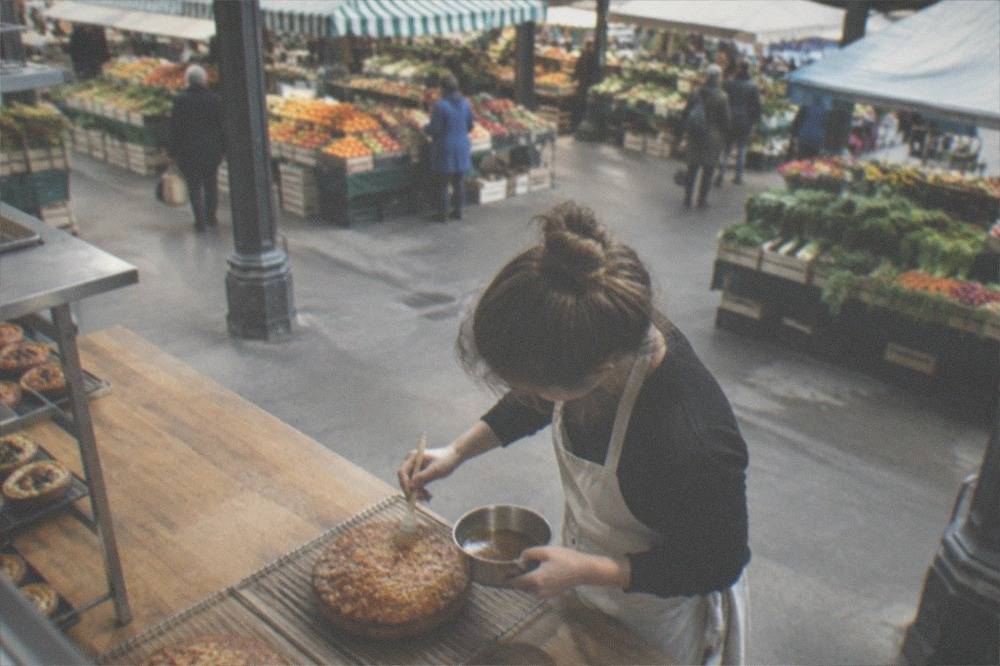
Home bakers should not be put off. The cake contains no difficult technique, no tempered chocolate, no laminated dough, and it improves for two or three days after baking, which makes it an ideal make-ahead dessert for the whole family. Weigh everything, including the eggs, because the quatre-quarts logic only works if the four base ingredients genuinely match. Soak gradually rather than flooding, and give the glaze time to set before slicing. Anyone planning a wider food trip through the city should read the main Nantes food guide alongside this one, and the muscadet tasting below is a natural companion purchase for the evening you cut the cake.
The cake's history is tied to the port of Nantes, whose trade connections brought rum from the Caribbean into local kitchens, and bakers there turned that imported spirit into the cake's signature perfume. The salted butter is not an afterthought either; it comes from the region's dairying tradition and it seasons the crumb in a way unsalted butter cannot, so substitutions change the character of the cake more than most bakers expect.
For visitors who want to taste before they bake, the cake is sold by the slice and as whole loaves in Nantes patisseries, and it pairs naturally with a glass of muscadet, the local white wine, whose dry cut balances the richness. Some shops also sell miniature versions, which make practical gifts and let you compare the work of different bakers side by side.
Where To Try Gateau Nantais In Nantes?
Gâteau nantais is now found primarily in artisanal patisseries rather than supermarkets, and names cited among the city's makers include Maison Juhel and Esthète. The cake keeps and travels far better than most patisserie items thanks to its syrup and glaze, which makes it a realistic souvenir to carry home. It also appears on the dessert lists of restaurants that cook the traditional Loire-Atlantique repertoire.
A practical note: the cake's resting requirement means most patisseries bake it in advance rather than to order, so you are buying a finished, matured cake rather than something from the morning's batch. That is a strength, not a compromise. Ask when it was baked, and favour a shop that can tell you without hesitating; a maker who knows their cake's age is a maker who cares about the rest.
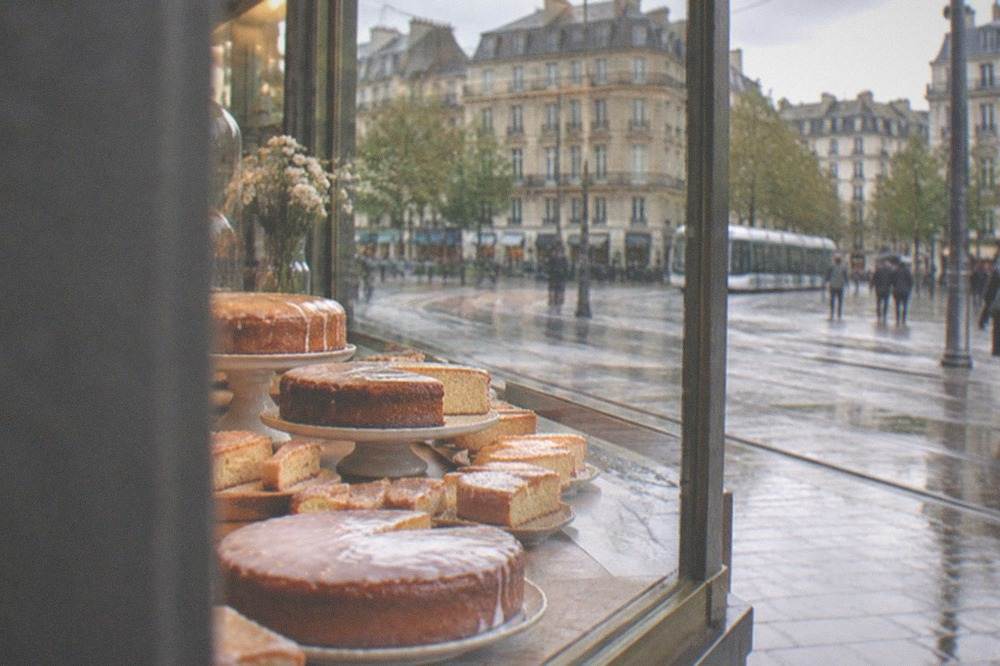
Visitors building a food-focused day around the city centre can pair a patisserie stop with the best restaurants in Nantes, and a guided walk makes the routing simple. The Check availability link beside this paragraph goes to an all-inclusive Old Town food tour whose live listing carries the current price, and the Nantes walking tours guide compares the options in full.
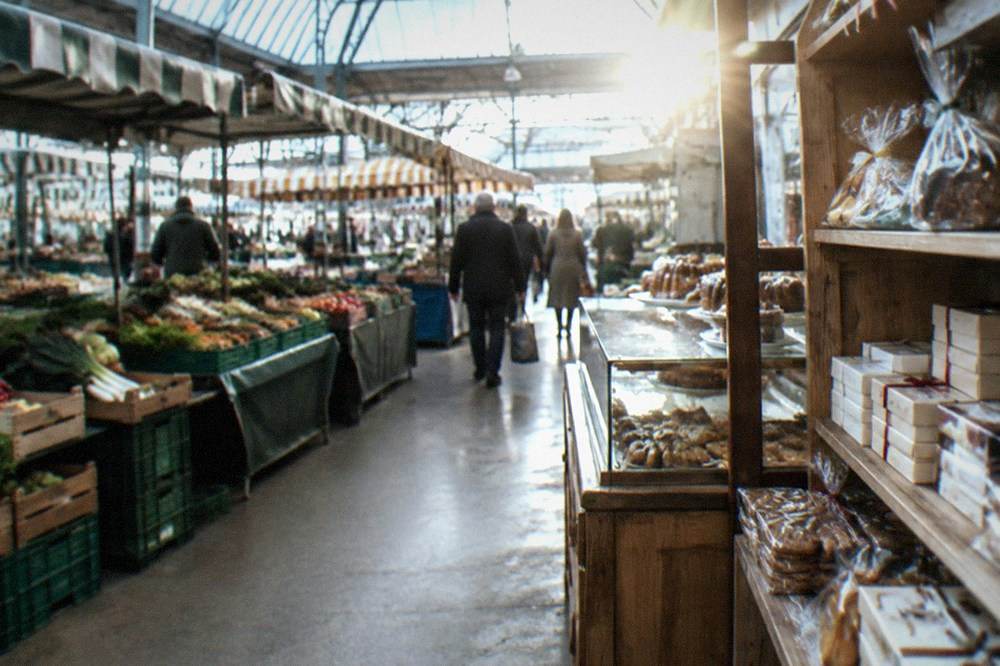
Between tasting stops, the Talensac market remains the city's benchmark food market, open Tuesday to Friday from 8:00 to 13:00, Saturday and Sunday from 8:00 to 13:30, and closed on Mondays apart from public holidays. It is more of a raw-ingredients stop than a cake stop, but it gives the clearest picture of what the region's larder actually looks like, and it puts the salted butter and seasonal fruit that surround the cake in context.
How Does Gateau Nantais Compare With Other Nantes Sweets?
Nantes has three landmark sweets, and gâteau nantais is the oldest of them. Its origins are linked to around 1820, the Petit Beurre biscuit was invented by LU in 1886, and the berlingot nantais hard candy industry grew from a confiserie founded in 1895 near the port. Gâteau nantais is the only one of the three that is primarily an artisanal patisserie product today, and the only one built around rum.
| Nantes sweet | Earliest date in the record | Key ingredients | Where it stands today |
|---|---|---|---|
| Gâteau nantais | Around 1820 | Almond, salted butter, rum and lemon syrup | Artisanal patisseries, a strong recent revival |
| Petit Beurre (LU) | 1886 | Butter, flour, sugar | Mass produced, made at La Haye-Fouassière since 1986 |
| Berlingots nantais | Confiserie founded 1895 | Sugar, flavourings, typically seven flavours | Production largely shifted to Boufféré around 2011 |
The comparison is worth drawing because visitors routinely confuse them. The berlingot is a boiled-sugar candy in a tetrahedron shape, sold in rainbow jars and traditionally made in seven flavours; the Petit Beurre is a crisp butter biscuit with scalloped edges; the gâteau nantais is none of those things, a soft, boozy, almond-rich cake you eat by the slice with a fork. The companion guides to berlingots nantais and LU Petit Beurre cover the other two in detail.
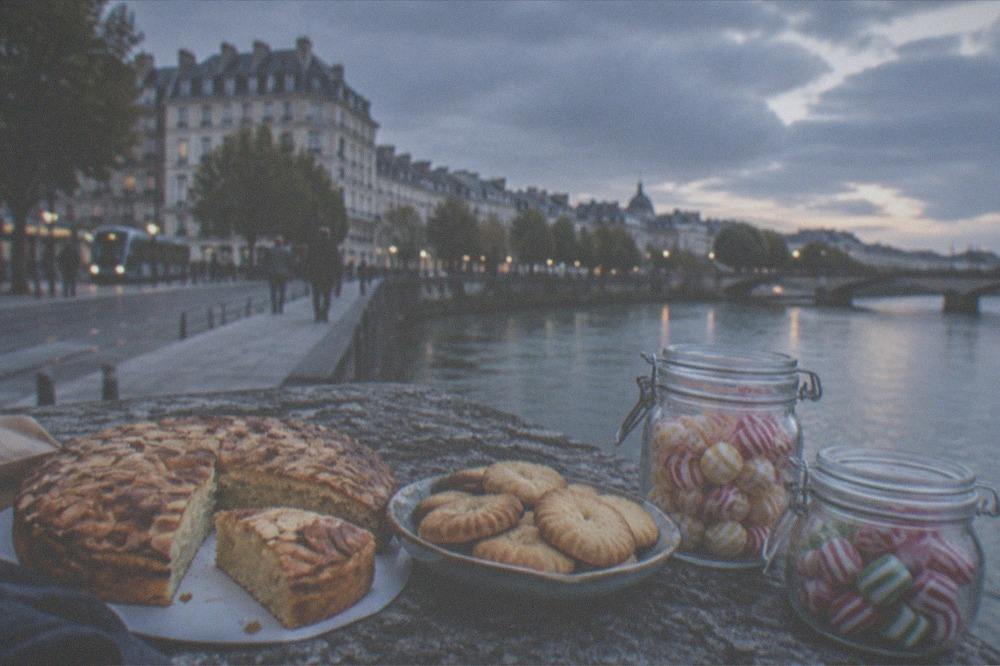
For the savoury side of the same culinary tradition, beurre blanc, the emulsified shallot, wine and butter sauce also claimed by Nantes, is covered in its own guide to beurre blanc. Order a river fish with beurre blanc and finish with a slice of gâteau nantais and you have eaten the city's signature sauce and its signature cake in one meal. Nantes restaurateurs have even pursued protected traditional specialty status for beurre blanc, a signal of how seriously this city takes the defence of its edible heritage, and the cake sits squarely in the same tradition.
When Is The Best Time To Enjoy Gateau Nantais In Nantes?
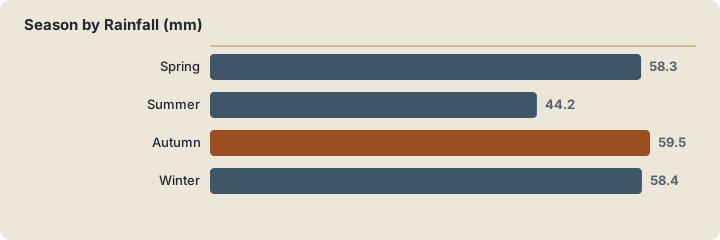
Any time of year, honestly, because the cake is an indoor pleasure in a temperate oceanic city: Météo-France normals for the Nantes-Bouguenais station give a mean maximum of 9.3 C in January and 25.4 C in August, with 819.5 mm of rain a year, so there is no season that rules the cake out. What changes through the year is what you pair with it and how you plan the day around the slice.
The climate table below, drawn from the 1991-2020 normals for the Nantes-Bouguenais station, shows why the cake travels through the calendar so comfortably: no month in Nantes is either too hot or too cold for a coffee-and-cake stop, and the wetter months simply move the ritual indoors.
| Season | Months | Mean maximum (C) | Rainfall (mm) | Cake-and-coffee plan |
|---|---|---|---|---|
| Spring | April to May | 16.2 to 19.6 | 58.3 to 61.0 | Terrace weather returns; pair the slice with a walk |
| Summer | June to August | 23.0 to 25.4 | 44.2 to 50.3 | Lightest rain of the year; buy the whole cake for a picnic |
| Autumn | September to October | 22.4 down to 17.6 | 59.5 to 88.8 | Back indoors; the cake's warmth suits the season |
| Winter | November to March | 9.3 to 12.9 | 58.4 to 101.0 | The classic season: rum, coffee, a warm café |
July and August are the driest months on the normals, at 44.2 mm and 50.3 mm respectively, which makes them the picnic-cake months if you are visiting in the high season. December is the wettest at 101.0 mm, and it is also the month of the Nantes Christmas market, which runs from 19 November to 27 December, an occasion that practically demands a boozy slice between the chalets. For the full picture of the city's seasons, read the guides on the best time to visit Nantes and Nantes weather.

Can You Bring Gateau Nantais Home?
Yes, and that is one of the cake's practical advantages. The rum syrup and sugar glaze act as preservatives, so a whole gâteau nantais keeps for several days at room temperature and travels well in its box, which is exactly why it made a name as a portable gift in the port era. Bakers sell it whole or by the slice, and the whole cake is the better buy for anyone carrying it back from Nantes as a souvenir.
Check the shop's own guidance on how long their specific version keeps, since soaking levels and glaze thickness vary between makers. A cake that is generous with rum will keep longer and taste better on day three than a cautious one, and the maker will know which of the two they sell.
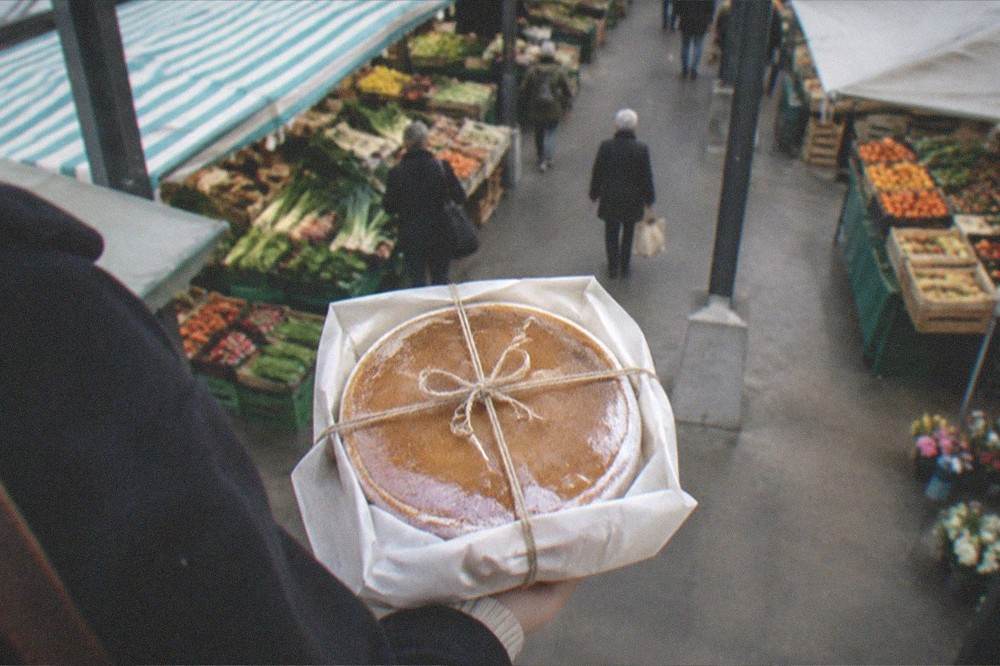
For a trip organised around the city's food and sights, the practical planning guides on when to visit Nantes, where to stay and the master list of things to do in Nantes cover the rest of the itinerary. The climate here is temperate oceanic, with mild summers and cool, damp winters, so there is no wrong season for a cake that improves indoors, and no wrong day to carry one home in a box.
Common Questions About Gateau Nantais
What is gateau nantais?
A traditional Nantes cake in the quatre-quarts family, made with salted butter, eggs, flour and almond meal, soaked in rum and lemon syrup, sometimes layered with apricot gelée, and finished with a rum-and-sugar glaze. It is best eaten after resting for a day or more.
When was gateau nantais invented?
The cake's origins are linked to around 1820 and to a baker in Nantes. It was later produced industrially by LU through much of the 20th century before returning to artisanal patisseries, where it has made a strong recent comeback.
Does gateau nantais contain a lot of rum?
It contains rum twice, once in the soaking syrup and once in the glaze, and the quantity varies between makers. The resting period of at least a day lets the alcohol mellow, so a matured cake tastes rounded rather than sharp.
Where can I buy gateau nantais in Nantes?
Artisanal patisseries in the city centre are the main source, and makers cited for the cake's revival include Maison Juhel and Esthète. It also appears on dessert lists at restaurants cooking the traditional regional repertoire.
How long does gateau nantais keep?
Longer than most patisserie items, thanks to the syrup and glaze, and it is at its best a day or more after baking. Ask the selling patisserie about their specific version, since soaking levels differ between makers.
Is gateau nantais the same as a quatre-quarts?
It is built on the quatre-quarts method of equal weights of butter, sugar, eggs and flour, but the almond meal, the rum and lemon soak and the glaze make it a distinct cake rather than a plain quatre-quarts.
A slice of gâteau nantais with a coffee, taken slowly in a city-centre café, is one of the quiet pleasures of a Nantes trip, and one of the easiest to arrange. Buy the whole cake, let it rest another day at home, and the city's oldest sweet will still be improving when the rest of the trip is a memory.