Nantes Camping
Camping near Nantes, in the Loire-Atlantique department of western France, puts you within an hour of both a major city and the Atlantic beaches, in a mild oceanic climate that stays campable from late spring to early autumn.
Short answer
Camping around Nantes works best from May to September, when Météo-France normals for the Nantes-Bouguenais station show mean highs of 19.6 to 25.4 °C and the lowest rainfall of the year. Campsite tourist tax in 2026 stays modest even at high-end classified sites, and weekend trains, trams and buses across the Nantes Métropole network are free on Saturdays and Sundays.
Camping near Nantes, in the Loire-Atlantique department of the Pays de la Loire region of western France, is one of the few setups that genuinely gives you two holidays in one. Pitch within the métropole and you are a short tram or TER ride from a city of 327,734 people, the Château des ducs de Bretagne and the Machines de l'île. Pitch toward the coast and the Atlantic beaches of La Baule and Pornic sit inside roughly an hour by train. Between the two lie the Muscadet vineyards, the salt marshes of Guérande and the wetlands of the Brière. This guide covers what the climate actually does month by month, what camping costs in taxes and transport, and how to split a week between tent and city. For the broader where-to-sleep question, our where to stay in Nantes guide covers the hotel side.
When Is The Best Season For Camping Near Nantes?
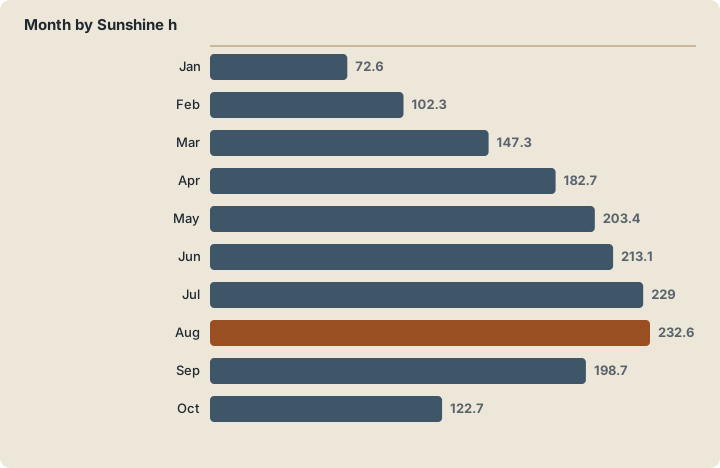
The best months for camping near Nantes are May through September, when Météo-France's 1991-2020 normals for the Nantes-Bouguenais station give mean daily highs of 19.6 °C in May, 23.0 °C in June, 25.1 °C in July and 25.4 °C in August, alongside the year's lowest rainfall counts. July averages just 44.2 mm of rain over 7.1 days with at least 1 mm, and August 50.3 mm, which is dry by the standards of a French summer.
The numbers behind that summary matter, because Nantes has a temperate oceanic climate, not a Mediterranean one. The same normals give the city 819.5 mm of rain spread over 119.7 days per year, with 1,873.3 hours of sunshine. That is rain roughly one day in three across a whole year, but it is not spread evenly: December is the wettest month at 101.0 mm and 13.5 rain days, while July is the driest. Frost is a non-issue in the camping season, with the frost-day normals reading 0.0 for every month from May to October.
Summer does carry heat worth planning for. Records for the Nantes-Bouguenais station show an all-time high of 42.2 °C on 24 June 2026, with a new August record of 40.4 °C set on 13 August 2026, and the year 2026 set station records for the number of days at or above 30 °C. A tent in full sun is no place to be in that kind of spell. Sites with shade, a swimming pool or direct river access earn their keep in late June and July; the Nantes weather guide carries the month-by-month detail if you are picking dates around it.
The shoulder months reward a different kind of camper. September averages a 22.4 °C mean high with 59.5 mm of rain, still warm enough for evenings outside, while the crowds thin after the summer holidays end. May is similar at 19.6 °C, though with 61.0 mm of rain. October remains possible at 17.6 °C, but the rain total climbs to 88.8 mm and nights close in. Winter camping is entirely viable in this climate, with January mean lows of 3.4 °C, but it is a fair-weather friend of a plan rather than a beach one. Our best time to visit Nantes guide weighs the same trade-offs for the city.
Here is what the verified monthly normals look like for planning a pitch:
| Month | Mean high °C | Mean low °C | Rain mm | Rain days ≥1 mm | Sunshine h |
|---|---|---|---|---|---|
| Jan | 9.3 | 3.4 | 87.9 | 12.5 | 72.6 |
| Feb | 10.5 | 3.0 | 67.5 | 10.6 | 102.3 |
| Mar | 13.5 | 4.9 | 58.4 | 9.4 | 147.3 |
| Apr | 16.2 | 6.6 | 58.3 | 9.7 | 182.7 |
| May | 19.6 | 9.8 | 61.0 | 9.6 | 203.4 |
| Jun | 23.0 | 12.7 | 48.5 | 7.6 | 213.1 |
| Jul | 25.1 | 14.3 | 44.2 | 7.1 | 229.0 |
| Aug | 25.4 | 14.2 | 50.3 | 7.2 | 232.6 |
| Sep | 22.4 | 11.8 | 59.5 | 7.8 | 198.7 |
| Oct | 17.6 | 9.5 | 88.8 | 11.8 | 122.7 |
| Nov | 12.9 | 5.9 | 94.1 | 13.0 | 91.3 |
| Dec | 9.8 | 3.7 | 101.0 | 13.5 | 77.6 |
The pattern is simple: warmth peaks in August, dryness peaks in July, and the two overlap neatly enough that early July to late August is the dependable core season.
How Much Does Camping Near Nantes Cost In Taxes And Extras?
The campsite tourist tax in Nantes Métropole for 2026 is reported at a higher per person per night rate for high-end classified campsites rated 3 to 5 stars than for standard classified sites of 1 to 2 stars, with rates that include a 10% departmental addition and apply from 1 January 2026. The tax is collected by the campsite, so it appears as a line on your bill rather than a separate chore.
That tax tier sits at the bottom of the whole accommodation ladder, which is the quiet argument for camping here. Reported 2026 rates for hotels in the same grid climb steadily by category, from a modest per person per night charge at 1 star up to a considerably higher figure at palace level, with 4-star and 3-star hotels falling in between. A family of four on a high-end campsite therefore pays a modest nightly tax, less than a single night at a mid-range hotel, and the saving compounds over a week.
The pitch itself is where the real budget lives, and that figure varies by site, season and whether you bring a tent, a caravan or a campervan. Treat any nightly pitch range you see online as a planning estimate and confirm the exact rate on the campsite's own booking page, because site-level prices are set by each operator and change with the school-holiday calendar. The tax is the part you can predict with confidence.
Transport is the other predictable line, and around Nantes it is unusually kind. A single Naolib ticket valid for one hour costs 1.80 EUR across trams, buses and the Navibus river shuttles, a 24-hour ticket costs 6.80 EUR, and a 24-hour ticket covering four people travelling together costs 15 EUR. Better still, the whole network is free for everyone from 00:00 on Saturday to 23:59 on Sunday, a rule in place since 2021, with one exception worth burning into memory: the airport shuttle is excluded and always costs 10 EUR. Our Nantes on a budget guide builds a full low-cost itinerary on these fares.
| Cost item | 2026 figure | Notes |
|---|---|---|
| Campsite tax, classified 3-5 star | varies by venue per person per night | Reported 2026 métropole tariff, includes 10% departmental addition |
| Campsite tax, classified 1-2 star | varies by venue per person per night | Same grid, same collection method |
| Hotel comparison, 3 star | 1.87 EUR per person per night | Same grid, shown for contrast |
| Naolib single ticket | 1.80 EUR, 1 hour | Tram, bus, Navibus, TER inside the métropole |
| Naolib 24-hour ticket | 6.80 EUR | Group of 4 version: 15 EUR |
| Weekend network travel | Free Sat 00:00 to Sun 23:59 | Airport shuttle excluded |
| Airport shuttle | 10 EUR one-way | Every day, including weekends |
For the city days themselves, a sightseeing pass can replace a stack of individual tickets, and the trio below covers three different ways to spend them: a guided walk, the city-wide pass and a museum entry. Check availability on the operator's live listing for current dates.
One more planning note on money: France is a founding member of the Schengen area and the euro is the local till currency, so campsite bills, market stalls and transport tickets all run in EUR. Card payment is near-universal, though a little cash is still useful at rural markets and small campsite bread services.
Which Areas Around Nantes Suit Which Kind Of Camper?
The camping geography around Nantes splits into four workable zones: the coastal strip from La Baule through Pornic to Le Croisic, reachable in roughly 51 minutes to about an hour by TER train; the Muscadet vineyard country south and east of the city around Clisson, about 23 minutes by TER on average; the salt-marsh and wetland belt at Guérande and the Brière; and the city-edge pitches inside the métropole itself, from which the tram network carries you into the centre.
The coastal zone is the classic family choice. TER trains reach La Baule from about 51 minutes, Pornic in roughly 59 to 65 minutes and Le Croisic in about 1 hour 3 minutes, so a coastal campsite does not cut you off from the city. The beaches themselves need no introduction, and the beaches near Nantes guide covers the full range from resort sand to hidden coves. What the coast adds to a camping holiday is the tide: plan swimming and rockpooling around it, and check locally posted times, since no verified tide figure belongs in a guide like this.
The vineyard zone suits campers who want quiet, shade and wine. The Muscadet appellation runs on the Melon de Bourgogne grape, with the Maison des vins de Muscadet at Vallet as its hub, and Clisson itself, with its Italianate architecture and château, sits about 23 minutes from Nantes by TER on average, with the fastest trains covering the 27 km rail journey from around 15 minutes. A bike-and-terroir holiday here pairs well with a tasting tour rather than a beach towel.
The wetland belt is the one most guides under-sell. Guérande sits about 80 km from Nantes by road, behind its medieval ramparts, and its salt marshes can be visited with guided walks year round through the Terre de Sel cooperative, home to roughly 200 bird species. The 2026 salt harvest was exceptional, with reports of double production and an average of around 1.5 tonnes per salt pan thanks to the summer heat. East of it, the Brière regional park is the largest marshland on the French Atlantic coast and the natural territory of a canoe-and-campsite holiday.
The city-edge zone is for campers whose holiday is really about Nantes itself. Staying inside the métropole puts you on the Naolib network, which carried 154 million trips in 2024, and makes the free-weekend rule work in your favour: park the car from Friday night and ride free through Saturday and Sunday. On weekday evenings you can still be back at the tent for a barbecue within half an hour of leaving the city centre.
The table below matches each zone to what it does best:
| Zone | Best for | Rail or road from Nantes | Signature outing |
|---|---|---|---|
| La Baule coast | Beach families, swimming | TER from about 51 min | Resort beach and coastal path |
| Pornic | Quieter coast, harbourside meals | TER roughly 59-65 min | Cliffs, port and gelato walk |
| Le Croisic / Batz-sur-Mer | Rock coastline, oyster country | TER from about 1 h 03 | Rocky shore and salt-pan paths near Guérande |
| Clisson and Muscadet country | Wine adults, cycling | TER about 23 min average, fastest from ~15 min | Château and vineyard tasting |
| Guérande and the Brière | Nature, birds, canoeing | About 80 km by road to Guérande | Terre de Sel guided marsh walk |
| Inside the métropole | City-first holidays | Tram and bus network | Evening return to the campsite after dinner |
Two zones deserve a caution. Mont-Saint-Michel is about 2 h 15 by road each way, which makes it a long day from any campsite near Nantes rather than an easy hop, and the Nantes Atlantique airport sits about 8 km south-west of the centre, so a campsite under a flight path is a question of checking the approach map rather than guessing.
How Do You Get From The Campsite Into Central Nantes?
The workhorses are the TER regional trains and the Naolib network: TER runs into Nantes station in about 33 minutes from Saint-Nazaire, 51 minutes from La Baule and around an hour from Pornic, while inside the métropole a 1.80 EUR Naolib ticket covers an hour of tram, bus and Navibus river travel. The entire network is free from Saturday 00:00 to Sunday 23:59, with one fixed exception: the airport shuttle at 10 EUR, charged every day.
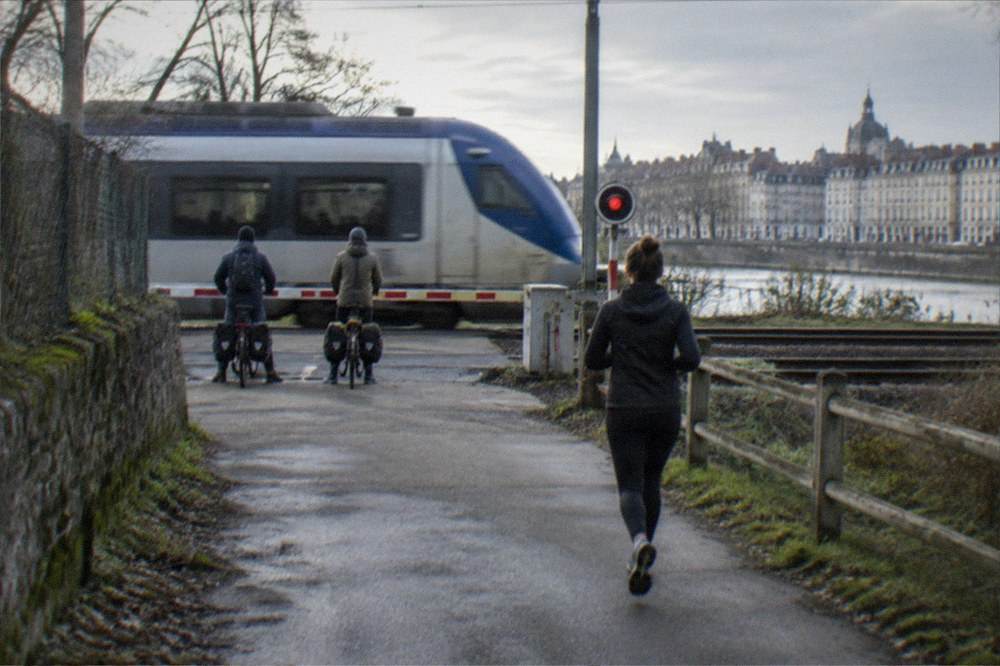
The tram is the part visitors consistently underestimate. Nantes runs three tram lines totalling 45.6 km across 84 stations, plus a busway line, and it was 7 January 1985 when line 1 became the first modern tram network in France. New tram lines 6 and 7 and busway line 8 are under construction for the end of 2027, with the first rails laid in Rezé in December 2025 and on boulevard Léon Bureau in February 2026. If your campsite sits near works for those lines, expect temporary bus replacements, and check the live network map before setting out. The wider set of guides lives on Nantes Travel Guide.
The Navibus river shuttles are the camping-friendly pleasure. Line N1 runs from the Gare Maritime to Trentemoult Sablières, N2 links the Hangar à Bananes and Bas-Chantenay to Trentemoult, an extension launched on 12 November 2025, and N3 runs on the Erdre, all on normal Naolib tickets. That means a 1.80 EUR fare can double as a river cruise past the Île de Nantes, which is the kind of value a camping budget is built for. Our getting around Nantes guide has the full network picture.
For a coastal or vineyard campsite, the TER is your tram connection. Trains run from Saint-Nazaire in about 33 minutes, from Clisson with an average of about 23 minutes, and the Paris direction aside, the Nantes to Rennes TER covers its fastest journeys in about 1 h 16, which sets the scale of the region. A Pass Nantes even includes one TER return between Nantes and Clisson, alongside unlimited Naolib travel and one airport-shuttle return, which can make the maths work for a mixed city-and-country week.
If you are arriving with a car, parking is the missing half of the equation, and P+R park-and-ride sites at the network's edge are the intended answer: a P+R ticket is reported at 4.50 EUR for parking plus transport for up to five people, and the sites are free on the same validated basis on weekends. The car hire in Nantes guide covers the other direction, picking up a vehicle on arrival.
Cyclists have the best option of all. The Loire à Vélo route starts from Nantes and the surrounding département is forgivingly flat, so a campsite within 20 km of the centre is realistically bikeable for most families with older children. E-bike charging is now common at better-run sites, and the local Bicloo bike-share scheme exists in the city itself, though we quote no 2026 price for it because none is verified.
What Should You Pack For A Nantes Camping Trip?
Pack for a mild oceanic climate with rain on roughly one day in three across the year, summer heat spikes that have reached 42.2 °C at the Nantes-Bouguenais station, and cool nights even in July: the July mean low is 14.3 °C, so a three-season sleeping bag, a shade structure or tarp, full waterproofs and a warm evening layer belong in the kit even for an August trip, alongside a power bank for campsites whose sockets sit far from the pitch.
The sleeping-bag point surprises people who picture France as uniformly warm in summer. Mean lows sit at 12.7 °C in June and 14.2 °C in August, and September nights average 11.8 °C, which is comfortable in a three-season bag and chilly in a cheap summer one. A closed-cell mat matters more than usual on coastal sites, where sea damp reaches the groundsheet by morning.
The heat point matters just as much. With the station record at 42.2 °C on 24 June 2026 and a record 40 days at or above 30 °C that year, a tent that ventilates well, a reflective windscreen foil for the campervan and a refillable water bottle each earn their space. Campsites with swimming pools or river access are worth prioritising if you are travelling in late June or July, and the same heat that stresses campers is a feature of the local wine country: the 2026 Muscadet harvest ban was declared on 11 August 2026, a record eight days earlier than the previous mark.
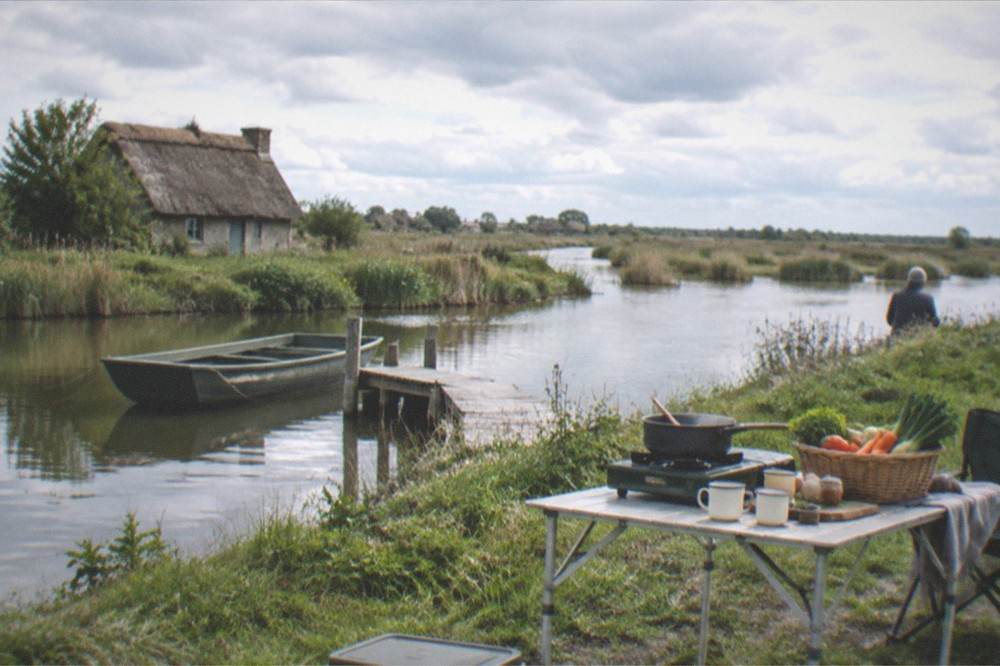
The rain point is where oceanic climate catches out optimists. The rain-day normals run 9.6 in May, 7.6 in June and 7.1 in July, so even the driest month has rain on better than one day in four. A proper porch or awning for cooking under, and a dry-bag day pack for city trips, convert those days from misery into a museum afternoon. The free things to do in Nantes guide has a wet-day list that costs nothing.
A packing table for the core season:
| Kit item | Why, given the climate | When it matters most |
|---|---|---|
| Three-season sleeping bag | July mean low 14.3 °C, September 11.8 °C | Every month |
| Tarp or shade structure | Mean highs 25.4 °C, record 42.2 °C | June to August |
| Full waterproofs | 44-61 mm rain per summer month | All season |
| Warm evening layer | Oceanic nights cool quickly after sunset | May, June, September |
| Refillable water bottle | Heat spikes and long site-to-beach days | June to August |
| Power bank | Sockets often distant from pitches | All season |
| Dry-bag day pack | Rain days and Navibus river trips | All season |
| Bike lock | Loire à Vélo route starts at Nantes | Coastal and vineyard zones |
One thing not to pack is an expectation of Mediterranean evenings. This is western France on the Atlantic seaboard, and even the sunniest month, August at 232.6 sunshine hours, averages under eight hours of sun a day. The payoff is green countryside, full rivers and a campsite season that runs longer than the beaches suggest.
What Can You Do Between Campsite Days In Nantes?
The city day-trip menu from a campsite covers the Château des ducs de Bretagne, whose courtyard and ramparts are free daily from 8:30 to 19:00, the Machines de l'île with its Grand Éléphant, the reopened cathedral that welcomed visitors back on 27 September 2025 with full reopening planned for 2028, and the green line of the Le Voyage à Nantes art trail, which the event's own site describes as running to 22 kilometres through the city.
Plan the city days around opening rhythms rather than cramming. The château's history museum inside costs 9 EUR full tariff or 5 EUR reduced, is free for under-18s and closes on Mondays, while the surrounding courtyard and moat garden are free and open longer, which makes the site work for a campsite rhythm of arriving late morning. At Les Machines de l'île, each attraction, the Galerie, the Carrousel or a Grand Éléphant ride, costs 12 EUR full price with a 20 EUR two-activity and 29 EUR three-activity day package, and the site is currently rebuilding its calendar around maintenance: the Carrousel closed 22 to 25 September 2026 and there are no elephant rides from 2 November 2026 to 28 February 2027.
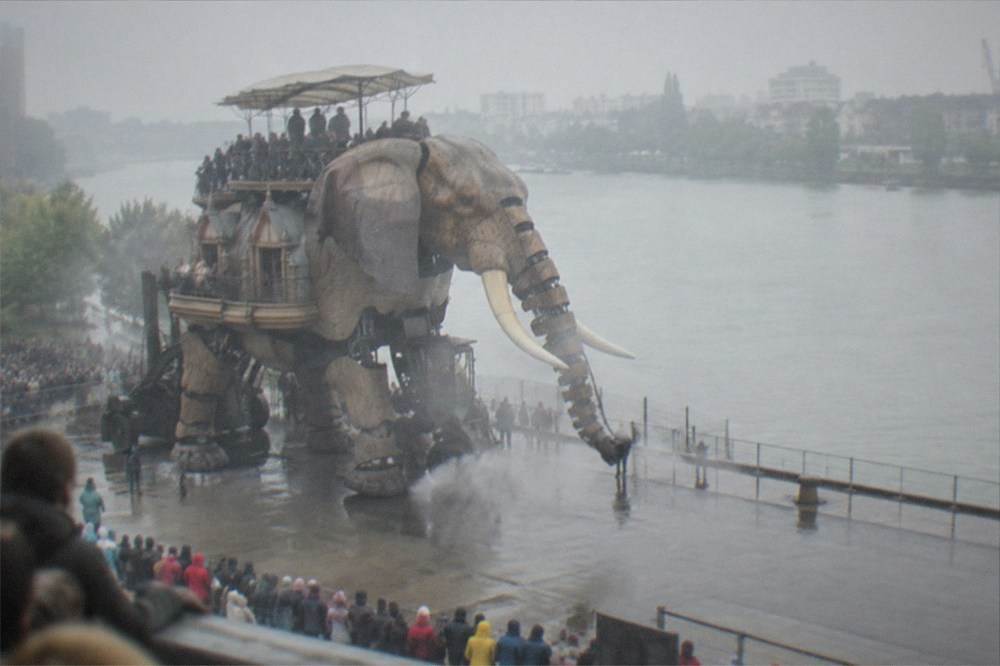
The cathedral deserves its own afternoon. It partially reopened on 27 September 2025 after the July 2020 arson fire, with full completion projected for 2028 and the west facade still under scaffolding, so the experience is of a great building in active restoration rather than a finished one. Entry is free. The Mémorial de l'abolition de l'esclavage, also free, is the counterpart visit: Nantes mounted 1,714 slave-trade expeditions, 43% of the French total, and withdrew from the trade in 1830, history the memorial presents on the quays where the ships left.
The art trail is the thread that ties a city day together. Le Voyage à Nantes created the summer event in 2011 and has run it every year since 2012; the 2026 edition, themed around Earth, ran from 4 July to 6 September, and the green line it paints through the city is described by the event's own site as running to 22 kilometres, though a 2026 maintenance report gave 20.5 km, so say about 20 km and walk a section rather than attempt the lot. The Le Voyage à Nantes guide covers what is permanent and what is seasonal.
For the return leg, the evening is a camping holiday's best hour. Markets make that hour cheap: Talensac, the city's grand market, runs Tuesday to Friday 8:00-13:00 and Saturday to Sunday 8:00-13:30, closed Monday, so a late-morning shop before the train back stocks a campsite dinner. The Nantes food guide goes deeper into beurre blanc, Muscadet and the LU Petit Beurre biscuit, invented in a city that still celebrates its 180th anniversary in 2026.
| City sight | Entry cost | Key rhythm for campers |
|---|---|---|
| Château courtyard and ramparts | Free | Daily 8:30-19:00, longer in summer |
| Musée d'histoire de Nantes | 9 EUR full, 5 EUR reduced, free under 18 | Closed Mondays, 10:00-18:00 |
| Machines de l'île, per attraction | 12 EUR full, 8 EUR age 4-12 | No elephant rides 2 Nov 2026 to 28 Feb 2027 |
| Cathedral | Free | Reopened 27 Sept 2025, works to 2028 |
| Mémorial de l'abolition de l'esclavage | Free | Daily, longer hours in summer |
| Green line art trail | Free | About 20 km, walkable in sections |
| Talensac market | Free to browse | Tue-Fri mornings, weekends to 13:30, closed Monday |
If the weather turns mid-week, the museums in Nantes guide lists the indoor options, with one standing exception: the Muséum d'histoire naturelle is closed for works until 2029 and is not currently a stop of any kind, rainy day included.
Is Camping Near Nantes A Good Base For A Wider Holiday?
Camping near Nantes works as a base for the Loire valley and Brittany as well as the Atlantic coast, because the city sits at the junction of all three: TER trains reach Saint-Nazaire in about 33 minutes and Clisson in about 23 minutes on average, the Mont-Saint-Michel is about 2 h 15 away by road, and the Loire à Vélo cycle route starts here, letting one campsite anchor beach days, vineyard days and château days on a single holiday.
The day-trip radius is unusually generous. Westward, Saint-Nazaire offers the Escal'Atlantic liner experience at 15 EUR adult, 13 EUR reduced and 7.50 EUR for children aged 4-17 in 2026, with a Normandie-themed photography exhibition running July 2026 to September 2027. Southward, Puy du Fou's 2026 season ran 4 April to 1 November with a Christmas extension, and its one-day tickets were priced at the pricier end for a family outing, though the park sits about 1 h to 1 h 15 from Nantes, a distance that suits a campsite with its own car more than a tram-connected pitch.
North and east, the Loire valley châteaux and the Brittany border are both reachable, and the question of which region Nantes even belongs to, Brittany or Pays de la Loire, is answered in our is Nantes in Brittany guide: administratively the latter since a 1941 decree moved the department, though the city was the historic capital of the duchy and Breton identity runs deep. That split identity is itself a reason to camp here, since one holiday can legitimately claim both regions.
The honest verdict is that a campsite inside the métropole maximises city time and a campsite on the coast maximises beach time, and a week split between the two, three nights each, is the configuration that makes the most of the TER network. The Nantes and Loire Valley road trip guide covers the version with a car and a bigger loop.
Whether the whole region is worth the trip at all is a fair question when Paris is a quick TGV ride away, and the is Nantes worth visiting guide answers it at length, but from a campsite's point of view the answer is already partly made: very few French campsites sit this close to a European Green Capital, a first-in-France tram network and a free-weekend transport rule that effectively subsidises every Saturday.
Common Questions About Camping Near Nantes
Can You Camp Near Nantes In Winter?
You can, and the climate makes it milder than most of France: January's mean low is 3.4 °C and its mean high 9.3 °C, with 87.9 mm of rain across the month. Winter camping is a quiet, wellies-and-museum affair rather than a beach one, and the free weekend transport rule still applies on the Naolib network through the coldest months.
Do You Pay Tourist Tax On A Campsite Near Nantes?
Yes. The 2026 Nantes Métropole tariff grid sets a slightly higher tourist tax per person per night for high-end classified campsites rated 3 to 5 stars than for standard classified sites of 1 to 2 stars, rates that include a 10% departmental addition. The campsite collects it as part of your bill.
How Far Is The Nearest Beach Camping From Nantes?
The coastal resort of La Baule is about 51 minutes from Nantes by TER train, Pornic roughly 59 to 65 minutes and Le Croisic about 1 hour 3 minutes, so a coastal campsite still leaves the city a practical day trip by train.
Is Transport Free In Nantes At Weekends?
Trams, buses, Navibus river shuttles and in-agglomeration TER travel are free for everyone from 00:00 Saturday to 23:59 Sunday, a rule in place since 2021. The airport shuttle is excluded and costs 10 EUR every day, including weekends.
When Can You Not Ride The Grand Éléphant At Les Machines De L'île?
There are no Grand Éléphant rides from 2 November 2026 to 28 February 2027 for maintenance, and the site has an annual January closure besides. The Galerie des Machines and the Carrousel des Mondes Marins normally keep running through that window, so an off-season campsite holiday can still include the site.
Is Nantes Camping Suitable For Families With Children?
The combination of under-18 free entry at the château museum, 8 EUR child tickets at Les Machines, a 15 EUR 24-hour group transport ticket and roughly one-hour rail hops to sandy beaches makes the region one of the easier family camping bases in western France, and the flat terrain suits family cycling.