Is Nantes Worth Visiting
This guide answers that question with the city's own figures rather than opinions.
Short answer
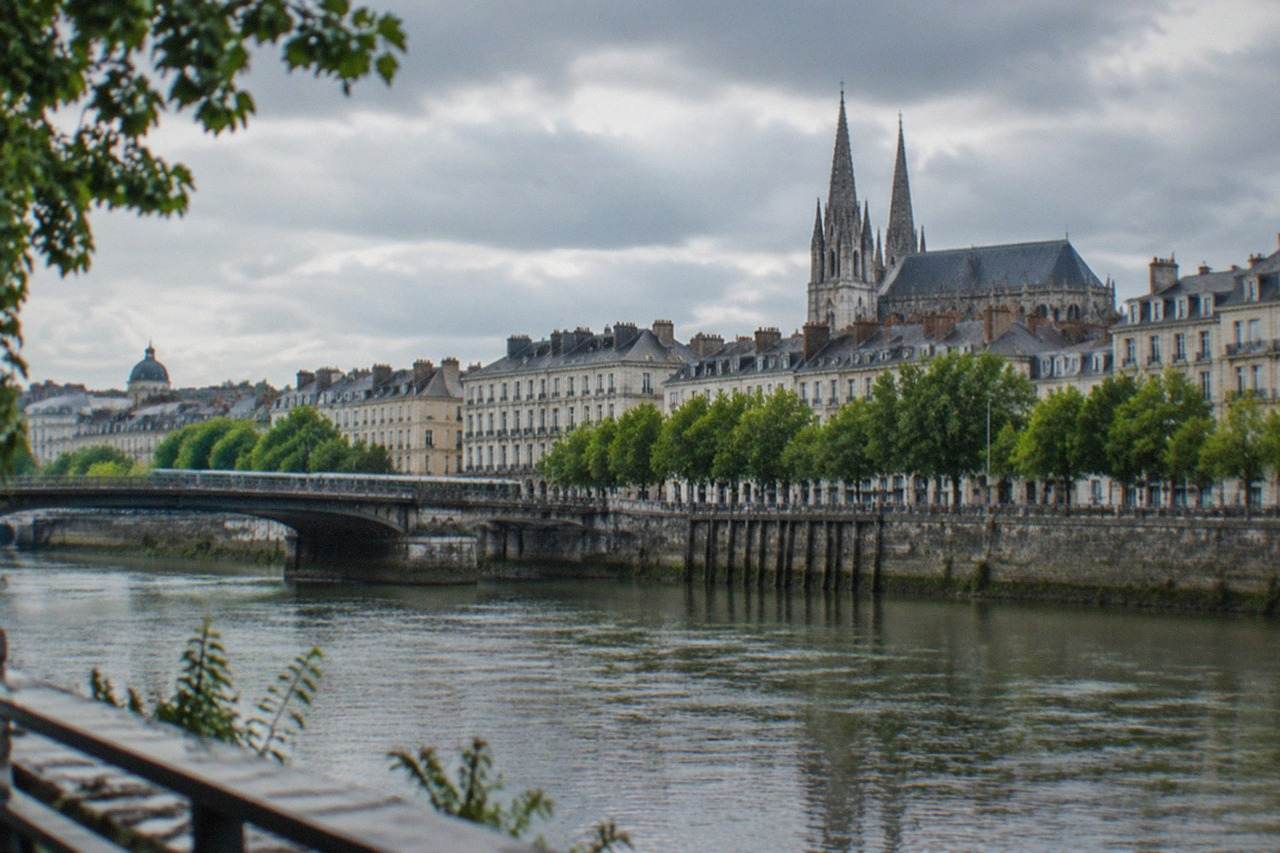
Yes: Nantes is worth visiting. Its castle museum, reopened cathedral, Machines de l'île, free riverside memorial and about 20 km of green art line fill two to three days comfortably, at lower prices than Paris and with a tram network that makes a car unnecessary.
Nantes, the riverside capital of the Loire-Atlantique department in the Pays de la Loire region of western France, sits on the Loire where the Erdre and Sèvre Nantaise tributaries meet it. The 2023 census counted 327,734 residents in the commune itself, France's sixth most populous, with the wider metropolitan area reported at 689,456. Time Magazine called it "the most liveable city in Europe" in 2004 and it held the European Green Capital title in 2013, two distinctions that raise a fair question: does the city live up to them for a visitor today, in 2026?
The short answer is yes, and the reasoning is largely measurable. Nantes holds a Renaissance castle with a history museum, a cathedral that partially reopened on 27 September 2025 after the 2020 arson fire, the mechanical elephant and marine carousel of Les Machines de l'île, and a free Mémorial de l'abolition de l'esclavage on the Loire quays, one of the most significant monuments of its kind in Europe. All of it clusters within tram reach of the centre. This guide works through the question of worth with the city's own published figures, sight by sight, so the judgement is one a reader can check rather than take on trust.
Is Nantes Worth Visiting Compared With Better-Known French Cities?
Nantes is worth visiting for anyone drawn to a compact, inventive French city that packs a castle begun by Duke Francis II from 1466, a functioning mechanical elephant, a cathedral that reopened in September 2025 and a free riverside memorial into two walkable days. The 2023 census counted 327,734 residents, making it France's sixth-largest commune, and its main sights sit close enough together to visit without a car.
The comparison question is fair, because Nantes is not on most first-time France itineraries. Paris, Bordeaux and Lyon absorb the attention, and Nantes sits quietly two hours by train from the capital. That quietness is part of the value. The city's core sights sit within a radius of roughly two kilometres, so a two-day stay becomes two full days of visiting rather than two days of commuting between distant monuments.
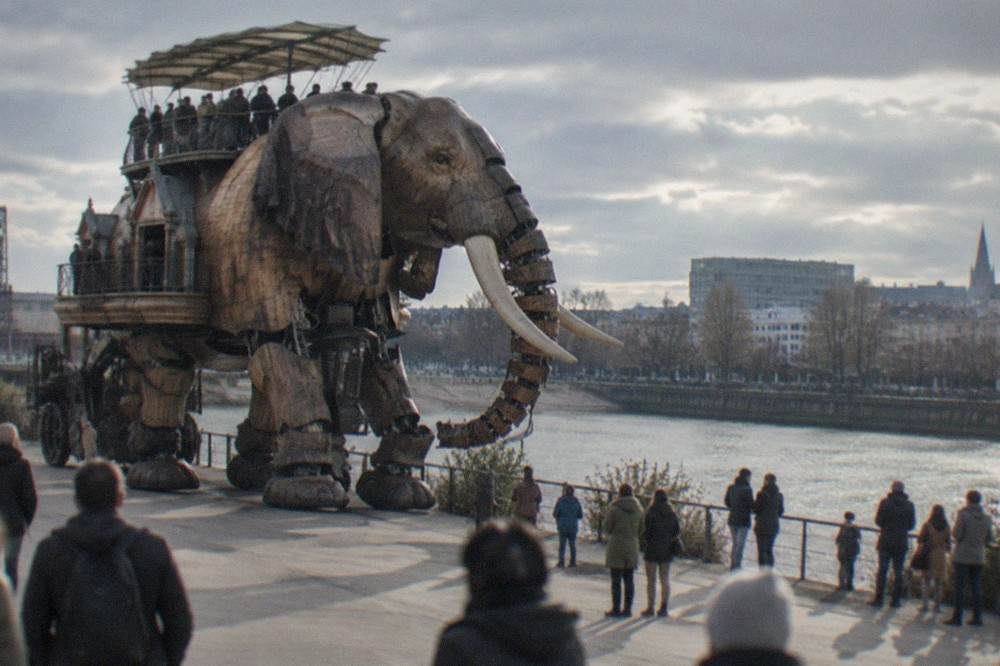
The character is distinctive too. Nantes spent the 20th century rebuilding an identity after its port economy faded, and the result is a city that treats culture as infrastructure. The former LU biscuit factory on the Loire became Le Lieu Unique, a national theatre and arts centre, in 2000. The derelict shipyards of Île de Nantes became Les Machines de l'île, inaugurated with the Grand Éléphant on 30 June 2007. The green line painted through the streets by Le Voyage à Nantes, a summer art trail first run in 2012 and described by its organisers as running to some 22 kilometres, links permanent works across the whole centre.
There is also a weight of history that surprises visitors who arrive expecting a light regional stop. Nantes was the birthplace of Anne of Brittany on 25 January 1477, the duchess who became twice queen of France. It was the last city to hold out against Henri IV, who then signed the Edict of Nantes at the château in April 1598. And it was, from the mid-17th century to 1830, France's leading slave-trading port: the Mémorial de l'abolition de l'esclavage records 1,714 slave-trade expeditions fitted out here, 43% of the French total, and the city faces that history directly rather than tidying it away. For a fuller account, see the guide to Nantes history and heritage.
What Are The Best Things To Do In Nantes Over Two Days?
A two-day stay covers the Château des ducs de Bretagne and its history museum, the Machines de l'île with the Grand Éléphant, the reopened cathedral, the Passage Pommeraye and a glass of Muscadet at the source. Day one works the historic Bouffay quarter, the château and the Machines on Île de Nantes; day two takes the Jardin des Plantes, the Musée d'arts, the Erdre riverbank and a food stop at Talensac market, which opens Tuesday to Sunday mornings.
Start on the Île de Nantes, because it is the sight no other French city offers. The Galerie des Machines, the Carrousel des Mondes Marins and a ride on the Grand Éléphant each cost 12 EUR full price, with a two-attraction day package at 20 EUR and three attractions at 29 EUR, and under-4s go free. One caveat matters for planning: the Machines' own schedule page states there are no elephant rides from 2 November 2026 to 28 February 2027 for maintenance, so anyone visiting in that window should plan around the Galerie and Carrousel instead.
The château itself, begun by Duke Francis II from 1466, is a walk across the river and a different register entirely. The courtyard and ramparts are free and open from 8:30 to 19:00 daily; the Musée d'histoire de Nantes inside charges 9 EUR full price, 5 EUR reduced, and is closed on Mondays. The permanent display of more than 1,150 objects covers the city from the dukes through the slave trade, the wars and the industrial era, and it is the single best introduction to what Nantes has been. The guide to the castle museum breaks down the rooms and prices in detail.
A private guided walk on the first morning sets up everything that follows, and the roster's professional-guide private tour is the strongest option for exactly this, with its price unpublished by the operator and a 5 rating on the listing. The card below shows what it covers:
The second day rewards a slower rhythm. The cathedral of Saint-Pierre-et-Saint-Paul, whose gothic rebuild ran from 1434 to 1891, reopened on 27 September 2025 after five years of restoration and is free to enter, with works on the west facade continuing toward full reopening planned for 2028. The Passage Pommeraye, the 1843 shopping arcade rising three floors on a slope, is within easy walking distance of the cathedral and costs nothing to admire. The Musée d'arts de Nantes holds the city's fine-arts collection at 9 EUR full price, and the whole sweep of museums is covered in the museums in Nantes guide.
For visitors who prefer structure over self-direction, these three options cover the city on foot and the vineyards beyond it:
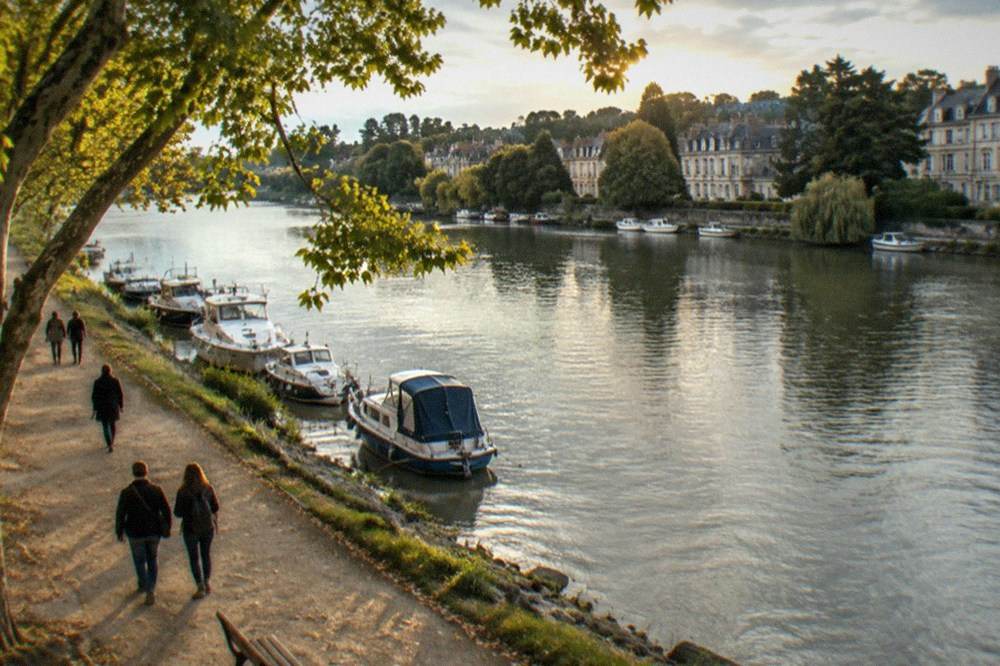
Day two also earns a detour along the Erdre, the river the city calls the most beautiful in France, and the Jardin des Plantes, one of the finest public gardens in the country, both free. A full inventory of free and paid stops, hour by hour, is in the free things to do in Nantes guide.
| Sight in Nantes | Entry cost | Hours in 2026 | Key detail |
|---|---|---|---|
| Château courtyard and ramparts | Free | 8:30-19:00 daily | Anne of Brittany born here in 1477 |
| Musée d'histoire de Nantes | 9 EUR full, 5 EUR reduced | 10:00-18:00, closed Mondays | 32 rooms, 1,150+ objects |
| Cathedral Saint-Pierre-et-Saint-Paul | Free | Reopened 27 Sept 2025 | Full reopening planned 2028 |
| Machines de l'île, each attraction | 12 EUR full | Seasonal, last entry 45 min before close | No elephant rides 2 Nov 2026 to 28 Feb 2027 |
| Musée d'arts de Nantes | 9 EUR full, 4 EUR reduced | 11:00-19:00, closed Tuesdays | Free late opening Thursdays 19:00-21:00 |
| Mémorial de l'abolition de l'esclavage | Free | 9:00-18:00 or 20:00 by season | Records 1,714 slave-trade expeditions |
| Passage Pommeraye | Free | 8:00-20:00 Mon-Sat | Built 1843, unchanged layout |
How Expensive Is A Trip To Nantes Compared With Other French Cities?
Nantes is a mid-priced French city: the château museum charges 9 EUR full price, each Machines de l'île attraction 12 EUR, the cathedral is free and a one-hour Naolib tram ticket costs 1.80 EUR. Aggregated mid-2026 figures put an inexpensive restaurant meal at the budget end and a three-course mid-range dinner for two a step up, so a comfortable day of sightseeing and eating sits well below Parisian levels.
The transport side of the budget is small and predictable. A 24-hour Naolib ticket at 6.80 EUR covers unlimited trams, buses and the Navibus river shuttles for a day, or 15 EUR for four people travelling together. The Pass Nantes, valid on pricing from 1 April 2026, bundles unlimited transport, a return airport shuttle trip and entry to partner sites at 30 EUR for 24 hours, 40 EUR for 48 hours and 49 EUR for 72 hours, with the Galerie des Machines and Carrousel included but, importantly, not the Grand Éléphant ride. The trade-offs between the pass and individual tickets are worked through in the Pass Nantes guide.
Accommodation carries one line-item worth knowing in advance: the tourist tax, which Nantes Métropole reports as tiered by hotel rating, at 2.86 EUR per person per night in a 4-star property, 1.87 EUR in a 3-star and 1.10 EUR in a 2-star, those figures as reported rather than official grille values. It is collected by the hotel, so the only surprise is if a traveller has never paid one elsewhere in France.
Food spending is where Nantes clearly undercuts the capital. The cost-of-living aggregates current in September 2026 put an inexpensive meal at the budget end of the scale, a mid-range three-course dinner for two at a moderate step up, and a pint of domestic draught beer at the inexpensive end of the range. Those are planning ranges for ordinary venues, not promises about any particular restaurant; a fuller treatment of where the money goes best is in the best restaurants in Nantes guide.
| Cost item in Nantes | Typical 2026 figure | Notes |
|---|---|---|
| Naolib 1-hour ticket | 1.80 EUR | Tram, bus, Navibus, TER inside the métropole |
| Naolib 24-hour ticket | 6.80 EUR | 15 EUR for a 4-person group ticket |
| Airport shuttle | 10 EUR | Always charged, even on free-travel weekends |
| Château history museum | 9 EUR full | Free under 18; 5 EUR reduced |
| Machines de l'île, 3 attractions | 29 EUR full | 20 EUR for 2 attractions |
| Inexpensive restaurant meal | ~15 EUR | Range 12-23 EUR per aggregates |
| Mid-range dinner for two | ~varies by venue | Three courses, no drinks |
| Tourist tax, 3-star hotel | 1.87 EUR per person per night | As reported, tiered by rating |
How Easy Is It To Get To Nantes And Around Without A Car?
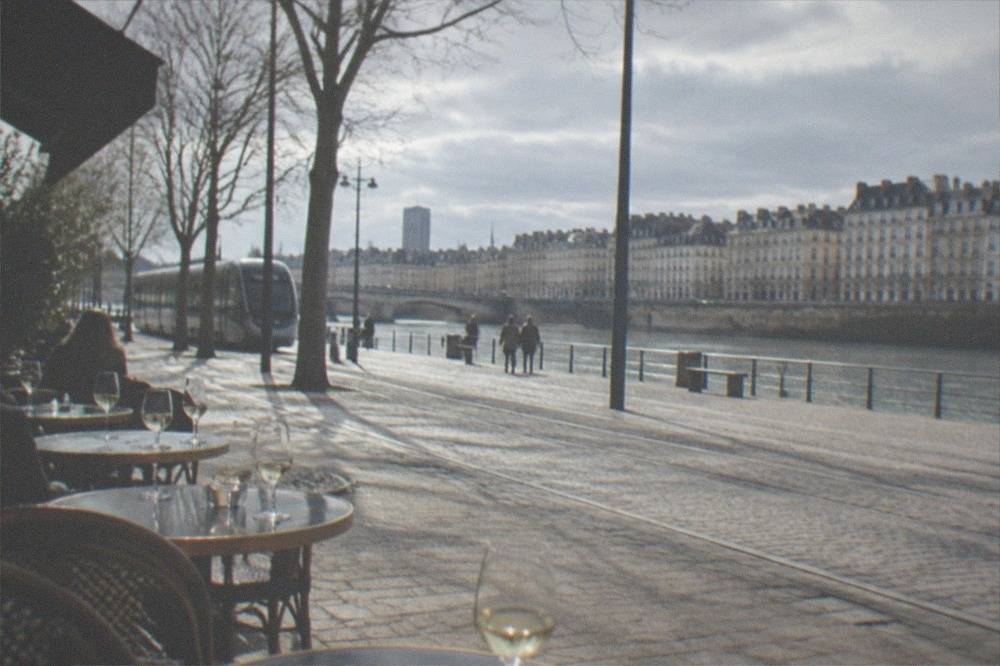
Nantes is easy to reach and easier still to explore: high-speed trains from Paris Montparnasse cover the route in about two hours, and the airport shuttle links Nantes Atlantique to the station area in roughly twenty minutes for 10 EUR. Naolib trams and buses cover the whole city, a single ticket is valid for an hour, and Naolib's fare pages state that weekend travel on the network is free for everyone.
The rail link is the backbone. Around 24 direct trains a day run each way between Nantes and Paris, with the fastest services covering the distance in roughly two hours; the practical planning figure is "about two hours", with OUIGO budget fares frequently available. The detail is covered in the Paris to Nantes guide.
The airport picture is stronger than many travellers expect. Nantes Atlantique, about 8 km south-west of the centre, handled 7,189,480 passengers in 2025 according to its annual traffic report, and the 2026 schedule added direct routes including Air Canada's seasonal Montreal service from June 2026 and easyJet's Brussels and Essaouira flights announced for autumn 2026. The shuttle runs every 20 minutes from April to October and every 30 minutes from November to March, costs a flat 10 EUR bought on board by bank card, and its stop moved on 30 March 2026 to the Gare routière, quai A. One trap to flag: Naolib's weekend free travel applies to trams, buses and Navibus, but the shuttle is explicitly excluded and always costs its 10 EUR. The airport to city centre guide covers every option.
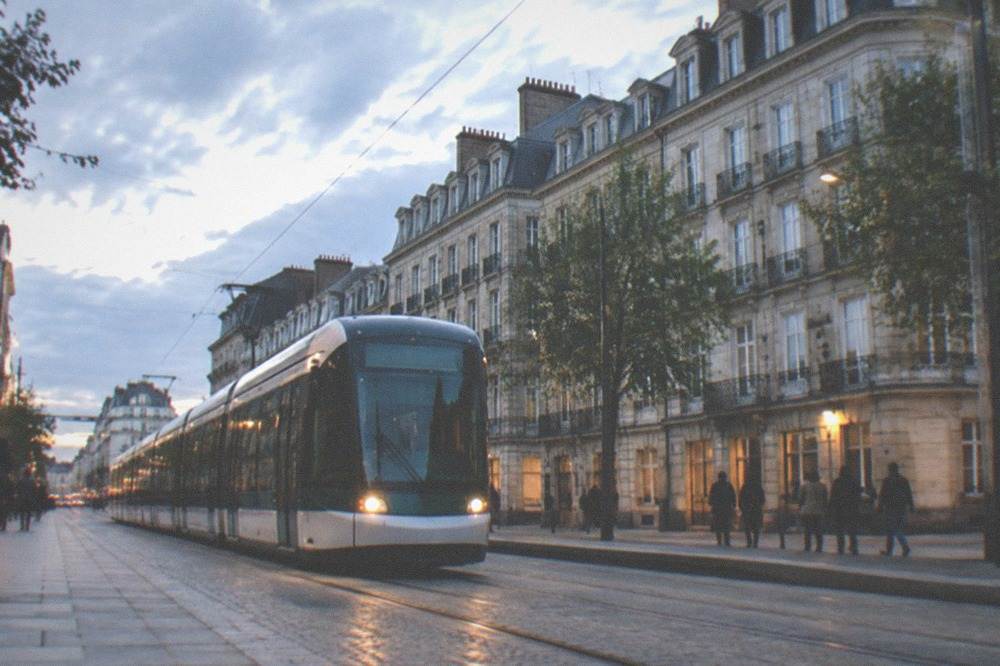
Inside the city, a car is not merely unnecessary, it is a mild liability. Nantes built France's first modern tram network, opened on 7 January 1985, and today three tram lines, a busway and the Navibus river shuttles move 154 million trips a year. Two more tram lines, 6 and 7, are under construction with service planned from the end of 2027. The getting around Nantes guide maps the lines, and anyone weighing a car for regional touring should read the car hire in Nantes guide first.
For a first-day orientation, the surprise walk with a local is the strongest mid-budget card in the roster:
What Is The Weather Like In Nantes Through The Year?
Nantes has a temperate oceanic climate, not a Mediterranean one: Météo-France's 1991-2020 normals for the Nantes-Bouguenais station give a mean daily maximum of 9.3 C in January rising to 25.4 C in August, with 819.5 mm of rain spread over 119.7 days and 1,873.3 sunshine hours a year. Summer days stay mild and hard freezes are rare, so there is no bad month to visit, only wetter and drier ones.
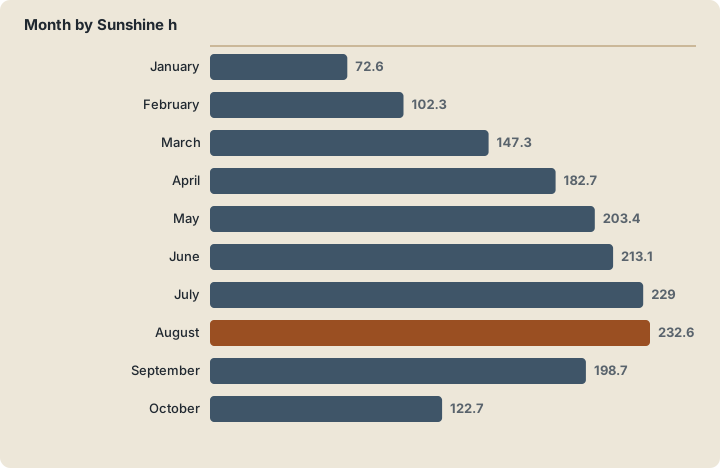
The numbers matter more here than in most of France, because Nantes sits at the Atlantic end of the Loire basin and takes the ocean's influence directly. The rain is evenly spread rather than concentrated: December is the wettest month at 101.0 mm, July the driest at 44.2 mm, and the year's total of 819.5 mm is moderate for western France. Sunshine peaks in August at 232.6 hours, and the warm season runs from June through September with mean maxima above 22 C.
The recent record tells a story of a changing baseline. The station's all-time high of 42.2 C was set on 24 June 2026, breaking the previous 42.0 C record of 18 July 2022, and 2026 also set August and May records at 40.4 C and 35.7 C. Against that, the normals show frost on only about 29 days a year and snow on fewer than 5, so winter visits are about rain gear rather than ice. The month-by-month breakdown is in the Nantes weather guide.
| Month | Mean daily max C | Mean daily min C | Rain mm | Sunshine h |
|---|---|---|---|---|
| January | 9.3 | 3.4 | 87.9 | 72.6 |
| February | 10.5 | 3.0 | 67.5 | 102.3 |
| March | 13.5 | 4.9 | 58.4 | 147.3 |
| April | 16.2 | 6.6 | 58.3 | 182.7 |
| May | 19.6 | 9.8 | 61.0 | 203.4 |
| June | 23.0 | 12.7 | 48.5 | 213.1 |
| July | 25.1 | 14.3 | 44.2 | 229.0 |
| August | 25.4 | 14.2 | 50.3 | 232.6 |
| September | 22.4 | 11.8 | 59.5 | 198.7 |
| October | 17.6 | 9.5 | 88.8 | 122.7 |
| November | 12.9 | 5.9 | 94.1 | 91.3 |
| December | 9.8 | 3.7 | 101.0 | 77.6 |
What Is The Food Scene In Nantes Actually Like?
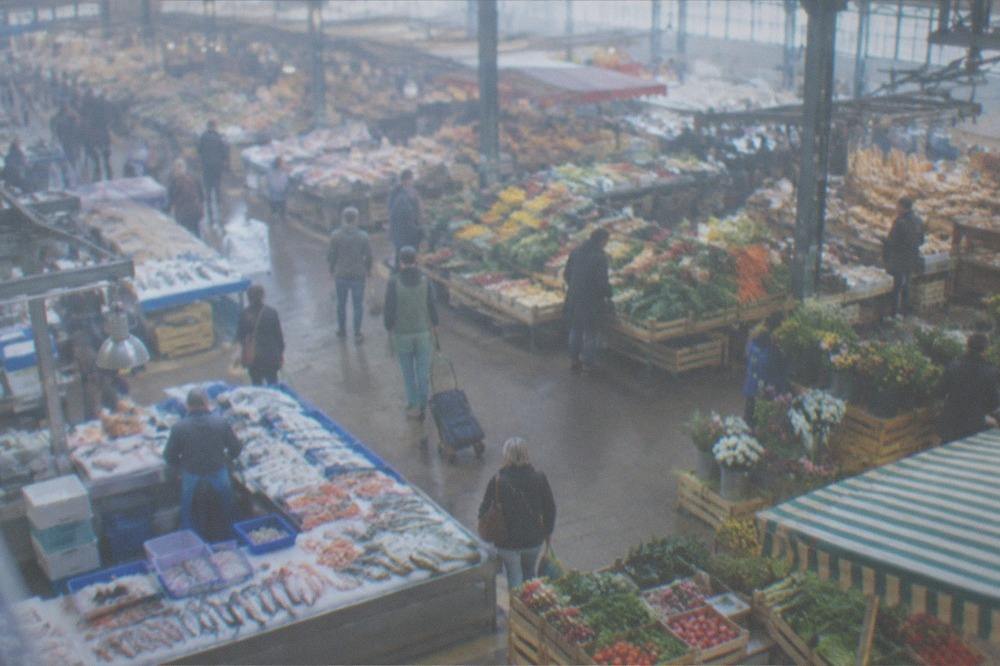
Nantes earns its food reputation through Muscadet, the dry white wine from vineyards just south of the city, beurre blanc, the emulsified butter sauce the city claims as its own, LU's Véritable Petit Beurre biscuit baked since 1886 and the almond-and-rum gâteau nantais. Talensac, the central market, opens Tuesday to Sunday mornings, and an inexpensive restaurant meal there comes with a glass of the local white.
The city's food identity is unusually specific for a mid-sized French city, and it is anchored by the wine. Muscadet, made from the Melon de Bourgogne grape in the Sèvre-et-Maine vineyards south of the city, with the Maison des vins at Vallet as its visitor centre, is the default accompaniment to the Loire fish that shaped the cooking here. The 2026 harvest told the story of the times: the picking ban was declared on 11 August 2026, eight days earlier than any previous year, with yields down to around 30 to 40 hectolitres per hectare after the summer heat.
The sweet and savoury inventions are just as local. The Petit Beurre biscuit was created by the Lefèvre-Utile company, set up in Nantes in 1846, and 2026 marks the firm's 180th anniversary; production moved out of the city to La Haye-Fouassière in 1986, but the LU factory building on the Loire now houses Le Lieu Unique arts centre. Berlingots nantais, the striped tetrahedral sweets made since the 19th century, and gâteau nantais, the rum-soaked almond cake dating to around 1820, round out the pantry. The full story of all of it is in the Nantes food guide.
The best-value way to taste the wine at its source is the short vineyard tour by van, which the roster lists from 80 EUR per person with a 5 rating:
| Nantes food or drink | What it is | Where it comes from |
|---|---|---|
| Muscadet | Dry white wine from Melon de Bourgogne | Vineyards south of Nantes, Maison des vins at Vallet |
| Beurre blanc | Shallot, wine and emulsified butter sauce | Nantes kitchens, classically served with river fish |
| Petit Beurre | Square butter biscuit, LU, since 1886 | Lefèvre-Utile, founded in Nantes 1846 |
| Gâteau nantais | Almond, rum and salted-butter cake | Nantes bakers, since about 1820 |
| Berlingots nantais | Striped tetrahedral hard sweets | Nantes confectioners, late 19th century |
| Talensac market | Fresh produce, cheese, fish stalls | Central Nantes, Tue-Sun mornings |
Is Nantes A Good Base For Day Trips Around The Loire And Brittany?
Nantes works well as a base because the surrounding Loire-Atlantique countryside sits inside about an hour by train: Clisson in as little as fifteen minutes by TER, Saint-Nazaire from around thirty-three, La Baule in roughly fifty and Pornic in about an hour. The Muscadet vineyards, the Guérande salt marshes and the Puy du Fou park are all feasible in a day, and a Pass Nantes even includes one return TER journey to Clisson.
The geography favours the day-tripper. Nantes sits at the point where Brittany, the Loire Valley and the Atlantic coast converge, and Loire-Atlantique, its department, was attached to the Pays de la Loire region by a 1941 decree and renamed in 1957, which is why the city's Breton identity and its modern administrative home have coexisted ever since. The question is explored in full in the is Nantes in Brittany guide.
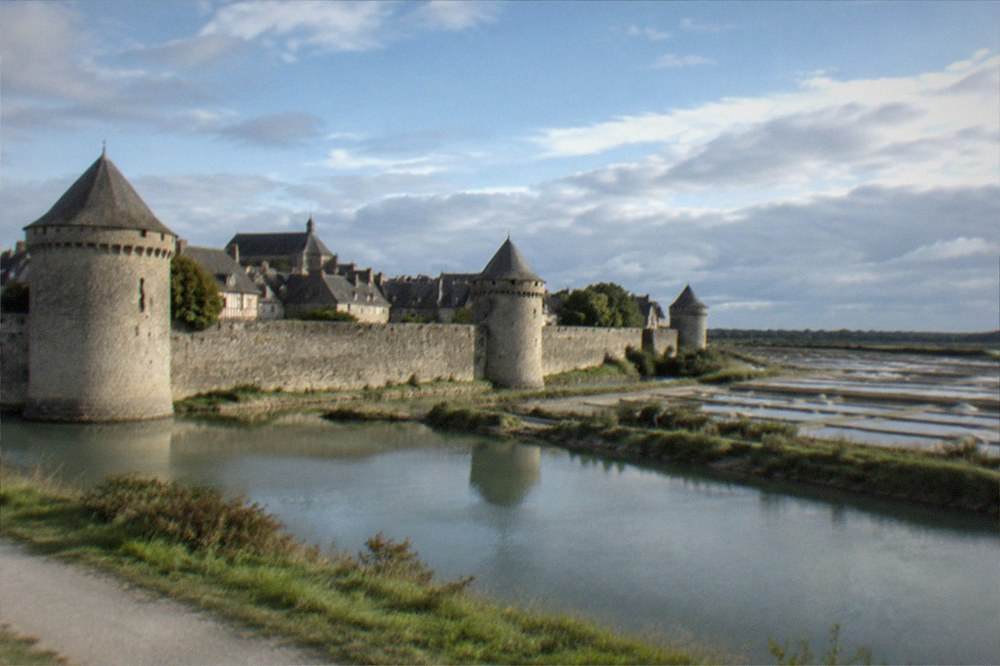
The coast is the most compelling direction. La Baule, the long sandy resort bay, is about fifty minutes by TER; Le Croisic at the far end of the same line takes about an hour and three minutes; Pornic, to the south, about an hour. Guérande, the walled medieval town beside the working salt marshes that produced an exceptional harvest in 2026, is reachable by road in about eighty kilometres. Inland, Clisson, the Italianate town on the Sèvre Nantaise with its castle and vineyards, is the closest and the easiest. The beaches near Nantes guide and the day-trips guide cover each route in detail.
These are the verified journey times from the schedule data:
| Day trip from Nantes | Fastest train or road time | What it offers |
|---|---|---|
| Clisson | ~15 min by TER, 27 km | Italianate town, château, vineyards |
| Saint-Nazaire | ~33 min by TER, 64 km | Escal'Atlantic liner tour, shipyard city |
| La Baule | ~51 min by TER | Resort beach, villas |
| Pornic | ~59-65 min by TER | Fishing port, rocky coves |
| Le Croisic | ~1 h 03 by TER | Oyster port, coastal path |
| Guérande | ~80 km by road | Salt marshes, medieval ramparts |
| Puy du Fou | ~1 h by road | History theme park, 2026 season 4 Apr to 1 Nov |
When Is The Best Time Of Year To Visit Nantes?
The best months to visit Nantes are May to September, when the outdoor programme peaks: the Voyage à Nantes art trail ran from 4 July to 6 September in 2026 and the free Rendez-vous de l'Erdre jazz and boating festival fills the last week of August. April, May and September offer mild air with fewer crowds, while November to January brings the heaviest rain, softened by the Christmas market that opens on 19 November 2026.
Summer is the season the city organises itself around. The Voyage à Nantes, its 15th edition in 2026, paints the green line through town and installs new works each year, and in 2026 the cathedral crypts and the Jardin Extraordinaire joined the route for the first time. The Rendez-vous de l'Erdre, the free festival that pairs jazz concerts with classic wooden boats along the river, ran 24 to 30 August 2026 with its 2027 edition already set for 23 to 29 August. The trade-off is the heat: July 2026 set a monthly sunshine record of 382 hours, and summer now regularly delivers days above 30 C.
The shoulder months reward timing. September combines mean daily maxima of 22.4 C with 59.5 mm of rain spread thinly, school-free streets and the opening of the arts season. May is nearly as warm at 19.6 C. Winter is the honest low season: November and December bring the year's heaviest rain and its shortest days, but the Christmas market on Place Royale and Place du Commerce, running 19 November to 27 December in 2026, and the Folle Journée classical festival, set for 27 to 31 January 2027, give the cold months a programme of their own. The full month-by-month case, including the best time to visit Nantes guide breakdown, is worth a read before booking.
For a trip built around the green line and the summer art installations, these are the tours that pair best with it:
Is Nantes Safe And Practical For First-Time Visitors To France?
Nantes is a practical, manageable city for a first visit: it is compact, its public transport runs from early morning to around midnight, and English is understood in hotels and most tourist-facing venues, though French politeness opens more doors. The city's recorded crime total rose 2% in 2025 to 24,384 offences city-wide, but the central districts visitors stay in are repeatedly described as lively and well-patrolled.
The practicalities are friendly to newcomers. The tram network is legible, the airport shuttle is simple, and weekend free travel means Saturday and Sunday exploring costs nothing on the network. The city's tourist office, run by Le Voyage à Nantes at 9 rue des États, opens daily 10:00 to 18:00 with extended summer hours. The Muséum d'histoire naturelle is closed for major works until 2029, one of the few rainy-day staples currently off the board, so anyone planning around wet weather should build the museums list from the château, the Musée d'arts, the Musée Dobrée and the Planétarium instead. A fuller treatment of areas and cautions is in the is Nantes safe guide.
For travellers deciding where to sleep, the where to stay in Nantes guide maps the Bouffay, Graslin and Île de Nantes districts against price and character, and the things to do in Nantes page collects every major sight on one list for final itinerary planning.
Common Questions About Visiting Nantes
Is Nantes Worth Visiting For A Short Break?
Yes. Two days cover the château, the Machines de l'île, the reopened cathedral, the Passage Pommeraye and a market morning, and a third day adds the vineyards or a coastal trip such as Clisson or La Baule. The city's compactness means short stays lose little time to commuting.
How Many Days Are Enough In Nantes?
Two days for the city itself, three to four if day trips to Guérande, La Baule, Saint-Nazaire or the Muscadet vineyards are part of the plan. The Pass Nantes at 72 hours suits the longer stay, though note it excludes the Grand Éléphant ride.
Is Nantes Expensive Compared With Paris?
Less than Paris, in the areas a visitor feels directly: museum entries, meals and transport all sit at the inexpensive to mid-range level for a major European city. Tourist tax adds 1.10 to 2.86 EUR per person per night depending on hotel rating, as reported.
Can You Visit Nantes Without Speaking French?
Yes, in practice. Hotel, museum and restaurant staff in the centre generally manage in English, signage is bilingual on the main visitor routes, and the tram system is easy to use without language. Learning a few French courtesies still improves service everywhere.
What Is The Single Best Thing To Do In Nantes?
The Machines de l'île, and specifically the Grand Éléphant, is the sight no other French city offers. Ride it before it pauses for maintenance from 2 November 2026 to 28 February 2027, then pair it with the free Galerie visit and a walk along the Loire quays to the Mémorial de l'abolition de l'esclavage.
When Should You Avoid Visiting Nantes?
Avoid early November to mid-February if ride-dependent plans matter, because the Grand Éléphant pauses from 2 November 2026 to 28 February 2027 and the site closes annually in January. Otherwise the wettest months, November and December with 94.1 and 101.0 mm of rain, are simply a rain-coat question.
The verdict, on the evidence: Nantes is worth visiting, and worth more than the two days travellers typically give it. A castle that held the births and treaties of Breton history, a cathedral back open after five years, machines that walk the old shipyards, a wine country within a van ride and a coast within an hour, all priced below the capital and stitched together by trams that cost less than a coffee, make a stronger case than any nickname could. For trip planning that goes deeper, the Nantes Travel Guide homepage collects every sight, season and itinerary on the site.