Loire à Vélo From Nantes
The Loire à Vélo carries riders out of Nantes along the last stretch of France's longest river, past the Île de Nantes, the Estuaire art trail and the vineyards of Muscadet country. Here is how to plan the ride: the route, the seasons, the costs and the stops.
Short answer
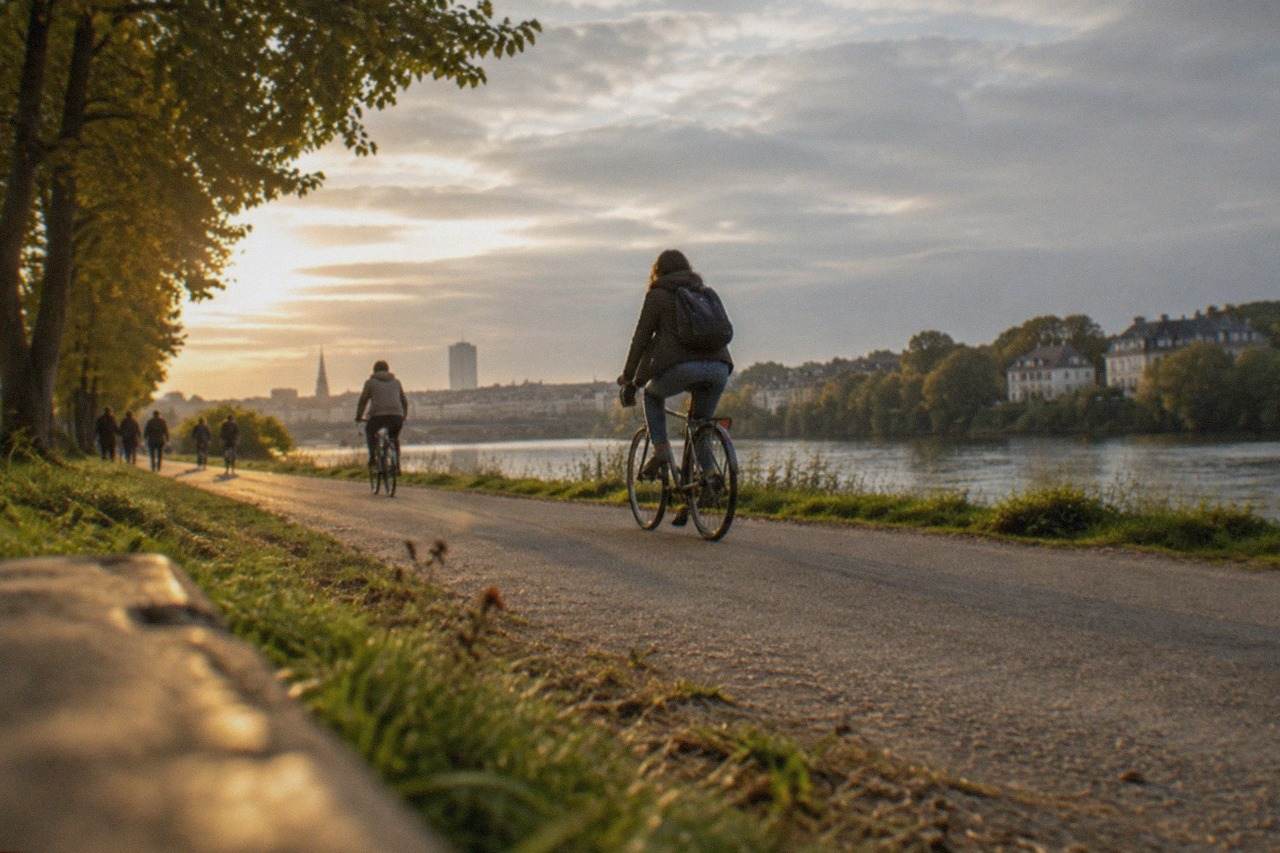
The Loire à Vélo is the signed cycling route that follows the Loire river, and Nantes, in the Loire-Atlantique department of the Pays de la Loire region, sits near its western end. Ride west toward Saint-Nazaire and the Atlantic, or east into chateau country. May, June, September and October give the best balance of temperature and rain; a Naolib ticket is 1.80 EUR and the whole network is free at weekends.
Nantes sits on the Loire in the Loire-Atlantique department of the Pays de la Loire region of western France, and it is one of the natural gateways to the Loire à Vélo, the signed cycling route that traces the river through the valley that gives the region its name. The city's riverbanks, islands and quays have been reshaped over two decades into a landscape you can read from a saddle: former shipyards turned into mechanical-elephant workshops, banana warehouses turned into galleries, and levee-top paths that carry you out of town within minutes of the cathedral. This guide covers what the route is, where to start it, when to ride, what it costs and what to see along the way, using figures drawn from official city, transport and weather sources.
What Is The Loire à Vélo Route From Nantes?
The Loire à Vélo is the signed cycling route that follows the Loire river, and from Nantes, in the Loire-Atlantique department of western France, it runs west along quays, towpaths and levee-top lanes toward the river's mouth at Saint-Nazaire, and east into the chateau country of the wider Loire Valley. Nantes, a city of 327,734 residents in 2023, sits near the route's western end and works as a base because the terrain is almost flat and the rail network carries you home.
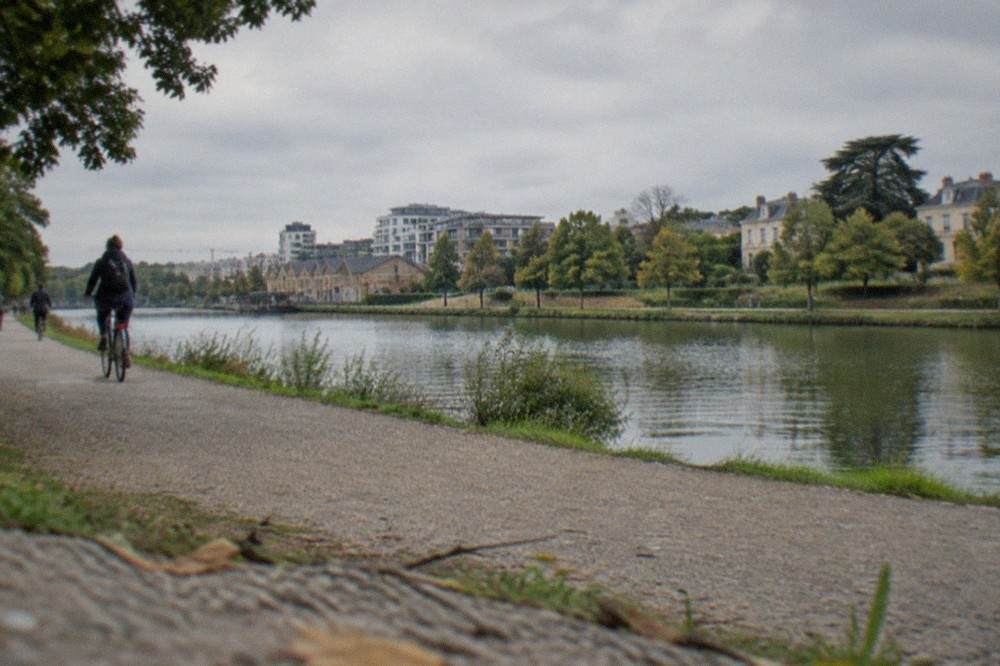
The river itself frames everything. The Loire meets two tributaries at Nantes, the Erdre from the north and the Sèvre Nantaise from the south, and the city grew around that junction. For a cyclist this matters less as history than as geography: the banks are wide, the islands are many, and the paths hug the water for most of the way out of town. You do not need to be fit to enjoy the Nantes stretch. Families ride it on hire bikes, commuters ride it daily, and the flat profile means a first afternoon covers a surprising amount of ground.
What the route gives you near the city is a sequence of contrasts. The Île de Nantes, the island district between the river's north and south arms, holds Les Machines de l'île on the old shipyard site, inaugurated with the Grand Éléphant on 30 June 2007. Further west the banks open toward the Estuaire art trail, a public collection of 33 works across 23 sites between Nantes and Saint-Nazaire, verified on the Le Voyage à Nantes site. Ride east instead and the Loire carries you toward vineyards and chateaux; the question of how long it takes to cycle the Loire Valley is really a question about how much of that you want.
A practical note on direction. Most riders based in Nantes ride the western, riverside stretch first because it starts at the city's own front door, then use the train for the longer hauls. The rail line from Nantes follows the Loire toward the coast, with stations at Saint-Nazaire, La Baule and Le Croisic, so a one-way ride with a rail return is the standard pattern. Timetables reported by SNCF Connect show these as frequent regional TER services, and bikes travel on them without a reservation in ordinary circumstances, though capacity rules are the operator's to state and worth checking before a summer departure.
Where Does The Loire à Vélo Begin In Nantes?
The practical starting point is the Loire's north-bank quays between the Château des ducs de Bretagne area and the Île de Nantes, from which the signed route picks up the riverside lanes west past the Hangar à Bananes and out along the levees. Within the city you can also orient yourself on the green line, the painted trail of the Le Voyage à Nantes art route, which the event's own pages describe as running about 20 km through the city.
The Château des ducs de Bretagne is a good first landmark. Its courtyard and ramparts are free and open daily 8:30 to 19:00, an hour later in July and August, and from its walls you are a short roll from the river. The castle's museum, 32 rooms and more than 1,150 objects on the city's history, costs 9 EUR full tariff or 5 EUR reduced if a rainy morning interrupts a riding day. The moat garden is free too, open from 8:00.
From there the natural line is south to the water and onto the Île de Nantes. The island's west end holds the Hangar à Bananes, the old banana-ripening warehouses now holding bars, restaurants and the HAB Galerie, which hosted the INTERSTELLAR exhibition from 23 May to 27 September 2026. Cross to the south bank and the route continues toward Bas-Chantenay and the Jardin Extraordinaire, a park built into the old quarry cliffs, one of the sites the 2026 Le Voyage à Nantes summer edition used for the first time. That edition, the fifteenth, ran from 4 July to 6 September 2026 on the theme of Earth, and several of its works stayed beyond the summer, so the riverbanks reward a slow look rather than a head-down dash.
If you want a structured first taste of the riverside before setting off, a guided photo walk of the city's most photogenic corners covers the quays and the island in an hour and a half, and it pairs neatly with an afternoon on the path.
How Do You Get To Nantes To Start A Loire à Vélo Trip?
Rail is the main way in: timetables reported by SNCF Connect show about 24 trains a day each way between Paris Montparnasse and Nantes, with the fastest direct services taking about two hours. Nantes Atlantique airport lies about 8 km south-west of the centre and, according to the airport's annual report, handled 7,189,480 passengers in 2025; its shuttle costs 10 EUR and runs roughly every 20 minutes from April to October, covering the trip in about 20 minutes.
The shuttle detail matters to cyclists. The fare is 10 EUR one way, it is bought on board by bank card, and it is valid for one hour on the whole Naolib network, trams, buses and the river Navibus ferries included. Since 30 March 2026 the shuttle stop has been at the Gare routière by the southern side of the station, quai A, according to the airport's access page. One thing to be clear about: Naolib travel is free for everyone from Saturday 00:00 to Sunday 23:59, a scheme running since 2021, but the airport shuttle is excluded from that and always costs its 10 EUR. Do not plan a free weekend transfer from the airport.
The airport's 2026 route list, as reported, adds long-haul reach: Air Canada's Montreal service runs seasonally three times weekly from June 2026, Air Transat adds Quebec, and easyJet has announced Brussels and Essaouira from autumn 2026. For anyone asking which airport to fly into for the Loire Valley, Nantes is the valley's western hub, and the city's own guide to flights to Nantes and Nantes airport to the city centre cover the detail.
| Way in | What the sources give | Cycling note |
|---|---|---|
| TGV from Paris | About 24 trains/day each way, fastest about two hours, per SNCF Connect timetables | Station sits between the Erdre and the Île de Nantes; riverside path starts minutes away |
| Nantes Atlantique airport | About 8 km south-west of the centre; 7,189,480 passengers in 2025 per the airport's annual report | New 2026 routes include seasonal Air Canada Montreal from June 2026, as reported |
| Airport shuttle (Navette Aéroport) | 10 EUR, about 20 minutes, every 20 min April to October and every 30 min November to March; stop at Gare routière quai A since 30 March 2026 | Excluded from Naolib's free weekend travel; valid one hour on the network |
| Arriving by car | Park-and-ride facilities pair 24-hour parking with transport, at 4.50 EUR for a day's parking plus travel for up to five people, as Naolib's FAQ gives | Useful if you bring bikes on a roof rack |
France sits inside the Schengen area and the Eurozone, so for most European visitors there is no border formality to budget time for, and the till currency everywhere on this route is EUR.
When Is The Best Time Of Year To Cycle The Loire à Vélo From Nantes?
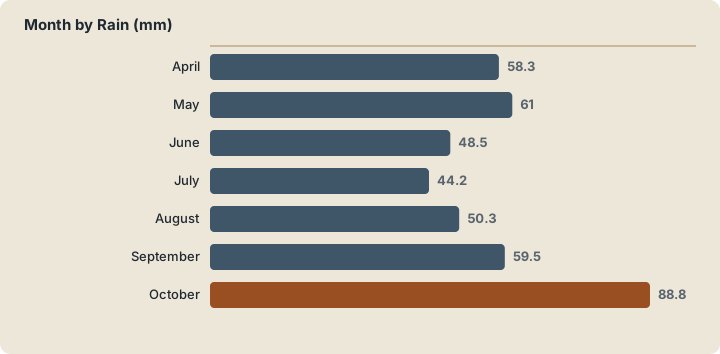
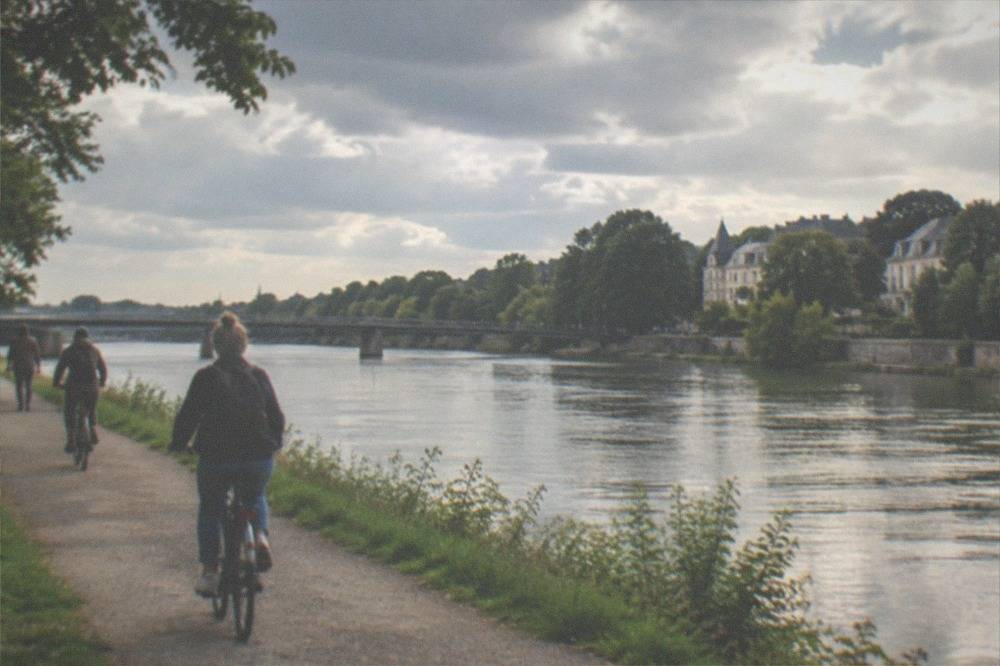
The climate is temperate oceanic, not Mediterranean, and the numbers bear it out: Météo-France's 1991-2020 normals for the Nantes-Bouguenais station give mean daily maxima from 9.3 C in January to 25.4 C in August, with 819.5 mm of rain across the year. For cycling, late spring to early summer and September to October offer the best balance, since July and August are the warmest but also the busiest, while December, the wettest month at 101.0 mm, belongs to the indoor museums.
The month-by-month picture is the honest way to plan. March is actually the driest spring month on the rainfall-day count, and May and June carry long evenings without July's peak heat. September is the connoisseur's pick: the sea is at its warmest, the holiday crowds have gone, and the vineyards along the Sèvre Nantaise are thinking about harvest. The 2026 harvest made the news for its earliness, with the Muscadet picking ban declared on 11 August 2026, a record eight days ahead of the previous mark set in 2003, as reported by local producers.
| Month | Mean daily maximum (C) | Rain (mm) | Days with 1 mm or more |
|---|---|---|---|
| April | 16.2 | 58.3 | 9.7 |
| May | 19.6 | 61.0 | 9.6 |
| June | 23.0 | 48.5 | 7.6 |
| July | 25.1 | 44.2 | 7.1 |
| August | 25.4 | 50.3 | 7.2 |
| September | 22.4 | 59.5 | 7.8 |
| October | 17.6 | 88.8 | 11.8 |
Two warnings from the recent record. First, heat: the station's all-time high is 42.2 C, set on 24 June 2026, which broke the previous record of 42.0 C from 18 July 2022, and 2026 logged 40 days at or above 30 C. A July or August ride needs an early start and midday shade. Second, water: in February 2026 the Loire reached 8.18 m at the Pont Anne-de-Bretagne, above 8 m for the first time in about 15 years, closing riverside sections and the Mémorial de l'abolition de l'esclavage, which shuts during Loire floods. Winter floods are real here; the riverside paths reopen once levels drop.
For a deeper read on seasons, the site's guides to the best time to visit Nantes and Nantes weather unpack the same station data month by month.
Which Sights And Day Trips Line The Loire à Vélo Near Nantes?
West of the city the route threads the Estuaire trail, 33 artworks on 23 sites between Nantes and Saint-Nazaire, so the ride doubles as an open-air gallery; east and south, the train opens Clisson in about 23 minutes on average, the Muscadet vineyards around Vallet, and the coast at La Baule in about 51 minutes, all per SNCF Connect's reported times. Guérande's walled medieval town and salt marshes sit about 80 km away by road.
Start with what is under your wheels. The Estuaire works are installed on both banks, on islands and in the water, and they turn a riverside day ride into a treasure hunt; the collection is verified on the Le Voyage à Nantes site, which also runs the green line through the city itself. At the far end, Saint-Nazaire holds Escal'Atlantic, the ocean-liner museum in the old submarine-base pen, priced in 2026 at 15 EUR adult, 13 EUR reduced and 7.50 EUR for children aged 4 to 17, with a temporary exhibition on the liner Normandie running from July 2026 to September 2027. That is a natural end-of-ride reward, or a rail trip in its own right.
| Destination | TER journey time (reported) | Why riders go |
|---|---|---|
| Clisson | Fastest about 15 min, average about 23 min | Italianate town, ruined chateau, and the Sèvre Nantaise valley's vineyards |
| Saint-Nazaire | About 33 min | The Loire's mouth, Escal'Atlantic, and the ocean-liner heritage of the port |
| La Baule | About 51 min | The bay beach, the classic resort arcades, gateway to Guérande |
| Le Croisic | About 1 h 03 | Fishing port, rocky coves, the end of the rail line into salt-marsh country |
| Pornic | About 59 to 65 min | Old port, castle above the harbour, the closest stretch of Atlantic coast by rail |
Beyond the immediate valley, the classic regional add-ons are Puy du Fou, about 70 to 80 km from Nantes and roughly an hour's drive, whose 2026 season ran 4 April to 1 November with a Christmas extension from 19 December 2026 to 3 January 2027, and the Mont-Saint-Michel, about 2 h 15 by road, per aggregator estimates. Neither is a cycling day out, but both explain why families base in Nantes and radiate outward. The site's guides to the Loire Valley chateaux and the Nantes and Loire Valley road trip map the same country for four wheels, and if you are choosing towns, the question of the prettiest town in the Loire Valley is argued endlessly and worth settling yourself.
What Does Cycling The Loire à Vélo From Nantes Cost?
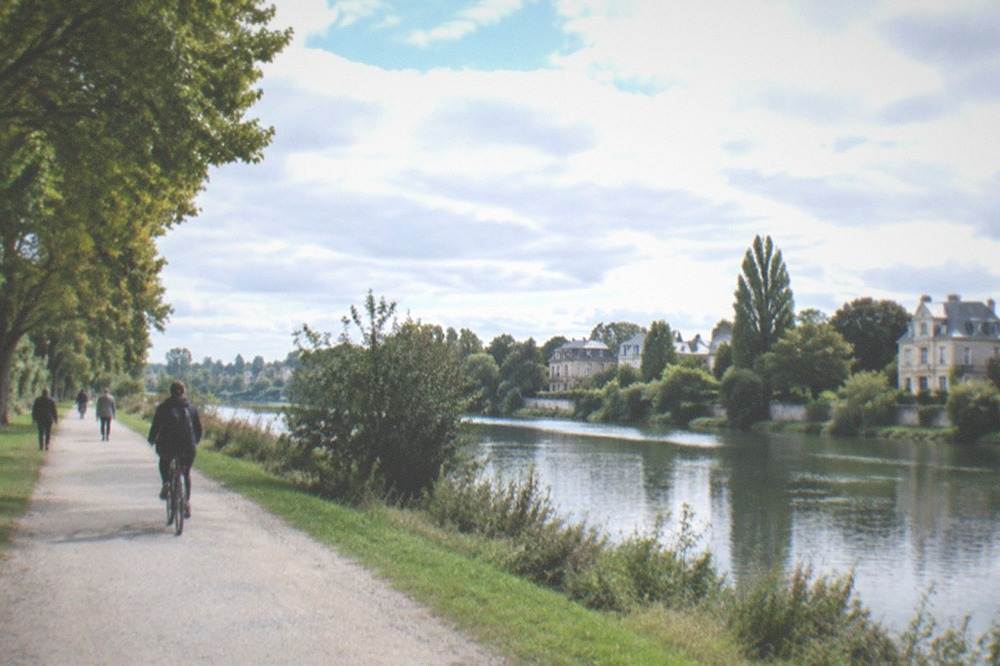
Getting around Nantes itself is cheap and partly free: a Naolib one-hour ticket covering trams, buses, the Navibus river ferries and TER trains inside the metropole is 1.80 EUR, a 24-hour ticket is 6.80 EUR, and the whole network is free for everyone from Saturday 00:00 to Sunday 23:59. The Pass Nantes visitor pass runs from 30 EUR for 24 hours, per the official tariff table, and bundles transport, museums and attractions.
Bike hire is the line the sources cannot fix. The city's Bicloo share scheme exists, but the verified pack carries no current price for it, so no figure is quoted here: check the scheme's own site before budgeting. The same honesty applies to independent hire shops along the route, whose rates and fleets change seasonally. What can be stated is the shape of the other costs. The Pass Nantes, valid from 1 April 2026 at the prices below, includes unlimited Naolib travel, one airport-shuttle return, one TER return between Nantes and Clisson, and one entry per partner site, among them the Château des ducs de Bretagne museum, the Galerie des Machines and the Carrousel des Mondes Marins.
| Pass duration | Full | Reduced (ages 4 to 17, students under 26, disability card) | Family (2 adults + 2 children) |
|---|---|---|---|
| 24 hours | 30 EUR | 20 EUR | 80 EUR |
| 48 hours | 40 EUR | 26 EUR | 106 EUR |
| 72 hours | 49 EUR | 31 EUR | 129 EUR |
| 7 days | 75 EUR | 45 EUR | 195 EUR |
Attraction prices along the river are straightforward till prices. Each of the three Machines de l'île attractions, the Galerie, the Carrousel and a Grand Éléphant ride, costs 12 EUR full, 10 EUR reduced and 8 EUR for children aged 4 to 12, with day packages at 20 EUR for two and 29 EUR for three. Note the maintenance window: there are no elephant rides from 2 November 2026 to 28 February 2027, so a winter ride along the island should not promise one. The Musée d'arts de Nantes is 9 EUR full with free entry 19:00 to 21:00 on Thursday nocturnes, and the Jules Verne museum is 4 EUR, a modest rainy-hour option. The full detail sits in the site's guide to the Pass Nantes.
One hidden line item is the tourist tax, charged per person per night and tiered by star rating: rates reported for 2026 give 2.86 EUR for a 4-star, 1.87 EUR for a 3-star and 1.10 EUR for a 2-star property, with unclassified lets paying 5.5% of the nightly price capped at 5.39 EUR. It is collected by the accommodation, not by you at a desk, and it explains small gaps between quoted and charged room rates.
If you would rather sample the saddle without committing to a hire contract, the city also has a guided panoramic tour by electric bike, a loop that covers the riverside and hillside viewpoints; its current price and dates render in the live listing below.
Where Should You Stay Along The Loire à Vélo From Nantes?
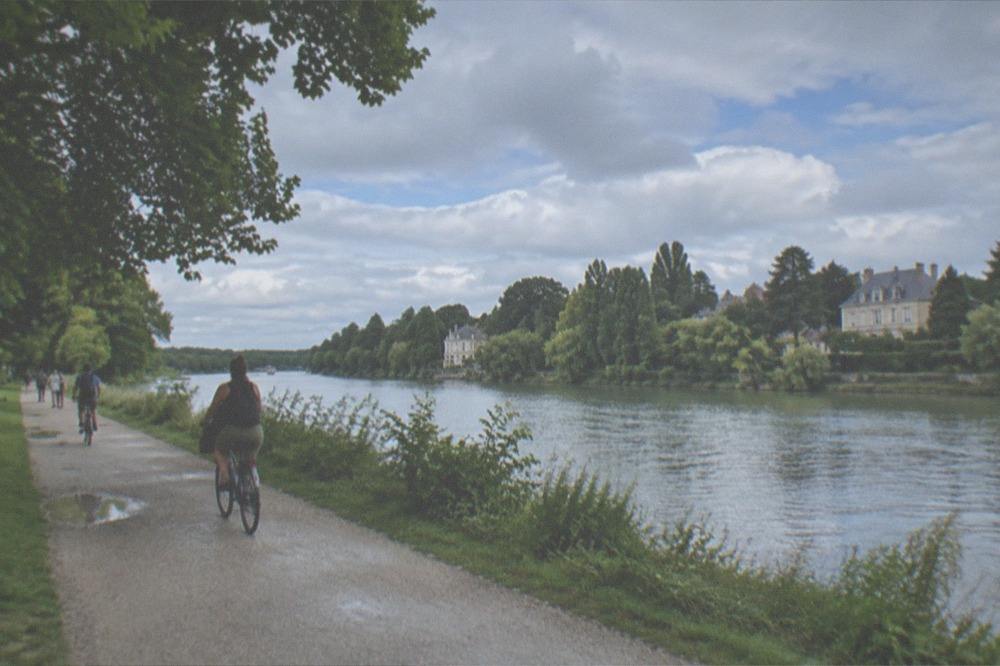
Base in Nantes, ideally in the Bouffay or Graslin districts on the north bank or on the Île de Nantes, because both put the riverside paths within a few minutes' ride and the station a short hop from every rail line the route uses; no nightly hotel rate can be quoted, since the verified pack carries none and rates vary by season and star class.
The newest opening is the Eklo hotel on the Île de Nantes, an 86-room budget concept that welcomed its first guests on 12 January 2026.
The geography decides the answer more than the hotel does. Bouffay, the old town around the cathedral, and Graslin, the theatre and passage quarter, sit closest to the historic core and the quays. The Île de Nantes puts you between the river's arms, next to Les Machines and the Hangar à Bananes, which is the strongest position if evenings on the terrace matter to you. Across the Loire to the south, Trentemoult's painted fishermen's houses in Rezé are a short Navibus ferry ride across the water, and the N2 river link between Trentemoult, Bas-Chantenay and the Hangar à Bananes, launched on 12 November 2025, made that crossing a genuine commute rather than a detour.
The cathedral quarter deserves one honest flag. The cathedral itself, Saint-Pierre-et-Saint-Paul, partially reopened on 27 September 2025 after the July 2020 arson fire, with full completion planned for 2028 and the west facade still under scaffolding; entry is free, and the rebuilt interior is worth the stop even mid-ride. The site's wider guide to where to stay in Nantes covers the districts in depth.
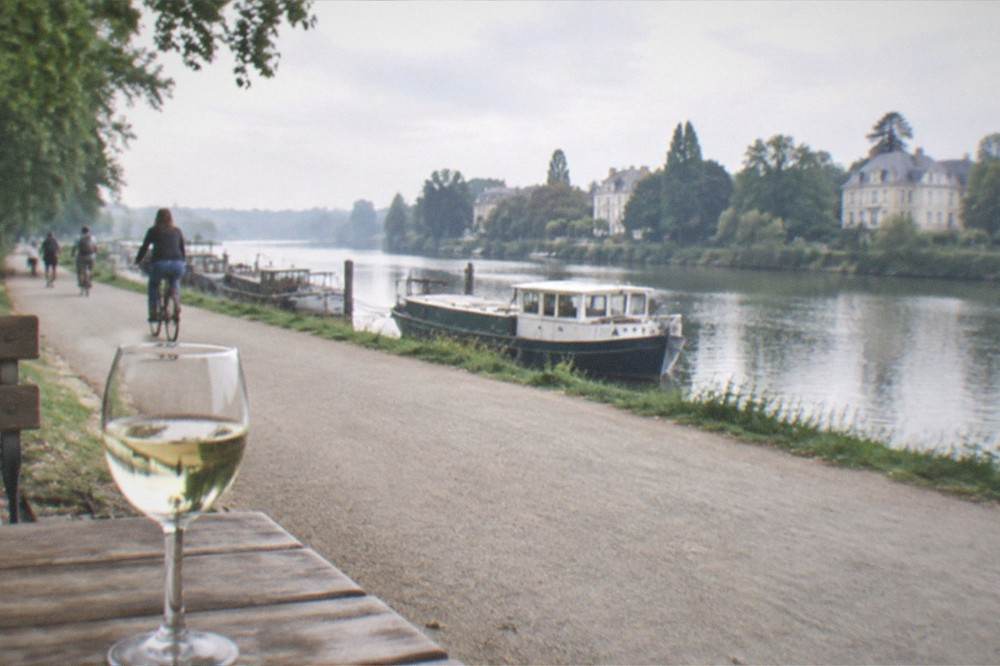
Two day-rides illustrate the pattern. Ride west from the island through the Estuaire sites toward the river's mouth at Saint-Nazaire, then return by TER. Or ride east and south into the Muscadet country, which is the vineyard landscape most people picture when they ask what wine the Loire Valley is famous for, and come back the same way. Both end at the same glass of something cold.
Can You Pair The Loire à Vélo With The Erdre, Muscadet Country And The Coast?
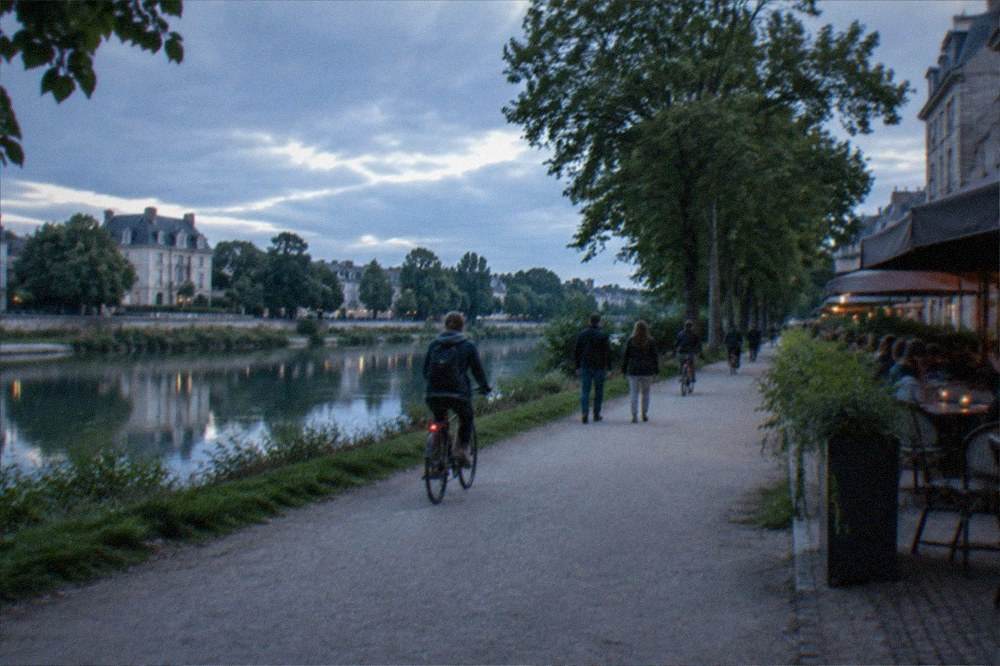
Yes, and Nantes is the hinge for all three. The Erdre, the Loire's tributary from the north, has its own river experience including the Navibus N3 ferry service on the Erdre, which runs on ordinary Naolib tickets, while Muscadet country to the south-east is the home vineyard of the Melon de Bourgogne grape with the Maison des vins at Vallet, and the Atlantic coast sits under an hour away by rail to La Baule or Pornic.
The Erdre is the quiet surprise of the region. Here is what is verified: the Navibus network runs three ferry lines on ordinary Naolib tickets, N1 and N2 across the Loire and N3 along the Erdre itself, verified on the Naolib site, and a three-hour cruise aboard the Na Boa boat explores the Erdre from the water for those who would rather be carried than pedal. The riverbank meadows and the Île de Versailles, a free Japanese garden at the Erdre's edge, make a soft half-day that contrasts with the wide, island-split Loire.
Muscadet country is where the ride turns agrarian. The grape is Melon de Bourgogne, the trade body's Maison des vins sits at Vallet, and the wine's character is the subject of its own guide here; a sensory tasting visit in the city itself is the gentlest introduction, with the live listing below carrying the current price. The vineyards' 2026 story was the heat: an early harvest, lower yields around 30 to 40 hectolitres per hectare, and strong sugar ripeness, as the producers themselves reported, so expect growers to talk about the vintage whether you ask or not.
The coast completes the triangle. The question of what city sits at the mouth of the Loire is answered by riding west far enough: Saint-Nazaire, and beyond it the Atlantic beaches of La Baule, Le Croisic and Pornic, all on the TER lines already listed. The full coastal picture, including Guérande's salt marshes, whose 2026 harvest was doubled by the summer heat according to local reporting, sits in the site's day-trip coverage and its answer on what the Pays de la Loire is famous for.
A Three-Day Loire à Vélo Plan From Nantes
Three days is the comfortable minimum for the Nantes end of the Loire à Vélo: one day for the city stretch from the Château des ducs de Bretagne quays to the Île de Nantes and Les Machines, one for the ride west through the Estuaire sites toward the river's mouth at Saint-Nazaire, and one for the flexible extras, the Muscadet vineyards, the Erdre riverbanks or a rail-and-ride day to Clisson.
Every night can be spent in the same Nantes base, because the TER network brings each finish line home.
For riders who want the shape before the detail, a three-day pattern works well and uses only the figures above.
| Day | Focus | Base |
|---|---|---|
| Day one | The city stretch: chateau and quays, Île de Nantes, Machines, green line orientation | Nantes, Graslin or the Île de Nantes |
| Day two | Ride west through the Estuaire sites toward the river's mouth; return by TER from Saint-Nazaire, about 33 minutes as reported | Nantes |
| Day three | Muscadet country and the Erdre, or a rail-and-ride day to Clisson and the Sèvre valley, about 23 minutes by TER on average | Nantes or Clisson |
The order is deliberate. Day one lets the legs find the flat and the eyes find the water; day two is the signature ride, ending with the liner museum or simply the sight of the ocean-going river meeting the sea; day three is the flexible one, trading saddle time for vineyards, ferries or a small Italianate town. Weather decides the swap: the museum-heavy day belongs to the rainy one, and the Mémorial, free and open 9:00 to 18:00 in the cooler season, or the Musée d'arts with its Thursday nocturne, absorb a wet afternoon without cost pressure.
Cyclists who fall for the region sometimes extend into a full road trip through the valley; the site's Nantes and Loire Valley road trip itinerary does that by car, and the same logic works by rail and pedal, one station at a time.
Common Questions About Cycling The Loire à Vélo From Nantes
What is the Loire à Vélo?
It is the signed cycling route that follows the Loire river through its valley. From Nantes, in the Loire-Atlantique department of western France, the western stretch runs along the river's quays, islands and levees toward the mouth at Saint-Nazaire, while the eastern direction leads into the chateau country of the wider Loire Valley.
Where does the Loire à Vélo start in Nantes?
Practically, from the north-bank quays near the Château des ducs de Bretagne and the Île de Nantes, where the riverside lanes are continuous west past the Hangar à Bananes. The city's green line, about 20 km of painted trail per the Le Voyage à Nantes pages, is a good way to orient yourself before setting out.
Is the Nantes stretch of the Loire à Vélo flat?
Yes. The Loire at Nantes runs through low riverbank terrain, and the city stretch along the quays, the island and the levees is almost entirely level, which is why it suits families and casual riders as well as distance cyclists.
When is the best month to cycle the Loire à Vélo from Nantes?
May, June and September, with October as a cooler runner-up. Météo-France's 1991-2020 normals for the Nantes-Bouguenais station give mean daily maxima of 19.6 C in May and 22.4 C in September, against 25.4 C in August, the warmest month. July and August work best with early starts.
Can you take a bike on the train from Nantes?
Ordinarily yes on the regional TER services along the Loire toward Saint-Nazaire, La Baule and Clisson, which is what makes one-way rides with a rail return the standard pattern. Exact capacity rules are the operator's to state, so check with SNCF before a busy summer departure.
How much does it cost to cycle from Nantes?
Around the city, a Naolib one-hour ticket is 1.80 EUR, a 24-hour ticket is 6.80 EUR, and the network is free all weekend; the Pass Nantes visitor pass starts at 30 EUR for 24 hours. Bike hire rates are not published in the verified pack, so check hire shops directly. The full cost picture is in the tables above.
The Loire à Vélo rewards the unhurried: a morning on the island watching the Grand Éléphant spray its crowd, a flat afternoon weaving between the Estuaire works, and a train home with the river still in your legs. Nantes, as this Nantes Travel Guide keeps finding, is the rare city that works both as a destination and as a departure point, and the saddle is one of the best ways to see why.