Guerande
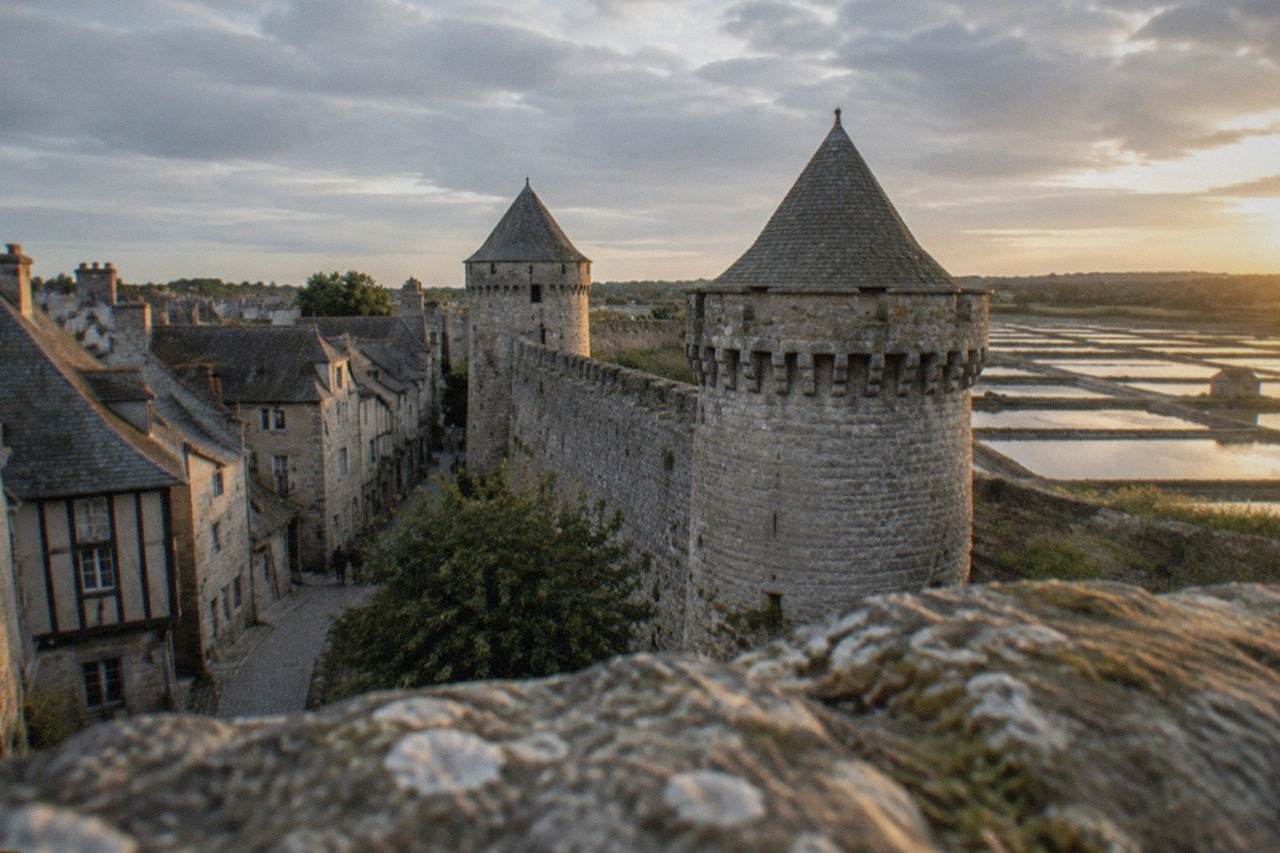
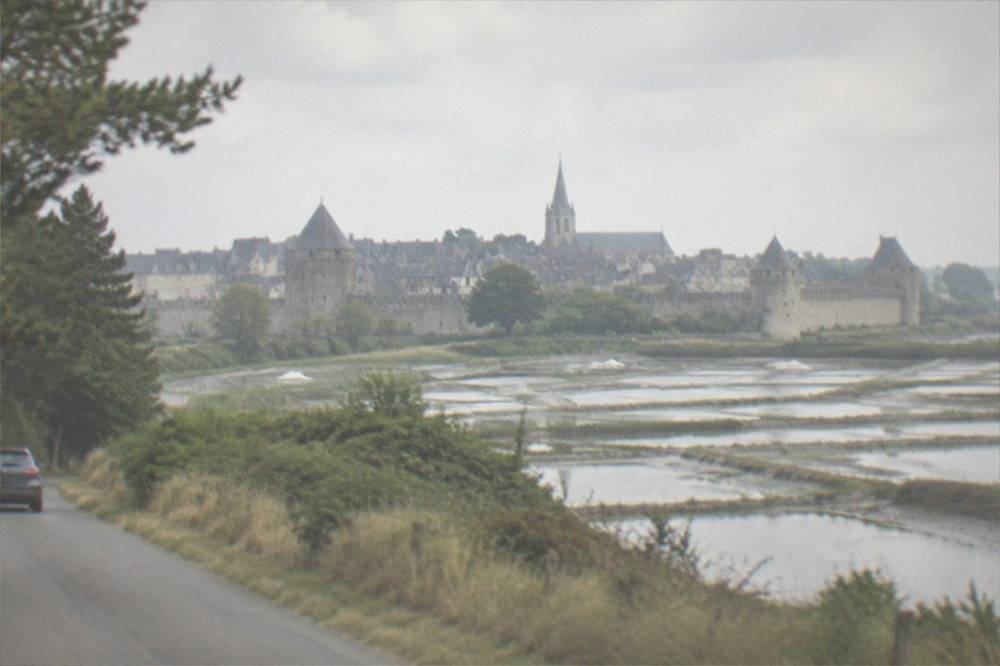
Guerande is a walled medieval town in Loire-Atlantique, Pays de la Loire, about 80 km by road west of Nantes in western France, ringed by working salt marshes that still produce hand-harvested fleur de sel. This guide covers how to get there from Nantes, what the 2026 salt harvest looks like, and how to pair the town with La Baule or Saint-Nazaire.
Short answer
Guerande sits about 80 km by road from Nantes in the Loire-Atlantique department of western France. Its complete medieval walls encircle a small historic town, and the surrounding salt marshes are still worked by hand. The 2026 harvest was exceptional, with average yields of about 1.5 tonnes per salt pan and some exceeding 3 tonnes. Terre de Sel runs guided marsh visits year-round, and the site records around 200 bird species.
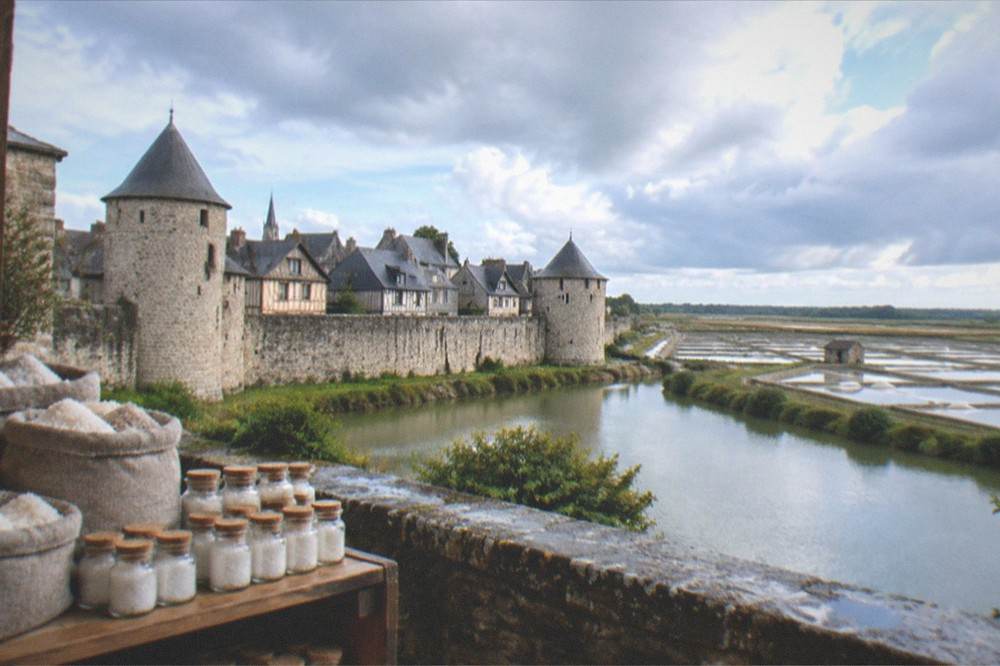
Guerande is a walled medieval town in the Loire-Atlantique department of the Pays de la Loire region of western France, roughly 80 km by road from Nantes, and it remains one of the few places in Europe where sea salt is still harvested by hand on an industrial scale. The town itself is small enough to walk in an afternoon. The marshes around it are the reason many people come, and they are a working landscape rather than a museum piece: roughly 200 bird species have been recorded there according to local tourism listings, and the salt pans are tended by paludiers whose techniques go back centuries.
This guide from the Nantes Travel Guide editorial desk covers what Guerande actually is, how to reach it from Nantes with only the travel figures that are verified, what the record 2026 salt harvest means for visitors, and how to combine the town with La Baule, Le Croisic or Saint-Nazaire on the same run west. Every operational claim below is framed the way the source gives it.
Where Is Guerande And How Far Is It From Nantes?
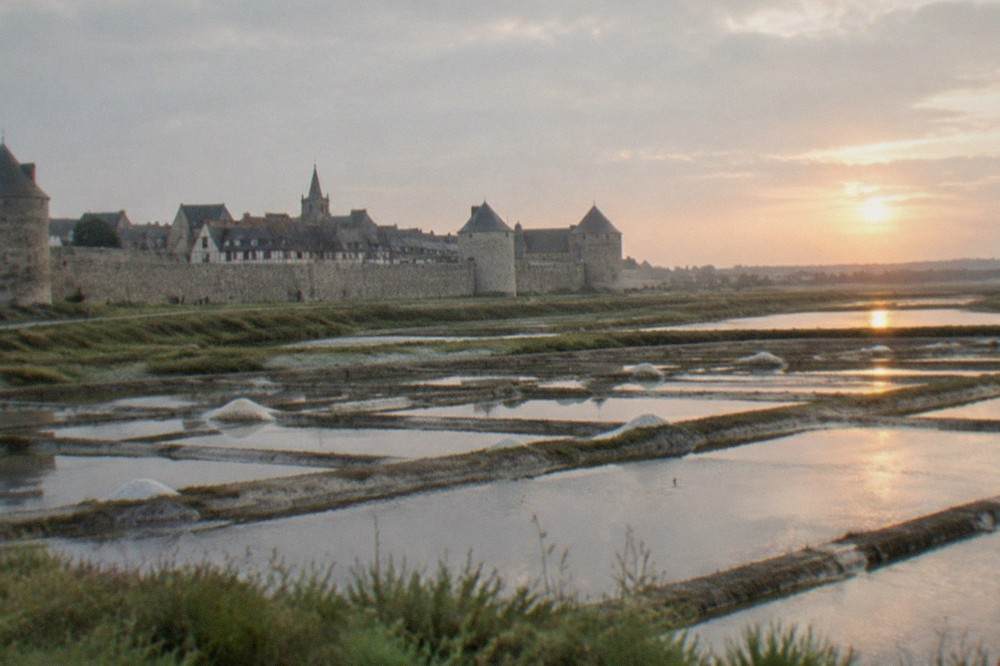
Guerande sits on a rocky promontory in Loire-Atlantique, the same department as Nantes, in the Pays de la Loire region of western France, roughly 80 km by road west of the city, between the Briere marshland to the north and the Atlantic coast to the south. The town is administratively part of the Guérande Peninsula, and its salt basin drains toward the ocean at Le Croisic and Batz-sur-Mer. Nantes, on the Loire and Erdre rivers, is the natural starting point.
The geography matters more than it first appears. The peninsula is low, flat and threaded with water: salt pans to the south and east, the Briere regional park's wetlands to the north, and beaches at La Baule a short hop south. Guerande's position on a slight rise is why the medieval town was fortified where it was, and why the walls still stand complete today when so many French towns lost theirs to nineteenth-century development.
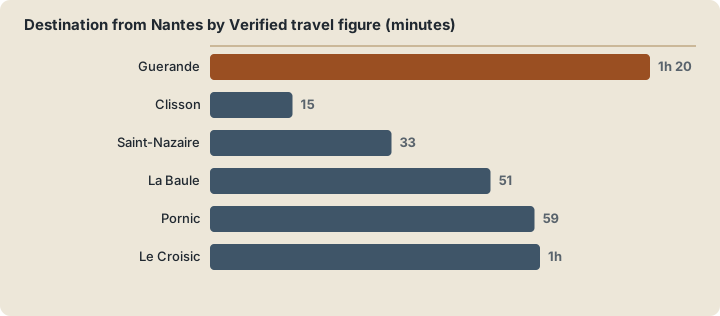
For orientation purposes, the figures that follow are the only ones verified for this route and its neighbours. Where a journey time is not listed, this page stays silent rather than guessing.
| Destination from Nantes | Verified travel figure | Source status |
|---|---|---|
| Guerande | About 80 km by road | GROK-sourced |
| Clisson | TER train, about 15 to 23 minutes, 27 km by rail | GROK-sourced |
| Saint-Nazaire | TER train, about 33 minutes, 64 km | GROK-sourced |
| La Baule | TER train, about 51 minutes | GROK-sourced |
| Pornic | TER train, about 59 to 65 minutes | GROK-sourced |
| Le Croisic | TER train, about 1 hour 3 minutes | GROK-sourced |
Note the gap: the pack gives a road distance for Guerande but no train time, because the rail line from Nantes runs down the coast through Saint-Nazaire and La Baule rather than through the town itself. Visitors without a car usually combine Guerande with a coastal stop, which the section on combinations below covers in detail.
What Makes Guerande Salt Special?
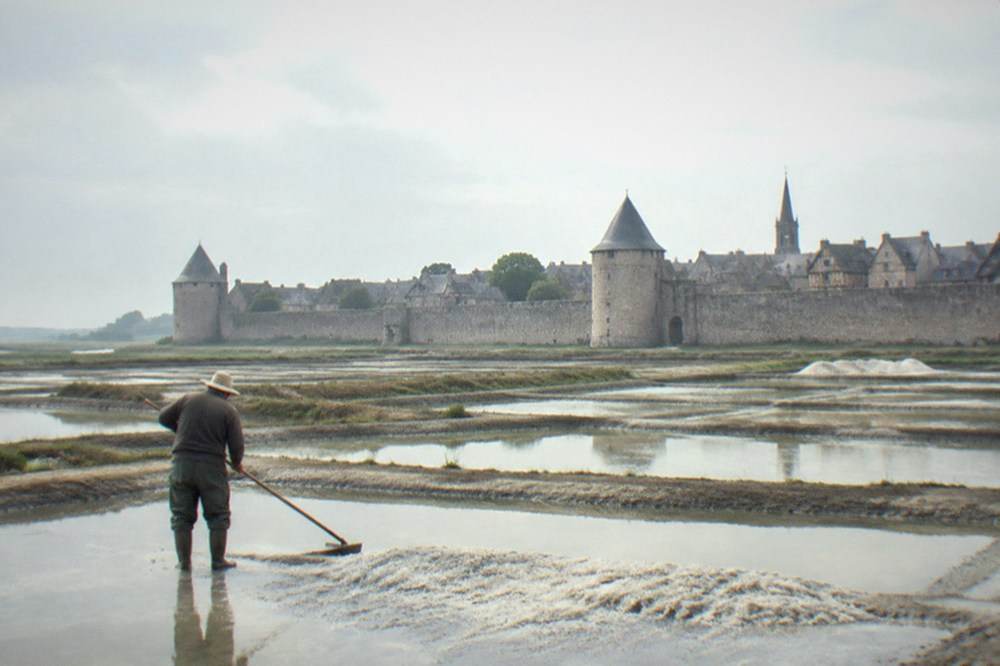
Guerande salt is hand-harvested fleur de sel and coarse grey sea salt, drawn from clay-bottomed Atlantic salt pans by paludiers working with wooden tools, and the 2026 harvest was exceptional: reporting from the marshes in September 2026 gives an average of about 1.5 tonnes per salt pan, with the best pans exceeding 3 tonnes, roughly double a usual year thanks to the summer heat. The salt basin is a living industry, not a re-enactment.
The full story of how the salt forms, and how fleur de sel differs from gros sel, sits in our dedicated long answer at what is special about Guerande salt. In short: seawater is channelled through a sequence of pans where sun and wind concentrate it, the coarse salt crystallises on the clay bottom and is raked up, while the fine fleur de sel forms as a fragile film on the surface on warm afternoons and is skimmed off by hand. The grey tint of the coarse salt comes from the clay itself.
The 2026 season is worth understanding before you go, because it reshaped the marshes' year. The harvest ban for the wider region's vineyards was declared on 11 August 2026, a record early date driven by heat and drought, and the same summer pattern benefited the salt pans: evaporation is what makes salt. Reporting on 7 September 2026 described production as doubled, an intense season now winding down as autumn rain returns.
| Measure of the 2026 salt harvest | Figure reported |
|---|---|
| Average yield per salt pan (oeillet) | About 1.5 tonnes |
| Best pans in 2026 | More than 3 tonnes |
| Overall production | Described as roughly double a usual year |
| Cause | Summer heat and drought driving evaporation |
The marshes are also a habitat. The roughly 200 bird species recorded around the basin include herons, egrets and migrating waders that feed along the pan edges, and Terre de Sel, the cooperative that runs visits, frames its tours around both the craft and the ecology. Its guided visits run year-round, according to the La Baule-Guerande tourism listing.
If you would rather have a guide handle the logistics of a taste of the region, the Muscadet vineyards sit just inland of the peninsula, and a guided option covers them in half a day:
The Muscadet country and the salt basin are two halves of the same peninsula economy: the same Atlantic influence that feeds the pans shapes the Melon de Bourgogne grape in the vineyards east of Nantes. Our Muscadet vineyards guide covers that half of the day out.
How Do You Get From Nantes To Guerande?
Guerande lies about 80 km from Nantes by road, which makes a car the direct option; the pack gives no train time for Guerande itself because the coastal rail line serves Saint-Nazaire and La Baule instead, so rail travellers typically take a TER toward Saint-Nazaire or La Baule and arrange the last leg to Guerande from there. No shuttle or direct public service figure exists in the verified pack.
That silence is deliberate. Plenty of third-party pages quote a Guerande train time; the verified research for this site found none, so this guide does not print one. What the pack does verify is the coastal spine: Saint-Nazaire at about 33 minutes by TER, La Baule at about 51, Le Croisic at about 1 hour 3. Guerande sits between the last two on the map, reachable by road from either.
One dated caveat for drivers: Guerande began three months of water network renewal works on 28 September 2026, scheduled to run to 18 December 2026, centred on the boulevard du General de Gaulle and the faubourg Sainte-Anne area. Reporting from 12 September 2026 flagged the works as a traffic consideration, so anyone driving in autumn should expect disruption on the approaches and allow slack in the day.
For planning a wider trip out of Nantes, these are the transport figures the site carries with confidence:
| Transport item from Nantes | Figure | Status |
|---|---|---|
| Naolib 1-hour ticket (tram, bus, Navibus) | 1.80 euro | VERIFIED |
| Naolib 24-hour ticket | 6.80 euro | VERIFIED |
| Naolib 10-pack of 1-hour tickets | 17.80 euro | VERIFIED |
| Park-and-ride ticket (24 h parking, up to 5 people) | 4.50 euro | GROK-sourced |
| Airport shuttle (excluded from free weekends) | 10 euro | VERIFIED |
Those fares cover the Nantes metropolitan network, not the run to Guerande, but they matter for the bookends of the day: getting to the station or the rental pickup before you leave town. Weekend transport in Nantes is free from Saturday 00:00 to Sunday 23:59, with the airport shuttle excluded, so a weekend departure day starts cheaper.
If you want the salt marshes themselves explained rather than just seen, a dedicated product covers the visit:
That visit covers exactly the ground this page describes: the pans, the harvest and the paludiers' tools. Its price is not published by the operator, so the live listing carries the current figure.
What Can You See Inside The Medieval Walls Of Guerande?
Guerande keeps its complete circuit of medieval ramparts, a rare survival in western France, and walking the walls is free and takes in the whole town in under an hour; inside are narrow granite streets, a collegiate church at the highest point, and small shops selling salt, caramel and local crafts rather than chain retail. The pack does not carry a founding date for the walls, so this page does not print one.
The honest way to say it is that the walls are medieval and complete, and that the verified research gives no construction dates for them. Guides that quote a specific century for Guerande's fortifications are filling the gap from memory, and this site does not do that. What the sources do establish is the town's character: fortified because of its position, preserved because the salt trade kept it wealthy enough to matter and small enough to escape wholesale rebuilding.
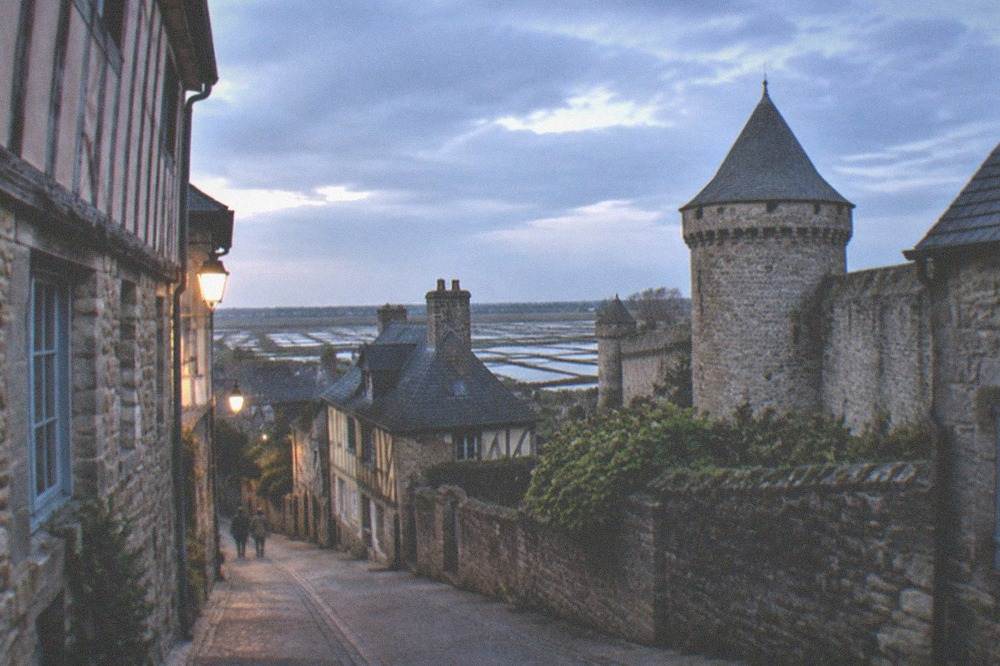
A workable circuit: enter by the main gate, climb to the church square for the high point, follow the interior lanes toward the market area, then walk the ramparts themselves around the outside. Allow a slow afternoon. The town is compact, and the pleasure of it is in the details, the salt sellers' cellars and the views south over the first pans.
After the walls, the marshes. Terre de Sel's guided visits run year-round and are the structured way to see the pans; the cooperative's own framing, per the tourism listing, puts the roughly 200 bird species alongside the harvesting story. Book ahead in the harvest months, when demand peaks.
Before you head back toward Nantes, the region's wine country makes a natural pairing, and a guided half-day option covers it with transport included:
The 2026 vintage year was itself unusual: the Muscadet harvest ban was declared on 11 August 2026, eight days earlier than the previous record, with yields down at about 30 to 40 hectolitres per hectare against richer years. A guide from Nantes can explain what that means in the glass while you taste.
When Is The Best Time To Visit The Guerande Salt Marshes?
The salt harvest runs through the warm months and the 2026 season, doubled by heat, was still being drawn out in early September before autumn rain, so the harvest itself is a late-spring-to-summer phenomenon; for weather comfort the Nantes-Bouguenais station's 1991-2020 normals give July and August the warmest means at 25.1 and 25.4 degrees and July the driest month at 44.2 mm of rain, with September cooler at 22.4 and still bright.
The practical read: come between late spring and early September if you want to see harvesting in progress, and come in the shoulder months if you want the town to yourself. The marshes do not stop in winter, but the skimming does, and a winter visit is about the landscape and the walls rather than the craft.
| Month (Nantes-Bouguenais normals, 1991-2020) | Mean maximum | Rainfall | Character for a Guerande day |
|---|---|---|---|
| May | 19.6 C | 61.0 mm | Marshes filling, few visitors |
| June | 23.0 C | 48.5 mm | Harvest building |
| July | 25.1 C | 44.2 mm | Peak harvest, driest month |
| August | 25.4 C | 50.3 mm | Peak heat, fleur de sel at its best |
| September | 22.4 C | 59.5 mm | Season winding down, quieter town |
| October | 17.6 C | 88.8 mm | Marsh walks, moods and birds |
One caution from the record books: the Nantes station's all-time high, 42.2 degrees on 24 June 2026, was set in the same heat that doubled the salt harvest. Heat events on that scale are rare, but midsummer days in the pans have no shade, so water and a hat are not optional in July and August.
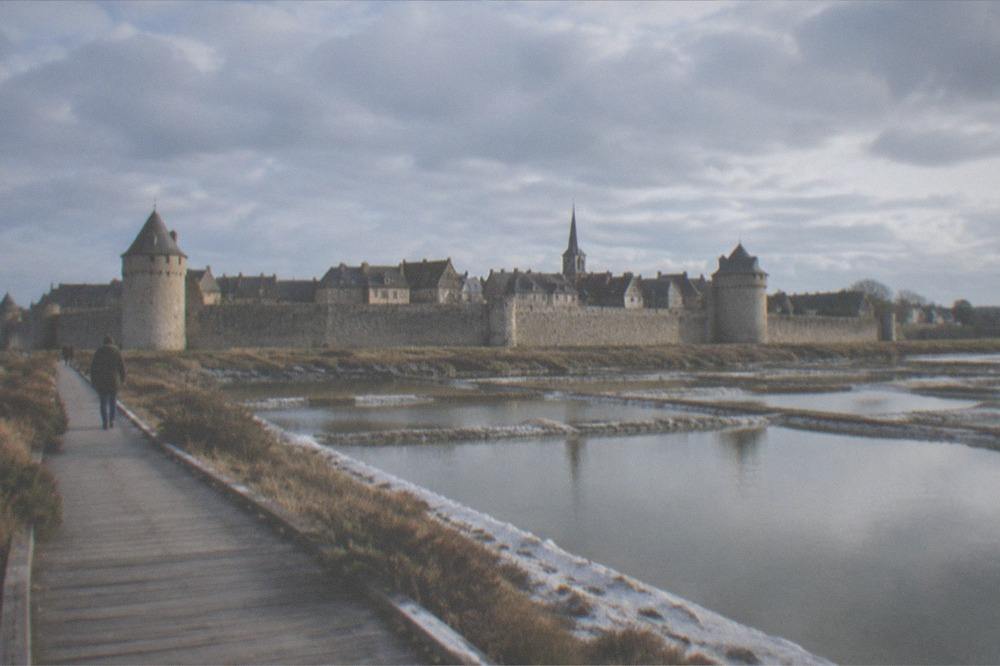
If photography is the point of the trip rather than an afterthought, the pans are at their most graphic in low light, when the water mirrors the sky and the white crusts stand out. There is a product built around exactly that kind of shooting in Nantes itself, useful for the city half of the trip:
What Can You Do Around Guerande: La Baule, Le Croisic And Saint-Nazaire?
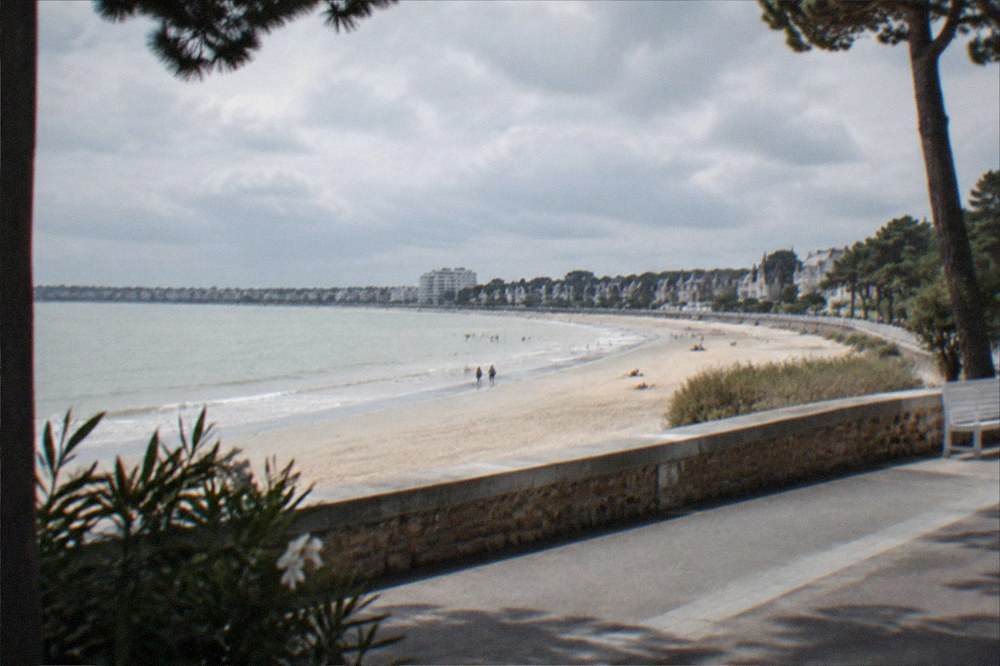
Guerande sits at the centre of a day-trip cluster: La Baule's beach resort is a TER ride of about 51 minutes from Nantes on the same coastal line, Le Croisic about 1 hour 3 minutes, and Saint-Nazaire about 33 minutes, so the peninsula rewards a full day split between the walls and marshes of Guerande and one coastal stop, with Escal'Atlantic in Saint-Nazaire at 15 euro full, 13 euro reduced and 7.50 euro for children aged 4 to 17.
The pairing most guides recommend, and the geography supports, is Guerande plus La Baule: salt in the morning, sea in the afternoon. La Baule is the classic French seaside town of the peninsula, and our La Baule day-trip guide covers it in full. Its September 2026 calendar was dominated by the 39th Triathlon Audencia on 19 and 20 September, an event drawing about 9,000 athletes and an estimated 70,000 spectators, with traffic restrictions across the town.
Le Croisic, at the peninsula's tip, is the older, quieter port, and Saint-Nazaire to the north pairs the ocean liner museum with the shipyards that still build them. For a fuller run-down of the coast and the wetlands behind it, see the site's day trips from Nantes overview and the Saint-Nazaire guide.
| Stop near Guerande | Verified figure for visitors |
|---|---|
| Escal'Atlantic, Saint-Nazaire (adult) | 15 euro |
| Escal'Atlantic (reduced) | 13 euro |
| Escal'Atlantic (child 4-17) | 7.50 euro |
| Terre de Sel guided marsh visits | Run year-round |
| Bird species recorded around the marshes | About 200 |
Also in range, though further, is Clisson, an Italianate town in the opposite direction from Nantes; the Clisson guide covers it, and its heritage days in September 2026 opened the chateau free of charge. One flag from that area: Clisson's Mascarades event is cancelled for 2027 on budget grounds, per reporting from 21 September 2026.
What Should You Eat And Buy In Guerande?
Buy salt, and buy it in the town: coarse grey Guerande salt and fleur de sel are the two harvests of the pans outside the walls, sold by the cooperative and by independent sellers, and the 2026 doubling of production means stock is plentiful; beyond salt, the peninsula's table runs on seafood from Le Croisic and Batz-sur-Mer, Muscadet from the vineyards inland, and the salted caramels and butter biscuits of the wider region.
The honest shopping advice is simple. The cooperative's shop and the cellars inside the walls sell the same product with different framing; what varies is whether you meet the paludier who raked it. Fleur de sel is the fragile top skim, costlier and seasonal; the grey gros salt is the everyday harvest and the one local kitchens actually cook with.
For the Nantes side of the palate, the region's classics are worth knowing before you shop: beurre blanc, the shallot, Muscadet and butter emulsion the city's restaurateurs are seeking protected status for; LU's Véritable Petit Beurre, invented in Nantes in 1886; and gâteau nantais, the almond and rum cake now back in the city's patisseries. Salt from Guerande finishes all three traditions in the kitchen.
The wine to carry home is Muscadet, and the 2026 vintage is small but, by the producers' own account, good: strong sunshine concentrated flavours even as yields fell. If tasting before buying appeals more than a cellar door gamble, the half-day guided vineyard run from Nantes is the region's most-reviewed way to do it:
And if the day's plan is still forming, the wider things to do in Nantes page keeps the city's own weight of options in one place, from the Machines of the ile to the chateau of the dukes of Brittany.
Is Guerande Worth The Day Trip From Nantes?
Yes, for a specific kind of visitor: Guerande rewards travellers who want one thing done extremely well rather than a checklist, and that thing is a complete walled town beside a living artisanal industry about 80 km by road from Nantes; the 2026 record harvest, the year-round guided marsh visits and the proximity of La Baule and Le Croisic make it one of the strongest single-day runs out of the city, provided you accept that the last leg depends on road transport.
The balance of the argument runs like this. Against: it is not on a direct rail line from Nantes, the verified pack gives no train time for the town, and a day there means either a car or a split journey. For: the walls are complete, the marshes are genuinely working rather than preserved-in-amber, the bird life is serious, and the 2026 harvest story, doubled yields, a season that started early and ran hot, gives the visit a news hook that most medieval towns cannot offer.
The verdict, in the site's own framing: go if your Nantes trip has room for one slow, western, salt-scented day; skip it only if you are pinned to the city and its tramlines, in which case the chateau museum, the Machines of the ile and the Passage Pommeraye of 1843 will fill the time without a car. For everything bookable around both city and peninsula, the Nantes tours overview collects the verified options.
Common Questions About Guerande
How far is Guerande from Nantes?
About 80 km by road, per the site's verified research. No train time for Guerande itself appears in the verified pack, because the coastal rail line from Nantes serves Saint-Nazaire, La Baule and Le Croisic rather than the town, so most visits involve a car for the final leg or throughout.
What is special about Guerande salt?
It is hand-harvested: coarse grey salt raked from clay-bottomed Atlantic pans, with fleur de sel skimmed as a fine film from the surface on warm afternoons. The 2026 harvest was exceptional, averaging about 1.5 tonnes per pan with some exceeding 3 tonnes. The full answer is in our dedicated page on what is special about Guerande salt.
When is the best time to visit the Guerande salt marshes?
Late spring through early September, when harvesting is under way. July is the driest month at the Nantes station, 44.2 mm in the 1991-2020 normals, and August the warmest at a 25.4 degree mean maximum. September is quieter and cooler at 22.4 degrees. Terre de Sel's guided visits run year-round.
Can you visit Guerande without a car?
It is harder than the coastal stops. The verified pack gives rail times only for Saint-Nazaire, about 33 minutes, La Baule, about 51 minutes, and Le Croisic, about 1 hour 3 minutes, with no Guerande train figure, so a car-free visit means combining the town with one of those railheads and arranging onward transport.
What else can you combine with Guerande on a day trip?
La Baule's beach resort, Le Croisic's old port, and Saint-Nazaire with its Escal'Atlantic ocean liner experience at 15 euro full, 13 euro reduced and 7.50 euro for children aged 4 to 17. The Briere regional park's wetlands sit immediately north of the town for a second, wilder half of the day.
Guerande is the peninsula's anchor, and a day built around its walls, its marshes and one coastal stop is one of the most satisfying runs out of Nantes.