Loire-Atlantique: The Department Around Nantes, France
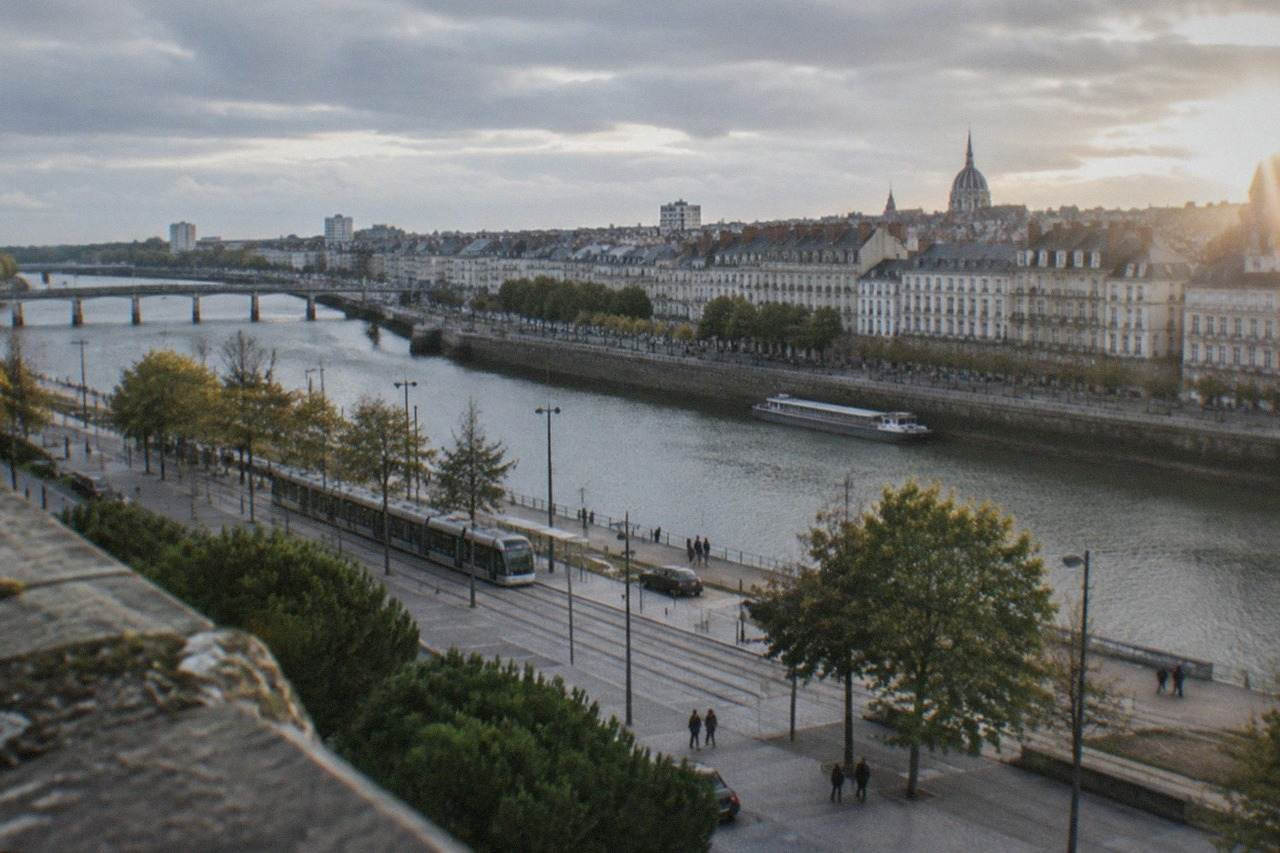
Loire-Atlantique is the Pays de la Loire department that holds Nantes, the Atlantic beaches of La Baule and Le Croisic, the walled salt town of Guérande and the Muscadet vineyards, all strung along the last stretch of the Loire before it meets the ocean at Saint-Nazaire.
Short answer
Loire-Atlantique is the western French department around Nantes, named after the Loire river and the Atlantic ocean. Its highlights are the city of Nantes, the shipbuilding port of Saint-Nazaire, the resort of La Baule, the medieval salt town of Guérande, and Muscadet wine country around Clisson and Vallet.
Loire-Atlantique is the department of western France, in the Pays de la Loire region, whose capital and by far its largest city is Nantes, on the Loire and Erdre rivers. Its name joins the two things that define it: the Loire, which crosses the whole department before emptying into the Atlantic at Saint-Nazaire, and the ocean, whose beaches, oyster ports and salt marshes line its western edge. For a visitor, it is one of the most convenient corners of France to explore, because nearly everything worth seeing sits within an hour of a city with fast TGV links to Paris and a busy airport.
The department is often confused with Brittany, and there is a real historical reason for that, which this guide covers in full below. It was Breton territory for centuries, its dukes ruled from Nantes, and its separation from Brittany is a mid-20th-century administrative story, not an ancient one. That tension between Breton identity and French administration is one of the most interesting things about travelling here.
This page pulls the department together in one place: the main towns, the coast, the vineyards, the history that explains the Brittany question, the climate, the practical costs, and the day trips that make sense from a Nantes base. Everything is anchored to the city guides on Nantes Travel Guide, including the master list at things to do in Nantes.
What Is Loire-Atlantique, The Department Around Nantes?
Loire-Atlantique is a department of western France, in the Pays de la Loire region, with Nantes as its capital (prefecture). It is named for the Loire river and the Atlantic ocean, covers the final stretch of the Loire before the river meets the sea at Saint-Nazaire, and had a commune population of 327,734 in Nantes alone in 2023 according to INSEE figures. Its neighbours are Morbihan to the north-west, Ille-et-Vilaine to the north, Maine-et-Loire to the east and Vendée to the south. Until 1957 it was called Loire-Inférieure, "lower Loire", a name that survives on old postcards and in long-standing residents' conversation.
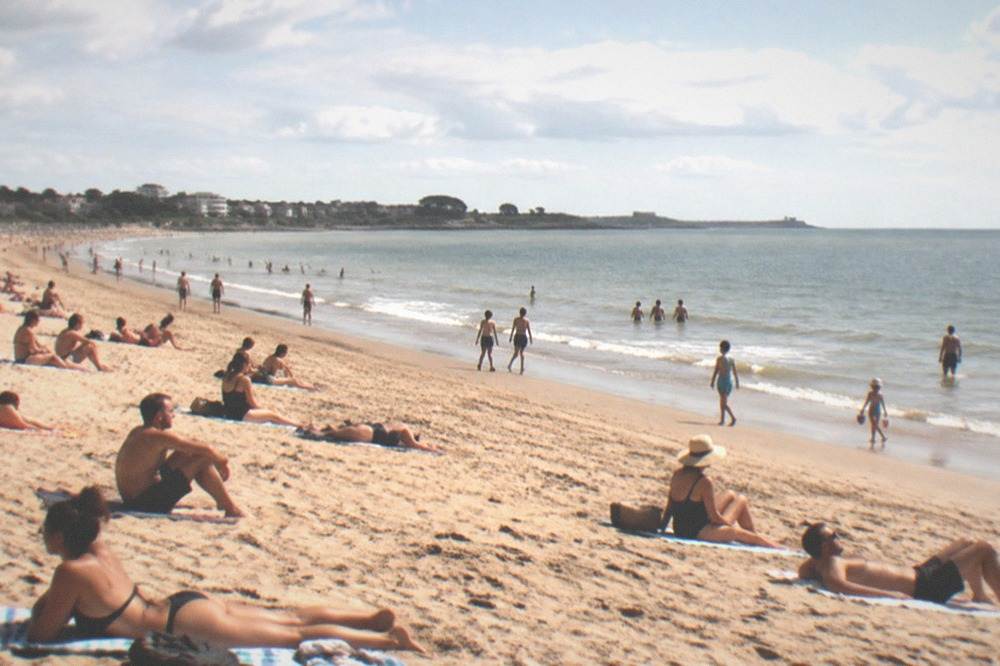
The department mixes three distinct worlds. Inland, around Nantes and the Erdre valley, it is a green, water-threaded landscape of parks, rivers and market gardens. To the south and east, around Clisson and Vallet, it is wine country, the home of Muscadet. To the west, it turns maritime: oyster beds at Pornic and Le Croisic, the vast bay at La Baule, and the salt marshes of Guérande, which produced an exceptional harvest in 2026 thanks to a hot, dry summer.
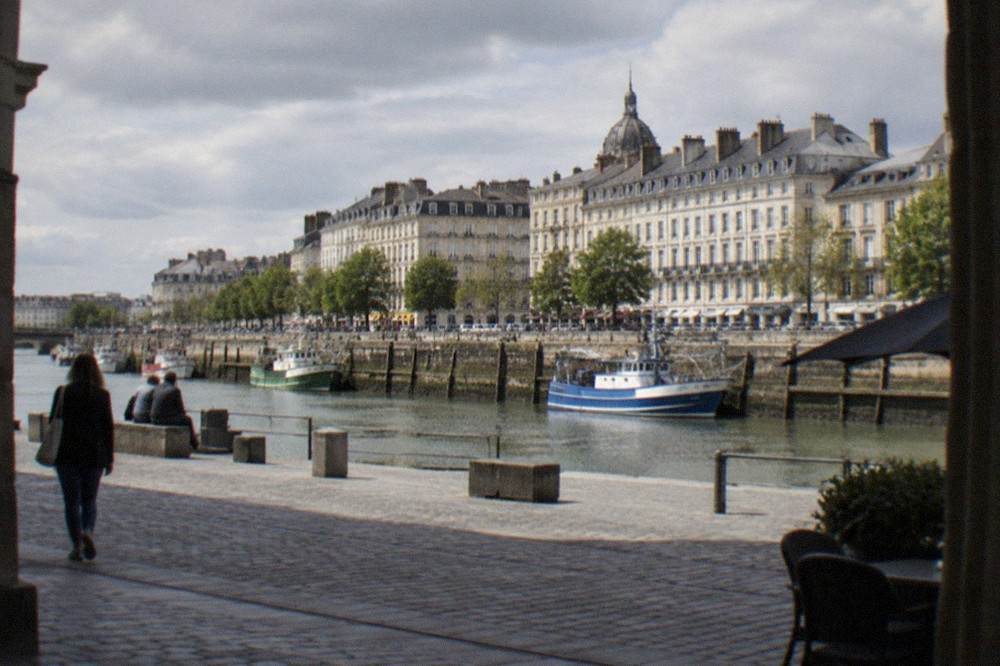
Nantes is the right place to arrive, and that is the right plan. The city sits at the junction of everything: the TGV line from Paris, the airport, the tram network, and the TER regional lines that fan out to the coast and the vineyards. The regional context is worth a read too, in the companion guide to Pays de la Loire, which explains how the five-department region fits together.
Those three options all work as orientation days in the department capital before you strike out for the coast. A walking, Segway or electric-bike loop of Nantes gives you the Château, the cathedral district, the Bouffay old town and the Île de Nantes in a single morning or afternoon, which is exactly the grounding you want before a region this varied.
What Are The Main Towns Of Loire-Atlantique To Visit?
The main towns of Loire-Atlantique are Nantes, the prefecture and by far the largest city; Saint-Nazaire, the Atlantic port at the mouth of the Loire; La Baule, the department's biggest seaside resort; Guérande, the medieval walled salt town; Clisson, an Italianate market town in the vineyards; and Pornic, a small resort and oyster port. The first two are the anchors: Nantes for city culture and transport, Saint-Nazaire for shipbuilding heritage and the Escal'Atlantic liner museum. The others are half-day or day-trip material, each reachable by TER train from Nantes in under about an hour.
The table below uses the rail times given by SNCF Connect for direct TER services from Nantes, and the road figure where the pack gives one instead. Treat them as planning minimums: the fastest trains are quicker than the average, and connections can add time.
| Town | TER from Nantes | What it is known for |
|---|---|---|
| Clisson | from about 15 min (average about 23 min) | Italianate architecture, château, Muscadet vineyards |
| Saint-Nazaire | from about 33 min | Shipbuilding, Escal'Atlantic, Loire estuary, beaches |
| La Baule | from about 51 min | Nine-kilometre-scale bay, belle époque villas, triathlon |
| Pornic | about 59-65 min | Oyster port, castle, coastal footpath |
| Le Croisic | from about 1 h 03 | Fishing port, oyster beds, salt marsh edge |
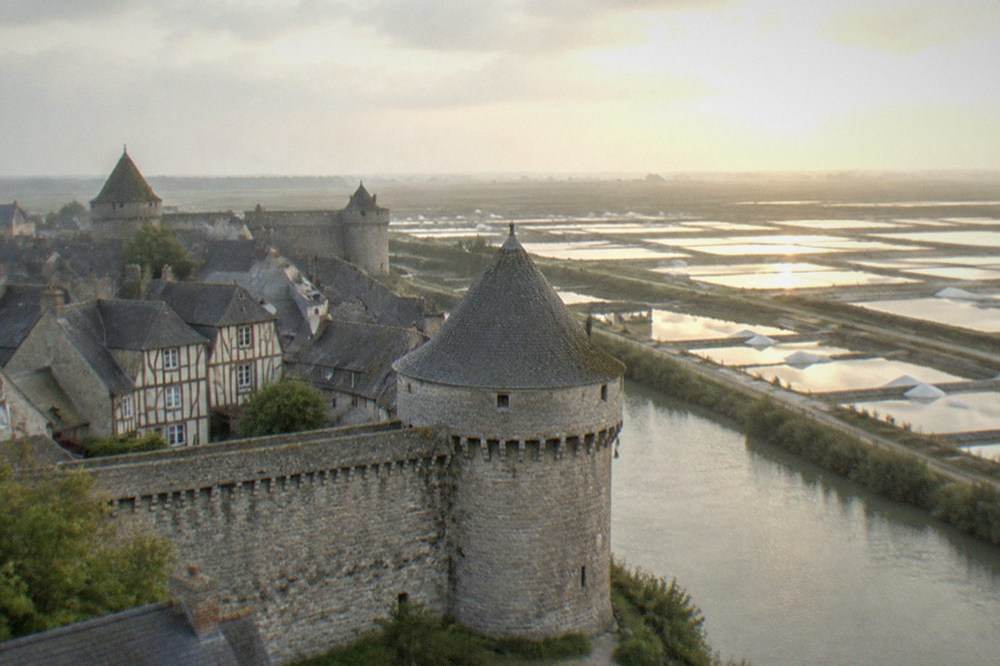
| Guérande | about 80 km by road | Walled medieval town, salt marshes, Terre de Sel visits |
Guérande's road distance is given rather than a rail time because the verified pack gives the road figure; the town sits inland of the coast rail line, and many visitors combine it with La Baule on the same drive.
How Do You Plan Days Out In Loire-Atlantique From Nantes?
Plan Loire-Atlantique days out by matching each corner of the department to a half-day or full day: the Nantes city sights on foot, the Atlantic coast (Saint-Nazaire, La Baule, Pornic or Le Croisic) as a full day by TER train, Guérande and its salt marshes as a half-day or combined with La Baule, and Clisson with the Muscadet vineyards as a half-day. The Pass Nantes includes one TER return between Nantes and Clisson, which makes the vineyard town the cheapest day trip of all. A car helps only for Guérande, the marshes and the southern beaches; the rail lines cover the rest.
For the coast, Escal'Atlantic in Saint-Nazaire is the flagship paid sight: a self-guided visit inside a reconstructed ocean liner, listed for 2026 at 15 EUR full price, 13 EUR reduced and 7.50 EUR for children aged 4 to 17, with under-4s free. Its temporary exhibition on the liner Normandie, built in Saint-Nazaire, runs from July 2026 to September 2027. Farther afield but still feasible, the Puy du Fou historical theme park ran its 2026 season from 4 April to 1 November, with a Christmas extension from 19 December 2026 to 3 January 2027.
| Day trip from Nantes | Journey | 2026 admission or season |
|---|---|---|
| Escal'Atlantic, Saint-Nazaire | TER from about 33 min | Adult 15 EUR, reduced 13 EUR, child 4-17 7.50 EUR |
| Puy du Fou | about 70-80 km, about 1 h drive | Season 4 Apr to 1 Nov 2026; Christmas 19 Dec to 3 Jan |
| Mont-Saint-Michel | about 2 h 15 drive | Abbey admission booked separately |
| Guérande salt marshes | about 80 km by road | Guided Terre de Sel visits, year-round options |
If you want someone else to handle the logistics, guided products exist: a Clisson-and-Trentemoult day, a short vineyard van tour and a half-day vineyard van tour all run from the city, and the château options further east are compared in the companion Loire Valley châteaux guide. For a fuller route across the whole region, the Nantes and Loire Valley road trip itinerary strings the department together with its eastern neighbours.
Whether you go guided or self-directed, the same rule holds across Loire-Atlantique: the coast deserves the fullest day you can give it, and the vineyards and Guérande work best as calm half-days rather than rushed add-ons.
Why Is Loire-Atlantique Not Part Of Brittany?
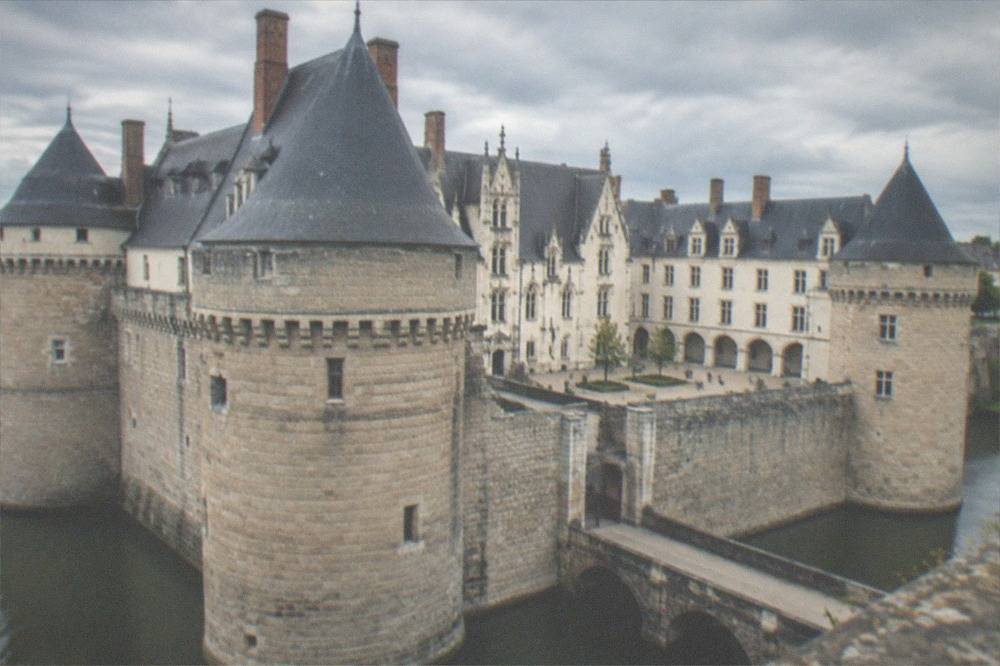
Loire-Atlantique is not part of the Brittany region today because of two administrative decisions, not geography: the Vichy-era decree of 30 June 1941 attached the then Loire-Inférieure to an Angers-centred region, separating it from Brittany, and that arrangement survived the war and was locked into the modern region map, so today the department sits in Pays de la Loire instead. Historically the territory is Breton in the deepest sense: the Dukes of Brittany ruled from the Château des ducs de Bretagne in Nantes, Anne of Brittany was born at the château on 25 January 1477, and the union of the Duchy of Brittany with the kingdom of France was sealed in 1532.
The 1941 decree is the pivot. Nantes had been the effective capital of the duchy and then of the historical province of Brittany; the wartime government redrew the map, and when post-war French administration created the modern regions, Loire-Atlantique stayed outside them. On 9 March 1957 the department's name changed from Loire-Inférieure to Loire-Atlantique, but its regional attachment did not change. The debate is alive to this day, and many residents still identify as Breton.
| Year / date | Event in Loire-Atlantique history |
|---|---|
| 1466 | Francis II begins rebuilding the Château des ducs de Bretagne in Nantes |
| 25 January 1477 | Anne of Brittany born at the château of Nantes |
| 1532 | Union of the Duchy of Brittany with the kingdom of France |
| April 1598 | Edict of Nantes signed by Henri IV at the château |
| 30 June 1941 | Vichy decree attaches Loire-Inférieure to the Angers region, separating it from Brittany |
| September 1943 | Allied bombings of Nantes |
| 9 March 1957 | Loire-Inférieure renamed Loire-Atlantique |
The fuller story of the city's role as a ducal capital, and of the slave trade that Nantes dominated from the mid-17th century until its withdrawal in 1830, is told in the guides to the Château des ducs de Bretagne and the Mémorial to the Abolition of Slavery.
What Wine Is Loire-Atlantique Known For?
Loire-Atlantique is known for Muscadet, a dry white wine made from the Melon de Bourgogne grape in the vineyards south and east of Nantes, around Clisson, Vallet and the wider Sèvre-et-Maine area, with the Maison des vins at Vallet serving as the appellation's visiting centre. Muscadet is the definitive oyster wine: dry, light and saline, it is the classic pairing for the oysters harvested along the department's own coast. The 2026 harvest was the earliest on record, with the picking ban declared 11 August 2026, eight days ahead of the previous record from 2003, after a hot, dry summer.
Yields in 2026 were lower, around 30-40 hectolitres per hectare, but producers reported good quality thanks to strong sunshine. What that means for a visitor is simple: the tasting rooms around Vallet and Clisson are open, the wine is the same crisp style it has always been, and the 2026 vintage is a genuinely interesting one to taste because of its unusual season.
Two wine experiences run from Nantes city itself: a Muscadet sensory tour and tasting, and vineyard van tours of half a day. The Segway product above has its price unpublished by the operator, so the live card is the only place to see what it currently costs; the same is true of the Erdre cruise, which is covered separately in the Erdre river cruise guide. If wine rather than rivers is the priority, the regional picture is in what wine is the Loire Valley famous for?
What Is The Weather Like In Loire-Atlantique?
Loire-Atlantique has a temperate oceanic climate, not a Mediterranean one: Météo-France's 1991-2020 normals for the Nantes-Bouguenais station show mean daily maximum temperatures rising from 9.3 C in January to 25.4 C in August, with 819.5 mm of rain spread across about 120 days of the year. Summer is warm and bright without being reliably hot, autumn stays mild, and winter is damp rather than severe. The coast is breezier than inland Nantes, and water temperatures stay cool even in August.
| Month | Mean max C | Rain mm |
|---|---|---|
| Jan | 9.3 | 87.9 |
| Mar | 13.5 | 58.4 |
| May | 19.6 | 61.0 |
| Jul | 25.1 | 44.2 |
| Sep | 22.4 | 59.5 |
| Nov | 12.9 | 94.1 |
The full monthly breakdown and the best-time debate are in the guides to Nantes weather and the best time to visit Nantes. Two recent extremes are worth knowing when you pack. On 24 June 2026 the Nantes-Bouguenais station recorded 42.2 C, the highest temperature ever measured there, beating the old record of 42.0 C from 18 July 2022. And in February 2026 the Loire reached 8.18 m at the Pont Anne-de-Bretagne in Nantes, the first time above 8 m in about 15 years, closing riverside roads and the Mémorial during the flood.
How Much Does A Trip To Loire-Atlantique Cost?
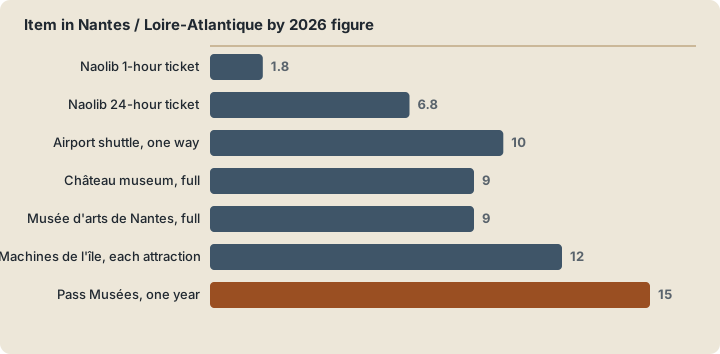
**A trip to Loire-Atlantique costs comparatively little for France: local transport is 1.80 EUR for a one-hour Naolib ticket in Nantes or 6.80 EUR for 24 hours, the airport shuttle is 10 EUR each way, the Château museum is 9 EUR full price, and each Machines de l'île attraction in Nantes is 12 EUR, with a 20 EUR two-attraction or 29 EUR three-attraction day package. Eating out sits at French urban prices, with an inexpensive meal widely available in Nantes and a mid-range dinner for two running noticeably more.
| Item in Nantes / Loire-Atlantique | 2026 figure |
|---|---|
| Naolib 1-hour ticket | 1.80 EUR |
| Naolib 24-hour ticket | 6.80 EUR (15 EUR for 4 people) |
| Airport shuttle, one way | 10 EUR |
| Château museum, full | 9 EUR (5 EUR reduced, free under 18) |
| Musée d'arts de Nantes, full | 9 EUR (4 EUR reduced) |
| Machines de l'île, each attraction | 12 EUR full, 8 EUR child 4-12 |
| Pass Musées, one year | 15 EUR |
One reported cost to be aware of rather than take as gospel: the 2026 tourist tax in Nantes Métropole is reported as tiered by hotel rating, at 2.86 EUR per person per night for a 4-star hotel, 1.87 EUR for 3-star and 1.10 EUR for 2-star, with unclassified rentals charged 5.5 percent of the room price capped at 5.39 EUR. Those are reported figures relayed as such, not read from the official tariff sheet, so expect the amount to appear on your hotel bill rather than to plan around it.
For serious sightseeing, the Pass Nantes covers unlimited Naolib transport, an airport shuttle return, one TER return to Clisson and one entry per partner site including the Château museum and the Machines Galerie, from 30 EUR for 24 hours. What it does not include is the Grand Éléphant ride, and note the elephant pauses entirely from 2 November 2026 to 28 February 2027 for maintenance. Budget planning advice, including free sights, is in the guide to where to stay in Nantes.
How Do You Get Around Loire-Atlantique Without A Car?
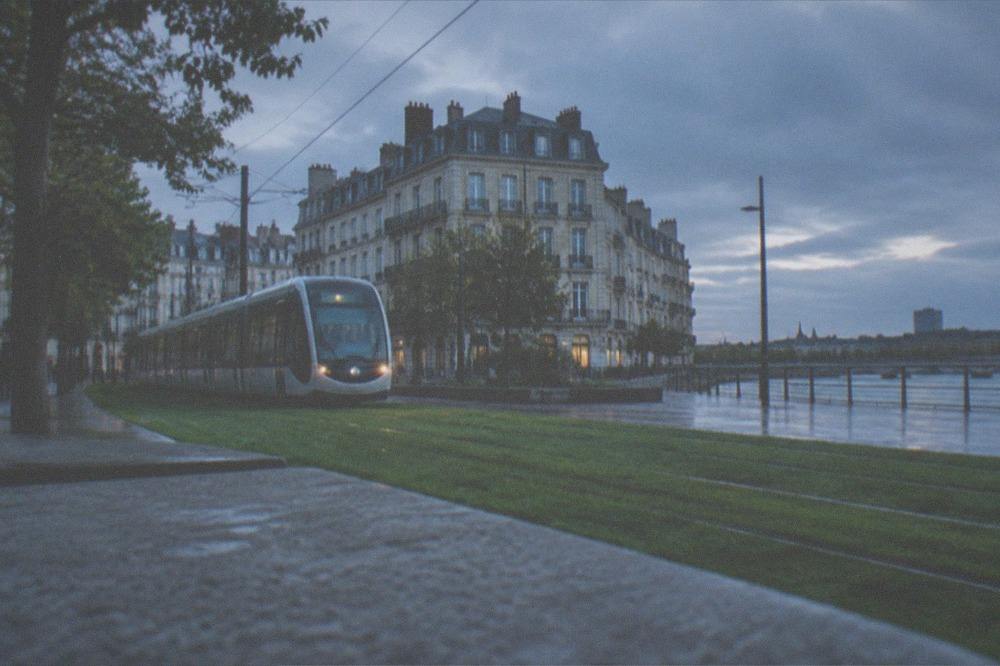
You get around Loire-Atlantique without a car by basing yourself in Nantes and using the Naolib network in the city, the TER regional trains to the coast and Clisson, and the Navibus river shuttles across the Loire, with a 1.80 EUR one-hour ticket covering trams, buses and river boats inside the city network. The three tram lines, the busway and the Chronobus lines radiate through the metropolis, and free park-and-ride options exist for arriving drivers. The airport shuttle costs 10 EUR and is deliberately excluded from the weekend free-transport offer: Naolib travel is free for everyone from Saturday midnight to Sunday 23:59, but the shuttle always charges.
Two expansions matter to 2026 visitors. The Navibus N2 river link, extended on 12 November 2025, now runs between Trentemoult, Bas-Chantenay and the Hangar à Bananes, making the Trentemoult fishing village reachable by water. And new tram lines 6 and 7 are under construction, with service planned from the end of 2027; they do not exist yet, so do not plan around them. Rail timetables and ticketing live on the SNCF Connect site, and the city-level detail, including station orientation, is in getting around Nantes.
Arriving from Paris, the rail link is covered in the dedicated Paris to Nantes guide: about 24 direct trains a day connect Paris Montparnasse with Nantes, the fastest in about two hours. Nantes Atlantique airport sits about 8 km south-west of the centre, handled 7,189,480 passengers in 2025 according to the airport's own annual figures, and added new routes in 2026 including a seasonal Montreal service. If you would rather drive the department yourself, the options are compared in car hire in Nantes.
What Are The Best Times Of Year To Visit Loire-Atlantique?
The best times of year to visit Loire-Atlantique are late spring and early autumn: May and June bring mean highs around 19.6 C to 23.0 C with long evenings on the coast, while September stays near 22.4 C with the beaches emptying and the Muscadet harvest concluding, making it the sweet spot for combining Nantes, the vineyards and the seaside. July and August are the warmest and busiest months, at 25.1 C to 25.4 C mean highs, and are also when La Baule's triathlon and the Erdre jazz festival fill the calendar. Winter is mild but damp, with December the wettest month at 101 mm.
The seasonal calendar has real anchors. Le Voyage à Nantes, the city-wide summer art event, ran from 4 July to 6 September 2026 along its roughly 20 km green line. The Rendez-vous de l'Erdre jazz and boating festival took the river over from 24 to 30 August 2026, and the 2027 edition is set for 23 to 29 August. The Christmas market runs from late November to late December on Place Royale and Place du Commerce, with the 2026 edition confirmed from 19 November to 27 December.
Which Corner Of Loire-Atlantique Should You Choose?
Choose Nantes and its immediate river country if you want museums, the Machines de l'île and food culture with no car; choose the Atlantic coast, Saint-Nazaire to Le Croisic, if beaches and maritime heritage are the priority; choose Guérande and the salt marshes for the department's most distinctive landscape; and choose Clisson and the Muscadet vineyards for wine, rivers and half-day countryside. Each works as a day trip from Nantes, and each rewards a longer stay if the weather is on your side.
The coast deserves more time than most guides give it. The question of which seaside town to pick is genuinely contested, and the honest answer depends on what you want from sand, crowds and oysters; some visitors want the scale of La Baule, others the working port atmosphere of Le Croisic or the castle-backed quays of Pornic. For the mouth of the river itself, Saint-Nazaire is the answer, and the estuary between it and Nantes is one of the department's least-visited stretches.
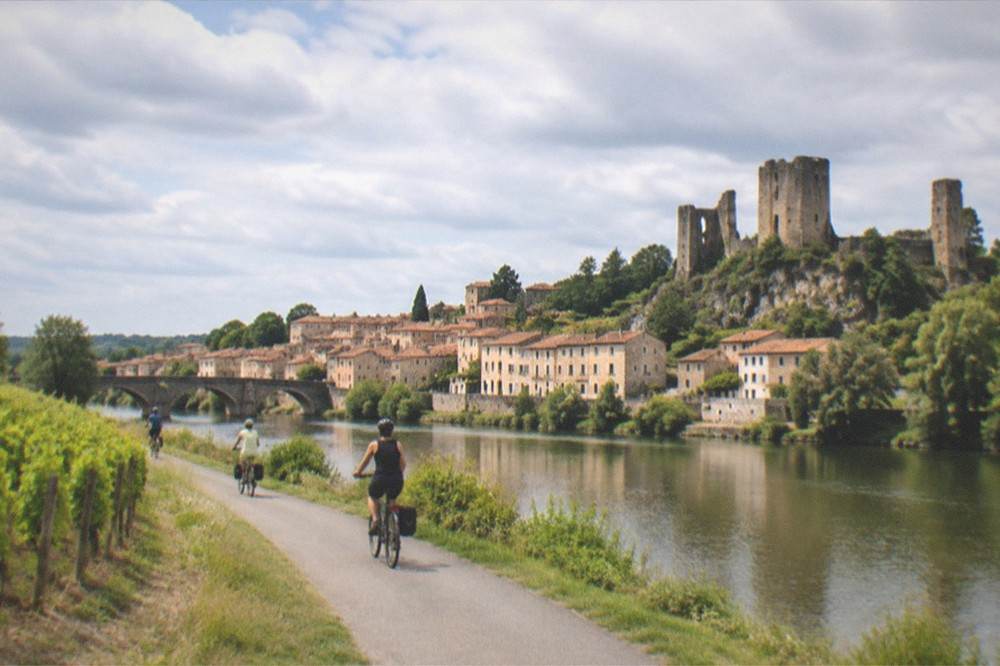
Cyclists have a special claim on the department: the Loire à Vélo route runs out of Nantes along the river and links into the wider valley network towards the east. The regional identity question, for anyone still puzzling over the department's name after the history section above, comes down to that 1941 decree and the naming of 1957: Breton in memory, Pays de la Loire on the map.
Common Questions About Loire-Atlantique
Is Loire-Atlantique part of Brittany?
Historically yes, administratively no. The department was Breton territory for centuries and Nantes was the seat of the Dukes of Brittany, but a decree of 30 June 1941 attached it to an Angers-centred region, and it now sits in Pays de la Loire rather than Brittany. Many residents still identify as Breton.
What is the capital of Loire-Atlantique?
Nantes is the prefecture and the department's dominant city, with a 2023 commune population of 327,734 per INSEE figures. The wider Nantes Métropole is reported at 689,456 in the same 2023 estimate.
What was Loire-Atlantique called before?
It was called Loire-Inférieure, "lower Loire", from the French Revolution until 9 March 1957, when it was renamed Loire-Atlantique.
What sea does Loire-Atlantique touch?
The Atlantic ocean, on the department's western side. The Loire river empties into it at Saint-Nazaire, in the estuary that also defines the department's shipbuilding heritage.
Can you visit the Loire-Atlantique coast as a day trip from Nantes?
Yes. TER trains reach Saint-Nazaire in about 33 minutes, La Baule in about 51 minutes, Pornic in roughly an hour and Le Croisic in about an hour and three minutes. Guérande, about 80 km by road, is easier by car or on a combined La Baule itinerary.
What wine should you taste in Loire-Atlantique?
Muscadet, the dry white made from Melon de Bourgogne around Clisson and Vallet. It is the traditional pairing for the department's own coastal oysters, and the Maison des vins at Vallet is the appellation's visiting centre.
Whichever corner you choose, Loire-Atlantique repays slow travel: one base in Nantes, the trains out to the coast and the vineyards, and a river or a glass of Muscadet at the end of each day.