Château Des Ducs De Bretagne
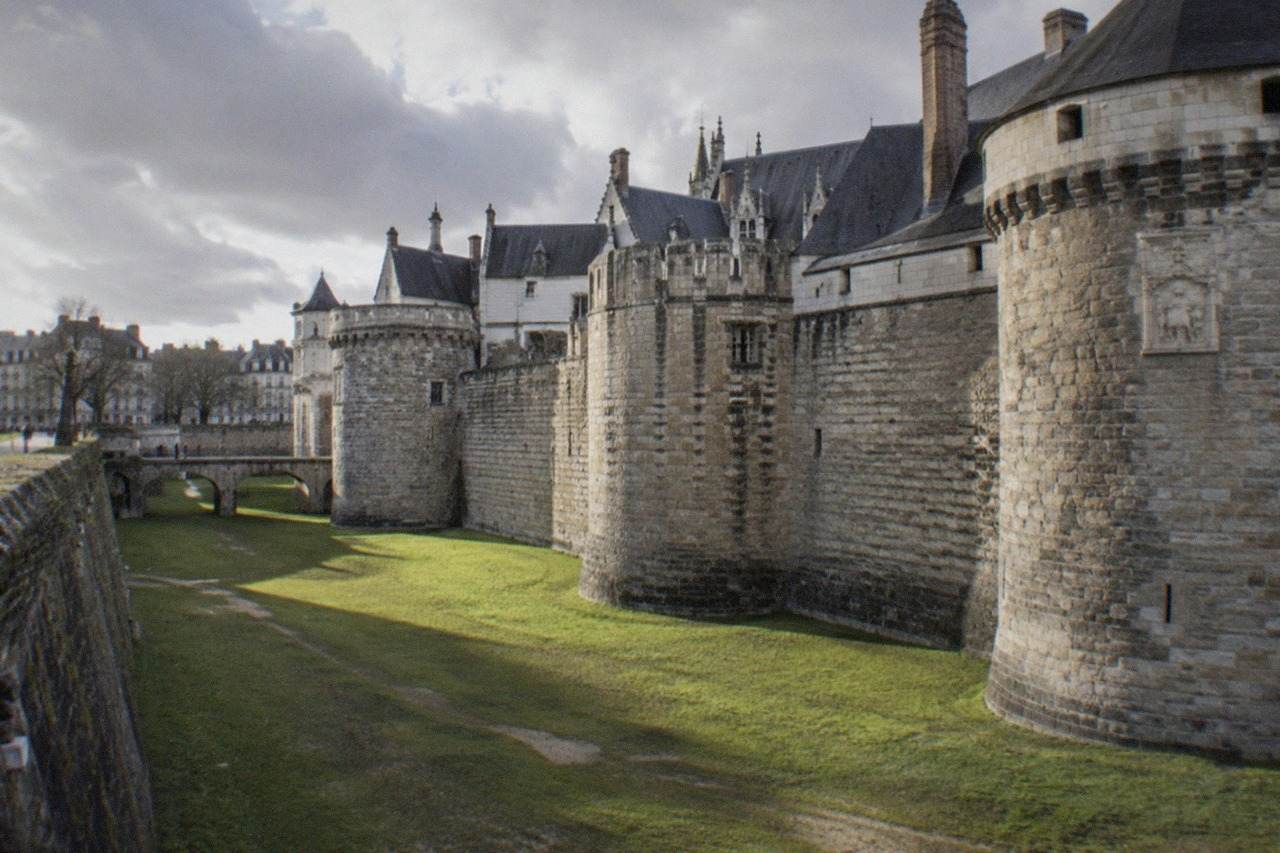
The Château des ducs de Bretagne is the historic castle of the Dukes of Brittany in Nantes, now home to the city's history museum. Its courtyard and ramparts are free to enter, while the museum inside traces Nantes from the Middle Ages to the present.
Short answer
The Château des ducs de Bretagne is a 15th-century ducal castle in Nantes, Loire-Atlantique, that houses the Musée d'Histoire de Nantes, a museum covering the city's past from the Duchy of Brittany through the Atlantic slave trade to modern times. The courtyard and ramparts are free to walk, and the museum (9 EUR full price, free for under-18s) is open daily except Mondays.
The Château des ducs de Bretagne has stood at the eastern edge of Nantes' historic centre since the late 15th century, its granite walls and moat garden marking the former seat of the Dukes of Brittany. Today the castle houses the Musée d'Histoire de Nantes, a 32-room museum that traces the city from its medieval origins through the Atlantic slave trade, industrialisation and the present day. The courtyard and ramparts are free to enter every day of the year, making the château one of the most visited landmarks in the city, while the museum inside carries a modest admission charge and is closed on Mondays. This guide from Nantes Travel Guide covers everything you need to plan a visit to the Château des ducs de Bretagne in 2026.
What Is The Château Des Ducs De Bretagne In Nantes?
The Château des ducs de Bretagne is the historic castle of the Dukes of Brittany, built from 1466 under Francis II and completed under his daughter Anne of Brittany, who was born here in 1477. It sits on the right bank of the Loire in the Bouffay district and combines a medieval fortress exterior with an elegant Renaissance courtyard. Since 1924 the château has housed a museum, and today the Musée d'Histoire de Nantes occupies the entire interior, presenting over 1,150 objects across 32 rooms.
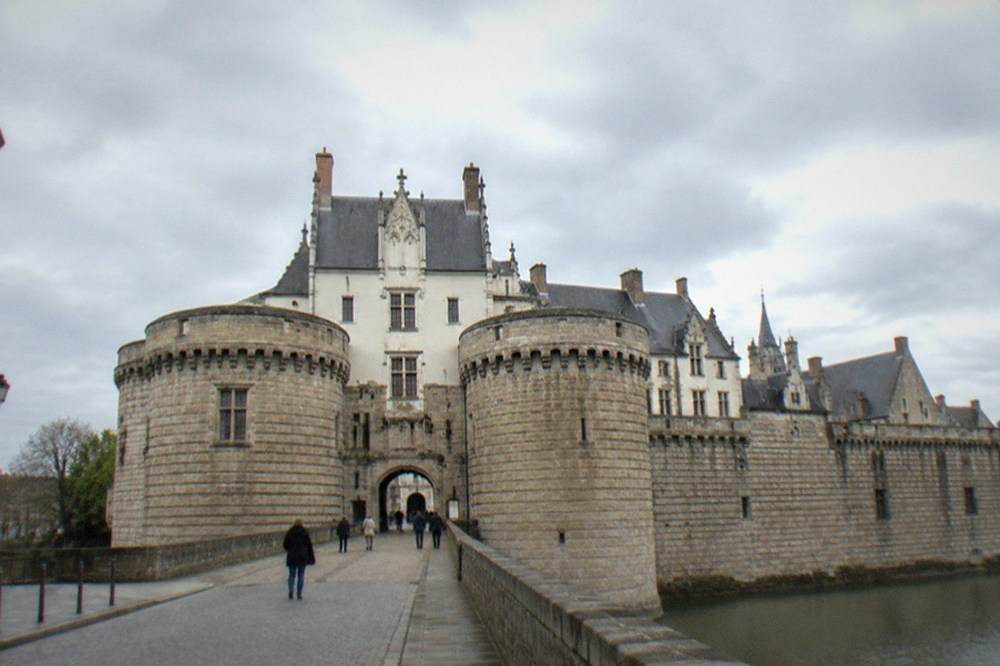
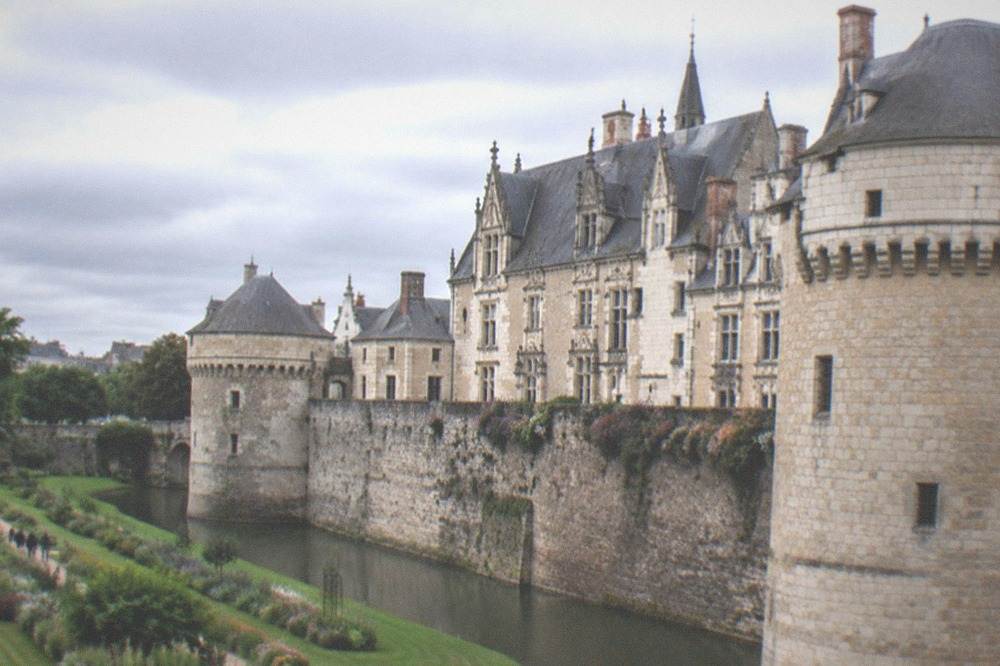
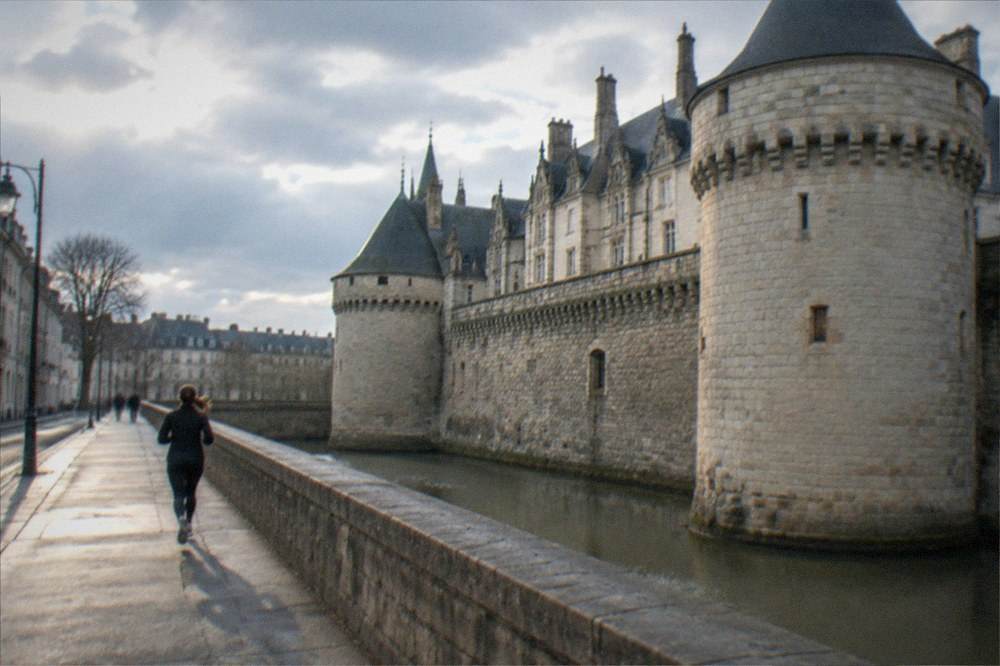
The castle's silhouette is unmistakable: seven massive round towers linked by curtain walls, surrounded by a dry moat that was transformed into a public garden in the 1990s. The château is not a ruin or an empty shell. It is a fully intact building that has been restored in phases, most recently in a ten-year project that finished in 2007, when the history museum opened in its current form. The museum is not a dusty collection of armour but a contemporary, multimedia-driven narrative that tackles difficult chapters such as Nantes' role as France's leading slave-trade port, alongside the city's industrial and cultural evolution.
The château's own website, chateaunantes.fr, describes the permanent exhibition as "a journey through the history of Nantes, from the Duchy of Brittany to the contemporary city." The route is chronological, beginning with the castle's construction and moving through the Edict of Nantes, the 18th-century port economy, the Revolution, the 19th-century industrial boom, the two world wars, and the post-war transformation. A final room features a video installation by contemporary artist Pierrick Sorin that playfully reflects on the museum itself.
What Can You See Inside The Château Des Ducs De Bretagne?
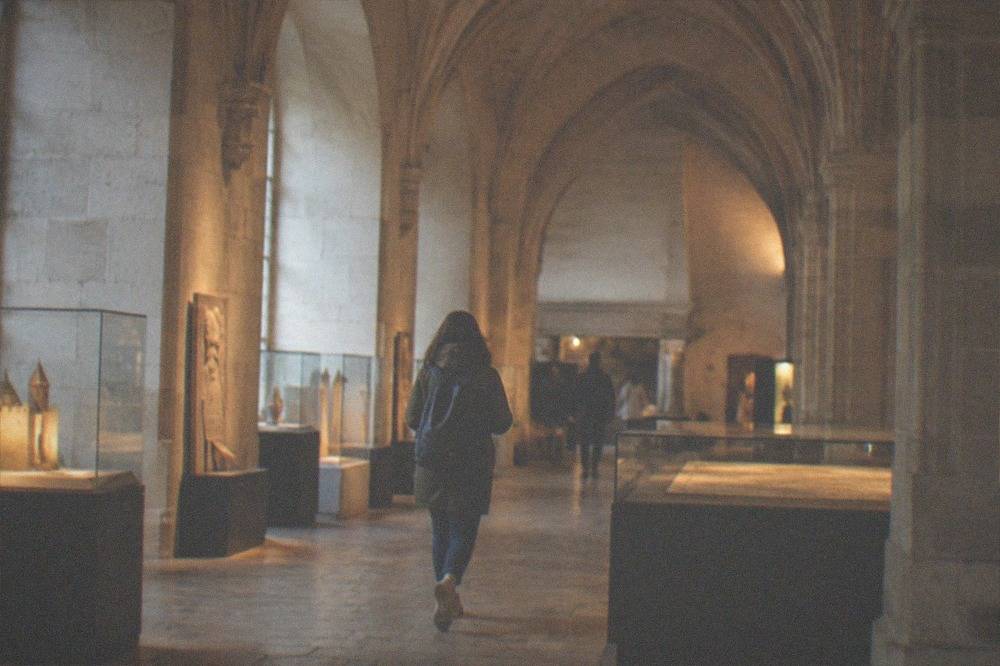
The Musée d'Histoire de Nantes inside the château covers 32 rooms with over 1,150 objects, from medieval artefacts and Renaissance portraits to scale models of the 18th-century port, a section on the Atlantic slave trade, and a contemporary art finale. The permanent collection is complemented by temporary exhibitions in the same ticket. Highlights include the multimedia displays on the slave trade, the 19th-century industrial models, and the view from the ramparts, which are free to walk without a museum ticket.
The museum is laid out as a single chronological circuit that takes most visitors between 90 minutes and two hours. The early rooms cover the Duchy of Brittany and the castle's construction, with documents and models explaining how the fortress evolved. The Edict of Nantes, signed here by Henri IV in April 1598, gets its own space, though the château's page notes that the exact date is given as 30 April 1598 on its own site, a detail that differs from the textbook 13 April date often cited.
The slave-trade section is the most powerful part of the museum. Nantes organised 1,714 slave-trade expeditions, 43% of the French total, and the museum does not shy away from this history. Multimedia stations, ship models and original documents explain how the trade operated and how it shaped the city's wealth. The memorial continues across the Loire at the Mémorial de l'Abolition de l'Esclavage, a free site that complements the château visit.
Later rooms cover the LU biscuit factory, the development of the port, the two world wars and the post-war rebuilding. The final room is given over to Pierrick Sorin's video work, a whimsical piece that uses mirrors and projections to create a miniature theatre of Nantes history. It is a fitting end to a museum that mixes serious scholarship with a light touch.
If you want to guarantee entry on a specific day, especially during the summer or the Christmas market period, the museum's own site recommends booking a time slot in advance. The operator's live listing offers a combined ticket that bundles the museum with other Nantes attractions.
How Much Does It Cost To Visit The Château Des Ducs De Bretagne, And When Is It Free?
General admission to the Musée d'Histoire de Nantes inside the château is 9 EUR for a full-price ticket and 5 EUR for the reduced rate, which covers visitors aged 18 to 25, teachers, large families and the last hour before closing. Entry is free for everyone under 18, on any open day, and for all visitors on the first Sunday of each month from September to June. The courtyard, ramparts and moat garden are free every day, with no ticket required.
The château's own tariff page confirms these prices, which have not changed in 2026. The reduced rate also applies to jobseekers and RSA recipients with proof less than six months old, and to disabled visitors plus one companion. A guided tour costs extra: the full price is 12 EUR and the reduced price 7.50 EUR, though these tours must be reserved in advance via the château's website or by phone.
The annual Pass Musées, priced at 15 EUR, gives unlimited access to the Musée d'Histoire de Nantes, the Musée d'Arts de Nantes, the Musée Jules-Verne and Le Chronographe in Rezé for one year from the date of purchase. The Muséum d'Histoire Naturelle is closed for renovation until 2029 and is not included. The Pass Musées can be bought at any of the participating museums and pays for itself in two visits.
| Ticket type | Price | Who qualifies |
|---|---|---|
| Full price | 9 EUR | Adults 26 and over |
| Reduced price | 5 EUR | 18–25 years, teachers, large families, jobseekers, RSA recipients, disabled visitors + companion, last hour before closing |
| Free | 0 EUR | Under 18s (any day), first Sunday of the month (Sept–June), Carte Blanche holders |
| Guided tour (full) | 12 EUR | Available by reservation |
| Guided tour (reduced) | 7.50 EUR | Same reduced categories as above |
| Pass Musées (annual) | 15 EUR | Unlimited access to four metropolitan museums |
The courtyard and ramparts are open daily from 8:30 to 19:00, extending to 20:00 in July and August, with last entry 15 minutes before closing. The moat garden (Jardin des douves) opens at 8:00 and closes at the same time as the ramparts. These outdoor areas are free and do not require a ticket, making the château a popular spot for a stroll even if you do not visit the museum.
If you would rather book a combined ticket or a guided tour that includes the château, the options below bundle the castle with other Nantes experiences.
What Are The Château Des Ducs De Bretagne Opening Hours And Best Times To Visit?
The museum inside the château is open Tuesday to Sunday from 10:00 to 18:00, with the last ticket sold at 17:30. It is closed every Monday, as well as on 1 January, 1 May, 1 November and 25 December. In July and August the museum stays open daily, including Mondays, from 10:00 to 19:00. The courtyard and ramparts are accessible every day from 8:30 to 19:00, extending to 20:00 in July and August, and are never closed on Mondays.
The best time to visit the museum is on a weekday morning, especially Tuesday or Wednesday, when the galleries are quietest. The château receives heavy footfall during school holidays and on the first Sunday of the month, when entry is free and the museum can feel crowded by midday. Thursday afternoons are also popular because the nearby Musée d'Arts de Nantes stays open late until 21:00, and many visitors combine the two.
The courtyard and ramparts are busiest between 11:00 and 16:00, particularly in summer when the Voyage à Nantes green line draws visitors through the site. An early morning or late afternoon walk along the ramparts offers the best light for photographs, with the sun behind the towers in the morning and casting long shadows across the moat garden in the evening.
A practical note: the château's welcome area was reorganised in the summer of 2026, swapping the ticket desk and the bookshop to improve visitor flow. The new layout includes inclusive tools and clearer signage, as reported by Ouest-France. The museum recommends allowing at least 90 minutes for the permanent collection, and two hours if you also want to see the temporary exhibition.
What Temporary Exhibitions Are On At The Château Des Ducs De Bretagne In 2026?
The main temporary exhibition at the château in 2026 is "Expression(s) décoloniale(s) #4," running from 8 May to 8 November 2026. It features contemporary interventions by Brazilian artist Rosana Paulino, Senegalese photographer Omar Victor Diop and Beninese historian Lylly Houngnihin, all placed in dialogue with the permanent collection. The exhibition is included in the standard museum ticket and does not carry a separate charge.
This is the fourth edition of a series that invites artists and thinkers from former French colonies and territories touched by the Atlantic slave trade to respond to the museum's displays. Rosana Paulino's work honours Afro-Brazilian women victims of the trade through drawing, painting, sculpture, video and installation. Omar Victor Diop presents two photography series, "Diaspora" and "Liberty," while Lylly Houngnihin contributes around ten new texts and cartels that weave together history, memory and poetry.
Guided tours of the exhibition are offered on select dates in September and October 2026, with details posted on the château's programme page. The exhibition occupies several rooms within the permanent circuit, so visitors following the standard route will encounter it naturally. The previous temporary show, "Sorcières," which ran from 7 February to 28 June 2026, drew approximately 109,523 visitors according to the château's LinkedIn page, and its catalogue won the Prix du Livre d'art 2026.
What Is The History Of The Château Des Ducs De Bretagne?
The château was begun in 1466 by Francis II, the last Duke of an independent Brittany, and completed under his daughter Anne of Brittany, who was born here on 25 January 1477. After the union of Brittany with France in 1532, it became a royal fortress, later housing the city's prison, barracks and arsenal. The city of Nantes acquired it in 1915, and the Musée d'Histoire de Nantes opened inside it in 1924, with a major renovation and reinstallation completed in 2007.
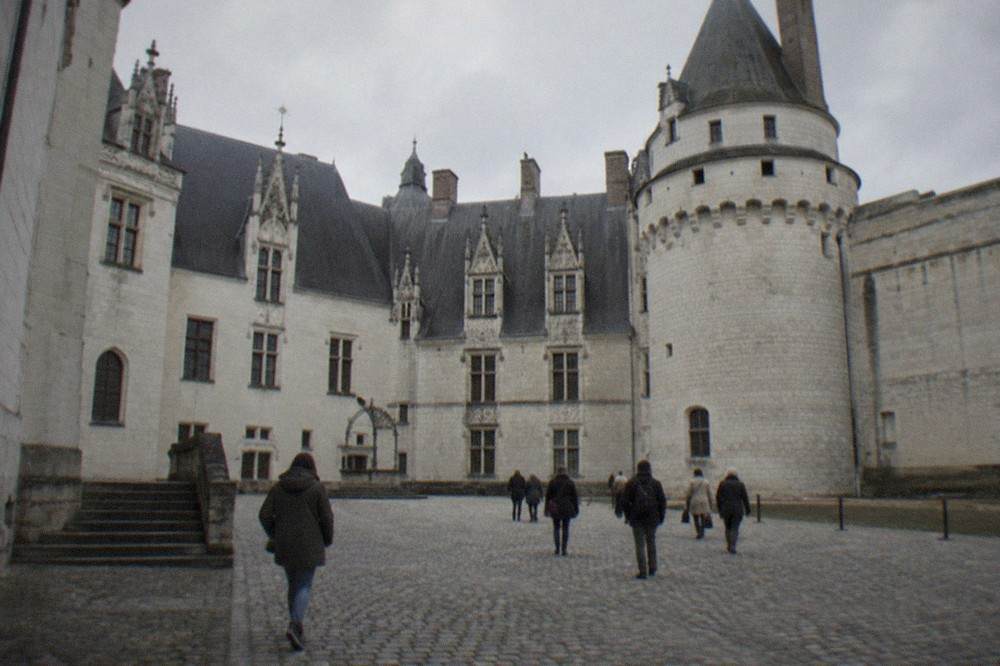
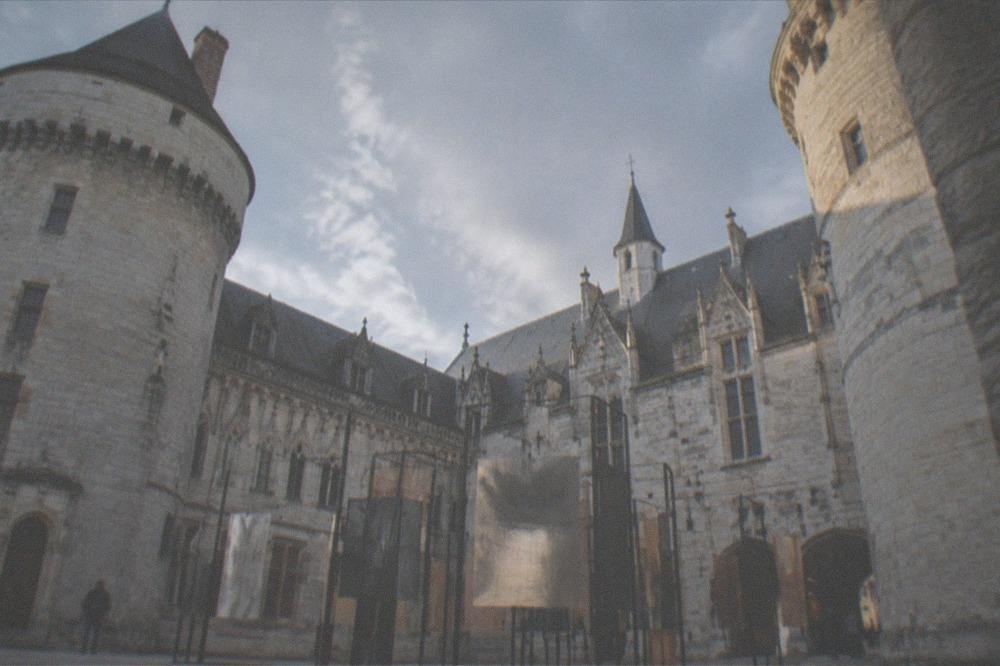
The castle was built on the site of an earlier Gallo-Roman wall and a medieval count's castle. Francis II chose to rebuild it as a statement of ducal power at a time when the French crown was encroaching on Breton independence. The design is a deliberate hybrid: a severe military exterior facing the city and the river, with seven towers and a deep moat, and a refined Renaissance courtyard inside, added by Anne of Brittany and her husband, King Charles VIII of France.
The most famous event to take place within these walls was the signing of the Edict of Nantes by Henri IV in April 1598, which granted religious freedoms to Protestants and ended the French Wars of Religion. The château's own history page states the date as 30 April 1598, and while other sources cite 13 April, the château itself is the primary authority on its own story.
In the 18th century the château was used as a military prison and arsenal, and during the Revolution it held royalist prisoners. The 19th century saw it become a barracks, and by the early 20th century it had fallen into disrepair. The city bought it in 1915 and opened the first museum in 1924. The most recent full restoration, which lasted from 1997 to 2007, stripped back later additions, restored the original stonework and created the modern museum layout that visitors see today.
| Year | Event |
|---|---|
| 1466 | Construction begins under Francis II |
| 25 January 1477 | Anne of Brittany born at the château |
| 1532 | Union of Brittany with France; château becomes a royal fortress |
| April 1598 | Edict of Nantes signed here by Henri IV |
| 18th–19th centuries | Used as prison, barracks and arsenal |
| 1915 | City of Nantes acquires the château |
| 1924 | Musée d'Histoire de Nantes opens inside |
| 1997–2007 | Major restoration; new museum layout opens in 2007 |
Today the château is one of the anchor points of the Machines de l'Île and the Voyage à Nantes cultural trail, and it sits at the edge of the Île de Nantes creative district. Its role as both a historic monument and a contemporary museum makes it the single best place to begin understanding Nantes.
How Do I Get To The Château Des Ducs De Bretagne And What Is Nearby?
The château is at 4 place Marc Elder, at the eastern edge of the Bouffay historic centre, a five-minute walk from the Commerce tram hub and ten minutes from Nantes train station. Tram line 1 stops at Duchesse Anne–Château des Ducs de Bretagne, directly outside the main entrance. The site is fully accessible, with ramps and lifts inside the museum, and carries the Tourisme & Handicap label for all four disability categories.
The château is impossible to miss once you are in central Nantes. Its towers rise above the tram stop of the same name, and the green line of the Voyage à Nantes summer art trail runs right past the main gate. If you are arriving from the station, walk straight up the Cours John Kennedy and you will see the château after about 800 metres. The walk takes roughly ten minutes.
Several other major sights are within a short walk. The Cathédrale Saint-Pierre-et-Saint-Paul, which partially reopened in September 2025 after the 2020 fire, is five minutes to the north. The Passage Pommeraye, the 19th-century shopping arcade, is seven minutes west. The Jardin des Plantes is a ten-minute walk south, across the Loire-facing side of the château. And the Mémorial de l'Abolition de l'Esclavage, the free underground memorial on the Quai de la Fosse, is a fifteen-minute walk along the river.

If you are spending a full day in this part of the city, a logical route starts at the château in the morning, continues to the cathedral and the Bouffay quarter for lunch, then crosses to the Île de Nantes for the Machines de l'Île in the afternoon. The château's ramparts offer a free, elevated view of the Loire and the island that helps you orient yourself before you set off.
For a broader Nantes experience, the electric bike tour below covers the château along with other key sights, while the jet-ski session offers a completely different perspective from the water.
Common Questions About The Château Des Ducs De Bretagne
Is The Château Des Ducs De Bretagne Free To Enter?
The courtyard, ramparts and moat garden are free every day. The museum inside charges 9 EUR full price, 5 EUR reduced, and is free for under-18s and on the first Sunday of the month from September to June.
How Long Does It Take To Visit The Château Des Ducs De Bretagne?
The museum recommends 90 minutes for the permanent collection and two hours if you include the temporary exhibition. Walking the ramparts and courtyard adds another 20 to 30 minutes.
Is The Château Des Ducs De Bretagne Closed On Mondays?
The museum is closed every Monday except in July and August, when it opens daily. The courtyard and ramparts are open every day of the year, including Mondays.
Can You See The Tomb Of Francis II At The Château?
The tomb of Francis II and Marguerite de Foix, a Renaissance masterpiece by Michel Colombe, is in the Cathédrale Saint-Pierre-et-Saint-Paul, not the château. The cathedral is a five-minute walk north. The tomb's effigies have been visible since February 2026, with full reinstallation expected by the end of 2026.
Is The Château Des Ducs De Bretagne Wheelchair Accessible?
Yes. The château holds the Tourisme & Handicap label for all four categories, and the museum has ramps and lifts. The courtyard and ramparts are also accessible, though some sections of the rampart walk have cobblestones.
What Is The Best Time Of Day To Visit The Château Des Ducs De Bretagne?
Weekday mornings, especially Tuesday or Wednesday, are quietest. The ramparts are best for photographs in the early morning or late afternoon. Avoid the first Sunday of the month if you prefer a less crowded museum visit.