What Wine Is The Loire Valley Famous For?
The Loire Valley is famous for its white wines, above all Muscadet, the dry white grown from the Melon de Bourgogne grape in the vineyards that start just south-east of Nantes in France. Here is what to taste, how to visit and where to buy.
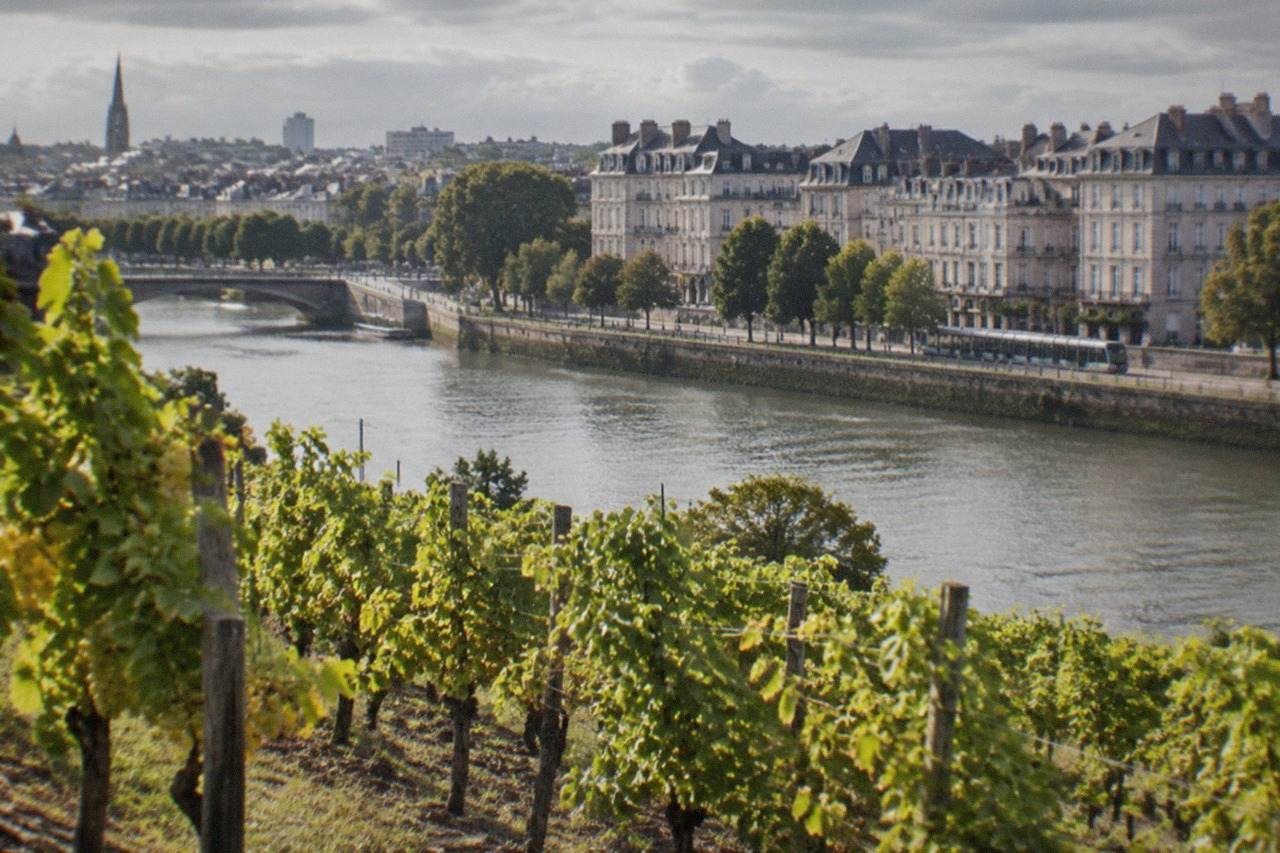
Nantes, in the Loire-Atlantique department of the Pays de la Loire region of western France, stands at the western gate of the Loire Valley wine country. The vineyards begin a short drive south-east of the city, on the ground around Vallet and the Sèvre Nantaise, and they produce the wine that most people mean when they ask this question: Muscadet, a dry white pressed from the Melon de Bourgogne grape. It is the local wine, poured by the glass everywhere in the city, and the natural starting point for anyone curious about what the longest river valley in France puts in a bottle.
What Wine Is The Loire Valley Famous For?
The Loire Valley is famous for its white wines, and the first one any visitor to Nantes encounters is Muscadet, a bone-dry white made from the Melon de Bourgogne grape in the vineyards that begin just south-east of the city in the Loire-Atlantique department of France. Further up the valley, the region's other celebrated bottles are Chenin Blanc whites, Sauvignon Blanc whites and Cabernet Franc reds, but the stretch of valley nearest Nantes belongs almost entirely to Muscadet.
That answer surprises people who arrive expecting castles and red wine. The Loire Valley is a long corridor, and its wine map changes as the river travels. Near the Atlantic, around Nantes, the ocean cools the vineyards and the Melon de Bourgogne grape makes a lean, saline, citrus-edged white. Further inland, the same valley produces richer styles from other grapes. The one thing the whole valley shares is that its reputation rests on whites, not reds, and that its driest, most refreshing white comes from the end of the valley that Nantes calls home.
The city itself leans into this. Muscadet is the house pour in the bars of the Bouffay old town, the default companion to a plate of oysters or a fillet of river fish with beurre blanc, the emulsified butter sauce the region claims as its own. If you are planning a trip around the river rather than the city, the broader picture is in what the Pays de la Loire is famous for, and the question of timing is covered in the best time of year to visit the Loire Valley.
Which Wines Grow Closest To Nantes?
Muscadet is the wine that grows closest to Nantes, made from the Melon de Bourgogne grape in the vineyards of the Sèvre Nantaise area, with the Maison des vins, the appellation's wine centre, located at Vallet. There is no other namable wine region bordering the city. The grape, the appellation and the vineyards around Vallet are the verified facts on the ground, and everything a visitor tastes within easy reach of Nantes flows from them.
The appellation's own centre of gravity sits at Vallet, where the Maison des vins, the region's wine house, represents the local producers. The grape itself, Melon de Bourgogne, was historically brought west and now grows nowhere in France to greater effect than here, on the cool slopes above the Sèvre Nantaise before that river meets the Loire at Nantes.
What the verified facts actually say about the region is worth setting out plainly, because a great deal of confident detail about the Muscadet country circulates online without any source behind it:
| Fact about the Muscadet country near Nantes | What the verified record says |
|---|---|
| Grape | Melon de Bourgogne |
| Style | Dry white wine |
| Appellation wine house | Maison des vins at Vallet |
| 2026 harvest start (ban de vendange) | 11 August 2026, declared a record 8 days earlier than the previous mark set in 2003 |
| 2026 yields reported by producers | Roughly 30-40 hectolitres per hectare, down from higher years such as the 2018 reference of about 55 |
| Classic local food pairing | Beurre blanc, the Nantes emulsified butter sauce made with shallots, white wine and cold butter |
The 2026 harvest deserves its own note. Producers reported that the picking ban was declared on 11 August 2026, eight days ahead of the previous record from 2003, driven by heat and drought, and that yields fell to around 30-40 hectolitres per hectare. The quality, in the same reporting, was described as good thanks to strong sunshine. That is a genuine recent change in the region, and it is the kind of detail that separates a useful answer from a generic one.
For visitors who want the ground-level view rather than a day of driving, a guided option exists:
How Do You Visit The Muscadet Vineyards From Nantes?
The practical way to visit the Muscadet vineyards from Nantes is a guided half-day van tour into the hills south-east of the city, or an independent trip to Vallet and the Maison des vins, the appellation's wine house. No tasting fee, opening hour or admission figure for any individual producer was independently verified, so the honest answer is to let a booked tour carry those details or to confirm them directly with the Maison des vins before travelling.
That last sentence is a deliberate choice. Plenty of guides quote tasting fees and cellar hours for the Muscadet country; none of those figures survived verification for this site, so they do not appear here. What is verified is the tour product below, whose own listing carries its price, schedule and inclusions, and the existence of the Maison des vins at Vallet as the appellation's public face.
The guided route is the one to take for a first visit. A van tour from Nantes reaches the vineyards in a single half-day, pairs visits with tastings, and removes the question of who drives home. If you prefer to go alone, Vallet is the anchor point, and the Muscadet vineyards day-trip guide covers the practical planning.
Should You Book A Vineyard Tour Or Go Independently?
A booked tour suits anyone who wants the tastings without the logistics, and the operator's live listing will show the current price and availability: Check availability. Independent travel suits anyone with a car, a full day and a wish to linger at the Maison des vins in Vallet. Both are legitimate; the only wrong answer is arriving without a plan, because cellar visits in wine country generally reward arrangement ahead of time.
Is Muscadet Sweet Or Dry?
Muscadet is dry, unambiguously so. It is a white wine fermented fully, leaving little or no residual sugar, and its character comes from minerality, citrus and a saline edge rather than sweetness. People who ask whether it is sweet are usually thinking of sweeter Loire styles or confusing the name with muscat, an unrelated and often sweet grape. The two are entirely different wines, and Muscadet belongs firmly in the dry camp.
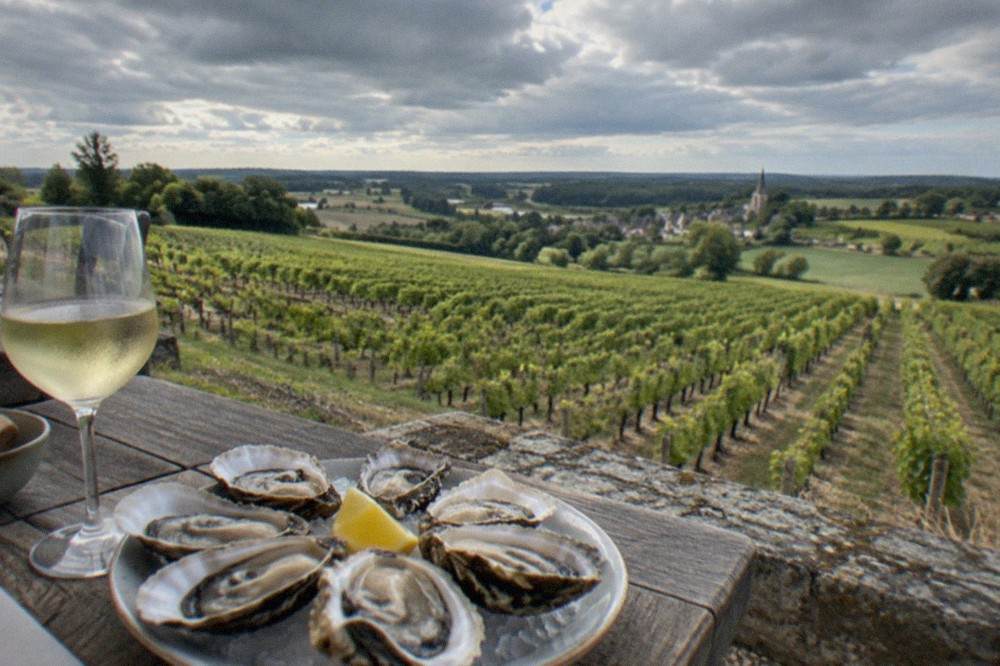
That confusion with muscat is the single most common mix-up, and it is worth killing at the root. Melon de Bourgogne, the grape of Muscadet, is not related to the muscat family. The finished wine tastes of lemon, green apple, wet stone and sea air, and it is the classic pour for the Atlantic seafood that arrives at Nantes tables daily. The fuller treatment of the question, with the style's characteristics set out in detail, is on the page is Muscadet wine sweet or dry.
What Are The Other Famous Loire Valley Wines?
Away from Nantes, the Loire Valley is famous for three further families of wine: Chenin Blanc whites such as Vouvray, Sauvignon Blanc whites from the upper valley, and Cabernet Franc reds from the middle stretches of the river. These begin well east of the Muscadet country, and they are named here as styles rather than as day-trip targets.
That honesty matters. Nantes is the western end of the valley, and the rest of the wine country lies upriver. The styles, however, are the valley's shared fame, and a visitor who understands the geography understands the wine:
| Stretch of the Loire Valley | Signature grape | What the wine tastes like |
|---|---|---|
| Around Nantes, Loire-Atlantique | Melon de Bourgogne | Bone-dry white, citrus and saline, the oyster wine |
| Middle valley, Touraine country | Chenin Blanc | White ranging from dry to gently sweet, honeyed when ripe |
| Upper valley, the Sancerre country | Sauvignon Blanc | Crisp, aromatic white with cut grass and grapefruit |
| Middle valley reds | Cabernet Franc | Light to medium red, peppery and soft |
The pattern to hold onto is simple: the closer to the ocean, the drier and leaner the white; the further upriver, the more aromatic and fuller the wines become. Muscadet is the ocean's wine, and it could not be made with the same character a hundred kilometres inland.
Can You Buy Loire Valley Wine In Nantes Itself?
Yes, Loire Valley wine, and Muscadet above all, is everywhere in Nantes, from wine merchants to restaurant lists and the stalls of the Talensac market, the city's main food market, which runs Tuesday to Friday from 08:00 to 13:00 and Saturday to Sunday from 08:00 to 13:30, closed Mondays except public holidays. Restaurant pricing for a mid-range meal for two with three courses sits at a moderate level, with inexpensive options also widely available.
The Talensac hours are the verified detail worth planning around, because a morning visit catches the market at its fullest and puts bottles from the surrounding country on a food stall's shelf rather than behind a specialist counter. Beyond the market, the city's restaurants pour Muscadet by the glass as a matter of course, and the pairing to order is anything from the river or the Atlantic: pike with beurre blanc, oysters, or simply a plate of the local cheeses.
For planning a wider trip that strings the wine country together with the river itself, the Nantes and Loire Valley road trip itinerary and the Loire à Vélo cycling guide from Nantes both use the city as a base. Back in town, Nantes Travel Guide is the companion for the days between tastings, starting with everything there is to do in Nantes. Visitors comparing the full range of wine-tour options from the city can weigh the choices below:
Common Questions About Loire Valley Wine
What wine is the Loire Valley famous for?
The Loire Valley is famous for its white wines, led by Muscadet, the dry white made from the Melon de Bourgogne grape in the vineyards around Nantes, followed upriver by Chenin Blanc and Sauvignon Blanc whites and Cabernet Franc reds.
Is Muscadet the same as muscat?
No. Muscadet is a dry white from the Melon de Bourgogne grape grown near Nantes, while muscat is a separate, often sweet grape family grown elsewhere. The similar names are a coincidence, not a relationship.
What food does Muscadet go with?
Muscadet is the classic pairing for oysters, Atlantic seafood and river fish, especially the local pike served with beurre blanc, the Nantes butter sauce made with shallots, white wine and cold butter.
Where is the best place to taste wine near Nantes?
The Muscadet vineyards south-east of the city, anchored by Vallet and its Maison des vins, are the namable wine region closest to Nantes. A guided half-day van tour is the most common way visitors reach the producers.
Was the 2026 Muscadet harvest affected by the weather?
Yes. The harvest ban was declared on 11 August 2026, a record 8 days earlier than the 2003 mark, and producers reported lower yields of roughly 30-40 hectolitres per hectare, with quality described as good thanks to strong sunshine.
Can you cycle through the Loire Valley wine country from Nantes?
Yes, the Loire à Vélo cycle route connects Nantes to the wider valley, and cycling holidays along it are a well-established way to combine the river with the vineyards further east.
Where Should A Wine Lover Start In Nantes?
A wine lover should start in Nantes with a glass of Muscadet alongside local food, then spend half a day in the vineyards around Vallet with a booked van tour, and finish by browsing the Talensac market on a Tuesday or Saturday morning, when its 08:00 opening brings the region's producers and produce together in one place. That single arc, glass, vineyard, market, covers everything the Loire Valley is famous for at the end of the river that runs through this city.
Nantes is the western door of the Loire Valley wine country, and the wine it is famous for grows within easy reach of the tram lines. Start with the glass, take the half-day into the hills, and the rest of the valley, with its Chenin and Sauvignon and Cabernet Franc, will still be there when the city lets you go.