Berlingot Nantais
The berlingot nantais is the tetrahedron-shaped, striped hard candy of Nantes, a city in the Loire-Atlantique department of the Pays de la Loire region of western France, born of the sugar that arrived through the port and still sold in confectioneries across the city.
Short answer
The berlingot nantais is a small tetrahedron-shaped hard candy, striped and poudre, made from cooked sugar and traditionally offered in seven flavours: orange, lemon, cassis, strawberry, anise, caramel and mint. Its origins date to the late 19th century, tied to the Nantes sugar trade, and it is sold today by makers including Debotté in Nantes.
The berlingot nantais is the signature sweet of Nantes, a tetrahedron-shaped, striped hard candy that has been made in the city since the late 19th century, when the sugar arriving through the Atlantic port turned Nantes into one of France's confectionery capitals. Nantes sits in the Loire-Atlantique department of the Pays de la Loire region of western France, and its candies, biscuits and cakes are as much a part of the city's identity as its tramways and mechanical elephant. This guide covers what a berlingot is, where it came from, how it is made, which flavours are traditional, and where to buy an authentic one today. It also places the berlingot alongside the other sweet specialities of the city, from Petit Beurre biscuits to gâteau nantais, so a sweet-toothed visitor can plan an edible itinerary.
What Is A Berlingot Nantais, And Why Is It Nantes's Signature Sweet?
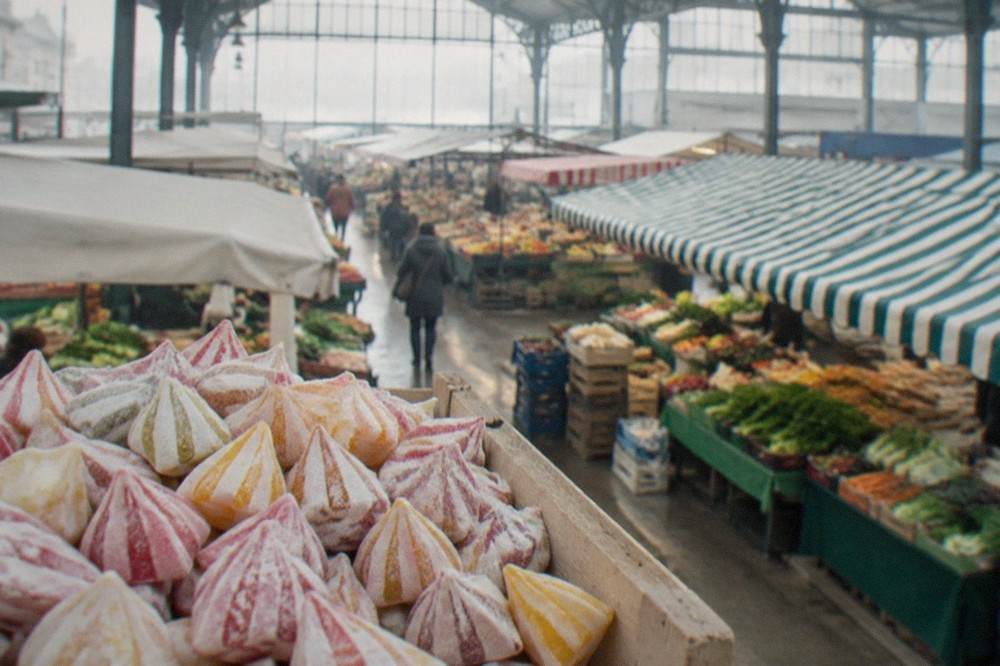
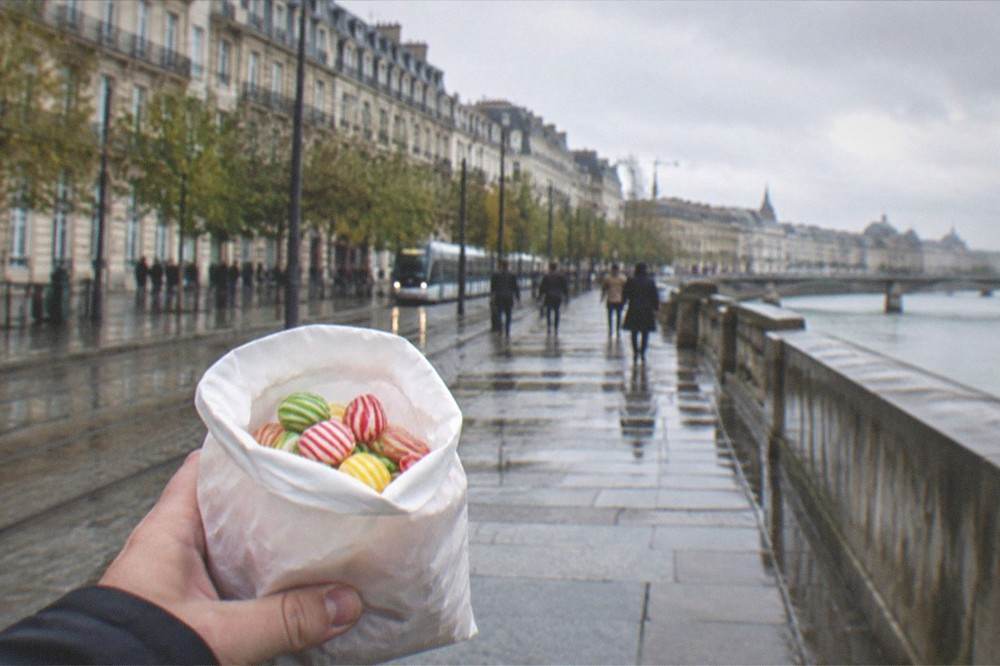
The berlingot nantais is a small hard candy shaped like a four-faced pyramid, a tetrahedron, its surface striped with colour and dusted with a fine powdered sugar finish called poudre, and it is traditionally made in seven flavours: orange, lemon, cassis, strawberry, anise, caramel and mint. It is a boiled-sugar sweet, cooked rather than set, and its shape is its passport: no other French candy carries this exact pyramid form, which is why the berlingot is instantly readable as a Nantes product. It belongs to the same family of port-city confections as the berlingots of other French sugar towns, but the nantais version, with its fine stripes and matte dusted finish, is the one that travelled furthest.
The candy's identity is inseparable from the city's sugar economy. Nantes grew wealthy on trade through its port on the Loire, and refined sugar was one of the goods that flowed through it. Where a Mediterranean city might build its sweets on honey or almonds, Nantes built its confectionery tradition on cane sugar and, later, the sugar refineries of the wider region. Sugar was cheap and abundant for confectioners, and the berlingot is the most visible survivor of that abundance.
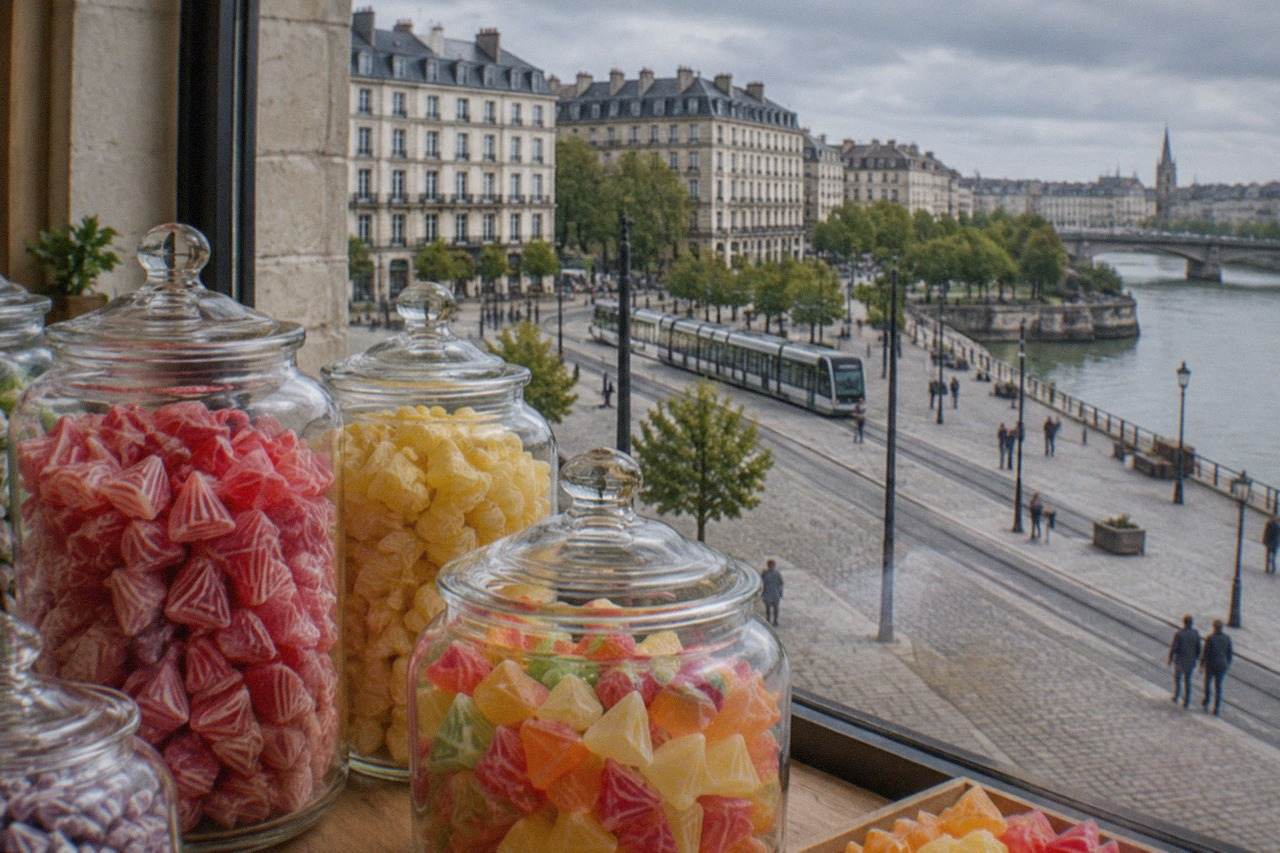
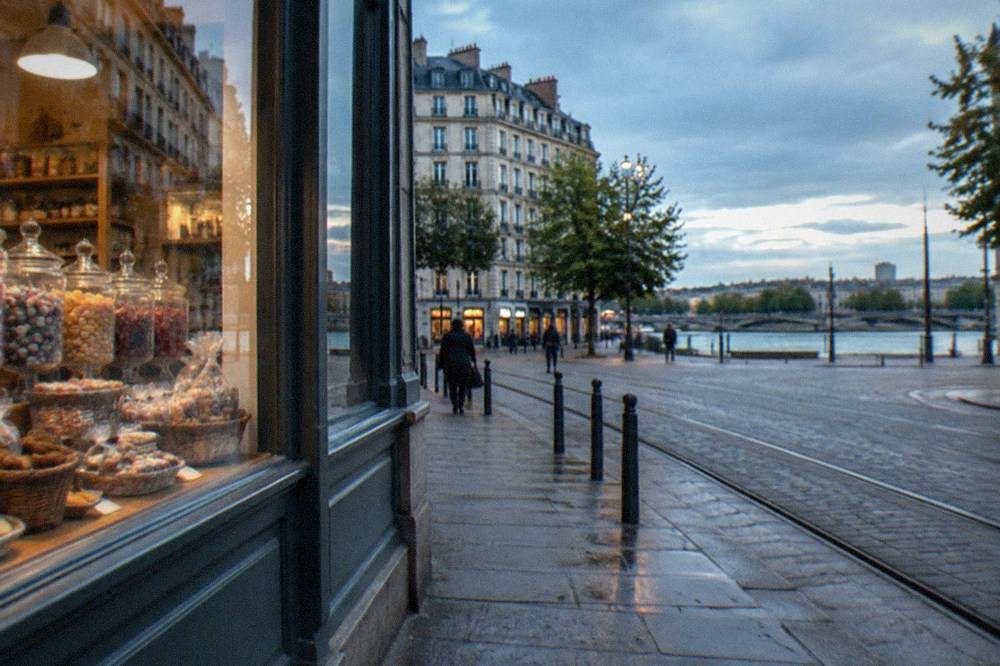
It is also a candy that keeps. Boiled sugar with a low moisture content stores well, which mattered in an era when confectioners sold from jars on the counter and families bought by weight. That shelf stability helped the berlingot become a souvenir: a paper bag of pyramids could survive a train journey to Paris or a sea crossing, carrying a little piece of Nantes with it. Visitors today buy it for exactly that reason, and the city's confectioners still display it in tall glass jars, the same way they have for well over a century.
For anyone planning a food-focused visit, the wider picture is in the Nantes food guide, and the candy sits naturally alongside the city's other edible institutions, including the ones covered in the LU Petit Beurre guide and the gâteau nantais guide. If Nantes's sweet heritage is the draw, Nantes Travel Guide's food pages are the place to start before arriving.
Where Did The Berlingot Nantais Come From?
The berlingot nantais dates to the late 19th century in Nantes, and its documented history is tied to the Pinson confiserie, founded in 1895 near the port, precisely where imported sugar was most accessible to working confectioners. Production largely shifted to Boufféré in the neighbouring Vendée department by around 2011, though Debotté, a long-established Nantes chocolate maker, is noted in reporting as a remaining Nantes maker of the candy.
That arc, from port-side workshop to regional factory, mirrors the story of Nantes confectionery as a whole. The LU biscuit maker followed the same pattern: Jean-Romain Lefèvre set up as a biscuit maker in Nantes in 1846, the company's Loire-side factory facing the château opened in 1886, and the Nantes factory finally closed in 1986 when production moved to La Haie-Fouassière, south of the city, where Petit Beurre biscuits are still made at a rate of roughly 24,000 tonnes a year. What begins beside the port in Nantes tends, eventually, to outgrow it.
The late 19th century was the moment when Nantes's sweet identity crystallised. The LU company invented the Véritable Petit Beurre in 1886, the gâteau nantais, an almond and rum cake whose origins are traced to around 1820, was being produced industrially by LU through much of the 20th century, and the berlingot's port-side makers were boiling sugar into pyramids for a growing urban market. Reporting by France 3 in the Loire-Atlantique has grouped the berlingot nantais alongside Petit Beurre, BN and other "gourmand treasures" that made the city's reputation, a framing worth repeating because it is how Nantes itself tells the story.
The historical context matters for another reason: the sugar that made these candies possible arrived through a port whose wealth also carried a darker traffic. The city's full reckoning with that history, including the Mémorial de l'abolition de l'esclavage on the quay, is covered in the Nantes slave trade history guide, and a visitor tracing the berlingot's sugar back to its source will pass that story on the same quays.
How Is The Berlingot Nantais Made, And What Makes Its Shape Special?
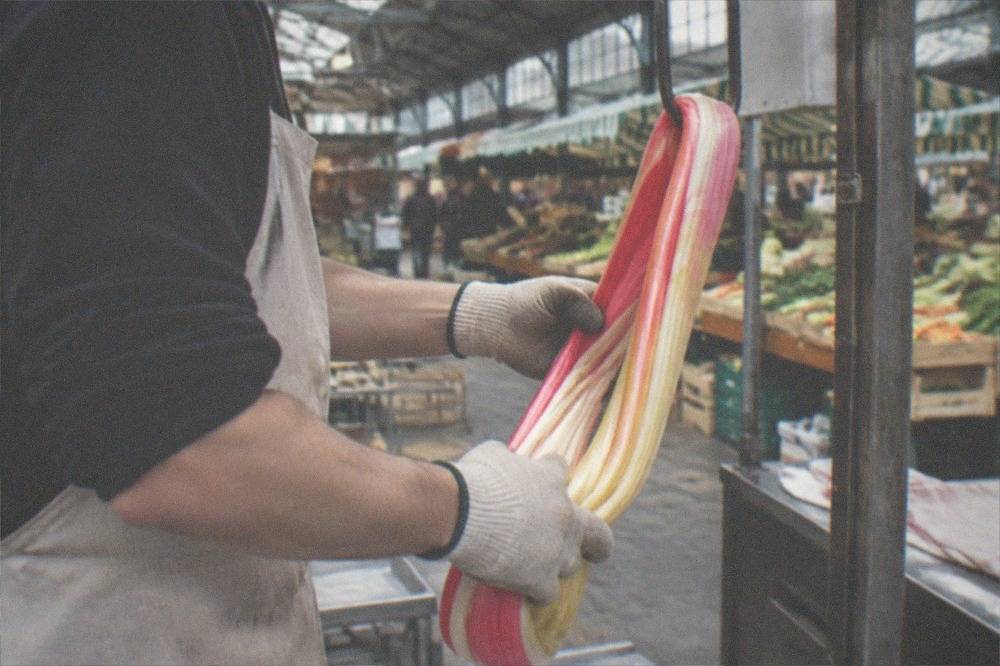
The berlingot nantais is made by boiling sugar with water and flavouring to a high temperature, then working the mass while it is still plastic: the confectioner pulls and folds it on a hook to aerate the sugar and draw in the colour stripes, then stretches it into a long rope and cuts it into segments that fold naturally into the four-faced pyramid. The poudre finish, a dusting of fine sugar powder, gives the nantais berlingot its matte, non-sticky surface.
The pulling is the craft. Worked sugar takes in thousands of tiny air bubbles, which is what turns a translucent boiled mass into an opaque, satin-textured candy that catches colour in fine parallel lines. A skilled confectioner controls the stripe by laying a coloured strand against a white mass and folding it in a fixed sequence, so the finished rope shows the same pattern down its entire length. Cut at an angle and left to close, each segment becomes a tetrahedron, four triangular faces meeting at a point, with the stripe wrapping around them.
| Step | What Happens | What It Gives The Candy |
|---|---|---|
| Cooking | Sugar, water and flavour boiled to a high temperature | The hard, glassy base |
| Colouring | A coloured sugar strand is added | The signature stripes |
| Pulling | The mass is pulled and folded on a hook | Aeration, opacity and sheen |
| Roping | The mass is stretched into a long rope | A repeating pattern along the length |
| Cutting | Segments are snipped from the rope | The four-faced pyramid shape |
| Poudrage | A dusting of fine powder | The matte, non-stick poudre finish |
Very few visitors will ever watch this done live in Nantes, because production is now largely industrial, but the finished candy still encodes every one of those steps. The matte surface tells you it was dusted; the fine, regular stripes tell you it was pulled by a controlled process; the shape tells you it was cut, not moulded. A bag of berlingots is, in effect, a small demonstration of 19th-century sugar craft that survived into the age of factory wrapping.
Where To Buy Berlingots Nantais In Nantes Today?
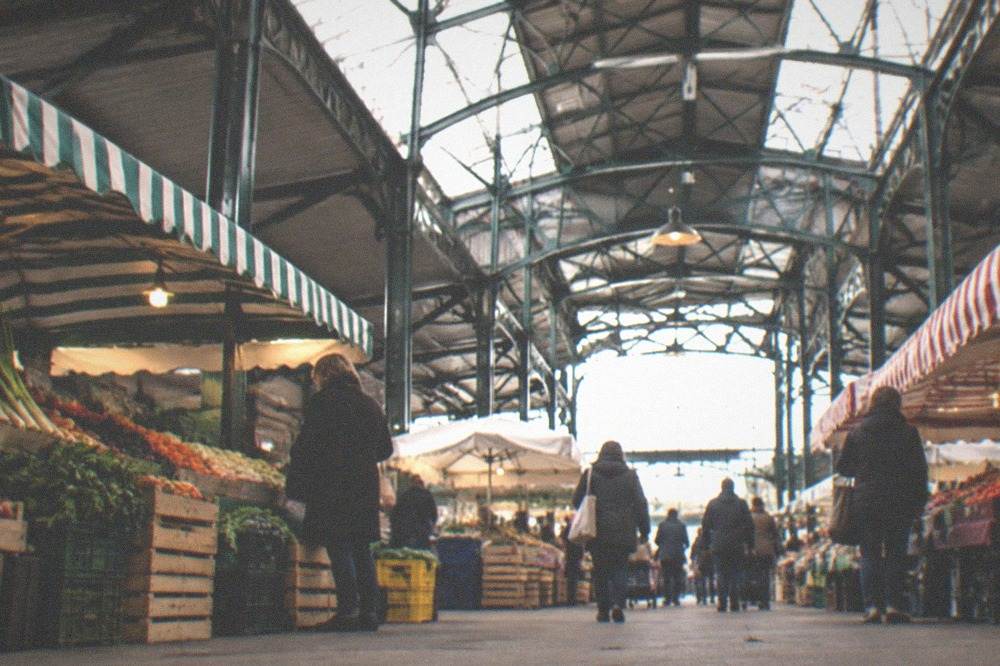
Berlingots nantais are bought today in three kinds of place: established Nantes confectioners and chocolatiers, of which Debotté is the name most cited as a remaining local maker; the city's food shops and epiceries that stock regional specialities; and the covered markets, above all Talensac, the city's main market, which runs Tuesday to Friday from 8:00 to 13:00, Saturday and Sunday from 8:00 to 13:30, and is closed on Mondays.
Talensac is the authentic setting for the purchase. It is the market Nantes people actually shop at, and buying sweets there, alongside the fish, vegetables and cheese, is closer to the berlingot's origins than any gift shop. The market's rhythm is worth building a morning around: the market guide covers it in detail, and a walk there pairs naturally with the old town Bouffay guide and a look at the Passage Pommeraye, the 1843 shopping arcade where the city's confectionery and commerce histories visibly overlap.
| Where To Buy | Setting | Best Time To Go | What Else Is Nearby |
|---|---|---|---|
| Talensac market | Covered city market | Tue-Fri morning, before 13:00 | Quai de la Fosse, Memorial |
| Nantes confectioners and chocolatiers | Old shopfronts in the centre | Weekday afternoons | Bouffay, cathedral |
| Passage Pommeraye area | 1843 shopping arcade and surrounding streets | Any opening hour | Graslin, théâtre, place Royale |
| Regional food shops | Epiceries stocking Pays de la Loire goods | Any opening hour | Île de Nantes, Machines |
The Passage Pommeraye deserves a special mention for sweet hunters. Built in 1843 on three floors that climb the slope between rue Santeuil and rue de la Fosse, it is the city's most beautiful piece of retail heritage, and the streets around it hold the densest cluster of the centre's food and gift shops. Its hours run Monday to Saturday from 8:00 to 20:00 and Sunday from 9:00 to 20:00, and its mix of traditional and modern retailers makes it the easiest single stop for a souvenir bag that includes berlingots.
For visitors who want the sweets explained rather than just found, a private guide is the efficient route. The private walking tour with a professional guide can be routed around the city's food addresses, and its price is not published by the operator, so it renders only in the listing itself: Check availability.
Which Flavours Are Traditional, And How Should You Taste A Berlingot?
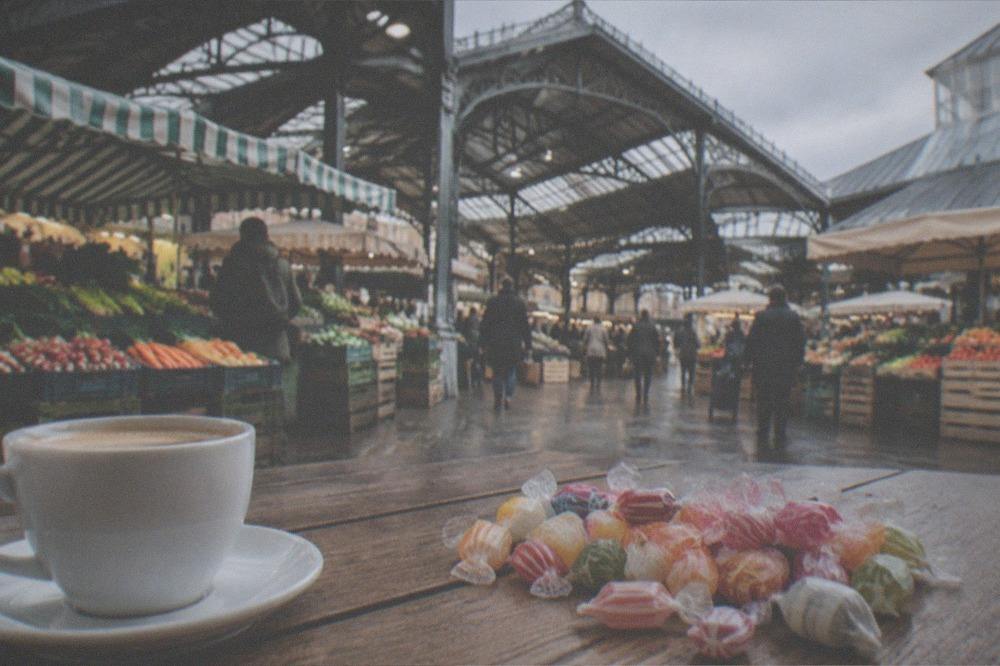
The seven traditional flavours of the berlingot nantais are orange, lemon, cassis, strawberry, anise, caramel and mint, a list that has stayed stable because it spans the full range of the candy's audience: fruit for children, anise and caramel for adults, mint for after dinner. There is no ceremony to tasting one: it is a hard candy meant to dissolve slowly, and the correct approach is simply to let it sit on the tongue rather than chew it.
The flavours divide cleanly into families. Orange, lemon, cassis and strawberry are the acidic brights, and their stripes tend to be the most vivid. Caramel is the roundest, warmest note in the jar. Anise is the divisive one, unmistakably French, loved in the region and alien to many anglophone palates, and a good flavour to offer a companion as a test. Mint is the after-dinner delegate. Bought as a mixed bag, the seven together give an honest cross-section of what 19th-century boiled-sugar confectionery could do with nothing but sugar, acid, colour and plant extracts.
| Flavour | Family | Character | Who It Suits |
|---|---|---|---|
| Orange | Citrus | Bright, familiar | Everyone |
| Lemon | Citrus | Sharp, clean | Most palates |
| Cassis | Berry | Deep, faintly tart | Adventurous tasters |
| Strawberry | Berry | Sweet, mild | Children first |
| Anise | Spice | Distinctive, liquorice-like | An acquired, very French taste |
| Caramel | Cooked sugar | Round, warm | Coffee drinkers |
| Mint | Herb | Cool, clean | After dinner |
One honest note for visitors arriving from Britain: the berlingot is a hard candy, not a chew, and it rewards patience. Chewing a boiled sugar pyramid too early is a good way to meet the dentist, and the candy's whole design, the slow-dissolving body and the dusted finish, assumes it will be savoured. A bag of berlingots with a coffee, sampled one pyramid at a time across all seven flavours, is the complete experience, and it costs very little by any standard of souvenir shopping. For travellers watching the budget more broadly, the Nantes on a budget guide collects the city's other inexpensive pleasures.
How Does The Berlingot Sit Among Nantes's Other Sweet And Savoury Specialities?
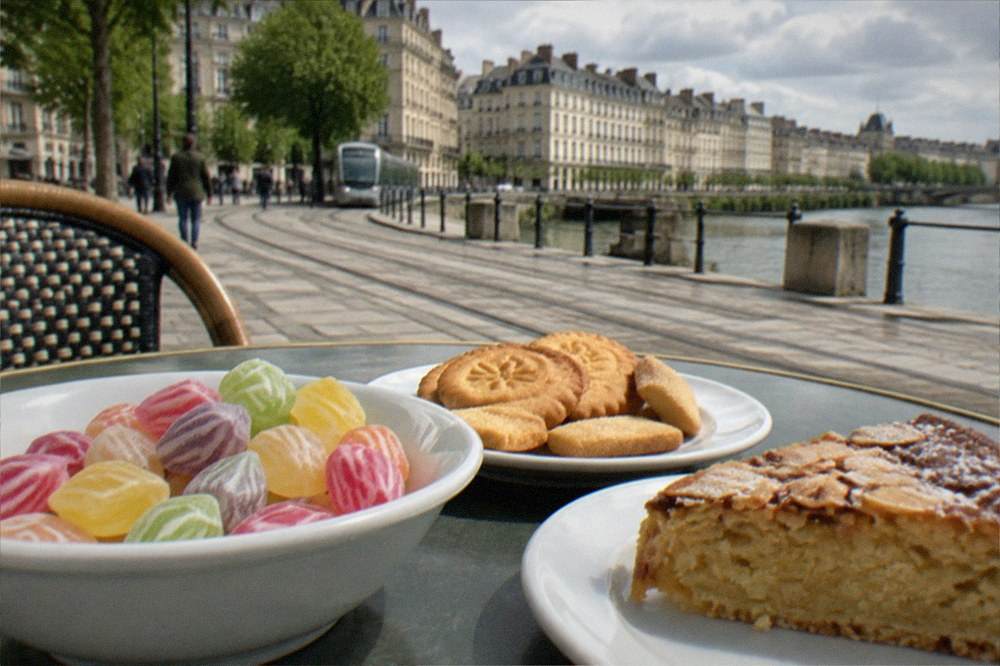
The berlingot nantais shares the city's food identity with four other named specialities: the LU Petit Beurre biscuit, invented in Nantes in 1886 and still produced at a factory near the city; the gâteau nantais, an almond and rum cake traced to around 1820; the cure nantais, a washed-rind cow's milk cheese from the Nantes region; and Muscadet, the dry white wine made from the Melon de Bourgogne grape south and east of the city.
The pattern behind all five is the same: raw materials arriving through the port, transformed by city craftsmen into products that outlived the port economy itself. Sugar became berlingots and Petit Beurre; almonds and rum, colonial goods through the same docks, became the gâteau nantais; the Loire's river economy gave the cheese its trade routes and the wine its export market. The berlingot is the smallest and cheapest of the five, and for that reason the easiest to underestimate, but it is also the most portable, which is why it, not the gâteau, is the candy that most often represents Nantes abroad.
| Speciality | Type | Key Date | Character |
|---|---|---|---|
| Berlingot nantais | Hard candy | Late 19th century origins | Striped, dusted pyramid |
| Petit Beurre (LU) | Butter biscuit | 1886 | Dry, buttery, iconic scalloped shape |
| Gâteau nantais | Almond and rum cake | Around 1820 | Dense, soaked, improves with a day's rest |
| Cure nantais | Washed-rind cheese | Regional, traditional | Salty, pungent, cow's milk |
| Muscadet | Dry white wine | Appellation of the Nantes region | Dry, mineral, made from Melon de Bourgogne |
Each of these has its own story on this site, told in depth: the gâteau nantais guide and the cure nantais guide cover the cake and the cheese, while the Muscadet vineyards day trip guide takes the wine out to its source in the countryside. The 2026 Muscadet harvest was historically early, with the official ban de vendange declared on 11 August 2026, a full eight days ahead of the previous record from 2003, following heat and drought, and growers reported reduced yields of around 30 to 40 hectolitres per hectare. The wine, in other words, is having a story year, and a sweet itinerary that pairs berlingots with a bottle of the current Muscadet is very much a Nantes thing to do.
Do Berlingots Make Good Gifts And Souvenirs From Nantes?
Berlingots nantais make excellent gifts and souvenirs precisely because they were engineered for travel: a hard, low-moisture candy in a sealed bag keeps for a long time, packs flat, breaks nothing and represents the city with a shape found nowhere else. The one weakness is heat, since boiled sugar softens in a hot car or a sunlit suitcase, so buy late in the trip and keep the bag out of the sun and out of checked luggage on a hot day.
The gift logic extends to the packaging. Traditional berlingots come in cellophane or paper bags, sometimes by weight, sometimes pre-packed in kilo-style sachets, and the striped pyramid piles up in a way that looks generous in any jar. A small hamper built in Nantes might combine berlingots, a packet of Petit Beurre, a gâteau nantais from a patisserie and a bottle of Muscadet, and every component of that hamper except the wine can be assembled in a single afternoon around the Passage Pommeraye and Talensac.
For a gift that is about the giver as much as the city, a photo session makes a striking alternative or companion to the edible souvenir. A photoshoot experience in Nantes runs from thirty minutes to an hour, and the operator's live listing carries the current price and availability. Berlingots also travel well by post, which is more than can be said for the gâteau nantais, so the candy remains the default answer for the practical question of what to send home from a trip.
A last planning note on timing. Nantes has a temperate oceanic climate, not a Mediterranean one, with Météo-France's 1991-2020 normals for the Nantes-Bouguenais station giving mean daily maxima from 9.3°C in January to 25.4°C in August and around 819.5 mm of rain a year, so the candy-safe window is generous but summer heat is real: the station's all-time record high is 42.2°C, set on 24 June 2026. The best time to visit Nantes guide and the Nantes weather guide cover the seasons in detail, and the things to do in Nantes page rounds out the itinerary beyond the sweet shops.
Common Questions About The Berlingot Nantais
What Is A Berlingot Nantais?
A berlingot nantais is a small tetrahedron-shaped hard candy from Nantes, striped with colour and finished with a fine powdered sugar dusting called poudre. It is made from boiled sugar pulled to incorporate air, traditionally in seven flavours: orange, lemon, cassis, strawberry, anise, caramel and mint.
Where Does The Berlingot Nantais Come From?
The berlingot nantais originates in Nantes in the late 19th century, with the Pinson confiserie, founded in 1895 near the port, a key name in its history. Production largely shifted to Boufféré in the Vendée by around 2011, though Debotté is cited as a remaining Nantes maker.
What Flavours Does The Berlingot Nantais Come In?
The traditional seven flavours are orange, lemon, cassis, strawberry, anise, caramel and mint. The list spans fruit notes for younger palates and anise, caramel and mint for adults, which is why a mixed bag is the standard way to buy them.
Is The Berlingot Nantais Still Made In Nantes?
Partly. Industrial production largely moved to Boufféré in the Vendée by around 2011, while Debotté is noted in reporting as a Nantes maker still producing the candy. The candy remains strongly identified with Nantes and is sold across the city, especially in confectioners and at the Talensac market.
How Should You Eat A Berlingot Nantais?
Let it dissolve on the tongue rather than chewing it. It is a hard, slow-release candy by design: the dusted surface gives way to the pulled, striped sugar body, and each of the seven flavours releases gradually. Keep it out of direct heat, as boiled sugar softens in warmth.
What Other Sweets Is Nantes Famous For?
Nantes is also the home of the LU Petit Beurre biscuit, invented in the city in 1886, the gâteau nantais almond and rum cake traced to around 1820, and, on the savoury side, the cure nantais cheese, all of which share the berlingot's roots in the port economy of the 19th century.
The berlingot nantais is a small thing, a few grams of pulled sugar in the shape of a pyramid, but it carries a century of port history, a craft that survives in every stripe, and a flavour list that still defines the city's candy jars; buy a mixed bag, taste all seven, and the sweetest chapter of Nantes is yours for the price of a coffee.