Cure Nantais
Nantes, in the Loire-Atlantique department of western France, keeps a cheese named after itself: Cure Nantais, a washed-rind cows' milk square built for the Muscadet that grows on the same hills.
Short answer
Cure Nantais is a soft washed-rind cows' milk cheese from the Nantes region of Loire-Atlantique, France, best bought fresh at a market such as Talensac, eaten at room temperature and paired with the local dry white, Muscadet.
The cheese of Nantes carries the city's name: Cure Nantais, a washed-rind cows' milk square from the Loire-Atlantique department of western France, made to be eaten young and soft alongside the white wine that grows on the hills just south of the city. Few French towns of its size pair a cheese, an appellation wine, a butter biscuit and a rum cake under one local banner, and fewer still put them all within a tram ride of each other. This page is about the cheese: what it is, how to serve it, where to buy it in Nantes, and how to fold it into a day of markets, arcades and riverbanks.
What Is Cure Nantais Cheese?
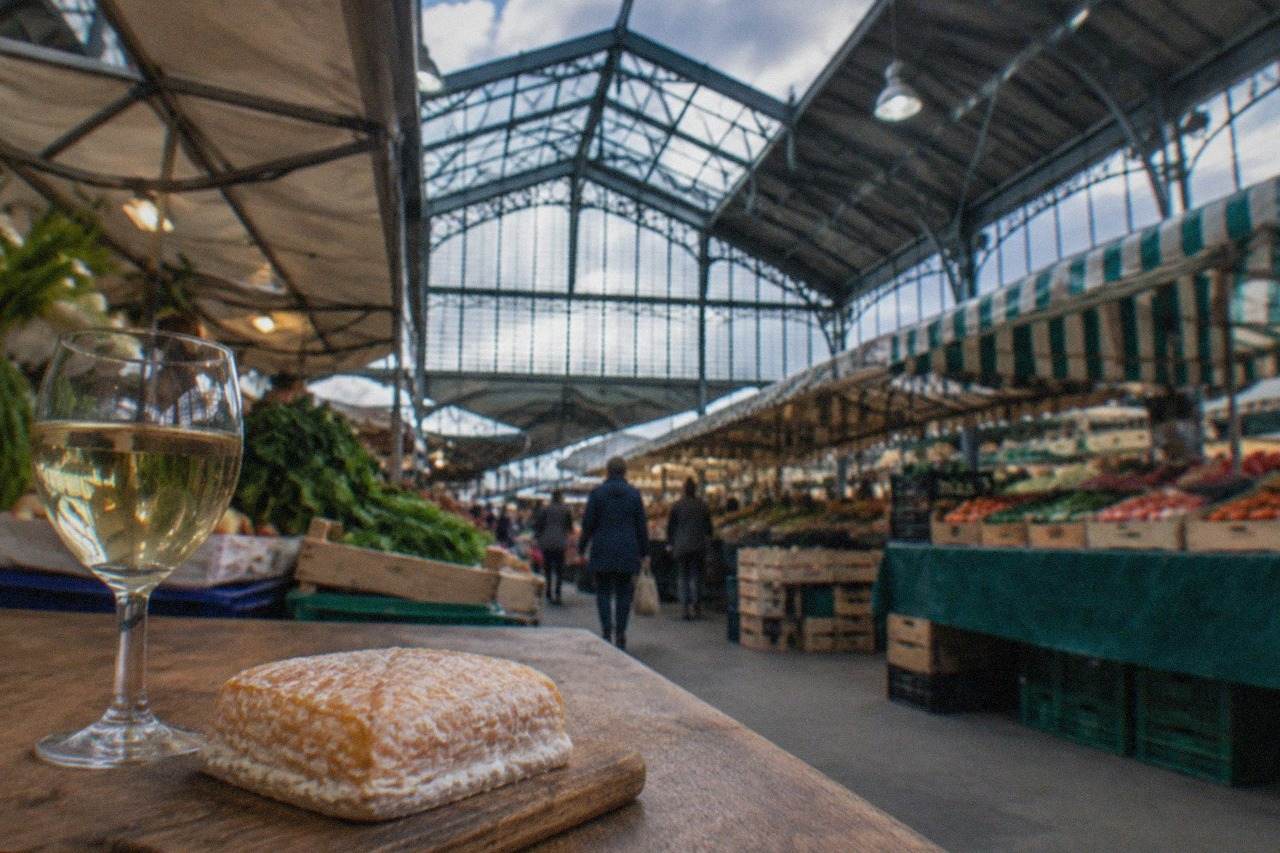
Cure Nantais is a soft, washed-rind cheese made from cows' milk in the Nantes region of Loire-Atlantique, western France: a squat square with an orange rind, a pungent farmyard aroma and a soft, salty, faintly meaty paste that grows runnier as it ripens. It belongs to the same family as the washed-rind squares of the Loire valley, and in Nantes it is the local cheese to put beside a glass of Muscadet.
That is the short version. The longer version is that the cheese exists because of where Nantes sits. The city stands on the Loire, with the Erdre and the Sèvre Nantaise joining it there, at the point where a great trading river meets the Atlantic vineyards of the Pays de Nantes. Cows' milk, salt drawn historically from the Guérande marshes down the coast, and wine growing on hills that the ocean cools: everything the cheese needs was already in the neighbourhood. A washed-rind square is a modest, everyday format compared with the grand wheels of the mountains, and that suits the local style of eating, which is casual, market-driven and centred on the counter rather than the dining room.
If you are planning around the cheese rather than the sights, start with a map of the centre. The Bouffay old town, the Graslin quarter around the Passage Pommeraye, and the Île de Nantes across the river hold most of what a first visit needs, and the tram stitches them together. A short orientation walk saves time later, and one option is a guided hour with a local:
A local guide is useful in Nantes for the same reason the cheese is: the city rewards knowing which street holds the fromagerie and which square holds the market. For everything the walk cannot cover, the pages of Nantes Travel Guide break the city down by quarter and by dish, from the old town to the river islands.
What Does Cure Nantais Taste Like, And What Do You Drink With It?
The classic pairing is Muscadet, the white appellation of the Nantes region, made from the Melon de Bourgogne grape: its dry, saline edge cuts through the richness of a ripe washed-rind square. A crusty baguette, a scrape of the same kind of butter that anchors beurre blanc, and an apple or a pear complete the board. The simplest rule is to serve the cheese at room temperature and open the bottle early.
Muscadet deserves its own sentence. It is the Nantes region's wine in the most literal sense, grown on the Melon de Bourgogne grape across the hills south and east of the city, with a Maison des vins at Vallet for visitors who want to go to the source. The 2026 vintage will be an unusual one to taste: wine-trade reporting from the harvest says the picking ban was declared on 11 August 2026, a record eight days earlier than the previous mark from 2003, with heat and drought pushing ripeness forward while cutting yields. A wine built to be fresh and saline suits a pungent, buttery cheese exactly, which is why the pairing has stuck.
For texture, serve the cheese the day you buy it or a day after, and let it sit out of the fridge before eating so the paste softens and the aroma opens. If you would rather have someone walk you through the pairing than work it out at a market stall, there is a guided tasting built around exactly this:
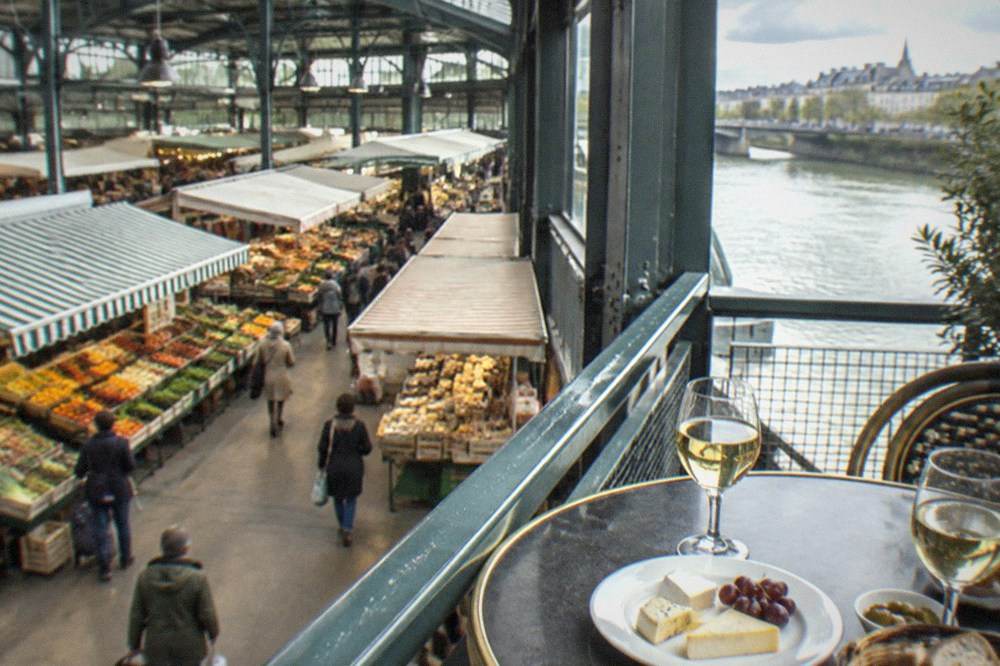
The tasting route runs the other way too: buy a square at a market, a bottle from the same region, and a baguette, and take the lot to the Erdre or the Loire bank. Both rivers are lined with benches and quays, and the green spaces around the Château des ducs de Bretagne's moat garden make an equally good table. That is the honest way to eat the cheese of Nantes, outdoors, with the wine it grew up beside.
These pages are useful companions if the pairing angle appeals: the Nantes food and local produce guide for the wider larder, and the best restaurants in Nantes rundown for the evenings when a market picnic is not the plan.
Where Do You Buy Cheese In Nantes?
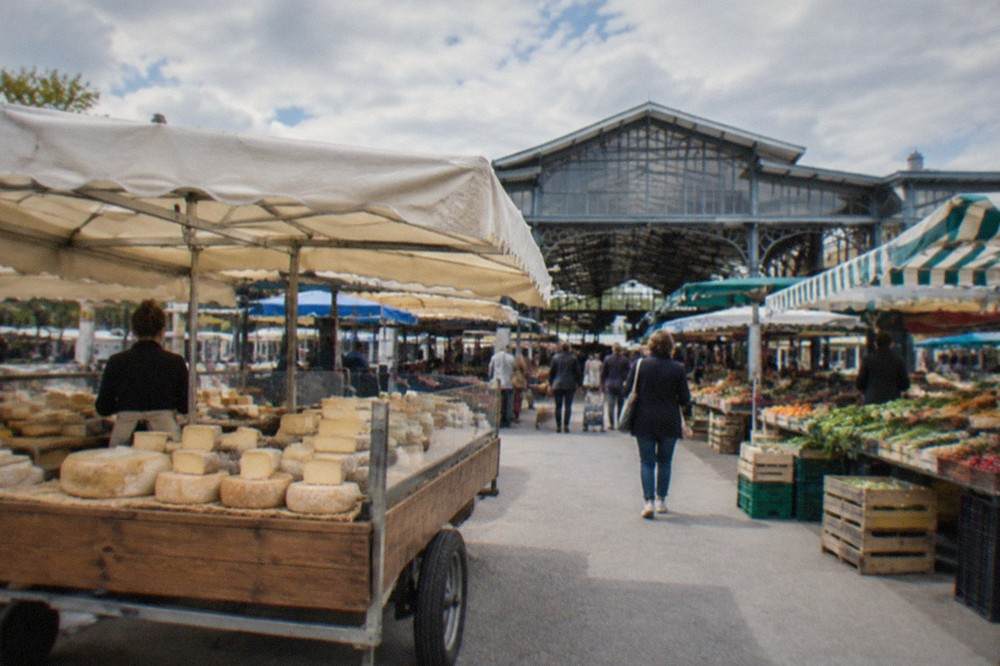
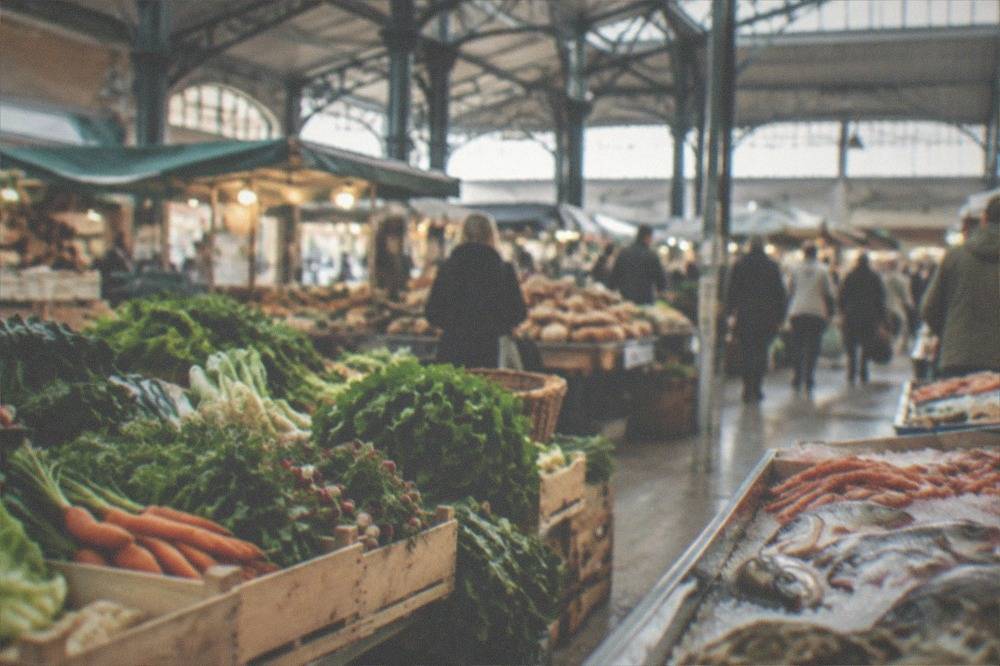
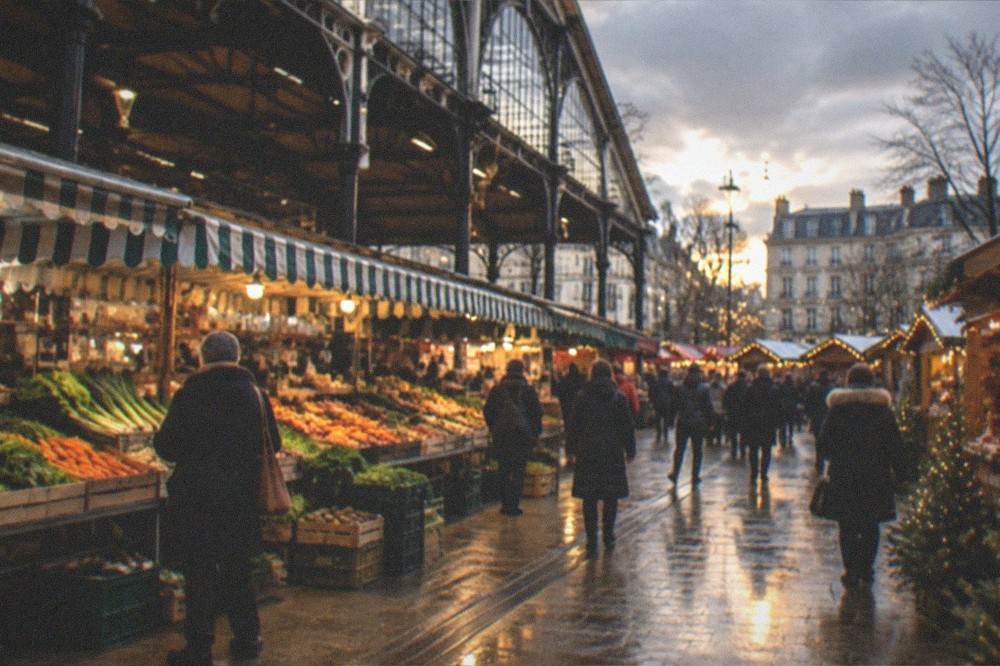
The main answer for visitors is Talensac, the city's best-known market, where cheesemongers run stalls alongside the fishmongers and greengrocers: the council's market page lists Tuesday to Friday 08:00 to 13:00 and Saturday to Sunday 08:00 to 13:30, closed on Monday. Beyond Talensac, the central quarters from Bouffay to Graslin keep cheese shops and market counters within reach of a tram stop.
Talensac is the market Nantes cooks from. It runs through the middle of the week and the weekend mornings, shuts at lunchtime, and closes altogether on Mondays, so the single biggest planning mistake is arriving on a Monday expecting cheese. Tuesday to Friday mornings are the working pattern; weekends run slightly later, to 13:30, and are busier for it. Go early, buy the cheese last so it spends the least time in a bag, and ask the fromager which squares are ripest that day. A market cheesemonger will usually cut to order, which is the point of buying at a market rather than a supermarket shelf.
Outside Talensac, the centre holds its own specialist cheese shops, clustered around Bouffay, Graslin and the streets off the Passage Pommeraye. The arcade itself, built in 1843 on three floors against a slope, is the fastest pleasant route between the Graslin quarter and the Sambre-et-Meuse side, and it costs nothing to walk through. Combine a cheese purchase with a lap of the covered arcades and you have the shape of a good afternoon.
If a guided tasting sounds better than self-direction, this one covers the pairing in a single sitting:
For a self-guided version, the sequence is simple: Talensac in the morning, a bottle shop or the market's wine stall for the Muscadet, a boulangerie for the baguette, and the riverbank by early afternoon. The Nantes food and local produce page lists more of the counters worth queuing at, and the gâteau nantais cake and berlingot sweets of Nantes pages cover the sweet half of the same shopping trip.
How Do You Build A Cheese Day Around Nantes?
A workable plan strings three or four stops into one loop: Talensac market in the morning while the stalls are fullest, the free courtyard and ramparts of the Château des ducs de Bretagne at midday, an afternoon at the Machines de l'île or the Musée d'arts, and a pass through the Passage Pommeraye, all reachable on foot and by tram. The stops are cheap or free, and nothing in the list needs a car.
The table below pulls the loop together with the entry costs and opening windows the venues themselves publish. Hours marked from the operators' own pages can shift with the season, so treat the figures as the planning frame rather than a promise, and check the day before you go.
| Stop | Why it fits a cheese day | Entry | Hours as listed |
|---|---|---|---|
| Talensac market | The cheese, the bread and the wine, all in one place | Free entry | Tue-Fri 08:00-13:00, Sat-Sun 08:00-13:30, closed Mon |
| Château des ducs de Bretagne, courtyard and ramparts | Moat garden and lawns for the picnic | Free | 08:30-19:00 daily |
| Machines de l'île, Galerie | The mechanical sights of the Île de Nantes | 12 EUR full, 8 EUR child 4-12 | Seasonal, last entry 45 min before close |
| Musée d'arts de Nantes | Indoor galleries for the hottest hours | 9 EUR full, 4 EUR reduced | 11:00-19:00, closed Tuesday, Thursdays to 21:00 |
| Mémorial de l'abolition de l'esclavage | Riverside walk along the Quai de la Fosse | Free | 09:00-18:00 (16 Sept to 14 May) |
| Passage Pommeraye | Covered arcade between Graslin and the north | Free | Mon-Sat 08:00-20:00, Sun 09:00-20:00 |
The château deserves its midday slot. The courtyard and ramparts are free and open every day, and the Jardin des douves, the moat garden, opens at 08:00 and runs to 19:00, later in July and August. If the history pulls you further in, the Musée d'histoire de Nantes inside charges 9 EUR full and 5 EUR reduced, and covers the city's whole story, including the slave trade from which Nantes armed 1,714 expeditions, 43% of the French total, before withdrawing in 1830; the Château des ducs de Bretagne page lays out the full visit. On the Île de Nantes, the Galerie des Machines holds the mechanical menagerie, and tickets can be checked ahead:
The island also carries the green line, the painted trail of the Le Voyage à Nantes art summer, which threads the city at about 20 km end to end. Follow it in either direction after lunch and it will deliver you, eventually, back to a riverbank. Check availability for the Machines if the afternoon is taking shape around them.
Does Nantes Weather Matter When You Are Cheese Shopping?
Nantes has a temperate oceanic climate, not a Mediterranean one: Météo-France's 1991-2020 normals for the Nantes-Bouguenais station put the mean maximum at 9.3 degrees in January and 25.4 in August, with 819.5 mm of rain a year, so a cheese picnic is a three-season pleasure and a July one needs shade. The station record high now stands at 42.2 degrees, set on 24 June 2026, which is the strongest argument for carrying a cool bag in summer.
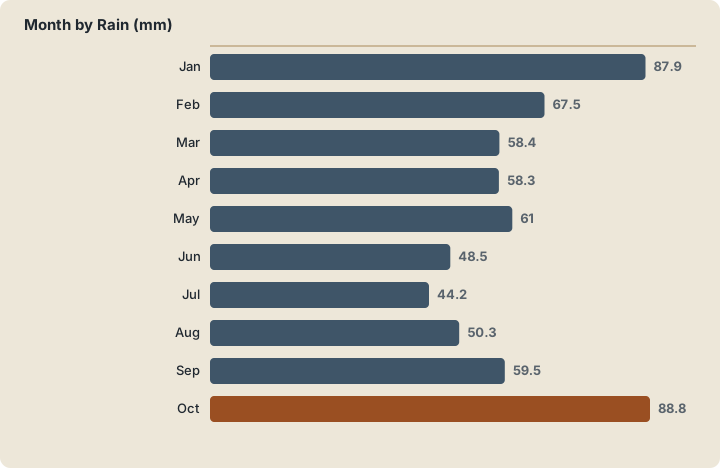
The rain is the other half of the equation. December is the wettest month on the normals at 101.0 mm and July the driest at 44.2 mm, and roughly 119.7 days a year see at least a millimetre, so a market morning can always turn. The practical response is to buy the cheese last, keep it shaded, and have an indoor stop ready: the museums listed above, the arcades, or the covered parts of the market trade.
| Month | Mean max (C) | Mean min (C) | Rain (mm) |
|---|---|---|---|
| Jan | 9.3 | 3.4 | 87.9 |
| Feb | 10.5 | 3.0 | 67.5 |
| Mar | 13.5 | 4.9 | 58.4 |
| Apr | 16.2 | 6.6 | 58.3 |
| May | 19.6 | 9.8 | 61.0 |
| Jun | 23.0 | 12.7 | 48.5 |
| Jul | 25.1 | 14.3 | 44.2 |
| Aug | 25.4 | 14.2 | 50.3 |
| Sep | 22.4 | 11.8 | 59.5 |
| Oct | 17.6 | 9.5 | 88.8 |
| Nov | 12.9 | 5.9 | 94.1 |
| Dec | 9.8 | 3.7 | 101.0 |
Source for all figures: the Météo-France 1991-2020 normals for the Nantes-Bouguenais station. The annual totals behind the columns are 819.5 mm of rain and a yearly mean maximum of 17.1 degrees, with 1,873.3 hours of sunshine, sunniest in August. The Nantes weather page unpacks the seasons month by month for anyone timing a trip around them.
How Do You Get Around Nantes On A Food Day?
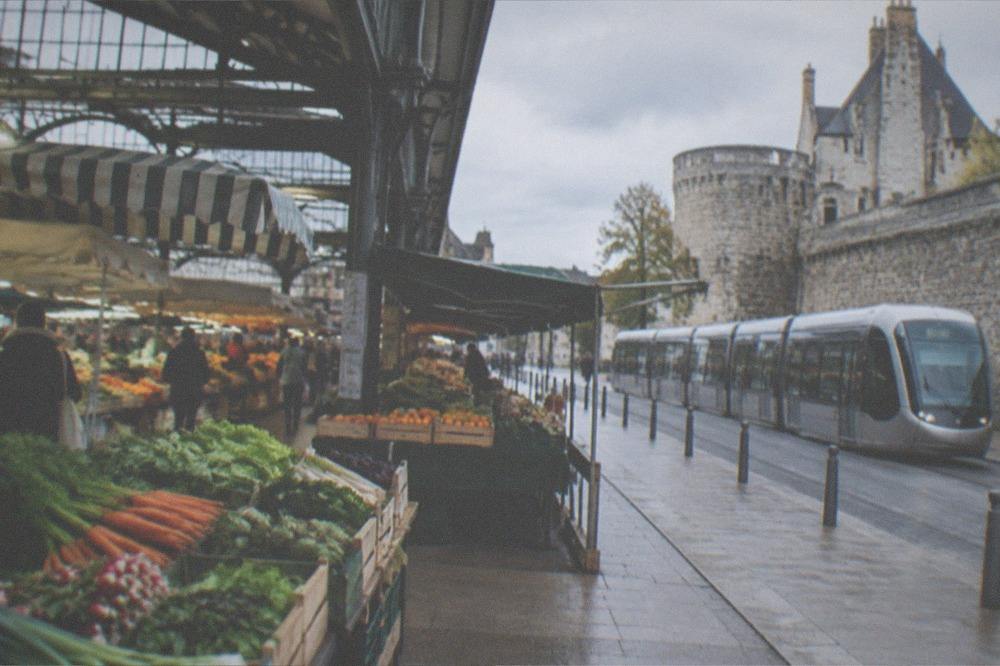
A one-hour Naolib ticket costs 1.80 EUR and covers the trams, buses and Navibus river shuttles; a 24-hour ticket is 6.80 EUR, and a 24-hour ticket for four people travelling together is 15 EUR, which usually wins for families. At weekends the whole network is free for everyone from Saturday 00:00 to Sunday 23:59, with one exception: the 10 EUR airport shuttle never joins the weekend-free scheme.
The network is built for exactly this kind of day. Three tram lines, a busway and the Navibus river crossings, including the line over to Trentemoult on the south bank, run on the same tickets, and a 10-ticket carnet at 17.80 EUR covers a couple of days of short hops. The weekend-free rule, in place since 2021, makes Saturday and Sunday the cheapest days to drift between market, château and riverbank. The one trap is the airport: the shuttle is always 10 EUR, weekend or not, and it moved its city stop to the Gare routière, quai A, on 30 March 2026.
| Ticket | Price | What it covers |
|---|---|---|
| 1-hour ticket | 1.80 EUR | Tram, bus, Navibus and TER inside the métropole |
| 10 x 1-hour carnet | 17.80 EUR | Ten single journeys |
| 24-hour ticket | 6.80 EUR | Unlimited network travel for a day |
| 24-hour ticket, 4 people | 15 EUR | A group day ticket |
| Airport shuttle | 10 EUR | Airport to station, valid one hour on the network, never free at weekends |
For a packed itinerary, the Pass Nantes bundles transport with entry to the main museums and sites, and its 2026 prices are set out on the Pass Nantes explained page. The short version of the tariff:
| Duration | Full | Reduced (4-17, students under 26, disability card) | Family (2 adults + 2 children) |
|---|---|---|---|
| 24 hours | 30 EUR | 20 EUR | 80 EUR |
| 48 hours | 40 EUR | 26 EUR | 106 EUR |
| 72 hours | 49 EUR | 31 EUR | 129 EUR |
| 7 days | 75 EUR | 45 EUR | 195 EUR |
The pass includes one airport shuttle return, unlimited Naolib travel and entry to partner sites including the château museum and the Machines' Galerie and Carrousel. Note what it does not include: the Grand Éléphant ride is excluded from the pass, so budget separately if the elephant is on the list. Anyone weighing up the maths should read the dedicated page before buying; the getting around Nantes guide covers the rest of the network.
What Other Nantes Specialities Belong On The Cheese Board?
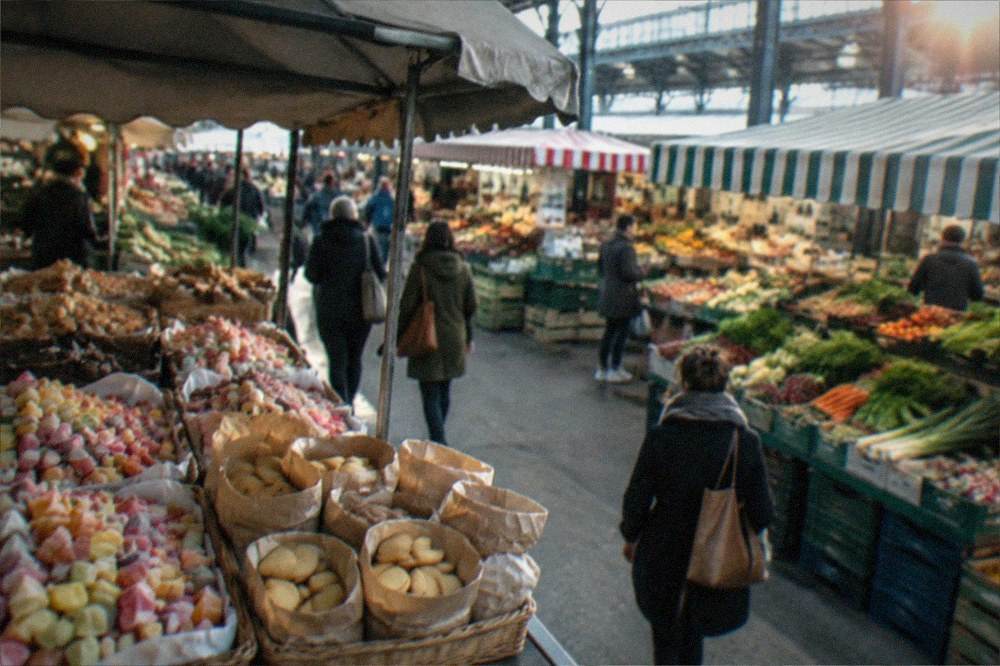
The same counter that sells the cheese sells the rest of the Nantes larder: berlingots nantais, tetrahedron sweets in seven traditional flavours from a confiserie tradition founded in 1895 near the port; the LU Petit Beurre biscuit, born in 1886; the almond-and-rum gâteau nantais, with origins traced to around 1820; and beurre blanc, the emulsified butter sauce the city's restaurateurs have been seeking protected status for. Muscadet, the local wine, ties the whole board together.
Each of these has its own page in this guide's food section, and each carries the same rule as the cheese: buy where Nantes buys, at the market and the specialist counters. The biscuits are the city's most exported piece of heritage, made by the firm founded in Nantes in 1846 whose production now runs from a factory at La Haye-Fouassière south-east of the city, at roughly 24,000 tonnes a year of output. The sweets, the cake and the sauce stay more local, which is exactly why they are worth the market trip.
| Speciality | What it is | Verified detail |
|---|---|---|
| Berlingots nantais | Tetrahedron hard sweets in seven traditional flavours | Confiserie tradition founded 1895 near the port |
| Petit Beurre LU | The butter biscuit of Nantes | Created in 1886 by the firm founded in 1846 |
| Gâteau nantais | Almond and rum quatre-quarts cake | Origins traced to around 1820 |
| Beurre blanc | Shallot, Muscadet and butter sauce | Restaurateurs pursued protected status in 2025 reporting |
| Muscadet | Dry white appellation of the Nantes region | Melon de Bourgogne grape; 2026 harvest ban declared 11 August 2026 |
Beurre blanc is the one that belongs in a restaurant rather than a shopping bag. The sauce is a reduction of shallots, white wine and vinegar or lemon into which cold butter is whisked, traditionally served with fish, and Nantes restaurateurs have been campaigning for it to carry protected traditional-speciality status. The recipe's anchor in Muscadet makes it the cooked cousin of the raw pairing at the top of this page. The dedicated berlingot sweets of Nantes and gâteau nantais cake pages finish the sweet side of the story.
When Should You Visit Nantes For Its Food Scene?
For a food-focused trip, the two anchors are the run-up to Christmas, when the Nantes Christmas market runs 19 November to 27 December 2026 on Place Royale and Place du Commerce, and late August, when the free Rendez-vous de l'Erdre jazz and boating festival fills the river. Folle Journée, the classical festival, returns 27 to 31 January 2027 with a Beethoven theme. September is the mild, quiet shoulder month after the summer programme closes.
The Christmas market is the food-lover's date to circle. It opens late morning and runs to 21:30 on weekdays and Saturdays, 20:00 on Sundays, with around 140 chalets across the two squares, and it is the one moment of the year when the regional producers, the salted caramels, the Muscadet and the cheese counters come to the centre rather than waiting at Talensac. Late January belongs to Folle Journée, the classical festival founded in 1995 whose 33rd edition, announced for 27 to 31 January 2027, carries a Beethoven theme marking the 200th anniversary of the composer's death.
| Event | Dates | Why it fits a food trip |
|---|---|---|
| Christmas market, 26th edition | 19 Nov to 27 Dec 2026, Place Royale and Place du Commerce | Regional food and producers in the city centre |
| Le Voyage à Nantes, 15th edition | 4 July to 6 Sept 2026 | Green-line art trail linking markets and riverbanks |
| Rendez-vous de l'Erdre | 24 to 30 Aug 2026; 2027 dates 23 to 29 Aug | Free jazz along the river, at its 40th edition in 2026 |
| Folle Journée, 33rd edition | 27 to 31 Jan 2027, theme Galaxie Beethoven | Five days of classical concerts in midwinter |
Summer visitors get Le Voyage à Nantes instead, the art festival that has run every summer since 2012 and painted its green line through the streets, about 20 km of it in the current edition's telling. There is no wrong season for the cheese itself, but there is a wrong day of the week: Monday, when Talensac sleeps. The best time to visit Nantes page works through the whole calendar, and the where to stay in Nantes page covers which quarter puts you closest to the morning markets.
Common Questions About Cure Nantais
These are the questions buyers actually ask about the city's cheese: what it is made from, how ripe to buy it, whether it travels, and what to drink alongside it. The short version is that it is a cows' milk washed-rind square from the Nantes region, best bought close to the day you want it at its softest, carried in a cool bag in warm weather, and poured a dry Muscadet beside.
What Is Cure Nantais Made From?
Cows' milk, in a soft washed-rind square format typical of the Loire valley's cheesemakers. The rind is washed as it ripens, which gives the cheese its orange colour and its strong aroma, and the paste underneath is soft, salty and faintly meaty, softening further with age. It is the local cheese of the Nantes region in Loire-Atlantique, western France.
What Wine Goes With Cure Nantais?
Muscadet, the dry white appellation grown on the Melon de Bourgogne grape in the hills around Nantes. The wine's saline, citrus-edged dryness cuts the richness of the washed-rind paste. The Maison des vins at Vallet, in the heart of the appellation, is the place to learn the pairing at source.
Where Can You Buy Cure Nantais In Nantes?
Talensac market is the reliable answer: the council's market page lists Tuesday to Friday 08:00 to 13:00 and Saturday to Sunday 08:00 to 13:30, closed Monday. Specialist cheese shops in the Bouffay and Graslin quarters carry it through the week, and the Christmas market brings regional producers to Place Royale and Place du Commerce from 19 November to 27 December 2026.
How Should You Carry Cure Nantais Home?
Wrapped in wax paper rather than plastic, in a cool bag if the weather is warm. Nantes recorded a station high of 42.2 degrees on 24 June 2026, and a washed-rind cheese suffers in a hot bag faster than almost anything else in the shopping. For flights, check your carrier's rules on food in hold and cabin luggage before packing it.
What Else Should You Buy For A Nantes Cheese Board?
From the same counters: berlingots nantais sweets in their seven traditional flavours, a Petit Beurre from the biscuit firm founded in 1846, a gâteau nantais if you want the almond-and-rum cake with origins around 1820, and a second bottle of Muscadet. The market run is the point: one morning at Talensac assembles the whole board.
Is Nantes A Good City For Cheese Shopping Generally?
Yes. France is a founding member of the Schengen area and the Eurozone, so the till currency everywhere from the market to the museum is the euro, and the Naolib network that gets you to the market costs 1.80 EUR for a one-hour ticket and is free for everyone at weekends from Saturday 00:00 to Sunday 23:59, excluding the airport shuttle. Few French cities make a cheese errand this easy.