Muscadet Wine
The dry white wine of the Pays de la Loire begins in the hills south and east of Nantes, where the Melon de Bourgogne grape ripens on the slopes of the Sèvre Nantaise and the region's Maison des vins at Vallet opens the door to the cellars.
Short answer
Muscadet is a dry white wine made from the Melon de Bourgogne grape in the vineyards south and east of Nantes in Loire-Atlantique, France. The Maison des vins at Vallet is the region's welcome point, Clisson sits at the vineyards' eastern edge, and the 2026 harvest began on a record early date of 11 August.
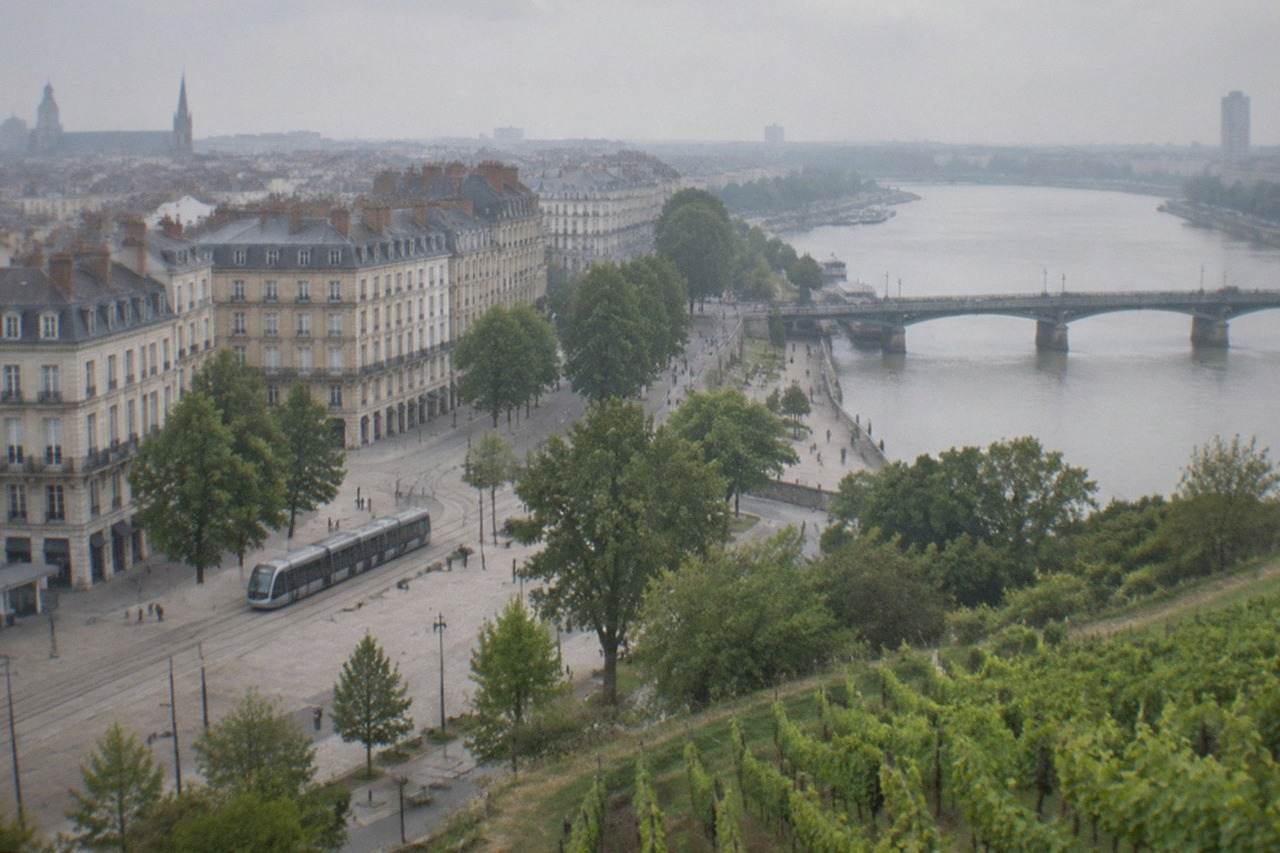
Muscadet is the dry white wine grown on the Melon de Bourgogne grape in the vineyards that roll south and east of Nantes, in the Loire-Atlantique department of the Pays de la Loire region of western France. It is the wine country closest to the city, the source of the bottles that Nantes kitchens pour alongside the beurre blanc sauce the town made famous, and a day trip that stays almost entirely off the standard tourist track. The vineyards follow the hills either side of the Sèvre Nantaise, the tributary that meets the Loire at the city itself, and the same half day can carry you past cellar doors, a wine museum and an Italianate market town without ever straying far from a rail line.
What Is Muscadet Wine?
Muscadet is a dry white wine made from the Melon de Bourgogne grape, grown in the vineyards that run south and east of Nantes in the Loire-Atlantique department of western France. The wine is crisp, light bodied and firmly dry, and the most sought after bottles spend a stretch resting on their fermentation lees before bottling, a technique that lends a faint texture and subtle bread like note to what is otherwise one of the freshest styles France produces.
That lees resting, labelled sur lie on the bottles that use it, is the detail that separates the wines people remember from the wines people forget. A standard Muscadet is clean, citric and gone in a sip. A sur lie bottling has been held on its sediment through the winter, and the extra contact gives the wine a softness at the middle of the tongue that holds up to richer food. For a fuller answer to the style question, our piece on whether Muscadet is sweet or dry works through the tasting profile in detail.
The wine belongs to the wider Loire family, which runs from crisp whites near the Atlantic to the grand reds and dessert wines far upstream. Where Muscadet sits at the mouth of that valley, at the maritime end, is worth understanding before you visit: it is the coolest, wettest corner of the valley, and the grape that grows best here is the one that ripens late and keeps its acid. If you are planning a broader wine trip, start with what the Loire Valley is famous for in wine and the practical options in Loire Valley wine tours from Nantes.
Where Do The Muscadet Vineyards Sit Relative To Nantes?
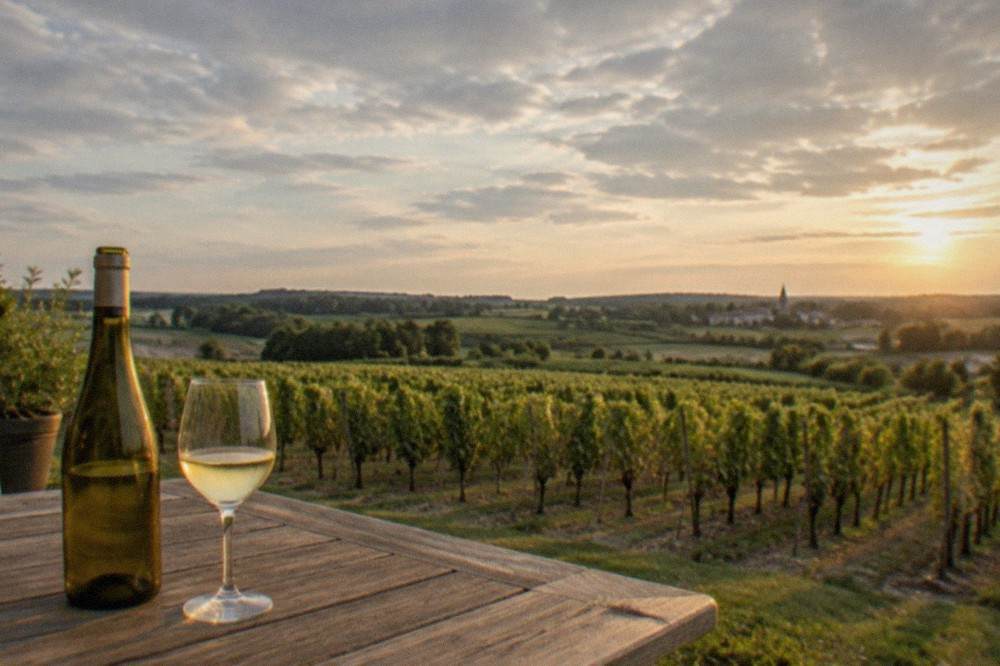
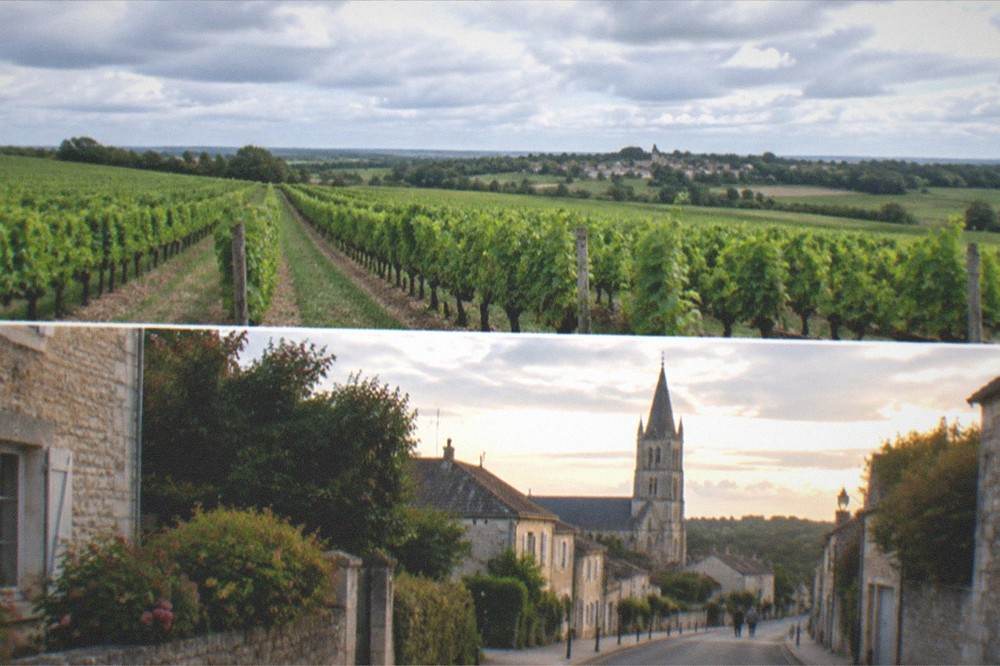
The Muscadet vineyards spread across the hills either side of the Sèvre Nantaise, south and east of Nantes, with the Maison des vins at Vallet acting as the official welcome centre of the region. The growing area runs inland from the city toward the vineyard villages that cluster around that river valley, and Clisson, the small town with an Italianate château at the eastern edge of the zone, makes a natural second stop on the same day trip.
Vallet is the practical anchor. The Maison des vins there is the region's own showcase, the place where the appellations are explained and the producers are pointed out on a map, and it is the single most useful first stop for a visitor arriving without a plan. No tasting fee or opening hours for individual producers were independently verified for this guide, so treat every cellar door as check on arrival or on the producer's own page before you set out.
The geography explains the wine as much as any technique does. The hills here are low and the climate is temperate oceanic: Météo-France's normals for its Nantes-Bouguenais station give a mean maximum of 25.4°C in August and 819.5 mm of rain a year, which is to say mild summers and steady Atlantic damp. That combination suits a grape that does not need heat to make interesting wine, only a long, cool ripening. The result is dryness and freshness rather than power, which is exactly why the wine pairs with the seafood of the coast a short drive west.
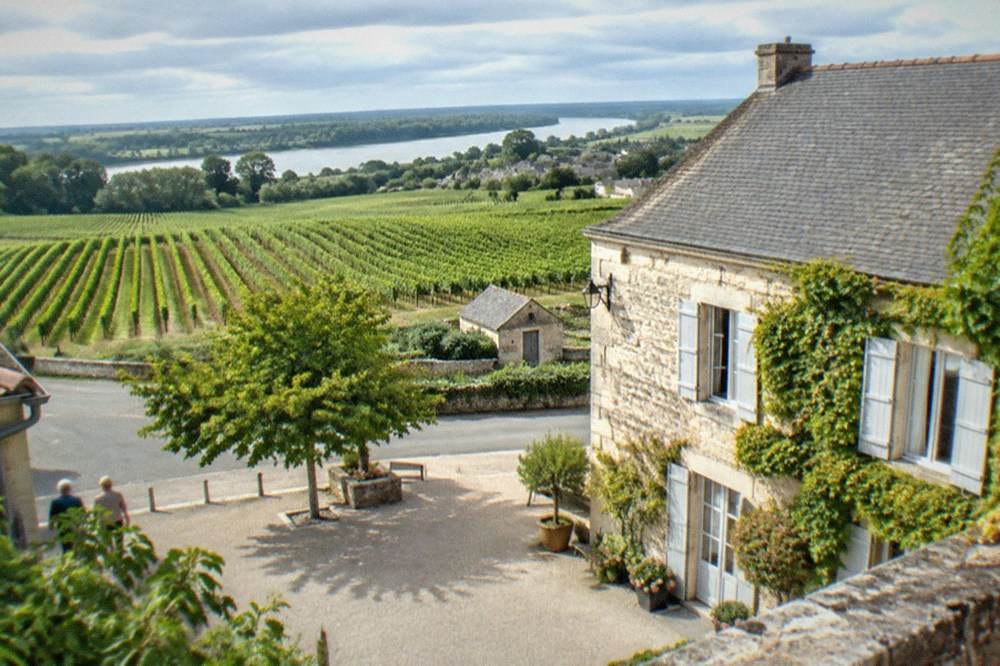
One honest note on how the vineyards feel on the ground: this is working farm country, not a polished tourism route. Expect cellar doors that are family operations, opening hours that bend around the harvest, and stretches where the best plan is simply to follow the signs from one producer to the next. Visitors who want the experience handled for them, with transport, tastings and the route decided in advance, are better served by the guided options below than by improvising a self-drive circuit.
What Can You Do In The Muscadet Vineyards On A Day Trip From Nantes?
A day in the Muscadet vineyards typically combines a stop at the Maison des vins at Vallet, one or two producer cellar door tastings, and a walk or lunch in Clisson at the eastern edge of the zone. Tastings are the core activity, and the ones the operators run from Nantes fold transport, several pours and a guide's commentary into a single booking, which matters when individual producer hours are not reliably published anywhere in one place.
The Maison des vins is the orientation stop. Producer visits are the substance. Between them, the day tends to be built around a long lunch, because this is a region where the restaurant is part of the tasting, and a carafe of the local dry white arrives at the table almost unasked. The vineyards are compact enough that a relaxed single day covers the heart of them without hurry.
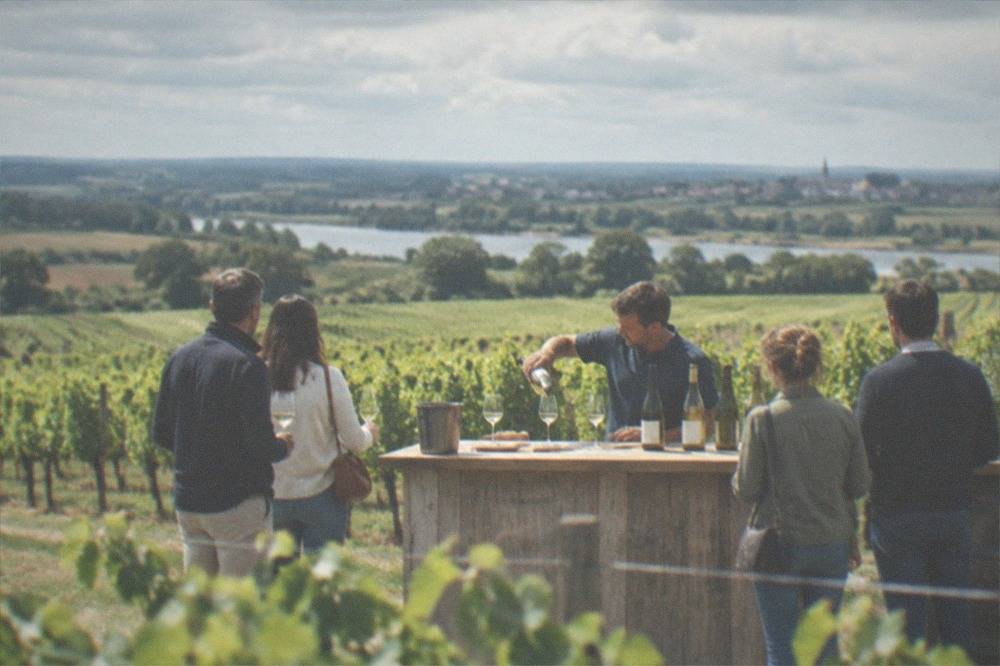
For a first visit, the guided sensory tasting experience in the city is a genuinely different proposition from a cellar door crawl. It is built as a structured tasting session rather than a drive through the vines, which makes it the right choice on a day when the weather turns, and it works as a primer before you head out to the producers, since you arrive knowing what sur lie should taste like.
If your instinct is to see the vines themselves rather than only the glasses, keep reading: the van tours in the section below run out to the growing area, and they pair naturally with a morning in the city beforehand. Many travellers use the morning for the essentials covered in what to do in Nantes itself and give the vineyards the afternoon.
How Do You Get To The Muscadet Vineyards From Nantes?
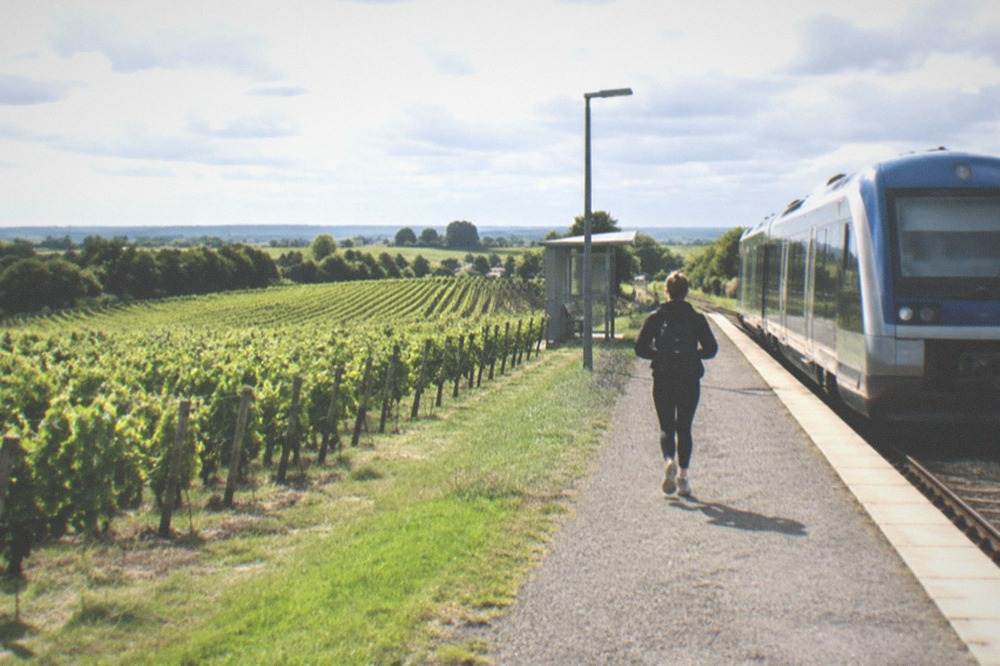
The vineyards are reachable from Nantes by regional train toward Clisson, by car on the roads that run south east of the city, or by a booked tour van that collects you in the centre, and a single Naolib ticket costs 1.80 EUR for one hour of travel on trams, buses and the Navibus river shuttles. The rail line to Clisson covers the journey from Nantes in as little as about fifteen minutes, the cheapest skeleton for a self-guided day.
Two details from the verified fare pages are worth knowing before you plan. A 24 hour Naolib ticket costs 6.80 EUR, or 15 EUR for a group of four travelling together, and the whole network is free on weekends from 00:00 Saturday to 23:59 Sunday for everyone, including visitors. That weekend rule makes a Saturday vineyard day by rail remarkably cheap, though you should still confirm at the station that your specific regional train is covered by it.
| Transport option | Cost | What it covers |
|---|---|---|
| Naolib single ticket | 1.80 EUR | One hour of tram, bus, Navibus and in-network regional travel |
| Naolib 24 hour ticket | 6.80 EUR | A full day of the city network |
| Naolib 24 hour, 4 people | 15 EUR | Group travel on the city network |
| Weekend travel | Free Saturday 00:00 to Sunday 23:59 | The whole network, everyone, no ticket needed |
| Regional train to Clisson | Standard regional fare | About fifteen minutes from Nantes by the fastest listings |
The Pass Nantes, the tourist pass priced from 1 April 2026, adds another angle. Beyond the museums, it includes unlimited Naolib travel and one regional return trip between Nantes and Clisson, which is precisely the leg a vineyard day needs if you are building the trip yourself. The pass prices, from the official page, are set out below.
| Pass duration | Full | Reduced | Family |
|---|---|---|---|
| 24 hours | 30 EUR | 20 EUR | 80 EUR |
| 48 hours | 40 EUR | 26 EUR | 106 EUR |
| 72 hours | 49 EUR | 31 EUR | 129 EUR |
| 7 days | 75 EUR | 45 EUR | 195 EUR |
Reduced rates cover children aged 4 to 17, students under 26 and disability card holders, and the family rate covers two adults and two children with the second child's pass free. Children under 4 do not need a pass at all. Whether the arithmetic works depends on how many of the included sites you plan to see: on a pure vineyard day the pass pays mainly for the train leg and the city transport around it.
What Do Guided Vineyard Tours From Nantes Include?
Guided tours from Nantes to the Muscadet vineyards handle the two hardest parts of the day, the driving and the choice of producer, and they run in two broad shapes: short van circuits of roughly two hours that visit the growing area with a driver-guide, and half-day versions that add more stops and a deeper immersion in the cellars. Prices and durations print live on the booking cards below, since the operators set and change them, and this guide does not quote figures second hand.
The short van circuit suits travellers with a packed schedule, because it leaves the rest of the day free for the city. The half-day version suits the trip where wine is the point, not a side excursion, and where a long lunch among the vines is the plan rather than the casualty. Both spare you the question of who is driving back, which in a tasting region is not a small question. The wider set of guides lives on Nantes Travel Guide.
There is a middle case worth naming: travellers who want the vineyards and the driving removed but only have a strict half day. The half-day van tour is built for exactly that, and it is the one to pick if you are catching an evening train out of the city.
Before booking anything, check the cancellation terms on the operator's live listing rather than assuming: most tours of this type allow free cancellation up to a day before, but the window is set by the operator and the listing is the only authoritative source. The tasting experience and the van tours can also be combined across two days, with the sensory tasting as an evening in the city and the van day for the vines.
When Is The Best Time To Visit The Muscadet Vineyards?
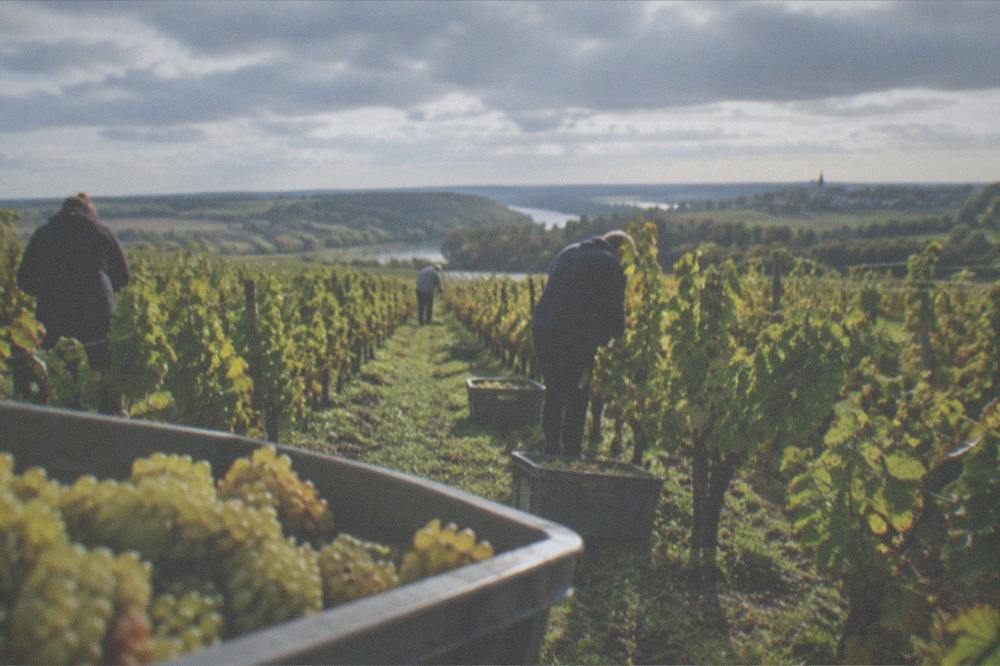
The best time to visit the Muscadet vineyards is late spring through early autumn, with September offering ripe vines after a harvest that in 2026 began on 11 August, a record early date, and August letting you watch the pickers at work in the hottest weeks. Winter visits are possible but quiet: the vines are bare, the cellars still pour, and the experience shifts from field walks to fireplace tastings.
The 2026 harvest tells you a lot about how the region is changing. The picking ban, the official date producers may start, was declared on 11 August 2026, a full eight days ahead of the previous record from 2003, because the summer heat and drought pushed the grapes to ripeness early. Producers reported lower yields of roughly 30 to 40 hectolitres per hectare against around 55 in a fuller year such as 2018, but with quality described as good thanks to the strong sunshine. Fewer grapes, riper grapes, and a harvest that started before most French schools went back.
| Harvest measure, 2026 | Figure |
|---|---|
| Picking ban declared | 11 August 2026 |
| Margin ahead of the previous record | 8 days, mark set in 2003 |
| Reported yields | Roughly 30 to 40 hl/ha |
| Reference year for fuller yields | Around 55 hl/ha in 2018 |
| Reported quality | Good, credited to strong sunshine |
If heat is your concern, the climate record matters: the all time station record for Nantes is 42.2°C, set on 24 June 2026, and that summer set the city's records for days at or above 30°C and 35°C. A tasting day in July or August can be genuinely hot, so morning cellar visits and a shaded lunch are the sensible shape. The seasonal normals below give the honest picture.
| Month | Mean maximum, °C | Rain, mm |
|---|---|---|
| May | 19.6 | 61.0 |
| June | 23.0 | 48.5 |
| July | 25.1 | 44.2 |
| August | 25.4 | 50.3 |
| September | 22.4 | 59.5 |
The figures come from Météo-France's 1991-2020 normals for the Nantes-Bouguenais station, the closest long record to the vineyards. They describe a growing season that is warm but rarely fierce, with modest rain, which is the weather that keeps Muscadet fresh. Whatever you do, do not plan around a Mediterranean image of the French south: this is the Atlantic west, green and temperate, and the wine tastes of it.
Which Foods Pair With Muscadet Around Nantes?
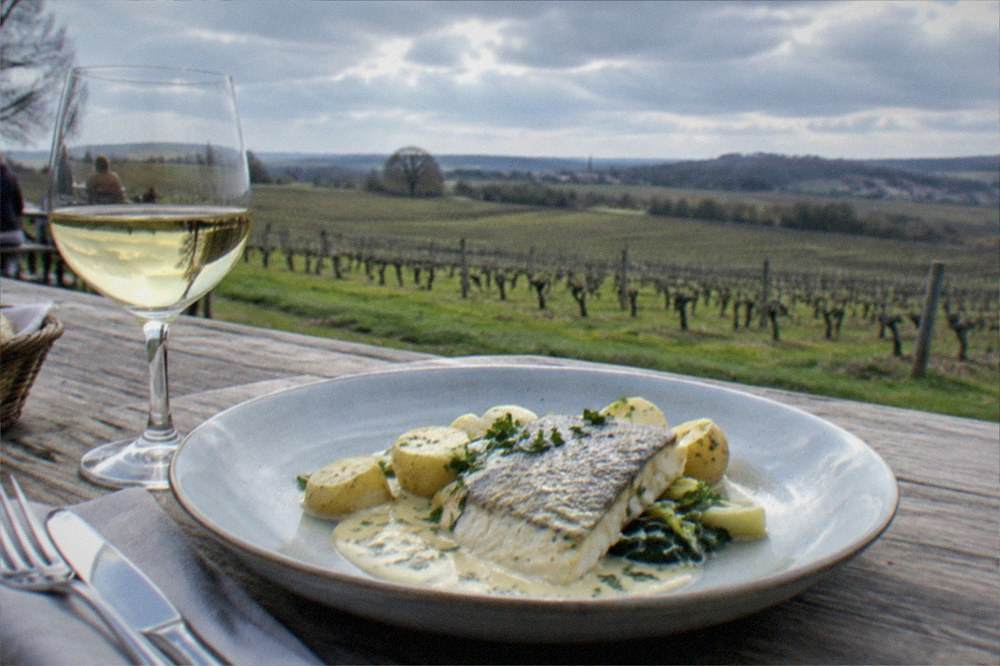
Muscadet pairs above all with the seafood of the Atlantic coast and with the dishes of Nantes itself, first among them beurre blanc, the emulsified butter sauce made from a reduction of shallots, white wine, typically Muscadet, and vinegar or lemon, into which cold butter is whisked. The sauce was built to sit beside fish, traditionally pike, and the wine that cooked into it is the wine that belongs in the glass beside it.
Beurre blanc is not a museum piece here. Nantes restaurateurs have been pursuing protected traditional specialty status, the STG label, to lock in the traditional method, a campaign reported in 2025 and still live. The sauce matters enough to the city that it has its own place in the local food story, alongside the biscuits and sweets that grew out of the same port economy that shipped the wine.
| Dish | Why it works with Muscadet |
|---|---|
| Fish in beurre blanc | The sauce is built on a Muscadet reduction, so the glass echoes the pan |
| Oysters and shellfish from the Atlantic coast | High acid and low sweetness clean the salt and mineral from the palate |
| Goat cheeses of the region | The wine's crispness cuts the lactic richness |
| Gâteau nantais, the almond and rum cake | Best after resting a day, it balances the wine's dryness at the end of a meal |
The pairing logic is simple once you taste it: a wine with no residual sweetness and a lot of acid acts like a squeeze of lemon, resetting the mouth between bites of butter, salt and cream. That is also why the dry style surprises people expecting a soft easy white. Our detailed answer on Muscadet's sweetness or dryness covers what that means in the glass, and the wider food culture of the city, from berlingots nantais to the LU Petit Beurre biscuit invented here in 1886, rewards a longer look.
For the full eating plan, pair the vineyard day with the city's own tables: the cuisine of Nantes runs from the covered market at Talensac, open Tuesday to Friday from 08:00 to 13:00 and Saturday and Sunday to 13:30, to the historic brasseries of the centre. A morning among the vines and an evening in a bouffay quarter restaurant is a day that uses the region properly.
Where Can You Combine The Vineyards With Other Nantes Day Trips?
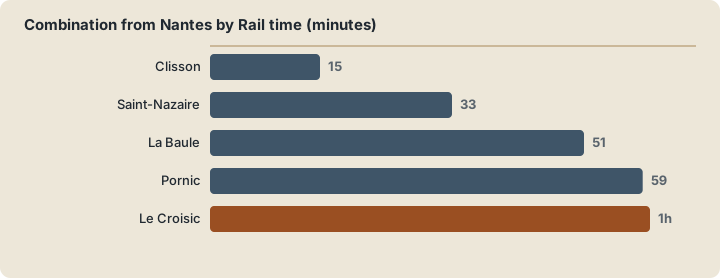
The Muscadet vineyards combine naturally with Clisson, the Italianate town at their eastern edge reached by rail from Nantes in as little as about fifteen minutes, and from there the same rail spine runs onward to the coast at Saint-Nazaire, La Baule, Pornic and Le Croisic, so a wine morning and a seaside afternoon fit in one day. The salt marshes of Guérande and the beach at La Baule make the fullest two-part itinerary for travellers with a car.
The combinations below all start from Nantes, with journey times as listed on the regional timetable data. They are planning figures, not promises: always check the day's timetable before committing to a tight connection.
| Combination from Nantes | Rail time | What it adds to a vineyard day |
|---|---|---|
| Clisson | From about 15 minutes | An Italianate château town and the eastern gate of the vineyards |
| Saint-Nazaire | From about 33 minutes | The shipyards and the ocean at the mouth of the Loire |
| La Baule | From about 51 minutes | A long curving bay beach for the afternoon |
| Pornic | About 59 to 65 minutes | A small harbour town with a rocky coast |
| Le Croisic | From about 1 hour 3 minutes | The far end of the Guérande peninsula and its oyster beds |
Clisson is the one that belongs on the vineyard trip itself. The town sits at the edge of the growing area, its château and arcaded market square give the day a sightseeing anchor, and the classical music festival Les ClisSonnantes runs there from 30 September to 4 October 2026 for anyone timing an autumn visit. Our guide to Clisson as a destination in its own right covers it in full.
With a car, a rewarding loop is vines in the morning, Guérande in the afternoon: the walled medieval town with its salt marshes, where the 2026 harvest was exceptional, sits within comfortable reach, and our Guérande salt marshes guide explains what the guided visits cover. Families with children to please often swap the salt marshes for the beach at La Baule, while oyster lovers push on toward Pornic instead. The full menu of options, including the Loire châteaux to the east and the sparkling wine cellars around Saumur, is in our overview of day trips from Nantes.
Once the day trips are sketched out, the last decision is how much of the wine country you want handed to you rather than driven through yourself. A guided tasting in the city, a van circuit among the vines or an electric bike loop along the river each suit a different traveller, and the trio below puts the three side by side.
Common Questions About Muscadet Vineyards
Is Muscadet wine sweet or dry?
Muscadet is dry. It is made from the Melon de Bourgogne grape in the cool oceanic climate south and east of Nantes, which keeps sugar low and acid high, and the classic bottlings, including those rested sur lie, carry no perceptible sweetness. It is one of the driest white wine styles produced in France.
What grape is Muscadet made from?
Muscadet is made from the Melon de Bourgogne grape, a variety that ripens late and holds its acidity, which suits the mild, damp Atlantic climate of the Nantes hills. The wine takes its name from the region rather than the grape.
Where are the Muscadet vineyards located?
The vineyards spread across the hills either side of the Sèvre Nantaise, south and east of Nantes in the Loire-Atlantique department of the Pays de la Loire region of western France. The Maison des vins at Vallet is the region's official welcome point, and Clisson sits at the eastern edge of the growing area.
Can you visit the Muscadet vineyards from Nantes without a car?
Yes. The regional rail line from Nantes to Clisson, about fifteen minutes by the fastest timetable listings, gives a self-guided day its skeleton, and guided van tours from the city handle the cellar stops and the driving for you. Individual producer opening hours are not reliably published in one place, so confirm each cellar door before setting out.
What food pairs with Muscadet?
Fish in beurre blanc is the canonical pairing, because the sauce itself is made from a Muscadet reduction. Atlantic seafood, oysters in particular, and the goat cheeses of the region also pair well, and the local gâteau nantais, an almond and rum cake best after resting a day, closes a meal beside a glass of it.
When is the Muscadet harvest?
The harvest is early by French standards. In 2026 the official picking ban fell on 11 August, eight days ahead of the previous record set in 2003, with lower yields of roughly 30 to 40 hectolitres per hectare but quality described as good. Late August and September are the months to see the tail of the work in the vines.
The Muscadet vineyards remain the most under-visited wine country in reach of a major French city, a region where the wine in the glass, the sauce on the plate and the hills outside the window all come from the same patch of the Sèvre Nantaise valley. Plan the cellar stops in advance, keep the rail leg to Clisson as your fallback, and leave room in the day for a long lunch, because that is how this corner of the Pays de la Loire drinks.