Nantes Dog Friendly
Nantes, in the Loire-Atlantique department of western France, is a compact, green, walkable city, and those three qualities happen to be exactly what makes a trip with a dog easier here than in most French cities of its size.
Short answer
Nantes is a genuinely dog friendly city for visitors, thanks to free public parks, riverside walks along the Loire and the Erdre, a pedestrian-friendly historic centre, and a mild oceanic climate. Most attractions do not allow dogs inside, but the free courtyards, gardens and green spaces are open daily, and day trips by train to Clisson and the coast are straightforward.
Nantes, in the Loire-Atlantique department of the Pays de la Loire region of western France, sits where the Erdre and the Sèvre Nantaise meet the Loire, and that knot of water has shaped a city of quays, gardens and long green corridors. For anyone arriving with a dog, that geography is the single biggest advantage. The historic core is compact, the tram and bus network is dense, and the city's parkland runs from the Jardin des Plantes down to the Erdre's Japanese garden on the Île de Versailles. This guide lays out where a dog fits into a Nantes visit: the walking routes, the parks, the rules at the major sights, the transport fares, the seasonal picture, and the day trips that work without a car.
The honest framing first: like most French cities, Nantes draws a firm line between outdoor public space, where a dog on a lead is generally welcome, and the interior of museums, monuments and shops, where it is not. The Château des ducs de Bretagne's own practical information states that dogs are prohibited inside, with the exception of assistance dogs. What Nantes offers instead is an unusually rich layer of free outdoor territory: the château's courtyard and ramparts are open to everyone daily, the moat garden is free, and a network of riverbanks and parks stitches the city together. A visit built around that outdoor layer, with museum time swapped or split between a party, is where the city works best for dog owners. For the wider picture of the city's appeal, see is Nantes worth visiting.
Is Nantes A Dog Friendly City For Visitors?
Yes, in the way that matters most to a dog owner: Nantes is a green, walkable, temperate city where the best experiences are outdoors and free. Metéo-France's normals for its Nantes-Bouguenais station record a mean maximum of just 9.3°C in January rising to 25.4°C in August, with 819.5 mm of rain a year, so walking weather exists in every season.
The free public layer of parks, quays and gardens is open daily, while indoor attractions are largely closed to dogs, so plan around that line.
The word "green" is not marketing here. Nantes holds the European Green Capital award for 2013, a distinction the European Commission's own pages confirm, and Time Magazine had already called it "the most liveable city in Europe" in 2004, as quoted on that same Commission page. Those accolades translate concretely into what a dog owner can use: the Jardin des Plantes, the Île de Versailles, the Parc de Procé and the château's moat garden are all free public space, and the Loire and Erdre banks give miles of continuous riverside walking through the middle of the city.
The temperament of the city helps too. Nantes is France's sixth most populous commune, with 327,734 residents in the 2023 INSEE figures, yet the historic core around Bouffay and Graslin is largely pedestrianised or traffic-calmed, with extensions to the pedestrian zones completed in phases through 2025. Wide pavements and slow traffic make a dog on a lead a normal presence rather than an obstacle. For context on how manageable the city feels on foot generally, the getting around Nantes guide covers the transport layer in depth.
One thing to set expectations on: this site's sources give no pet policy for many individual venues, including Les Machines de l'île and the covered Passage Pommeraye, so nothing below claims otherwise. Where a rule is documented, it is stated as documented. Where it is not, the answer is to check the venue's own current conditions before setting out, and this guide concentrates on the places where the documented position is clear.
Where Can You Walk A Dog In Nantes?
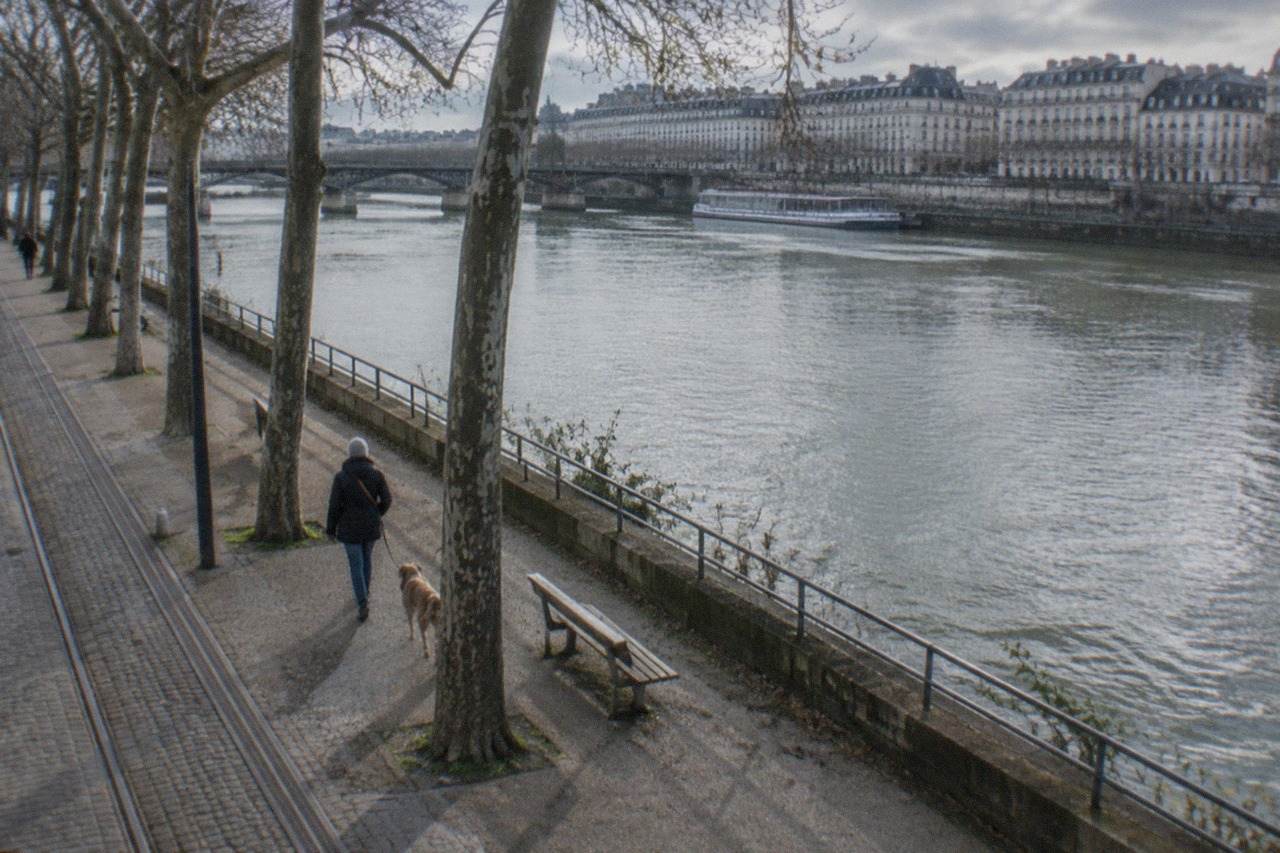
The core dog walking routes in Nantes are the banks of the Loire and the Erdre, the Jardin des Plantes, the Île de Versailles, the free courtyard and ramparts of the Château des ducs de Bretagne, and the green spaces of the Île de Nantes.
The château's own pages give the courtyard hours as 8:30 to 19:00 daily and the moat garden as 8:00 to 19:00, both free, so a daily dog walk around a fortress whose rebuild Francis II began in 1466 is on the table. The Erdre is the classic long walk.
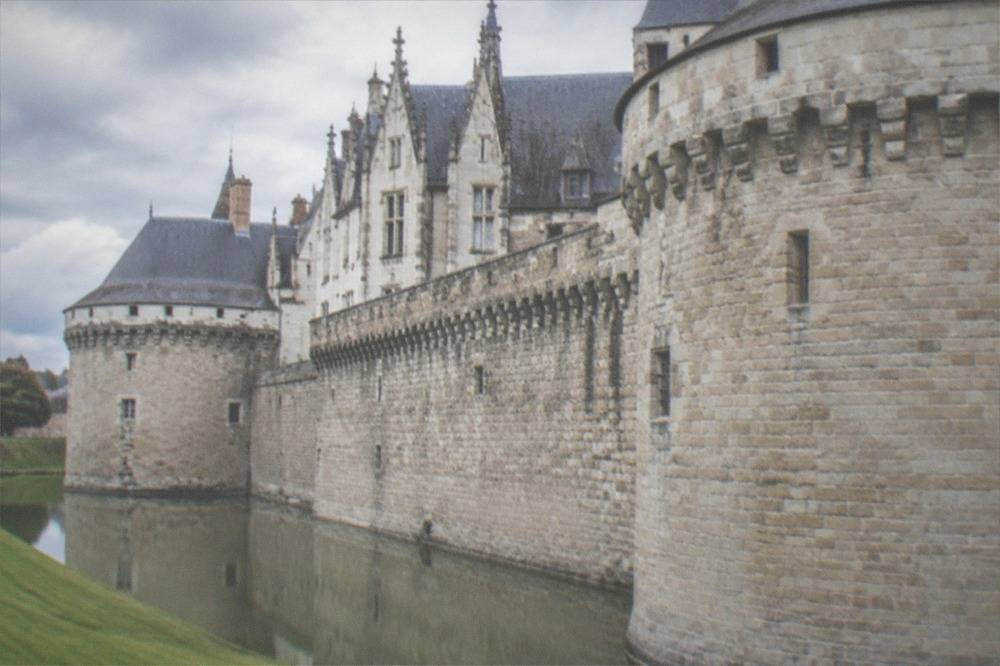
Start with the Château des ducs de Bretagne, because it combines history with a genuinely dog-friendly loop. Francis II began rebuilding the castle in 1466, and the free courtyard and ramparts are open 8:30 to 19:00 daily, extended to 20:00 in July and August, with the moat garden open 8:00 to 19:00 on the same summer extension. The museum inside charges 9 EUR full and 5 EUR reduced, but that interior is where the no-dogs rule applies. The walk around the walls costs nothing and works at any hour the gates are open, which makes it the easiest historic outing in the city with a dog in tow.
The Erdre is the other signature route. The river runs from the north into the Loire, and its banks host the Île de Versailles, a free Japanese garden with seasonal hours, roughly 8:30 to 17:30 in winter and to 21:30 in summer per the Métropole's listing. The Rendez-vous de l'Erdre jazz festival has used these banks every August since its first edition, with the 2026 edition, its 40th, running 24 to 30 August, which tells you how much of the riverbank is usable public space. A dog walk along the Erdre in late August coincides with the festival's free outdoor concerts, boats and crowds, so leash and early starts are the sensible combination that week.
The Jardin des Plantes, free and seasonal, is the city's great botanical park, and the green line of Le Voyage à Nantes threads permanent artworks through the city along a painted trail of roughly 20 km, some 22 km per the event's own "to see" page, with a 2026 maintenance report giving 20.5 km. Following the line with a dog is a structured way to see public art, the château, the cathedral's exterior and the Loire quays without ever needing a ticket. The practical companion for that trail is the Le Voyage à Nantes guide, whose summer edition in 2026, themed "Earth", ran from 4 July to 6 September.
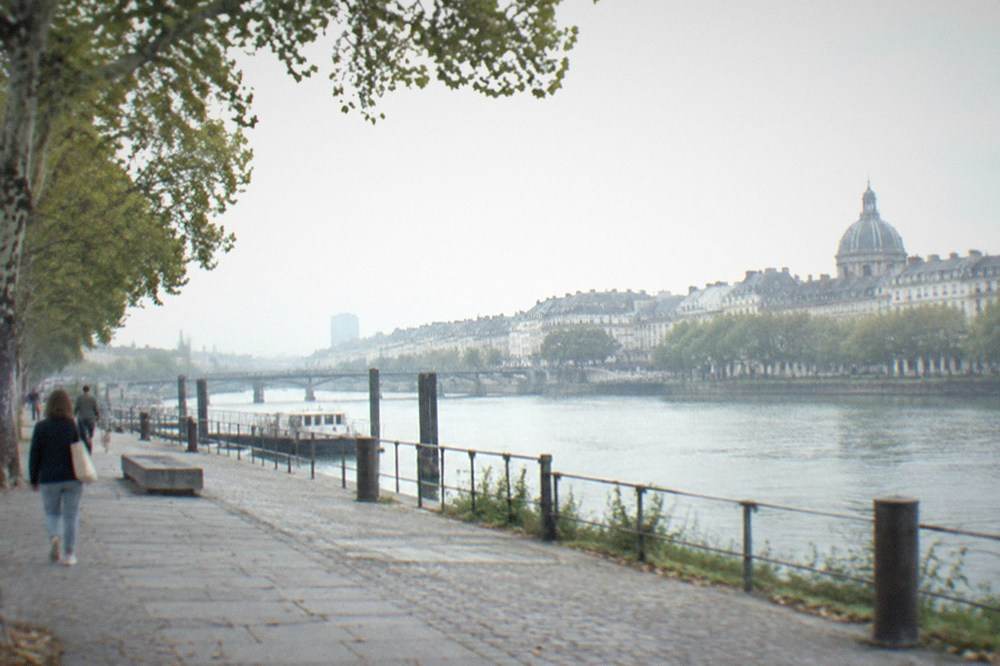
Here is the reliable free-outdoor layer of Nantes, with the hours the sources document:
| Space | Cost | Hours (documented) | Notes |
|---|---|---|---|
| Château courtyard and ramparts | Free | 8:30-19:00 daily, 20:00 July-Aug | Last entry 15 min before close |
| Château moat garden (Jardin des douves) | Free | 8:00-19:00, 20:00 July-Aug | Free public garden |
| Jardin des Plantes | Free | Seasonal, about 8:30 to 18:00/21:30 | Main botanical park |
| Île de Versailles (Erdre) | Free | Seasonal, about 8:30 to 17:30/21:30 | Japanese garden |
| Mémorial de l'abolition de l'esclavage, quayside | Free | 9:00-18:00 (16 Sept-14 May), 9:00-20:00 (15 May-15 Sept) | Open-air memorial on the Quai de la Fosse |
| Green line trail | Free | Public streets, always accessible | About 20 km painted route |
The Mémorial de l'abolition de l'esclavage deserves a specific mention. Its underground visitor spaces are an indoor monument, but the quayside promenade where it sits, on the Quai de la Fosse, is the old port frontage of the city that ran 1,714 slave-trade expeditions between the mid-17th century and its withdrawal in 1830, 43% of the French total, per the Mémorial's own history page. The quayside itself is a long, open, free walk, and the Nantes slave trade history guide covers the full context for readers who want it.
Which Nantes Attractions Can You Visit With A Dog?
Realistically, a dog gets you into the free outdoor layer of Nantes attractions, not the interiors: the château's courtyard, ramparts and moat garden, the Jardin des Plantes, the riverbanks and the public squares. Inside the Château des ducs de Bretagne dogs are prohibited except assistance dogs, per its own practical information, and French museums generally follow the same rule. The workable pattern is one person inside while the dog walks the walls, or splitting the day between indoor and outdoor sights.
Be precise about what the sources say and do not say. The château's position is documented and firm. For Les Machines de l'île, this site's research found no stated pet policy in the current sources, so the honest advice is to check the operator's current conditions before assuming anything about the Galerie or the Grand Éléphant, whose rides pause entirely from 2 November 2026 to 28 February 2027 for maintenance. What is documented is the pricing: each attraction, whether the Galerie, the Carrousel des Mondes Marins or the elephant ride, costs 12 EUR full, 8 EUR for ages 4-12 and 10 EUR reduced, with a 15% family discount for groups of five.
The cathedral is the city's other headline monument, and here the 2026 situation is specific. Cathédrale Saint-Pierre-et-Saint-Paul partially reopened on 27 September 2025 after the July 2020 arson fire, with full completion of the restoration programme planned for 2028 and the west facade still under scaffolding, its massif occidental standing behind roughly 41 m of scaffolding since summer 2025. Entry is free, and the square and surrounding streets, in the largely pedestrianised Bouffay district, are the outdoor half of the visit. The building itself took 457 years from its 1434 start to completion in 1891, and it is worth looking up at from the outside with a dog even when the interior is not an option.
For museum interiors, the practical fallback is timing. The Musée d'arts de Nantes opens 11:00 to 19:00, closed Tuesdays, with a Thursday nocturne to 21:00 and free entry from 19:00 to 21:00 on Thursdays; full price is 9 EUR and reduced 4 EUR. The Musée Jules Verne at 3 rue de l'Hermitage, on the Butte Sainte-Anne, charges 4 EUR full and 1.50 EUR reduced. The Muséum d'histoire naturelle is closed for restructuring until 2029 and should not appear in any rainy-day plan at all. The museums in Nantes guide carries the full picture.
A private walking tour is the one bookable product that can be shaped around a dog, since a guide sets the route and pace, and the Surprise Walk of Nantes with a Local is the natural fit. Its listing shows a five-star rating from three reviews, and its price is not published by the operator, so check the live listing rather than any figure quoted second-hand. Check availability and ask about bringing a dog when you book; the operator's own conditions govern.
How Do You Get Around Nantes With A Dog?
Nantes is easy to get around without a car, which is what matters with a dog: the Naolib network of trams, buses and Navibus river shuttles runs on a single 1.80 EUR one-hour ticket, a 24-hour ticket costs 6.80 EUR, and weekend travel on the whole network is free from Saturday 00:00 to Sunday 23:59, with the airport shuttle excluded. The Navibus boats cross the Loire for the price of a standard ticket, and river crossings are part of the fun.
The fare layer is documented precisely on Naolib's own tariff pages: a single one-hour ticket is 1.80 EUR, a carnet of ten is 17.80 EUR, a 24-hour ticket is 6.80 EUR, and a 24-hour ticket for four people travelling together is 15 EUR. The network is free for everyone on weekends, from Saturday 00:00 to Sunday 23:59, and has been since 2021. The Navibus lines, N1, N2 and N3, use normal Naolib tickets, and the N2 extension linking Trentemoult, Bas-Chantenay and the Hangar à Bananes launched on 12 November 2025, which means a Loire crossing to the Trentemoult fishing village is now a short hop from the Île de Nantes side. The Pack gives no stated pet policy for Naolib vehicles, so check the operator's current conditions for carrying a dog rather than assuming either way.

The walking case is strong enough that it may not matter. Nantes pioneered the modern French tram: line 1, Commerce to Haluchère, opened on 7 January 1985 as the first modern tram network in France, and the system now runs three tram lines covering 45.6 km and 84 stations, plus busway line 4. New tram lines 6 and 7 are under construction with service targeted for the end of 2027. Between the pedestrianised centre and the riverbanks, most of a dog-centred visit happens within walking distance of the historic core, and the getting around Nantes guide maps the rest.
| Ticket | Price | Coverage |
|---|---|---|
| Naolib 1-hour ticket | 1.80 EUR | Tram, bus, Navibus, TER inside the métropole |
| 10 x 1-hour tickets | 17.80 EUR | Carnet |
| 24-hour ticket | 6.80 EUR | Full network |
| 24-hour ticket, 4 people | 15 EUR | Group day pass |
| Airport shuttle (Navette Aéroport) | 10 EUR | Station to airport, valid 1 h on the network; excluded from weekend free travel |
| Weekend travel | Free | Sat 00:00 to Sun 23:59, all users, airport shuttle excluded |
The airport detail matters if you fly in with a dog. Nantes Atlantique handled 7,189,480 passengers in 2025, per the airport's annual results, and the Navette Aéroport costs 10 EUR each way, running every 20 minutes from April to October and every 30 minutes from November to March, with the stop moved on 30 March 2026 to the Gare routière, quai A. The shuttle is always 10 EUR, weekends included. New 2026 routes include Air Canada's seasonal Montreal service from June 2026 and easyJet's Brussels and Essaouira routes from autumn 2026, per the airport's own new-flights page. The Nantes airport and airport to city centre guides carry the full arrival picture, including the flights to Nantes options.
When Is The Best Time Of Year To Walk A Dog In Nantes?
The best dog-walking months in Nantes are April, May, June, September and October, when mean maximum temperatures sit between 16.2°C and 23.0°C and monthly rainfall stays moderate; July and August average 25.1°C and 25.4°C respectively, which is fine in the morning but hot for midday pavement. Winter walking is workable, with January's mean maximum at 9.3°C, though December is the wettest month at 101.0 mm of rain. Avoid the late-June heat extremes when planning long routes.
The climate record here is worth knowing precisely because 2026 rewrote it. The all-time station record for Nantes-Bouguenais is now 42.2°C, set on 24 June 2026, beating the previous 42.0°C from 18 July 2022, and multiple June 2026 days exceeded 40°C, with canicule alerts in Loire-Atlantique. For a dog owner, that is not trivia: a summer visit needs early-morning and evening walks, water, and shaded routes, and the Jardin des Plantes and the Erdre banks are the shadiest options. The Nantes weather guide has the full breakdown, and the best time to visit Nantes guide weighs the seasons for the trip as a whole.
| Month | Mean max °C | Mean min °C | Rain mm | Frost days |
|---|---|---|---|---|
| January | 9.3 | 3.4 | 87.9 | 7.8 |
| April | 16.2 | 6.6 | 58.3 | 0.8 |
| July | 25.1 | 14.3 | 44.2 | 0 |
| August | 25.4 | 14.2 | 50.3 | 0 |
| September | 22.4 | 11.8 | 59.5 | 0 |
| December | 9.8 | 3.7 | 101.0 | 7.4 |
Those are the 1991-2020 Météo-France normals, the baseline to plan against. The year totals 819.5 mm of rain over 119.7 days with at least 1 mm, and August is the sunniest month at 232.6 hours, with July newly notable for its 2026 record of 382 sunshine hours per Météo-France figures reported by Ouest-France. One seasonal footnote with a dog angle: the Loire flooded to 8.18 m at the Pont Anne-de-Bretagne on 19 February 2026, the first time above 8 m in about 15 years, and the Mémorial's own practical page notes it closes during Loire floods. Winter riverside routes can be affected in such episodes; the green parks on higher ground are the fallback.
Which Day Trips From Nantes Work With A Dog?
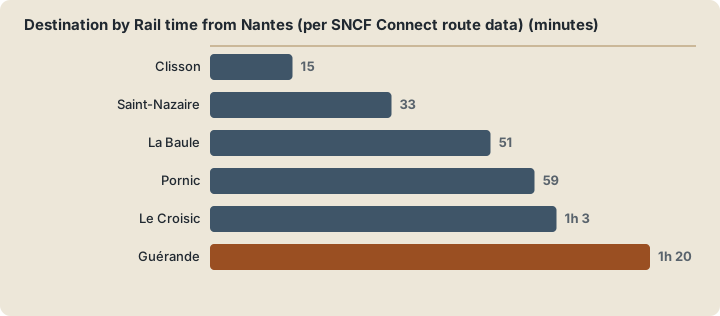
The dog-friendly day trips from Nantes are the outdoor ones reachable by TER train: Clisson, about 23 minutes on average per SNCF Connect's route data; the coast at La Baule, Pornic and Le Croisic at about 51, 59-65 and 63 minutes respectively; and the Guérande salt marshes area, about 80 km by road. Puy du Fou is a full theme-park day, open 4 April to 1 November in 2026, and is realistically a car trip.
Clisson is the easiest sell. It is 27 km by rail from Nantes, and the town pairs an Italianate centre with a château, the river Moine and the vineyards of the Muscadet country that starts at its edge. A Pass Nantes even includes one TER return journey to Clisson among its benefits. September is a good month there: European Heritage Days opened the Château de Clisson free on 19-20 September 2026, and the Les ClisSonnantes classical festival ran 30 September to 4 October 2026.
The vineyard option matters because Muscadet country is the local countryside, and a van tour is the one bookable way through it. The Nantes Vineyard Tour by Van carries a five-star rating from three reviews, per the roster's verified listing data, and it is a half-day commitment rather than a full one, leaving the morning or evening free for a dog walk. The 2026 Muscadet harvest itself began with the ban declared on 11 August 2026, a record eight days earlier than the previous mark from 2003, so the vineyards were stripped early this year. Whether a dog can come along is a question for the operator's own conditions; van tours vary.
The coast works too. La Baule, about 51 minutes by TER, is the classic resort beach, and its length is genuinely disputed: Ouest-France reported in 2026 that even "about 9 km" is contested. Pornic, at roughly 59 to 65 minutes, is a smaller port and beach option, and Le Croisic, about 1 hour 3 minutes, sits at the end of the line past Batz-sur-Mer. The beaches near Nantes guide covers them all, and the practical note for dogs is the same everywhere on this coast: French resort beaches apply seasonal dog restrictions, the specific rules are set commune by commune, and this site's sources give no single binding rule, so check the town's own beach page before you travel. At Escal'Atlantic in Saint-Nazaire, the liner-museum experience, the listed conditions state no pets, with guide dogs excepted.
| Destination | Rail time from Nantes (per SNCF Connect route data) | What it offers a dog owner |
|---|---|---|
| Clisson | ~15 min fastest, ~23 min average | Château, river, vineyard paths |
| Saint-Nazaire | ~33 min | Port city; Escal'Atlantic admits no pets |
| La Baule | ~51 min | Long resort beach, seasonal dog rules apply |
| Pornic | ~59-65 min | Small port, coastal paths |
| Le Croisic | ~1 h 03 | Rocky coast, salt-marsh edge |
| Guérande | ~80 km by road | Medieval ramparts and salt marshes, road trip |
Guérande deserves its row for a different reason: the 2026 salt harvest was exceptional, with double production reported, an average of about 1.5 tons per "œillet" of marsh and some above 3 tons, per 20 Minutes' September 2026 report. The Terre de Sel guided visits run year-round, and the marshes hold around 200 bird species. It is a car or organised-transport day rather than a train one, and the Guérande and wider day trips pages hold the details.
What Should You Budget For A Dog Friendly Trip To Nantes?
A dog-friendly Nantes trip can be run cheaply, because its core is free: the parks, riverbanks, château courtyard and green line cost nothing, and weekend Naolib travel is free. Where money goes is food and optional interiors: a mid-range restaurant meal for two sits at a moderate level per Numbeo's recent aggregates, a simple meal costs considerably less, and the city's tourist tax is tiered by hotel category, with a 4-star priced a step up from the lower tiers as reported by current rate schedules.
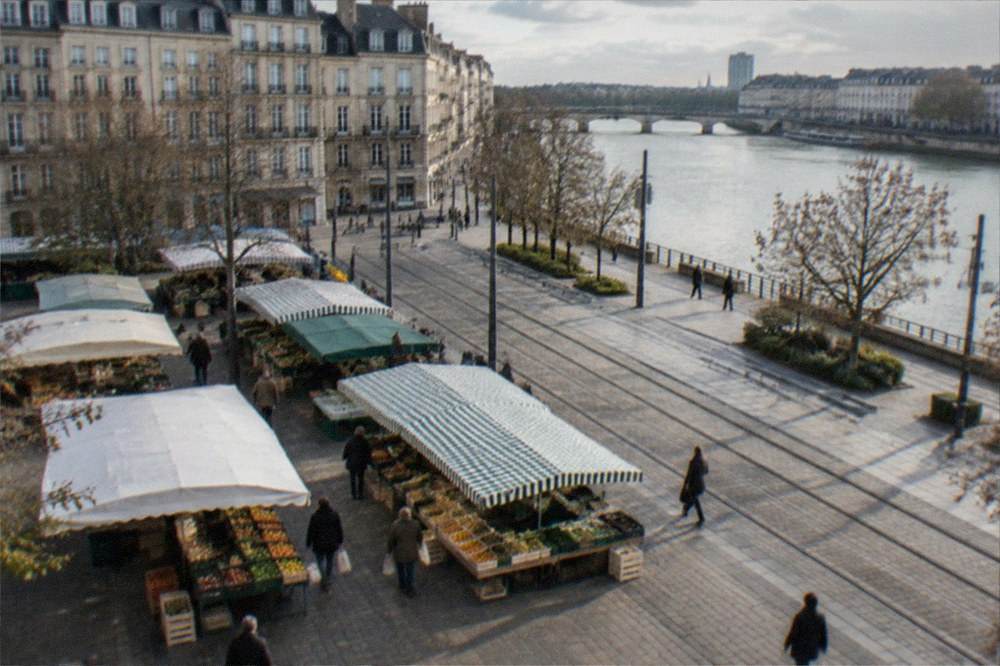
The eating layer is the one worth planning with a dog, because the pattern of French café and restaurant terraces generally being more accessible than dining rooms holds, though no venue-specific dog policies are documented in this site's sources, so terrace-first is a strategy, not a guarantee. The Talensac market, the city's main food market, runs Tuesday to Friday 8:00 to 13:00 and Saturday to Sunday 8:00 to 13:30, closed Mondays, per the Métropole's own listing, and an outdoor market stroll with a dog is a natural morning. The Nantes food and best restaurants in Nantes guides carry the dining detail.
For the food itself without the dog, the All Inclusive Food Tour of Nantes Old Town runs 3.5 hours with a local guide, and its price is not published by the operator, so the live listing is the only source for cost. It is the standard move on a dog trip: one traveller takes the tour while the other walks the Bouffay district, then swap the next day. The old town around Bouffay is compact and largely pedestrianised, so the dog's half of that trade is not a hardship.
Accommodation needs care, because Nantes charges a tourist tax per person per night, tiered by classification: the rates reported for Nantes Métropole run 2.86 EUR for a 4-star property, 1.87 EUR for 3-star and 1.10 EUR for 2-star, with unclassified lettings charged at 5.5% of the nightly price capped at 5.39 EUR. Pet fees at hotels are set property by property and appear in none of this site's verified sources, so confirm the pet policy and any fee directly when booking, and see where to stay in Nantes for the neighbourhood picture. The newest opening, the 86-room Eklo hotel on the Île de Nantes, arrived on 12 January 2026, but no dog policy is documented for it either.
| Budget line | Figure | Source note |
|---|---|---|
| Inexpensive restaurant meal | ~15 EUR (range 12-23) | Numbeo aggregate |
| Mid-range meal for two, 3 courses | ~varies by venue (range 35-100) | Numbeo aggregate |
| Château museum (if you swap dog duty) | 9 EUR full, 5 EUR reduced | Château's own tariffs page |
| Musée d'arts | 9 EUR full, 4 EUR reduced, free Thu 19:00-21:00 | Museum's own tariffs page |
| Tourist tax, 3-star | 1.87 EUR per person per night | Reported 2026 rate schedule |
| Tourist tax, 4-star | 2.86 EUR per person per night | Reported 2026 rate schedule |
Safety, for completeness: Nantes is a generally safe city for visitors, and the tourist core of Bouffay, Graslin and the Île de Nantes is repeatedly characterised in the available reporting as among the livelier, better-patrolled zones, though city-wide recorded delinquency rose 2% in 2025. The is Nantes safe guide covers the detail; none of it changes the ordinary precautions of keeping a dog on a lead in crowds and watching for cyclists on the riverside paths.
Common Questions About Nantes With Dogs
Can I take my dog on the tram in Nantes?
Naolib runs the trams, buses and Navibus boats on a single ticket system, a 1.80 EUR one-hour fare, and weekend travel is free for everyone from Saturday 00:00 to Sunday 23:59, the airport shuttle excluded. The published sources for this site give no stated pet policy for Naolib vehicles, so check the operator's current conditions before boarding with a dog.
Are dogs allowed in the Château des ducs de Bretagne?
Dogs are prohibited inside the Château des ducs de Bretagne, with the exception of assistance dogs, per the castle's own practical information. The free courtyard and ramparts are open 8:30 to 19:00 daily, extended to 20:00 in July and August, and the free moat garden opens 8:00 to 19:00, so the outdoor circuit of the castle works with a dog on a lead.
Is Nantes a walkable city for a dog?
Yes. The historic core around Bouffay and Graslin is largely pedestrianised or traffic-calmed, the banks of the Loire and the Erdre give continuous riverside walking, and the green line trail of Le Voyage à Nantes runs roughly 20 km of painted route through the city. The compact centre means most of a dog-centred visit needs no transport at all.
When is it too hot to walk a dog in Nantes?
July and August average 25.1°C and 25.4°C mean maximums, which is manageable in the mornings. The cautionary figure is the new station record of 42.2°C set on 24 June 2026, with multiple days above 40°C that week; in such episodes, shift walks to early morning and evening, use the shaded Jardin des Plantes and Erdre banks, and avoid midday pavement.
Which Nantes day trips suit a dog?
Clisson, about 15 minutes by TER at the fastest, offers a château, river and vineyard paths. The coastal options of La Baule, Pornic and Le Croisic run about 51 to 63 minutes by train, but French resort beaches apply seasonal dog rules set by each commune, so check the town's own beach page first. Escal'Atlantic in Saint-Nazaire states no pets, guide dogs excepted.
Can a dog visit the Machines of the Isle of Nantes?
The sources available to this site state no pet policy for Les Machines de l'île, so check the operator's current conditions before visiting. Note also that the Grand Éléphant does not run at all from 2 November 2026 to 28 February 2027 for maintenance, and each attraction ticket, when available, costs 12 EUR full price.
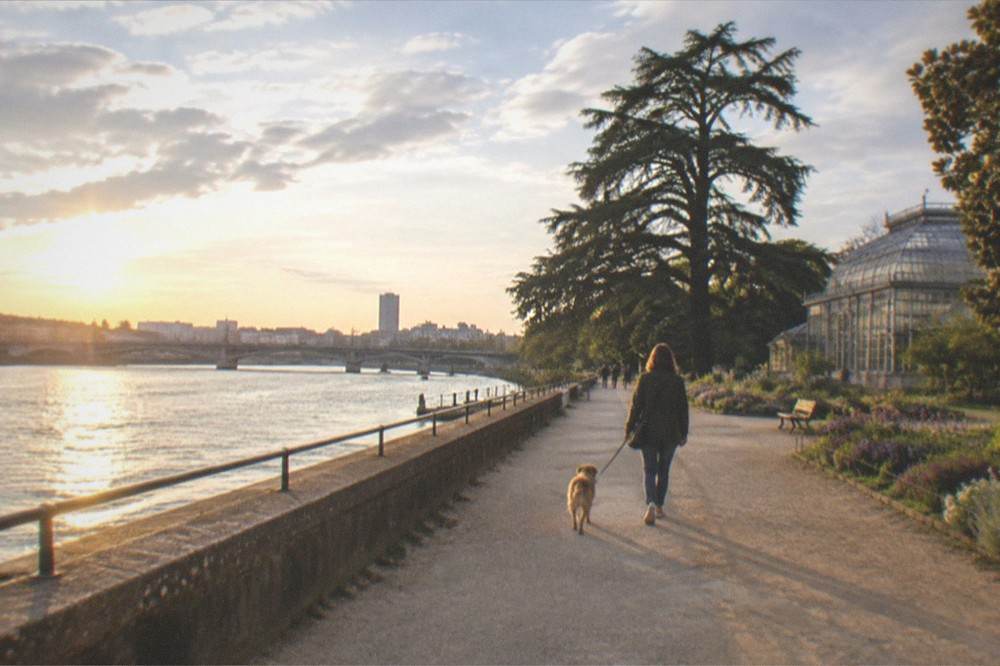
Nantes with a dog is, in the end, a city that rewards the traveller who plans around its free, open layer: the fortress walls and moat garden, the botanical park, two rivers of banks, a painted trail through the whole of it, and a coast and wine country within an hour. The interiors belong to the museum hours; the miles belong to whoever arrives on four legs. Build the days that way and the city delivers, at Nantes Travel Guide's own favourite pace, from the first quay of the morning to the last lap of the ramparts before the gates close at seven.