Nantes Vs Bordeaux
Nantes and Bordeaux are the two most-visited city-break rivals in western France, and they reward very different travellers: Nantes is the quirky, machine-powered Loire city with the lower sticker prices, while Bordeaux trades on wine, classical architecture and a longer tourist high season. Here is how the two compare.
Short answer
This page compares costs, climate, transport and day trips with Nantes's figures.
Nantes, in the Loire-Atlantique department of the Pays de la Loire region in western France, gets compared with Bordeaux more than with any other French city, and for understandable reasons: both are river cities on the Atlantic seaboard, both are around two hours from Paris by fast train, and both anchor a wine region that visitors come specifically to drink. The comparison is also slightly lopsided, because the two cities sell completely different things. Bordeaux is a wine capital with a classical limestone streetscape; Nantes is a former ducal capital of Brittany turned whimsical industrial playground, home to a 12-metre mechanical elephant and a museum inside the castle where the Edict of Nantes was signed in April 1598. This guide from the Nantes Travel Guide editorial desk compares the two honestly: every figure printed here is a verified Nantes number, and Bordeaux is described only in qualitative terms a traveller can check for themselves.
What Kind Of City Is Nantes, And How Does It Differ From Bordeaux?
Nantes is a mid-sized, inventive, green city of about 327,734 residents in the commune, 689,456 across the wider métropole, per INSEE's 2023 figures, built on the Loire and split by its tributaries the Erdre and the Sèvre Nantaise, and its character is playful rather than grand: it was European Green Capital in 2013. Bordeaux is larger and more classical, built on wine wealth and uniform limestone architecture, while Nantes's story runs from dukes and a slave-trade port to biscuit factories and street theatre.
That layered, oddball history is exactly what a visitor feels on the ground, and it is the opposite of a wine-trade patrician city. Nantes was even named Europe's most liveable city by Time in 2004, and the title stuck in the way the city uses its public space: a tram-first centre, riverside lawns and art dropped onto street corners.
The Château des ducs de Bretagne anchors the centre: Francis II began rebuilding it in 1466, his daughter Anne of Brittany was born there on 25 January 1477, and it now houses the Musée d'histoire de Nantes, which does not flinch from the city's role in the Atlantic slave trade. Nantes outfitted 1,714 slave-trade expeditions, 43% of the French total, before withdrawing in 1830, and the free Mémorial de l'abolition de l'esclavage on the Quai de la Fosse commemorates that history. If you want to understand how Nantes became the city it is, the Nantes history guide and the deeper slave-trade history page cover both strands.
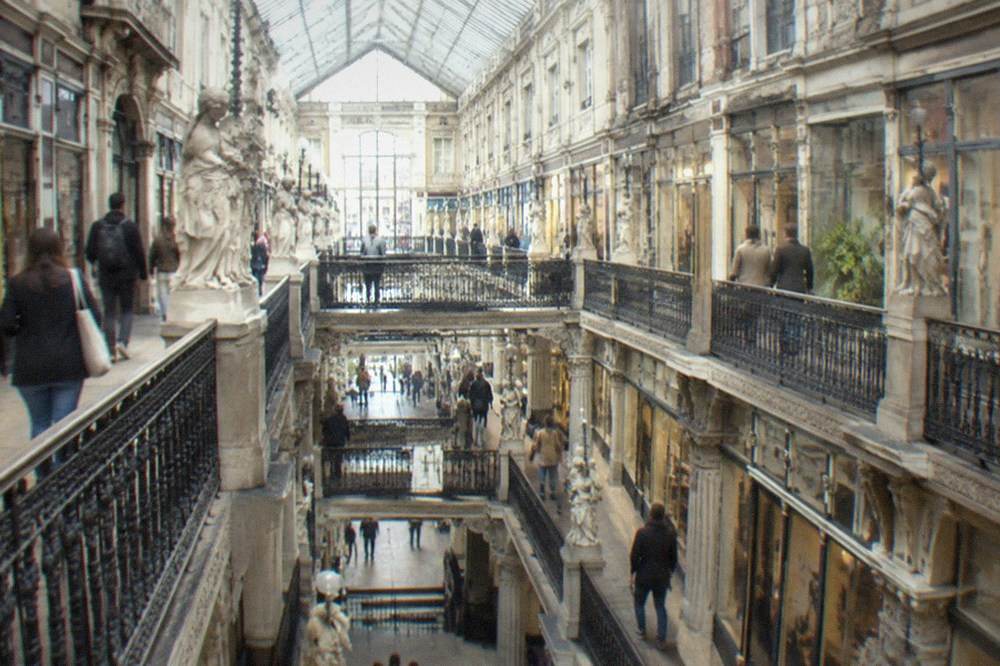
Bordeaux, by contrast, sells coherence: harmonious squares, wine bars and the Garonne riverside. Nantes sells contrast. One afternoon can take you from the 1843 Passage Pommeraye shopping arcade, unchanged across three floors on a slope, to the Île de Nantes, where the former shipyards now hold the Machines de l'île, with Trentemoult's fishing-village colour across the water. For a fuller sense of whether the city rewards your kind of travel, see Is Nantes Worth Visiting?.
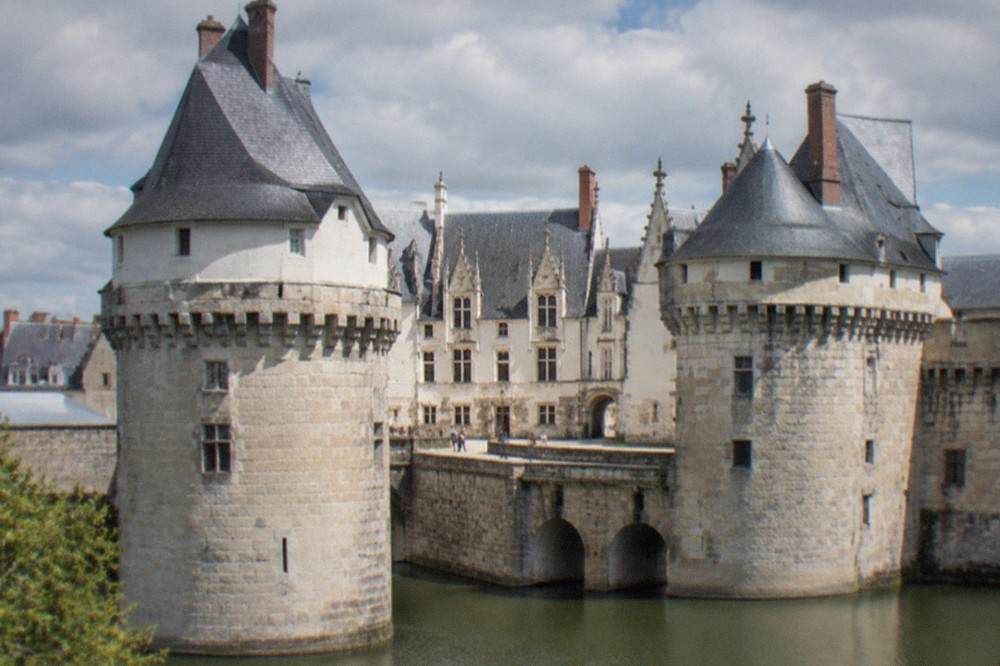
A recurring question is whether Nantes is even part of Brittany; it was the dukes' capital, but a Vichy decree of 30 June 1941 attached Loire-Inférieure (renamed Loire-Atlantique on 9 March 1957) to the Angers region, separating it from Brittany. The Is Nantes In Brittany? page settles it, and it matters for a comparison like this one: Nantes's identity is Breton-adjacent, industrial and experimental, not wine-trade patrician. The head-to-head question also has its own dedicated answer page, linked at the end of this guide.
How Much Does A Nantes Trip Cost Compared With Bordeaux?
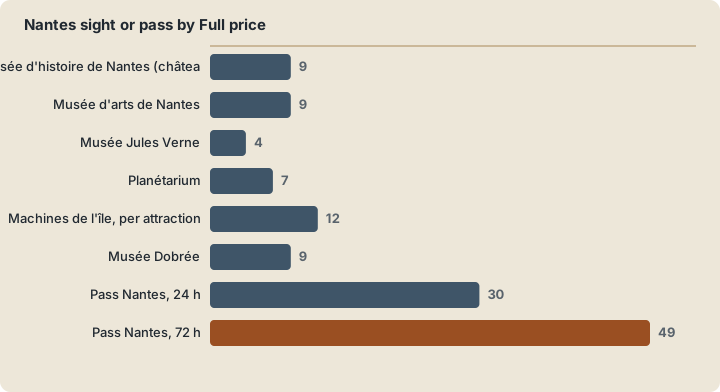
A Nantes city break is cheap by big-city French standards: the Château's history museum and the Musée d'arts are each 9 EUR, the Musée Jules Verne is 4 EUR, and each Machines de l'île attraction, whether Galerie, Carrousel or the Grand Éléphant ride, is 12 EUR, with a 24-hour Pass Nantes at 30 EUR bundling transport with entries.
No Bordeaux price is verified, so none is printed for the other side; Nantes's entry prices sit at the affordable end for a major French city.
The Planétarium is 7 EUR full price, the Musée Dobrée 9 EUR with a 6 EUR reduced ticket, and the reduced rates elsewhere run 4 to 5 EUR, which softens the bill further for students, jobseekers and seniors. Treat meal budgets as planning ranges rather than promises: an inexpensive Nantes meal stays modest, while a mid-range three-course dinner for two is a step up.
Nantes also gives away a lot for free. The cathedral is free (it partially reopened on 27 September 2025 after the 2020 arson fire, with full reopening planned for 2028). The château's courtyard and ramparts are free daily, the Mémorial is free, and the Jardin des Plantes and Île de Versailles Japanese garden cost nothing. First Sundays of the month from September to June bring free entry to the city museums, and under-18s enter free everywhere. The free things to do in Nantes and Nantes on a budget guides collect the full set.
| Nantes sight or pass | Full price | Notes |
|---|---|---|
| Musée d'histoire de Nantes (château) | 9 EUR | 5 EUR reduced; free under 18; closed Mondays |
| Musée d'arts de Nantes | 9 EUR | 4 EUR reduced; free Thursday 19:00-21:00 |
| Musée Jules Verne | 4 EUR | 1.50 EUR reduced |
| Planétarium | 7 EUR | 3 EUR reduced |
| Machines de l'île, per attraction | 12 EUR | 8 EUR ages 4-12; 3 attractions 29 EUR |
| Musée Dobrée | 9 EUR | 6 EUR reduced |
| Pass Nantes, 24 h | 30 EUR | Transport plus entries |
| Pass Nantes, 72 h | 49 EUR | 31 EUR reduced |
The Pass Musées, at 15 EUR for a year of unlimited access to the Musée d'arts, the Jules Verne museum, the château museum and the Chronographe, is a genuine bargain if the city hooks you. It is one of the details collected on the Pass Nantes guide, which also covers the 7-day pass at 75 EUR.
Accommodation taxes are worth a line, since they appear on every hotel bill: Nantes's tourist tax is reported as 2.86 EUR per person per night at 4-star hotels, 1.87 EUR at 3-star and 1.10 EUR at 2-star. The one new hotel of the year is the 86-room Eklo on the Île de Nantes, opened 12 January 2026. Where to base yourself is covered in Where To Stay In Nantes.
What Is The Weather Like In Nantes Versus Bordeaux?
Nantes has a temperate oceanic climate, not a Mediterranean one, and Météo-France's station normals give a mean maximum of 9.3 C in January rising to 25.4 C in August, 819.5 mm of rain a year across 119.7 days with at least 1 mm, and 1,873.3 hours of sunshine. Bordeaux, further south, is generally warmer and sunnier in high summer.
The practical takeaway for planning: Nantes's best-visited window is May to September, with July and August the warmest (mean maxima of 25.1 C and 25.4 C) and the wettest single months actually in late autumn and winter, with December the wettest at 101.0 mm. June, often assumed damp, averages only 48.5 mm. The full monthly breakdown lives on the Nantes weather guide and the broader best time to visit Nantes page.
| Month | Mean max C (Nantes) | Mean min C (Nantes) | Rain mm (Nantes) |
|---|---|---|---|
| January | 9.3 | 3.4 | 87.9 |
| March | 13.5 | 4.9 | 58.4 |
| May | 19.6 | 9.8 | 61.0 |
| July | 25.1 | 14.3 | 44.2 |
| September | 22.4 | 11.8 | 59.5 |
| December | 9.8 | 3.7 | 101.0 |
Recent years have bent the curve. The station's all-time record high is now 42.2 C, set on 24 June 2026, beating the old 42.0 C mark from 18 July 2022, and 2026 set local records for days at or above 30 C. February 2026 brought the most significant Loire flood in about 30 years, with the river reaching 8.18 m at the Pont Anne-de-Bretagne, the first time above 8 m in roughly 15 years. None of that changes the planning basics, but it is a reminder that "oceanic" does not mean uneventful.
Which City Is Easier To Reach And Get Around: Nantes Or Bordeaux?
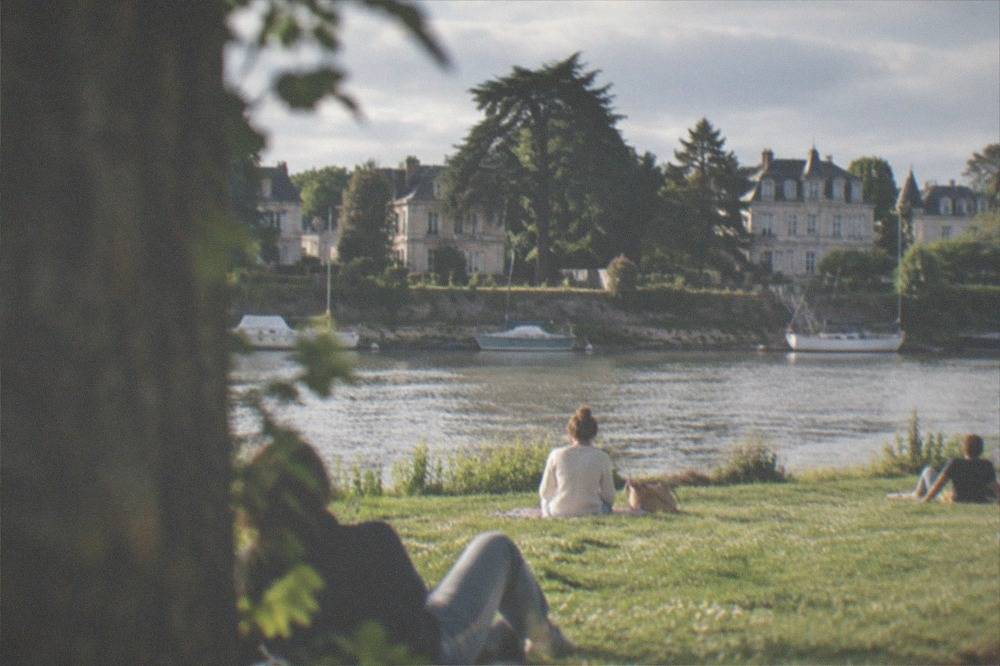
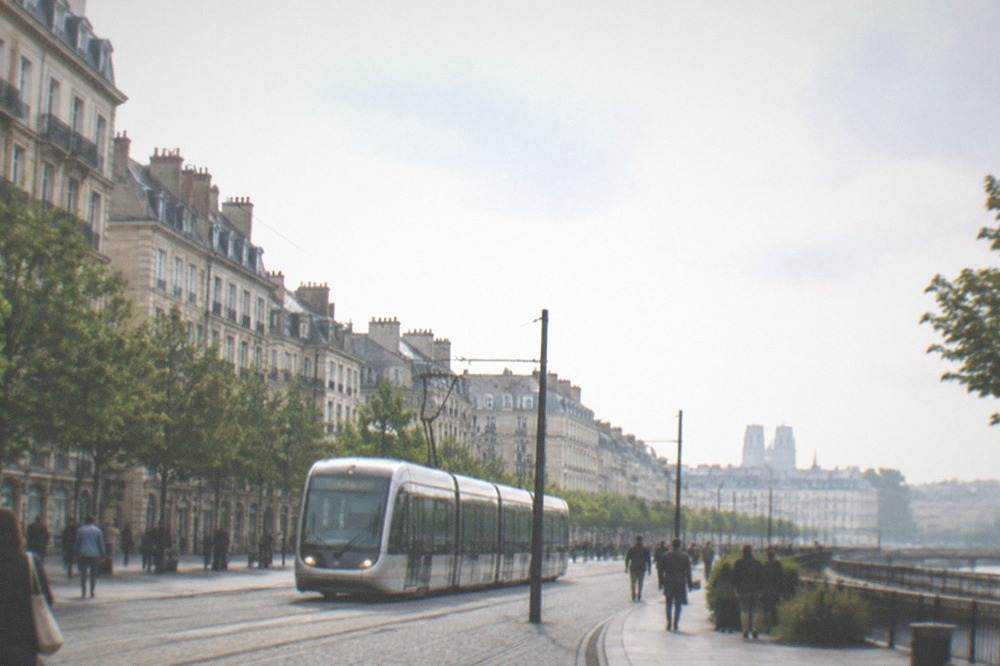
Nantes is about two hours from Paris by TGV, with roughly 24 daily trains each way and the fastest direct services around 2 hours 4 to 9 minutes, and the city runs a 3-line tram network of 45.6 km with 84 stations, where a 1-hour ticket costs 1.80 EUR, a 24-hour ticket 6.80 EUR and a 24-hour ticket for four people 15 EUR.
Both cities are walkable in their centres; the hyper-centre between Bouffay, Graslin and the château is entirely manageable on foot.
Whether Nantes is a walkable city in the fuller sense gets its own dedicated answer elsewhere on this site, and the honest short version is yes, with the caveat that the island and the riverside districts reward a tram hop. The two cities tie on rail access in the way that matters most: both are on high-speed lines from Paris Montparnasse, and Nantes's fastest trains complete the run in just over two hours, with OUIGO fares frequently among the cheapest options on the route. First departures from Nantes leave around 5:08 and the last around 20:09. The full arrival picture, including the Paris to Nantes options, is covered in dedicated guides.
By air, Nantes Atlantique handled 7,189,480 passengers in 2025 across 52,128 commercial movements, and 2026 added seasonal routes including Air Canada's Montreal service. The airport shuttle costs 10 EUR one way and takes about 20 minutes, running every 20 minutes from April to October and every 30 minutes from November to March; note the shuttle stop moved on 30 March 2026 to the Gare routière, quai A. One trap to flag: Naolib transport is free for everyone from Saturday 00:00 to Sunday 23:59, but the airport shuttle is excluded and always costs 10 EUR. Details are on the Nantes airport page.
| Nantes transport item | Price / figure |
|---|---|
| Naolib 1 h ticket | 1.80 EUR |
| Naolib 24 h ticket | 6.80 EUR |
| 24 h ticket, 4 people | 15 EUR |
| Airport shuttle, one way | 10 EUR (always, weekends included) |
| Weekend network travel | Free Sat 00:00 to Sun 23:59 |
| Paris TGV, fastest direct | around 2 h 04 to 2 h 09 |
| Paris trains per day | about 24 each way |
Once in town, the tram is the workhorse, and the Navibus river shuttle adds a genuinely pleasant commute across the Loire to Trentemoult. New tram lines 6 and 7 and busway line 8 are under construction, with service expected from late 2027, so works will be visible around the Île de Nantes and Rezé during 2026 and 2027 visits. The getting around Nantes guide tracks all of it, and car hire only makes sense if the trip extends beyond the city.
Food And Wine: What Does Each City Do Best?
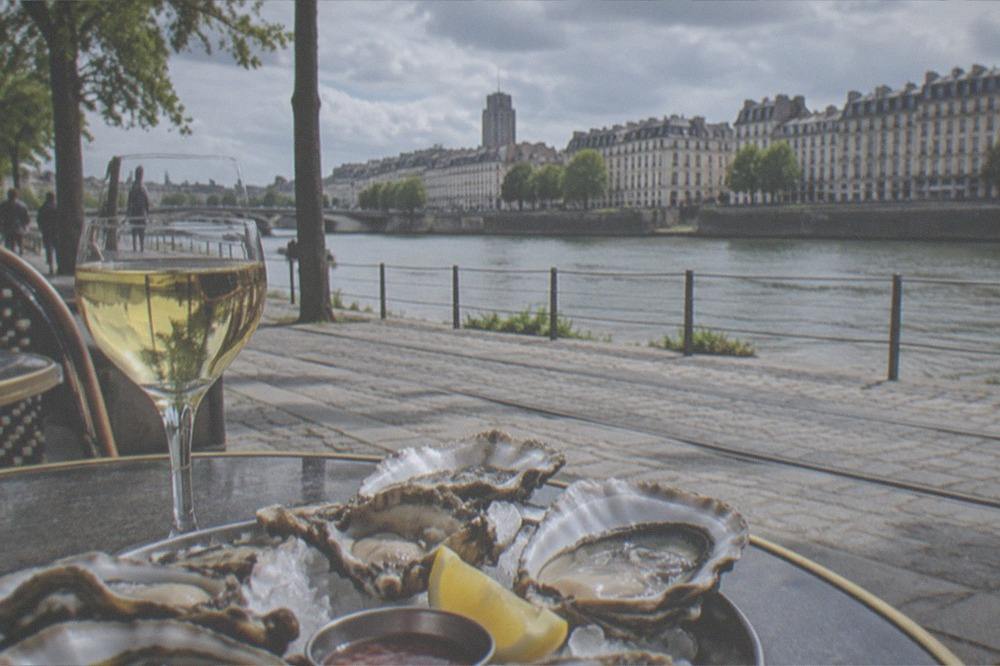
Nantes eats like a port city with a sweet tooth and a white-wine valley behind it: beurre blanc, the emulsified butter sauce built on a Muscadet and shallot reduction, was born here and is traditionally served with river fish; LU's Petit Beurre biscuit was invented in the city, where the Lefèvre-Utile firm began in 1846; berlingots nantais are tetrahedral hard candies and gâteau nantais an almond-and-rum cake. The wine of the region is Muscadet, a dry white from the Melon de Bourgogne grape.
Nothing about Bordeaux's red-wine economy is in dispute here: that city's gastronomic identity is cabernet-and-merlot, grand restaurants built on the wine trade. Nantes's is more Marine Atlantic: oysters and shellfish from the coast 30-odd minutes west, Muscadet by the carafe, and a baking heritage that made it France's biscuit capital. The 2026 Muscadet harvest was declared on 11 August, a record-early ban eight days ahead of the old mark, with lower yields but good quality from the sunshine, so expect the local whites to be a talking point on menus this year. The Nantes food guide and the best-restaurants round-up cover the edible city in full, with deeper dives on beurre blanc and the LU Petit Beurre elsewhere on the site.
The market to beat is Talensac, open Tuesday to Friday 8:00-13:00 and Saturday-Sunday 8:00-13:30, closed Monday. If you want a guided introduction rather than self-navigation, a couple of food-focused options exist; one all-inclusive Old Town food tour is run by a local guide, though its price is not published by the operator, so check the live listing rather than any number quoted second-hand.
On the wine side, Muscadet country starts practically at the tram's edge, and the Maison des vins at Vallet is the appellation's home base. A sensory Muscadet tasting experience in the city and two van-based vineyard tours from half-day to full-day are all bookable, and the question of whether Muscadet is sweet or dry is answered plainly on its own page: it is dry. For a dry white that pairs with the oysters the coast sends east, Muscadet is the local answer to Bordeaux's reds.
How Many Days Should You Spend In Nantes Or In Bordeaux?
Two full days is the realistic minimum for Nantes and three is comfortable: day one for the château, cathedral, Bouffay, Passage Pommeraye and Graslin, day two for the Île de Nantes and the Machines de l'île, with the Jules Verne museum, Jardin des Plantes or an Erdre cruise filling a third. Bordeaux rewards a similar two-to-three-day core stay, though neither city needs a week on its own unless day trips are the point of the trip.
The one-day, two-day and three-day itineraries on this site are built exactly on that sequencing, and families have a dedicated Nantes-with-kids plan. The reason Nantes holds attention for two days rather than one is distribution: the headline sights cluster in the hyper-centre, but the Machines de l'île, Trentemoult and the Erdre all sit at or beyond the edges, and each deserves a half-day with travel.
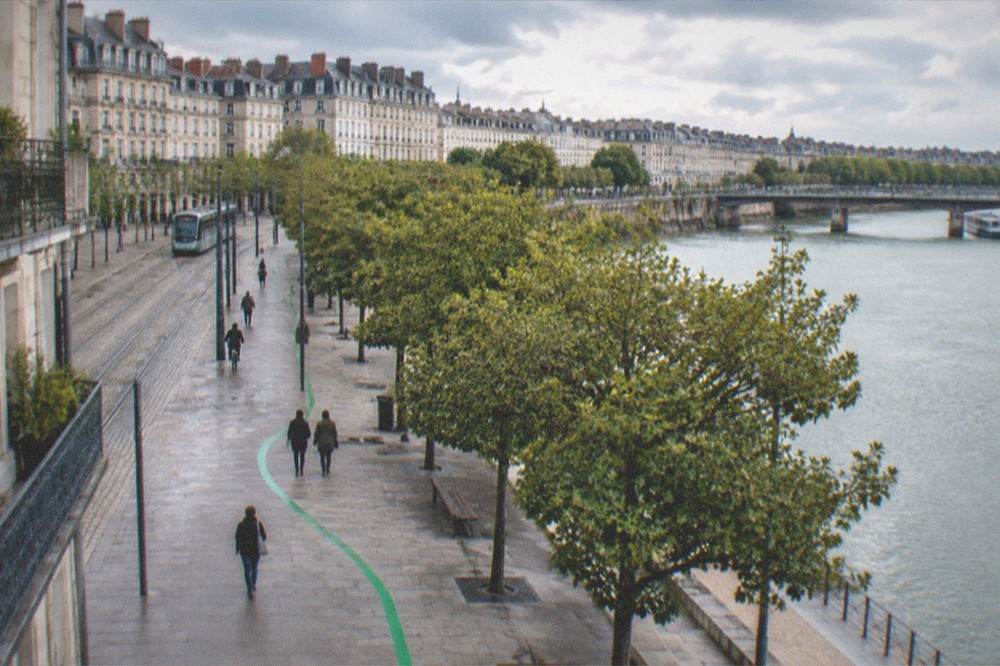
Timing matters more than duration. If your dates brush early July to early September, Le Voyage à Nantes, the summer art trail along a painted green line of about 20 km through the city, adds dozens of temporary works; the 2026 edition, themed "Earth", ran 4 July to 6 September. In late January, La Folle Journée fills the Cité des Congrès with classical concerts, and the 2027 edition runs 27 to 31 January. The events and festivals calendar keeps the full year straight.
| Season in Nantes | What you get | Worth knowing |
|---|---|---|
| Spring (Apr-May) | Jardin des Plantes at peak, fewer crowds | Mean max 16.2-19.6 C |
| Summer (Jul-Aug) | Voyage à Nantes trail, guinguettes, warmest weather | Mean max 25.1-25.4 C |
| Autumn (Sep-Oct) | Rendez-vous de l'Erdre jazz, milder crowds | Erdre jazz fest 24-30 Aug 2026 |
| Winter (Nov-Dec) | Christmas market 19 Nov-27 Dec 2026 | Rainiest period; museums quieter |
One structural warning for 2027 planners: the Cité des Congrès closes fully for works from February to December 2027, which reshuffles Folle Journée's usual venue, with Le Lieu Unique and the Conservatoire mentioned as alternatives. The auditorium itself started works in July 2026.
Day Trips: Nantes Versus Bordeaux As A Base
Nantes as a base gives you the Atlantic coast and Brittany's edge, all by cheap regional train: Clisson in about 15 to 23 minutes, Saint-Nazaire from about 33 minutes, La Baule from about 51 minutes, Pornic under an hour and Le Croisic about 1 h 03. Bordeaux as a base gives wine country, Saint-Émilion and the Arcachon basin rather than ocean, and those options are well documented elsewhere. The difference is character, not quality: Nantes's day trips are salt marshes, beaches and one eccentric Italianate town.
The Clisson day trip is the surprise package: an Italianate château town 27 km by rail, with a TER return included in the Pass Nantes, and its Les ClisSonnantes classical festival ran 30 September to 4 October this year. Guérande, about 80 km by road, pairs a medieval walled town with working salt marshes whose harvest was a record this year, roughly 1.5 tons per salt pan on average. Further out sit La Baule, Pornic, Le Croisic, Noirmoutier, the Brière regional park and the Mont-Saint-Michel at around 2 h 15 by car.
| Day trip from Nantes | Rail time (fastest) | What it is |
|---|---|---|
| Clisson | from about 15-23 min | Italianate town, château, vineyards |
| Saint-Nazaire | from about 33 min | Ocean liner museum Escal'Atlantic, shipyards |
| La Baule | from about 51 min | Long beach resort |
| Pornic | about 59-65 min | Harbour, coastal path |
| Le Croisic | about 1 h 03 | Rocky Atlantic coast |
| Guérande | by road, about 80 km | Walled town and salt marshes |
| Mont-Saint-Michel | about 2 h 15 by car | The abbey island |
The full set is gathered in this site's day-trip collection, with individual pages for each destination, and salt-marsh visits are bookable as a guided excursion. If the trip is really a road trip, the Loire Valley and Brittany itineraries build the route outward from the city.
So Which Should You Choose: Nantes Or Bordeaux?
Choose Nantes if you want a cheaper, quirkier, greener city break with a mechanical elephant, a ducal castle that tells an honest history, dry Muscadet instead of grand reds, and the Atlantic coast 30 to 60 minutes away by train. Choose Bordeaux if wine château day trips and classical architecture matter more to you than novelty. For a first-time visitor to western France with three days and no strong wine agenda, Nantes is the better value and the more surprising weekend, backed by the city's own numbers.
Every comparison in this article leans on Nantes's figures, because this is a Nantes site and nothing about Bordeaux's prices, population or climate has been checked here; treat the Bordeaux side as characterisation you can confirm yourself, not audited data. That honesty cuts both ways: if your trip is defined by wine, go south and be happy.
To make a Nantes stay click, the fastest single investment is time with someone who knows the streets. A surprise walk with a local is the highest-rated way to get oriented, and a second option explores the city's most photogenic corners; both, plus a Muscadet tasting, are worth booking before you arrive.
And for the fuller decision, read Is Nantes Worth Visiting?, the safety question covered on the Is Nantes Safe page, and the head-to-head Which Is Better, Bordeaux Or Nantes?.
Common Questions About Nantes Vs Bordeaux
Is Nantes cheaper than Bordeaux?
On the Nantes side, the figures are a 9 EUR full-price entry to the château's history museum and Musée d'arts, 12 EUR per Machines de l'île attraction, 4 EUR for the Jules Verne museum and a 1.80 EUR tram ticket. No comparison figure is printed for Bordeaux; Nantes's own numbers sit at the affordable end for a major French city.
Is Nantes bigger than Bordeaux?
No verified Bordeaux population figure is printed here. Nantes's own verified numbers are 327,734 residents in the commune and about 689,456 in the métropole, per INSEE's 2023 publication, making it the sixth most populous commune in France.
Which city has better weather, Nantes or Bordeaux?
Nantes is temperate oceanic, with Météo-France's published station normals of 819.5 mm rain a year and mean maxima from 9.3 C in January to 25.4 C in August. Bordeaux, further south, is generally warmer and sunnier in summer, though no Bordeaux figure is verified on this site, so check that side independently.
Is Nantes a good base for wine tours?
Yes, for white wine: the Muscadet appellation surrounds the city, with the Maison des vins at Vallet as its hub, and vineyard van tours and city-based tastings are bookable year-round. Bordeaux remains the reference for red-wine château visits.
Can you visit Nantes and Bordeaux in one trip?
The two cities are linked by rail through the Loire valley, so a combined western-France trip is practical, but treat it as two bases: two to three days in Nantes with an Atlantic or vineyard day trip, then move south. In Nantes itself, the one, two and three-day itineraries on this site sequence the city efficiently.
Which is better for families, Nantes or Bordeaux?
Nantes is exceptionally child-friendly on verified, current attractions: the Machines de l'île Galerie and Carrousel welcome all ages (under-4s enter free, ages 4-12 pay 8 EUR), the Planétarium runs 30-minute child sessions, and the Jardin des Plantes is free. Note the Grand Éléphant pauses rides from 2 November 2026 to 28 February 2027.