Markets In Nantes
Nantes, in the Loire-Atlantique department of the Pays de la Loire region in western France, is a city whose food culture runs through its markets. This guide covers the city's main market, the specialities worth hunting for, how to reach them on the Naolib network, and the market towns you can reach for a day trip.
Short answer
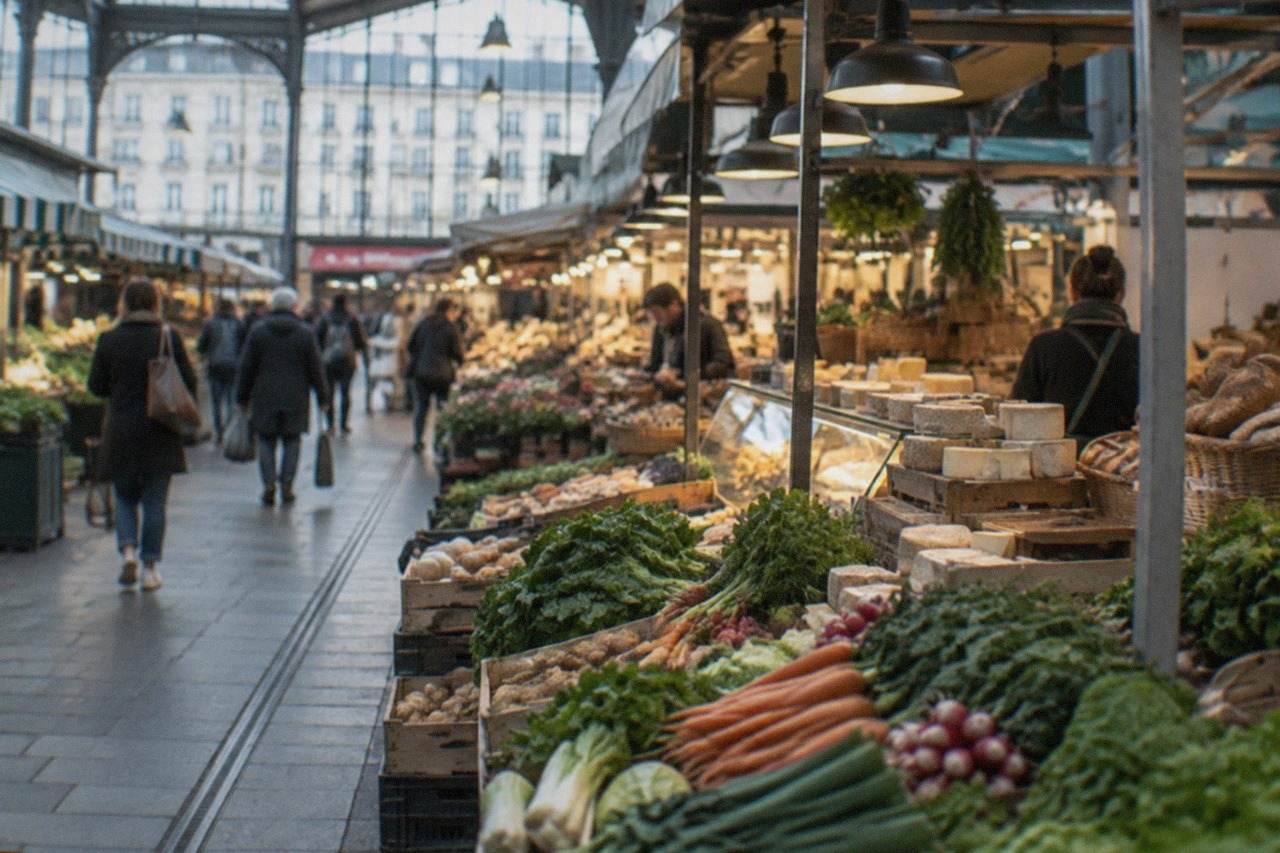
The main market in Nantes is Marché de Talensac, open Tuesday to Sunday with hours published by Nantes Métropole, closed Monday except public holidays. Around it sit smaller neighbourhood markets, covered halls and flea markets, plus market towns like Guérande and Clisson reachable by train. This guide explains what to buy, when to go and how to get there.
Nantes, in the Loire-Atlantique department of the Pays de la Loire region in western France, has always traded from its rivers. The Loire and the Erdre meet at the city, and for centuries the quays were the market: sugar, salt, fish and wine all moved through the port. Today the cargo has changed, but the instinct has not. The Nantes Métropole website counts markets as a core part of city life, and the biggest of them, Talensac, sits a short walk from the centre in a district that was once a village of its own. This guide, from the Nantes Travel Guide editorial desk, covers the markets you can actually shop at: the main market halls, the neighbourhood stalls, the food worth carrying home, and the market towns a train ride away.
What Are The Best Markets In Nantes, France?
The anchor market in Nantes is Marché de Talensac, the city's largest, which Nantes Métropole lists as open Tuesday to Friday from 08:00 to 13:00 and Saturday to Sunday from 08:00 to 13:30, closed on Mondays except public holidays. Around it, the city runs a network of smaller neighbourhood markets and covered halls, each with its own catchment and its own character, plus seasonal flea and vintage markets that rotate through the squares of the old town. No single market covers everything in Nantes, and locals treat them as a weekly circuit rather than one destination.
That circuit idea is the useful way to plan. Talensac is the full-shop market where a Nantais household does a week's buying in one go: vegetables, fish, cheese, charcuterie, bread. The neighbourhood markets are smaller and faster, the kind of place you visit for one dinner's ingredients. The flea markets belong to weekends and collectors. And beyond the city limits, the walled town of Guérande and the Italianate town of Clisson run their own market traditions, both reachable without a car.
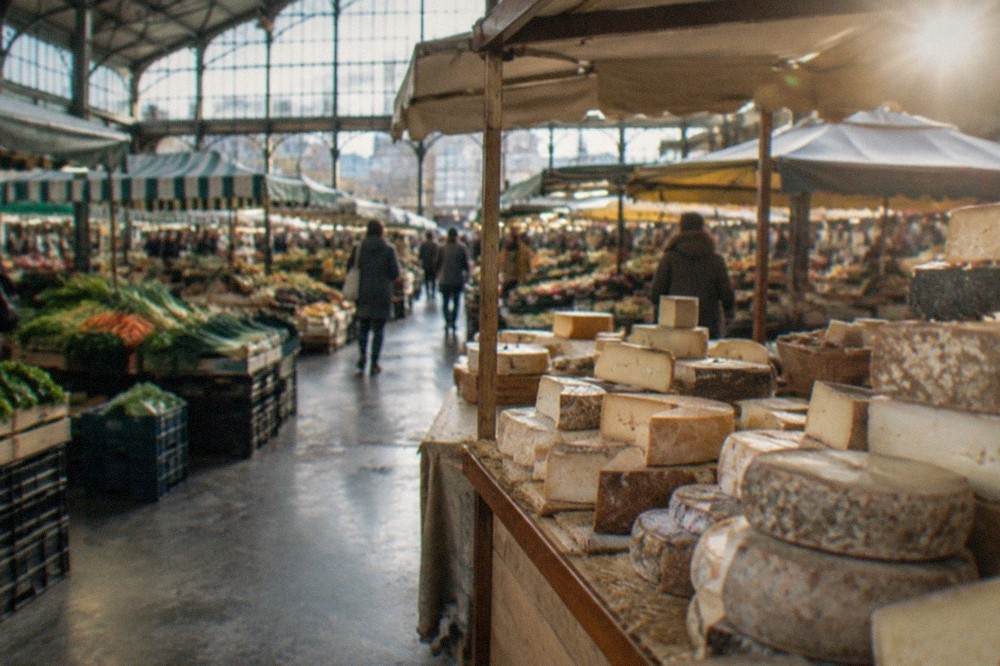
If food is the reason you are market-hunting, the fastest way into the city's food culture is with someone who knows the stops. A guided walk does the routing for you, and the food tours below range from a quick hour with a local to a longer Old Town tasting walk and a Muscadet sensory tasting built around the region's signature white wine.
When Is Talensac Market Open, And What Will You Find There?
Talensac runs Tuesday to Friday from 08:00 to 13:00 and Saturday to Sunday from 08:00 to 13:30, closed on Mondays except public holidays, according to the Nantes Métropole market page, which lists it among the metropolitan area's unmissable markets.
That schedule makes it a morning market in the French tradition: the stalls are at their fullest and the fish at its best before 10:00, while the last hour before the 13:00 or 13:30 close brings the end-of-market bargaining, with thinner pickings as vendors pack down. The Métropole's own market guide treats Talensac as the reference market of the city, and the schedule is the piece of information every visit should start from.
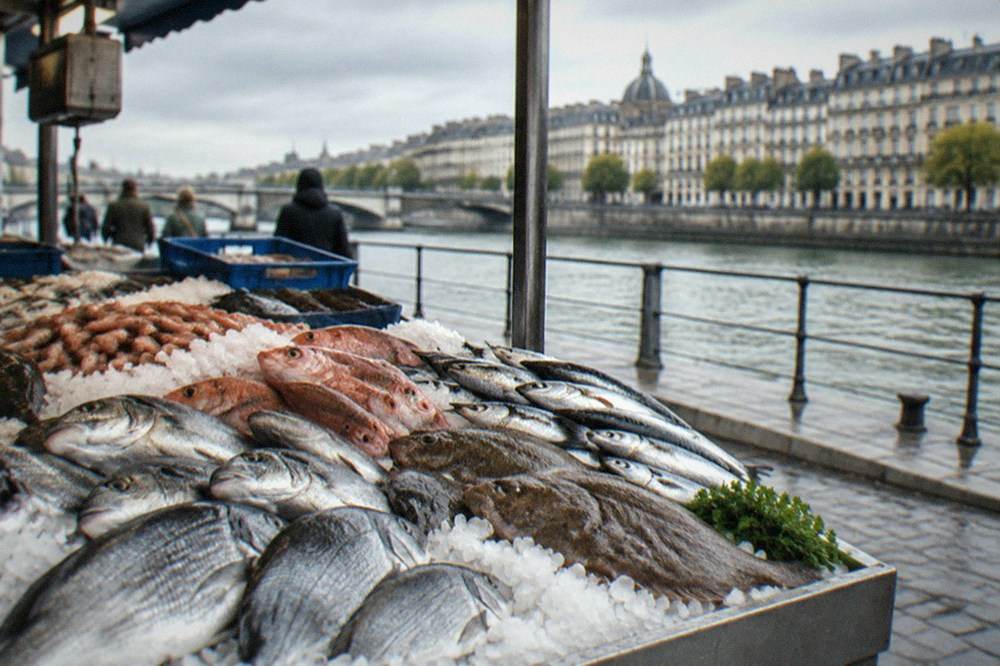
Talensac is the market to treat seriously. It occupies a purpose-built market district rather than a single square, so the produce stalls, the covered hall and the surrounding streets work together. Fish is a Nantes strength, inherited from the port: the Atlantic is close, and the Loire's own catch, including the pike that classic beurre blanc was invented to accompany, still appears on the slab. Cheese stalls carry the region's own, including the Nantais washed-rind cheeses cured in the salt of the Guérande marshes, a genuine local pairing rather than an import.
| Market detail | What the official pages give |
|---|---|
| Days | Tuesday to Sunday |
| Hours Tue-Fri | 08:00 to 13:00 |
| Hours Sat-Sun | 08:00 to 13:30 |
| Closed | Monday, except public holidays |
| Source | Nantes Métropole market pages |
The market sits just west of the city centre, walkable from the old town and served by the Naolib network described further down this page. Saturday is the liveliest day and the one locals treat as the full market day; Sunday morning runs to 13:30 and pairs well with a long lunch. Monday is the day the district rests.
Which Neighbourhood Markets Do Locals Shop At In Nantes?
Beyond Talensac, Nantes runs a spread of neighbourhood markets across the metropolitan area, from the old-town squares to the communes around the city, and the Nantes Métropole pages present them as a shared weekly circuit rather than competing destinations. Each neighbourhood's market follows the same French pattern, a morning of stalls and an afternoon of clear streets, so the planning question is which day your own neighbourhood falls on rather than which market is best. The métropole's market guide is the page that lists them all with their individual days.
The character shifts with the district. In Bouffay, the medieval heart of the city, market stalls rub against half-timbered buildings and the streets that the green line of the Le Voyage à Nantes art trail threads through. On Île de Nantes, the market days serve a district transformed from shipyards into the home of the Machines de l'île, so a market morning can be paired with the mechanical elephant and the Carrousel. Across the Loire in Trentemoult, the old fishing village now reachable by Navibus river shuttle, the market rhythm belongs to a village that happens to sit inside a city.
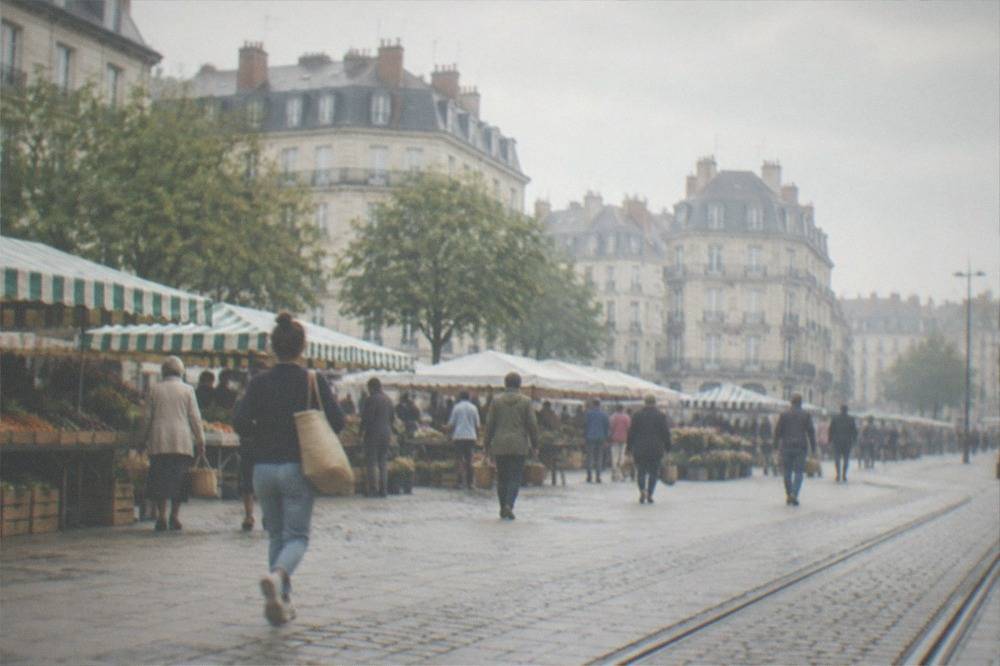
For a first-time visitor the honest advice is simple: pick one market day and go early, because a French market at 08:30 and the same market at noon are different experiences. Shopping is cash- and card-friendly, queues move quickly, and vendors will happily explain a cheese or a fish if you ask. Market shopping is also the cheapest way to eat well in the city, a point worth remembering if you are following a budget guide to Nantes.
A guided walk strings the neighbourhoods together if you would rather not plan the circuit yourself, and the short options below cover the historic centre on foot.
What Food Specialities Should You Look For At Nantes Markets?
The market specialities that are genuinely Nantais are beurre blanc sauce's raw ingredients, Muscadet wine, berlingot nantais hard candies, LU Petit Beurre biscuits, gâteau nantais almond-rum cake, and the salt-cured cheeses of the region, each documented to the city and its surrounding vineyards and marshes. None of these are tourist inventions; each has a traceable Nantes origin, and the market is where you meet them at source rather than on a restaurant plate.
Beurre blanc is the city's signature contribution to French cooking: a reduction of shallots, white wine, typically Muscadet, and vinegar into which cold butter is whisked. It was created to accompany pike, the Loire fish, and Nantes restaurateurs have been campaigning for protected traditional-speciality status for the recipe, a movement reported by France 3. At market you buy the components, the Muscadet, the shallots, the butter, and the fish if the slab has pike that day.
Muscadet deserves its own paragraph because it is the region's wine and the market's natural bottle. It is made from the Melon de Bourgogne grape in the vineyards east and south of the city, with a Maison des vins at Vallet as the appellation's home base. The 2026 harvest was historically early, with the picking ban declared on 11 August 2026, eight days ahead of the previous record, with lower yields but strong quality from the sunshine, as regional producers reported.
| Speciality | What it is | Nantes connection |
|---|---|---|
| Beurre blanc | Shallot, Muscadet and butter emulsion sauce | Created in Nantes for Loire pike; restaurateurs seek protected status |
| Muscadet | Dry white from Melon de Bourgogne | The Nantes region's appellation; Maison des vins at Vallet |
| Berlingot nantais | Tetrahedron hard candy, traditionally seven flavours | Nantes confectionery tradition dating to the late 19th century; Pinson founded 1895 |
| Petit Beurre | The classic butter biscuit | Invented by Nantes firm Lefèvre-Utile, founded 1846; 1886 marks the biscuit's era |
| Gâteau nantais | Almond and rum quatre-quarts cake | Nantes origin attributed to around 1820, now a patisserie staple |
| Guérande salt | Coarse and fleur de sel sea salt | Harvested in the Guérande marshes, 2026 harvest exceptional |
The sweet corner of the stall is where berlingots live: tetrahedron-shaped, powdery hard candies in seven traditional flavours, orange, lemon, cassis, strawberry, anise, caramel and mint. The confiserie Pinson was founded in 1895 near the port, which put imported sugar within reach, and the candy carries the city's name to this day. The LU Petit Beurre biscuit is the other industrial-age Nantes legend, invented by the Lefèvre-Utile firm whose founder set up as a biscuit maker in 1846; 2026 marks the firm's 180th anniversary, and the biscuit is still made near Nantes at La Haye-Fouassière. The gâteau nantais, an almond and rum cake attributed to around 1820, rounds out the trio, and market patisserie stalls and the city's bakeries keep it current.
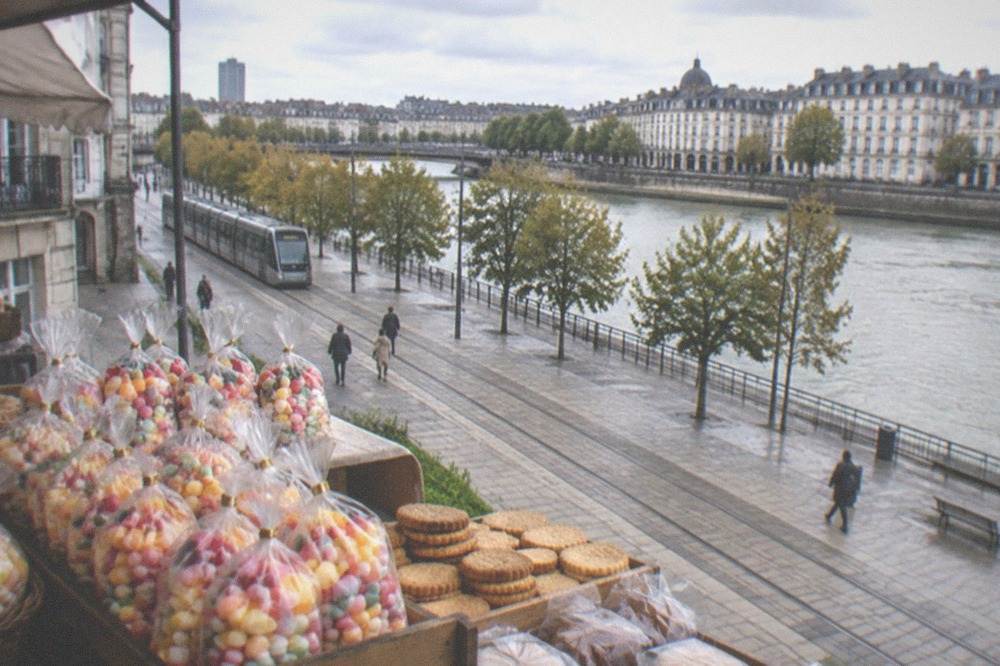
To taste the wine side of the city with guidance rather than guesswork, the Muscadet sensory tasting below is built entirely around the appellation, and the longer food walk covers the Old Town's eating streets.
If the market has done its work and you want the same city served course by course, from the stalls of Talensac to the bistros of the old town, the Old Town food walk is the product built for exactly that transition, with a local guide leading the route and the tastings along the way.
How Much Does Getting To Nantes Markets Cost?
A one-hour Naolib ticket costs 1.80 EUR and covers trams, buses and Navibus river shuttles, a 24-hour ticket costs 6.80 EUR, a 24-hour ticket for four people costs 15 EUR, and on weekends, Saturday 00:00 to Sunday 23:59, the whole network is free for everyone except the airport shuttle, which always costs 10 EUR. Those figures come from the Naolib fare page, and they make market-hopping in Nantes unusually cheap: a Saturday circuit of markets by tram and river shuttle can cost nothing at all in fares.
The tram network is the practical spine. Three tram lines, plus the busway and the Navibus river routes, connect the city's market districts, and the network carried 154 million trips in 2024, a figure the Métropole cites in its transport planning. The Navibus lines are the ones worth knowing for a market day with a view: they cross the Loire between the city centre, Trentemoult and the Hangar à Bananes, so a morning at a Trentemoult market stall and an afternoon on Île de Nantes can be stitched together by river.
| Naolib ticket | Price | Covers |
|---|---|---|
| 1-hour ticket | 1.80 EUR | Tram, bus, busway, Navibus, TER within the métropole |
| 10 x 1-hour | 17.80 EUR | Carnet of single tickets |
| 24-hour ticket | 6.80 EUR | Full network for one person |
| 24-hour, 4 people | 15 EUR | Group day ticket |
| Weekend travel | Free | Saturdays 00:00 to Sundays 23:59, airport shuttle excluded |
| Airport shuttle | 10 EUR | Always charged, even on free weekends |
Two cautions come with those numbers. The airport shuttle, the Navette Aéroport, is excluded from the weekend free travel and always costs 10 EUR, a point Naolib states plainly and one that catches visitors out. And the tram network is mid-expansion: new lines 6 and 7, plus the L8 busway, are under construction with services planned from the end of 2027, so street works can shift stops; check the Naolib site on the day. The full transport picture, including the city's walking-friendliness, is covered in our guide to getting around Nantes, and the Tourist Pass that bundles transport with museum entry is compared in the Pass Nantes guide.
What Can You Buy At Flea And Vintage Markets In Nantes?
Nantes flea and vintage markets rotate through the city's squares, and the reliable anchor is the Vanves-style brocante circuit of the wider region, with Nantes itself hosting seasonal vintage markets whose dates shift year to year, so the practical approach is to check the city's events calendar for the weekend you are there. Verified recurring dates for a specific Nantes flea market are not carried here, and no operational details are invented, so the honest advice is calendar-first: the Voyage à Nantes and Métropole event pages list the seasonal brocantes as they are confirmed.
What you can plan around is the shape of the city. The old town's squares, Bouffay and its neighbours, and the quays along the Loire are the natural staging grounds for any outdoor market, vintage included, because they have hosted trade for centuries. The Hangar à Bananes on Île de Nantes, a former banana warehouse turned bar-and-gallery strip, hosts a different kind of hunting: design shops, art at the HAB Galerie and river-view terraces, all in the industrial architecture of the old port. It is a five-minute walk from the Machines de l'île, so a "market and machines" afternoon is an easy pairing.
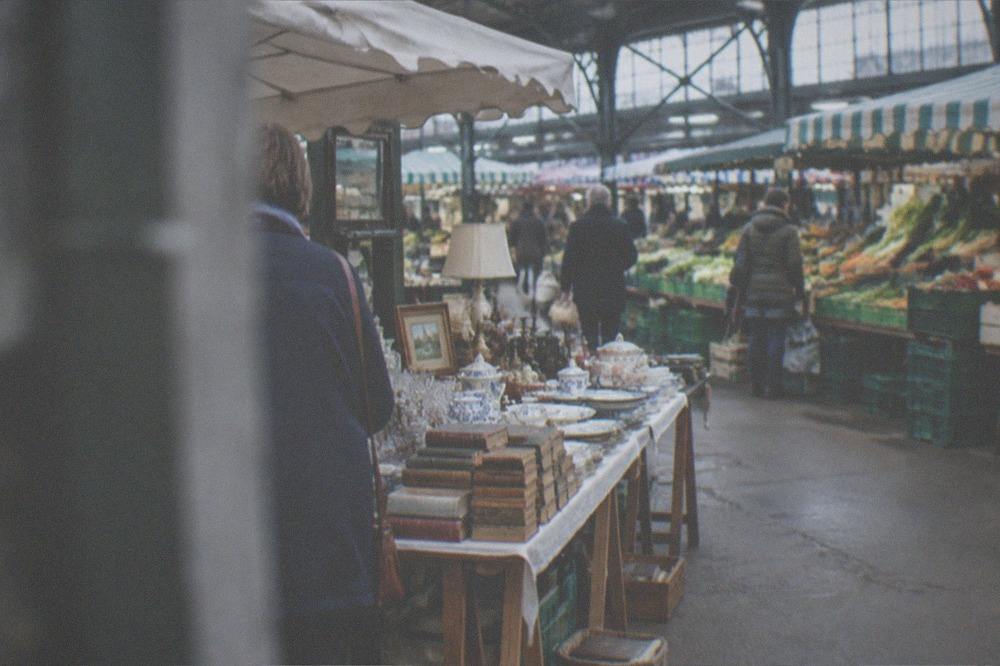
For collectors, the region's best-known antique circuit runs through the Loire valley towns west and east of Nantes, many of them covered in our guide to the Loire valley châteaux as day trips. Closer to hand, the everyday treasure at Nantes markets is food-adjacent: old LU biscuit tins, a Nantes brand whose packaging is itself collectable, and printed ephemera from the city's port and printing past.
Are There Markets Worth A Day Trip From Nantes?
Yes, and the two that pair best with a market visit are Guérande, the walled medieval town inside the salt-marsh region whose 2026 salt harvest was exceptional, and Clisson, the Italianate town 15 minutes from Nantes by TER whose château and covered Halles anchor its own market tradition. Both are reachable by train or bus from Nantes, both are covered in the Métropole and regional tourist listings, and both make a satisfying full day with a market at their centre.
Guérande is the more distinctive of the two. The town is enclosed by medieval ramparts, and its economy runs on the salt marshes that surround it, worked by paludiers who harvest fleur de sel by hand. The 2026 harvest was a double one: regional reporting gave an average of around 1.5 tonnes per salt pan, up to more than 3 tonnes, thanks to the summer heat, so the marshes are working at full capacity. The Terre de Sel cooperative runs guided visits of the marshes year-round, and the marshes shelter around 200 bird species, so the trip is as much landscape as shopping.
Clisson is the easier half-day. The TER connection runs from Nantes in as little as 15 minutes, and the town reads like a piece of Italy transplanted to the Loire: terracotta roofs, a riverside château, and the Halles, a covered market hall that hosts the town's events, including the free concerts of the Les ClisSonnantes classical festival running 30 September to 4 October 2026. Clisson is also the home of Hellfest, the metal festival whose 2027 20th-anniversary edition runs 17 to 20 June, but that is a different kind of pilgrimage.
| Market day trip | Travel from Nantes | What the market trip is about |
|---|---|---|
| Guérande | About 80 km by road | Walled town, salt marshes, fleur de sel, exceptional 2026 harvest |
| Clisson | TER from about 15 minutes | Italianate town, château, Halles, wine country |
| La Baule | TER from about 51 minutes | Resort town with an ocean beach, often paired with Guérande |
| Saint-Nazaire | TER from about 33 minutes | Port city, shipyard tours, Escal'Atlantic liner experience |
The coastal option, La Baule, is a natural pairing with Guérande since both sit on the same stretch of the Atlantic coast, and the beaches of the region are covered in our guide to beaches near Nantes. A guided version of a Clisson-and-coast day exists in the tour roster too, an English-assisted 10-hour day that links Clisson, Nantes and Trentemoult in one loop.
When Is The Best Season For Markets In Nantes?
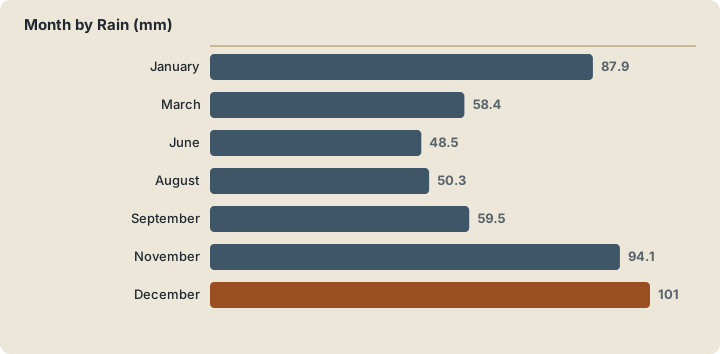
The best market months in Nantes are April through October, when the climate normals for the Nantes-Bouguenais station give mean maximums of 16.2 C rising to 25.4 C in August, with the driest market stretch from June through August at 44 to 50 mm of rain per month; September, at 22.4 C mean maximum, is the sweet spot of warm days, thin crowds and full harvest stalls. Those figures come from the Météo-France 1991-2020 normals, and they are what a market calendar actually tracks.
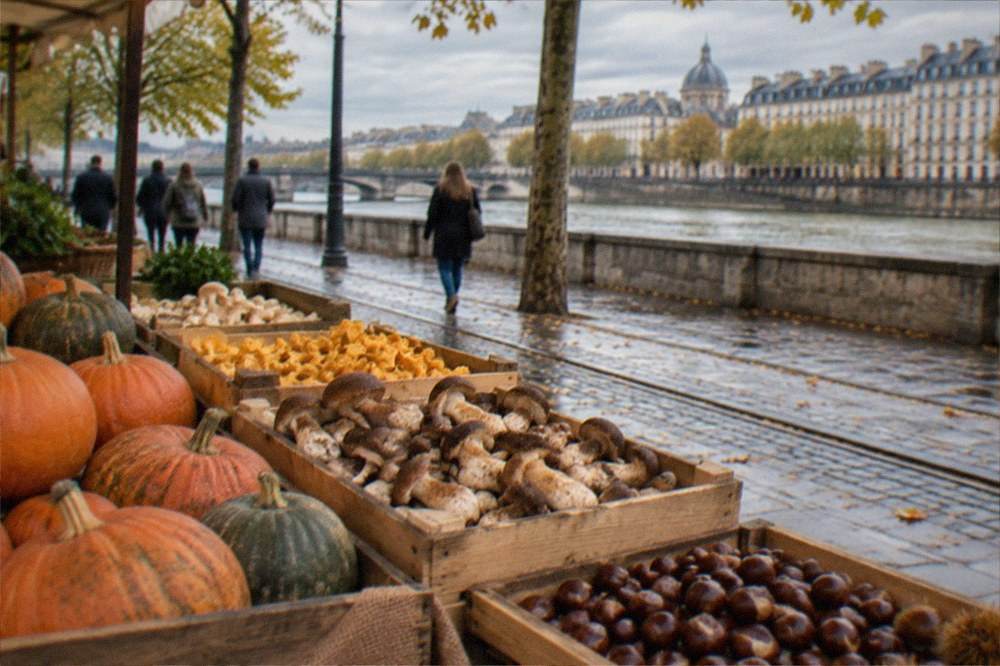
The produce calendar drives everything. Spring brings the first vegetables and the tail of the citrus; summer is the full Atlantic fish and the Loire valley fruit; autumn is mushrooms, game and the new Muscadet; winter is oysters, chou and the Christmas market, whose 2026 edition, the 26th, runs Thursday 19 November to Sunday 27 December on Place Royale and Place du Commerce with hours from 11:00, per the official market site. That Christmas market is itself a market in the shopping sense: about 140 chalets, according to the event listings, which makes it the biggest stall event of the Nantes year.
| Month | Mean max (C) | Rain (mm) | Market character |
|---|---|---|---|
| January | 9.3 | 87.9 | Oysters, winter brassicas, quiet stalls |
| March | 13.5 | 58.4 | First spring produce |
| June | 23.0 | 48.5 | Full summer stalls, driest stretch begins |
| August | 25.4 | 50.3 | Peak heat, peak fish, salt harvest season |
| September | 22.4 | 59.5 | Harvest stalls, thin crowds |
| November | 12.9 | 94.1 | Wild mushrooms, game, Christmas build-up |
| December | 9.8 | 101.0 | Christmas market on Place Royale |
One caution belongs in any honest seasonal note: Nantes has a temperate oceanic climate, not a Mediterranean one, and the rain numbers above are the reality. December is the wettest market month at 101 mm and January follows at 87.9 mm, so a winter market visit wants a covered hall and an umbrella. The full picture, including the 2026 heat records, is in our Nantes weather guide, and the wider timing question, crowds and all, in the best time to visit Nantes.
How Do You Shop At A Nantes Market Like A Local?
The local routine at a Nantes market is early arrival, a circuit before buying, greetings before questions, and cash or card at the stall: say "bonjour" when you reach a stand, let the vendor serve you rather than grabbing produce yourself, ask for advice on ripeness, and take the paper-wrapped parcel rather than expecting supermarket-style self-service. None of that is a rule enforced on anyone, but it is the rhythm the stalls run on, and visitors who match it get better produce and better conversation.
The practicalities are light. Bring a bag, because stall holders hand out thin plastic sparingly; bring small notes for the morning's small purchases; and go before 10:00 if fish matters to you, because the best of the Atlantic slab goes first. Peak heat changes the routine: on summer mornings the stalls pack down around noon regardless, which is one more argument for the early start. And on the subject of fish, ask what is local, because the Loire and the Atlantic both supply the city, and the answer changes with the day's catch.
For the sit-down part of a market morning, the classic move is to eat at the market's edges, where the bistros and wine bars serve the day's produce, and Nantes' restaurant culture, from crêperies to the city's best tables, is covered in our guide to the best restaurants in Nantes and the wider Nantes food guide. The food-tour circuit below walks that edge of the market with a local guide, from market stalls to the dishes they become, with tastings included along the route.
Between them, the three options here cover the three ways into Nantes food: a fast orientation walk of the centre, a full tasting circuit of the Old Town, and a seated exploration of the region's Muscadet. All three run with local guides, and all three book through the operator's live listing.
Common Questions About Markets In Nantes
What is the main market in Nantes?
Marché de Talensac is the city's main market. Nantes Métropole lists it among the metropolitan area's unmissable markets, and its hours are Tuesday to Friday 08:00 to 13:00, Saturday and Sunday 08:00 to 13:30, closed Monday except public holidays.
Is Talensac market open on Sunday?
Yes. According to the Nantes Métropole market page, Talensac runs Sunday mornings from 08:00 to 13:30. Monday is the market's closed day, except when a public holiday falls on it.
What food is Nantes famous for at its markets?
Beurre blanc sauce, Muscadet white wine from the surrounding vineyards, berlingot nantais candies, LU Petit Beurre biscuits, gâteau nantais almond-rum cake, and the salt-cured cheeses of the region are the market specialities with genuine Nantes origins.
Are there flea markets in Nantes?
Seasonal brocante and vintage markets rotate through the city's squares, but the recurring dates shift year to year, and no verified standing schedule exists for them here. Check the Métropole and Voyage à Nantes event calendars for the weekend you visit.
Is public transport free on weekends in Nantes?
Yes. Naolib makes the tram, bus and Navibus network free for everyone from Saturday 00:00 to Sunday 23:59, with one exception: the airport shuttle always costs 10 EUR and is excluded from the free weekend travel.
Which market towns can you visit from Nantes?
Clisson, about 15 minutes by TER, is the closest, with a covered market hall and an Italianate old town. Guérande, the walled salt town about 80 km away by road, La Baule and Saint-Nazaire on the coast are all reachable as day trips by train or bus.

The short version of all of this: go to Talensac on a Saturday morning, buy the things on the specialities table above, take the river shuttle if the weather holds, and save one weekend for Guérande's salt marshes. That is a week of Nantes eating, arranged exactly the way the city has done it for centuries.