Nantes Walking Tour
Nantes, in the Loire-Atlantique department of western France, is a city built to be walked: a fortified castle, a gothic cathedral, a 19th-century shopping arcade and a mechanical elephant all sit within one compact loop. This guide sets out the route, the guided and self-guided options, and what each part costs.
Short answer
A Nantes walking tour should link the Château des ducs de Bretagne, the Bouffay old town, the cathedral, the Passage Pommeraye and Place Royale, the Graslin district and the Île de Nantes. Nearly every stage is free to enter, the city is flat, and guided, self-guided and food-themed walks are all available as live products.
Nantes, in the Loire-Atlantique department of the Pays de la Loire region of western France, rewards walkers more than almost any other French city of its size. The historic core sits on level ground between the Loire and the Erdre, the big sights were built in a chain rather than scattered, and three tram lines mean a tired pair of legs is never more than a stop from a rescue. A well-planned walking tour covers a thousand years of the city, from a ducal castle begun in 1466 to mechanical creatures inaugurated in 2007, without ever needing a car or a long detour.
This guide lays out the classic walking loop, compares the guided, self-guided and food-focused products you can book, and answers the practical questions: what a walk costs, when the weather cooperates, and what to do with children or in rain. The single most important thing to know before planning is that Nantes keeps changing. The cathedral only partially reopened in September 2025 after five years of restoration, the natural history museum is shut until 2029, and the elephant at Les Machines de l'île pauses its rides every winter. Those details, and several others, are flagged where they matter below.
Why Is Nantes Such A Good City For Walking?
Nantes is flat, compact and organised around a walkable historic core: the Bouffay quarter, the Graslin district and the Château des ducs de Bretagne sit within easy walking distance of each other, and the Loire-side Île de Nantes is a short stroll across the river. The city was France's European Green Capital in 2013, and its historic centre has been progressively closed to through traffic, which keeps the walking calm. Time Magazine called it the most liveable city in Europe in 2004.
The geography does most of the work. Nantes sits at the point where the Erdre and the Sèvre Nantaise meet the Loire, and the historic quarters grew up in a tight cluster around the château rather than spreading along the riverbank. INSEE's 2023 figures put the commune at 327,734 inhabitants, the métropole at 689,456, making Nantes the sixth most populous commune in France and the largest in the west of the country. Yet the centre you actually walk feels far smaller than those numbers suggest, because nearly everything a visitor wants sits inside a loop you can trace on a postcard.
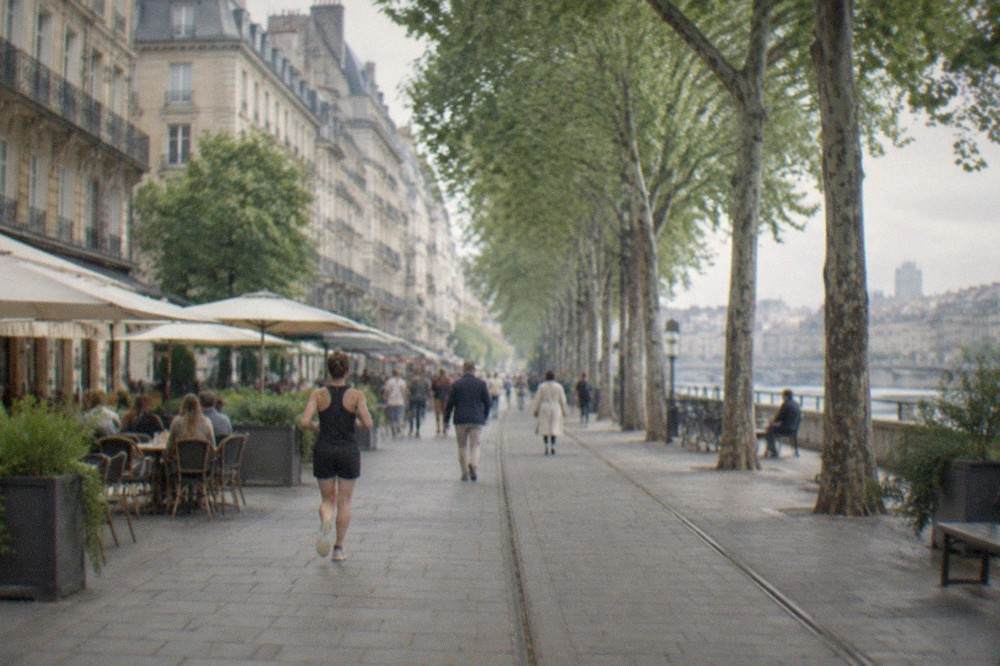
The car-free policy is the second reason. Bouffay, the medieval quarter around the cathedral, has had its pedestrian zones extended in phases through 2025, covering sectors near rue de l'Hôtel de Ville, Joffre and the south side of the cathedral. Graslin and the Île de Nantes are similarly pleasant on foot. Add the green line painted by Le Voyage à Nantes, a roughly 20 km trail linking the city's sights and public artworks, and Nantes essentially hands you a self-guided walking route for nothing. Our green line guide covers that trail in detail if you want the full parcours.
| Figure | What it means for walkers |
|---|---|
| 327,734 | Commune population, INSEE 2023 figures, sixth largest in France |
| 689,456 | Nantes Métropole population, 2023 figures on file |
| 3 tram lines, 45.6 km, 84 stations | The network shadows the walking loop; useful when legs tire |
| About 20 km | Length of the Voyage à Nantes green line painting |
| 1,873.3 h | Annual sunshine at the Nantes-Bouguenais station, 1991-2020 normals |
| 154 million | Naolib network trips in 2024, showing how central transit is to city life |
What Should A Nantes Walking Tour Cover?
A first Nantes walking tour should link the Bouffay old town, the Château des ducs de Bretagne and its ramparts, the cathedral of Saint-Pierre-et-Saint-Paul, the Passage Pommeraye, Place Royale and the Graslin district, then cross to the Île de Nantes for Les Machines de l'île. That loop covers a thousand years of the city, from the château works begun in 1466 to the Machines inaugurated in 2007, and every stage except the Machines costs nothing to enter.
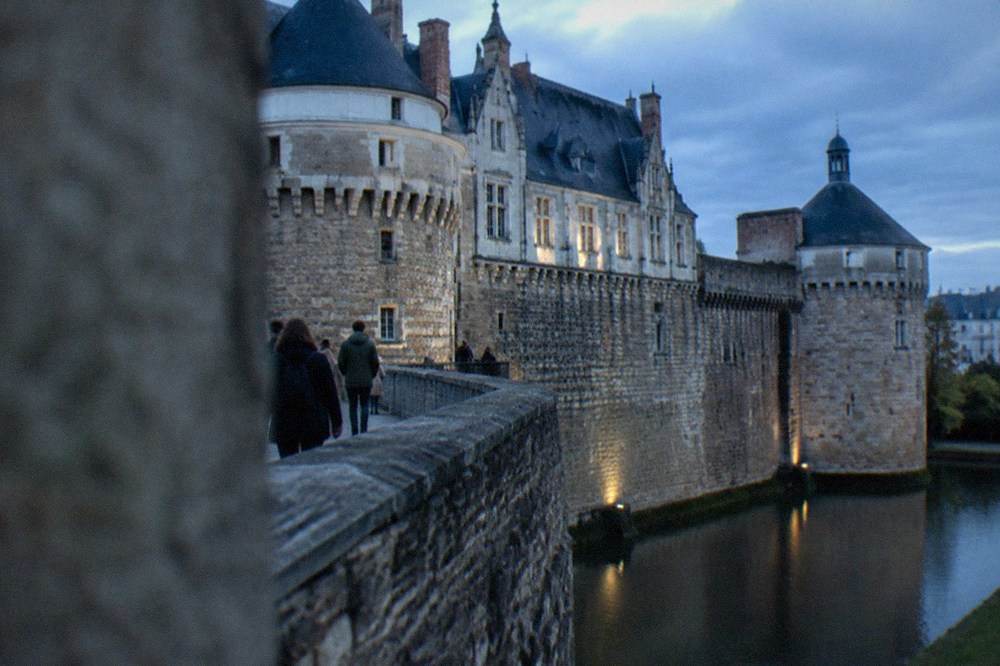
Start at the château, because it anchors everything. Francis II began rebuilding it in 1466, Anne of Brittany was born there on 25 January 1477, and the Edict of Nantes was signed there by Henri IV in April 1598. The courtyard and ramparts are free and open from 8:30 to 19:00 daily, with the moat garden free from 8:00 to 19:00. From there the route runs through Bouffay, the oldest quarter, where the streets still follow their medieval lines, and on to the cathedral. Our Château des ducs de Bretagne guide and Bouffay old town guide break both into full pages.
The southern half of the loop is the 19th-century city. The Passage Pommeraye, a three-storey shopping arcade built in 1843 on a slope and described by the tourism office as unchanged, connects the lower rue de la Chaussée area to Place Royale, and from there the Graslin district delivers the theatre, the place Graslin and the legendary art nouveau La Cigale brasserie before the route reaches the Loire. Crossing to the Île de Nantes brings you to the Machines, the Jules Verne-inspired mechanical bestiary, and to the Hangar à Bananes strip at the island's western tip. If your time is short, our one day in Nantes itinerary compresses exactly this loop.
| Stop on the loop | Entry | Hours | Planning note |
|---|---|---|---|
| Château courtyard and ramparts | Free | 8:30-19:00 daily | Summer opening extends to 20:00 in July and August |
| Château moat garden | Free | 8:00-19:00 daily | Quietest early morning |
| Cathedral Saint-Pierre-et-Saint-Paul | Free | Roughly 10:00-19:00 except Mondays, per its practical page | Partially reopened 27 September 2025; full works to 2028 |
| Passage Pommeraye | Free | 8:00-20:00 Monday to Saturday, 9:00-20:00 Sunday | Covered, so it doubles as a rain corridor |
| Mémorial de l'abolition de l'esclavage | Free | 9:00-18:00, 9:00-20:00 from mid-May to mid-September | Closes during Loire floods |
| Jardin des Plantes | Free | Seasonal, roughly 8:30 into the evening | One of the finest public gardens in western France |
For travellers who would rather have the route curated, three live products cover this ground from different angles, and the cards below render their current details from verified listing data.
Whichever style you choose, book the Machines separately if the elephant matters to you: the Grand Éléphant pauses its rides from 2 November 2026 to 28 February 2027 for annual maintenance, so a winter visit may meet the Galerie and the Carrousel but not the ride.
Guided Or Self-Guided: Which Nantes Walking Tour Suits You?
A guided walk suits visitors who want the city's history explained on the spot and do not mind fixing a departure time; a self-guided app tour suits independent walkers who prefer the same streets at their own pace with commentary on a phone; a themed food walk suits travellers whose interest runs to the city's tables as much as its stones. Nantes supports all three, and the choice comes down to pace and appetite rather than quality.
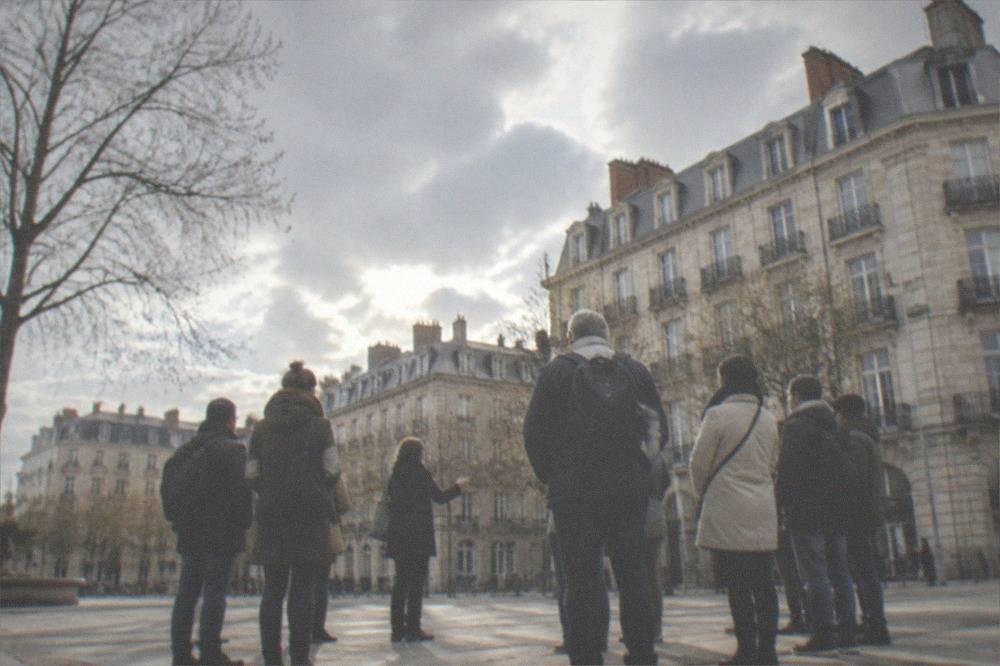
The case for a guide is context. A professional walk through Bouffay can explain why the 1943 bombings reshaped the quarter, why the slave trade made Nantes France's richest port, and why the Edict of Nantes was signed in the château rather than in Paris, all while you simply look around. Private and custom guided walks in the city let you set the theme and the length, and the operators publish their pricing on their live listings, which this site renders from verified feed data rather than restating.
The case for self-guided is freedom. A phone-based walking product lets you start when you want, stop for a berlingot or a gâteau nantais without losing the group, and skip what does not interest you. The self-guided app tour below is the natural companion to this page's route: the loop described above is precisely the kind of ground it covers, and it suits couples and families who like to wander but still want the stories.
If that format appeals, Check availability before you travel; most walking products in Nantes can be reserved with free cancellation, so an early booking costs you nothing if your plans shift.
The food walk deserves its own word, because Nantes is a food city in a way its postcode does not advertise. Beurre blanc was invented here, the Muscadet vineyards begin at the southern edge of the metropole, and LU's Petit Beurre biscuit was born here in 1886. An old town food walk turns the same streets into a tasting route, and for many visitors it is the most efficient way to understand what Nantes actually is.
A Self-Guided Walking Route Through Bouffay And Graslin
The classic self-guided loop starts at the Château des ducs de Bretagne, runs through the Bouffay old town to the cathedral, drops south to the Passage Pommeraye and Place Royale, continues through the Graslin district to the Loire, and finishes on the Île de Nantes among the Machines. Every stage except the Machines sits on level ground, and because the tram network's three lines criss-cross the route, the loop can be split at any point and resumed later.
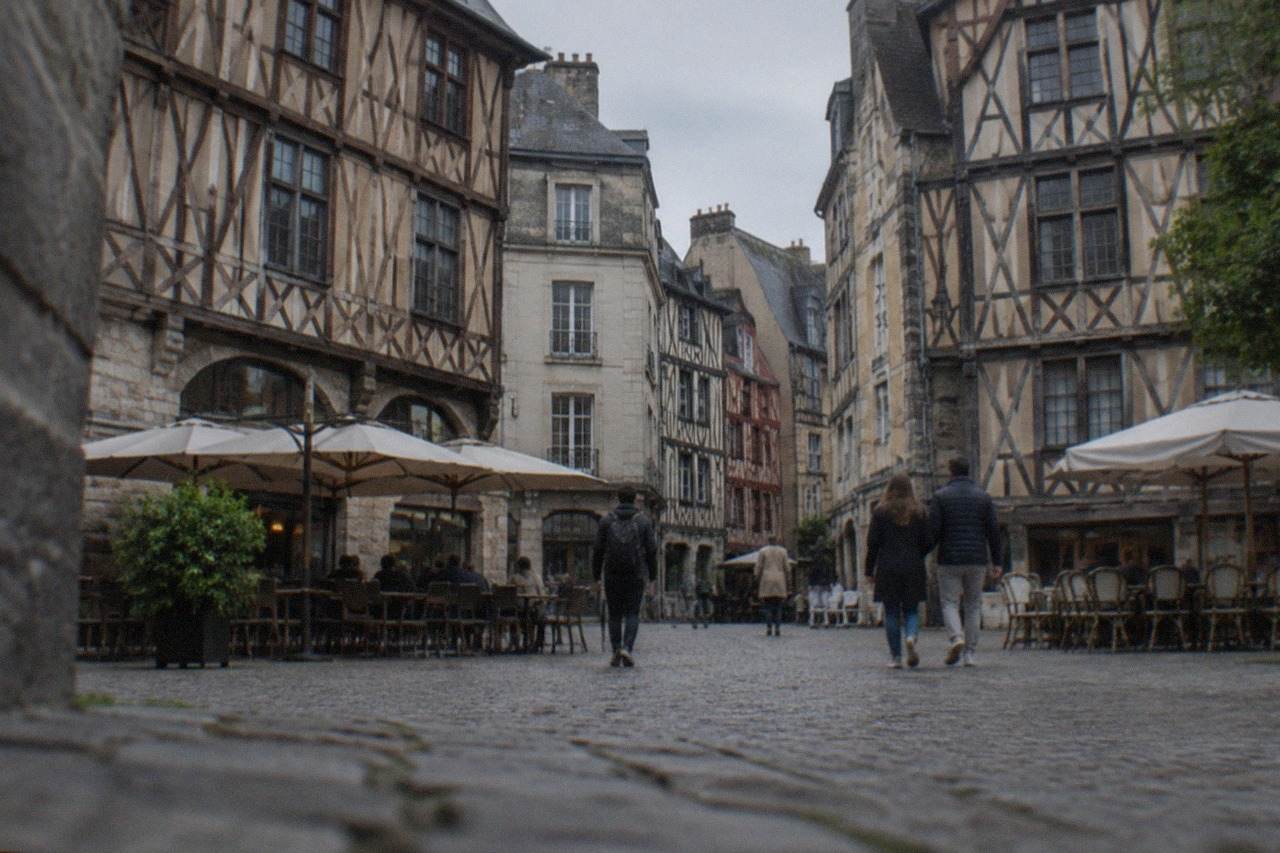
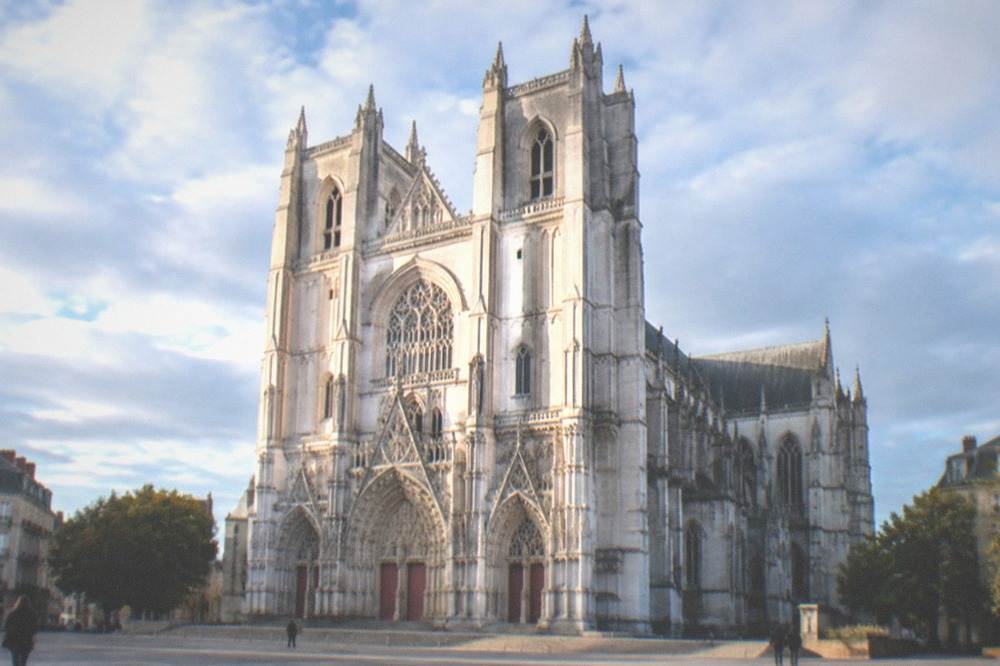
Walk the château ramparts first, then exit east into Bouffay. The quarter's narrow streets hold the city's oldest fabric, half-timbered houses among them, and the place du Bouffay at its heart was the medieval market square. Two minutes south stands the cathedral, begun in 1434 and only completed in 1891 after 457 years of works. It was badly damaged by arson on 18 July 2020, and after a restoration funded by the French State at a reported 32 to 35 million euros, it partially reopened on 27 September 2025 with full completion projected for 2028. Enter through the side portals: the west facade remains under scaffolding roughly 41 metres high. Inside, the tomb of Francis II and Marguerite de Foix, a Renaissance masterpiece by Michel Colombe, has had its effigies visible again since around 20 February 2026.
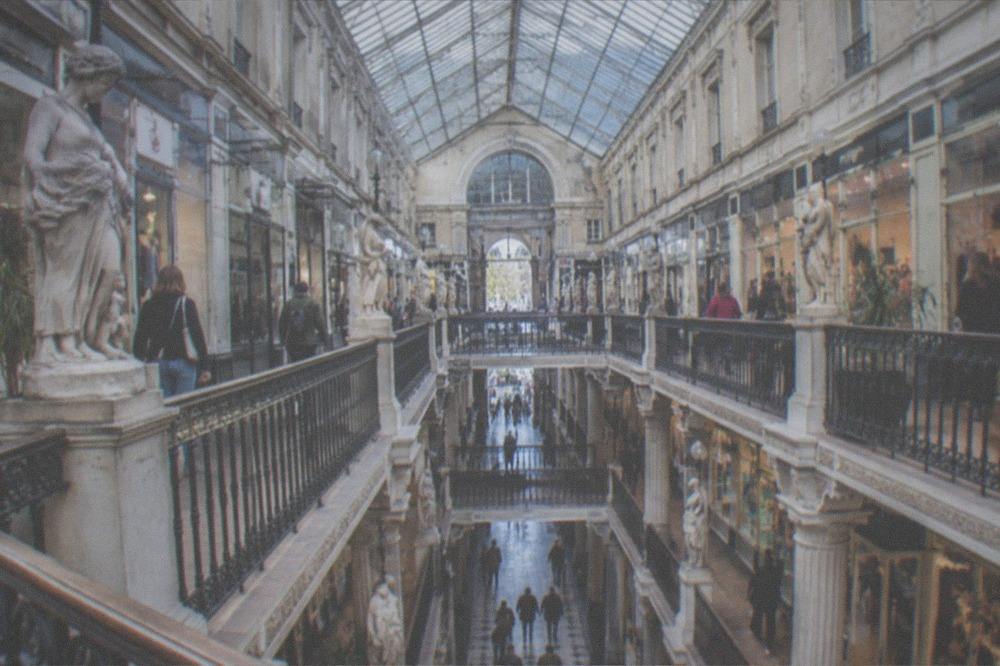
From the cathedral, rue de la Marne leads down toward the Passage Pommeraye, and the drop in ground level is the arcade's whole trick: three floors of shops stacked on a slope, lit by a glass roof, opened in 1843 and still trading. Place Royale follows, then place Graslin with its theatre and La Cigale, the art nouveau brasserie facing it. This is the moment to fold in food: the same streets that carry the history also carry the beurre blanc, the Muscadet and the berlingots, and an old town food walk covers both halves of the city at once.
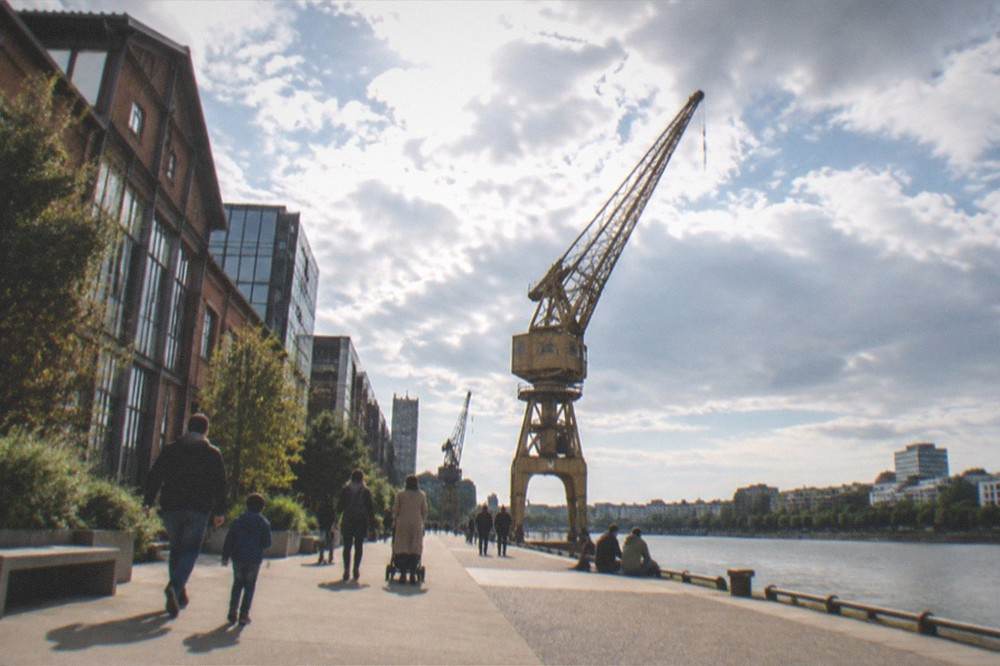
The last leg crosses the Loire to the Île de Nantes. The Machines de l'île opened on 30 June 2007 with the Grand Éléphant, joined in 2012 by the Carrousel des Mondes Marins, and the Galerie, the Carrousel and the elephant each take a separate ticket under the site's own pricing. Allow time for the Anneaux de Buren, the rings installation on the island's quays, and finish at the Hangar à Bananes for the sunset over the river. Our Île de Nantes area guide and Machines de l'île page cover the island in depth.
| Year | What you walk past |
|---|---|
| 1434 | Gothic rebuild of the cathedral begins; the works take 457 years, completing in 1891 |
| 1466 | Francis II begins rebuilding the Château des ducs de Bretagne |
| 25 January 1477 | Anne of Brittany is born at the château |
| 1532 | The Duchy of Brittany is joined to the kingdom of France |
| April 1598 | The Edict of Nantes is signed at the château by Henri IV, on 30 April per the château's own page |
| 1843 | The Passage Pommeraye opens, three floors on a slope |
| 1846 | Jean-Romain Lefèvre sets up as a biscuit maker in Nantes, the start of LU |
| 30 June 2007 | Les Machines de l'île is inaugurated with the Grand Éléphant |
| 2012 | The Mémorial de l'abolition de l'esclavage opens on the quays |
| 27 September 2025 | The cathedral partially reopens after the 2020 fire |
One honest note on the history: Nantes was France's largest slave-trading port, and the Mémorial de l'abolition de l'esclavage, free to enter on the Quai de la Fosse, is the memorial to that. The Memorial's own figures state 1,714 slave-trade expeditions left Nantes, 43 per cent of the French total, before the city's traders withdrew in 1830. Walking the riverside quays with that in mind changes the loop from a pretty stroll into something more complete. Our dedicated Mémorial guide covers it fully.
How Do You Get Between Nantes Walk Areas When Legs Tire?
Nantes is one of the easiest French cities to walk without a car: the tram network runs three lines over 45.6 km and 84 stations, the Navibus river shuttles cross the Loire and the Erdre on normal tickets, and the entire Naolib network is free for everyone from Saturday 00:00 to Sunday 23:59. The single exception is the airport shuttle, which always costs 10 EUR, weekend or not.
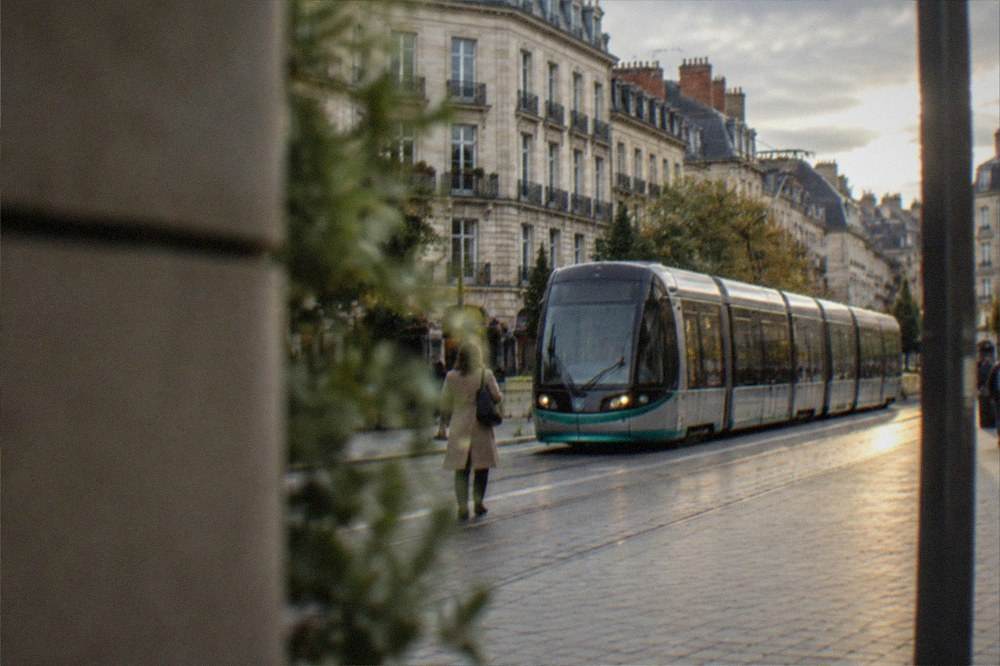
The tram is the walker's safety net. Nantes opened France's first modern tram line on 7 January 1985, running from Commerce to Haluchère, and the network now carries 154 million trips a year. Lines 1, 2 and 3 converge on the city centre, so almost any point on the walking loop is close to a stop. New lines 6 and 7 are under construction, with Rezé as their southern hub, targeted for the end of 2027; until then the existing three do the work. Other pages covering the same trip are gathered on Nantes Travel Guide.
The Navibus boats are the more scenic option. Route N1 links the Gare Maritime to Trentemoult on the left bank, N2 connects the Hangar à Bananes area to Trentemoult via Bas-Chantenay following its 12 November 2025 extension, and N3 runs on the Erdre. All take ordinary Naolib tickets, so a boat leg costs the same as a tram leg. Our Trentemoult area guide explains why the fishing village at the end of the N1 is worth the crossing, and our Erdre river guide covers the longer sightseeing options.
| Mode | Figure | Note for walkers |
|---|---|---|
| Tram | 3 lines, 45.6 km, 84 stations | First modern French tram line opened 7 January 1985 |
| Navibus | Routes N1, N2 and N3 | Crosses the Loire and the Erdre on ordinary Naolib tickets |
| Weekend travel | Free Saturday 00:00 to Sunday 23:59 | In place since 2021, open to visitors |
| Airport shuttle | 10 EUR one way | Excluded from the weekend free travel, every day of the year |
| New tram lines 6 and 7 | About 12 km and 9 km | Under construction, targeted for the end of 2027 |
Practically, this means you never need to plan the loop as one unbroken march. Walk the château and the cathedral in the morning, tram to the Île de Nantes for the Machines after lunch, and boat back across the Loire at dusk. That is how locals use the city, and it is the pattern our getting around Nantes guide describes in full.
How Much Does A Nantes Walking Tour Cost?
The walking itself is close to free: the château courtyard and ramparts, the moat garden, the cathedral, the Mémorial de l'abolition de l'esclavage, the Passage Pommeraye and the Jardin des Plantes all cost nothing to enter, and the museum admissions inside the loop are single-figure euro prices set by the venues themselves. Paid products, meaning guided walks, food walks and the Nantes CityPass, are sold through live listings, so their current prices render on this page's booking cards rather than in this sentence.
Break the costs into three layers. The first layer, the outdoor city, is free. Every street, square, rampart and riverside quay on the loop above costs nothing, and that includes the green line, the Anneaux de Buren and the street art of the Île de Nantes. Nantes is unusually generous this way: a visitor with comfortable shoes and no budget at all can walk the entire classic route and see the majority of the city's landmarks. Our free things to do in Nantes guide lists the full set.
The second layer is museum admission, paid at the till in euros. The château's Musée d'histoire de Nantes charges 9 EUR full price and 5 EUR reduced, free for under-18s and on the first Sunday of each month outside July and August. The Musée d'arts charges 9 EUR full and 4 EUR reduced, free for under-18s, free for everyone on Thursday evenings from 19:00 to 21:00. The Musée Jules Verne charges 4 EUR, reduced 1.50 EUR. The Musée Dobrée charges 9 EUR, reduced 6 EUR. None of these figures is a guess: each comes from the venue's own tariff page as verified for this site.
The third layer is the bookable products, and there the honest answer is that prices move with the market and the season, so this site renders them from live listing data instead of printing numbers that age badly. The Nantes CityPass is the one product worth understanding structurally before you buy anything: it bundles unlimited Naolib transport, a return airport shuttle trip, one TER return to Clisson and one entry per partner site including the château museum, the Galerie des Machines and the Carrousel, though not the Grand Éléphant ride. For a walker doing the full loop plus two museums, that bundling is where the arithmetic usually lands in your favour.
When Is The Best Weather For Walking In Nantes?
Nantes has a temperate oceanic climate, not a Mediterranean one: Météo-France's 1991-2020 normals for the Nantes-Bouguenais station give mean maximum temperatures from 9.3°C in January to 25.4°C in August, with 819.5 mm of rain spread over 119.7 days a year. For walking, that makes May to September the comfortable core season, spring and early autumn the sweet spots for mixtures of mild air and thin crowds, and a waterproof layer worth packing in any month.
The monthly picture matters more than averages, because Nantes winters are damp rather than dramatic. December is the wettest month at 101.0 mm, November follows at 94.1 mm, and January and October both land near 88 to 89 mm. Summer is the dry end of the year: July averages just 44.2 mm. Sunshine follows the same shape, from 72.6 hours in January to a July and August peak above 229 hours a month. Frost is real but modest, at fewer than eight days a month in the coldest stretch, so winter walking is perfectly possible with the right layers, which our Nantes in winter guide plans in detail.
| Month | Mean max °C | Rain mm |
|---|---|---|
| January | 9.3 | 87.9 |
| February | 10.5 | 67.5 |
| March | 13.5 | 58.4 |
| April | 16.2 | 58.3 |
| May | 19.6 | 61.0 |
| June | 23.0 | 48.5 |
| July | 25.1 | 44.2 |
| August | 25.4 | 50.3 |
| September | 22.4 | 59.5 |
| October | 17.6 | 88.8 |
| November | 12.9 | 94.1 |
| December | 9.8 | 101.0 |
Two weather facts deserve a planning flag. First, heat: the station's all-time record is now 42.2°C, set on 24 June 2026, and 2026 also set the station's records for the number of days at or above 30°C and 35°C. A July or August walk should start early and use the shade of the Jardin des Plantes and the Passage Pommeraye at midday. Second, floods: the Loire reached 8.18 m at the Pont Anne-de-Bretagne in February 2026, above 8 m for the first time in about 15 years, and the riverside Mémorial closes during such episodes. Our best time to visit Nantes guide weighs all of this against crowds and events.
If you would rather lock in a guided product for the good months, these are the walking-centred options the site has verified for Nantes.
Can You Walk Nantes With Kids Or On A Rainy Day?
Nantes works well as a walking city with children and on wet days: the Jardin des Plantes and the Machines de l'île hold attention outdoors, the Musée d'arts, the Musée Jules Verne and the Musée Dobrée cover the indoor hours, and the 1843 Passage Pommeraye gives a covered arcade as a rain corridor between Bouffay and Graslin. One planning warning: the natural history museum, the classic rainy-day stop, is closed for works until 2029, so do not build a wet-weather plan around it.
With children, structure the walk around the island. The Galerie des Machines shows the workshop where the creatures are built and maintained, the Carrousel des Mondes Marins is a ride in itself, and the elephant, when it is running, stomps the quay and sprays passers-by, which is exactly the memory a child keeps. Feed the route through the Jardin des Plantes too: it is free, central, and its aviaries and greenhouses give a rest from stone and streets. Our Nantes with kids guide builds a full family plan on the same bones.
On wet days, the indoor layer is deeper than it first appears. The Musée d'arts is open until 19:00, until 21:00 on Thursdays, closed Tuesdays. The Musée Jules Verne, in the house where the city honours its most famous son, born on the Île Feydeau in 1828, is small but perfectly formed, open afternoons and closed Tuesdays. The Musée Dobrée, which reopened in May 2024 after thirteen years of closure, runs Wednesday to Sunday. Le Lieu Unique, the national arts centre inside the old LU biscuit factory, is free to enter and combines exhibitions with a bookshop and a café. For its part, the Muséum d'histoire naturelle's closure until 2029 has pushed its programming out into pop-up exhibitions across the metropole, so a rainy day can still turn up a natural history event if you check what is running.
| Wet-day stop | Hours | Closed |
|---|---|---|
| Musée d'arts de Nantes | 11:00-19:00, Thursdays to 21:00 with free entry 19:00-21:00 | Tuesdays |
| Musée Jules Verne | Afternoons from 14:00, Saturday mornings from 10:00, summer daily 10:00-19:00 | Tuesdays |
| Musée Dobrée | 10:00-18:00, Wednesdays to Sundays | Mondays and Tuesdays |
| Muséum d'histoire naturelle | Closed for works until 2029 | Entirely |
| Le Lieu Unique | Free entry to the building | Check programme for show times |
| Passage Pommeraye | 8:00-20:00 Monday to Saturday, 9:00-20:00 Sunday | Never, and it is covered |
Accessibility on the loop is generally good. The château is labelled Tourisme & Handicap across all four disability categories, the tram fleet is low-floor, and the centre's new pedestrianised zones are surfaced for wheels as well as feet. Our accessibility in Nantes guide carries the detail for wheelchair users and visitors with limited mobility.
Common Questions About Nantes Walking Tours
Is Nantes A Walkable City?
Yes. The historic core of Bouffay, Graslin and the château is compact, flat and progressively pedestrianised, and the classic sightseeing loop links everything on foot. Three tram lines and the Navibus river shuttles cover any leg of the route that tires you out.
What Should A First Walking Tour Of Nantes Include?
The Château des ducs de Bretagne with its free ramparts, the Bouffay old town, the cathedral, the Passage Pommeraye, Place Royale, the Graslin district and a crossing to the Île de Nantes for Les Machines de l'île. Every stage except the Machines costs nothing to enter.
Is The Nantes Cathedral Open For Visits?
Partially, yes. It reopened on 27 September 2025 after the 2020 fire, roughly 10:00 to 19:00 except Mondays per its practical page, with works continuing toward full reopening in 2028. Enter by the side portals while the west facade remains under scaffolding.
Do You Need A Guide To Walk Nantes?
No, the city is easy to walk independently, and the green line painting links about 20 km of sights for free. A guided or self-guided app tour adds depth on the slave-trade history, the Edict of Nantes and the Machines, which many visitors prefer to have explained.
How Much Does Walking In Nantes Cost?
The outdoor city is free, including the château courtyard, the cathedral, the Mémorial, the Passage Pommeraye and the Jardin des Plantes. Museum admissions inside the loop run 4 to 9 EUR at the till, and bookable walking products render their live prices on this site's cards.
When Should You Not Do A Long Walk In Nantes?
Avoid midday in high summer, since the station record of 42.2°C was set on 24 June 2026, and avoid riverside stretches during Loire floods, when the Mémorial closes. Winter walking is fine with layers; December is the wettest month at 101.0 mm on average.
The honest summary is that Nantes is a walker's city that does not require a walker's fitness. The loop is flat, the sights are chained, the transport safety net is dense, and the price of admission to most of it is nothing at all. Pick your season from the climate table, put the elephant's winter pause in your calendar if you are travelling between November 2026 and February 2027, and the city will do the rest.