Creperie Nantes
Nantes sits on the Loire in the Loire-Atlantique department of western France, close enough to Brittany for its crêperies to serve the same buckwheat galettes and cider, with a sweet menu that runs from classic crêpes to berlingots and gâteau nantais.
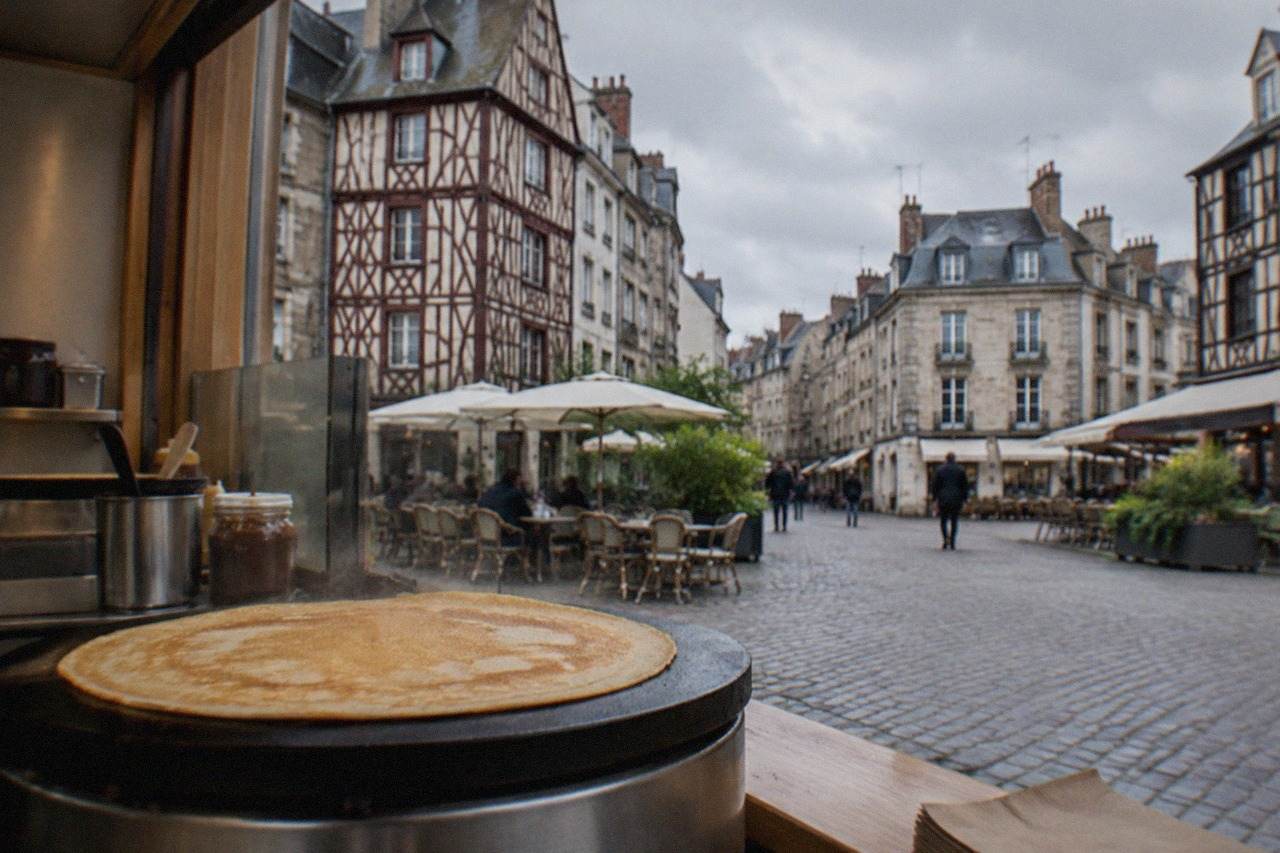
Short answer
A crêperie in Nantes is a restaurant serving savoury buckwheat galettes and sweet wheat-flour crêpes, usually with cider. Expect roughly the same prices as a casual bistro, with the city's own sweet specialities, berlingots, gâteau nantais and Petit Beurre, waiting in the shop windows nearby.
Nantes, the Loire-Atlantique city on the Loire and Erdre rivers in the Pays de la Loire region of western France, keeps one of the densest concentrations of crêperies you will find outside Brittany itself. The city spent centuries as the capital of the dukes of Brittany, only detached administratively in 1941, and its kitchens still cook to a Breton instinct. That means the crêperie is not a novelty here: it is an ordinary weeknight dinner, the savoury galette first with cider, the sweet crêpe after, in rooms that range from half-timbered Bouffay basements to the painted fishermen's houses of Trentemoult across the river.
This guide covers what to order, what it costs, where to look by neighbourhood, and how the crêperie fits into the wider Nantes food scene. Prices on this page are local till figures in euro, drawn from verified sources; anything relating to a bookable tour renders from live listings rather than being typed by hand. For the definitional basics, the sister page what exactly is a creperie takes the question in depth, and the broader Nantes food guide sets the crêperie in its full local context.
What Exactly Is A Crêperie In Nantes?
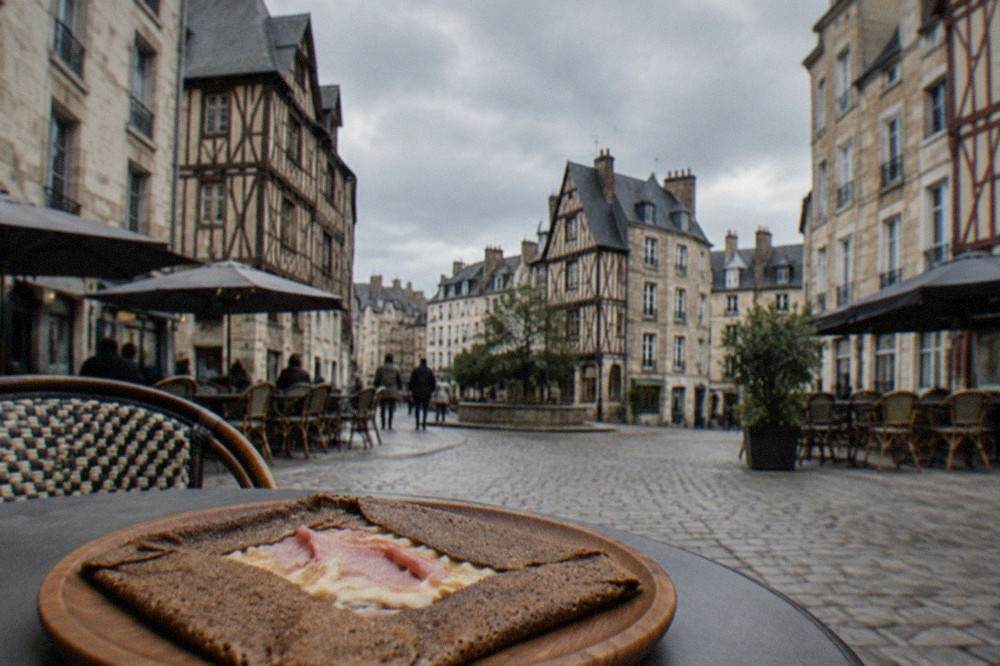
A crêperie in Nantes is a restaurant built around the crêpe: a savoury galette made from buckwheat flour, filled with ham, cheese, egg or seafood, followed by a sweet wheat-flour crêpe, and traditionally drunk with dry cider served in small earthenware cups called bolées. The format is Breton in origin, and Nantes inherited it through centuries as the capital of the duchy, before 1941 separated the department from the Breton administrative region.
The distinction between the two dishes matters more than visitors expect, because ordering backwards is the classic first-timer's mistake. A galette is the savoury course: darker, crisp-edged, made from sarrasin, the buckwheat that Brittany's poor soil favoured. The crêpe is the sweet one, pale and folded from white wheat flour. A crêperie will run both off the same griddle, the billig, all evening.
| Dish | Batter | Course | Typical Fillings | Traditional Drink |
|---|---|---|---|---|
| Galette | Buckwheat (sarrasin), darker and crisp | Savoury main | Ham, cheese, egg, mushrooms, seafood | Dry cider in a bolée |
| Crêpe | White wheat flour, pale and soft | Sweet dessert | Sugar, butter, chocolate, jam, caramel | Cider, or coffee after |
Cider is the other half of the institution. Crêperies in western France pour still, dry farmhouse ciders by the bolée, and the better ones stock several, the way a wine bar lists by grower. Locals treat the pairing as non-negotiable: galette, crêpe, cider, in that order. The question of whether Nantes itself is really Brittany is a live local debate, and one this site answers separately on is Nantes in Brittany; for crêpe purposes, the cooking culture crosses whatever line the map draws.
How Much Does A Meal At A Crêperie In Nantes Cost?
A crêperie meal in Nantes generally sits at the casual end of the price scale, with crêperies typically landing between inexpensive and mid-range territory depending on how many galettes, crêpes and ciders each person orders. A galette, a crêpe and two bolées is a normal full order, and drinks are itemised separately.
That aggregate picture is the honest one, because individual crêperies post their own menus and the numbers vary by street and season. What the aggregates do establish is the band: Nantes is not an expensive city to eat in by French standards, and a crêperie is usually the cheapest sit-down hot meal in the centre. Price data from Numbeo, current to its September 2026 update, gives the ranges below.
| Item | Typical 2026 Aggregate | Observed Range |
|---|---|---|
| Inexpensive restaurant meal | ~15 EUR | 12-23 EUR |
| Mid-range dinner for two, three courses | ~varies by venue | 35-varies by venue |
| Average three-course dinner, good restaurant | ~25 EUR | 17.50-varies by venue |
| Pint of draft domestic beer | ~7 EUR | venue-dependent |
| Cappuccino | ~varies by venue | venue-dependent |
| Soft drink | ~varies by venue | venue-dependent |
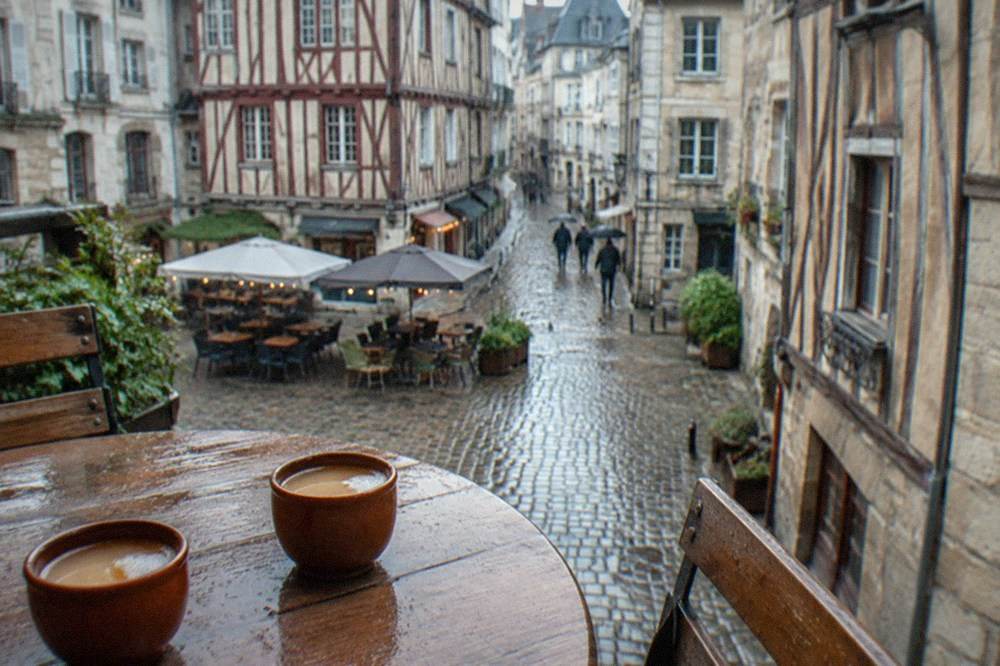
A few habits keep the bill down. Lunchtime set formulas, where a crêperie pairs a galette, a crêpe and a cider at a single price, are common through the working week in the Bouffay and Graslin quarters. Ordering tap water is normal and unremarkable. And the drink markup that stings in fine-dining rooms barely exists at this level; cider by the bolée is priced to be drunk, not admired. For a fuller treatment of eating across the city, the best restaurants in Nantes guide covers the sit-down scene beyond the crêperie.
If you would rather walk off lunch across the whole city first, a photo-focused walking tour is one of the more popular first-day products on this site's roster:
The listings carry their own live prices and ratings, so the figures you see on a card are the figures the operator publishes today rather than anything this page states second-hand.
Which Neighbourhoods Of Nantes Have The Best Crêperies?
The historic centre holds the densest cluster: the Bouffay quarter around the cathedral and the Château des ducs de Bretagne is the old medieval core where crêperies occupy ancient cellar rooms, while Graslin and the area around the Passage Pommeraye, built in 1843, add more polished dining rooms. Across the Loire, Trentemoult's painted fishermen's houses and the Île de Nantes around the Hangar à Bananes offer a newer, riverside crêperie culture.
No single named crêperie is recommended here, deliberately: venues in this segment open and close faster than a guide's facts can be verified, and this site only publishes figures it has checked at source. What can be verified is the geography, and Nantes' geography does the sorting for you.
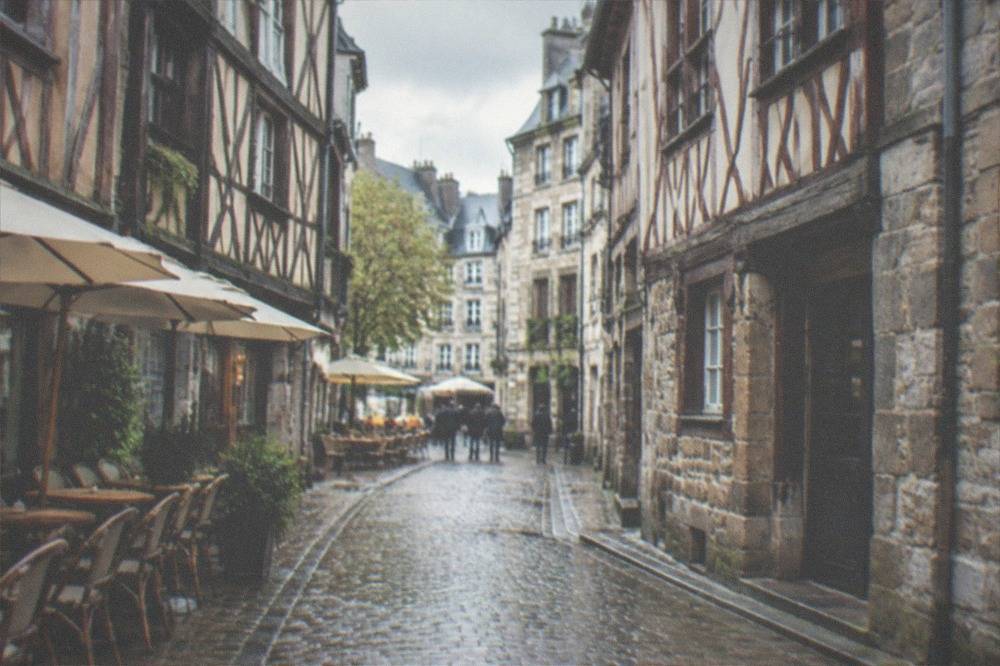
Bouffay is the default search area. It is the pedestrianised medieval quarter, extended in phases through 2025 with wider traffic-limited zones, and its cellar crêperies are the atmospheric archetype visitors picture. Graslin, around the Théâtre Graslin and the Passage Pommeraye, is the 19th-century commercial heart; the Passage, a three-floor 1843 shopping arcade that the tourism office describes as unchanged since it was built, sits in the middle of a dense dining strip. The Île de Nantes, the island between the river's channels, puts crêperies and bars near the Machines de l'île and along the Hangar à Bananes, the old banana warehouse now holding restaurants and galleries. Trentemoult, on the left bank at Rezé, reached by the Navibus river shuttle, is the small-scale option: painted houses, quayside tables, and a boat ride instead of a bus.
A photo walk is the efficient way to pick your crêperie: the old town, the Passage and the quays fall inside a single guided circuit, and every one of those streets is also where the crêperies cluster.
What Should You Order After The Crêpe: Nantes' Own Sweets?
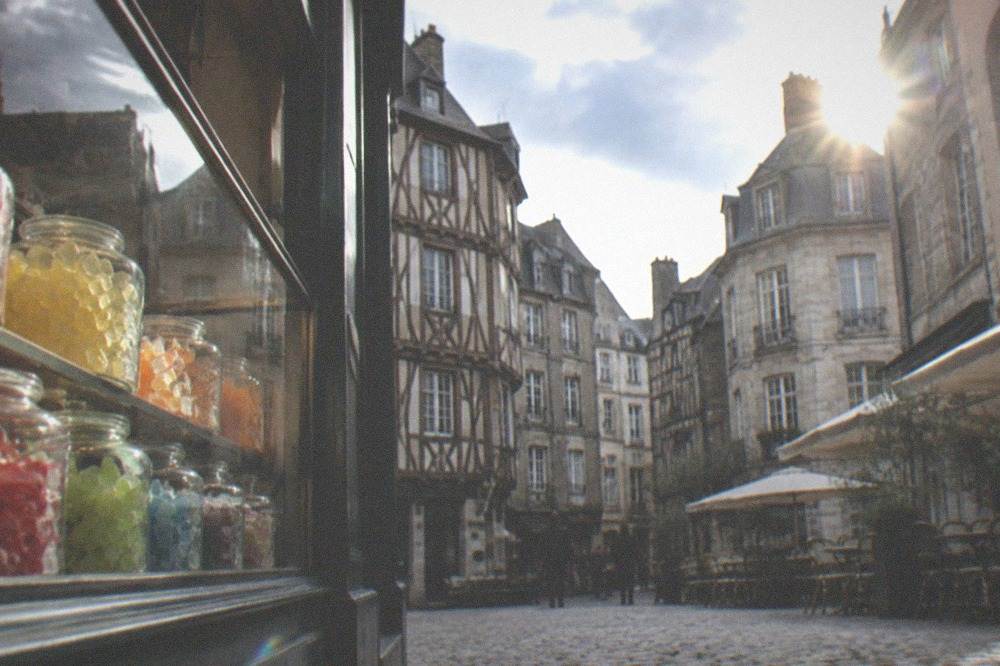
The classic end to a crêperie meal is a crêpe with butter and sugar, but Nantes adds its own confectionery canon: berlingots, the tetrahedron-shaped hard candies traced to the late 19th century and made by Pinson from 1895 near the port; gâteau nantais, the almond-and-rum cake attributed to around 1820; LU's Véritable Petit Beurre biscuit invented in 1886; and beurre blanc, the city's emulsified butter sauce, for the savoury side of the meal.
These are not filler facts; they are the window displays you will walk past on the way to any crêperie in the centre, and they carry real dates. LU's biscuit factory is a genuinely local story: Jean-Romain Lefèvre set up as a biscuit maker in Nantes in 1846, production moved to the Loire-side factory facing the château in 1886, and today's output runs to roughly 24,000 tonnes a year from the La Haye-Fouassière plant near the city, which has hosted the biscuit lines for 40 years as of 2026. The full index of guides sits on Nantes Travel Guide.
| Speciality | What It Is | Key Date From The Sources |
|---|---|---|
| Berlingots nantais | Tetrahedron hard candies, traditionally seven flavours from orange to mint | Pinson confiserie founded 1895 |
| Gâteau nantais | Almond-rum quatre-quarts cake soaked in syrup, patisserie-led revival | Origin attributed to circa 1820 |
| Petit Beurre | The scalloped butter biscuit invented by the LU company | Invented 1886; factory move same year |
| Beurre blanc | Shallot, white wine and vinegar reduction whisked with cold butter | Restaurateurs sought protected STG status in 2025 reporting |
| Muscadet | Dry white from the Melon de Bourgogne grape around Nantes | 2026 harvest ban declared 11 August 2026, a record eight days early |
Two of those rows deserve a pause. Beurre blanc is the savoury pride of the city, a Nantais sauce of shallots, Muscadet and butter that the standard pairing serves with fish, and in 2025 local restaurateurs were publicly pursuing protected traditional-specialty status for the recipe. Muscadet, meanwhile, is the region's own wine, and its 2026 harvest was historically early, the picking ban declared on 11 August 2026, a record eight days ahead of the previous mark set in 2003, with heat and drought cutting yields to around 30-40 hectolitres per hectare. A crêperie that pours cider will often pour Muscadet too; the wine tour below is the deeper route into that side of the local table.
For the sweet-toothed, the Nantes food guide maps the full gourmand trail from the Talensac market to the patisseries, and it is the natural next click after this one.
How Do You Get To The Crêperie Districts In Nantes?
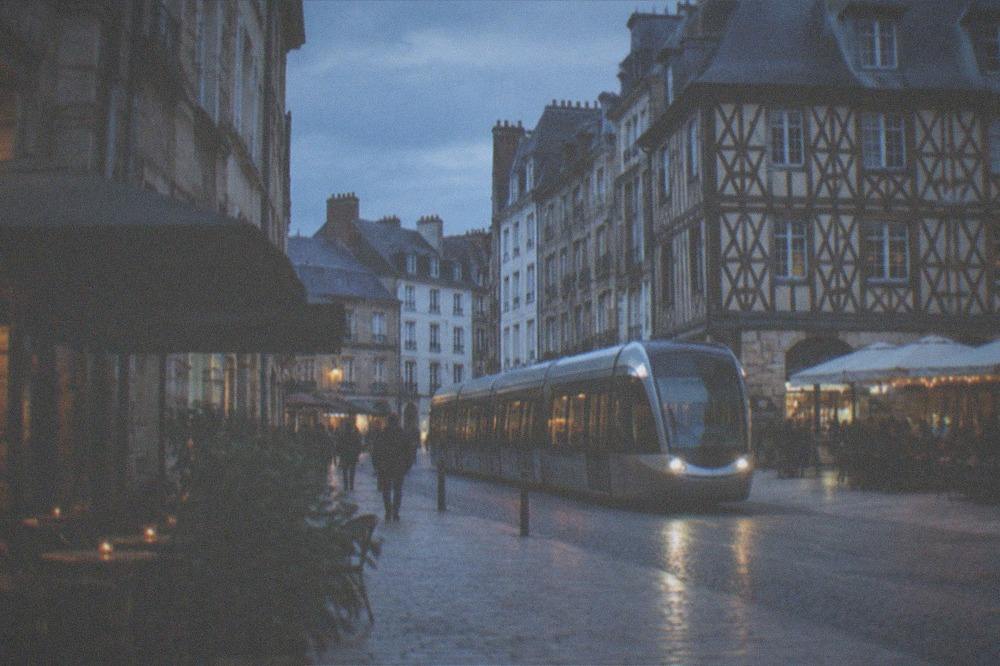
Nantes runs a tram and bus network, Naolib, with a 1-hour ticket at 1.80 EUR, a 24-hour ticket at 6.80 EUR and a 24-hour ticket for four people at 15 EUR, and the network is free for everyone from midnight Saturday to 23:59 Sunday, with the airport shuttle the one paid exception. The crêperie districts of Bouffay, Graslin and the Île de Nantes all sit on tram lines or a short riverside walk from each other.
The city's geography is compact, so most crêperie-hunting happens on foot once you are in the centre. Bouffay to Graslin is a level ten-or-so-minute stroll through the Passage Pommeraye; the Île de Nantes is across the Loire from both. The Navibus river shuttles cross the water instead: line N1 runs from the Gare Maritime to Trentemoult Sablières, N2 links the Hangar à Bananes and Bas-Chantenay to Trentemoult, and N3 runs on the Erdre, all on normal Naolib tickets.
| Naolib Ticket | Price | Notes |
|---|---|---|
| 1-hour single | 1.80 EUR | Tram, bus, Navibus, TER inside the métropole |
| Carnet of 10 | 17.80 EUR | The standard multi-trip option |
| 24-hour ticket | 6.80 EUR | Unlimited network use for one day |
| 24-hour ticket, 4 people | 15 EUR | Group day ticket |
| Weekend travel | Free | Saturdays and Sundays, all network modes |
| Airport shuttle | 10 EUR | Always paid, excluded from the weekend rule |
If you are stringing crêperie stops together with sightseeing over several days, the city's tourist pass is worth arithmetic. The Pass Nantes, priced from 30 EUR for 24 hours as of the structure valid from 1 April 2026, bundles transport with entries; the Pass Nantes guide works through the sums, and getting around Nantes covers every mode in detail, including the free-weekend rule.
For a crêperie-adjacent day out, salt is the surprise link. Guérande, the medieval walled town about an hour away whose marshes produce the region's fleur de sel, reports an exceptional 2026 harvest thanks to the summer heat, and a visit there pairs naturally with a coastal lunch:
When Is The Best Time Of Year For Crêperies In Nantes?
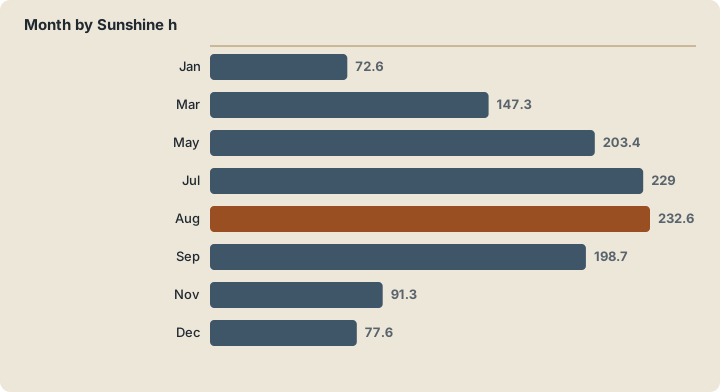
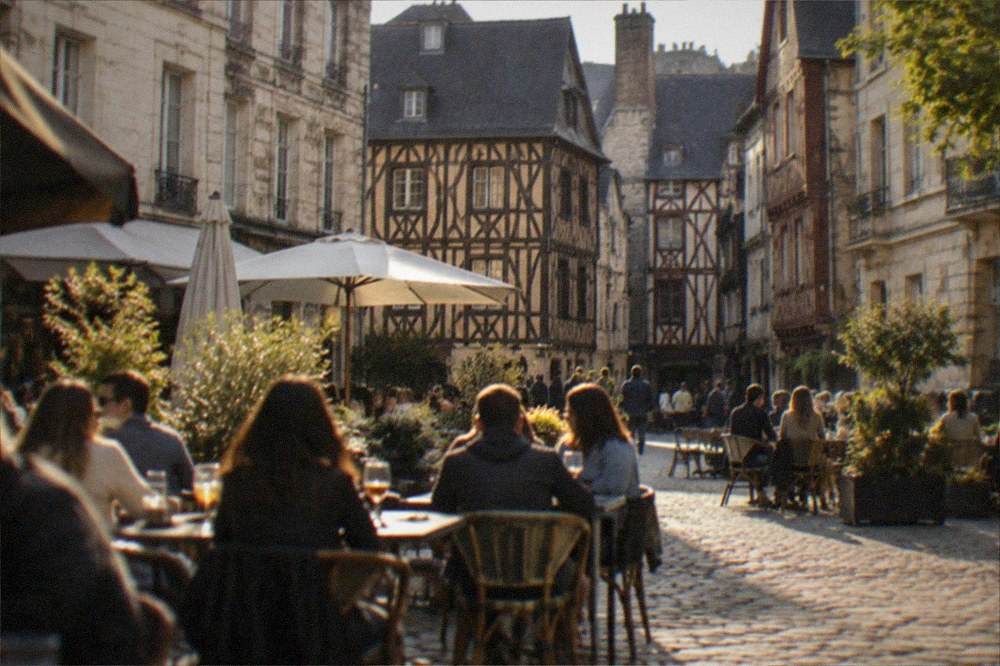
Crêperies in Nantes trade all year, but the eating weather matters: Météo-France normals for the Nantes-Bouguenais station show mean maximums of 9.3 C in January rising to 25.4 C in August, with 819.5 mm of rain a year spread across 119.7 days, so indoor cellar crêperies do most winter business while terrace crêperies along the quays fill from late spring through September, and July is both the driest month and the warmest.
The table below is the verified climate record, not a guidebook impression. Note what it actually says: the wettest months are November and December, at 94.1 and 101.0 mm respectively, and the driest is July at 44.2 mm, while sunshine peaks in August at 232.6 hours. The 15th edition of the Le Voyage à Nantes summer art trail, themed on Earth, ran 4 July to 6 September 2026 and fills the streets the green line marks out; the best time to visit Nantes guide weighs the same numbers against crowds and prices, and Nantes weather has the full monthly breakdown.
| Month | Mean Max °C | Rain mm | Sunshine h |
|---|---|---|---|
| Jan | 9.3 | 87.9 | 72.6 |
| Mar | 13.5 | 58.4 | 147.3 |
| May | 19.6 | 61.0 | 203.4 |
| Jul | 25.1 | 44.2 | 229.0 |
| Aug | 25.4 | 50.3 | 232.6 |
| Sep | 22.4 | 59.5 | 198.7 |
| Nov | 12.9 | 94.1 | 91.3 |
| Dec | 9.8 | 101.0 | 77.6 |
Two weather events of 2026 will shape the folklore for years. On 24 June 2026 the station recorded 42.2 C, the new all-time record for Nantes, beating the 42.0 C of 18 July 2022, with several June days above 40 C; and in February 2026 the Loire reached 8.18 m at the Pont Anne-de-Bretagne, above 8 m for the first time in about 15 years, closing riverside sections including the Mémorial de l'abolition de l'esclavage during the flood. Practical translation: in a heatwave, the cellar crêperies of Bouffay are the coolest tables in town, and after a wet winter week, check whether the quayside rooms are open before you walk to them.
What Else Rounds Off A Crêperie Day In Nantes?
A crêperie day in Nantes slots neatly around the city's free anchors: the Château des ducs de Bretagne's courtyard and ramparts are free daily from 8:30 to 19:00, the Passage Pommeraye costs nothing to walk, and the Jardin des Plantes and the Île de Versailles are free public gardens. Add a Talensac market morning before the galette, and the whole day costs little more than the meal itself.
The free layer of the city is deep, and the free things to do in Nantes guide enumerates it properly; the crêperie is simply the paid punctuation between free sights. Markets deserve the morning slot: Talensac is the city's reference market, and its stalls are the same producers whose cider, butter and buckwheat end up on crêperie griddles. Note the Monday closure, unusual for a city market, with an exception on public holidays.
| Talensac Market | Days | Hours |
|---|---|---|
| Standard week | Tuesday to Friday | 08:00-13:00 |
| Weekend | Saturday and Sunday | 08:00-13:30 |
| Closed | Monday | Except public holidays, when it opens |
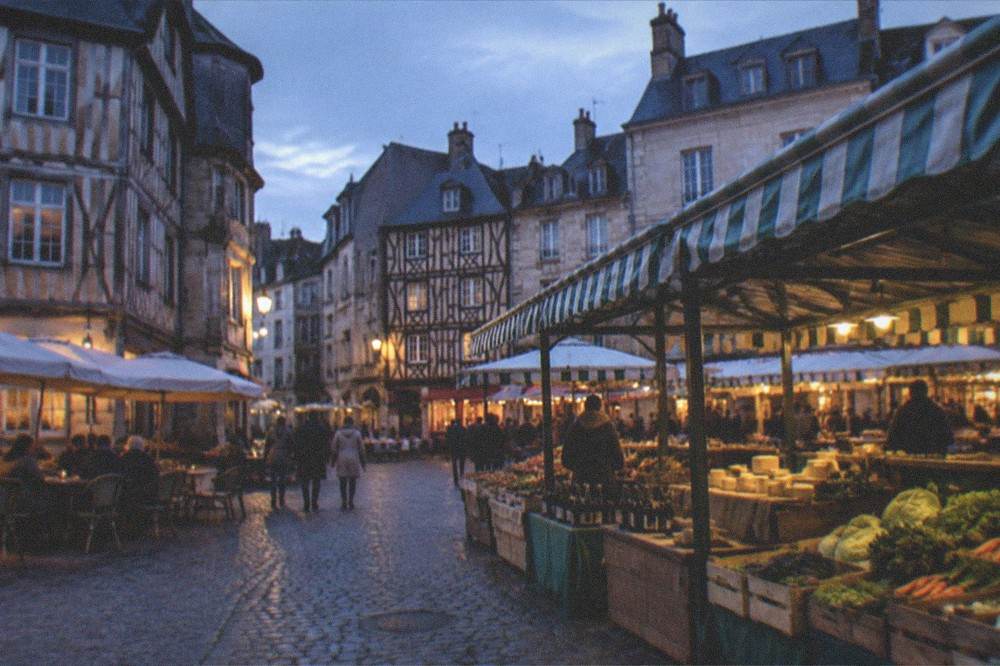
For a livelier evening than a quiet galette, the city has other registers: the Hangar à Bananes on the Île de Nantes concentrates bars and restaurants in the old warehouses, and the green line painted along about 20 km of pavement threads the art installations, cathedral, château and riverfront into one walkable circuit, as the Le Voyage à Nantes guide explains. Budget travellers should read Nantes on a budget before committing to anything priced like a proper restaurant; the crêperie will usually win that comparison anyway.
The second set of paired tours below covers the walking, water and wheels options that bracket a crêperie stop most naturally:
One of the most enjoyable pre-lunch formats in the city is a guided roll through the historic streets:
Whether you arrive at your galette on foot, by tram or by Segway, the order of the meal stays the same, and the city stays walkable between all of it. That is the real pleasure of a crêperie crawl in Nantes: the distances are short, the cider is local, and the sweet course is never more than a street away.
Common Questions About Crêperies In Nantes
What Is The Difference Between A Galette And A Crêpe?
The galette is the savoury course, made from buckwheat flour, darker and crisper, filled with ham, cheese, egg or seafood. The crêpe is the sweet dessert, pale and soft, made from white wheat flour. A crêperie in Nantes serves both in sequence, galette first, crêpe second, with dry cider the traditional drink throughout.
Do You Need To Book A Crêperie In Nantes?
For an ordinary weeknight, walking in is usually fine, and this site states no queue figures because none are verified at source. Weekend evenings in the Bouffay and Graslin quarters fill up fastest, and the terraces along the Île de Nantes and Trentemoult are weather-dependent. Booking ahead is the safe habit in July and August, when the city's summer programme fills the streets.
Is Cider Compulsory At A Crêperie?
Nothing is compulsory, but cider is the traditional pairing and the one most rooms pour by the small earthenware bolée. Crêperies typically also stock still and sparkling water, coffee, and often the local Muscadet, the dry white made from the Melon de Bourgogne grape in the vineyards around Nantes. Tap water is free on request in France.
Are Crêperies In Nantes Good For Children?
The format suits families well: galettes and crêpes are simple, hot, fast-cooked foods, and children under 18 eat free in the city's museums while the Château courtyard and Jardin des Plantes cost nothing at all. The Nantes with kids guide builds full family days around the same centre where most crêperies sit.
What Sweets Should You Try Alongside The Crêpes?
The Nantes canon runs beyond the crêpe: berlingots, the multicoloured tetrahedron candies made by Pinson from 1895; gâteau nantais, the almond-and-rum cake attributed to around 1820; and LU's Véritable Petit Beurre biscuit, invented in 1886. Beurre blanc, the city's butter sauce, belongs to the savoury course and pairs with the fish dishes of the Loire estuary.
How Many Days Should You Give Nantes For A Food-Focused Trip?
A crêperie crawl needs one evening, but the food city deserves two or three days: a market morning at Talensac, a museum afternoon in the Château des ducs de Bretagne, a wine detour into the Muscadet vineyards, and a river crossing to Trentemoult for the quayside tables. The itineraries on this site, from one day to three, sequence the full list.