What Exactly Is A Crêperie?
A plain-English explanation of what a crêperie is, how galettes differ from sweet crêpes, what to order in Nantes and what a meal there typically costs.
Nantes, in the Loire-Atlantique department of the Pays de la Loire region in western France, is full of crêperies along its winding lanes, and visitors often ask the same question within a day of arriving: what exactly is a crêperie? The short answer is a restaurant that specialises in crêpes and, in this part of France, in their savoury buckwheat cousins called galettes. The longer answer involves cider drunk from bowls, Brittany's grain history and the fact that in Nantes the whole tradition sits only a short walk from some of the best food streets in western France.
What Exactly Is A Crêperie?
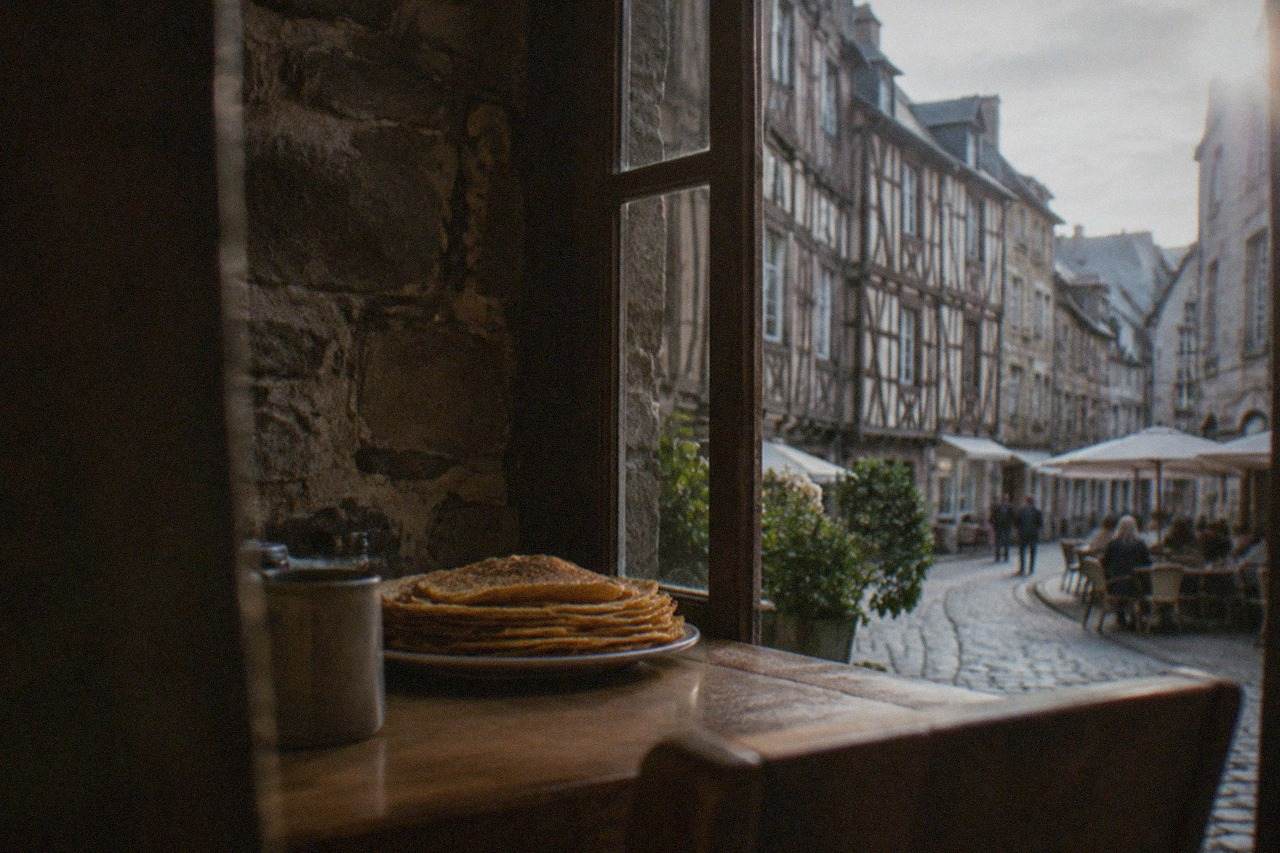
A crêperie is a restaurant, sometimes a small café or a takeaway window, whose menu is built around crêpes and galettes rather than a full kitchen of dishes. In Nantes, in western France, the classic version is a low-lit room with wooden tables, hard cider served in earthenware bowls, a griddle called a billig at the centre of the operation and a menu split between savoury galettes and sweet crêpes. Some are sit-down institutions, others are holes in the wall near the Bouffay old town.
The distinction matters because a crêperie is not a dessert shop. The galette comes first: a thin, crisp pancake made from buckwheat flour, folded around fillings such as egg, cheese, ham, mushrooms or fish, and eaten as a main course. The sweet crêpe, made from white wheat flour, arrives afterwards, filled with sugar, jam, chocolate or the salted caramel butter that this region loves. A full crêperie meal in the Nantes style is therefore savoury first, sweet second, and cider throughout.
That cider is part of the definition. The historic duchy of Brittany, of which Nantes was the capital until the sixteenth century, is cider country rather than wine country on its Atlantic side, and the crêperie carries that heritage inland. Order a bolée, the small earthenware bowl it is served in, and you are eating the way the region has eaten for generations. For a broader sense of what the city is known for beyond the table, our guide to what Nantes is famous for covers the essentials.
Why Is The Crêperie Such A Big Deal In Nantes?
Because Nantes sits at the cultural seam between Brittany and the Loire valley, and the crêperie tradition belongs to both worlds. Nantes was the historic capital of the dukes of Brittany, and its old Bouffay quarter still carries Breton street names and Breton eating habits, while the surrounding Loire-Atlantique countryside grows the buckwheat and produces the cider that the galette tradition runs on. The crêperie here is not a tourist import, it is the local default lunch.
The buckwheat itself explains much of it. Known locally as blé noir, or black wheat, buckwheat grows well on the poor, damp soils of Atlantic France, and it became the everyday grain of the Breton rural diet centuries ago. The galette de blé noir that a Nantes crêperie cooks today is the direct descendant of that farmhouse cooking: a cheap grain, a hot stone, whatever filling the household had. The sweet crêpe was the festive version, reserved for feast days, and that hierarchy, savoury then sweet, survives on every menu card in the city.
What makes Nantes distinct from, say, Rennes further north is that the crêperie tradition here overlaps with a wine region. Muscadet, made from the Melon de Bourgogne grape in vineyards just south and east of the city, is the other drink that appears on crêperie tables, and plenty of Nantes establishments list it alongside the cider. If you are unsure which way that wine leans, our piece on whether Muscadet is sweet or dry settles it. The practical upshot for a visitor is that a crêperie in Nantes is often the cheapest and most local way to eat well in the entire city centre, and the best concentrations of them sit in the Bouffay lanes and around the Halles and Place Royale area, both of which you can cover comfortably on foot given how walkable Nantes is.
If you would rather have the old town's food streets pointed out to you than find them yourself, a short guided walk is the efficient way to do it, and a food-focused tour is the deeper option.
How Do Galettes And Crêpes Differ?
A galette is the savoury one, made from buckwheat flour, darker in colour, slightly crisp at the edge and served folded around a filling as the main course. A crêpe is the sweet one, made from white wheat flour, thinner, paler and softer, served with sugar, jam, chocolate, caramel or fruit as the dessert. In a Nantes crêperie the two arrive in that fixed order, galette first and crêpe after, and the kitchen treats them as two separate dishes rather than one recipe with different toppings.
| Galette | Crêpe | |
|---|---|---|
| Flour | Buckwheat (blé noir) | White wheat |
| Course | Savoury main | Sweet dessert |
| Colour | Dark, speckled brown | Pale gold |
| Texture | Crisp, slightly chewy edge | Thin and soft |
| Typical fillings | Egg, ham, cheese, mushrooms, fish | Sugar, jam, chocolate, salted caramel, apple |
| Usual drink | Cider in a bolée, or Muscadet | Cider, coffee or chocolate |
The naming can trip visitors up, because usage varies across France. In most Nantes crêperies the menu will say galette complète, or simply complète, for the buckwheat pancake with egg, ham and cheese, and that is the dish to order if you want the canonical experience. Some establishments elsewhere in France use crêpe for both, which causes honest confusion, but in Brittany-adjacent Nantes the distinction is kept cleanly. The wrap-around fold of a galette is also practical: the edge stays crisp while the filling steams inside, which is why a good galette arrives looking like a square parcel rather than a flat round.
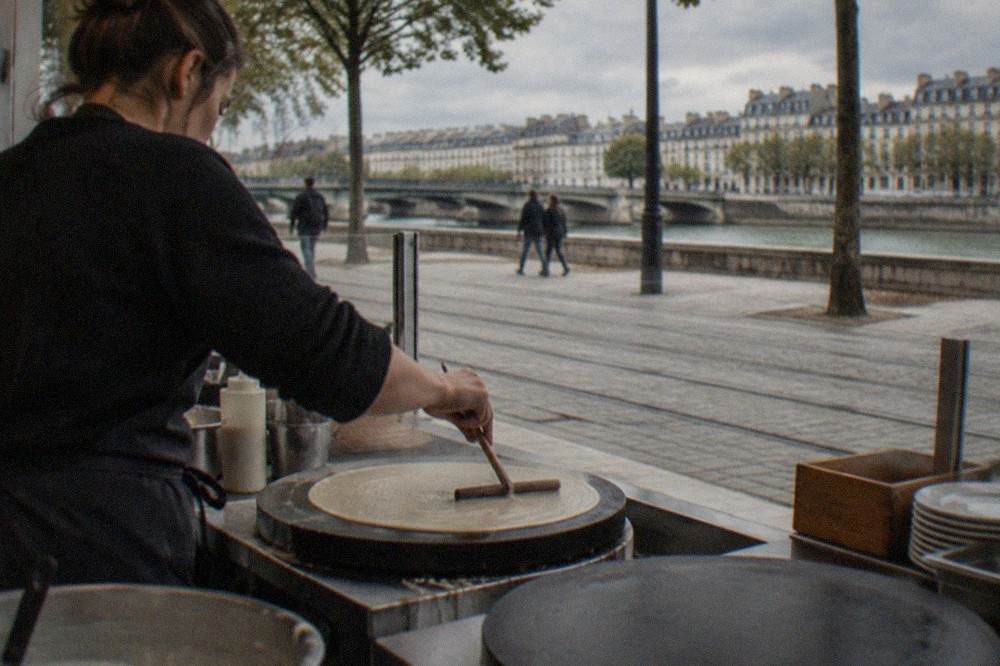
One more habit worth knowing before you sit down: the cider arrives in a bowl, not a glass, and there is nothing quaint to forgive in that. The bolée is the traditional serving vessel and it is simply how the drink is meant to come. Pour small amounts, because it is lightly sparkling and easy to underestimate.
What Should You Order At A Crêperie In Nantes?
Order a galette complète as your main, which is the buckwheat galette with egg, ham and Gruyère-style cheese, and follow it with a crêpe au beurre salé, a sweet crêpe with salted caramel butter. Drink cider in a bolée alongside, or a glass of Muscadet if the house lists it. That three-part sequence, galette, cider, sweet crêpe, is the complete Nantes crêperie meal and nothing on the menu improves on it for a first visit.
Beyond the complète, the strong regional options are the seafood galettes, which make sense in a port city that grew rich on the Atlantic trade, and the goat's cheese and spinach combinations that appear on most Bouffay menus. Apple in its many forms is the other local thread: the sweet crêpe au caramel beurre salé is the crowd-pleaser, but a crêpe flambée, finished with cider or apple spirit at the table, is the one that turns dinner into a small event. Mustard sometimes appears folded into galettes too, a nod to the wider Loire valley larder rather than to Brittany itself. The full index of guides sits on Nantes Travel Guide.
For a fuller rundown of the specific addresses worth queuing for, our dedicated guide to the crêperies of Nantes goes into the individual houses, their quirks and where to sit in each. The short version of that guide is that the Bouffay old town and the streets just off Place Royale hold the densest cluster, and that lunchtime table space goes faster than dinnertime space in most of them.
How Much Does A Meal At A Crêperie Cost In Nantes?
An inexpensive restaurant meal in Nantes stays cheap, a mid-range three-course dinner for two without drinks is a step up, and a crêperie meal remains among the most affordable options, according to crowd-sourced price aggregates updated in 2026. A crêperie meal lands at the lower end in practice, because a galette, a cider and a sweet crêpe is a short menu with modest ingredients, though prices vary by venue, so check each house's card.
| Cost element | Typical figure (2026 aggregate data) | Notes |
|---|---|---|
| Inexpensive restaurant meal | varies by venue (range 12-23) | Casual bistros and crêperies |
| Mid-range meal for two, three courses | varies by venue (range 35-100) | No drinks included |
| Average three-course dinner, good restaurant | varies by venue (range 17.50-50) | Updated August 2026 |
| Draft beer, domestic, one pint | varies by venue | Bar prices |
| Cappuccino | varies by venue | Café prices |
Those figures are planning ranges drawn from crowd-sourced cost-of-living aggregates, not promises from any particular establishment, so treat them as a budget sketch and check the menu card at the door. The reason a crêperie meal tends to land near the bottom of the range is structural: the ingredients are cheap, the kitchen needs one skilled cook and one griddle, and the format has always been workers' food. It remains, in 2026, one of the few Nantes meals where you can eat a proper sit-down lunch of local food without thinking twice about the bill.
If you want to combine the eating with seeing the city, the walking option below pairs the two cheaply.
Where Can You Find The Best Crêperies In Nantes?
The densest cluster of crêperies in Nantes sits in the Bouffay old town, the medieval quarter immediately around the cathedral and the Château des ducs de Bretagne, with a second strong pocket around Place Royale and the Graslin theatre district a short walk south. Both areas are compact, largely pedestrianised and within a ten-to-fifteen-minute walk of each other, so the honest answer is that you do not choose between them, you walk between them and eat in whichever has a free table.
Bouffay is where the tradition is thickest. The quarter's lanes hold the oldest timber-framed houses in the city, and the crêperies there lean rustic: stone or half-timbered rooms, cider on the shelf, galettes folded in front of you. Around Graslin and the Passage Pommeraye the tone shifts a little smarter, with the odd modern address doing adventurous fillings, but the core menu barely changes from one end of the city to the other. In warm months the tables spill onto the streets, and in the run-up to winter the whole city shifts towards the Christmas market on Place Royale and Place du Commerce, an area worth reading about alongside any winter visit.
The food tour in that selection is built around the old town's eating streets and suits anyone who wants the galette tradition explained while tasting it, while the escape game is the family-friendly alternative for a restless group. Whichever you choose, do it before dinner, not after.
Common Questions About Crêperies In Nantes
What exactly is a crêperie?
A crêperie is a restaurant whose menu is built around crêpes and savoury buckwheat galettes, usually served with hard cider in a bowl. In Nantes the format is the local default lunch rather than a novelty, and the classic meal runs galette first, sweet crêpe second.
Do You Need To Book A Crêperie In Nantes?
For lunch in the old town, arriving early helps, because table space in the Bouffay quarter goes quickly at midday. For dinner, most crêperies are casual enough to walk in, though weekend evenings near Place Royale can fill up in high summer and around the Christmas market.
Is A Galette Always Made With Buckwheat?
In Nantes and across Brittany-adjacent France, yes, the savoury galette is made from buckwheat flour, called blé noir locally, and the sweet crêpe is made from white wheat flour. Menus keep the two clearly separate, so if a dish is listed as a galette you can expect the dark, crisp, savoury version.
What Drink Goes With A Galette?
Cider is the traditional match, served in an earthenware bowl called a bolée. In Nantes, a glass of the local Muscadet white is a common alternative, since the city sits on the edge of that wine region, and both work equally well with a savoury buckwheat galette.
Are Crêperies Good For Vegetarians?
Yes. The galette format is naturally vegetarian-friendly, since the standard fillings of cheese, egg, spinach, mushrooms and tomato need no adaptation, and most crêperies in Nantes list at least two or three meat-free galettes. The galette complète simply loses its ham and keeps everything else.
Can You Eat At A Crêperie On A Budget?
Yes, it is one of the cheapest proper sit-down meals in Nantes. Crowd-sourced 2026 price data puts an inexpensive restaurant meal in the city at the cheap end of the scale, and a single galette with a cider usually sits at the very bottom of that range, though you should always check each house's own menu card for current prices.
Eat a galette, drink the cider from the bowl, leave room for the crêpe. That is the whole ritual, and Nantes does it as well as anywhere in France.