Free Walking Tour Nantes
Nantes, in the Loire-Atlantique department of the Pays de la Loire region in western France, is compact enough that its most rewarding sights sit within an easy walk of each other, and a large share of them, from the château courtyard to the riverside memorial, cost nothing at all.
Short answer
A free walking tour of Nantes works because the historic core is small and most of its highlights are free to enter: the Château des ducs de Bretagne courtyard, the cathedral, Passage Pommeraye, the Jardin des Plantes and the Mémorial de l'abolition de l'esclavage all cost 0 EUR, and a well-planned route covers them in a day.
Nantes, in the Loire-Atlantique department of the Pays de la Loire region of western France, sits on the Loire and the Erdre, and its historic core is tight enough that the whole sweep of it, from the Château des ducs de Bretagne to the old Feydeau quarter, can be covered on foot in a single unhurried day. This page, part of Nantes Travel Guide, lays out how a free walking tour of Nantes actually works in practice: which routes are genuinely free, which sights charge, what the trams cost when your legs give out, and where a paid guide earns its keep. Nothing here needs a booking to start, and the two things almost every visitor pairs with a first walk, the château and the river, are covered in detail on Château des Ducs de Bretagne and the wider round-up on things to do in Nantes.
What Does A Free Walking Tour Of Nantes Actually Include?
A free walking tour of Nantes means a self-guided route through a compact historic core where the majority of the headline sights cost nothing to enter: the château courtyard and ramparts, the cathedral, Passage Pommeraye, the Jardin des Plantes and the Mémorial de l'abolition de l'esclavage are all free, and the distances between them are short enough that a full circuit on foot is realistic for most people in one day. This site does not list a pay-what-you-want guided walk in Nantes, so the honest version of "free" here is a well-planned route with verified opening hours, verified prices and zero spending until you choose to spend.
The distinction matters. Many European cities have a standing free-tip-based walking tour culture; Nantes, for the UK and US market, does not have one worth listing. What it does have is unusually generous free access. The Château des ducs de Bretagne opens its courtyard and ramparts to everyone, daily from 8:30 to 19:00, and to 20:00 in July and August, at no charge. Only the Musée d'histoire de Nantes inside the buildings carries a ticket. The cathedral is free, and has been partially open again since 27 September 2025 after the 2020 fire, with full reopening targeted for 2028.
If a guide is what you want rather than a map, the paid options compared elsewhere on this site are worth a look before you set off, and the picks below are the ones worth booking ahead of a free day.
Where Can You Walk For Free In Nantes? The Bouffay Old Town Route
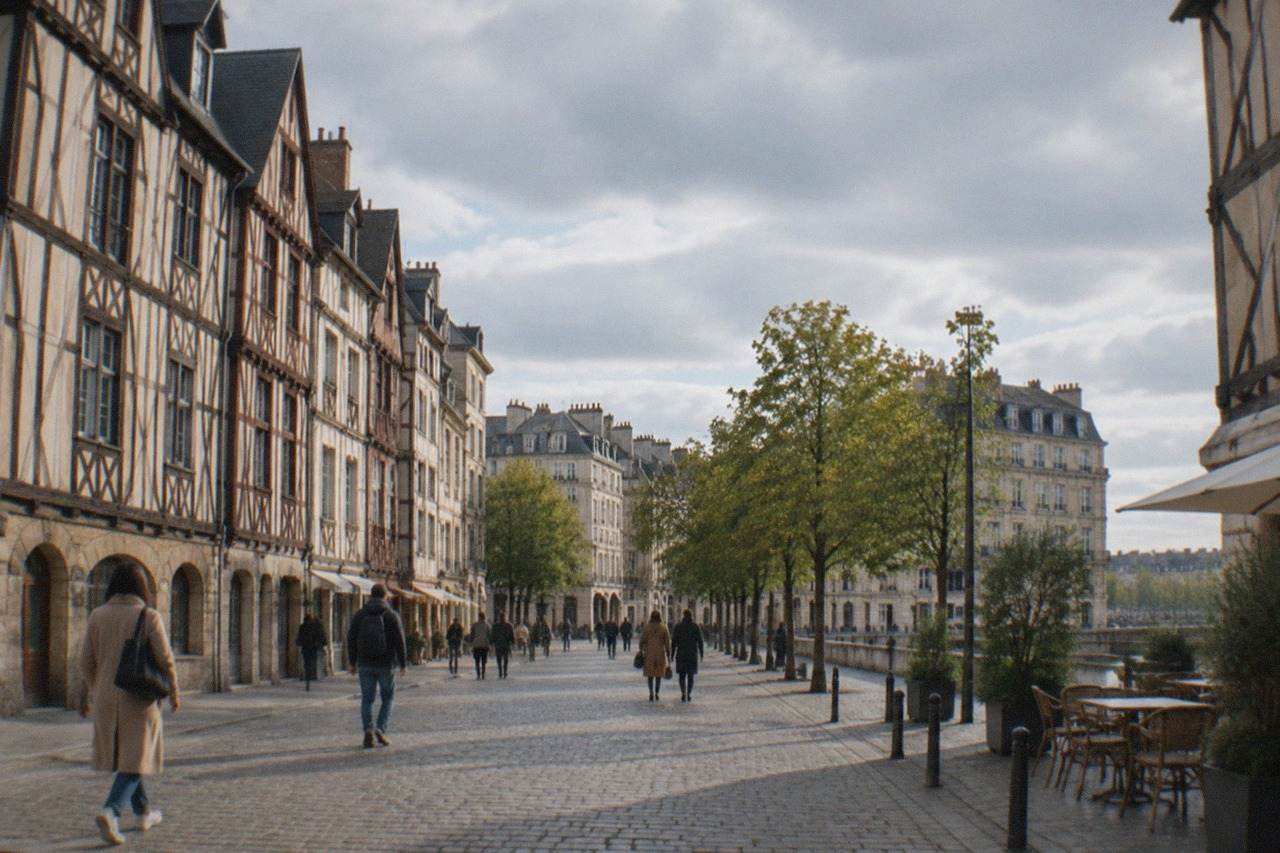
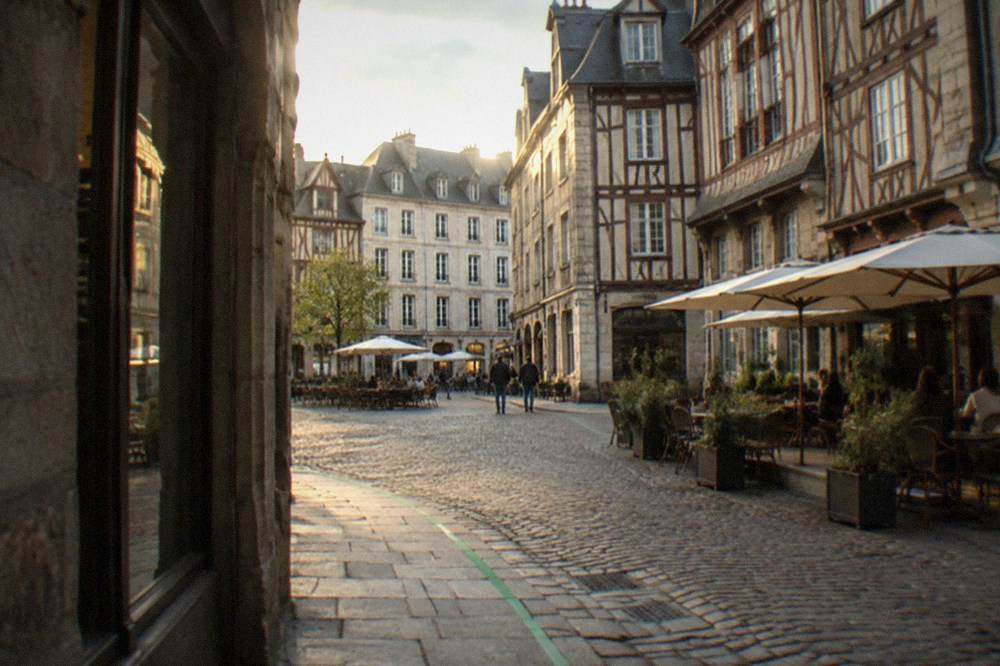
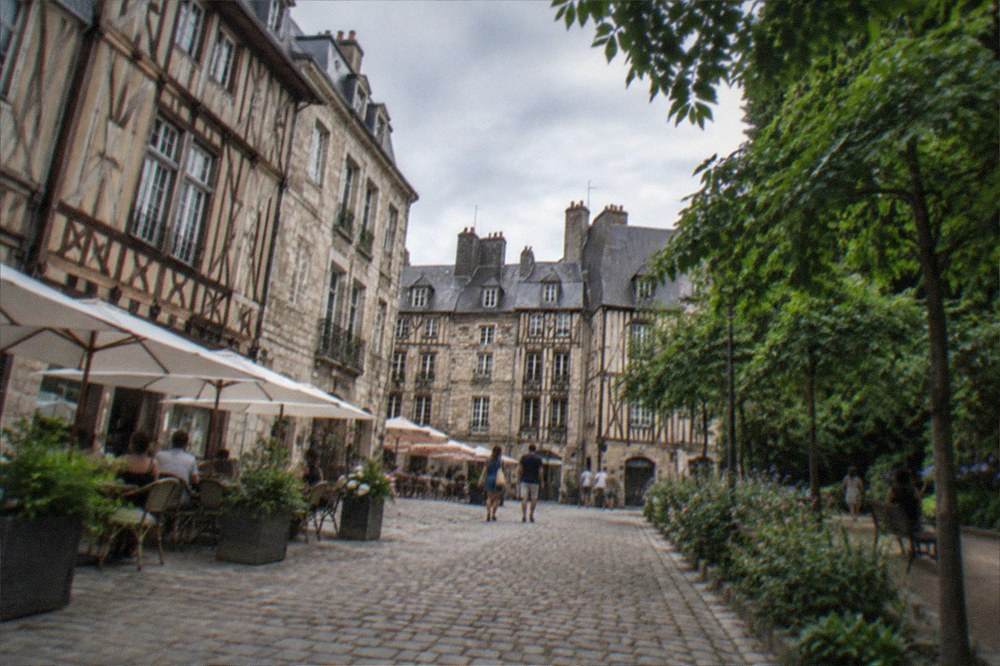
The core free route runs from Place Royale through the Bouffay old town to the Château des ducs de Bretagne, roughly fifteen to twenty minutes of walking end to end at a relaxed pace, passing Passage Pommeraye, the cathedral and Place du Bouffay on the way, and every one of those stops except the château's interior museum is free to see. Bouffay is the oldest part of the city, largely pedestrianised, and its lanes carry more half-timbered fronts per square metre than anywhere else in Nantes.
Start at Place Royale, a planned royal square laid out around its fountain, and head for Passage Pommeraye, the 1843 shopping arcade that climbs three floors up a slope between two streets and remains, in the local tourism office's own words, unchanged since it was built. Entry is free during opening hours. From the top exit you are a few minutes' walk from the cathedral, which has stood since a gothic rebuild begun in 1434 and completed 457 years later, in 1891.
The cathedral deserves more than a glance. The 18 July 2020 arson fire destroyed the grand organ and badly damaged the western facade, and the building partially reopened to the public on 27 September 2025. Scaffolding still covers the west front, with full restoration planned for 2028, but the nave, choir and side chapels are accessible, entry is free, and the tomb of Francis II, Duke of Brittany, a Renaissance masterpiece by Michel Colombe, has had its effigies visible to the public since around 20 February 2026. The fuller story, including what is open and what is not, is on the Nantes Cathedral page.
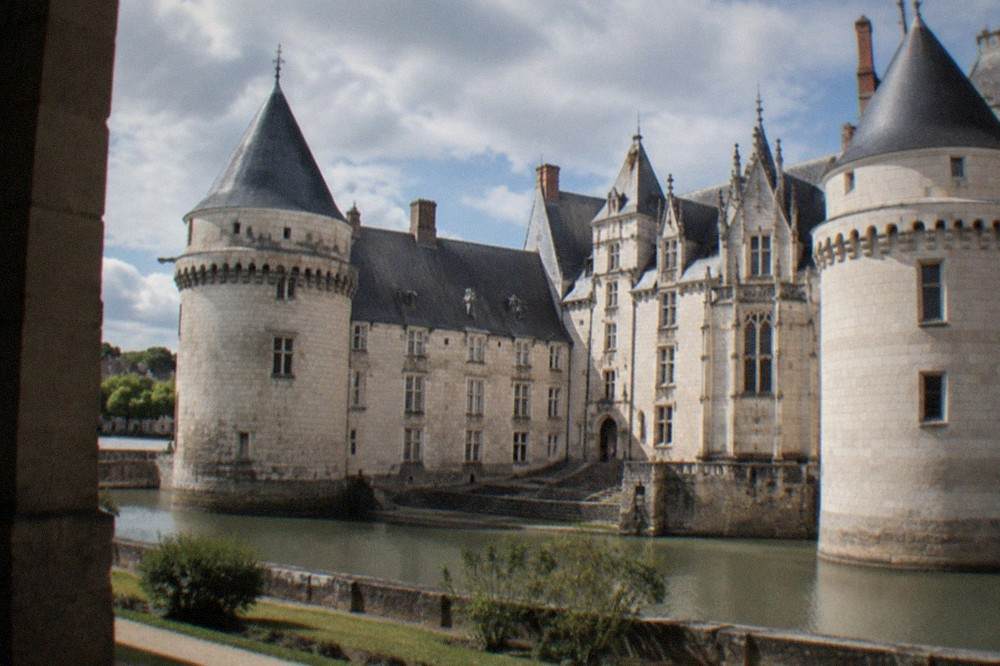
From the cathedral, rue de la Juiverie and the lanes of Bouffay run you down to the château, 500 metres of timber-framed walls and crêperies. The courtyard, ramparts and the free moat garden, open from 8:00 to 19:00 daily, can absorb an hour on their own. Our Bouffay Old Town area guide maps the quarter street by street.
How Much Do The Sights On A Nantes Walking Route Cost?
The free sights in central Nantes are the château courtyard, ramparts and moat garden, the cathedral, Passage Pommeraye, the Jardin des Plantes, the Île de Versailles Japanese garden, the Mémorial de l'abolition de l'esclavage and the green line art trail, while the paying stops, at 9 EUR full price for the château museum, 9 EUR for the Musée d'arts and 4 EUR for the Musée Jules Verne, are all optional add-ons to a route that already works without them. Nothing on the free list needs a ticket at all.
The table below is the full cost picture for a walking day, drawn from each venue's own tariff page. Prices are the local till figures in euros.
| Sight on the walking route | Entry cost | Notes |
|---|---|---|
| Château courtyard, ramparts, moat garden | Free | Daily 8:30-19:00, to 20:00 July-August |
| Musée d'histoire de Nantes (château interior) | 9 EUR full, 5 EUR reduced | Free under 18; closed Monday |
| Cathedral | Free | Partially reopened 27 Sept 2025; works to 2028 |
| Passage Pommeraye | Free | 1843 arcade, open during shopping hours |
| Jardin des Plantes | Free | One of France's notable botanical gardens |
| Île de Versailles | Free | Japanese garden on the Erdre |
| Mémorial de l'abolition de l'esclavage | Free | Daily, riverside on the Quai de la Fosse |
| Musée d'arts de Nantes | 9 EUR full, 4 EUR reduced | Closed Tuesday; Thursday nocturne to 21:00 |
| Musée Jules Verne | 4 EUR full, 1.50 EUR reduced | Closed Tuesday; on the Butte Sainte-Anne |
Two of these deserve their own detours. The Mémorial de l'abolition de l'esclavage, on the Quai de la Fosse, commemorates the port's central role in the Atlantic slave trade: Nantes outfitted 1,714 of at least 4,220 French expeditions, 43 per cent of the French trade, before withdrawing in 1830. Entry is free, daily 9:00-18:00 between 16 September and 14 May and 9:00-20:00 in summer. The Mémorial page covers what to expect and how to read the site.
The Musée d'arts is the one indoor stop worth budgeting for on a wet afternoon, and its ticket can be booked ahead.
Can You Follow The Green Line In Nantes For Free?
Yes, the green line is a free painted trail, roughly 20 km long, that links Nantes' permanent public art, museums, monuments and oddities across the city, and following even a section of it between the château and Île de Nantes costs nothing, needs no ticket and works year-round. The line is the backbone of Le Voyage à Nantes, the summer art programme that has run each year since 2012, but the paint itself is permanent and walkable in any season.
You do not need to walk all 20 km. The most rewarding free stretch for a first visit runs from the château moat, where a 14-metre metal palm tree by Louis Guillaume stood during the 2026 Earth-themed edition, down through Bouffay and Graslin to the Loire, crossing onto Île de Nantes toward the Machines de l'île. Allow two to three hours at browsing pace.
Along the way the line passes the Anneaux de Buren, the 18 metal rings on the Quai des Antilles that have become the city's most-photographed riverside installation, and the HAB Galerie on the Hangar à Bananes, which hosts the Voyage à Nantes exhibitions each summer. The gallery itself is free to enter during exhibition periods. Our green line and Le Voyage à Nantes guides break the trail into walkable stages.
What Are The Best Free Neighbourhood Walks Around Nantes?
The four free walks beyond the historic core are Graslin and the Cours des 50 Otages, the Île de Nantes riverside, Trentemoult across the Loire, and the Butte Sainte-Anne to the Musée Jules Verne, each reachable on foot or by a single cheap tram or Navibus crossing, and each free to walk in full. They share the same city but not the same century, which is the point.
| Free neighbourhood walk | What you see | Free access |
|---|---|---|
| Graslin and Place Graslin | Théâtre Graslin, La Cigale brasserie exterior, fountain square | Public streets, always free |
| Île de Nantes riverside | Machines de l'île forecourt, Anneaux de Buren, Loire views | Quays free; Machines tickets separate |
| Trentemoult | Fishing-village lanes, coloured house fronts, Loire bank | Free; reachable by Navibus N1 |
| Butte Sainte-Anne | Panorama over the Loire, Musée Jules Verne exterior | Streets free; museum 4 EUR |
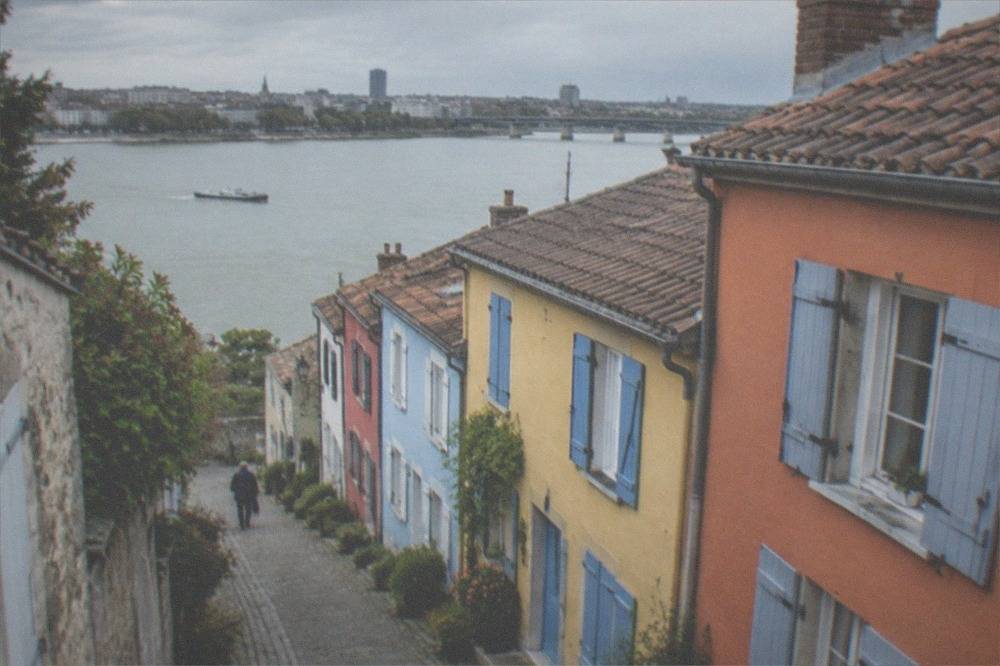
Trentemoult is the one people underestimate. The old fishing quarter on the south bank, in Rezé, is a grid of low coloured houses, and since 12 November 2025 the Navibus N2 line has linked it directly to the Bas-Chantenay side and the Hangar à Bananes, alongside the long-running N1 crossing from the Gare Maritime. The boat is part of the normal Naolib network. The Trentemoult guide covers the crossing and the lanes.
Île de Nantes, the former shipyard island, now carries the Machines de l'île, where each activity, the Galerie, the Carrousel or a Grand Éléphant ride, costs 12 EUR full price with reductions, and note that no elephant rides run from 2 November 2026 to 28 February 2027 for maintenance. But the walk along the island's quays, past the Hangar à Bananes and under the Anneaux de Buren at dusk, is entirely free and arguably the better half of the visit. Details and current maintenance windows are on the Machines de l'île page.
How Much Does It Cost To Rest Your Legs: Nantes Transport Fares?
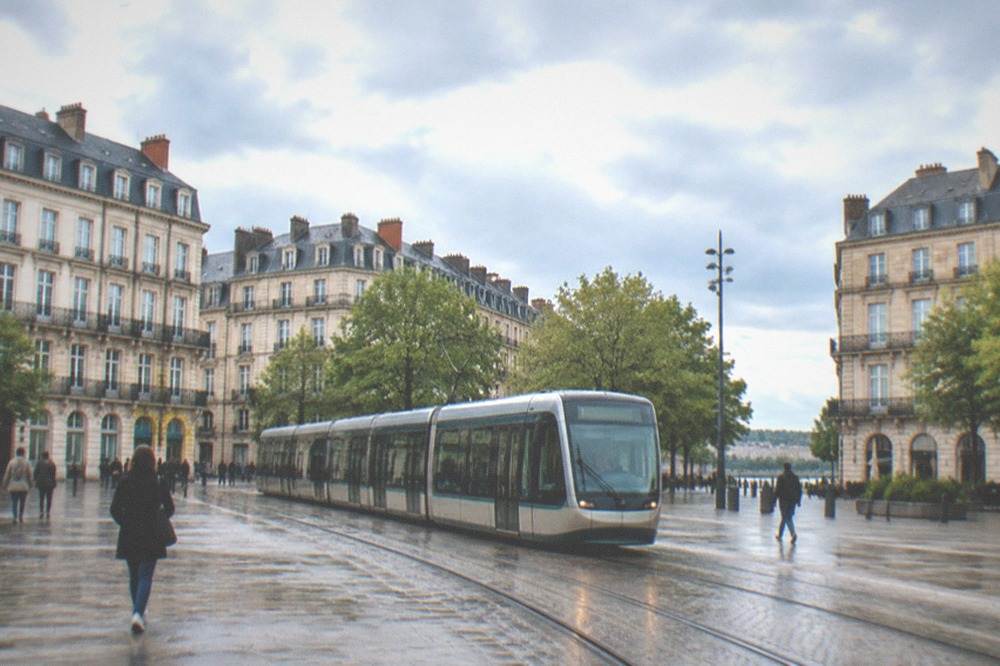
A single Naolib ticket in Nantes costs 1.80 EUR and is valid for one hour on trams, buses, Navibus river boats and TER trains inside the métropole, a 24-hour ticket is 6.80 EUR, and the whole network is free for everyone from 00:00 Saturday to 23:59 Sunday, with one exception: the 10 EUR airport shuttle, which is never free. If your walking day falls on a weekend, the city effectively becomes a free-transport zone.
| Naolib ticket | Price | Validity |
|---|---|---|
| 1-hour single | 1.80 EUR | Tram, bus, Navibus, TER in the métropole |
| 10 x 1-hour carnet | 17.80 EUR | Ten singles |
| 24-hour ticket | 6.80 EUR | One person, whole network |
| 24-hour, 4 people | 15 EUR | Group day ticket |
| Airport shuttle | 10 EUR | One way, never free, valid 1 h on the network |
| Weekend travel | Free | Sat 00:00 to Sun 23:59, shuttle excluded |
The weekend rule is the quiet bargain in that table, in place since 2021. Park at any P+R, validate, and ride everything, trams, buses, boats, at no charge across Saturday and Sunday. Only the airport shuttle, which runs every 20 minutes from April to October and every 30 minutes from November to March, about 20 minutes between the station and the terminal, sits outside it.
The Navibus deserves a second mention because it doubles as sightseeing. The N1 crossing from the Gare Maritime to Trentemoult takes a few minutes on the water and costs the same 1.80 EUR single, or nothing at all on a Saturday. Few city walks anywhere end better than one that finishes with a river crossing on the way back.
What Free Sights Should You Build Into A Nantes Walk?
The strongest free sights to anchor a Nantes walk are the Jardin des Plantes, one of France's great botanical gardens, the Île de Versailles with its Japanese garden on the Erdre, Talensac market during its morning hours, and the Quai de la Fosse riverside, and every one of them is free to enter, with only Talensac needing you to arrive while the stalls are up. These are the places locals actually use, which is what separates a route from a checklist.
| Free sight | Where | When |
|---|---|---|
| Jardin des Plantes | East of the station | Daylight hours, seasonal closing times |
| Île de Versailles | On the Erdre, north of the centre | Daylight hours, seasonal closing times |
| Talensac market | North of the château | Tue-Fri 8:00-13:00, Sat-Sun 8:00-13:30, closed Monday |
| Quai de la Fosse and Mémorial | West of the château | Memorial daily 9:00-18:00 or 9:00-20:00 in summer |
| Château moat garden | South of the château | Daily 8:00-19:00 |
| Green line trail | City-wide | Always walkable |
The Jardin des Plantes is the free hour that gets skipped and shouldn't. It sits ten minutes' walk from the château, mixes formal beds with eccentric modern planting, and costs nothing. Its full seasonal detail is on the Jardin des Plantes page. The Île de Versailles, upstream on the Erdre, is smaller, quieter and centred on a Japanese garden laid out on the island's tip; our Erdre river guide treats the whole river valley.
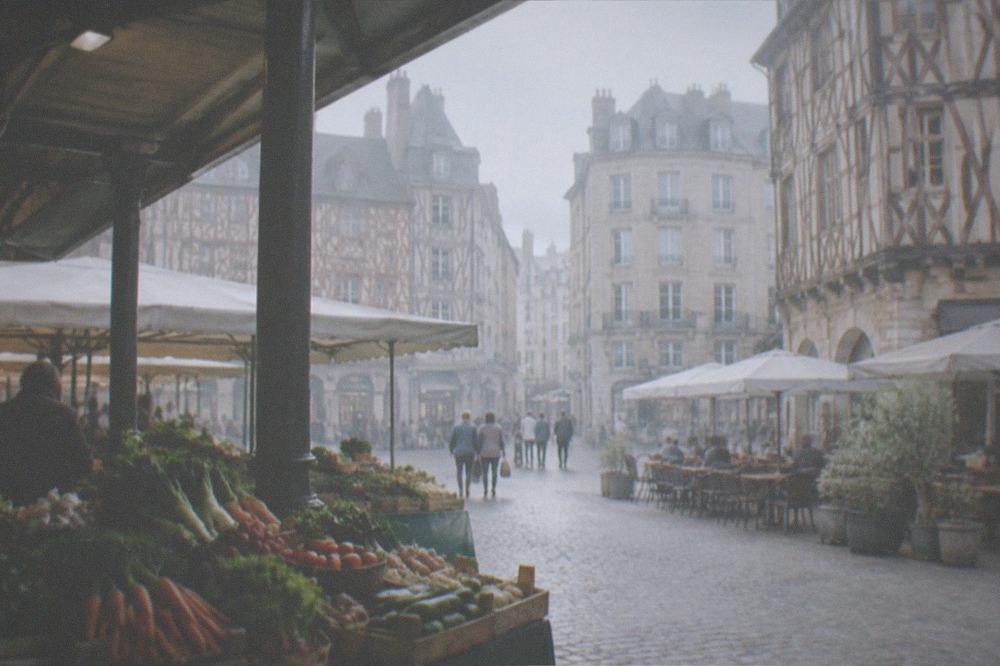
Talensac is the city's main covered market, and the métropole's own page gives the hours above. Note the Monday closure. Walking there on a Saturday morning, then looping back through the château moat, is about as good as a free morning in Nantes gets, and the city's smaller neighbourhood markets are worth a detour if Talensac feels crowded.
When Is The Best Day And Season To Walk Nantes?
The best walking conditions in Nantes run from May to September, when Météo-France's 1991-2020 normals for the Nantes-Bouguenais station show mean maximums of 19.6 C in May rising to 25.4 C in August and falling to 22.4 C in September, while the wettest months are October through January, with December the dampest at 101 mm and November close behind at 94.1 mm, so spring and early autumn are the sweet spot for a day on foot.
| Month | Mean max C | Rain mm | Verdict for walking |
|---|---|---|---|
| March | 13.5 | 58.4 | Cool, often fine |
| May | 19.6 | 61.0 | Warm, long days |
| June | 23.0 | 48.5 | Warm, drier than July |
| July | 25.1 | 44.2 | Driest midsummer month |
| August | 25.4 | 50.3 | Warmest, busier |
| September | 22.4 | 59.5 | Warm and quieter |
| November | 12.9 | 94.1 | Wet, short days |
The city's climate is temperate oceanic, not Mediterranean, and it pays to plan for a shower even in summer: the annual total is 819.5 mm spread over 119.7 days with at least 1 mm of rain. Recent years have also pushed extremes. The station's all-time record high is now 42.2 C, set on 24 June 2026, which broke the previous record of 42.0 C from 18 July 2022, and July 2026 set a monthly sunshine record of 382 hours. Heat like that makes midday walking punishing; start early and use the shade of the Jardin des Plantes and Passage Pommeraye.
February 2026 delivered the other extreme, when the Loire reached 8.18 m at the Pont Anne-de-Bretagne, above 8 m for the first time in about 15 years, closing riverside sections including, at times, the Mémorial itself, which shuts during Loire floods. If a flood warning is in force on the day you walk, check the riverside stops before you set out. Our Nantes weather guide carries the full picture.
Is A Guided Tour Better Than A Free Self-Guided Walk In Nantes?
A guided tour is worth paying for in Nantes when you want context a map cannot give, above all at the Château des ducs de Bretagne, whose museum covers the slave trade, the Edict of Nantes signed here in April 1598 and 400 years of Breton history, and on a food walk through Bouffay, while the free self-guided route wins on flexibility, cost and the simple fact that the city's outdoor highlights need no narration to enjoy. The honest answer is that most first-time visitors do a free walking day and add one paid tour around it.
If one guided experience fits a Nantes stay, a private custom walk is the most flexible: the guide sets the route around what you want to see, and the duration can stretch across a full afternoon.
If history rather than streets is your interest, the city's museum passes change the arithmetic. The Pass Musées at 15 EUR covers a full year of unlimited entry to the Musée d'histoire de Nantes at the château, the Musée d'arts, the Musée Jules Verne and the Chronographe, which pays for itself within two visits, though note it excludes the Muséum d'histoire naturelle, closed for works until 2029. For a short stay, the Pass Nantes, from 30 EUR to 75 EUR for seven days at full price, bundles transport with sight entries; the breakdown is on our Pass Nantes guide.
For a different angle on the city entirely, a river trip on the Erdre, the tributary Nantes calls its most beautiful, sits just off the walking itinerary.
How Do You Fit A Free Walking Day Into A Longer Nantes Stay?
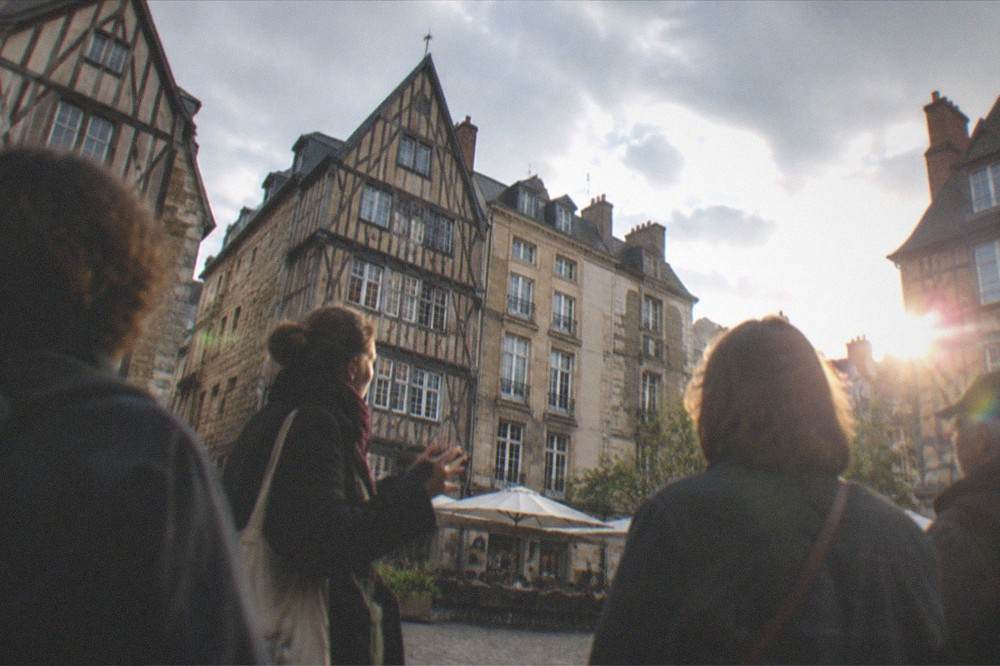
A single free walking day covers the château, Bouffay, the cathedral, Graslin and one river bank, while a second day is needed for Île de Nantes, the Machines de l'île and Trentemoult, and a third for the Erdre and the Jardin des Plantes at a proper pace, which is why most people plan either one, two or three days in the city around a walking-first structure. The ready-made versions live on our one day in Nantes and two days in Nantes itineraries.
The split that works: day one, the left-bank historic core, Place Royale to the château, everything in this guide's second section, plus the Mémorial on the Quai de la Fosse at golden hour. Day two, cross to Île de Nantes, walk the quays to the Machines, take the Navibus to Trentemoult for lunch, and finish on the Hangar à Bananes. Walking with children shifts the balance toward the Machines and the gardens, and a family-paced itinerary handles that neatly.
Beyond the city, the walkable logic extends down the rail line. Clisson, an Italianate town 27 km away by rail, is the easiest walking day trip from Nantes, reachable by TER in as little as 15 minutes and covered in our Clisson guide.
The full set of paid and guided options, if your free day leaves you wanting more, sits elsewhere on this site, and the deeper free-angle round-up, including free museums days and free viewpoints, is our free things to do in Nantes guide.
Common Questions About Free Walking Tours In Nantes
Is there a free guided walking tour in Nantes?
This site does not list a free or pay-what-you-want guided walk in Nantes for the English-speaking market. The free option that genuinely works here is self-guided: the historic core is compact, and the château courtyard, cathedral, Passage Pommeraye, Jardin des Plantes and Mémorial are all free to enter.
What can you see in Nantes for free on foot?
The Château des ducs de Bretagne courtyard, ramparts and moat garden, the cathedral, Passage Pommeraye, the Jardin des Plantes, the Île de Versailles, the Mémorial de l'abolition de l'esclavage and roughly 20 km of green line art trail, plus the riverbanks themselves. All are free to enter or walk.
Is Nantes a walkable city?
Yes. The historic core between the château, Graslin and the Loire is compact and largely pedestrianised, and the walkable extensions, Île de Nantes and the riverbanks, are linked by trams and Navibus boats where the distances grow.
Do you need to pay for transport between the walking stops in Nantes?
Mostly no: the core stops are within walking distance of each other. A 1.80 EUR Naolib single covers an hour on trams, buses and Navibus boats if you need it, and the whole network is free from 00:00 Saturday to 23:59 Sunday, except the 10 EUR airport shuttle, which is never free.
Is the Château des ducs de Bretagne free to walk around?
The courtyard, ramparts and moat garden are free, daily 8:30-19:00 and to 20:00 in July and August. Only the Musée d'histoire de Nantes inside the buildings charges, 9 EUR full price or 5 EUR reduced, free for under-18s, closed on Mondays.
Is the Nantes cathedral open in 2026?
It partially reopened on 27 September 2025 after the 2020 fire, and the nave, choir and side chapels are accessible, with the west facade still under scaffolding and full completion planned for 2028. Entry is free.
A free walking day in Nantes is less a budget compromise than the natural shape of the place: the best of it, the lanes of Bouffay, the château walls, the painted green line, the two rivers, was designed to be walked, and only the doors marked with a ticket ask for anything at all.