What Is The Pays De La Loire Famous For?
What the Pays de la Loire region of western France is famous for, from Nantes and the Château des ducs de Bretagne to Muscadet vineyards, Guérande salt and La Baule.
Nantes sits in the Loire-Atlantique department of the Pays de la Loire region of western France, on the Loire river where the Erdre and the Sèvre Nantaise meet it, and almost everything the region is famous for gathers within a day of that spot. The Pays de la Loire takes its name from the river rather than from any single city, and it delivers what the name promises: vineyards on the river's lower slopes, beaches where it meets the Atlantic at Saint-Nazaire, châteaux upstream, and a regional capital in Nantes that was named European Green Capital in 2013. This page sets out, in plain terms, what the region is actually known for and how each part of it connects back to Nantes. You can see the wider regional picture on the Pays de la Loire overview guide, or start with what Nantes itself is famous for.
What Is The Pays De La Loire Famous For?
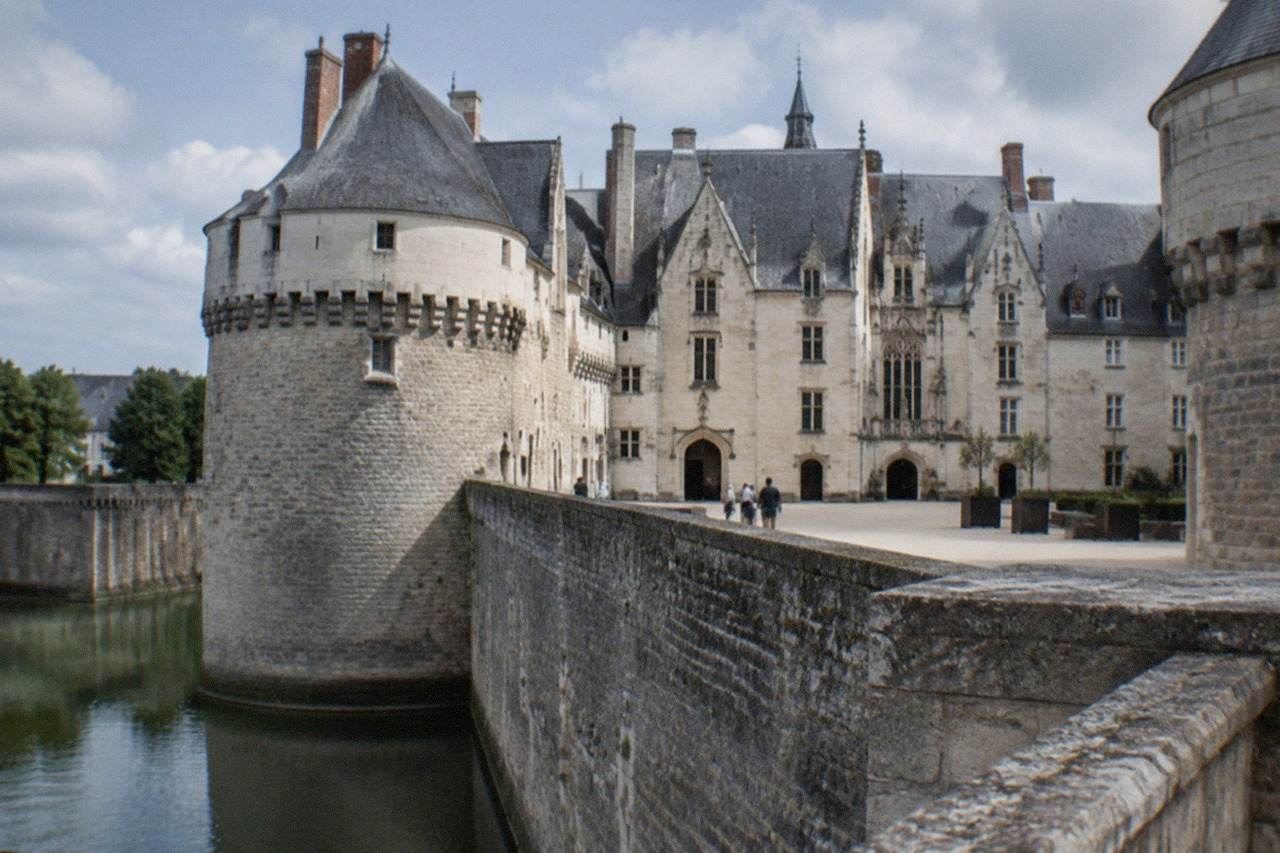
The Pays de la Loire is famous for four things above all: the lower Loire river and its valley, the Muscadet white wine grown around Nantes, the Atlantic coastline running from La Baule to Le Croisic, and the historic city of Nantes itself, once the seat of the dukes of Brittany. Add the salt marshes of Guérande, the giant mechanical elephant of Les Machines de l'île, and one of France's most-visited theme parks at Puy du Fou, and the regional picture is complete.
Each of those deserves a sentence of grounding before we go deeper, because the region is often confused with its neighbours. The Pays de la Loire is not Brittany, though Nantes was Brittany's ducal capital for centuries and the question of whether the city belongs to Brittany is a live local debate. It is not the classic Loire Valley of tour-brokered château country either, though the river runs straight through it on its way to the ocean. The region owns its own version of both, plus a wine and a coastline that neither neighbour can claim.
The confusion is worth resolving early because it shapes every itinerary. Nantes is the region's biggest city, France's sixth most populous commune in the 2023 INSEE figures, and the natural base: the TER network fans out from Nantes station to the coast in under an hour, and the vineyards of Muscadet begin at the city's southern edge. For a sense of how the pieces fit, this site's own Nantes Travel Guide homepage collects the practical core.
Why Is Nantes The City The Pays De La Loire Is Known Through?
Nantes is the entry point because it is the region's largest city and its historic capital of ducal power: the Château des ducs de Bretagne, begun by Francis II in 1466, stands at its centre, and his daughter Anne of Brittany, born there on 25 January 1477, twice became queen of France. The city's commune counted 327,734 residents in 2023, and Nantes Métropole some 689,456. Its tram network, France's first modern one since 1985, carries 154 million trips a year.
That is a lot of numbers for one bold block, but they make the point: Nantes is not a charming footnote to the region, it is the engine. The château is the single best physical argument. A medieval fortress rebuilt as a ducal residence from 1466, owned by the city since 1915 and housing the Musée d'histoire de Nantes since 2007, its courtyard and ramparts are free to walk daily from 8:30 to 19:00. The museum inside costs 9 EUR full tariff, 5 EUR reduced, and is closed on Mondays; the details are all on the château's own page.
The second thing Nantes gives the region is invention. Jules Verne was born in the city on 8 February 1828, and his imagination is the thread that runs from the Musée Jules Verne on the Butte Sainte-Anne through to Les Machines de l'île, the workshop-gallery on the Île de Nantes where the sculptors of La Machine build walking mechanical animals, inaugurated with the Grand Éléphant on 30 June 2007. The elephant carries passengers through the old shipyard district, and the Machines de l'île attraction guide covers tickets, which run 12 EUR per attraction or 29 EUR for all three in a day.
For visitors who want the city's most photogenic corners pointed out rather than discovered by chance, a photo-focused walk with a local is the direct route:
The rest of the region, from here, is a set of short hops. Everything below sits within about an hour of Nantes by train, which is precisely why the city works as a base.
What Food And Drink Is The Region Around Nantes Famous For?
The Pays de la Loire around Nantes is famous for a tight cluster of food brands and dishes with documented local origins: the Véritable Petit Beurre biscuit of LU, invented in 1886; beurre blanc, the shallot, white wine and butter sauce first served with fish in Nantes; berlingots nantais candies; gâteau nantais, an almond and rum cake; and the Muscadet that finishes the meal. The LU company itself began in 1846 when Jean-Romain Lefèvre set up as a biscuit maker.
The biscuit story is the most surprising one, because few visitors realise that a biscuit they have eaten all their lives is a Nantes invention. Lefèvre married Pauline-Isabelle Utile in 1850, the couple's initials gave LU its name, and production moved to a Loire-side factory facing the château in 1886, the year the Petit Beurre appeared. The Nantes factory closed in 1986 and production moved to La Haye-Fouassière south of the city, where the company still makes around 24,000 tonnes of biscuits a year; 2026 marks the firm's 180th anniversary.
Beurre blanc has the more contested story, but the sauce itself is not in dispute: a reduction of shallots, white wine and vinegar into which cold butter is whisked, traditionally served with pike, and traditionally made with Muscadet. Nantes restaurateurs were still pursuing protected traditional-specialty status for it in 2025 reporting. The cake, the candies and the cheese of the region fill out the list, and the market where locals buy them is Talensac, open Tuesday to Friday 8:00-13:00 and Saturday-Sunday 8:00-13:30.
| Regional speciality | What it is | Local anchor |
|---|---|---|
| Petit Beurre | Square butter biscuit with scalloped edges | Invented by LU in Nantes, 1886 |
| Beurre blanc | Emulsified butter sauce with shallots and Muscadet | Served with Loire fish in Nantes |
| Berlingots nantais | Tetrahedron hard candies, traditionally seven flavours | Nantes confectionery since the late 19th century |
| Gâteau nantais | Almond and rum quatre-quarts cake | Origins traced to around 1820 |
| Muscadet | Dry white wine from the Melon de Bourgogne grape | Vineyards south and east of Nantes |
| Cure nantais | Salt-washed cows' cheese | Loire-Atlantique cheese trails |
For a fuller taste of the old-town tables, a guided food walk covers the quartier Bouffay side of the region's cuisine in one sitting:
What Is Muscadet And Why Is It The Region's Signature Wine?
Muscadet is a dry white wine made from the Melon de Bourgogne grape in the vineyards south and east of Nantes, at the western end of the Loire's wine country, and it is the wine the whole lower Loire is famous for. The 2026 harvest was historically early, with the official picking ban declared on 11 August 2026, a record eight days ahead of the previous mark from 2003, and yields came in lower at roughly 30 to 40 hectolitres per hectare.
That last detail is the kind of fact that rarely reaches a first page of search results, and it matters: 2026 was an exceptional, heat-driven vintage in the region's only signature appellation. The Maison des vins de la Muscadet sits at Vallet, and the vineyard belt runs from there toward the coast. The wine's character is what the region's restaurateurs lean on: bone dry, saline, historically aged on its lees, and the canonical partner for the oysters harvested further down the Loire estuary at places like Le Croisic.
The wine pairs naturally with the region's second liquid claim, the Loire itself. The river is the region's spine, its name and its economy: cargo ships still pass the Île de Nantes, the Navibus river boats cross it on ordinary Naolib tickets, and the quieter tributary Erdre, which Rabelais is said to have called the loveliest river in France, runs through the city's north. If wine rather than water is the draw, the vineyard side of the region is best reached on a dedicated half-day run:
The wider Loire question, including the appellations upstream that share the valley, is answered in what wine the Loire Valley is famous for.
Which Coastline And Day Trips Make The Pays De La Loire Famous?
The Pays de la Loire is famous for its Atlantic coast: the bay at La Baule, one of Europe's long resort beaches; the walled medieval town of Guérande with its working salt marshes, which reported a doubled 2026 harvest thanks to the summer heat; the oyster port of Le Croisic; and Saint-Nazaire, where the Loire meets the ocean and where the liner museum Escal'Atlantic reconstructs the age of transatlantic ships. All are reachable by TER from Nantes in about an hour.
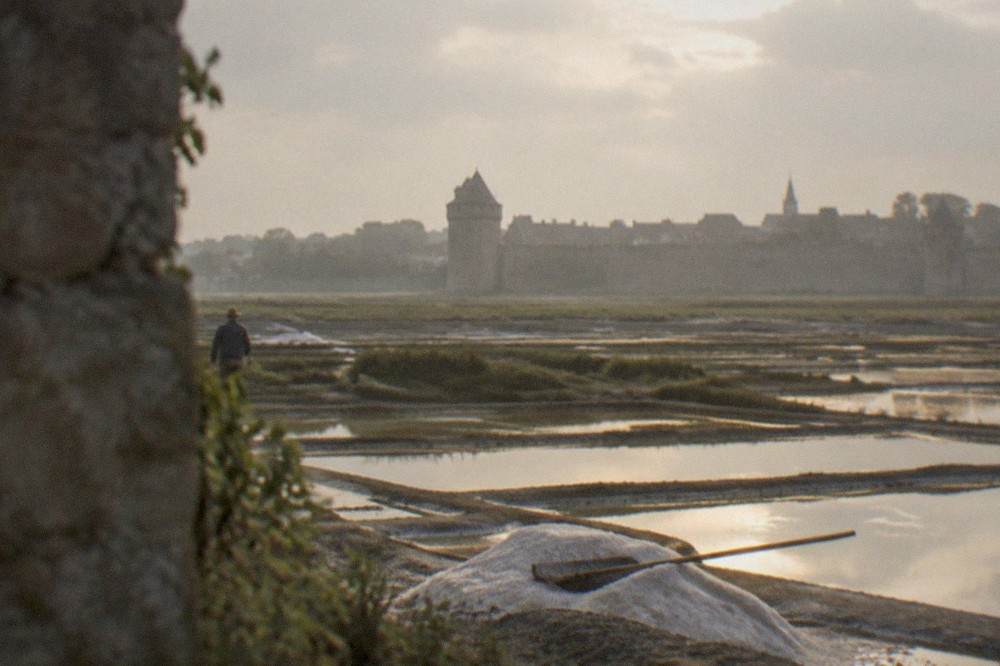
The salt story is the region's most distinctive. Guérande's marshes have produced fleur de sel by hand-raking for centuries, the marshes shelter roughly 200 bird species, and 2026's heat meant the average œillet, the raking pan, yielded around 1.5 tons, some more than 3. Terre de Sel runs guided visits year-round. The town itself keeps its medieval ramparts, and the combination of walls, marsh and Atlantic light is why Guérande and La Baule are usually done as one loop from Nantes.
| Destination from Nantes | Rail time | What it is known for |
|---|---|---|
| Clisson | ~23 min average | Italianate château town, Hellfest site, Muscadet edge |
| Saint-Nazaire | ~33 min | Estuary mouth, shipyards, Escal'Atlantic liner museum |
| La Baule | ~51 min | Long resort bay, 2026 triathlon of 9,000 athletes |
| Pornic | ~59-65 min | Seaside port and castle town |
| Le Croisic | ~1 h 03 | Oyster port on the Croisic peninsula |
| Guérande | ~80 km by road | Salt marshes, medieval ramparts |
Inland, the region's other heavy hitter is Puy du Fou, the historical theme park whose 2026 season ran 4 April to 1 November, with day tickets priced mid-range and somewhat pricier if bought on site rather than in advance. The Loire Valley château country upstream is covered in the site's Loire Valley châteaux day-trip guide, and the beach question in whether La Baule is worth visiting.
What Festivals And Events Is The Pays De La Loire Known For?
The Pays de la Loire is famous for festivals of unusual range: La Folle Journée in Nantes, the classical marathon founded in 1995 whose 2027 edition runs 27 to 31 January on a Galaxie Beethoven theme; Rendez-vous de l'Erdre, the free jazz-and-boating festival whose 40th edition ran 24 to 30 August 2026; and Hellfest at Clisson, Europe's biggest metal festival, whose 20th-anniversary 2027 edition is set for 17 to 20 June with a pricier four-day pass.
Nantes adds the summer art trail of Le Voyage à Nantes, running 4 July to 6 September 2026 for its 15th edition on the theme of Earth, with a painted green line of about 20 km threading temporary and permanent artworks through the streets. The Christmas market fills Place Royale and Place du Commerce from 19 November to 27 December 2026. The one structural change worth knowing: the Cité des Congrès, home of Folle Journée, closes fully for works from February to December 2027, and the 2027 festival is expected to spread across alternative venues.
| Event | 2026 or next dates | Base |
|---|---|---|
| La Folle Journée | 27-31 January 2027, Galaxie Beethoven | Nantes, Cité des Congrès area |
| Le Voyage à Nantes | 4 July-6 September 2026 | Nantes, green line citywide |
| Rendez-vous de l'Erdre | 24-30 August 2026; 2027: 23-29 August | Nantes, Erdre river |
| Hellfest | 2027: 17-20 June (20th edition) | Clisson |
| Marché de Noël | 19 November-27 December 2026 | Nantes, Place Royale |
Whatever brings you into the region, the practical threads of transport, passes and the airport shuttle are laid out elsewhere on this site, from the 10 EUR airport shuttle to the free Naolib weekend travel. And if the plan is to arrive, walk the city with someone who knows its corners, then eat and drink your way outward, these three cover the ground:
Common Questions About The Pays De La Loire
What is the Pays de la Loire famous for?
The lower Loire river and its valley, Muscadet wine from the vineyards around Nantes, the Atlantic coast at La Baule and Le Croisic, the salt marshes of Guérande, the ducal history of Nantes, Les Machines de l'île, and Puy du Fou inland.
Is Nantes part of the Pays de la Loire?
Yes. Nantes is the capital of the Loire-Atlantique department, which was attached to the region by a decree of 30 June 1941 and formally renamed from Loire-Inférieure to Loire-Atlantique on 9 March 1957. The city's Breton history is real, but administratively it is Pays de la Loire.
What wine is the Pays de la Loire famous for?
Muscadet, a dry white made from Melon de Bourgogne around Nantes. The 2026 harvest began on 11 August 2026, the earliest ban on record.
What is the best time of year to visit the Pays de la Loire?
June to September for the coast and the festivals, with July and August the warmest months at Nantes, mean maximums of 25.1 and 25.4 C in the 1991-2020 normals. September is milder at a 22.4 C mean maximum and quieter. The details are in the site's best-time-to-visit guide.
How far is the Pays de la Loire coast from Nantes?
La Baule is about 51 minutes from Nantes by TER, Le Croisic about 1 h 03, and Saint-Nazaire about 33 minutes, so the whole Atlantic edge of the region works as a day trip from the city.
The short version, then: the Pays de la Loire is famous for a river, a wine, a coastline and a capital city, and Nantes is where all four are within reach of an afternoon train. Start at the château, work outward to the vineyards and the salt pans, and the region explains itself.