How Long Does It Take To Cycle The Loire Valley?
How long it takes to cycle the Loire Valley from a Nantes base: full-route durations, single-day stages, the best months by climate data, and how fit you need to be.
The Loire Valley is a region, not a single measured lap, and that is why the question has no one fixed answer. Nantes, in the Loire-Atlantique department of the Pays de la Loire region of western France, sits at the Atlantic end of the valley where the Loire meets the sea, and it makes a natural base for cycling either the whole riverside route or a short, satisfying slice of it. The green line painted through Nantes itself runs about 22 km, which gives a sense of scale before you even leave the city. How long the full ride takes comes down to how far along the valley you want to go, and how many of the châteaux, vineyards and riverside towns you stop for along the way.
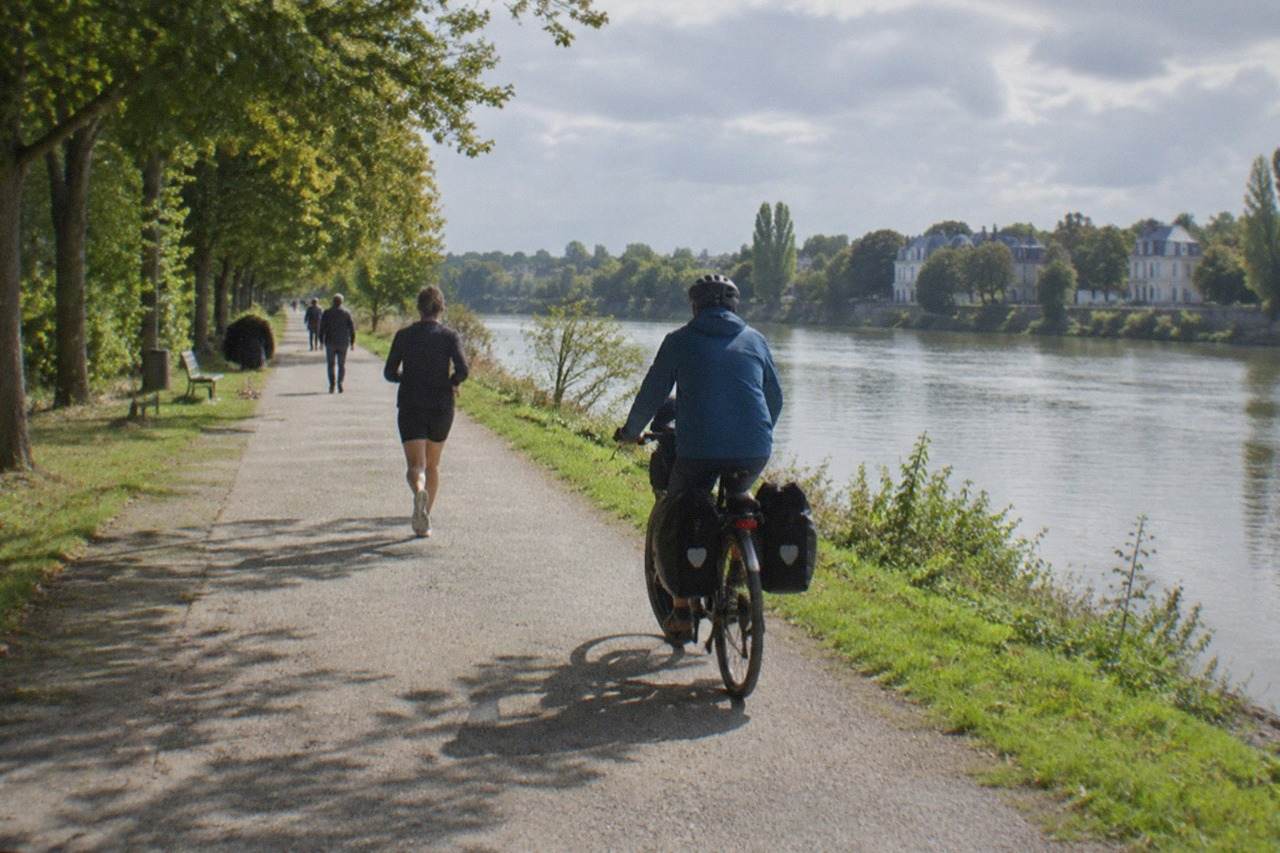
How Long Does It Take To Cycle The Loire Valley?
There is no single fixed duration, because the Loire Valley is a region rather than one route: the full riverside path between its far ends is a multi-day project that most riders spread across a week or more, while a Nantes-based taste of it fits into a single day. From Nantes the practical answer is one relaxed day per stage, and the riverside towns of Clisson, Saint-Nazaire and La Baule each sit within a day's riding.
Riders who plan the whole valley usually break it into daily stages anchored on the towns where they sleep, rather than a distance target. The valley's terrain helps: this is low-lying river country, not mountain country, and the cycling is gentle enough that days are defined more by lunch stops and château visits than by climbs. Nantes, at the downstream end, gives you the estuary landscape and the Muscadet vineyards, and the wider Loire-Atlantique area supplies compact stage towns such as Clisson that are close enough to reach, enjoy and return from without an epic day in the saddle.
For a sense of how the stages fit together from a Nantes base, the table below lists the towns that most riders use as day anchors, with the rail figures on record for each. Cycling times vary with pace, wind and route choice, so treat the rail distances as a floor for how far apart the towns actually are.
| Day anchor from Nantes | TER train time (on record) | Distance on record | What the stage gives you |
|---|---|---|---|
| Clisson | about 15 to 23 minutes | 27 km by rail | Italianate town, château and vineyards; a TER return is included in the Pass Nantes |
| Saint-Nazaire | about 33 minutes | 64 km by rail | The estuary and the Atlantic; the mouth of the Loire |
| La Baule | about 51 minutes | not on record | Bay beaches, often paired with Guérande |
| Le Croisic | about 1 hour 3 minutes | not on record | Salt coast and rocky shoreline |
| Pornic | about 59 to 65 minutes | not on record | Old port and coastal paths |
| Guérande | not on record | about 80 km by road | Walled medieval town and salt marshes |
One structural advantage of a Nantes base is the train. Every town in that table is on a TER line, which means a cyclist can ride out in one direction and, if the day turns long or the weather turns, put the bike on a return train instead of grinding home into a headwind. The Pass Nantes even includes one TER return to Clisson, which pairs neatly with a vineyard stage in that direction.
How Many Days Should You Give The Loire à Vélo From Nantes?
Plan for one day per stage if you are riding out of Nantes and back, or a week or more if your ambition is the full length of the valley. A three-day Nantes-anchored trip covers the estuary end well: day one for the city's riverside and the Île de Nantes, day two for Clisson and the Muscadet country south-east of the city, and day three for the line toward the mouth of the Loire at Saint-Nazaire. That is the shape most visiting riders actually ride.
The single-day version is the most underrated. Nantes is compact, flat and threaded with riverside paths, and the about-22 km green line gives a self-guided loop that touches the Château des ducs de Bretagne, the cathedral district and the island before you have even crossed to the south bank. The Loire à Vélo guide for Nantes covers the route options leaving the city in detail, and the wider Nantes and Loire Valley road trip itinerary shows how the same geography works for visitors who mix cycling days with train days.
For riders who want the valley's headline châteaux rather than the estuary, the Loire Valley châteaux day trips page maps the famous castles further upstream, and those are the stages that push a full ride into week-long territory. Distance between the upstream château towns is the reason the whole valley takes as long as it does: you are riding the length of a region, not a loop.
If a week or more in the saddle is more than your trip allows, the honest move is to pick one or two stages and ride them properly. A Clisson day, a Saint-Nazaire estuary day and a city day inside Nantes add up to a short trip that still answers the question with real valley kilometres under the wheels. And on the day the legs need a rest, the vineyard country south of Nantes can be done from a van seat instead of a saddle, which is exactly what the related tour below covers.
When Is The Best Month To Cycle The Loire Valley From Nantes?
Late spring through early autumn is the cycling window, and the climate data for the Nantes station points at May, June and September as the sweet spots: monthly means of 17.3 C, 20.9 C and 17.2 C respectively, with March the driest month on record at 34.1 mm. July and August are the warmest at 22.8 C and 22.5 C mean, but June is the wettest month at 79.1 mm, so summer riders should pack for showers as well as heat.
The table below gives the monthly means and precipitation for the Nantes climate station, which is the closest data that covers the downstream end of the valley. It is the planning table a cyclist actually needs: it shows when the riding is warm enough for light kit, and when the rain is heavy enough to matter for a week-long trip. The full index of guides sits on Nantes Travel Guide.
| Month | Mean temperature (C) | Precipitation (mm) |
|---|---|---|
| Jan | 0 | 37.3 |
| Feb | 2.1 | 35.5 |
| Mar | 6.5 | 34.1 |
| Apr | 12.3 | 50.6 |
| May | 17.3 | 57.2 |
| Jun | 20.9 | 79.1 |
| Jul | 22.8 | 61.9 |
| Aug | 22.5 | 54.6 |
| Sep | 17.2 | 50.4 |
| Oct | 11.5 | 50.0 |
| Nov | 6.4 | 45.3 |
| Dec | 1.5 | 44.7 |
Read the table before generalising: March is drier than the summer months, but its 6.5 C mean makes it a cold-month ride, while September's 17.2 C mean with only 50.4 mm of rain is arguably the best combination on the sheet for a cycling holiday. The wider question of the best time of year to visit the Loire Valley pulls in the château opening seasons as well as the weather.
Do You Need A Tour To Cycle The Loire Valley?
No, you do not need a tour: the route works well self-guided, and the valley's stage towns, signage and TER rail links are set up for independent riders. What a tour adds is a day off logistics, not a requirement. A guided or driver-supported day, such as a half-day vineyard tour by van out of Nantes, fits naturally on the recovery day of a multi-stage cycling week, when you still want the Muscadet country but no longer want the saddle.
The classic self-guided pattern is simple: base in Nantes, ride one direction per day, and use the TER lines in the table above to bring you home. Riders who prefer some structure on at least one day often split their trip, keeping the cycling self-guided and booking a supported wine day for the vineyards around the Sèvre, whose own tasting rooms are covered in the guide to what wine the Loire Valley is famous for.
The practicality of mixing cycling days with a supported day is the reason the pattern works so well for mixed-ability groups. Stronger riders take the long river stages out along the Erdre or the estuary paths toward the coast; everyone meets for the vineyard afternoon and rides home together or, more often, takes the train. For the flavour of the estuary end of the valley without a bike at all, the question of how far Nantes is from the ocean covers the same geography from a different angle. And if the whole group prefers two wheels all week, nothing here is compulsory: the supported day is one option among several, and plenty of riders complete their week entirely under their own power with nothing booked at all.
How Fit Do You Need To Be To Cycle The Loire Valley?
You need comfortable everyday fitness rather than athletic training: the Loire is low-lying river country and the downstream stages out of Nantes are famously flat, so the limiting factor is usually hours in the saddle, not gradient. If you can ride a bike for a leisurely afternoon at home, you can ride a Nantes-based stage. The full valley is an endurance project only because of its accumulated days, not because any single day is hard.
That said, plan honestly. A week or more of consecutive riding days is its own training load, and riders who rarely cycle should build in rest days, which is exactly where the van-supported vineyard day above earns its place. E-bikes change the calculus entirely: a battery removes most of the fitness question from the flat stages, and the rental market along the route means you do not need to bring your own machine. The one caution the climate data adds is heat: 2026's June records mean midsummer weeks need early starts, water and shade stops built into the day, not just a sunhat.
For riders whose trip is really a city break with wheels, Nantes itself is flat, compact and well suited to short rides, and the question is Nantes a walkable city gives a sense of how little of the centre ever needs a bike at all.
Common Questions About Cycling The Loire Valley
How long does it take to cycle the Loire Valley?
There is no single duration. The full Loire à Vélo along the length of the valley is a multi-day project, usually planned as a week or more of stages, while a Nantes-based taste of the downstream valley fits into one to three days, with the city's own about-22 km green line rideable in a single outing.
Can you cycle the Loire Valley in one day?
You can cycle a satisfying slice of it in one day, but not the whole valley. From Nantes, a single-day stage to Clisson and back, or a riverside and estuary day toward Saint-Nazaire, is realistic for a reasonably fit rider, with the TER network available as a bail-out if the day runs long.
Is the Loire à Vélo flat?
The downstream, Nantes end of the route is low-lying river and estuary country, and the stages out of the city are effectively flat. Riders describe the limiting factor as hours in the saddle rather than climbing.
Is Nantes a good starting point for cycling the Loire Valley?
Yes. Nantes sits at the Atlantic, downstream end of the valley, where the Loire meets the sea, and it combines riverside riding, the Muscadet vineyard country and TER rail links to the stage towns, so it works both as a base for day rides and as one end of a longer point-to-point ride.
What is the best month to cycle from Nantes?
The Nantes station data points at May, June and September: means of 17.3 C, 20.9 C and 17.2 C, with September the driest of the three at 50.4 mm. June is the wettest month on record at 79.1 mm, so early-summer riders should pack for showers.
Do you need a guided tour to ride the Loire Valley?
No. The route works well self-guided, with stage towns and rail links set up for independent riders. A supported day, such as a half-day vineyard tour by van from Nantes, is a useful addition rather than a requirement, and pairs well with a rest day inside a longer cycling week.
The short version: budget a week or more for the whole valley, one to three days for the Nantes end of it, and one honest rest day per week, ideally spent in the vineyards rather than the hotel.