Nantes Pronunciation
Nantes, in the Loire-Atlantique department of the Pays de la Loire region in western France, is pronounced 'nont': one syllable, a nasal vowel, and silent letters at the end. This guide breaks the sound down letter by letter, lists the mistakes English speakers make most often, and covers the other Nantes names you will actually need on the ground, from the Erdre river to Trentemoult.

Short answer
Nantes is pronounced 'nont' in French, IPA /nɑ̃t/: one syllable with a nasal 'on' sound and a silent s and t. In English most people say 'nont' or 'nahnt', rhyming roughly with 'want'. Never say 'nan-teez' or 'nants'.
Nantes, the capital of the Loire-Atlantique department in the Pays de la Loire region of western France, sits on the Loire and Erdre rivers and carries one of the deceptively tricky names in French travel. Most first-time visitors say "nan-teez" or "nants", and both are wrong. The correct French pronunciation is a single syllable with a nasal vowel: "nont", IPA /nɑ̃t/, where neither the final s nor the final t is heard at all. This page from the Nantes Travel Guide editorial desk breaks the name into its letters, explains the mistakes English speakers make most, and walks through the other local names, from Erdre to Trentemoult, that you will need when buying tram tickets or asking for directions.
How Do You Pronounce Nantes In French?
In French, Nantes is pronounced "nont", a single syllable written in IPA as /nɑ̃t/, with a nasal vowel and completely silent final letters. The s at the end is never sounded, and neither is the t. The vowel is the same nasal "on" heard in the French word "bon" or "font", which means the whole city name rhymes with the English word "want" said quickly. There is no second syllable, no "ee" sound, and no hard ending.
The best way to build the sound is to start from a word you already know. Say the English word "want" at normal speed, then round your lips slightly as if drifting toward "ohnt", and you are close. The nasal quality is the part that needs practice. In French, the "an" spelling before certain consonants does not produce the "an" of "hand"; it produces a sound that resonates through the nose rather than the mouth. English has no exact equivalent, which is why approximations always fall a little short.
The ending is the other half of the puzzle. French orthography keeps final consonants on the page but frequently drops them from the mouth. Nantes ends in "-tes", and neither letter is pronounced. What you are left with is the vowel, the n, and nothing else. A French speaker saying the city's name gives it less time than an English speaker needs to say the word "town".
If you want to hear the name in natural context rather than in isolation, a guided walk is one of the easiest ways. A local guide will say "Nantes" dozens of times over a couple of hours, in sentences, at normal speed, and your ear will tune to the nasal vowel far faster than it does from a written guide. The professional private walking tour below is the strongest fit for this, and the operator's live listing carries current pricing and availability.
For more on the city behind the name, start with our guide to whether Nantes is worth visiting, and for the fuller story of the dukes and the port that made the name famous, see our history of Nantes.
Why Are The S And T At The End Of Nantes Silent?
The final s and t are silent because French does not sound most final consonants, and Nantes follows that rule exactly. The name is a plural form, the Latin Portus Namnetum of the founding Namnètes tribe became Nantes, and the plural s survives in the spelling while staying absent from speech. The t before that final s was never a strong sound here either, so the spoken name ends on the nasal vowel. English, by contrast, sounds its final consonants, which is why the mistake is so common.
French final-consonant behaviour is systematic rather than random. A useful rule of thumb: in French, the last consonant of a word is silent unless it belongs to a small group, mainly c, r, f, l, as in the schoolroom mnemonic "careful" sounds those. T and s are not in that group, so "Nantes" ends on air. The s does its work grammatically, marking the plural, not phonetically.
This is not a Nantes quirk alone. Rennes, the Breton capital two hours to the north-west, ends the same way, silent s and a single nasal syllable. Calais, Bordeaux, Paris: each keeps a written final consonant that French mouths do not deliver. Once you accept that the last letter of a French place name is usually decoration for the eye, Nantes stops looking like an exception.
The nasal vowel deserves a note of its own, because it is the one sound in the name English genuinely lacks. In "Nantes" the "an" spelling signals the nasal vowel /ɑ̃/. You produce it by saying "ah" while letting air escape through the nose, as if you had a mild cold. Practise with the French word "enchanté", which contains the same sound twice and, conveniently, is a word you may use in Nantes itself.
The table below maps every letter of the name to what your mouth actually does with it.
| Letter(s) | What you hear | How to make it | Common English error |
|---|---|---|---|
| N | n, as in "no" | Tongue to the ridge behind the teeth | Usually correct |
| a + n | Nasal vowel /ɑ̃/ | Say "ah" with air through the nose, mouth slightly rounded | Said as flat "an" as in "hand" |
| t | Silent | Nothing at all | Pronounced as a hard "t" |
| e | Silent | Nothing at all | Pronounced as "ee" |
| s | Silent | Nothing at all | Pronounced as "z" or "s" |
Which Mistakes Do English Speakers Make Most?
The four most common mistakes are "nan-teez", turning the name into two syllables; "nants", sounding the t as in "ants"; "nan-tess", sounding the s; and stressing the wrong part of the word. Since the correct form is one syllable, "nan-teez" adds a sound that does not exist. "Nants" and "nan-tess" invent final consonants. Correcting any of these usually takes one step: drop everything after the nasal vowel and you are there.
The "nan-teez" version is the most stubborn, because English speakers expect a final e to behave as in "name" or "note". In French, a single e at the end of a word is almost always silent. The "eez" ending belongs to words like "Nantes" only in the imagination. Listen to how a French speaker says "Bordeaux", and you will hear the same lesson applied to a different city: no final consonant, no extra vowel.
"Nants", the second mistake, comes from reading the word as if it rhymed with "ants" or "pants". French does not do this. The t is on the page for spelling history, not for the voice. Rhyming Nantes with the English word "want", as noted earlier, is the closest comfortable approximation, and it also cures the stress problem, because "want" is a single unstressed-feeling syllable just like the French name.
A subtler point is rhythm. English speakers often hit the first part of a borrowed name hard and let the rest trail off, "NAN-tes". French gives the name no internal contrast at all; it is one even, short beat. Slowing down and keeping the word small does more for your accent than any amount of vowel gymnastics.
If you would rather learn the sounds while seeing the city, a private walk puts the names in context, street by street and square by square, and guides are used to patiently repeating anything you ask. Cancellation terms are on the operator's live listing, so there is little risk in booking ahead.
| Wrong version | What goes wrong | Why it happens | The fix |
|---|---|---|---|
| "nan-teez" | Adds an "ee" syllable | English expects a final e to sound | The final e is silent in French |
| "nants" | Sounds the t | English sounds final consonants | Drop the t entirely |
| "nan-tess" | Sounds the s | Plural s feels like it should be heard | The final s is silent |
| "NAN-tes" | Two beats, heavy stress | English stress habits | One even syllable, no stress |
| "nan-tay" | Vowel drift | Overcorrection toward a Romance sound | Keep the nasal "on" of "want" |
How Do You Pronounce Other Nantes Place Names?
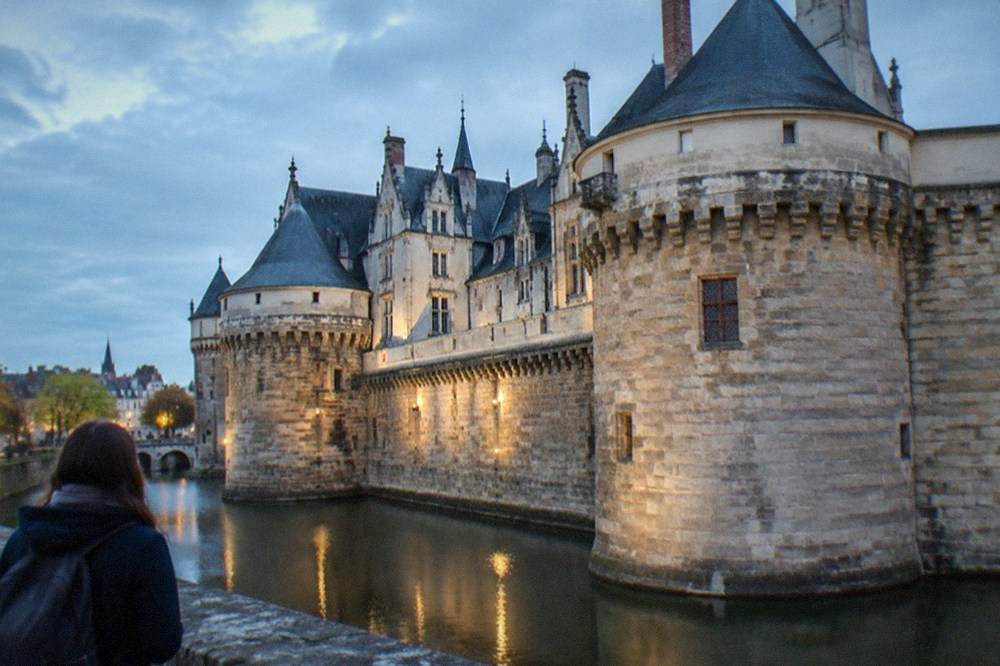
The names you will say most in Nantes are Erdre, said roughly as "air-druh" with a soft d; the Loire, said "lwar"; Île de Nantes, "eel duh nont"; Graslin, "grahs-lan" with a silent n; and Trentemoult, "tront-moo", the last one being the village across the Loire. Each follows the same French rules as the city name: nasal vowels, soft r, and silent final consonants. The château, the Château des ducs de Bretagne, is simply "shah-toh day dük duh breh-tahnyuh".
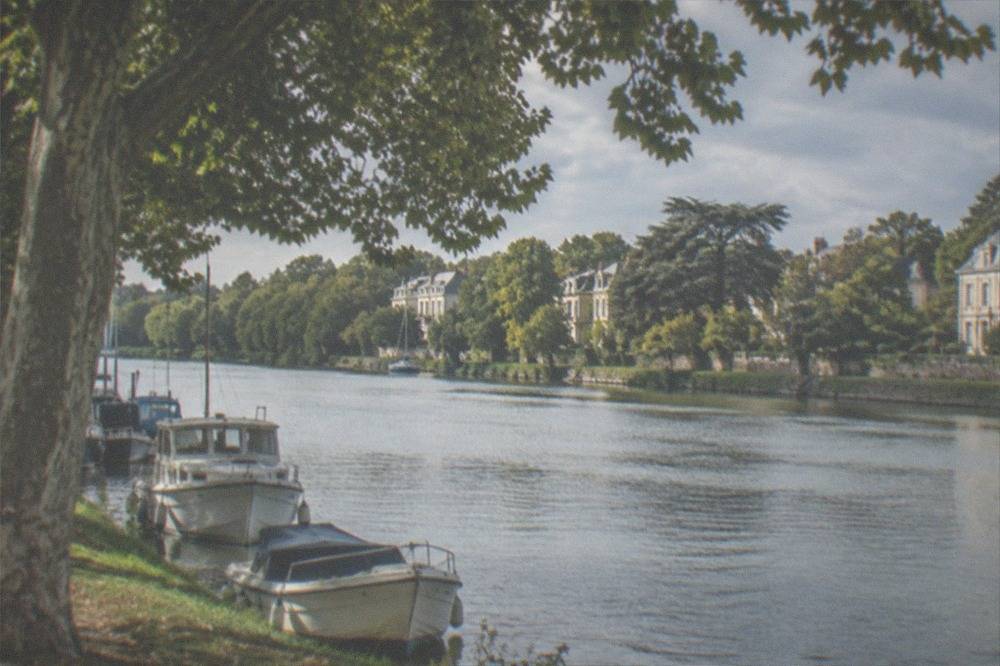
Start with the two rivers, because they shape the whole city. The Loire, France's longest river, is one syllable and a half: "lwar", with the oi forming a "wa" sound. The Erdre, the calm tributary that locals call the prettiest, is "air-druh": the Er gives "air", and the final dre softens so the e fades. The Sèvre Nantaise, the other tributary, is "sev-ruh nont-ehz", and yes, in that final word the s before the next word can liaise into "nont-ehz nont-ehz" territory, but for a visitor "seh-vruh nont-ehz" is perfectly understood.
The neighbourhood names reward a little rehearsal. Bouffay, the medieval quarter, is "boo-fay". Graslin, the theatre district, is "grahs-lan", and the final in spelling is silent. Trentemoult, the fishing village of coloured houses in Rezé, is "tront-moo", with the moult rhyming with "moo" and the n at the end of "Trentemoult" itself unheard. Talensac, the market street, is "tah-len-sahk", and here the final c does sound, a rare exception worth noting. Passage Pommeraye, the 1843 shopping arcade, runs as "pah-sahzh pom-er-eye".
The big landmark names are easier than they look. Château des ducs de Bretagne: "shah-toh day dük duh breh-tahnyuh". The machines of the Île de Nantes, the mechanical elephant and its cousins, are "mah-sheen duh leel duh nont", and Machines de l'île is "mah-sheen duh leel". Cathédrale Saint-Pierre-et-Saint-Paul, the cathedral that partially reopened on 27 September 2025 with full reopening planned for 2028, is "kah-tay-drahl san pyerr ay san pol", with the final l of Paul faint.
| Place name | Rough English guide | Key rule it shows |
|---|---|---|
| Loire | "lwar" | oi sounds as "wa" |
| Erdre | "air-druh" | soft d, fading final e |
| Sèvre Nantaise | "seh-vruh nont-ehz" | nasal "an" again |
| Île de Nantes | "eel duh nont" | silent final s on the city name |
| Bouffay | "boo-fay" | ay from a + y |
| Graslin | "grahs-lan" | silent final n |
| Trentemoult | "tront-moo" | nasal "on", silent final t |
| Talensac | "tah-len-sahk" | final c is sounded |
| Passage Pommeraye | "pah-sahzh pom-er-eye" | soft g in "Passage" |
Both the château and the Machines carry their own ticketed visits. Entry to the castle museum is bookable in advance, and the Machines of the Isle tickets include the Galerie and the Carrousel, with the note from the official tariff page that the Grand Éléphant ride is not part of the Pass Nantes.
The two sites sit on opposite sides of the city centre, and both names are ones you will practise saying aloud more than once on any first visit, which makes them good anchors for the pronunciation work above.
Does The Name Nantes Mean Anything?
Nantes descends from the Namnètes, the Gallic tribe the Romans recorded at the river crossing, so the city name is ultimately a people's name, worn down by two thousand years of use. The Latin Portus Namnetum became the modern Nantes through ordinary sound change, not through any word with a meaning like "port" or "city". The final -es plural shape survives from that history, which is exactly why it sits silent on the end today.
The city's Gallic origin places it in a family of French city names that preserve tribal roots: Paris from the Parisii, Rennes from the Redones, and Nantes from the Namnètes. Nothing in the modern name translates to anything in contemporary French; a French speaker hears only the city. There is no "nante" in a dictionary any more than there is a "paris".
That history also explains why the pronunciation and the spelling diverged. Spelling froze centuries ago; speech kept moving. French final consonants weakened over generations, and the plural s, once more likely to have been heard, drifted into silence while the letters stayed on maps, tickets and street signs. The gap you are crossing when you practise "nont" is a genuine archaeological one.
The name's deeper story is tied up with the dukes of Brittany, the slave-trade port the city later became, and the departmental split that followed. Nantes was Brittany's historic capital, and the question of whether it still belongs to Brittany at all is a live one for locals: Loire-Atlantique was separated from Brittany administratively in 1941 and the department was renamed Loire-Atlantique in 1957, facts covered in full in our guide to whether Nantes is in Brittany.
For the fuller sweep, from the 1466 start of the château rebuild through the 2020 cathedral fire and the 2025 reopening, our Nantes history page carries the timeline, and the Nantes slave trade history page covers the port era when the city's name was known across the Atlantic.
How Do You Use The Name When Buying Tickets And Asking Directions?
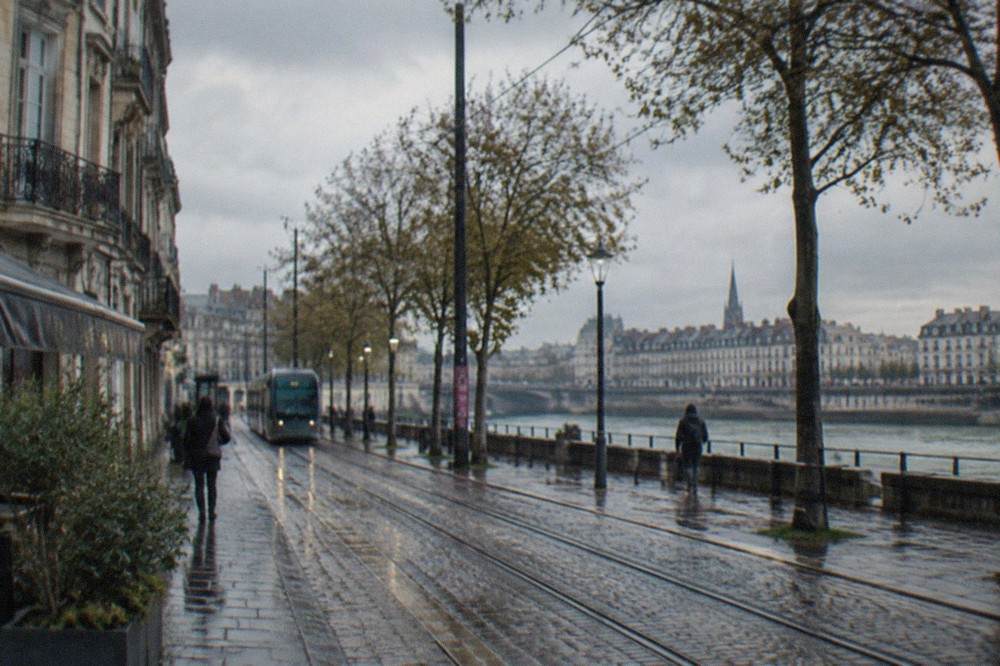
In practice, you will say "Nantes" most often at ticket counters, train stations and hotel desks, and the locals will understand you even with an English accent, provided you keep to one syllable. On the transport network, the names that matter are stop names, not the city name, so learn Commerce, "kom-mairss", and Gare Sud, "gahr süd". For trains, the phrase is simply "un billet pour Nantes", and for the airport shuttle the destination is the airport itself, Nantes Atlantique.
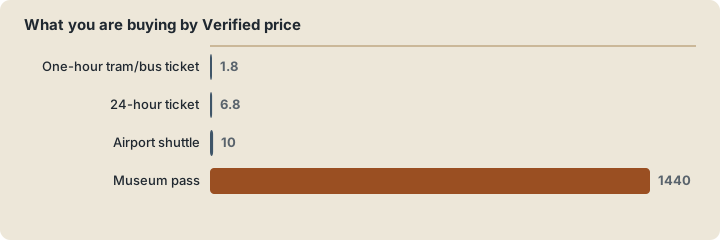
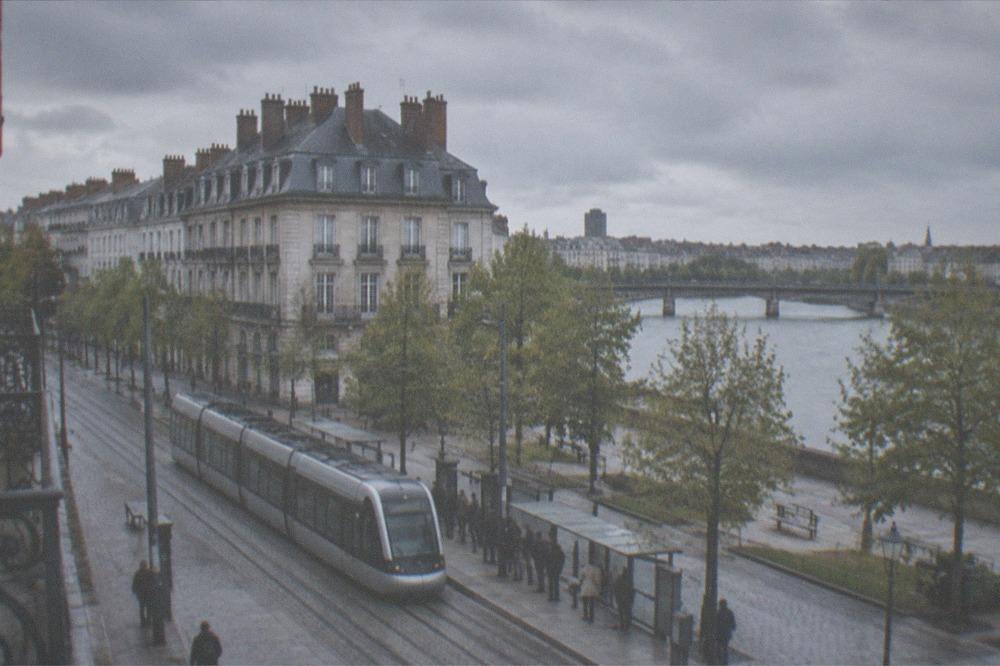
The transport figures worth knowing are few and stable. A one-hour Naolib ticket costs 1.80 EUR and covers trams, buses and the Navibus river crossings; a 24-hour ticket is 6.80 EUR, and a 24-hour ticket for four people travelling together is 15 EUR. The airport shuttle is 10 EUR one way and is excluded from the weekend free-transport rule, which makes Naolib free for everyone from Saturday 00:00 to Sunday 23:59 except on that shuttle. If you are arriving by air, our Nantes airport to city centre guide covers the transfer, and the getting around Nantes page handles the network in detail.
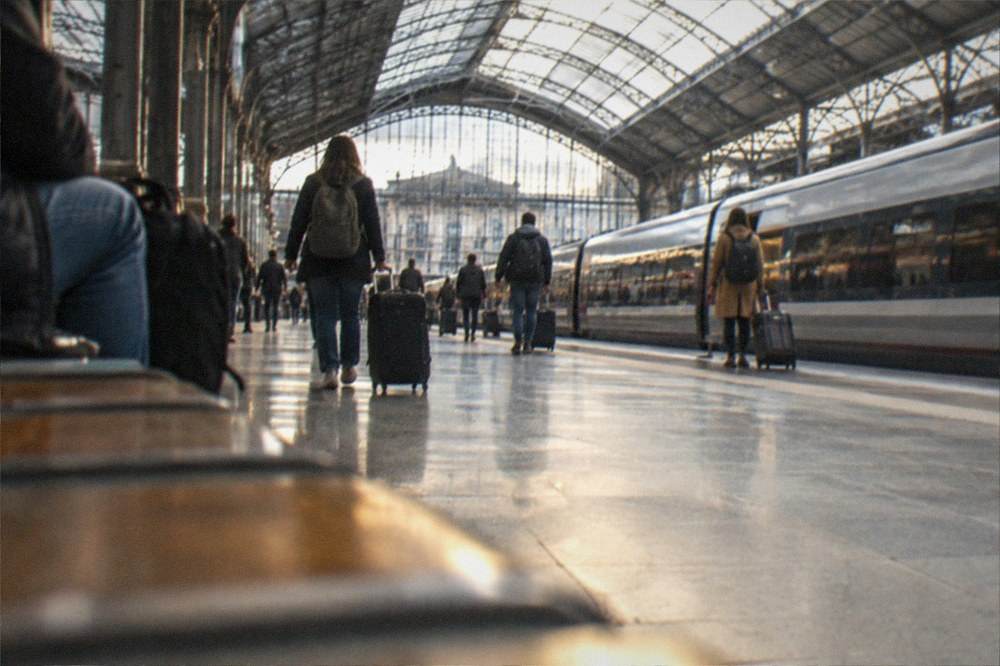
On the trains from Paris, the journey takes about two hours on the fastest direct services, and the arrival station is simply Nantes, "gare de Nantes", so there is nothing extra to mispronounce. Our Paris to Nantes guide covers timetables and booking approaches. If you plan to pack the museums and river crossings into a short stay, the Pass Nantes page explains what the pass covers, including the Galerie des Machines and the Carrousel but not the Grand Éléphant ride, and a 24-hour pass costs 30 EUR full fare under the tariffs valid from 1 April 2026.
A pronunciation note for the pass itself: "Nantes" inside any longer phrase keeps its one syllable, and the French for "I would like", "je voudrais", is "zhuh voo-dreh". Together: "zhuh voo-dreh ün bee-yay pohr nont". That single sentence, plus a pointing finger at the tram map, resolves most transactions in the city.
| What you are buying | French phrase | How to say it | Verified price |
|---|---|---|---|
| One-hour tram/bus ticket | "un ticket" | "uhn tee-keht" | 1.80 EUR |
| 24-hour ticket | "un ticket journée" | "uhn tee-keht zhohr-nay" | 6.80 EUR |
| Airport shuttle | "la navette aéroport" | "lah nah-veht ay-roh-pohr" | 10 EUR one way |
| Museum pass | "le Pass Nantes" | "luh pass nont" | 30 EUR for 24 h full fare |
| Train ticket to Paris | "un billet pour Paris" | "uhn bee-yay pohr pah-ree" | Fares vary, check at the counter |
How Do You Practise Before You Travel?
Practise by anchoring the name to English words you already say: "want" for the syllable shape, "on" said through the nose for the vowel, and a full stop after it. Say the name in short bursts of ten, alternating with a word you know is right, and record yourself once to compare. Then move to the longer local names only after the city name is stable, because Erdre and Graslin reuse the same nasal and silent-letter skills. Ten focused minutes is genuinely enough for most speakers.
The pairing trick works well. Alternate between the English word "want" and your target "Nantes", back to back, letting the French version borrow the English word's rhythm. Then drop the w sound and round your lips. Most learners find the nasal vowel arrives naturally after a dozen repetitions, because the mouth learns by imitation rather than by description.
Do the same for the landmark names before you land. "Château" pairs with "shah-toh", and saying "show" then "toe" gives you the two halves. "Trentemoult" pairs with "tront" plus "moo". "Pommeraye" is three easy beats: "pom", "er", "eye". The full set appears in the table earlier on this page, and nothing in it requires a sound English does not have except the nasal vowel itself.

Once you arrive, let the city finish the teaching. Announcements on the trams say every stop name clearly; the Navibus crossing to Trentemoult gives you the river names; and market vendors at Talensac will say the street name for you when you buy berlingots. Guided visits are the fastest route, because a guide repeats names all day and answers the "how do you say that one?" question without a second thought. The trio of bookable options below, a private walk and two of the city's headline attractions, all suit a first visit.
Between sessions, the lighter practical pages help you plan around the sounds rather than in a vacuum: when to visit Nantes covers the seasons, and Nantes weather gives the climate background for the weeks you choose.
Common Questions About Nantes Pronunciation
Is Nantes pronounced "Nants"?
No. The t at the end of Nantes is silent in French, as is the s. The correct pronunciation is a single syllable, "nont", rhyming roughly with the English word "want". "Nants", with a sounded t as in "ants", is one of the most common mistakes English speakers make.
How many syllables does Nantes have?
One. The name is a single syllable with a nasal vowel: /nɑ̃t/. Any version that adds a second syllable, such as "nan-teez", is incorrect. The final e, s and t are all silent, so the word ends on the nasal "on" sound with nothing after it.
What does Nantes rhyme with in English?
The closest comfortable rhyme in English is "want", said quickly and without stress. The French vowel is nasal, which English does not reproduce exactly, but "want" matches the syllable count, the rhythm and the absence of any sounded final consonant.
Do locals mind if you mispronounce Nantes?
Not in any practical sense. Nantes is a university city with plenty of visitors, and a French speaker will understand "nan-teez" from context without difficulty. Making the small effort toward "nont" is appreciated, but nobody expects a native-level nasal vowel from a visitor.
Is the S in Nantes ever pronounced?
No, not in the modern city name on its own. The s survives in the spelling as a historical plural marker, from the Latin-era Namnètes roots, but French does not sound it. The only time a final s in French is heard is in liaison before a following vowel, which does not apply to saying the city's name in isolation.
How do you pronounce Nantes in English?
English speakers commonly say "nont" or "nahnt", keeping the single syllable, and both are accepted in English conversation. What matters is avoiding the two-syllable "nan-teez" and the hard-t "nants". The French original remains /nɑ̃t/ with the nasal vowel.
With one syllable, one nasal vowel and two silent letters, the name of the city is easier than it looks, and the same rules unlock the Loire, the Erdre, Trentemoult and the Château des ducs de Bretagne on the same trip.