Nantes Wheelchair Accessible
Nantes, in the Loire-Atlantique department of western France, is a largely modernised city where trams, free courtyards and labelled museums do much of the work for wheelchair users, while cobbled Bouffay and old quays do the opposite. Here is what the official sources actually say.
Short answer
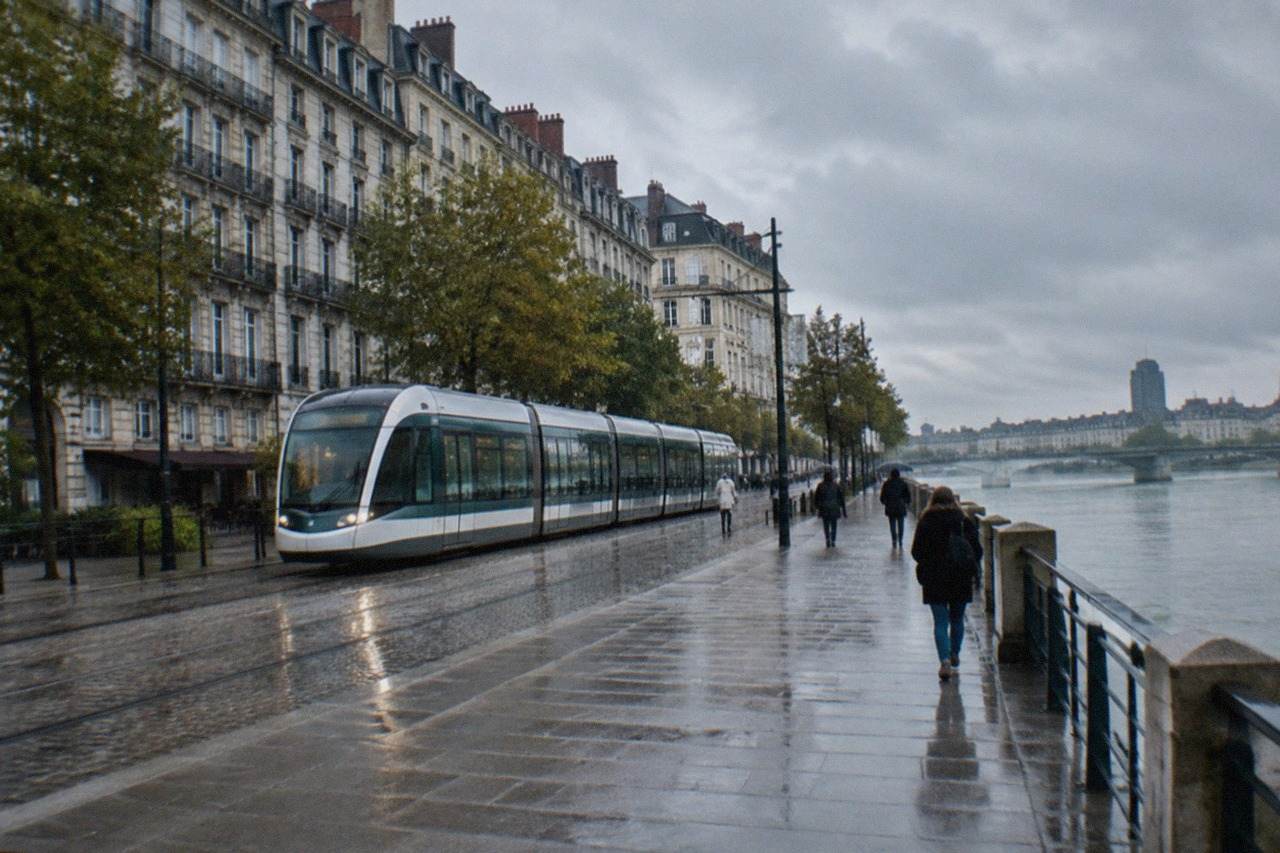
Nantes is workable for wheelchair users: three tram lines cover 45.6 km, the Château des ducs de Bretagne holds the Tourisme & Handicap label in all four categories, and the cathedral, Mémorial and Jardin des Plantes are free. Cobbles in Bouffay and the Muséum closure until 2029 are the main drawbacks.
Nantes, in the Loire-Atlantique department of the Pays de la Loire region of western France, has spent four decades rebuilding itself around trams, riverbanks and pedestrianised cores, and that modernisation is what makes it approachable for wheelchair users. The city is not a medieval maze: three tram lines cover 45.6 km and 84 stations, the riverside quays have been relaid, and the biggest museums hold official accessibility labels. At the same time, the old Bouffay quarter is cobbled, one major museum is shut until 2029, and the cathedral is a live construction site with a 2028 completion target. This guide separates what the official sources confirm from what they do not, so you can plan a visit built on facts rather than optimism. For the wider picture of the city, start with our Nantes Travel Guide homepage.
Is Nantes Wheelchair Accessible Overall?
Nantes is broadly workable for wheelchair users, with modern transport as its strongest asset. The tram network runs three lines across 45.6 km and 84 stations, the Château des ducs de Bretagne carries the Tourisme & Handicap label in all four disability categories, and several headline sights cost nothing to enter. The two structural drawbacks are the cobbled Bouffay old town and the Muséum d'histoire naturelle, closed for works until 2029.
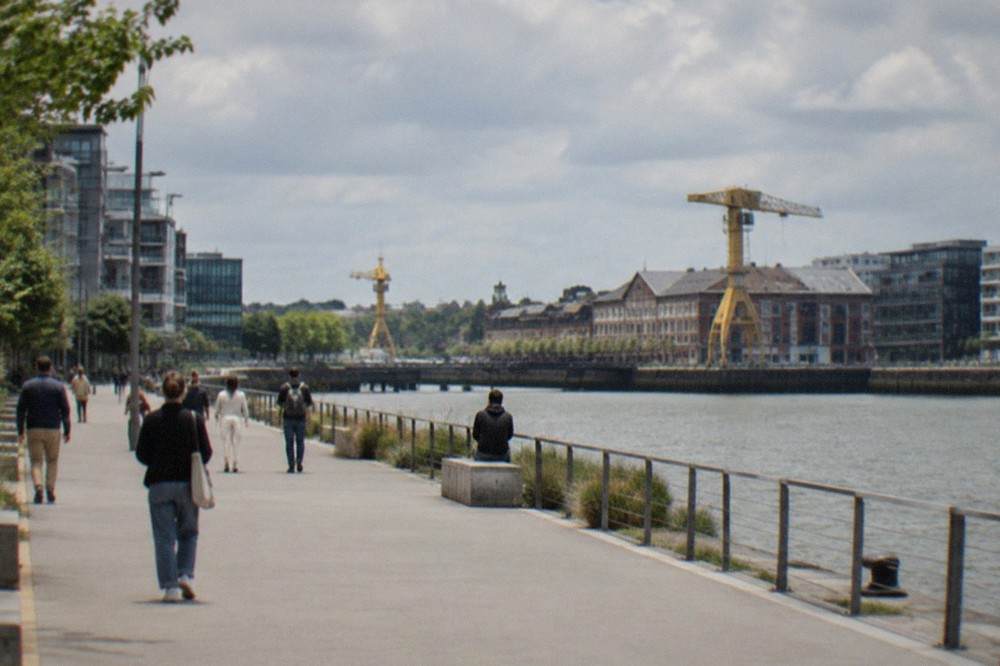
That balance is the honest summary. Nantes was France's European Green Capital in 2013 and its modernisation shows in the public realm: the Île de Nantes, the former shipyard island, has been rebuilt with wide flat walkways between the Machines de l'île attractions, and the green line painted route that threads the city runs about 20 km along repaved surfaces. The city's own transport figures record 154 million Naolib trips in 2024, which tells you the network is dense, frequent and used by everyone, not a tourist curiosity.
What no official source will tell you, and what this site will not invent, is the step-by-step state of every kerb, lift and toilet in the centre. Those details change with works schedules. What the sources do give is firm: prices, labels, closures and transport rules, all covered in the sections below. If you are still deciding whether the city merits the trip at all, read our verdict on whether Nantes is worth visiting alongside this page.
Which Nantes Sights Are Free To Enter And Easy To Reach?
The free headline sights in Nantes are the Château courtyard and ramparts, open 8:30 to 19:00 daily, the Jardin des Plantes, the Passage Pommeraye, the Mémorial de l'abolition de l'esclavage and the cathedral itself, which has been partially open again since 27 September 2025 with entry through the side portals while the west facade is under scaffolding until the full reopening planned for 2028.
The cathedral detail matters for access planning. The château's heritage partner, Patrimonia, states that the building partially reopened on 27 September 2025 and that access remains via the lateral portals while the western front is scaffolded. Entry is free. The interior, including the nave and choir, is generally accessible for visits and worship, and the tomb effigies of Francis II and Marguerite de Foix have been visible to the public since around 20 February 2026, with full reinstallation expected by the end of 2026.
The free outdoor layer is just as useful. The château's own hours page gives the courtyard and ramparts daily from 8:30 to 19:00, extended to 20:00 in July and August, and the moat garden from 8:00 daily, both free and both flat. The Jardin des Plantes, one of the finest city parks in western France, is free with seasonal hours. The Passage Pommeraye, the 1843 glass-roofed shopping gallery, is free to walk, though it climbs a slope across three floors, so treat it as a viewing stop rather than a through-route. The Mémorial on the Quai de la Fosse is free, open daily with seasonal hours and last access 30 minutes before closing.
| Sight | Entry cost | Access detail from official sources |
|---|---|---|
| Château courtyard and ramparts | Free | Daily 8:30-19:00, July-Aug to 20:00, flat cobbled court |
| Château moat garden | Free | Daily 8:00-19:00, summer to 20:00 |
| Cathedral Saint-Pierre-et-Saint-Paul | Free | Partially reopened 27 Sept 2025, entry via side portals, full reopening planned 2028 |
| Mémorial de l'abolition de l'esclavage | Free | Daily 9:00-18:00 (16 Sept-14 May), 9:00-20:00 in summer, last access 30 min before close |
| Jardin des Plantes | Free | Seasonal hours, main paths paved |
| Passage Pommeraye | Free | Mon-Sat 8:00-20:00, Sun 9:00-20:00, three floors on a slope |
| Île de Versailles | Free | Japanese garden on the Erdre, seasonal hours |
For the paid layer, the sightseeing maths favour a pass if your days are full, and the Nantes CityPass page works through the numbers in detail. If you would rather have someone else handle the routing on day one, a short guided orientation is the fastest way to learn the flat streets from the cobbled ones.
How Accessible Is The Château Des Ducs De Bretagne?
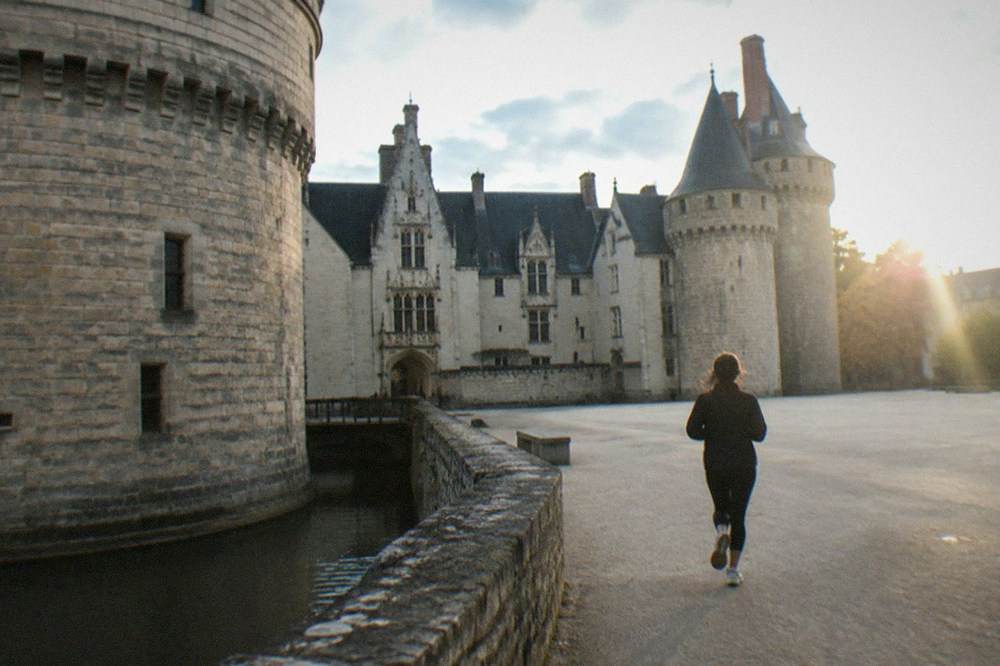
The Château des ducs de Bretagne is the single best-documented accessible site in Nantes: the venue's visitor information records the Tourisme & Handicap label across all four disability categories, the courtyard, ramparts and moat garden are free and open long hours daily, and the Musée d'histoire de Nantes inside costs 9 EUR full or 5 EUR reduced. Assistance dogs are admitted while other dogs are not.
The museum itself, 32 rooms and more than 1,150 objects covering Nantes history from the dukes through the Atlantic slave trade to the modern city, opens 10:00 to 18:00 and is closed on Mondays, extending to 10:00-19:00 daily in July and August. Last tickets are sold 30 minutes before closing. The label covering all four Tourisme & Handicap categories, mobility, hearing, visual and intellectual, is reported in the venue's own practical information, which is as close to a certification as French cultural sites publish.
Two price levers are worth knowing before you buy. The annual Pass Musées at 15 EUR covers a year of unlimited entry to the Musée d'histoire de Nantes, the Musée d'arts, the Musée Jules Verne and the Chronographe in Rezé, which pays for itself on a second visit to any of them. And the temporary exhibition programme is included in the standard 9 EUR ticket: Expression(s) décoloniale(s) #4 runs from 8 May to 8 November 2026, with contemporary works installed in dialogue with the permanent collection. Free entry applies for under-18s on any open day and on the first Sunday of each month from September to June. Our full Château des ducs de Bretagne guide covers the building's history and current programme in depth.
A walk with a local, starting near the château, is the most efficient way to map the accessible centre on your first morning, and you can reserve it directly through the operator's live listing.
What Do Wheelchair Users Pay At Nantes Museums?
Nantes museums apply documented concessions rather than blanket free entry, and the pattern is consistent: the Musée d'arts charges 9 EUR full and 4 EUR reduced with a free Thursday nocturne from 19:00 to 21:00, the Musée Dobrée charges 9 EUR full and 6 EUR reduced with free entry for disabled visitors and a companion, the Musée Jules Verne charges 4 EUR full and 1.50 EUR reduced, and the Pass Musées at 15 EUR covers four museums for a year.
The Muséum d'histoire naturelle is closed until 2029 and excluded from every pass, which is the one museum fact no accessibility plan can dodge.
The Dobrée terms are the most generous of the set: its official price page lists free entry for disabled visitors accompanied by a carer, alongside free entry for under-26s and Pass Nantes holders. It reopened in May 2024 after thirteen years of renovation and now runs Wednesday to Sunday, 10:00 to 18:00, 19:00 in July and August, closed Mondays, Tuesdays and public holidays. The Musée d'arts, by contrast, prices by tariff rather than by status: the reduced 4 EUR rate is the concession tier, and free hours are the Thursday-evening window and the first Sunday of each month between September and June. The Musée Jules Verne keeps a modest 4 EUR full tariff with 1.50 EUR reduced, open afternoons with extended summer hours, though the museum notes it is not air-conditioned. Its future replacement, the Cité des Imaginaires in Bas-Chantenay, is targeted to open in 2028.
| Museum | Full price | Reduced | Accessibility-relevant terms |
|---|---|---|---|
| Musée d'histoire de Nantes (château) | 9 EUR | 5 EUR | Tourisme & Handicap all 4 categories, free under 18, assistance dogs |
| Musée d'arts de Nantes | 9 EUR | 4 EUR | Free 19:00-21:00 Thursdays, closed Tuesdays |
| Musée Dobrée | 9 EUR | 6 EUR | Free for disabled visitors and companion, Pass Nantes holders |
| Musée Jules Verne | 4 EUR | 1.50 EUR | Closed Tuesdays, not air-conditioned |
| Planétarium | 7 EUR | 3 EUR | Sessions 1 hour, 30-minute child sessions at varies by venue |
| Pass Musées (annual) | 15 EUR | covers 4 museums | Muséum excluded while closed |
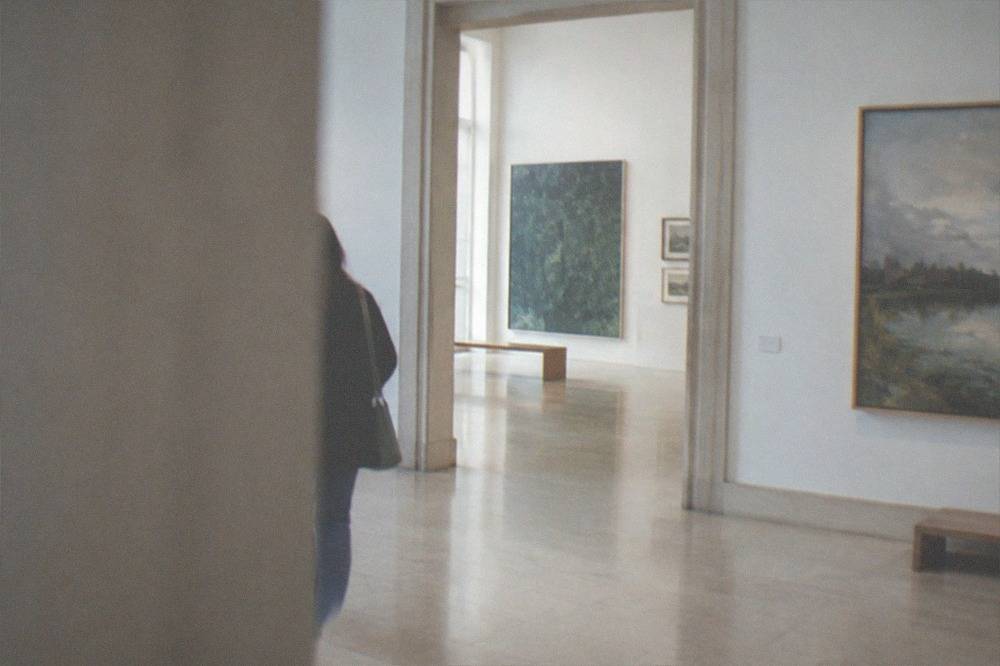
The Muséum closure is the one fact that catches out every older guide still listing it as a rainy-day stop. It has been closed since November 2025 for a restructuring that will roughly double its public space from about 2,200 to about 3,900 square metres, and it reopens in 2029. Until then the museum runs pop-up programming, "Le Muséum près de chez vous", at venues across the metropolitan area. Our museums in Nantes guide tracks the full set, open and closed.
How Accessible Are Les Machines De L'île?
Les Machines de l'île prices each attraction at 12 EUR full with a 10 EUR reduced rate for disabled visitors with proof, free entry for a disabled companion, and 8 EUR for children aged 4 to 12, according to the site's own tariff page, which also lists day packages at 20 EUR for two attractions or 29 EUR for three. The Grand Éléphant does not run from 2 November 2026 to 28 February 2027 for maintenance.
The site sits on rebuilt shipyard land with wide modern surfaces around the Galerie, the Carrousel and the elephant's departure point, which makes the approach the easiest of Nantes's big attractions. The tariff structure means a disabled visitor and companion visiting all three attractions pay the reduced rate once plus a free companion ticket each time, subject to the proof requirements the site states. Booking is advised for the elephant in particular, and the operators' live listing is the place to check current slots before travelling. A 15 percent family discount applies for groups of five with a maximum of two adults.
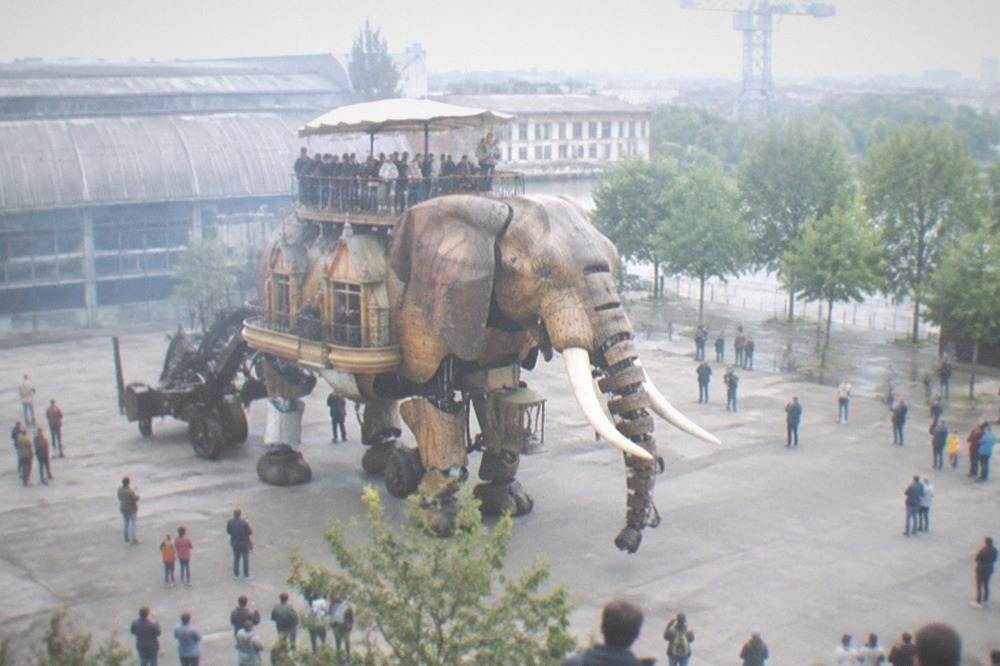
Two scheduling facts shape a visit. The Carrousel des Mondes Marins closed for maintenance from 22 to 25 September 2026, reopening 26 September, and the elephant pause from 2 November 2026 to 28 February 2027 removes the headline ride for an entire winter. The site also has its standard annual January closure, so a February trip sees the Galerie and Carrousel but no elephant. The prototype branch of the abandoned Arbre aux Hérons, a remnant of the project Nantes Métropole dropped in September 2023, remains part of the Galerie visit, with a film and terraces, as the tariff page notes. Our dedicated Machines de l'île guide has the full practical breakdown, and you can Check availability at the operator's listing.
How Does Wheelchair Accessible Transport Work In Nantes?
Naolib's standard ticket costs 1.80 EUR and covers trams, buses and the Navibus river shuttles, a ticket valid for a full day is 6.80 EUR or 15 EUR for a group of four, and the entire network is free for everyone from Saturday 00:00 to Sunday 23:59, with one exception: the airport shuttle is excluded from weekend free travel and always costs 10 EUR.
The airport page gives the shuttle as every 20 minutes from April to October, every 30 minutes from November to March, with a trip time of about 20 minutes.
The airport shuttle is the one fare rule that catches visitors out, because the weekend-free rule is heavily promoted and the exclusion is printed in the small print of the Naolib tariff page. The 10 EUR ticket is bought on board by bank card and is valid for one hour on the whole Naolib network including metropolitan TER trains, so it doubles as your transfer ticket into the centre. The shuttle stop moved on 30 March 2026 to the Gare routière at Gare Sud, quai A, per the airport's access information. Our Nantes airport to city centre guide walks the full transfer, and getting around Nantes covers the network in depth.
| Ticket | Price | Coverage |
|---|---|---|
| 1-hour ticket | 1.80 EUR | Tram, bus, Navibus, TER inside the metropole |
| 10 x 1-hour | 17.80 EUR | Carnet |
| 24-hour ticket | 6.80 EUR | Whole network, one person |
| 24-hour, 4 people | 15 EUR | Group day ticket |
| Weekend travel | Free | Sat 00:00 to Sun 23:59 for everyone |
| Airport shuttle | 10 EUR | Always charged, valid 1 h on the network, bought on board |
| P+R parking plus transport | 4.50 EUR | 24 h parking plus transport for up to 5 people |
The Navibus river crossings deserve a place in an accessibility plan, not least because they are the pleasant way across the Loire: line N1 links the Gare Maritime to Trentemoult Sablières, N2 connects the Hangar à Bananes and Bas-Chantenay to Trentemoult following the November 2025 extension, and N3 runs on the Erdre, all on standard Naolib tickets. Tram lines 1, 2 and 3 cover the spine of the city, with the first rails of future lines 6 and 7 laid in 2025 and 2026 for an end-2027 opening. None of the official sources state the boarding-ramp procedure at every stop, so plan the first tram journey with time to spare and treat the network map as the ground truth for routing.
A pass that bundles transport with museum entry changes the sums for a full itinerary; the Pass Nantes guide compares the available tiers, whose reduced rates cover children aged 4 to 17, students under 26 and disability card holders.
Where Are The Main Barriers For Wheelchair Users In Nantes?
The honest barriers are the cobbled Bouffay old town around the cathedral, the sloping Passage Pommeraye with its three linked floors, the closed Muséum until 2029, and the Loire's quays in their older stretches, while the modernised Île de Nantes, the tram corridors and the château plateau are the reliable surfaces. The cathedral itself remains a construction site toward its 2028 completion, with entry through side portals.
No official source publishes a kerb-by-kerb audit, so treat the old quarters as assisted territory and the modern core as independent territory.
Bouffay is the medieval heart of the city, pedestrianised in phases through 2025, and its charm and its difficulty are the same stones. Routines that work well: approach the cathedral from the château side along the newer surfaces, use the tram stops on the ring rather than trying to thread the interior lanes, and treat rue de la Barillerie and the lanes around Place du Bouffay as a slow zone. The Graslin quarter south of it is later, grander and more regularly paved, built around the place Graslin and the Théâtre Graslin.
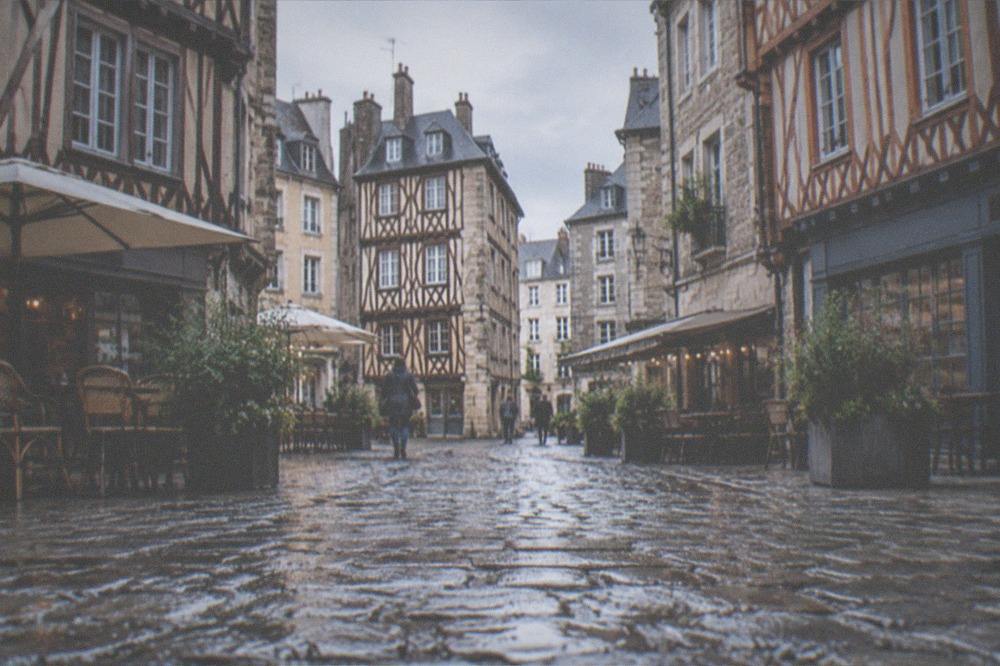
Trentemoult, the fishing village across the Loire reached by Navibus N1 or N2, is worth flagging for its painted houses and riverside terraces, though its lanes are old and narrow. The Île de Nantes at the northern end of that crossing is the opposite: wide, flat, rebuilt. One planning note on the rivers themselves: the Loire flooded to 8.18 metres at the Pont Anne-de-Bretagne in February 2026, the first time above 8 metres in about fifteen years, and the Mémorial's own information notes it closes during Loire floods. Winter flood risk is low but real, and it specifically affects the quayside sights this guide recommends.
When Is The Best Time To Visit Nantes For Easier Access?
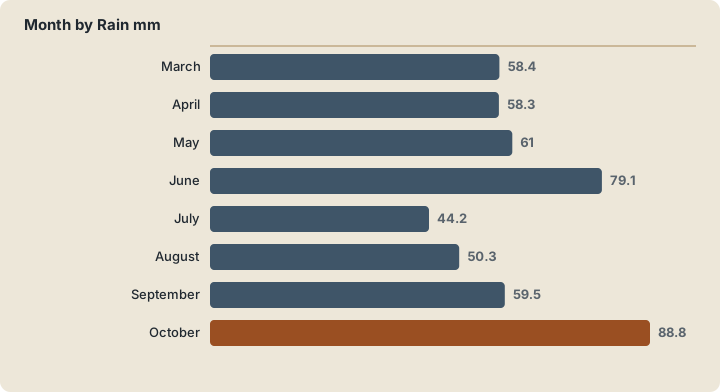
September and October are the sweet spot: Météo-France's 1991-2020 normals for the Nantes-Bouguenais station give September a mean maximum of 22.4 C and October 17.6 C, with 59.5 mm and 88.8 mm of rain respectively, and the summer crowds have gone. July is the warmest month at a 25.4 C mean maximum but June is the wettest at 79.1 mm, and the whole year totals 819.5 mm of rain.
Avoid the elephant's maintenance window from 2 November 2026 to 28 February 2027 if that ride is a priority.
The climate is temperate oceanic, not Mediterranean, and the numbers behind that are worth planning around. January's mean maximum is 9.3 C with 87.9 mm of rain; August is the sunniest month at 232.6 hours; December is the wettest at 101.0 mm. The last few years have pushed the extremes: a new station record of 42.2 C was set on 24 June 2026, and the summer of 2026 recorded an exceptional 40 days at or above 30 C. Heat is now a real planning variable for summer visits, and one that matters doubly for anyone whose condition makes heat harder to manage. Our Nantes weather and best time to visit Nantes guides expand on this.
| Month | Mean max C | Rain mm | Notes for accessible travel |
|---|---|---|---|
| March | 13.5 | 58.4 | Cool, quiet, possible late frost |
| April | 16.2 | 58.3 | Shoulder season, green line repainted |
| May | 19.6 | 61.0 | Mild, pre-summer crowds |
| June | 23.0 | 79.1 | Wettest month, can also run very hot |
| July | 25.1 | 44.2 | Driest month, peak heat risk |
| August | 25.4 | 50.3 | Warmest and sunniest, peak crowds |
| September | 22.4 | 59.5 | Best balance of warmth and quiet |
| October | 17.6 | 88.8 | Mild, wetter, theatre season begins |
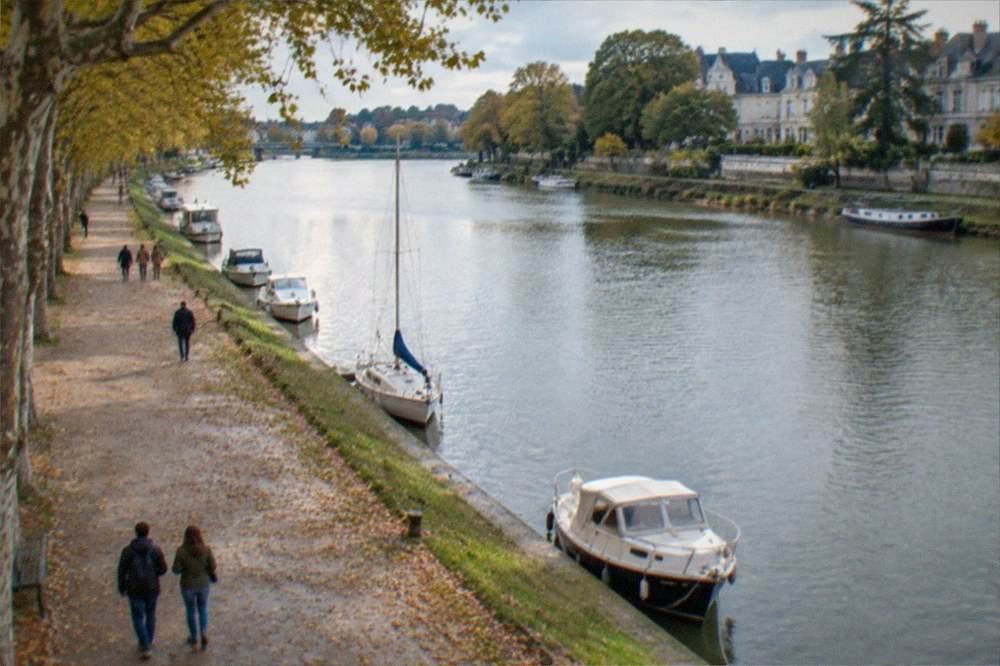
Event calendars cut both ways for access. The summer Voyage à Nantes art trail, which ran its 15th edition from 4 July to 6 September 2026, spreads free installations along about 20 km of the green line and fills the streets. The Christmas market runs from Place Royale to Place du Commerce from 19 November to 27 December 2026, and Folle Journée fills late January with classical music, though its Cité des Congrès home enters full closure for works from February to December 2027, with the 2027 edition set for 27 to 31 January before the shutters come down. Quieter windows with everything still open are late September through October, and late March through May.
Can You Book Accessible Tours In Nantes?
Yes, though Nantes is not a city with a dedicated wheelchair-tour operator among the verified products, so the practical approach is a private or short guided walk whose route you agree with the operator in advance, plus self-guided planning around the flat corridors this guide maps. The verified roster includes short local-led walks of about an hour, a private custom walking tour adjustable from two to eight hours, and a self-guided app tour of 35 stops.
The app tour lets you set your own pace and skip any street that defeats you, and food tours of the old town complete the set.
That last category needs the same warning as Bouffay itself: the food routes run through the old quarter, so name your mobility needs when you book rather than after. The private custom walk is the most flexible of the set for a wheelchair user, because the duration, pace and route are yours to fix with the guide, and the operator's listing is where that conversation starts. The app tour has a different kind of value: at 35 stops it is less a tour than a curated map, and a curated map is exactly what an accessible visit needs, since you take the stops on the flat corridors and leave the rest.
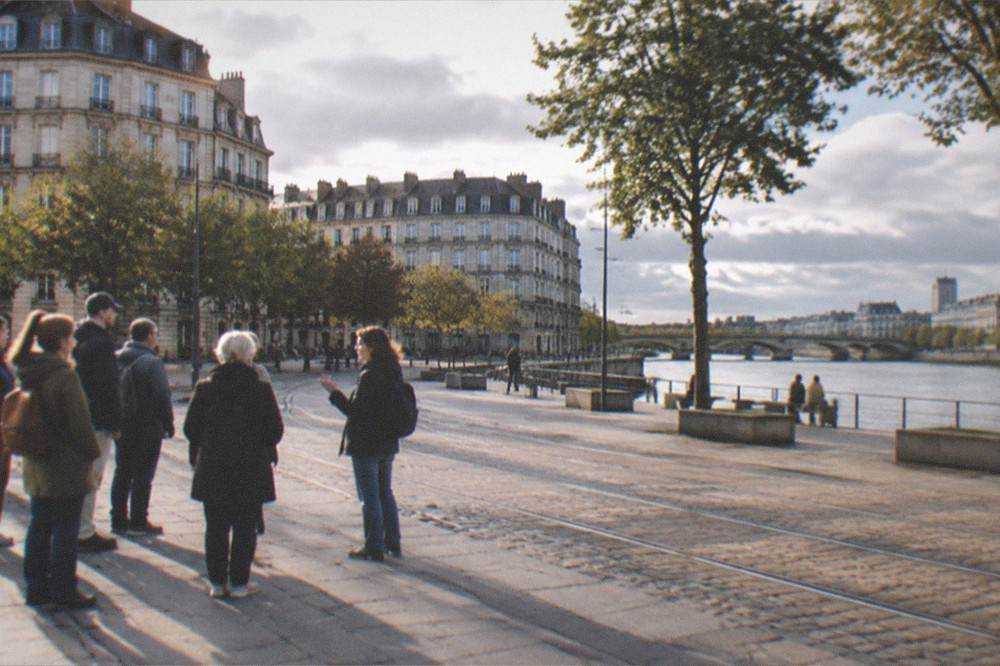
For day-trip ambitions, be realistic. The verified day trips from Nantes, Clisson by TER, Saint-Nazaire, the Guérande salt marshes and the vineyards, all involve historic towns or rural terrain whose surfaces are not documented to any accessibility standard in the sources this site uses. Puy du Fou and the coast are possible with a car and planning, and our day trips from Nantes guide lays out the distances, but none of those pages can promise step-free routes, and this one will not invent them. An orientation walk booked for your first morning remains the highest-value purchase for accessible travel in Nantes, because the local knowledge transfers to everything you do afterwards.
Common Questions About Accessible Travel In Nantes
Is Nantes wheelchair accessible?
Broadly, yes, with caveats. Three tram lines cover 45.6 km and 84 stations, the Château des ducs de Bretagne holds the Tourisme & Handicap label in all four categories, and the free sights include the cathedral, Mémorial, Jardin des Plantes and château courtyard. The cobbled Bouffay quarter and the Muséum's closure until 2029 are the main obstacles.
Is the Château des ducs de Bretagne accessible for wheelchair users?
The venue's visitor information records the Tourisme & Handicap label in all four disability categories, the courtyard, ramparts and moat garden are free and open daily, and the museum inside is open six days a week with a 5 EUR reduced tariff and free first Sundays from September to June. Assistance dogs are admitted; other dogs are not.
Do disabled visitors pay at Nantes museums?
Concessions vary by venue. The Musée Dobrée lists free entry for disabled visitors and a companion; Les Machines de l'île charges a 10 EUR reduced rate for disabled visitors with proof and admits a companion free; the Musée d'arts and Musée d'histoire price by standard full and reduced tariffs, with free windows on Thursday evenings and first Sundays respectively.
Is the Nantes airport shuttle wheelchair accessible and free at weekends?
The shuttle costs 10 EUR every day, including weekends, because it is excluded from the Naolib weekend-free rule. It runs about every 20 minutes from April to October and every 30 minutes from November to March, takes about 20 minutes, and since 30 March 2026 departs from the Gare routière at Gare Sud, quai A. Confirm boarding assistance with the operator before travel.
Is Nantes cathedral open, and can wheelchair users enter?
Yes. The cathedral partially reopened on 27 September 2025 after the 2020 fire, with entry via the side portals while the west facade remains scaffolded, and full completion is planned for 2028. Entry is free, the nave and choir are generally accessible for visits, and the tomb effigies of the dukes have been viewable since around February 2026.
When should wheelchair users avoid visiting Nantes?
Avoid 2 November 2026 to 28 February 2027 if the Grand Éléphant ride is a priority, since it pauses for maintenance in that window, and be aware the Machines site closes annually in January. Winter brings the highest rainfall, October to January, and February 2026 showed the Loire can flood above 8 metres, which closes the quayside Mémorial.
Nantes rewards visitors who plan around its modern skeleton: the trams, the rebuilt island, the labelled château and the free cathedral, courtyard and gardens that anchor the flat centre. Book the short orientation walk first, let the local route-setter show you where the cobbles begin, and the rest of the city opens up on your own terms.