Carnac
Carnac, on the southern Brittany coast west of Nantes, holds one of the most extraordinary concentrations of prehistoric standing stones in the world, and it works as a full day trip from the city.
Short answer
Carnac lies on the southern coast of Brittany, west of Nantes in western France, and is visited on a day trip by car along the coast road past Guérande and La Baule, or by train with a connection. The stones are free to walk among out of season, and the trip combines well with the salt marshes of Guérande and the beach at La Baule.
Carnac sits on the southern coast of Brittany, west of Nantes, the city in the Loire-Atlantique department of the Pays de la Loire region of western France that serves as the natural base for this trip. The town gives its name to one of the most remarkable prehistoric landscapes in Europe: alignments of standing stones that run in long rows across the heath, erected by communities whose names and languages are entirely lost. This page, part of the Nantes Travel Guide collection, sets out how to plan the journey from Nantes, what the stones are, when to go, and which neighbouring stops, from the salt marshes of Guérande to the beach at La Baule, fit naturally onto the same day. For a wider view of the region's day-trip options, start with the day trips from Nantes overview and the things to do in Nantes guide.
Why Is Carnac One Of The Best Day Trips From Nantes?
Carnac rewards the journey because it offers something Nantes itself cannot: a prehistoric landscape on a coastal scale, with stone rows, burial mounds and a seaside town wrapped around them, all reachable from Nantes in a single day by car or by rail with a connection. Where Nantes gives you châteaux, museums and the Machines de l'île, Carnac gives you something far older, and the drive west along the Breton coast passes the salt town of Guérande and the resort of La Baule on the way.
The contrast is the point. Nantes, in the Loire-Atlantique department of the Pays de la Loire region, is a city of trams, timber-framed medieval quarters and the Loire river. Head west along the coast and the landscape changes: heathland, standing stones, oyster beds and small granite-built villages. A day trip to Carnac lets you see both faces of western France in one long loop, and the route is flexible enough to shorten if the weather turns, as it can do quickly on this Atlantic coast.
The stones themselves are the draw, and they are unusual in being visible, walkable and free to approach for much of the year. Visitors who arrive expecting a single monument are often surprised by the spread: separate fields of alignments, each with its own character, plus a museum in the town that explains what is and is not known about the people who raised them. Because so much of the site is open ground, it suits families, dog walkers on the permitted paths, and photographers who want the low evening light raking across the rows.
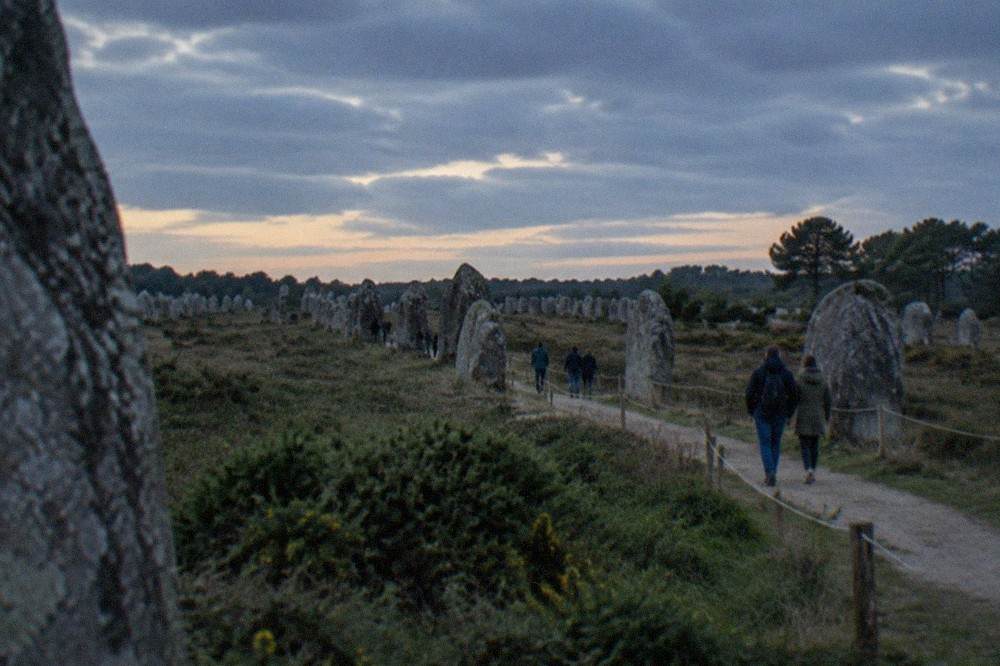
Planning-wise, treat Carnac as a full-day trip rather than a half-day one. The distance from Nantes is significant, the coast stops are worth lingering at, and the stones themselves deserve more than a drive-by. In summer, arrive early both for the light and for the parking; in the off-season you will often have fields largely to yourself. Nantes is the natural base, and its food scene makes a strong argument for returning to the city for dinner: see the Nantes food guide for where.
How Do You Get From Nantes To Carnac?
The practical answer is to drive, following the coast road west from Nantes past Guérande and La Baule, or to take a train from Nantes in the direction of the Breton coast stations and complete the last leg by local transport or taxi. Our verified research for this page gives no single door-to-door journey time for Nantes to Carnac, so we advise checking live timetables on SNCF Connect and road conditions on the day rather than trusting a rounded figure printed in a guidebook.
Driving gives you the most flexibility, and flexibility is what this trip wants. The coast route lets you break the journey at Guérande, whose walled medieval town and working salt marshes are a stop in their own right and are covered in our Guérande guide, and again at La Baule. Going home a different way than you came, looping through the Gulf of Morbihan or past Vannes, turns the day into a proper circuit; Vannes is another of our covered destinations at Vannes.
By train, the line west from Nantes serves the coast before continuing into Brittany, with connections for the final approach to Carnac. Our research pack gives verified times for several other Nantes day trips, which is useful for comparing options, but it does not give a verified Nantes-Carnac time, so plan on checking the live schedule rather than a figure quoted here. Book on the day or in advance through SNCF Connect, and remember that weekend engineering works can change Breton coast services at short notice.
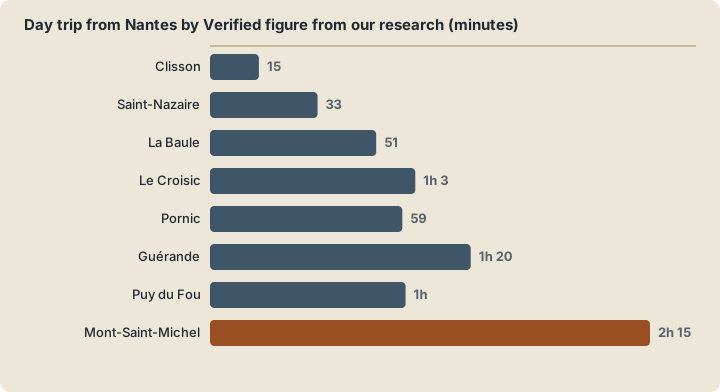
For comparison, here are the verified rail and road figures from Nantes that our research does give, for the destinations nearest the Carnac route:
| Day trip from Nantes | Verified figure from our research | Type |
|---|---|---|
| Clisson | from about 15 min by TER, 27 km by rail | rail |
| Saint-Nazaire | from about 33 min by TER, 64 km | rail |
| La Baule | from about 51 min by TER | rail |
| Le Croisic | from about 1 h 03 by TER | rail |
| Pornic | about 59-65 min by TER | rail |
| Guérande | about 80 km by road | road |
| Puy du Fou | about 70-80 km, about a 1 h drive | road |
| Mont-Saint-Michel | about a 2 h 15 drive | road |
One Nantes practicality worth knowing before any day trip: the city's Naolib network is free for everyone from Saturday 00:00 to Sunday 23:59, so a weekend departure costs nothing to get to the station. The airport shuttle is excluded from that and always costs 10 EUR. Those figures come from Naolib's own fare pages and the Nantes airport shuttle page.
What Are The Carnac Stones And Why Do They Matter?
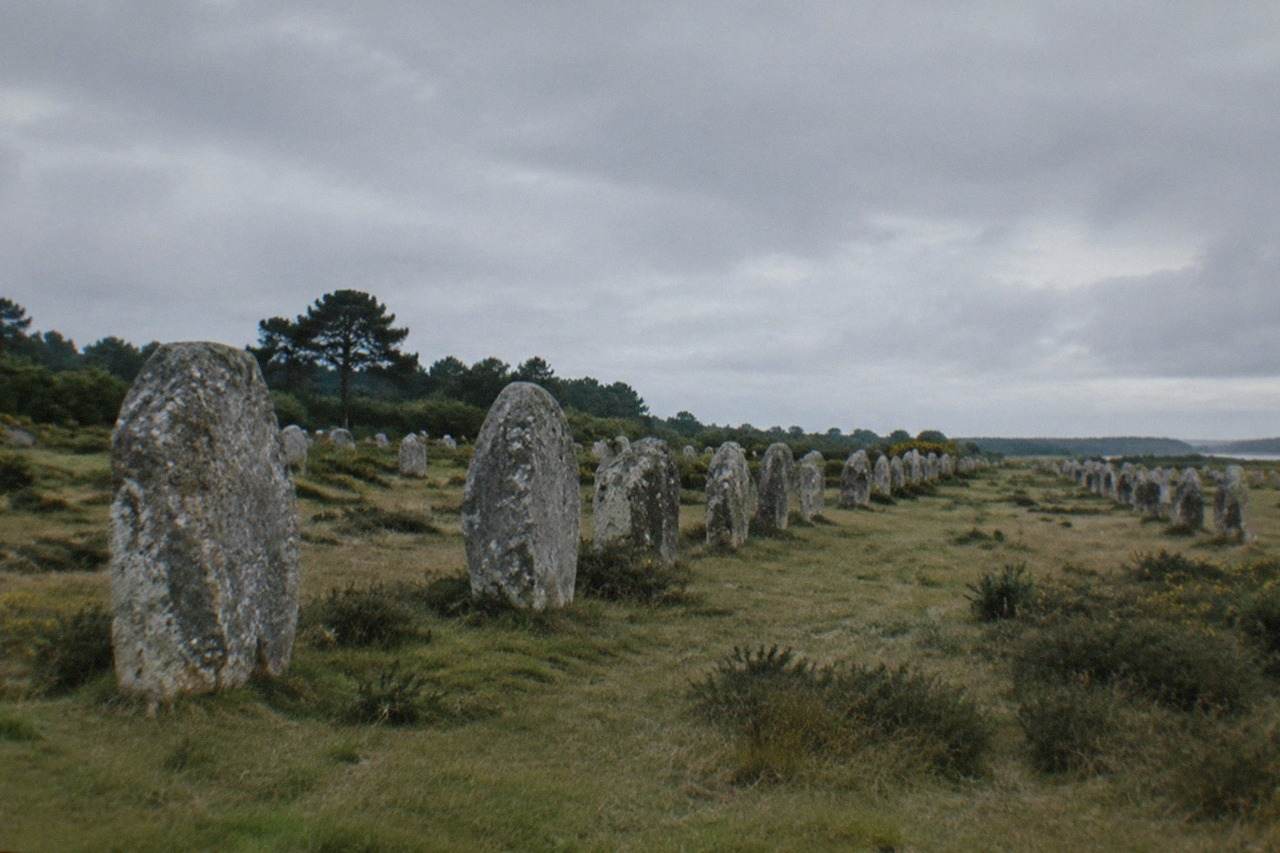
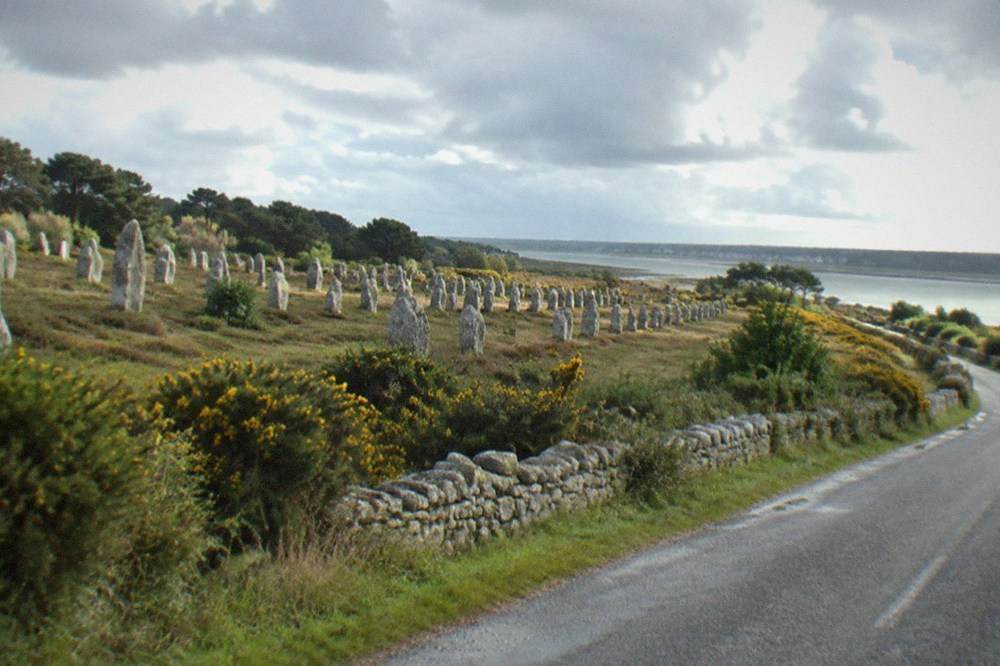
The Carnac stones are alignments of standing stones raised in the Neolithic period by prehistoric farming communities on what is now the southern Brittany coast, forming one of the largest concentrations of megalithic monuments in the world. Their purpose is still debated by archaeologists, with theories ranging from ceremonial processional routes to burial complexes and astronomical markers, and that unresolved mystery is a large part of their appeal.
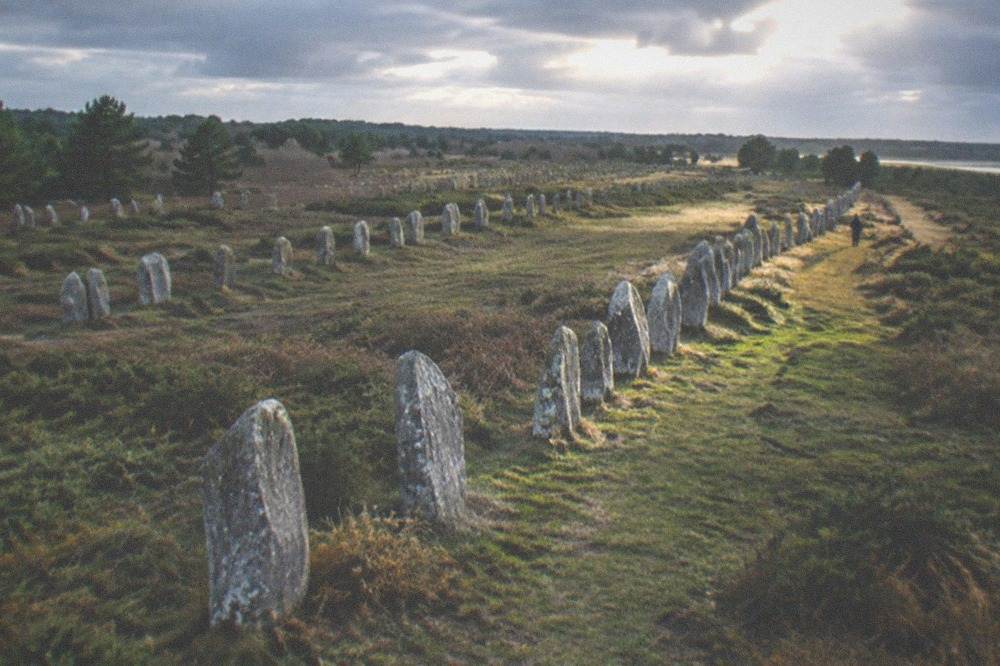
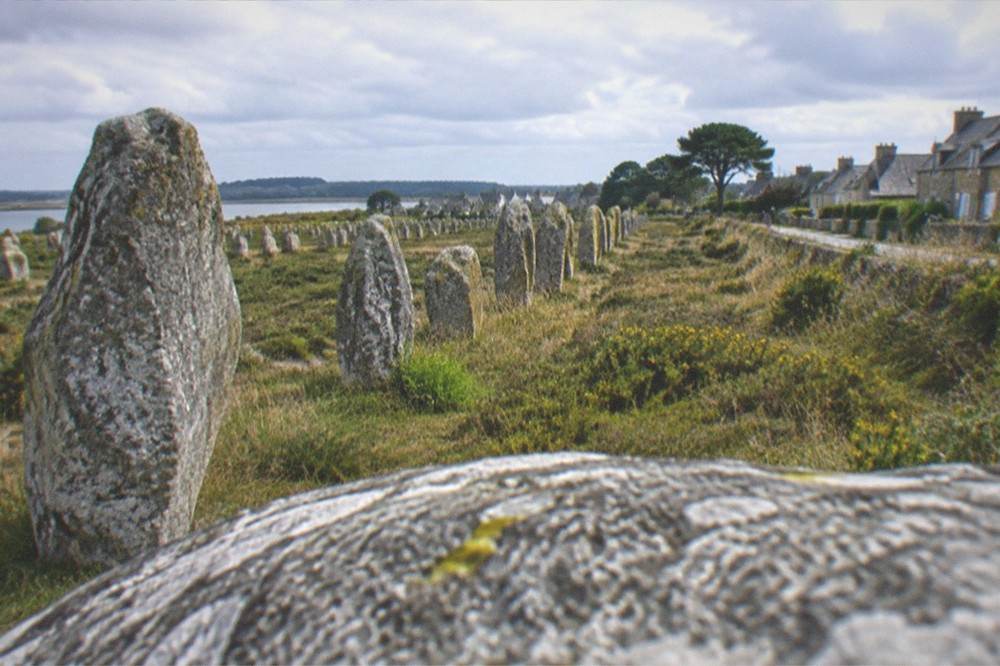
What you actually see on the ground is a series of separate fields, each with its own name and character, spread over a few kilometres of gently rolling heath. The stones range from knee-height blocks to slabs taller than a person, and the rows run in long disciplined lines that look deliberate in a way that random glacial debris never would. Walking the permitted paths, especially early or late in the day when the angle of the light emphasises the shapes, is one of the most atmospheric experiences reachable from Nantes.
Access rules matter and change with the season. In the main summer months, some of the most famous alignments are fenced and can only be entered on a guided visit, a measure taken to protect the ground and the stones from erosion. Outside that period, the fields are generally open to walk among freely. Because these arrangements are set locally and shift between years, check the current arrangements with the Carnac museum or the town's tourist information before you travel rather than relying on an old blog post, including this one.
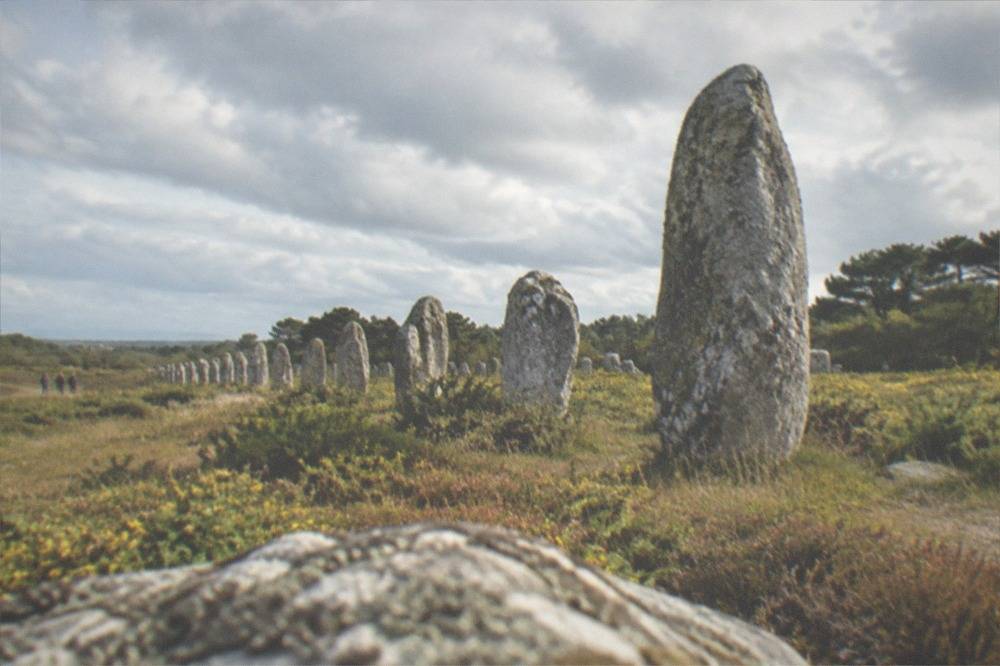
The museum in the town centre is worth the entry time even for sceptics, because it is honest about what is known and unknown, and it puts the stones in the context of the burial mounds, dolmens and single menhirs scattered across the whole surrounding area. The wider landscape, not just the headline alignments, is dense with these monuments; a short drive in almost any direction from Carnac will pass signed megalithic sites.
The stones also connect, unexpectedly, to the Jules Verne thread that runs through Nantes. The prehistoric imagination of the Atlantic coast, its lost peoples and its monuments, fed the romantic archaeology of the 19th century in which Verne grew up, and visitors who enjoy that connection should see the Jules Verne in Nantes guide.
When Is The Best Time Of Year To Visit Carnac From Nantes?
The best months for a Carnac day trip from Nantes are May, June and September, when the days are long, the crowds are thinner than in high summer, and the mean daily maximum at the Nantes-Bouguenais station runs from about 19.6 to 25.4 C in the warm season. July and August bring the warmest, sunniest weather but also the fenced alignments and guided-visit rules, plus the busiest coast roads. Winter visits are possible but short days and Atlantic rain make them a different kind of trip.
The climate data below comes from Météo-France's published 1991-2020 normals for the Nantes-Bouguenais station, the departure side of this trip. Carnac's own coastal climate runs a little milder in winter and no cooler in summer, but the Nantes figures are the verified ones on file and are a fair planning guide.
| Month | Mean max °C | Mean min °C | Rain mm | Sunshine h |
|---|---|---|---|---|
| March | 13.5 | 4.9 | 58.4 | 147.3 |
| April | 16.2 | 6.6 | 58.3 | 182.7 |
| May | 19.6 | 9.8 | 61.0 | 203.4 |
| June | 23.0 | 12.7 | 48.5 | 213.1 |
| July | 25.1 | 14.3 | 44.2 | 229.0 |
| August | 25.4 | 14.2 | 50.3 | 232.6 |
| September | 22.4 | 11.8 | 59.5 | 198.7 |
| October | 17.6 | 9.5 | 88.8 | 122.7 |
Two footnotes are worth carrying. First, Nantes is temperate oceanic, not Mediterranean: 819.5 mm of rain a year spread over 119.7 days with at least 1 mm. Second, recent summers have been breaking records, and 2026 sharply so: the station's all-time record high is now 42.2 °C, set on 24 June 2026, with 40.4 °C on 13 August 2026 the August record. Coastal heat on the stones with no shade is genuinely draining, so take water and a hat if you go in a hot spell.
Seasonal events can sharpen the choice of date. The Breton coast around Carnac hosts festivals through summer, and the Nantes side has its own calendar, covered in the Nantes events and festivals guide. If your dates are fixed by the January classical festival, La Folle Journée's 2027 edition runs 27 to 31 January under the theme "Galaxie Beethoven", and be aware that Cité des Congrès closes fully for works from February to December 2027.
What Can You Combine With Carnac On The Same Coast Trip?
The two natural combinations are Guérande, whose medieval walled town and working salt marshes sit directly on the driving route west from Nantes, and La Baule, the long sandy resort between Guérande and Carnac. Adding both turns the day into a coast circuit: salt flats in the morning, lunch on the seafront, the stones in the afternoon, and the drive home as the light fades. Vannes and the Gulf of Morbihan make an alternative return loop if you have the energy.
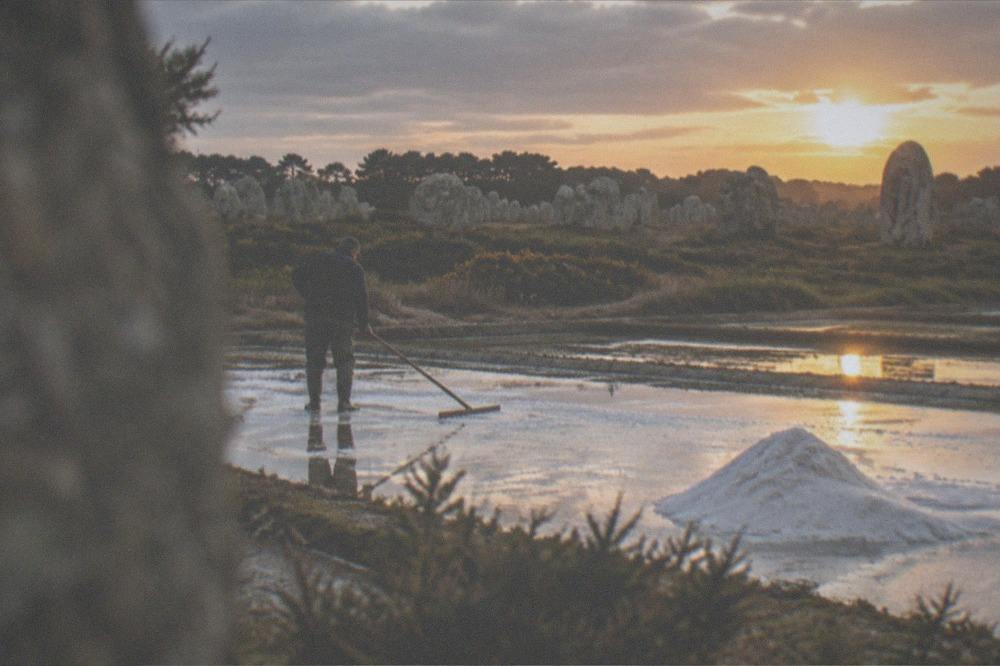
Guérande is the easiest add because it is, in effect, on the way. The town's ramparts are intact and walkable, and the salt marshes beyond them are a working landscape, not a museum piece: paludiers harvest fleur de sel by hand in the traditional way, and guided visits run year round with operators such as Terre de Sel. Our research notes around 200 bird species in the marshes, and the 2026 harvest was unusually abundant. The full detail is in the Guérande guide, and a dedicated visit from Nantes exists on the tour roster:
La Baule is the gentler stop: a broad beach, a promenade, and enough cafés to anchor a lunch stop. The resort hosts major events in September, including the Triathlon Audencia weekend, which fills the town and complicates parking, so check the calendar before planning a Saturday there. Full coverage is in the La Baule guide.
If you would rather stay closer to Nantes, the Muscadet vineyards sit on the south-eastern side of the city rather than the Carnac side, which makes them a separate day trip or a pre-departure tasting. The grape is Melon de Bourgogne, and the Maison des vins is at Vallet. Our Muscadet vineyards guide covers it in full.
| Coast stop near the Carnac route | What our verified research gives |
|---|---|
| Guérande salt marshes | Guided visits year round; about 200 bird species; 2026 harvest about 1.5 tons per basin on average |
| Escal'Atlantic, Saint-Nazaire | 2026 adult 15 EUR, reduced 13 EUR, child 4-17 7.50 EUR; liner Normandie exhibition from July 2026 to September 2027 |
| Puy du Fou | 2026 season 4 April to 1 November; Christmas extension 19 December 2026 to 3 January 2027; adult day ticket from varies by venue advance to varies by venue on site |
| Saint-Nazaire | TER from Nantes from about 33 min, 64 km |
| Le Croisic | TER from Nantes from about 1 h 03 |
For the drive home, the alternative northern return loop past Vannes keeps the day scenic, and Vannes itself, a walled Gulf of Morbihan town, is another strong candidate for a future trip in its own right. Ambitious travellers sometimes push on further into Brittany, but Mont-Saint-Michel, at about a 2 h 15 drive from Nantes, is really its own trip; see Mont-Saint-Michel.
What Nantes Tours And Tastings Fit A Carnac Trip?
Three Nantes-based products on our verified roster pair naturally with a Carnac day: the Muscadet sensory tasting tour, which grounds you in the region's wine before you leave; the Guérande salt marshes visit, which slots straight into the coast route; and the Segway tour of Nantes's historical centre, which suits a spare morning in the city before or after the drive. Each is booked through the operator's live listing, and the current prices and ratings render from verified data rather than from this page.
The Muscadet tasting is the best fit for the evening before, or the evening after. The Nantes region's white wine is the local pour along the whole Atlantic coast, and understanding what is in the glass at a Carnac crêperie is half the pleasure of ordering one. Note the 2026 vintage context from our infogain section: an early, low-yield harvest, which is exactly the kind of detail a good sensory tour will talk through.
The Segway option is a city alternative for travellers who would rather spend the morning in Nantes and make the stones an afternoon-only sprint. It covers the historical centre, the district covered in detail in Bouffay old town, and the operator's live listing carries the price, which is not published in our research pack.
If a full coast day feels like too much, the honest alternative is to stay in the city and use the Pass Nantes, whose 2026 prices, valid from 1 April 2026, are below. Note that the pass covers the Galerie des Machines and the Carrousel but not the Grand Éléphant ride, and that no elephant rides run from 2 November 2026 to 28 February 2027 for maintenance.
| Pass Nantes duration | Full | Reduced (4-17, students under 26, disability card) | Family (2 adults + 2 children) |
|---|---|---|---|
| 24 h | 30 EUR | 20 EUR | 80 EUR |
| 48 h | 40 EUR | 26 EUR | 106 EUR |
| 72 h | 49 EUR | 31 EUR | 129 EUR |
| 7 days | 75 EUR | 45 EUR | 195 EUR |
For getting around the Nantes end of the trip, the verified fare figures from Naolib's own pages are these:
| Naolib ticket | Price |
|---|---|
| 1 h ticket (tram, bus, Navibus, TER in the métropole) | 1.80 EUR |
| 10 × 1 h carnet | 17.80 EUR |
| 24 h ticket | 6.80 EUR |
| 24 h ticket for 4 people | 15 EUR |
| Airport shuttle (always charged, weekends included) | 10 EUR |
| P+R 24 h parking with transport for up to 5 people | 4.50 EUR, as reported |
The wider day-trip roster, from Saint-Malo to the Loire châteaux, is listed on the site's tours pages, and the wine-themed options, including Loire valley tastings from Nantes, sit alongside the vineyard guides already mentioned here.
Practical Tips For The Carnac Day Trip From Nantes
The four things that most often catch visitors out are the seasonal fencing of the main alignments, the scarcity of shade on the stone fields, the parking pressure in July and August, and the temptation to try to do too much in one day. Build the trip as car, Guérande, La Baule lunch, Carnac afternoon, and treat anything beyond that as a bonus, and it will run smoothly.
Start early. The drive west is straightforward, but every stop you add eats time, and the stones are best seen with time to walk rather than to glance. Take water: the heathland has no shade, and the 2026 heat records show how hot this coast can now get. Wear shoes you can walk on grass and soft ground in; the permitted paths are not always paved.
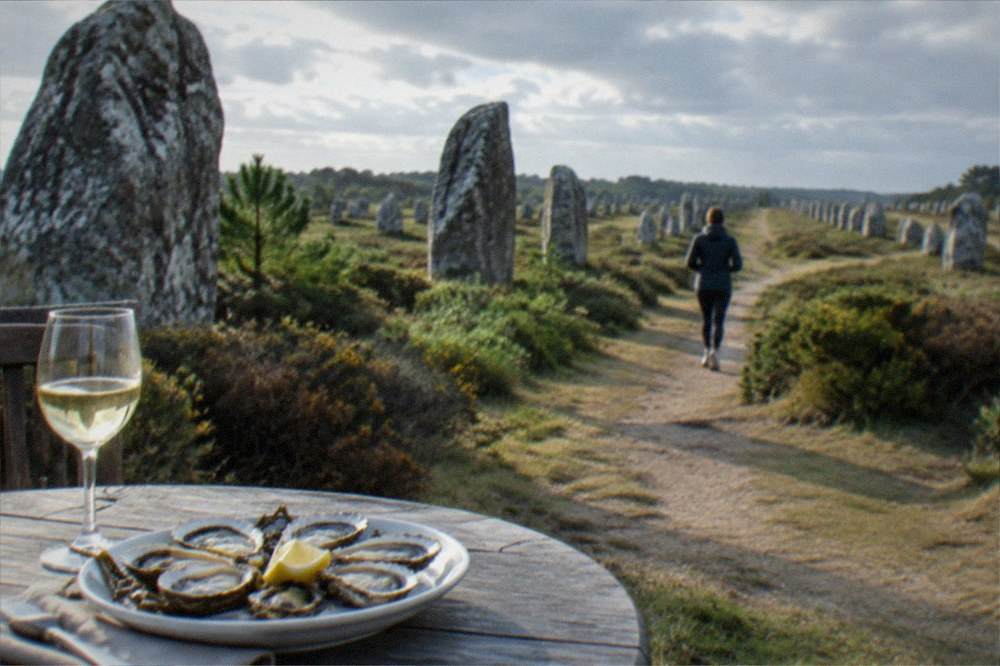
Eat well, and eat locally. Crêperies are the natural lunch or late-afternoon stop, and the regional pairings are Muscadet with oysters and sea food, salted butter with everything, and a gâteau nantais or berlingots nantais if you want to bring Nantes sweets home; the site's regional food guides cover all three, from berlingot nantais to gâteau nantais and beurre blanc. The wine itself is dry rather than sweet, which is exactly what a sensory tasting will demonstrate.
If the weather collapses, and on this coast it can, have a fallback: the Carnac museum, the town of Vannes, or simply an earlier return to Nantes, whose rainy-day options, from the Château des ducs de Bretagne museum to the Musée d'arts, are listed in the rainy day in Nantes guide. Note that the Muséum d'histoire naturelle is closed for works until 2029 and is not a fallback.
Finally, plan the drive home around fatigue. A long day on the coast followed by a late drive is the one genuinely avoidable risk of this trip, and Nantes's restaurants will still be there tomorrow, as the best restaurants in Nantes guide makes clear.
Common Questions About Carnac
Where is Carnac in relation to Nantes?
Carnac lies on the southern coast of Brittany, west of Nantes, the city in the Loire-Atlantique department of the Pays de la Loire region of western France. Our verified research does not give a door-to-door Nantes-Carnac journey time, so check live train and road times on the day rather than trusting a figure quoted in a guidebook.
Can you walk among the Carnac stones for free?
For much of the year, yes: outside the main summer season the alignment fields are generally open to walk among freely. In the summer months some of the most famous alignments are fenced and can only be entered on a guided visit, to protect the ground and stones. Arrangements can change, so check with the Carnac museum or tourist information before travelling.
Is Carnac a good day trip from Nantes?
Yes, as a full-day trip rather than a half-day one. The stones, the museum, the coast towns of Guérande and La Baule on the route, and the return loop past Vannes together make one of the most varied days available from Nantes, mixing prehistory, working salt marshes and a seaside resort.
When is the best time of year to visit the Carnac stones?
May, June and September balance long days, thinner crowds and warm weather. July and August are warmest, with a mean daily maximum of 25.4 C at the Nantes-Bouguenais station, but bring the fenced alignments, guided-visit rules and the busiest coast roads. Winter days are short and Atlantic rain is frequent.
What else can you see on the way to Carnac from Nantes?
Guérande's walled town and salt marshes come first on the coast route, with about 200 bird species and year-round guided visits, then La Baule's beach and promenade. Saint-Nazaire's Escal'Atlantic, where 2026 adult entry is 15 EUR, sits just south of the route.
Do you need a car for Carnac from Nantes?
A car is the most flexible option, because the coast stops are spread out. A train from Nantes toward the Breton coast with a final connection is the alternative, and the Muscadet tasting, Guérande salt marshes visit and Segway tours of Nantes covered on this page all run from the city itself.