Vannes
Vannes sits west of Nantes, in Brittany rather than in the Pays de la Loire, and it makes one of the most rewarding day trips you can plan from the Loire-Atlantique city. Here is how to organise the day, what it costs to base yourself in Nantes, and what the verified numbers say about the journey.
Short answer
Vannes is a walled Breton town on the Gulf of Morbihan coast, reached as a day trip from Nantes in the Loire-Atlantique department of western France. Plan it from a Nantes base, travel on a weekend when the Nantes transport network is free, and use the Pass Nantes or the individual museum tickets to keep costs controlled.
Vannes is one of the great Brittany day trips you can plan from Nantes, the Loire-Atlantique city in the Pays de la Loire region of western France, and it could hardly be more different from its eastern neighbours. Where Nantes traded its medieval core for trams, green lines and mechanical elephants, Vannes kept its ramparts, its narrow medieval streets and its fishing-port character on the Gulf of Morbihan. This guide sets out how to organise the trip from a Nantes base: what the verified transport and pass prices are, which day trips sit alongside Vannes on the same rail and road corridors, and how to build the Nantes side of the itinerary, including the wine, cruise and guided-walk products this site carries.
Why Visit Vannes On A Day Trip From Nantes?
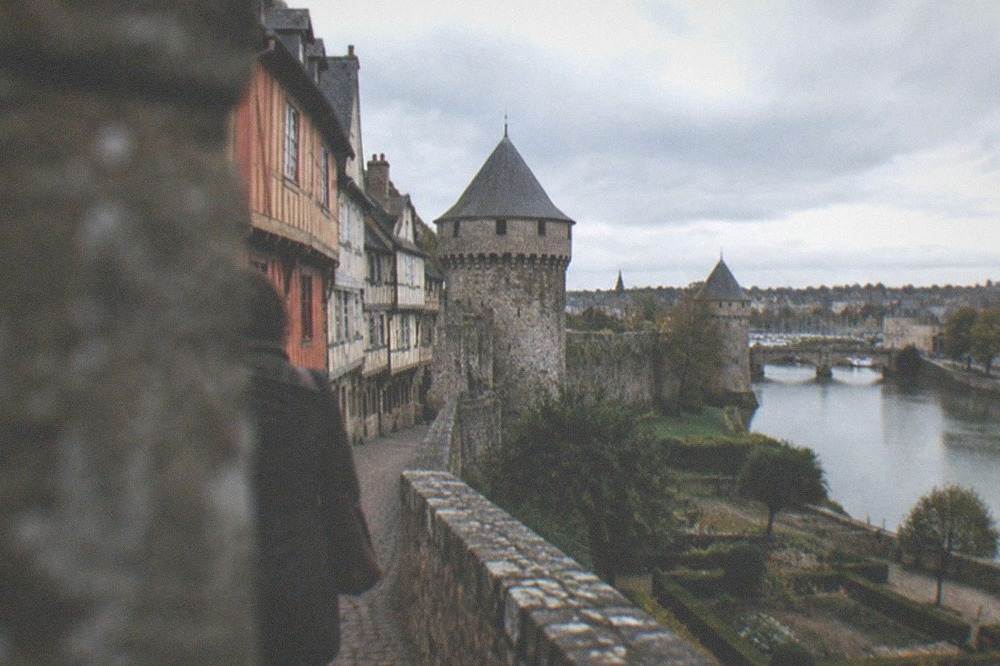
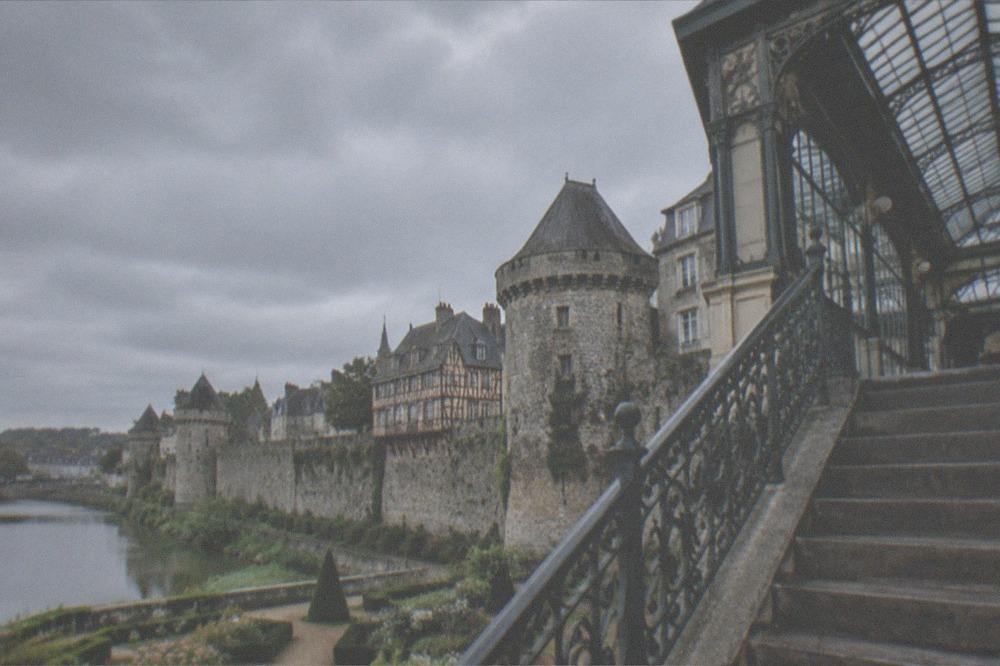
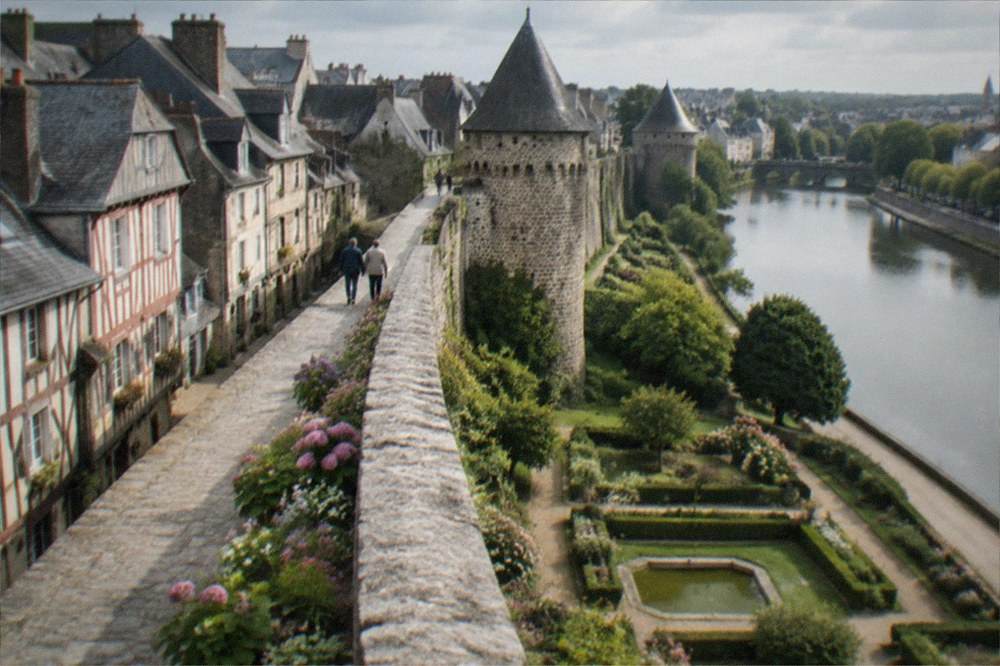
Vannes gives you the walled, half-timbered Brittany that Nantes itself lost, in a single compact day: ramparts you can walk, a cathedral and old-town core built for wandering, and a yacht harbour opening onto the Gulf of Morbihan, all reached as a straightforward day trip from your Nantes base. The town is the natural western counterpart to the Loire-side and coastal trips on this site, and it pairs Brittany's medieval character with an easily managed return to Nantes the same evening.
The logic of the trip is simple. Nantes, in the department of Loire-Atlantique, is a major rail and road hub for western France, with three tram lines, a TGV link to Paris and a regional TER network that fans out in every direction. You sleep in Nantes, you use its transport and its restaurants, and you spend the daylight hours somewhere else entirely. Vannes is that somewhere: a ducal Breton town whose medieval centre survived the centuries largely intact.
It is also a useful corrective to a common assumption. Nantes was historically the capital of Brittany, and the question of whether it still belongs there is argued to this day on the streets and in the pubs of both cities. Visiting Vannes from a Nantes base puts you inside that debate in the most pleasant way possible: you see both the historic Breton capital and one of the province's best-preserved Breton towns on the same trip. Our Nantes Travel Guide homepage collects the city-side planning, and the Brittany road trip from Nantes hub covers the wider overnights.
One warning before anything else. Several rival guides treat the whole western seaboard as one interchangeable "Nantes area". It is not. The distances between Nantes and the Brittany and Vendée coast are real, and the day-trip timings on this site are given per destination, not as a rough average. Trust the per-journey figures in the tables below, and do not let any guide tell you the coast is "just down the road".
What To See In Vannes In One Day?
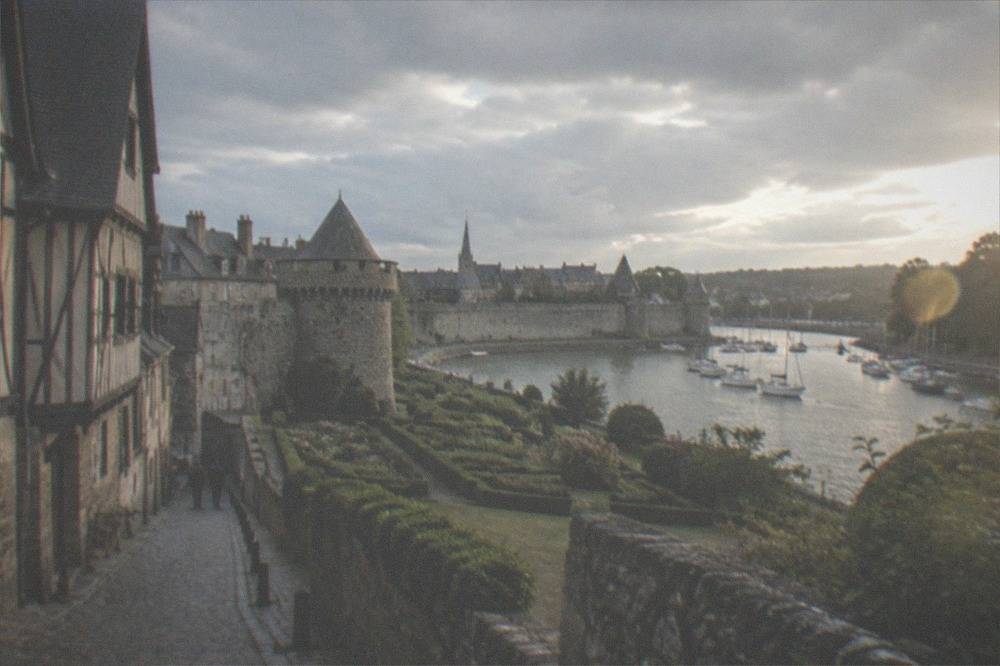
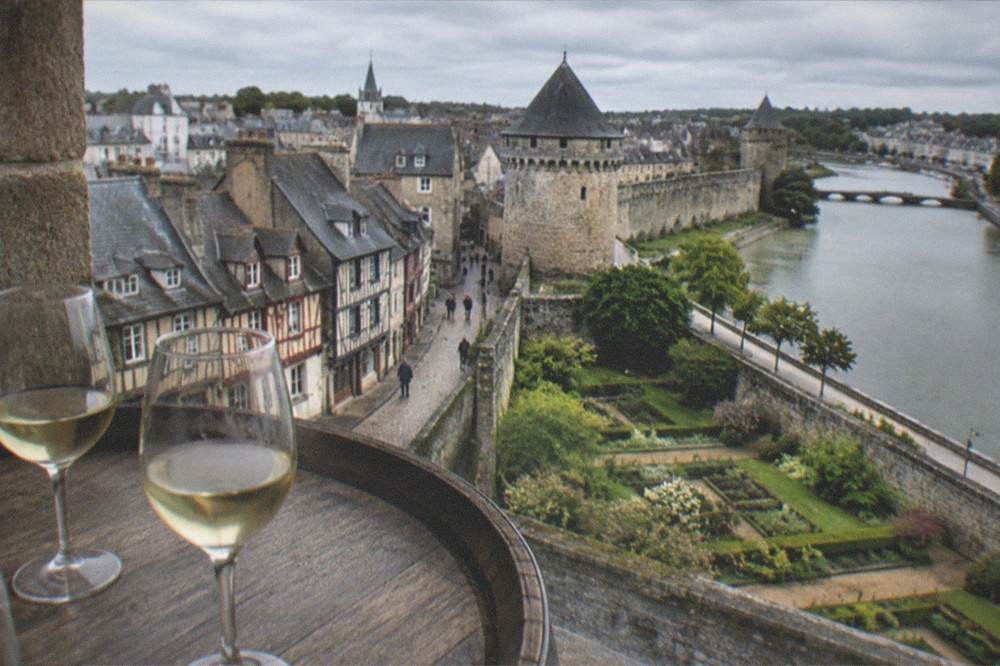
A one-day Vannes itinerary centres on the walled old town: the ramparts and their gardens, the cathedral of Saint-Pierre, the Place des Lices with its half-timbered houses, and the port at the bottom of the town where the Gulf of Morbihan begins. Everything sits within a short walk of everything else, so the day is a walking day, and the practical limit is your energy rather than transport.
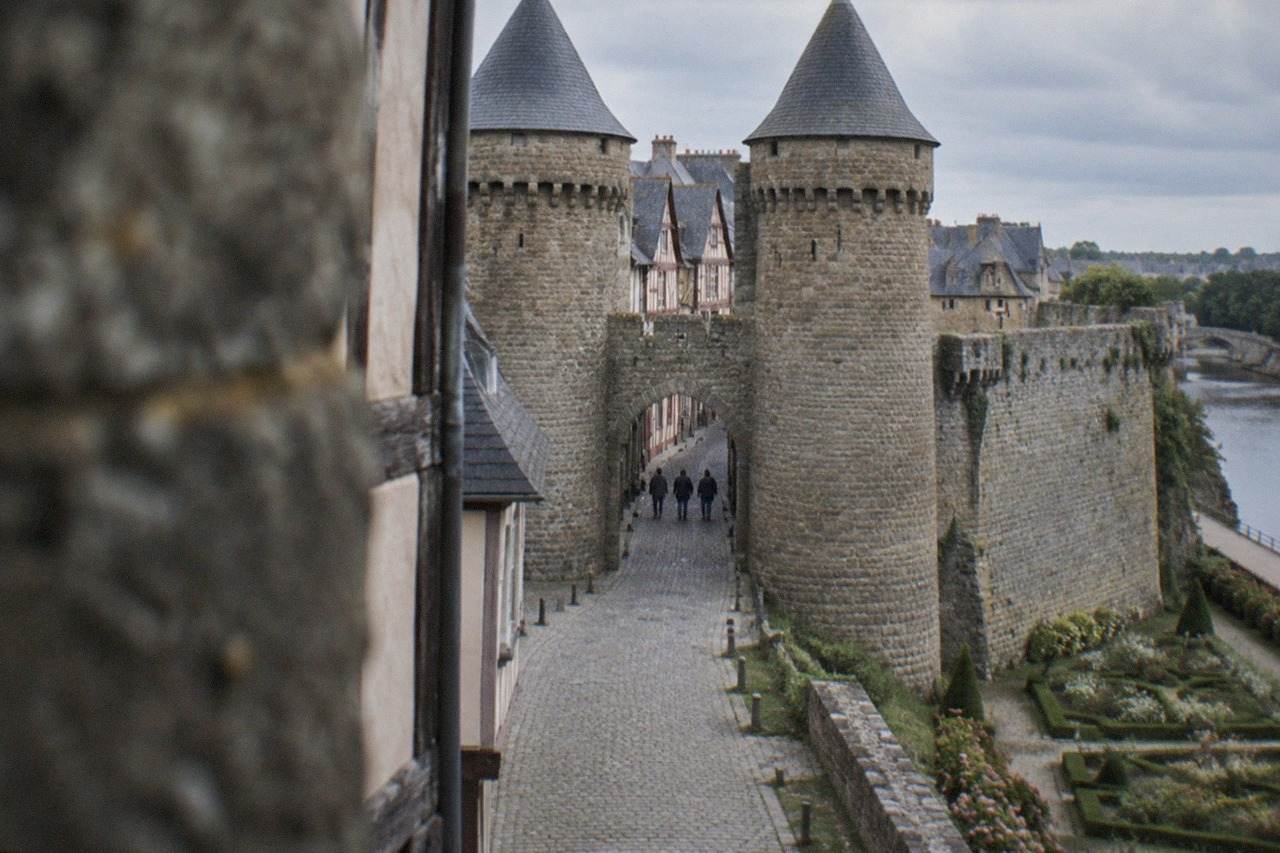
Start at the top of the town and work down. The medieval gate, with its twin towers, opens onto the old-town network of streets where the upper floors lean towards each other across the lanes. The ramparts can be walked in sections, and the gardened stretches behind them are where locals read and sunbathe. The cathedral anchors the centre; it is free to enter like most French cathedrals of its type.
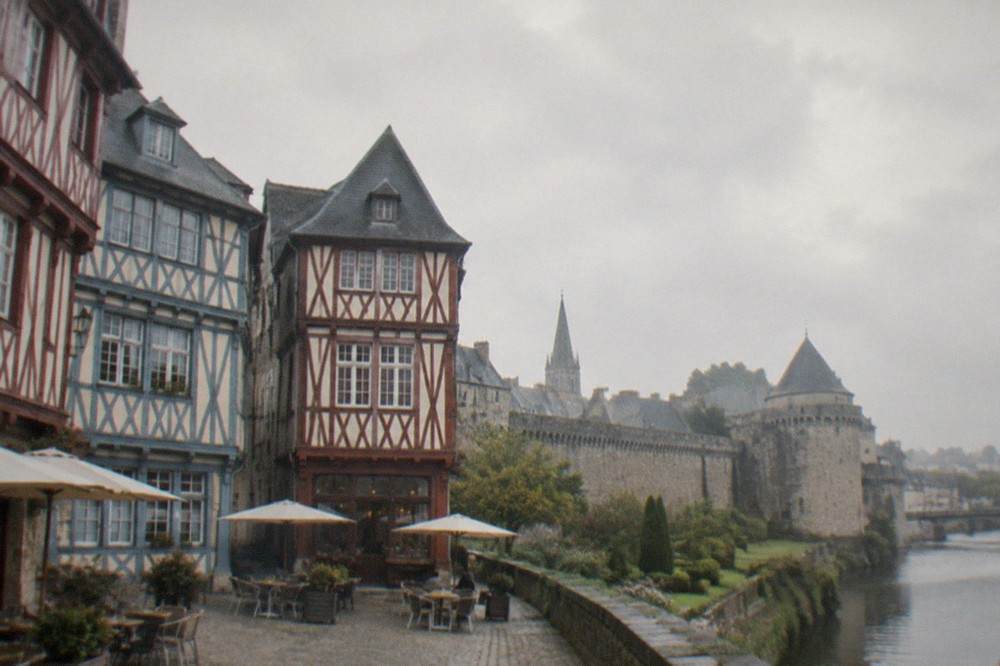
The Place des Lices is the social heart, lined with the photogenic corbelled houses that appear on every Vannes postcard. On the inland side, the washhouse and the old wash district give the town its working-class memory; on the seaward side, the port and its marina face down the Gulf of Morbihan, the almost-enclosed sea whose narrow entrance is a story in itself.
Two honest notes. This site's verified fact pack carries detailed, sourced figures for Nantes and its eastern and southern day trips, but no Vannes-specific opening hours, prices or event dates, and the rule here is that nothing goes on the page without a source. So plan the Vannes side of the day as a self-guided wander, with meals from the port-side crêperies, and check the town's own tourism site for anything timed, such as guided visits of the ramparts or the aquarium, before you commit. And remember the Muscadet you will be offered on the menus: it comes from the Nantes region, and there is a tasting room back in your base city that explains exactly why. Check availability before you travel, because the Muscadet tasting in Nantes is the natural evening after a Brittany day, and it rounds out the week's plan. The other pairing worth booking is a private guide for the Nantes side of the trip, since the two cities' stories are entangled.
Back in Nantes, the Muscadet tasting stands out as an easily missed pairing: the grape is Melon de Bourgogne, the appellation sits immediately around the city, and the Maison des vins de la region is at Vallet, the heart of the appellation. The full day-long Loire option visits Clisson, Nantes and Trentemoult, so it is the eastern mirror image of your Vannes day.
How Do You Get From Nantes To Vannes?
You get from Nantes to Vannes by regional train or by car, and the planning that matters happens on the Nantes side: buy your Nantes transport before you travel, use the free weekend rule if your dates allow, and remember the airport shuttle is never free. The Nantes rail station sits at the hub of the network, and the TGV side of the station links the city to Paris in roughly two hours on the fastest services.
The honest position on the Nantes to Vannes leg itself: this site's verified fact pack carries exact timings for the eastern and southern corridors out of Nantes, but no sourced Nantes to Vannes rail time, so check the live timetable when you book rather than trusting a rounded figure from any guide. What is verified and worth planning around is the Nantes end of every journey.
The rail hub is Gare de Nantes, and the figures for the main corridors out of it are in the table further down this page. Paris Montparnasse connects to Nantes with around 24 trains per day in each direction and a fastest direct service of roughly two hours, so a Nantes-plus-Vannes trip is perfectly feasible even from the capital in a single holiday. Within Nantes, the Naolib network of trams, buses and Navibus river shuttles carries the visitor side of things, and its current fares are below.
The single best money decision available is the weekend rule. Naolib's own fare page states the network is free for everyone, visitors included, from 00:00 Saturday to 23:59 Sunday, a policy in place since 2021, and park-and-ride car parks are free on the same terms when combined with network use. The airport shuttle is excluded and always costs the fixed fare below. Build your Vannes day on a Saturday and your in-city Nantes travel costs nothing.
| Nantes transport | Price | Notes |
|---|---|---|
| Naolib 1-hour ticket | 1.80 EUR | Tram, bus, Navibus, TER inside the metropole |
| 10 x 1-hour carnet | 17.80 EUR | Cheaper per trip |
| 24-hour ticket | 6.80 EUR | Whole network |
| 24-hour ticket, 4 people | 15.00 EUR | Good for families |
| Airport shuttle (Navette Aeroport) | 10 EUR | Never free, weekends included; card payment on board |
| Free weekend travel | 0 EUR | Sat 00:00 to Sun 23:59, everyone; shuttle excluded |

Should You Buy The Pass Nantes For A Vannes Trip?
The Pass Nantes pays for the Nantes side of your stay, not the Brittany leg: it bundles unlimited Naolib travel, one airport-shuttle return, one TER return to Clisson and entry to partner sites including the chateau museum and the Machines gallery, but it does not cover travel to Vannes. Buy it if your itinerary is Nantes-heavy, skip it if Vannes and the coast dominate your days.
Two traps to note from the pack. First, the Pass covers the Galerie des Machines and the Carrousel des Mondes Marins, but the Grand Elephant ride is excluded, so budget that separately if you want it. Second, the natural history museum is closed for works until 2029 and is not part of any pass, so no pass or itinerary should present it as a stop.
| Pass Nantes | Full | Reduced (4-17, students under 26, disability card) | Family (2 adults + 2 children) |
|---|---|---|---|
| 24 hours | 30 EUR | 20 EUR | 80 EUR |
| 48 hours | 40 EUR | 26 EUR | 106 EUR |
| 72 hours | 49 EUR | 31 EUR | 129 EUR |
| 7 days | 75 EUR | 45 EUR | 195 EUR |
For a trip built around a single Vannes day plus two or three Nantes days, the 48 or 72-hour pass usually wins, because the museum entries and the shuttle return accumulate quickly. For a weekend-only visit where your Nantes travel is free anyway, individual museum tickets are often the better call, and the Pass Nantes planning page on this site's hub walks through the arithmetic. The individual museum prices, all verified, are:
| Nantes museum or sight | Full price | Reduced price | Free conditions |
|---|---|---|---|
| Musee d'histoire de Nantes (chateau) | 9 EUR | 5 EUR | Under 18; first Sunday Sept to June |
| Musee d'arts de Nantes | 9 EUR | 4 EUR | Under 18; first Sunday Sept to June |
| Machines de l'ile, each attraction | 12 EUR | 10 EUR | Under 4; child 4-12 is 8 EUR |
| Musee Jules Verne | 4 EUR | 1.50 EUR | First Sunday Sept to June |
| Musee Dobree | 9 EUR | 6 EUR | Under 26 |
| Planetarium | 7 EUR | 3 EUR | Child sessions 3 EUR |
| Chateau courtyard, ramparts, moat garden | 0 EUR | 0 EUR | Open daily 8:30-19:00 |
A 15 EUR Pass Musees covers a year of unlimited entry to four of those museums, and the free stuff should not be skipped: the cathedral is free, the Jardin des Plantes is free, and the memorial to the abolition of slavery, open since 2012 on the Quai de la Fosse, is free too.
What Is The Weather Like On The Nantes To Vannes Corridor?
The climate at both ends of the corridor is temperate oceanic, never Mediterranean or continental: Meteo-France's normals for the Nantes-Bouguenais station give a mean maximum of 25.4 C in August against 9.3 C in January, with 819.5 mm of rain a year spread over 119.7 days. Plan for changeable weather on any date: the summer of 2026 set a station record of 42.2 C on 24 June, a warning that the oceanic pattern now swings further than the averages suggest.
The month-by-month picture below is the long-run normals series, and it is the honest basis for any packing list. June is wetter than you expect from a summer month, and the shoulder months of April, May and September combine lower visitor numbers with workable temperatures.
| Month | Mean max C | Mean rain mm | Days of rain at least 1 mm |
|---|---|---|---|
| January | 9.3 | 87.9 | 12.5 |
| March | 13.5 | 58.4 | 9.4 |
| May | 19.6 | 61.0 | 9.6 |
| July | 25.1 | 44.2 | 7.1 |
| September | 22.4 | 59.5 | 7.8 |
| November | 12.9 | 94.1 | 13.0 |
The record extremes matter more than they used to. The new all-time station high is 42.2 C set on 24 June 2026, breaking the previous 42.0 C of 18 July 2022, and 2026 also set the May record at 35.7 C and the August record at 40.4 C. Against that, the all-time low is minus 15.6 C from 15 February 1956, and frost days cluster in January and February. Rain in the mountains of the Massif Central does not touch you here, but Loire flooding can: February 2026 saw the river reach 8.18 m at the Pont Anne-de-Bretagne, above 8 m for the first time in about 15 years, and the memorial site closes during Loire floods. Check the forecast, not the averages, when you pick your dates.
Which Other Day Trips Combine Well With Vannes?
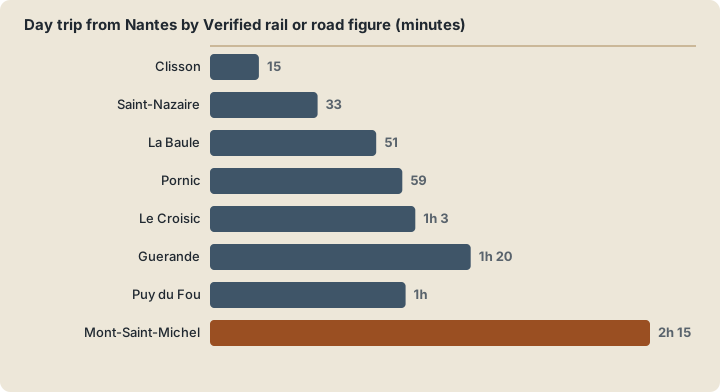
Vannes anchors the western, Breton end of the day-trip range from Nantes, and the verified timings show the gradient clearly: Clisson at roughly 15 minutes by rail, Saint-Nazaire at about 33, La Baule at about 51, Pornic at an hour, and Mont-Saint-Michel at roughly two and a quarter hours by car. Combining Vannes with its Breton neighbours Carnac and Saint-Malo is the classic move, while the eastern and southern trips fill the rest of a week.
The table below carries only journeys this site has checked itself, which is why it reads as it does: honest, per-corridor, and without a single guessed minute.
| Day trip from Nantes | Verified rail or road figure | Character |
|---|---|---|
| Clisson | TER from about 15 minutes; average about 23 | Italianate town and vineyards |
| Saint-Nazaire | TER from about 33 minutes | Shipyards, Escal'Atlantic, submarine base |
| La Baule | TER from about 51 minutes | Belle-Epoque beach resort |
| Pornic | TER about 59 to 65 minutes | Fishing port, rocky coves |
| Le Croisic | TER from about 1 h 03 | Oyster port, ocean front |
| Guerande | About 80 km by road | Walled medieval town, salt marshes |
| Puy du Fou | About 1 h to 1 h 15 by road | Historical theme park, 2026 season to 1 Nov |
| Mont-Saint-Michel | About 2 h 15 by car | The abbey island, best combined with an overnight |
The Breton pairing is the one to take seriously. Vannes, Carnac with its prehistoric stone rows, and Saint-Malo with its corsair walls form a corridor that deserves two or three days rather than one frantic loop, and an overnight in Vannes or Auray beats a same-day return if you can manage it. Closer to base, Guérande is the most Vannes-like of the short trips: a walled medieval town, in that case built on salt rather than dukes. The 2026 salt harvest was exceptional, with production roughly doubled by the summer heat, according to harvest reporting from the marshes, which makes the guided Terre de Sel visits a genuinely current draw.
For the Loire side, the Muscadet vineyards sit between Nantes and Clisson, the Loire valley châteaux corridor runs east, and the full English-assisted day covering Clisson, Nantes and Trentemoult is the packaged way to see the eastern end without a car. The 2026 Muscadet harvest itself is a story worth knowing before you taste: the picking ban was declared on 11 August 2026, a record eight days earlier than the previous mark, and yields came in lower at around 30 to 40 hectolitres per hectare against roughly 55 in the 2018 reference year, so the wine on your table is genuinely scarcer this vintage.
For the Nantes end of that eastern day, there is also a cruise on the Erdre, the river that joins the Loire at the city and that locals treat as their own small country, and it gives the day-trip week a slower waterborne counterweight to the Brittany walks.
How Do You Build The Week Around A Vannes Day?
A sensible week from a Nantes base runs one Brittany day in each direction, alternating: Vannes and the Breton coast west, Clisson and the Muscadet vineyards south-east, a full Loire or château day east, then the Nantes in-city days that carry the tram, the Machines, the château museum and the Passage Pommeraye. Book the guided and tasted products early, because the small-group ones sell their dates, and keep the free weekend transport rule in mind when you sequence.
The rhythm that works is alternate-and-rest. The heavy walking days, Vannes among them, need a gentler follow-on: the Erdre cruise, the Jardin des Plantes, an unhurried afternoon in the Bouffay old town with its pedestrianised streets. This site carries full itineraries for one day in Nantes and its two- and three-day extensions on the hub, so use those for the city spine and slot the day trips into the gaps.
Food deserves a paragraph of its own, because Brittany and the Nantes region eat differently and you will cross the line twice in one day. The Vannes side of the menu leans on galettes, buckwheat crêpes filled with ham, egg and cheese, and cidre brut served in bowls; the Nantes side answers with beurre blanc, the emulsified butter sauce the city's restaurateurs have been pursuing protected traditional status for, and with the gâteau nantais, the almond-and-rum quatre-quarts whose artisanal revival has put it back in every patisserie window. The LU Petit Beurre biscuit, invented in the city in 1886 and celebrated on its 180th anniversary in 2026, is the souvenir that fits in a pocket.
A practical accommodation note: the tourist tax in Nantes Métropole is tiered by hotel star rating, reported at 2.86 EUR per person per night for four-star properties, 1.87 EUR for three-star and 1.10 EUR for two-star, with unclassified lets charged as a percentage of the nightly price capped at 5.39 EUR. Those are reported figures, not printed tariffs, so expect the final bill to reflect the exact voted rate for your property's classification.
Common Questions About A Vannes Day Trip From Nantes
Is Vannes in Brittany or in the Pays de la Loire?
Vannes is in Brittany, in the Morbihan department, while Nantes is in Loire-Atlantique in the Pays de la Loire region of western France. The border between the two administrative regions lies west of Nantes, and the train to Vannes crosses it. Historically the argument runs deeper, because Nantes was the capital of the historic duchy of Brittany and the Vichy decree of 30 June 1941 detached Loire-Inferieure from the region, renaming it Loire-Atlantique in 1957.
How many days should I spend in Nantes before taking a Vannes day trip?
Plan at least two full days in Nantes itself before any day trips, then add one day per excursion. This site's itineraries cover one, two and three days in the city, and the answer to how many days to spend overall for most visitors is three to five depending on how many day trips you add.
Is the Nantes transport network really free at weekends?
Yes. Naolib's own fare page states the network, including trams, buses and Navibus river shuttles, is free for everyone from 00:00 Saturday to 23:59 Sunday, a policy in place since 2021, with park-and-ride car parks free on the same terms. The airport shuttle is excluded and always costs 10 EUR, bought on board by bank card.
What should I eat in Vannes?
Expect Breton food: galettes, the buckwheat crêpes filled with savoury ingredients, and cider. The Nantes side of the trip answers with beurre blanc, gâteau nantais and Muscadet, the white wine from the vineyards around the city, so a Vannes day from a Nantes base eats its way through two regional cuisines in one sitting.
Can I visit Vannes and Mont-Saint-Michel on the same day trip?
It is not advisable. Mont-Saint-Michel is roughly two and a quarter hours by car from Nantes on its own, further from Vannes, and the abbey island deserves a half-day minimum. Treat Mont-Saint-Michel as its own trip, ideally with an overnight, and keep Vannes, Carnac and Saint-Malo as the western corridor to explore over two or three days.
What Is The Best Way To Book The Nantes Side Of The Trip?
Book the guided and tasted products before you travel and keep everything else flexible: the Muscadet sensory tasting, the English-assisted Clisson and Trentemoult day and the Erdre cruise are the three products on this site that fill the gaps a self-guided Vannes day leaves, and their live listings carry the current prices and availability. Free cancellation terms are the norm on the operator's live listings, so booking early costs you nothing if plans change.
The reasoning is about scarcity, not price. Small-group walks and tastings run on fixed dates, and the products with the strongest reviews sell out first in the July-to-September window that the Le Voyage à Nantes summer programme, which ran its 15th edition from 4 July to 6 September 2026 on the theme of Earth, makes even busier. The city-side attractions, by contrast, can be bought on the day, and several of the best ones are free.
The Muscadet tasting is the natural first booking for a Vannes-centred week, because the wine originates in the vineyards immediately south-east of Nantes and the tasting explains the appellation you will keep meeting on Breton menus. The English-assisted day trip comes next, as the packaged counterpart to your self-guided western day.
What Should You Not Miss Before You Leave Nantes?
Do not leave Nantes without the Machines de l'île, the Château des ducs de Bretagne and a walk along the Loire, because those three carry the story your Vannes day will complete: the industrial, the ducal and the riverine. Two current warnings apply, though, and both matter to timing. The Grand Elephant pauses its rides for maintenance from 2 November 2026 to 28 February 2027, and the natural history museum is closed for works until 2029.
The château's museum is the deepest of them. Built from 1466 by Duke Francis II, birthplace of Anne of Brittany in 1477 and the building where the Edict of Nantes was signed by Henri IV in April 1598, with the château's own page giving 30 April, it now houses the history museum across 32 rooms covering the medieval city, the Atlantic slave trade in which Nantes ran 1,714 of at least 4,220 French expeditions, 43 per cent of the French total, before withdrawing in 1830, and the industrial city that followed. The courtyard, ramparts and moat garden are free every day from 8:30 to 19:00, so even a rushed morning gives you something.
The Machines de l'île opened on 30 June 2007 with the Grand Elephant and added the Carrousel des Mondes Marins in 2012; each attraction costs 12 EUR full price, with day packages at 20 EUR for two and 29 EUR for three, and the elephant should be booked ahead because slots sell out. The abandoned Arbre aux Hérons project still hangs over the site's story: the Métropole dropped it in September 2023 after costs ran from roughly 52 million euros towards 80 million, the Compagnie La Machine filed suit in December 2025, and only the prototype branch is visitable today.
The river is the quieter third. The green line of the Le Voyage à Nantes trail, painted on the pavement, runs about 20 km through the permanent art collection, and the Navibus shuttles cross the Loire to Trentemoult, the former fishing village on the south bank, for the price of an ordinary ticket. Finish the week the way the locals do, on a terrace in the Bouffay or Graslin districts with a glass of the local wine, and the contrast with your Breton day in Vannes will have been the whole point of the trip.