Which Is Better, Bordeaux Or Nantes?
A straight comparison of Nantes and Bordeaux for a city break: cost, food, wine, sights and travel times, with verified Nantes figures.
Two French cities on two great rivers, both a couple of hours from Paris by rail, both ringed by vineyards, both with a tram rattling through the centre. Choosing between Nantes, in the Loire-Atlantique department of the Pays de la Loire region, and Bordeaux, the capital of wine country, is a genuinely close call for a city break, and the honest answer changes depending on what you want from a weekend. This page compares the two on feel, cost, food, drink and ease of travel, with the Nantes side of the ledger drawn from figures checked against official sources. For a fuller Nantes argument, the site's own what Nantes is famous for page is the natural next read.
Which Is Better, Bordeaux Or Nantes?
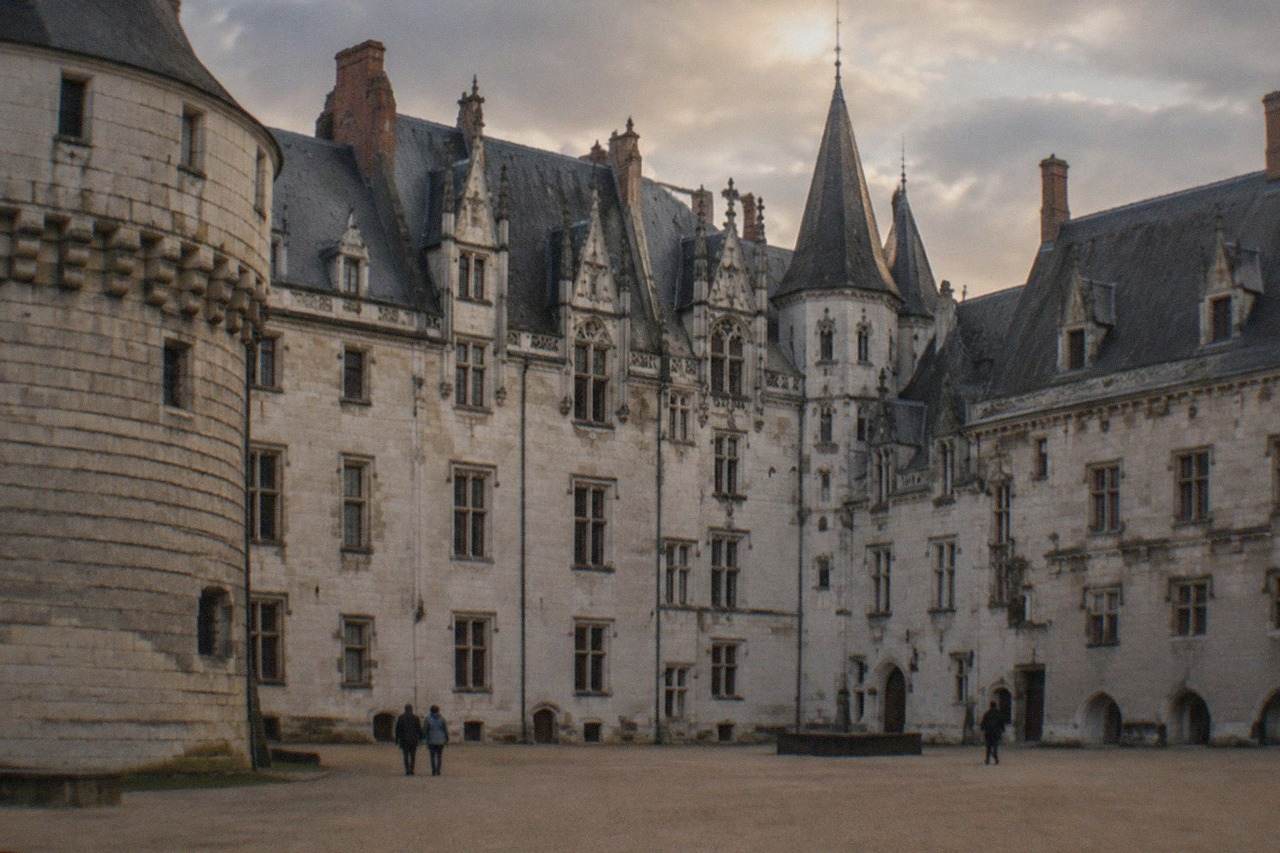
For most short-break visitors, Nantes is the better choice: it is more compact, generally cheaper to eat and sleep in, and its signature sights, the Machines de l'île, the Château des ducs de Bretagne and a cathedral that reopened in September 2025, sit within an easy walk or short tram ride of each other. Bordeaux wins decisively on wine culture, on grand classical architecture and on the pull of the vineyards around it. Neither city will disappoint.
That verdict deserves unpacking, because the two cities reward different kinds of curiosity. Bordeaux is a classical city, built wealthy on trade, its stone facades lined up along the Garonne with an almost theatrical confidence. Nantes is a stranger, more inventive city: a former shipbuilding town on the Loire that has spent two decades converting warehouses and shipyards into cultural venues, mechanical elephants and art trails. The Nantes Travel Guide is, admittedly, a partisan observer on this question, but the figures below are not partisan. They come from official Nantes sources and are checked as of late 2026.
Cost is where the gap is widest. Nantes sits in a region where restaurant and hotel prices run noticeably below those of the great wine capitals, and the city's own flagship attractions are cheap or free: the cathedral costs nothing, the château ramparts cost nothing, and the Machines de l'île charges 12 EUR per attraction at full price. Bordeaux's charm is not in dispute, but its centre is priced like a capital of anything, and the vineyard visits that justify the trip add their own layer of cost. A traveller watching a budget will feel the difference within a day.
Feel matters too. Nantes is a city you can cover on foot in two days without feeling you have missed a district, a point expanded on the is Nantes a walkable city page. Bordeaux asks for a little more time or a little more tram riding, and its pleasures are more concentrated in one spectacular ensemble along the riverfront. If your break is two nights rather than four, compactness is a real advantage.
How Do The Two Cities Compare On Size And Feel?
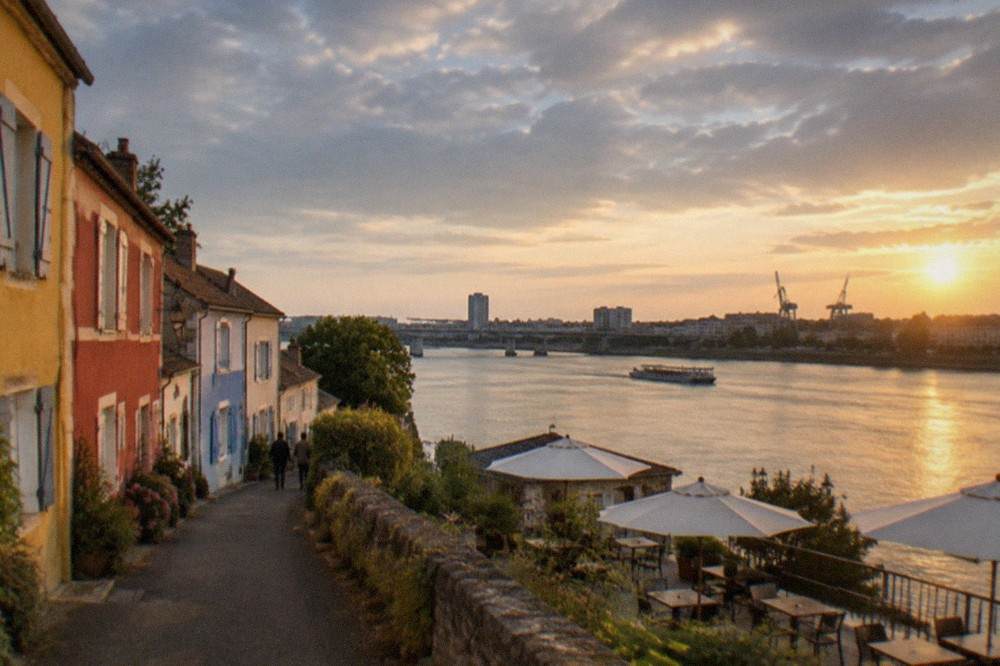
Nantes is the smaller headline city but the larger functional one: the commune counted 327,734 residents at the 2023 census, making it the sixth most populous commune in France and the largest in the west, while the wider Nantes Métropole is reported at 689,456. It spreads across the Loire and the Erdre rivers, with a temperate oceanic climate, mean daily maxima from 9.3 C in January to 25.4 C in August, and 819.5 mm of rain a year.
Bordeaux is broadly comparable in urban scale.
The comparison most guides skip is character. Nantes was named European Green Capital in 2013, and Time magazine called it the most liveable city in Europe back in 2004, a label the city has never entirely shaken off. That liveability shows up in the fabric of the place: riverside parks such as the Île de Versailles, a 22-stop botanical garden in the Jardin des Plantes, and a green painted line, about 20 km long, that threads visitors through the city's public art each summer. The city has also rebuilt itself around culture, from the Royal de Luxe street-theatre company, based here since 1989, to the Machines de l'île, opened in 2007 on the site of the old shipyards.
Bordeaux's feel is aristocratic and serene, a Unesco-listed classical core where the appeal is the ensemble rather than any single surprise. Nantes keeps surprising: a 12 EUR mechanical elephant sprays water outside a former shipyard workshop, a Renaissance castle sits in the middle of a business district, and a cathedral that burned in 2020 reopened its doors in September 2025 with a 2028 completion date still ahead. Visitors who like their cities tidy and grand lean Bordeaux; visitors who like them odd and playful lean Nantes.
For orientation, the verified essentials on the Nantes side of the comparison:
| Nantes at a glance | Figure |
|---|---|
| Commune population (2023, INSEE) | 327,734 |
| Métropole population (2023, reported) | 689,456 |
| Department and region | Loire-Atlantique, Pays de la Loire |
| Rivers | Loire and Erdre |
| Climate | Temperate oceanic; mean max 9.3 C (Jan) to 25.4 C (Aug) |
| Annual rainfall | 819.5 mm |
| Record high | 42.2 C, 24 June 2026 |
What Does Each City Offer On Food And Drink?
On wine, Bordeaux wins outright: it is the most famous wine city in France and the vineyard trips from its centre are the reason many people visit. Nantes answers with Muscadet, the dry white made from the Melon de Bourgogne grape on the city's doorstep, plus a food identity of its own: beurre blanc sauce, LU's Petit Beurre biscuit, berlingot candies, gâteau nantais and the Talensac market. Nantes is the better food-discovery city; Bordeaux is the better pilgrimage.
The Nantes table is genuinely distinctive. Beurre blanc, the emulsified butter sauce served with river fish, is a Nantes invention that has travelled the world, and local restaurateurs have been campaigning for protected traditional-specialty status for it. LU, the biscuit maker founded in Nantes in 1846, invented the Véritable Petit Beurre in 1886, and the brand is still made near the city. The Muscadet appellation surrounds the city, with the Maison des vins at Vallet as its hub, and the 2026 harvest made headlines by starting on 11 August, the earliest ban on record. Whether Muscadet suits your palate is a fair question, answered on the is Muscadet sweet or dry page.
Bordeaux needs no introduction on wine, and this guide will not pretend otherwise: the city is the gateway to the most prestigious red-wine region on earth, and a vineyard day trip there is an experience Nantes cannot match for sheer reputation. What Nantes offers instead is a less reverent, less expensive eating culture: crêperies, market halls, the Talensac market open Tuesday to Sunday mornings, and a tradition of nurseryman's produce and river fish. The gâteau nantais, an almond and rum cake, has enjoyed a visible revival in the city's patisseries. The wider set of guides lives on Nantes Travel Guide.
| Nantes food signature | What it is |
|---|---|
| Muscadet | Dry white wine from the Melon de Bourgogne grape, grown around the city |
| Beurre blanc | Emulsified butter, shallot and white-wine sauce served with fish |
| Petit Beurre | LU butter biscuit invented in 1886, brand founded 1846 |
| Berlingot nantais | Tetrahedral hard candy in seven flavours, late 19th-century origins |
| Gâteau nantais | Almond and rum quatre-quarts cake, origins around 1820 |
One practical note: pricing a food-and-drink weekend in Nantes is easier on the wallet, and the city's markets make a cheap, excellent lunch a daily option. The one 2026 caveat on the sightseeing side is maintenance: the Grand Éléphant at the Machines de l'île pauses its rides from 2 November 2026 to 28 February 2027, so anyone visiting specifically to ride it should time the trip outside that window. The Galerie and the Carrousel keep running.
To see the city's most photogenic side before deciding how many days to give it, a local-led walking tour is the efficient option.
Each of these three fits a different style of visit: a photo-led walk with a local, a self-guided app tour with 35 stops for independent explorers, and an outdoor historical game for families or anyone who prefers their sightseeing with a puzzle attached. The tours are short, cheap relative to a day's budget, and none commits you to a fixed itinerary for the whole stay.
How Easy Is It To Reach Bordeaux Or Nantes?
Both are easy: Paris to Nantes by TGV takes about two hours, with roughly 24 trains a day each way, and Nantes Atlantique airport handled a reported 7.19 million passengers in 2025 with new North American and European routes added in 2026. Bordeaux is likewise about two hours from Paris by TGV and has its own sizeable airport. From the UK and Ireland, both cities are served by direct flights; from Paris, the train is the simpler choice for either.
The rail comparison is close to a tie, and the pack behind this guide supports no more precise a figure than about two hours for the fastest Paris to Nantes services. What the train gives you in Nantes is a station at the southern edge of the centre, from which the tram network, three lines totalling 45.6 km, spreads across the city. Getting around once arrived is where the two diverge in detail rather than in kind: both cities run modern trams, both are navigable without a car, and both reward walking.
Nantes has one quirk worth knowing before you budget: public transport is free for everyone from midnight Saturday to 23:59 Sunday, covering trams, buses and the Navibus river shuttles, with the airport shuttle the one priced exception at 10 EUR. For the rest of the week the figures are as follows.
| Nantes transport and pass prices | Price |
|---|---|
| Naolib single ticket, 1 h | 1.80 EUR |
| Naolib 24 h ticket | 6.80 EUR |
| Airport shuttle, one way | 10 EUR |
| Park-and-ride day ticket | 4.50 EUR |
| Pass Nantes, 24 h (full) | 30 EUR |
| Pass Musées, 1 year | 15 EUR |
The Pass Nantes, priced from 30 EUR for 24 hours as of the April 2026 tariff, bundles transport, the airport shuttle return, the château museum and the Machines attractions, which makes a dense first day cheaper than buying pieces separately. Whether the pass pays off depends on pace, and the how many days to spend in Nantes page works through the arithmetic by itinerary length.
If a guided introduction appeals, the photo-spots walk is the one to book first: Check availability before locking in the rest of the weekend, since its timing shapes where you point your feet on day one.
Which City Suits A Two-Night Break Better?
Nantes suits a two-night break better, because its headline sights cluster tightly: the Machines de l'île, the château, the cathedral, the Passage Pommeraye and the Bouffay old town all sit within a walk or a single tram leg of each other, and two full days cover them without rushing. Bordeaux rewards a slower, wine-led visit, ideally three nights or more so a vineyard day does not crowd out the city itself.
Two days in Nantes, checked against what is actually open in 2026, look something like this: day one for the Machines de l'île on the Île de Nantes and the château museum, 9 EUR full price, with a walk through Bouffay; day two for the cathedral, free since its partial reopening on 27 September 2025, the Passage Pommeraye from 1843, the Jardin des Plantes and a Navibus crossing to Trentemoult. The one closure to plan around is the Muséum d'histoire naturelle, shut for a full rebuild until 2029, so it appears on no sensible 2026 itinerary. The Mémorial de l'abolition de l'esclavage, free and open daily, is the sobering counterweight to a fun weekend and deserves the half hour it asks.
Bordeaux in two nights works, but it tempts you into a wine day that leaves the city itself half-seen. The honest planning advice is to match the stay to the purpose: wine first, stay longer and book tastings ahead; city first, either city satisfies, and Nantes gives more variety per kilometre.
That walk, run by a local and built around the city's most photogenic corners, is a compact way to spend a first afternoon: it costs about the same as a restaurant main course, and the spots it surfaces, from the Anneaux de Buren to the Trentemoult facades, otherwise take a day of wandering to find.
For a longer base, the most beautiful village near Nantes question and the coast, about an hour away, widen the itinerary in ways a Bordeaux base cannot: salt marshes at Guérande, beaches at La Baule, the art trail down the estuary to Saint-Nazaire. The how far is Nantes from the ocean page covers the seaside options in detail.
Common Questions About Bordeaux Or Nantes
Which is better, Bordeaux or Nantes?
For a compact, inventive, lower-cost city break with mechanical elephants, a castle and a river-hopping tram network, Nantes. For wine culture, classical grandeur and vineyard day trips, Bordeaux. Both are about two hours from Paris by train and both are walkable, so the choice is about appetite rather than accessibility.
Is Nantes cheaper than Bordeaux?
Generally yes. Nantes sits in a lower-price region for hotels and restaurants, its cathedral and château ramparts are free, and its headline paid attraction, the Machines de l'île, charges 12 EUR per attraction at full price. Tourist tax in Nantes is tiered by hotel rating, reported at 2.86 EUR per night for a 4-star stay in 2026.
Is Nantes in Brittany or near Bordeaux?
Nantes is in the Loire-Atlantique department of the Pays de la Loire region, in western France, historically the capital of Brittany but administratively attached to the Pays de la Loire since a 1941 decree. Bordeaux lies some distance to the south-east, in a different region entirely, Nouvelle-Aquitaine, on the Garonne rather than the Loire.
Which city is better without a car?
Both. Nantes runs three tram lines over 45.6 km plus Navibus river shuttles, transport is free at weekends, and the centre is compact enough to walk. Bordeaux is also tram-served and largely pedestrian-friendly along its riverfront, with vineyard trips available as organised excursions rather than self-drive days.
How many days does Nantes need compared with Bordeaux?
Two full days cover Nantes's headline sights at a relaxed pace; three lets you add a riverside or seaside excursion. Bordeaux needs at least three nights if a vineyard day is part of the plan, since that day effectively spends itself outside the city.
Does the weather differ much between the two?
Not fundamentally: both are mild, temperate western French cities. Nantes's mean daily maxima run from 9.3 C in January to 25.4 C in August, with 819.5 mm of rain a year, and its weather station recorded a new all-time high of 42.2 C on 24 June 2026. Bordeaux runs marginally warmer in summer, but rain gear beats a wardrobe decision either way.
The short version: book Bordeaux for the wine, book Nantes for everything else, and if the budget allows only one trip this year, the inventive, affordable city on the Loire gives the more surprising weekend of the two.