What Is The Most Beautiful Village Near Nantes?
Clisson is the most beautiful village near Nantes, France, an Italianate stone town 27 km away by rail, with a riverside château, vineyards and a direct TER link. Here is how to plan the trip and what else is worth the train ride.
The most beautiful village near Nantes is a question with a defensible answer, not a coin toss, because one candidate combines looks, history and ease of access in a way the others cannot match. Nantes sits in the Loire-Atlantique department of the Pays de la Loire region of western France, and within an hour of its station you can reach an Italianate stone town, a walled medieval citadel and a former fishing village painted in riverside colours. This page names the winner, explains why, and lays out the honest comparison so you can plan the day yourself. For the wider picture of the city itself, the guides on Nantes Travel Guide cover each neighbourhood in detail.
What Is The Most Beautiful Village Near Nantes?
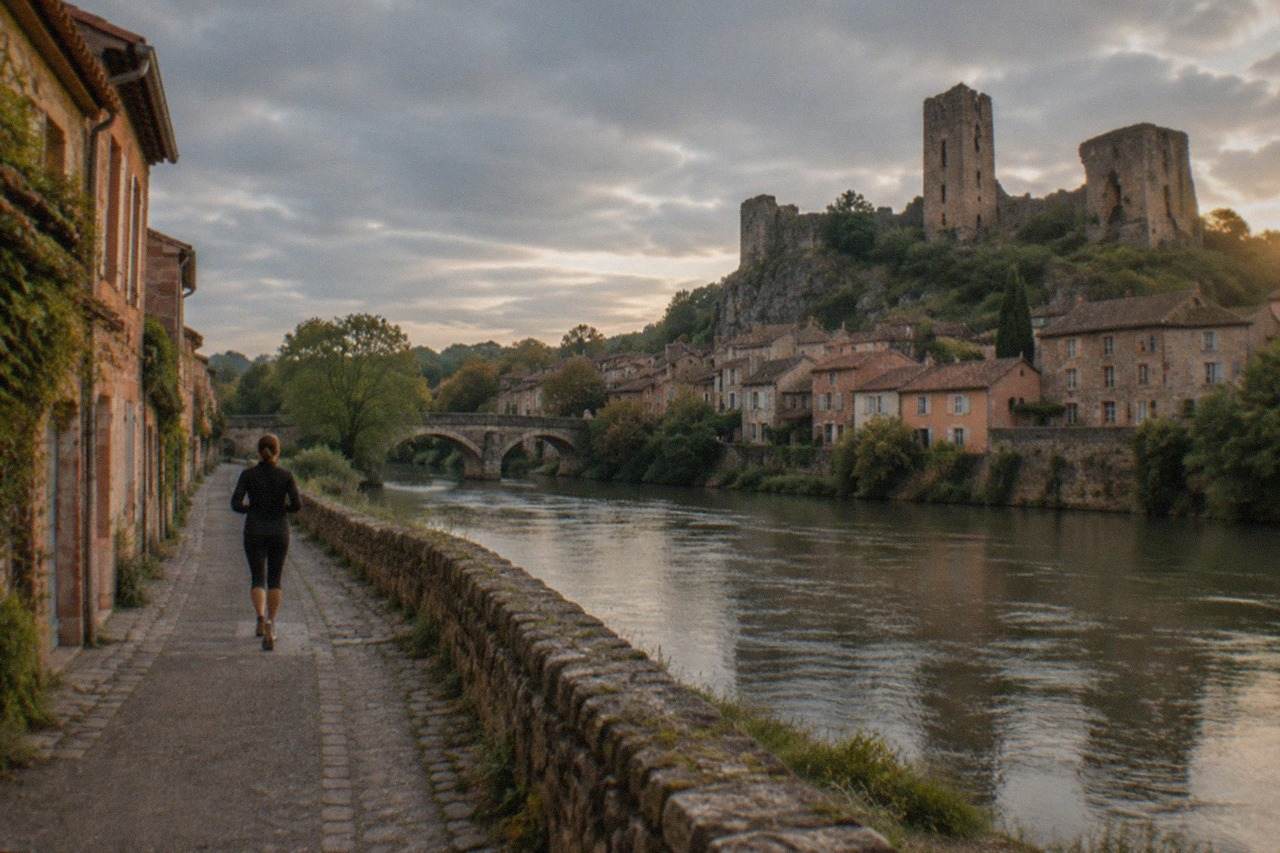
Clisson is the most beautiful village near Nantes, France. It is an Italianate town of red schist and pale tuffeau stone on the Sèvre Nantaise, 27 km from Nantes by rail, with a medieval château above the river, a historic covered market hall and terraced vineyards on the surrounding slopes. A direct TER train covers the fastest services in about 15 minutes, making it the easiest beautiful half-day trip the city offers.
Clisson looks like nothing else in the region, and that is the whole point. When the ruined town was rebuilt, it was given a deliberately Italian style, so arcades, loggias and cypress-lined terraces sit beside a Breton river landscape. The result is a place that feels transplanted from Tuscany but speaks with a Loire Valley accent.
The château ruins above the Sèvre are free to wander for much of the year, and the town's Italianate garden slopes down to the water. Add the covered Halles, the riverside walk downstream from the town, and the Muscadet vines that begin almost at the town edge, and the case is made. Clisson is also the vineyard gateway of the Nantes area, sitting at the eastern end of the Muscadet Sèvre et Maine country, so a village trip doubles as a wine trip if you plan it that way.
The town earns its ranking on looks alone, but the logistics seal it. The SNCF route data for Nantes to Clisson shows fastest services at around 15 minutes and an average closer to 23 minutes on the rail distance of 27 km. The Pass Nantes, the city's tourist pass, even includes one TER return journey between Nantes and Clisson alongside its museum entries and transport, which tells you how standard this trip has become for visitors.
Why Is Clisson So Different From Other Villages Near Nantes?
Clisson is different because it is a deliberate Italianate reconstruction rather than an organic Breton village. Its red schist and white tuffeau facades, tiled roofs, loggias and cypress terraces were imposed on a rebuilt town in a consciously Italian style, giving it a Tuscan appearance unmatched anywhere else in Pays de la Loire. No other nearby village shares this architectural story.
Most villages near Nantes are granite-and-slate Brittany or white-stone Loire country. Clisson alone was designed as a stage set for an imagined Italy, complete with a villa above the river and formal terraces. That singularity is exactly why the question of the most beautiful village has a real answer: the competition is beautiful in familiar ways, while Clisson is beautiful in a way nothing else in reach of Nantes attempts.
The town is not a museum piece either. It hosts Les ClisSonnantes, a classical music festival running 30 September to 4 October 2026 with a Beethoven theme and free events under the Halles, and it is the home of Hellfest, the metal festival that ran 18 to 21 June 2026 and returns 17 to 20 June 2027 for its 20th anniversary. A quiet stone village two weekends a year becomes something else entirely, and the timetable matters when you plan.
Here is the honest shortlist, with only travel figures the rail and road data actually supports:
| Village or town | Character | How you reach it from Nantes | What makes it beautiful |
|---|---|---|---|
| Clisson | Italianate stone town, vineyards | Direct TER, fastest about 15 min, average about 23 min, 27 km by rail | Château ruins, tiled roofs, riverside terraces, covered Halles |
| Guérande | Walled medieval town | About 80 km by road | Complete ramparts, salt marshes on the doorstep, a working medieval core |
| Trentemoult | Former fishing village, now a Nantes riverside quarter | Navibus N1 from Gare Maritime, standard Naolib ticket | Small coloured houses, quays, Loire views minutes from the centre |
| Pornic | Seaside port town | TER about 59 to 65 min | Harbour, castle above the port, Atlantic coast |
If your taste runs to castles of the grander kind rather than villages, the answer to a different question sits at the most beautiful château in France, and Brittany's wider towns are compared at the most beautiful town in Brittany.
How Do You Get To Clisson From Nantes Without A Car?
You get to Clisson by direct TER train from Nantes station, with fastest services taking about 15 minutes and an average around 23 minutes over the 27 km rail route, so a car buys you nothing on this particular trip. Trains run on the Nantes to Clisson SNCF route through the day, and the Pass Nantes includes one TER return between the two, which covers the journey alongside museums and city transport.
The practical rhythm is simple. Leave Nantes in the morning, walk from Clisson station into the old town in a few minutes, spend three to four hours on the château, the Halles, the garden terraces and lunch, and return on an afternoon or early-evening service. Check the live SNCF Connect timetable before you travel, because frequencies vary by day of the week and engineering works can alter a given Saturday.
On arrival, the town is compact and walkable, which mirrors Nantes itself, a city whose walkability is assessed at is Nantes a walkable city. If you want to understand Nantes before you leave it, a private walking tour with a professional guide is the natural first move; that operator's price is not published, so treat the live listing as the source of truth. You can also Check availability directly.
What Other Villages Near Nantes Are Worth The Train Ride?
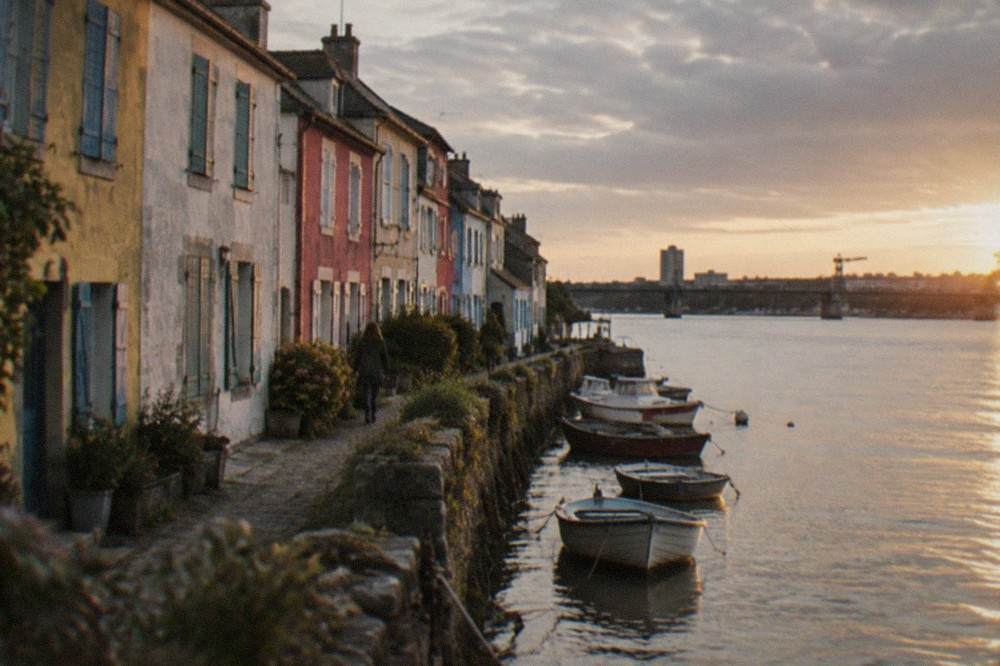
Guérande is the strongest alternative, a complete medieval walled town about 80 km from Nantes by road, where the ramparts enclose a working old core and the salt marshes sit immediately outside the walls. Trentemoult is the closest thing to a village inside the metropolitan area, a former fishing quarter of coloured houses reachable from Nantes by the Navibus river shuttle with a standard ticket. Both are beautiful, and neither looks like Clisson.
Guérande's case is about completeness. Few towns anywhere in western France keep their full circuit of medieval walls, and Guérande pairs that with the salt pans that still produce fleur de sel; the 2026 harvest was exceptionally large, with an average of around 1.5 tonnes per pan and some pans exceeding 3 tonnes. The town is best reached by car or organised day trip from Nantes, roughly 80 km by road, and its salt story is unpacked at what is special about Guérande salt.
Trentemoult belongs to Rezé, on the south bank of the Loire facing Nantes, so it wins on travel effort: the Navibus N1 shuttle from Gare Maritime lands you at the Sablières pontoon in minutes for a normal Naolib fare, and since 12 November 2025 the N2 link has also connected Trentemoult with Bas-Chantenay and the Hangar à Bananes. It is tiny, so pair it with time on the Île de Nantes rather than treating it as a full day.
The coastal options, for balance:
| Coastal alternative | Travel from Nantes | Best for |
|---|---|---|
| Pornic | TER about 59 to 65 min | Harbour and castle, a genuine seaside town feel |
| La Baule | TER from about 51 min | A long sandy beach and belle époque front; worth it? See the assessment |
| Saint-Nazaire | TER from about 33 min | Shipbuilding scale, Escal'Atlantic, less village-like |
La Baule is a resort town rather than a village, but it pairs naturally with Guérande on a coastal loop; whether it earns your time is weighed at is La Baule worth visiting.
When Should You Visit Clisson Rather Than The Coast?
Visit Clisson between spring and early autumn, when the riverside terraces, vineyard slopes and château grounds are open-air pleasures, and aim for late September if you can, because the Les ClisSonnantes festival of 30 September to 4 October 2026 fills the town with classical music, including free events under the Halles. Avoid mid-June if crowds put you off, since Hellfest takes over the town's surroundings from 17 to 20 June 2027.
The climate supports a long season. Nantes has a temperate oceanic climate, not a Mediterranean one, with Météo-France 1991-2020 normals for the Nantes-Bouguenais station showing mean maxima from 9.3 °C in January to 25.4 °C in August and 819.5 mm of rain spread across the year, so pack for showers in any month but expect genuinely warm summers. Spring and early autumn give the softest light for stone and terracotta.
For working out how much of your trip to give the city versus its surroundings, the answer to how many days you should spend in Nantes is the companion piece: most itineraries can absorb one village day without shortchanging the Machines de l'île, the château des ducs de Bretagne or the cathedral, which partially reopened on 27 September 2025 after the 2020 fire with full completion projected for 2028.
Common Questions About Villages Near Nantes
What is the most beautiful village near Nantes?
Clisson is the most beautiful village near Nantes, France. It is an Italianate town of red schist and tuffeau stone on the Sèvre Nantaise, 27 km away by rail with fastest TER services around 15 minutes, and it combines a medieval château, a historic covered market hall and terraced Muscadet vineyards in one compact visit.
How far is Clisson from Nantes?
Clisson is 27 km from Nantes by rail. The fastest TER trains take about 15 minutes and the average service is around 23 minutes, which makes it the quickest of the genuinely beautiful village trips out of the city. The Pass Nantes includes one TER return journey between Nantes and Clisson.
Can you visit Clisson without a car?
Yes, and the car is arguably a handicap. Direct TER trains run from Nantes station, the walk from Clisson station into the old town is short, and the town itself is compact enough to cover entirely on foot, from the château ruins down to the riverside garden terraces.
Is Trentemoult a village?
Trentemoult began as a fishing village on the Loire's south bank and is now part of Rezé in the Nantes metropolitan area. It keeps its small scale, coloured houses and quays, and it is reachable from central Nantes by the Navibus N1 river shuttle with a standard Naolib ticket, plus the N2 link to the Hangar à Bananes that entered service on 12 November 2025.
Is Guérande closer to Nantes than Clisson?
No. Guérande is about 80 km from Nantes by road and has no comparable direct rail link, while Clisson is 27 km by rail with fastest trains of about 15 minutes. Guérande rewards a longer day trip or a combined loop with La Baule; Clisson works as an easy half-day.
When is the best time of year to visit these villages?
Late spring through early autumn suits Clisson and its vineyard slopes, and late September is a sweet spot: the Les ClisSonnantes festival runs 30 September to 4 October 2026 with free events under the Halles. For the coastal villages, the same window applies, with sea breezes making July and August comfortable despite Nantes's temperate oceanic climate.
One honest caveat: none of the figures here transfer between subjects, so the 27 km rail distance belongs to Clisson, the roughly 80 km road figure to Guérande, and the TER timings to the routes named beside them. Plan against the live SNCF timetable on the day, and let Clisson make the case for itself in person.