How Far Is Nantes From The Ocean?
How far is Nantes from the ocean? Verified train times and distances from Nantes to Saint-Nazaire, La Baule, Pornic and Le Croisic on the Atlantic coast of France.
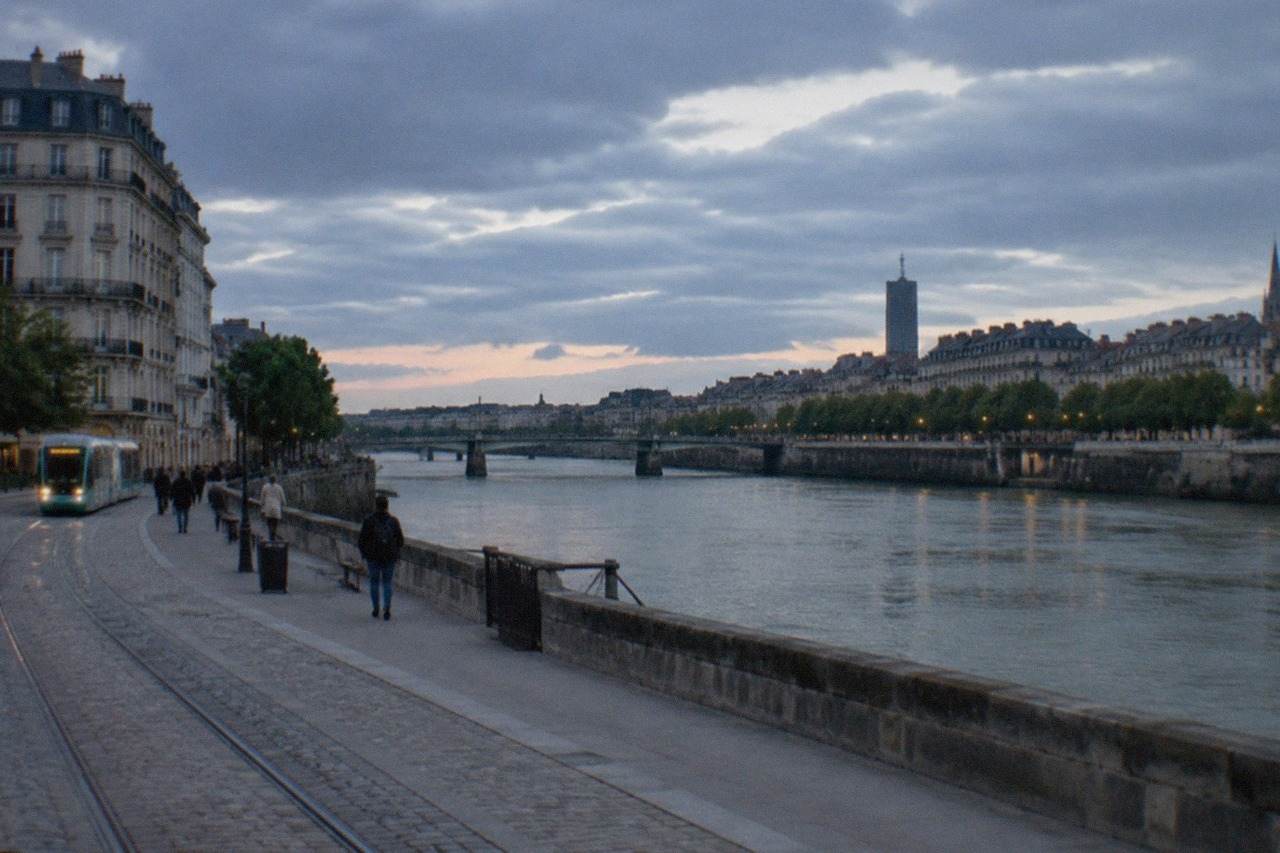
Nantes, in the Loire-Atlantique department of the Pays de la Loire region in western France, is an inland river city rather than a seaside one. It grew rich where the Erdre and Sèvre Nantaise meet the Loire, dozens of kilometres from any coast, and the river that runs through it is the reason the ocean is nearer than it looks. The Loire flows west from the city all the way to the Atlantic at Saint-Nazaire, and the railway that follows it makes the sea one of the easiest excursions a visitor to the city can make.
How Far Is Nantes From The Ocean?
Nantes sits inland on the Loire, roughly 64 km by rail from Saint-Nazaire, the port city where the river meets the Atlantic, with the fastest TER trains covering the run in about 33 minutes. La Baule is about 51 minutes from Nantes by train, Pornic takes 59 to 65 minutes, and Le Croisic about 1 hour and 3 minutes. In practice, the ocean is an easy half-day trip from the city centre.
That single rail figure explains the geography. Nantes was built where the Loire is still tidal and navigable, close enough to the sea to become France's great Atlantic port in the age of sail, far enough inland to stay a river city. Saint-Nazaire, at the mouth, took over the deep-water shipping role in the industrial era, and the rail line that connects the two follows the river's north side past the vineyards of the Muscadet country.
The 64 km figure is rail distance, not a straight line, and road travel is slower than the train because of the routes around the river's bends. For planning purposes the verified train times are the most useful numbers, because they come from the operator's own route data and hold steady across the year.
It also helps to understand what the question usually means in practice. The question is usually not about the map distance for its own sake; it is about whether a beach day fits into a city break, and whether a car is needed to get one. The answer on both counts is favourable. The coast is reachable by direct regional train from the main station, the journey is short enough that the sea can be an afternoon rather than a whole itinerary, and the same line serves several very different kinds of seaside town, so the choice becomes one of taste rather than logistics.
| Coastal destination | Fastest TER time from Nantes | Rail or road distance | What you find there |
|---|---|---|---|
| Saint-Nazaire | ~33 min | 64 km by rail | Port city at the mouth of the Loire, shipyard heritage, Escal'Atlantic |
| La Baule | ~51 min | On the Saint-Nazaire line | Long sandy bay, resort town, triathlon each September |
| Pornic | ~59-65 min | Separate route south of the Loire | Small harbour, medieval castle, rocky coves |
| Le Croisic | ~1 h 03 | End of the Saint-Nazaire line | Fishing port, salt-trailed coast, rock pools |
The table shows why the answer to the distance question is really a question of which coast you want. Rocky coves, long sand and working ports all sit within about an hour of the city, on two distinct rail routes.
Which Beach Towns Are Closest To Nantes?
The quickest seaside hop from Nantes is Saint-Nazaire, at the mouth of the Loire, about 33 minutes by TER along 64 km of rail. For a classic sandy beach, La Baule is about 51 minutes by train, with a seafront whose length is given as about 9 km, though sources dispute the exact figure. Pornic, a smaller port resort on the south side of the estuary, takes 59 to 65 minutes, while Le Croisic takes about 1 hour and 3 minutes.
La Baule is the one visitors mean when they ask about "the beach". It is a proper resort, built around its bay, and it is close enough that locals treat it as an ordinary weekend destination. The resort also hosts the Triathlon Audencia every September, an event that drew around 9,000 athletes and some 70,000 spectators in its 2026 edition, which is worth knowing if you would rather avoid the crowds than join them.
Pornic is the quieter choice, south of the Loire on the road towards the Vendée, and Le Croisic the far end of the main line, where the coast turns rocky and the oyster beds begin. Neither needs a car: both appear in the operator's route data with the times quoted above. Guérande, the walled medieval town just inland from La Baule with its famous salt marshes, lies about 80 km from Nantes by road and is usually visited alongside the coast rather than separately.
Each of these towns has a genuinely different character, which is worth a moment of thought before you pick one. Saint-Nazaire is the industrial face of the Atlantic, a place of shipyards and submarine bases turned museums, and it rewards visitors who like their coastline with some history attached. La Baule is the Belle Époque resort, all promenades and beach huts, and it fills up accordingly in July and August. Pornic and Le Croisic are smaller, saltier and slower, closer to the working coast that the Loire-Atlantique department shares with the Vendée, and better suited to travellers who want rock pools and a long lunch over a crowded strand.
If you want help weighing the options while you are actually out walking the city, a local's guide to what Nantes is famous for covers the inland sights worth pairing with a coastal half-day.
How Do You Get From Nantes To The Atlantic Coast?
The coastal line runs west from Nantes station to Saint-Nazaire, La Baule and Le Croisic, with the fastest TER services reaching Saint-Nazaire in about 33 minutes and Le Croisic in about 1 hour and 3 minutes. Pornic takes 59 to 65 minutes on its own route. All of these times are for direct TER regional trains, so no transfer through another city is needed.
The trains leave from Gare de Nantes, the main station, which sits on the edge of the city centre within walking distance of the Château des ducs de Bretagne and the Bouffay old town. That matters for planning: you can walk the historic core in the morning, be on a beach by early afternoon, and still be back in Nantes for dinner, all on regional trains.
Within the city itself, the Naolib network covers trams, buses and the Navibus river shuttles with a 1.80 EUR one-hour ticket, and the whole network is free all weekend for everyone, from Saturday midnight to Sunday night. Those tickets cover the city's transport, not the TER to the coast, so budget for a regional train fare separately, and check the operator's own pages for current fares before you travel. If you are also arriving or leaving by air, note that the airport shuttle is always 10 EUR and is excluded from the weekend free travel.
The station's position at the western edge of the pedestrian centre is the detail that quietly makes the whole plan work. Trains towards the coast depart from the same building that serves the long-distance routes, so connections are a matter of changing platforms rather than crossing the city, and the tram lines that fan out across Nantes all stop within a short walk of the concourse. For a day trip, that means almost no dead time between leaving your hotel and leaving the city.
A good way to anchor yourself in the city before or after a coastal trip is a self-guided walking route. The self-guided walking tour of the city question on this site explains why Nantes works so well on foot, and there is also a bookable option:
You can check current availability for that tour directly: Check availability
Is A Coast Day Trip From Nantes Realistic?
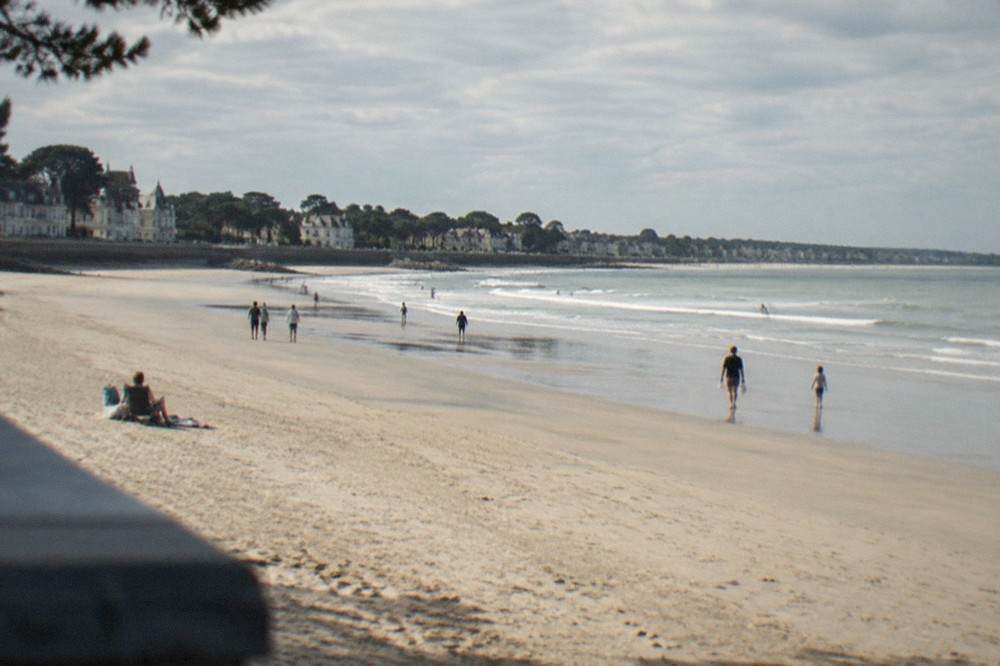
Yes. With Saint-Nazaire about 33 minutes away by TER and La Baule about 51 minutes, the Atlantic coast works as a half-day or full-day trip from Nantes without a car. Guérande's walled town and salt marshes sit about 80 km away by road and are normally combined with La Baule. Visitors who prefer organised travel can also book a full-day excursion that pairs the coast with stops in and around Nantes.
The practical limit is not distance but the shape of the day. Saint-Nazaire itself pairs the shipyard city with Escal'Atlantic, the liner museum on the submarine base, where 2026 adult entry is 15 EUR, 13 EUR reduced and 7.50 EUR for children aged 4 to 17, with under-4s free. That is a full visit in itself, so many travellers pick either the museum or the beach, not both.
Season matters more than you might expect for a coast this close. The Atlantic here is temperate oceanic, matching the city's own climate, so the sea is at its warmest in July and August and the resort towns are at their fullest then too. A September or early October visit, when the sea is still swimmable and the sand is no longer packed, is a classic local move, and the off-season has its own appeal: winter storms rolling up the estuary at Saint-Nazaire are dramatic, and the oyster season around Le Croisic runs into the colder months.
For the water without the ocean, Nantes has the Erdre, a quiet tributary of the Loire. Cruises on it run from the city, and a cruise on the Erdre is one of the standard answers to how many days to give the city. The Loire itself can be crossed on the Navibus river shuttles, including the line that links Trentemoult on the south bank to the Hangar à Bananes on the Île de Nantes.
Organised coastal days are worth comparing with the DIY train option, especially if you want to reach the smaller villages without hiring a car:
Common Questions About Nantes And The Ocean
These are the questions visitors ask most often about Nantes and its distance from the sea, answered from verified rail times and official figures: how far the nearest beach is, which coastal town is quickest to reach, whether Nantes itself has a seafront, and how the Loire connects the city to the Atlantic. Each answer keeps to figures confirmed in 2026 sources.
How far is Nantes from the ocean?
Nantes is about 64 km by rail from Saint-Nazaire at the mouth of the Loire, with the fastest TER trains taking roughly 33 minutes. Beach towns like La Baule, about 51 minutes by train, sit within about an hour of the city.
Is Nantes on the coast?
No. Nantes is an inland river city on the Loire and its tributaries, in the Loire-Atlantique department. Its historical port sat far enough upriver that ocean-going trade reached the city by river rather than by a seafront.
What is the closest beach to Nantes?
La Baule, at about 51 minutes by TER, is the closest major sandy beach. Saint-Nazaire is quicker to reach at about 33 minutes, but it is a port city at the river mouth rather than a classic bathing resort.
Can you visit the Atlantic coast from Nantes without a car?
Yes. Direct TER regional trains run from Gare de Nantes to Saint-Nazaire, La Baule and Le Croisic, and a separate route serves Pornic in 59 to 65 minutes, so the coast is reachable entirely by rail.
Does the Loire connect Nantes to the ocean?
Yes, the Loire flows west from Nantes roughly to Saint-Nazaire, where it empties into the Atlantic. That river route is what made Nantes a major Atlantic port historically, and the railway now follows the same corridor.
The short version: the sea is not on Nantes's doorstep, but it is barely an hour away by train, which is one of the quiet advantages of a city that manages to be both a river port and a base for the Atlantic coast. Whether you come for the things to do in Nantes themselves or use the city as your coastal basecamp, the geography works in your favour, and the Nantes Travel Guide covers both sides of that plan in detail.