What Is Nantes Famous For?
Nantes in western France is famous for the Machines de l'île, Jules Verne, LU Petit Beurre biscuits, beurre blanc, Muscadet wine and its honest slave-trade memorial. Here is what the city is really known for.
Nantes, in the Loire-Atlantique department of the Pays de la Loire region in western France, keeps defying the expectations of visitors who arrive expecting a provincial backwater. It is France's sixth most populous commune, home to 327,734 people in the 2023 INSEE count, and a place where a ducal castle, a Jules Verne birthplace and a twelve-metre mechanical elephant share one walkable centre. Ask a French person what the city stands for and the answers pile up quickly: machines, biscuits, butter sauce, wine, and an unusually frank reckoning with the slave trade that built much of its 18th-century wealth.
What Is Nantes Famous For?
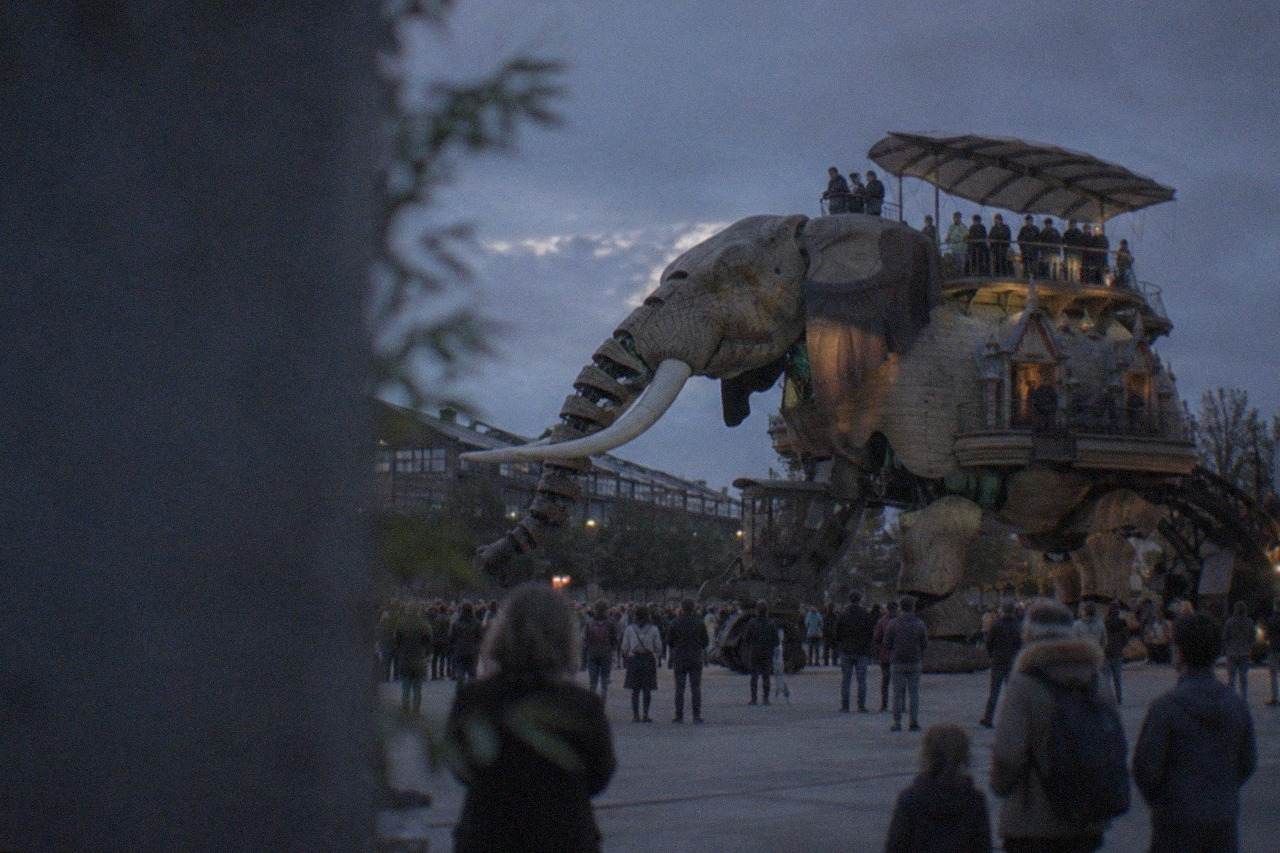
Nantes is famous for five things above all: the mechanical creations of Les Machines de l'île, led by the Grand Éléphant inaugurated in 2007; being the birthplace of Jules Verne in 1828; inventing the LU Petit Beurre biscuit in 1886; beurre blanc sauce and Muscadet wine; and the Château des ducs de Bretagne, where Anne of Brittany was born in 1477. The city is also known for facing its slave-trading past directly, at a free riverside memorial opened in 2012.
That shortlist covers machines, literature, food and history, which is roughly the order visitors encounter them. The green line painted on the pavements, about 20 km of it, strings these themes together each summer during Le Voyage à Nantes, a free public art trail that has run every year since 2012. The city's tourism office describes the line itself as an artwork guiding you past monuments, installations and sites.
| What it is famous for | The emblem | The hard fact |
|---|---|---|
| Mechanical theatre | Grand Éléphant at Les Machines de l'île | Site inaugurated 30 June 2007 |
| Literature | Jules Verne, born 8 February 1828 | Born on Île Feydeau, at 4 rue Olivier-de-Clisson |
| Food industry | LU Petit Beurre biscuit | Invented 1886; LU founded in Nantes in 1846 |
| Gastronomy | Beurre blanc sauce | Nantes emulsified butter sauce, traditionally served with fish |
| Wine | Muscadet | Made from the Melon de Bourgogne grape around the city |
| Heritage | Château des ducs de Bretagne | Rebuild begun by Francis II in 1466 |
| Memory work | Mémorial de l'abolition de l'esclavage | Opened 2012, free entry, on the Loire quays |
The table above is the honest headline version. The sections below take each claim in turn, because each one has a story worth more than a list item, and because some of the detail is what makes Nantes different from other French cities its size. If you are working out how long to stay, our piece on how many days to spend in Nantes breaks the itinerary question down.
Why Is Everyone Photographing The Machines De L'île?
Les Machines de l'île, on the Île de Nantes, is the city's most photographed attraction because it puts a 12-metre-tall walking elephant, a marine carousel and a gallery of inventor's machines on the site of the former shipyards, where they parade in front of paying visitors and passers-by alike. The Grand Éléphant first walked on 30 June 2007, and the Carrousel des Mondes Marins followed in 2012.
The project was dreamed up by François Delarozière and Pierre Orefice with the street-theatre company Royal de Luxe, which has been based in Nantes since 1989. The idea was to imagine a mechanical bestiary worthy of Jules Verne, the city's most famous son, built at full scale in the old Dubigeon workshops by the Loire. It worked. The elephant alone has become the image that identifies Nantes in photographs, the way the sagrada familia identifies Barcelona or the canals identify Venice.
Each attraction ticket costs 12 EUR full price, with reductions for children aged 4 to 12 and for visitors aged 13 to 17, students, jobseekers and disabled visitors with proof, according to the official tarifs page. A day package covering two attractions costs 20 EUR and three cost 29 EUR. One practical warning matters more than the prices: the official schedule states there are no elephant rides at all from 2 November 2026 to 28 February 2027, because of maintenance. Guides that promise a ride year-round are simply wrong. The abandoned Arbre aux Hérons project is another common trap; only the prototype branch can be visited, since Nantes Métropole dropped the full project in September 2023.
There is more on the machines, including the detail behind each contraption, in our dedicated answer on what the Machines de Nantes are.
A private guide makes a difference here, and not only for the machines. The island's layered history, from shipbuilding to the 2011 regeneration plans that created the Hangar à Bananes bars, reads better with someone who can point at the ground and explain it. A self-guided app tour covers the same ground for less money, at 35 stops, and suits travellers who would rather wander alone.
How Does Nantes Remember Its Slave-Trade Past?
Nantes was the largest French slave-trading port, sending 1,714 expeditions between the mid-17th century and 1830, which was 43 per cent of all French slave-trade voyages, and the city now addresses this history directly at the free Mémorial de l'abolition de l'esclavage, opened in 2012 on the Loire quays, and inside the Musée d'histoire de Nantes at the Château des ducs de Bretagne. The memorial's own figures state that at least 4,220 French expeditions crossed the Atlantic in the trade.
This is the fact most competing guides soft-pedal, and it is central to understanding the city's wealth. The quays of the Loire, the hôtels particuliers of Île Feydeau and the fortunes behind the Graslin district were built substantially on the triangular trade. Nantes withdrew from the trade in 1830, later than it should have, and the port's sugar refining carried the legacy deep into the 19th century.
The museum inside the château dedicates permanent rooms to the trade, and in 2026 it hosts the contemporary exhibition "Expression(s) décoloniale(s) #4" from 8 May to 8 November. The museum's press materials describe works by the Brazilian artist Rosana Paulino, photography by the Senegalese artist Omar Victor Diop, and new gallery texts by the Beninese historian Lylly Houngnihin. Entry to the museum is 9 EUR full price and 5 EUR reduced, free for under-18s and on the first Sunday of each month from September to June, according to the château's own tariff page.
| Place | Connection to the city's fame | Key figure |
|---|---|---|
| Château des ducs de Bretagne | Fortress of the dukes; museum of city history since 2007 | Rebuild begun 1466 |
| Cathédrale Saint-Pierre-et-Saint-Paul | Gothic rebuild begun 1434, completed 1891 | Reopened partially 27 September 2025 |
| Passage Pommeraye | 19th-century shopping arcade, unchanged since it opened | Built 1843 |
| Île Feydeau | Wealth of the shipowners; Verne's birth street | 4 rue Olivier-de-Clisson |
| Tour Bretagne | City's tower; bar Le Nid closed 30 June 2020 | 32 floors; roof at 120 m |
What Food And Drink Is Nantes Famous For?
Nantes is famous for beurre blanc, the emulsified butter sauce invented for fish in the city's kitchens; for Muscadet, the dry white wine pressed from Melon de Bourgogne grapes in the vineyards south of the city; and for sweets including the berlingot nantais, the gâteau nantais almond-rum cake and LU's Véritable Petit Beurre, first baked in 1886. Together they make Nantes one of the few French cities famous for a sauce, a wine and a biscuit at once.
The beurre blanc story is a triumph of accident: a sauce made from a reduction of shallots, white wine and vinegar, into which cold butter is whisked until it turns velvet. Local restaurateurs have been pursuing protected traditional speciality status for it, according to 2025 reporting by France 3. The Muscadet that goes into the pan, and into the glass, is the local grape's best defence: dry, saline and cheap by French standards. The 2026 harvest began on 11 August, a record eight days earlier than the previous mark, after a hot, dry summer that cut yields.
The biscuit story belongs to the Lefèvre family. Jean-Romain Lefèvre set up as a biscuit maker in Nantes in 1846, married Pauline-Isabelle Utile, and the initials LU went onto the Véritable Petit Beurre in 1886. Production moved out of the city to La Haie-Fouassière in 1986, but the heritage remains the city's, and 2026 marked LU's 180th anniversary.
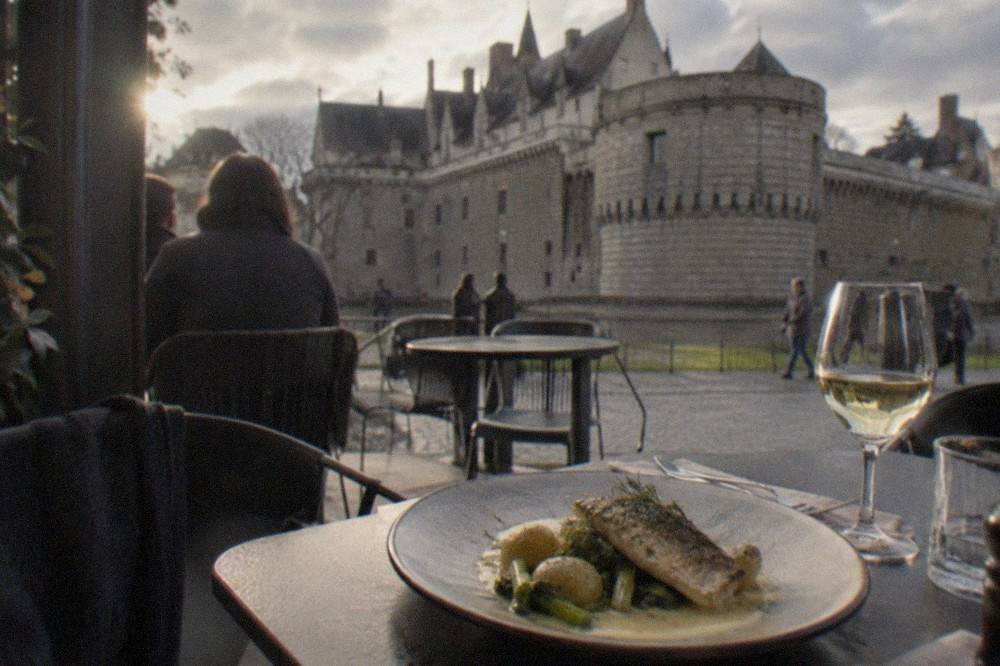
If wine is your reason for travelling, our answers on whether Muscadet is sweet or dry and on the wine the Loire Valley is famous for cover the bottles in more depth. If food is the reason, a guided tasting of the old town with a local is the fastest way to meet the berlingots, the gâteau and the sauce in one afternoon.
Which Writers, Ideas And Titles Came Out Of Nantes?
Nantes is famous as the birthplace of Jules Verne, born at 4 rue Olivier-de-Clisson on Île Feydeau on 8 February 1828, and as the city where the Edict of Nantes was signed by Henri IV in April 1598, at the château itself, granting Protestants their rights and ending a chapter of religious war. The city also gave France its first modern tram line in 1985 and was named European Green Capital in 2013.
Verne is the city's literary export, and the connection is not just a plaque. The Musée Jules Verne sits on the Butte Sainte-Anne, and the collections of the Cité des Imaginaires, a larger project in the former Cap 44 building at Bas-Chantenay, are planned to open in 2028. The port's ship traffic, the Loire's fog and the family of shipowners around his childhood street all fed the novels. His birth street lies on Île Feydeau, an island no longer an island, where the sunken façades of shipowners' houses still lean over the old arms of the river.
The Edict of Nantes is the city's other world-historical claim. The château's own page says the edict was signed there by Henri IV on 30 April 1598, though some sources give other dates that April; the safest wording is April 1598. Nantes was the last city holding out against the king when the signature came, which is why the document carries the city's name rather than that of the court. Our Nantes Travel Guide homepage collects these strands into routes if you want to follow them on the ground.
Nantes is also, quietly, a city of firsts. The tram network that returned on 7 January 1985 was the first modern one in France, and the city's habit of treating public space as a stage, from the green line to the summer artworks, has been copied across Europe since it won the Green Capital title.
Among those three, the food tour and the app tour suit travellers who already know their theme, while the private custom walk is the one that adapts. Fame of the kind Nantes carries, dense, layered and a little strange, rewards a guide who can shape the route around whichever thread pulled you here, whether that is Verne, the machines, the food or the harder history on the quays.
Common Questions About What Nantes Is Famous For
What is Nantes famous for?
Nantes is famous for the mechanical elephant and creations of Les Machines de l'île, for being Jules Verne's birthplace in 1828, for the LU Petit Beurre biscuit invented in 1886, for beurre blanc sauce and Muscadet wine, for the Château des ducs de Bretagne, and for its free memorial to the slave trade that made the 18th-century port wealthy.
Was Jules Verne really born in Nantes?
Yes. Jules Verne was born at 4 rue Olivier-de-Clisson, on Île Feydeau, on 8 February 1828, and lived in the city until his family moved to Paris. He died on 24 March 1905 in Amiens.
What food is Nantes known for?
Beurre blanc sauce, traditionally served with fish; Muscadet white wine; the gâteau nantais almond and rum cake; berlingots nantais hard candies; and the LU Petit Beurre biscuit, first made in the city in 1886.
Can you still ride the elephant at Les Machines de l'île?
Usually yes, but not always. The official schedule states there are no elephant rides from 2 November 2026 to 28 February 2027 because of maintenance, and the site also closes annually in January. Each attraction ticket costs 12 EUR full price.
Is Nantes a walkable city?
Yes. The historic core of Bouffay, Graslin and the quays sits within easy walking distance of the Île de Nantes across the Loire, and the tourism office's green line marks a waymarked route of roughly 20 km through the main sites for anyone who wants the full circuit.
Why is Nantes connected to the slave trade?
Nantes was the largest French slave-trading port, launching 1,714 expeditions that carried 43 per cent of the French trade before the city withdrew in 1830. The Mémorial de l'abolition de l'esclavage, free and open on the Loire quays, and the Musée d'histoire de Nantes at the château both present this history openly.