Planetarium Nantes
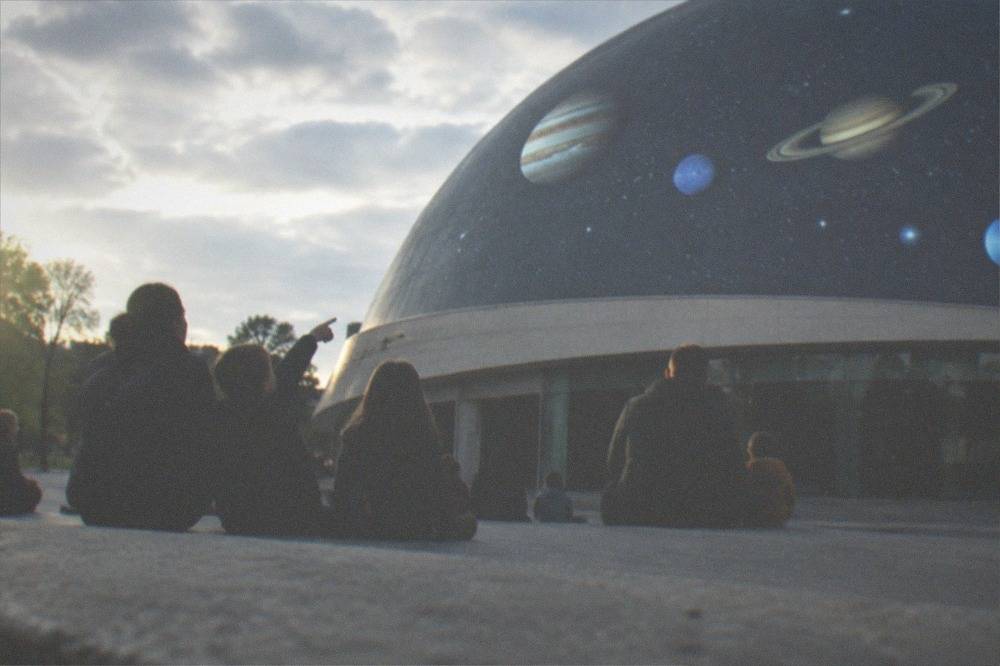
The Planetarium in Nantes offers hour-long astronomy sessions under a projection dome, with a dedicated short programme for younger children, and it costs less than a cinema ticket.
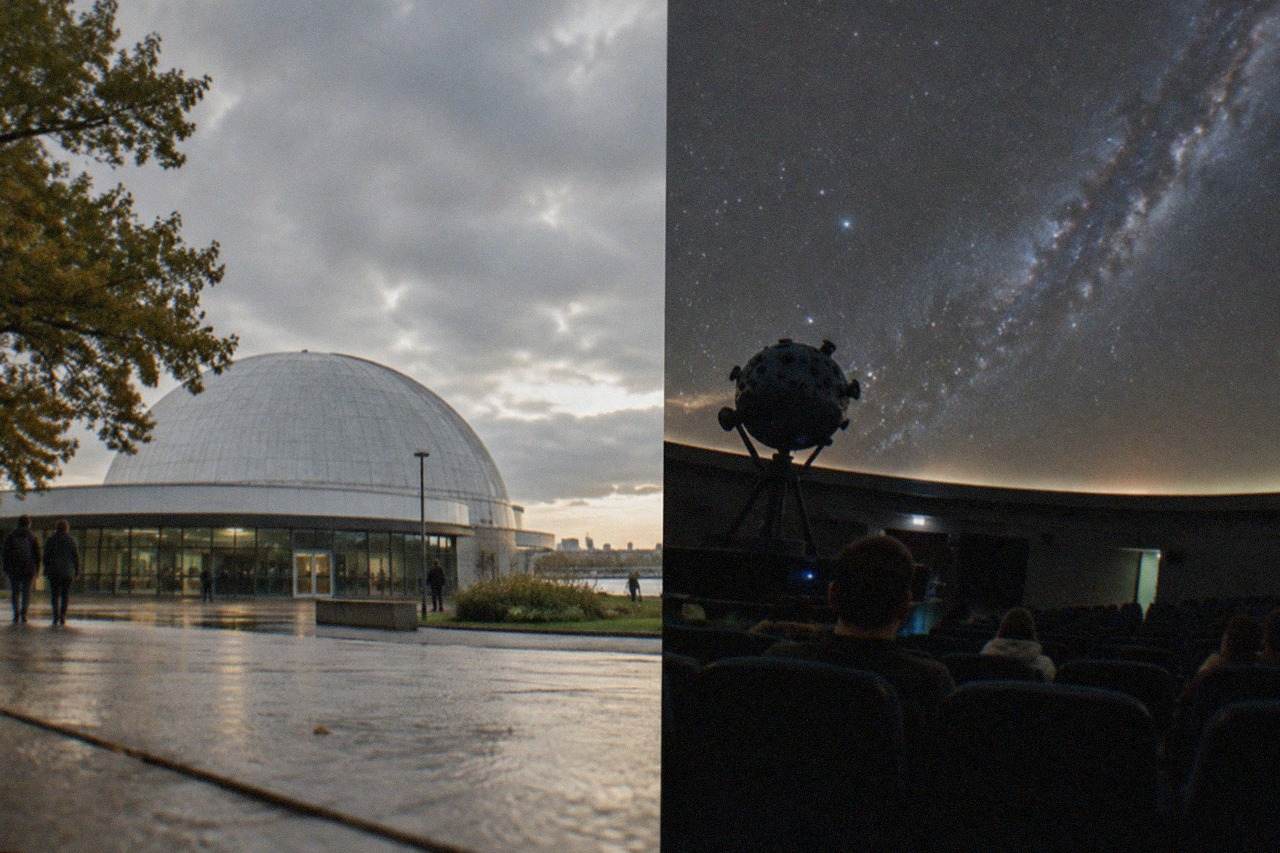
Short answer
The Planetarium in Nantes is run by Nantes Métropole and charges 7 EUR for a full-price ticket, 3 EUR reduced, with 30-minute children's sessions at 3 EUR for ages 4 to 8. Standard sessions last one hour and suit visitors aged 8 and over, making it an affordable indoor option in any weather.
The Planetarium in Nantes, a city in the Loire-Atlantique department of the Pays de la Loire region of western France, projects the night sky onto a dome for audiences who want astronomy without a telescope, a clear evening or a long drive into the countryside. It is a public, Nantes Métropole-run venue rather than a commercial attraction, and its pricing reflects that: a full-price ticket costs 7 EUR, the reduced rate is 3 EUR, and there is a shorter session built specifically for young children. For travellers planning a city break built around the Loire riverside, the Machines de l'île and the museum quarter, the planetarium is the kind of small, reliable stop that fits neatly into a rainy afternoon or a quiet morning before the larger sights open their doors. This guide lays out what the venue offers, what it costs, who it suits, and how to slot it into a wider Nantes itinerary.
What Is The Planetarium In Nantes And What Does It Show?
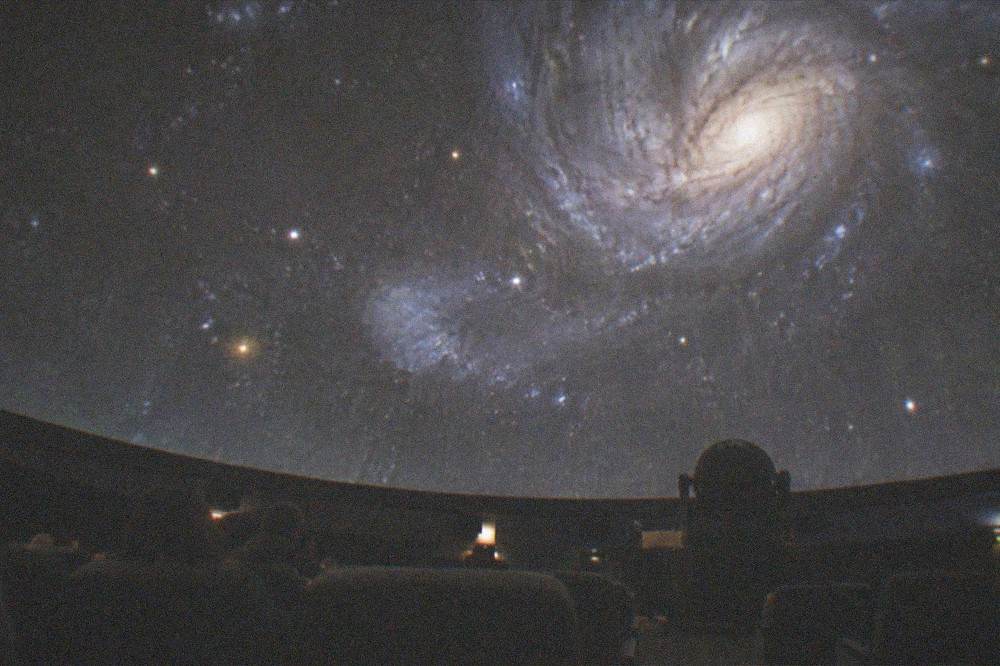
The Planetarium in Nantes is a Nantes Métropole-run dome venue presenting hour-long astronomy sessions aimed at visitors aged 8 and over, plus a separate 30-minute session designed for children aged 4 to 8. A full-price ticket costs 7 EUR and the reduced rate is 3 EUR, with the children's session also priced at 3 EUR. It belongs to the city's public cultural network rather than to the ticketed commercial attractions on the Île de Nantes.
Where Nantes's headline sights trade in mechanical elephants, castle ramparts and cathedral stone, the planetarium trades in scale. A dome session compresses the solar system, the Milky Way and the seasonal sky into an hour, which is a different order of experience from peering through a rooftop telescope and waiting for cloud cover to pass. The venue's own practical page lists the two session formats, and the split between the one-hour general programme and the half-hour children's programme is the single most useful thing to know before arriving, because it decides which members of a family can go in together.
The astronomy on offer is grounded in what visitors can actually see from French latitudes. Western France sits far enough north that summer nights stay light until late and winter nights are long, dark and often cloudy, so a dome sidesteps the Atlantic-influenced weather that makes real stargazing around Nantes a hit-and-miss affair. The region's climate is temperate oceanic, not Mediterranean: Météo-France's 1991-2020 normals for the Nantes-Bouguenais station give a yearly mean maximum of 17.1 °C and 819.5 mm of rain spread over 119.7 days with at least 1 mm of rainfall. An indoor dome guarantees the stars whatever the sky outside is doing.
Families with a strong astronomy interest often pair the planetarium with the Jules Verne thread that runs through the city. Verne was born in Nantes on 8 February 1828 at 4 rue Olivier-de-Clisson on the Île Feydeau, and his voyages Extraordinaires did as much as any French writing to popularise the idea of scientific exploration. The Jules Verne Museum in the Butte Sainte-Anne explores that heritage for a modest 4 EUR full price, and thematically it is the closest sibling the planetarium has in the city's cultural offer.
How Much Do Planetarium Nantes Tickets Cost?
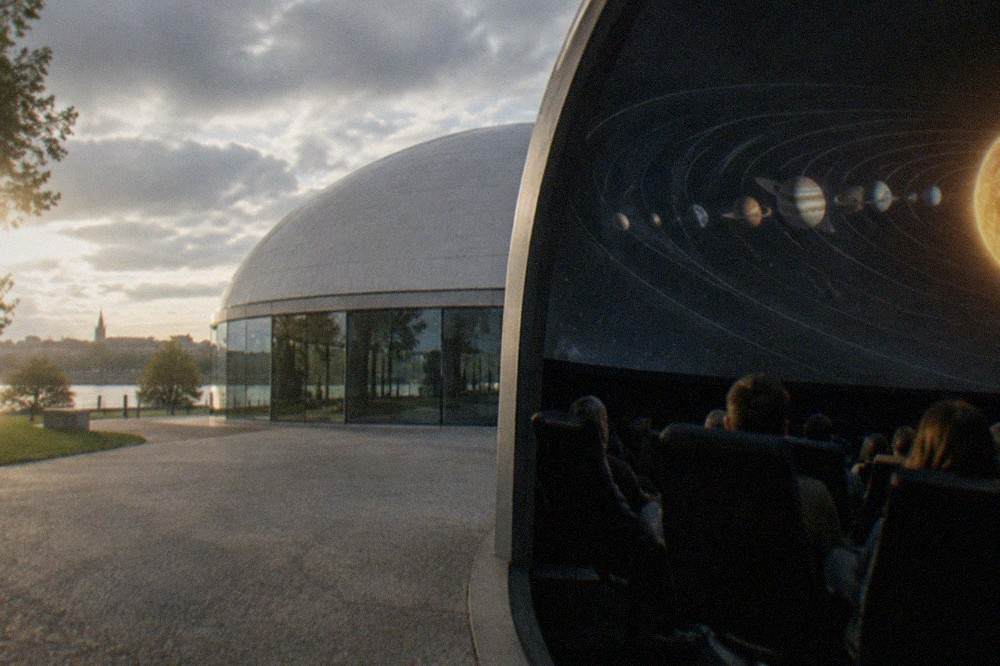
A full-price Planetarium Nantes ticket costs 7 EUR, the reduced rate is 3 EUR, and the 30-minute children's session for ages 4 to 8 costs 3 EUR per child. Standard sessions run for one hour and are aimed at visitors aged 8 and over. The planetarium is not included in the 15 EUR Pass Musées, which covers four other city museums, so a dome session is always bought on its own terms.
The pricing is simple enough to state in one breath, which is rare among Nantes attractions. The venue publishes a full tariff, a reduced tariff and a children's tariff, and there is no published combined family ticket or multi-session bundle. That stands in contrast to Les Machines de l'île across the water, where individual attractions cost 12 EUR full price and the operators sell 2-attraction and 3-attraction day packages at 20 EUR and 29 EUR respectively. The planetarium is a single-product venue: one dome, one session, one ticket.
| Ticket type | Price | What it covers |
|---|---|---|
| Full price | 7 EUR | One-hour session, ages 8 and over |
| Reduced | 3 EUR | One-hour session at the concession rate |
| Children's session | 3 EUR | 30-minute session for ages 4 to 8 |
| Session format | Length | Recommended ages | Price |
|---|---|---|---|
| Standard programme | 1 hour | 8 and over | 7 EUR full, 3 EUR reduced |
| Children's programme | 30 minutes | 4 to 8 | 3 EUR |
Two practical points follow from those tables. First, the children's session is the cheapest structured cultural activity of its kind in the city's paid offer, undercutting even the 4 EUR Musée Jules Verne. Second, the one-hour format means a planetarium visit is a genuine filler between two larger commitments: a morning at the Château des ducs de Bretagne museum and an afternoon on the Île de Nantes, for example, leaves exactly the kind of 90-minute window a dome session fills.
For visitors who prefer structure to spontaneity, the city can also be explored with a guided or self-guided format booked in advance. The trio below covers three complementary angles: a self-paced city walk, the cathedral, and a half-day trip into the Muscadet vineyards that surround the city.
Is The Planetarium In Nantes Good For Children?
Yes: the Planetarium in Nantes runs a dedicated 30-minute session for children aged 4 to 8 at 3 EUR each, while the hour-long programme is built for visitors aged 8 and over, including teenagers encountering astronomy at school. The reduced 3 EUR rate applies to the standard session for qualifying visitors. The short session exists precisely because an hour in a dark dome is a long ask for a four-year-old, and the venue programmes around that.
The age split is the whole game for families. Many planetariums across Europe run a single show and leave parents to judge whether their children will sit through it; Nantes instead offers a genuinely shorter format for the youngest audience, at a third of the length of the standard session. For visiting families this removes the most common failure mode of a dome visit, which is a pre-school child losing interest forty minutes into a one-hour projection.
Nantes as a whole is a strong city for this age range, which is worth knowing if the planetarium is one stop in a longer stay. The Machines de l'île, a short tram ride away, is the headline family sight, and the Jardin des Plantes is a free botanical garden that works as an open-ended run-around between structured activities. The green line painted through the city by Le Voyage à Nantes, roughly 20 km long, turns a simple walk between these places into a treasure hunt for children who like following a trail.
For a fuller view of how the city handles younger visitors, the site's dedicated guide to Nantes with kids covers the family angle in depth, and the general city roster lists the full range of sights. The planetarium's own niche is the rainy day and the wind-down: it is calm, seated, dark and short, which makes it a natural end-of-day activity when legs are tired.
If you are building a family itinerary around the visit, a self-guided walking format is one of the most flexible companions, because it can be paused, skipped and resumed around session times and nap schedules rather than the fixed departure of a group tour.
That flexibility is the quiet advantage of a self-guided format: a dome session published on the venue's calendar becomes a fixed point, and everything around it bends to fit, which is exactly how a relaxed family day in Nantes tends to be assembled.
How Long Is A Visit And When Is The Best Time To Go?
A Planetarium Nantes session lasts one hour for the standard programme and 30 minutes for the children's session, so a realistic visit runs to roughly ninety minutes once arrival time is included. The venue is indoor and weather-independent, in a city with 819.5 mm of rain a year falling on 119.7 days, so any month works. Session times vary by the venue's own calendar, which is the page to check before travelling.
Length is the planetarium's most underrated quality. The big sights of Nantes reward half-days: the château museum holds 32 rooms and more than 1,150 objects, and the Machines de l'île rewards a whole morning if you queue for the Grand Éléphant. A dome session is over in an hour or half an hour, which makes it the easiest thing in the city to drop into a schedule without reorganising everything else. The full index of guides sits on Nantes Travel Guide.
On timing within the year, the honest answer is that the planetarium has no season. That is not true of the city around it. July and August bring the longest opening hours at the major museums, the summer edition of Le Voyage à Nantes, which ran 4 July to 6 September 2026 for its fifteenth edition, and the warmest weather, with mean daily maxima of 25.1 °C and 25.4 °C in those months. They also bring the thinnest availability at the most popular attractions. The shoulder months of April, May, September and October offer a calmer city, and Nantes's oceanic climate keeps even winter visits workable, with January's mean maximum at 9.3 °C.
| Month | Mean daily maximum | Mean daily minimum | Rainfall |
|---|---|---|---|
| January | 9.3 °C | 3.4 °C | 87.9 mm |
| April | 16.2 °C | 6.6 °C | 58.3 mm |
| July | 25.1 °C | 14.3 °C | 44.2 mm |
| October | 17.6 °C | 9.5 °C | 88.8 mm |
The figures come from Météo-France's 1991-2020 normals for the Nantes-Bouguenais station, and they tell the usual story of a French Atlantic city: mild, rarely extreme, damp in winter and surprisingly dry in high summer, when July averages just 44.2 mm of rain. Recent years have pushed against those averages. A June 2026 heatwave set a new all-time station record of 42.2 °C on 24 June 2026, beating the previous record of 42.0 °C from 18 July 2022. None of that touches a domed, climate-controlled venue, which is precisely the point: on the day the heat or the rain rules out the riverside, the dome still runs.
Getting to the venue is straightforward on the city's public network. A single Naolib ticket costs 1.80 EUR and is valid for one hour across trams, buses and the Navibus river shuttles, while a 24-hour ticket costs 6.80 EUR, or 15 EUR for a 24-hour ticket covering four people travelling together. Better still, the whole Naolib network is free for everyone from 00:00 on Saturday to 23:59 on Sunday, a policy in place since 2021, with one exception worth remembering: the 10 EUR airport shuttle is excluded from the weekend free travel and always costs 10 EUR.
| Naolib option | Price | Notes |
|---|---|---|
| Single 1-hour ticket | 1.80 EUR | Trams, buses, Navibus, TER within the métropole |
| 24-hour ticket | 6.80 EUR | One person |
| 24-hour ticket, 4 people | 15 EUR | Group travel |
| Weekend travel | Free | Saturdays and Sundays, everyone; airport shuttle excluded |
What Else Is Near The Planetarium In Nantes?
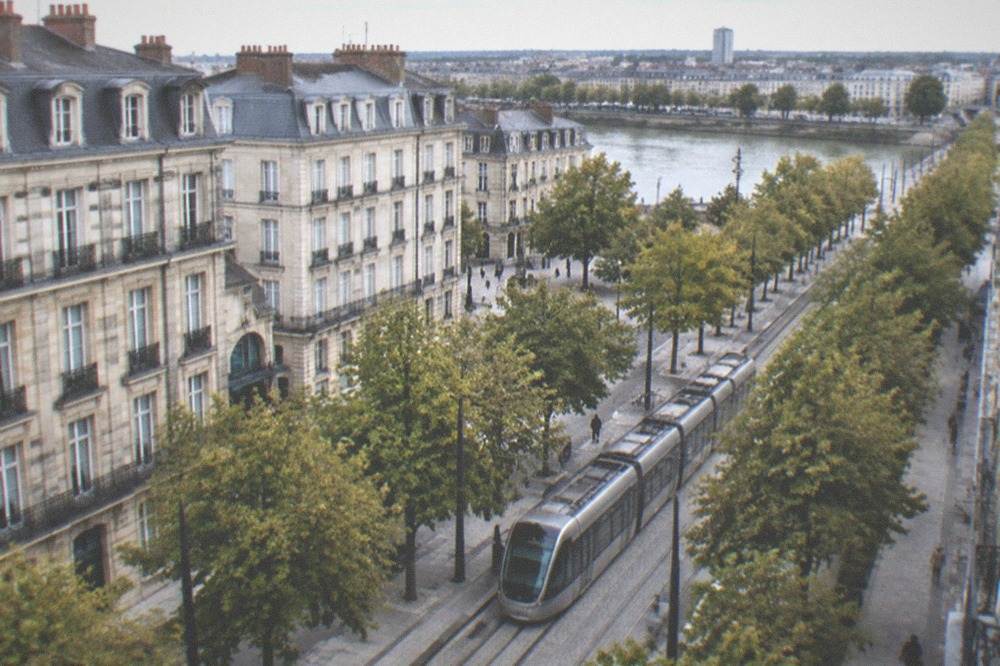
The Planetarium in Nantes belongs to the city's museum quarter cluster, whose flagship sights include the Musée d'arts de Nantes at 9 EUR full price, the Musée Jules Verne at 4 EUR and the Musée d'histoire de Nantes inside the Château des ducs de Bretagne at 9 EUR, all reachable on the same tram-and-bus network for the price of a 1.80 EUR single ticket. The cathedral is free, as are the Jardin des Plantes and the Mémorial de l'abolition de l'esclavage.
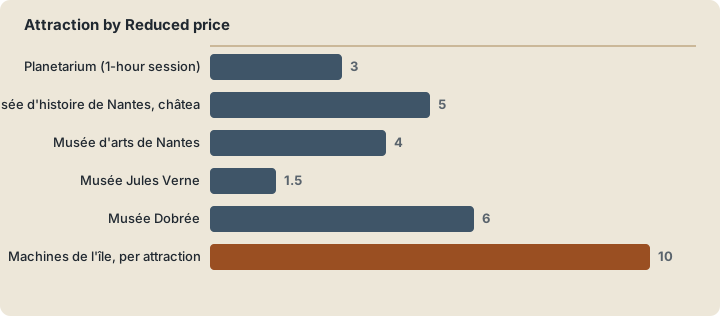
Building a half-day around the dome is easy because Nantes is compact and its paid culture is affordable. The table below gathers the entry prices for the venues most likely to share an itinerary with the planetarium, so a family or a couple can see at a glance where the money goes.
| Attraction | Full price | Reduced price | Free conditions |
|---|---|---|---|
| Planetarium (1-hour session) | 7 EUR | 3 EUR | Not listed as free for any category |
| Musée d'histoire de Nantes, château | 9 EUR | 5 EUR | Under 18s; first Sunday monthly, Sept to June |
| Musée d'arts de Nantes | 9 EUR | 4 EUR | Under 18s; Thursdays 19:00 to 21:00 |
| Musée Jules Verne | 4 EUR | 1.50 EUR | First Sunday monthly, Sept to June |
| Musée Dobrée | 9 EUR | 6 EUR | Under 26s; Pass Nantes holders |
| Machines de l'île, per attraction | 12 EUR | 10 EUR | Under 4s |
| Nantes Cathedral | Free | Free entry | Free for all |
| Jardin des Plantes | Free | Free entry | Free for all |
A note of caution on one item in that table: the Muséum d'histoire naturelle, which would once have been the planetarium's closest thematic partner, is closed for major works and is not due to reopen until 2029, having shut in November 2025. Its public programme continues through pop-up exhibitions across the metropolitan area, but the building itself is off the itinerary for several years, and no guide should send a science-minded family there expecting a visit. The natural history museum page on this site covers the closure in detail.
For a fuller sightseeing plan, the one day in Nantes and three days in Nantes itineraries sequence the city's highlights, and the rainy day in Nantes guide is the natural companion piece to this one, since the dome is among the best covered options in the city when the Atlantic weather arrives.
The museum quarter also rewards an evening. The Musée d'arts de Nantes runs a Thursday nocturne until 21:00, with free entry in the final two hours from 19:00, and the cathedral partially reopened on 27 September 2025 after the 2020 fire and remains free to enter, with full reopening planned for 2028. A day that pairs a planetarium session with a Thursday-evening gallery visit costs remarkably little for a city of this size.
Can You Visit The Planetarium With A Pass Nantes Or Pass Musées?
No: the planetarium is not among the partners of either pass. The 15 EUR Pass Musées covers unlimited annual access to the Musée d'arts, the Musée d'histoire de Nantes at the château, the Musée Jules Verne and the Chronographe in Rezé, while the Pass Nantes covers transport plus the château museum, the Galerie des Machines and the Carrousel des Mondes Marins. A dome session must be paid for separately at the venue's own prices.
This matters because both passes are genuinely good value for some visitors, and it is easy to assume a public planetarium would be folded into one of them. The Pass Nantes, priced from 30 EUR for 24 hours up to 75 EUR for seven days at the full rate valid from 1 April 2026, bundles unlimited Naolib travel, one airport-shuttle return trip, a TER return to Clisson and single entries to partner sites. It is the right buy for a packed two or three days centred on the big sights. It is not the right buy for a visitor whose main target is the dome.
| Pass | Price | What it includes | Planetarium included? |
|---|---|---|---|
| Pass Musées | 15 EUR, 1 year | Musée d'arts, château museum, Musée Jules Verne, Chronographe | No |
| Pass Nantes 24 h | 30 EUR full, 20 EUR reduced | Transport, airport shuttle return, château museum, Galerie, Carrousel | No |
| Pass Nantes 48 h | 40 EUR full, 26 EUR reduced | As above, longer duration | No |
| Pass Nantes 72 h | 49 EUR full, 31 EUR reduced | As above, longer duration | No |
| Pass Nantes 7 days | 75 EUR full, 45 EUR reduced | As above, longest duration | No |
The practical conclusion is that the planetarium should be planned as an add-on rather than as the anchor of a pass purchase. A family with two full days in the city and a taste for the Machines, the château and the vineyards will do well on a 48-hour Pass Nantes; the same family should simply pay the 7 EUR and 3 EUR at the dome on the day. Visitors staying longer, or living within reach, get better value from the Pass Musées, which at 15 EUR pays for itself in two museum visits and then keeps giving for a year, with the caveat that it excludes the Muséum d'histoire naturelle while that venue is closed.
For a sense of how the pieces fit across a week, the Le Voyage à Nantes guide covers the summer art trail that threads the whole city together, and the Pass Nantes guide runs the arithmetic on each pass duration in detail.
One thing the passes and the dome have in common is that neither is affected by Nantes's hotel levy, the taxe de séjour, which travellers pay separately through their accommodation. Reported 2026 rates run at 2.86 EUR per person per night for a 4-star hotel and 1.87 EUR for a 3-star, figures carried by accommodation-tax sources rather than printed here as bare official tariffs.
How Does The Planetarium Compare With Nantes's Other Indoor Options?
The Planetarium in Nantes is the city's cheapest timed indoor session at 7 EUR full price, and its 3 EUR children's programme undercuts every other paid cultural activity in the city, making it the strongest value option for families. Against the 9 EUR museums and the 12 EUR Machines attractions it offers the shortest commitment at one hour or 30 minutes, which suits tired legs, tight schedules and poor weather better than any of them.
Value in Nantes is a question of time as much as money. The château museum and the Musée d'arts are richer collections, but each asks for a half-day to do properly. Les Machines de l'île is unmissable spectacle, but a full package of three attractions at 29 EUR is a whole-day proposition, and the Grand Éléphant pauses for maintenance from 2 November 2026 to 28 February 2027, which is worth knowing for winter visitors. The dome asks for an hour, delivers a complete experience, and leaves the rest of the day intact.
It also fills a gap the other venues do not: science. Nantes's cultural strengths are history, art and mechanical theatre, from the slave-trade history at the Mémorial de l'abolition de l'esclavage to the old LU biscuit factory now housing Le Lieu Unique. Astronomy is the planetarium's alone, and for a child who has just learned the planets at school, or an adult who has never knowingly seen the Milky Way, that difference is the reason to go.
If the dome session leaves you wanting more of the city's engineered wonders, the Machines de l'île and the Carrousel des Mondes Marins pages cover the island's attractions, and a guided tour can stitch several stops into one booked afternoon. The selection below pulls together three options that pair naturally with an independent dome visit.
For travellers who want a deeper dive into the Muscadet country that begins at the city's edge, a half-day vineyard tour is the most direct route from stargazing to wine tasting, since the Muscadet appellation sits immediately south-east of the city around Vallet.
And for those who would rather stay under the city's roofs, the cathedral makes a free companion piece to the dome on any day the weather turns, with its own long restoration story documented on the Nantes Cathedral page.
Common Questions About The Planetarium In Nantes
How Much Do Planetarium Nantes Tickets Cost?
A full-price ticket costs 7 EUR, the reduced rate is 3 EUR, and the 30-minute children's session for ages 4 to 8 costs 3 EUR. The standard session lasts one hour and is aimed at visitors aged 8 and over. The planetarium is not included in the Pass Musées or the Pass Nantes, so tickets are bought separately for each visit.
Is The Planetarium In Nantes Good For Children?
Yes. The venue runs a dedicated 30-minute session for children aged 4 to 8 at 3 EUR, alongside the one-hour programme built for ages 8 and over. The short format exists because an hour in a dark dome is a long ask for the youngest visitors, and the children's programme is the cheapest paid cultural session in the city.
How Long Is A Visit To The Planetarium In Nantes?
A standard session lasts one hour and the children's session lasts 30 minutes, so a realistic visit runs to about ninety minutes once arrival time is included. Session times follow the venue's own calendar, so check the planetarium's practical information page for the day's programme before travelling.
Can You Visit The Planetarium With A Pass Nantes Or Pass Musées?
No. The Pass Musées at 15 EUR covers the Musée d'arts, the château museum, the Musée Jules Verne and the Chronographe, while the Pass Nantes covers transport plus the château museum, the Galerie des Machines and the Carrousel. Neither pass lists the planetarium among its partners, so dome tickets are always paid separately.
When Is The Best Time Of Year To Visit The Planetarium In Nantes?
Any month works, because the venue is indoor and weather-independent. July and August are the warmest months, averaging 25.1 °C and 25.4 °C daily maxima, while the shoulder months of April, May, September and October bring a calmer city. In a destination with 819.5 mm of annual rain spread over 119.7 wet days, the dome is a reliable option whenever the weather turns.
The Planetarium in Nantes is never going to head a list of the city's sights, and that is exactly its use: it is the short, cheap, dry, child-aware session you slot between the château and the Machines when the sky over the Loire turns grey. Buy the 3 EUR children's slot for the small ones, take the full hour yourself, and walk out into whatever weather the Atlantic has decided on, knowing the stars have already been seen.