3 Days In Nantes
Three days is enough to cover Nantes, in the Loire-Atlantique department of the Pays de la Loire region in western France, at a pace that leaves room for the river, the machines and the food.
Short answer
Spend day one on the historic centre and the Château des ducs de Bretagne, day two on the Île de Nantes and the Machines de l'île with an evening in Trentemoult, and day three along the Erdre and in the museums around Graslin. Buy a 72-hour Pass Nantes if you plan to use the trams and the main museums heavily, and remember the Muséum d'histoire naturelle is closed until 2029 and the cathedral's west facade is still under scaffolding.
Nantes rewards exactly this much time: the city in the Loire-Atlantique department, in the Pays de la Loire region of western France, splits naturally into three acts, the historic centre around the Château des ducs de Bretagne and Bouffay, the former shipyard island with its mechanical elephant, and the green river world of the Erdre and the south-bank village of Trentemoult. Seventy-two hours lets you move at French city pace rather than checklist pace, with a market morning, a long lunch and an evening by the Loire built into the plan rather than squeezed out of it.
The itinerary below assumes arrival the evening before day one, or an early start from the train station. Everything in it is reachable on foot or by tram: the Naolib network runs three tram lines, a busway and the Navibus river shuttles, and the whole network is free every weekend from Saturday 00:00 to Sunday 23:59, a scheme in place since 2021. The one thing to remember before planning is that two Nantes institutions are not currently available: the Muséum d'histoire naturelle is closed for works until 2029, and the cathedral, which partially reopened on 27 September 2025, still has its west facade under scaffolding, with full completion planned for 2028.
How Should You Structure 3 Days In Nantes?
The strongest structure for 3 days in Nantes is thematic rather than geographical: day one for the historic core of Bouffay, the cathedral and the Château des ducs de Bretagne museum, day two for the Île de Nantes, the Machines de l'île and an evening crossing to Trentemoult, and day three for the Erdre river, the Jardin des Plantes and the museums around Graslin. This order also matches the city's own rhythm, because the island attractions run on timed tickets best booked ahead, while the historic centre and the parks can absorb whatever pace the weather allows, and the Graslin museums stay open late on Thursday evenings.
Each day below is written as a full day, roughly nine in the morning to nine at night, but every block is detachable. If you only have two days, the full guide to two days in Nantes trims this plan down, and the question of how many days Nantes deserves has its own short answer on this site. The short version: one day covers the château and the elephant, two days add the island and one museum, three days add the river and the food scene without rushing any of it.
| Day | Theme | Anchor sights | Main cost of the day |
|---|---|---|---|
| Day 1 | Historic centre | Bouffay, cathedral, Château des ducs de Bretagne, Passage Pommeraye | Museum entry 9 EUR |
| Day 2 | Island and machines | Machines de l'île, Hangar à Bananes, Trentemoult | Machines attractions 12 EUR each |
| Day 3 | River and museums | Erdre, Jardin des Plantes, Musée d'arts, Musée Dobrée | One or two museum entries |
One practical note that shapes the whole plan: the Graslin museums each close one weekday. The Château des ducs de Bretagne museum closes on Mondays, the Musée d'arts closes on Tuesdays, and the Musée Jules Verne also closes on Tuesdays. Slot your museum days around those closures rather than discovering them at the door.
Day 1 In Nantes: Bouffay, The Cathedral And The Château
Day one belongs to the old city: start in the Bouffay quarter, Nantes' medieval core, walk to the Cathedral Saint-Pierre-et-Saint-Paul, then give the Château des ducs de Bretagne and its Musée d'histoire de Nantes the biggest block of the day, before finishing with the Passage Pommeraye and Place Royale. The cathedral is free to enter and has been partially open again since 27 September 2025, though the west facade remains behind scaffolding and full reopening is planned for 2028. Its gothic rebuild began in 1434 and the works took 457 years to complete.
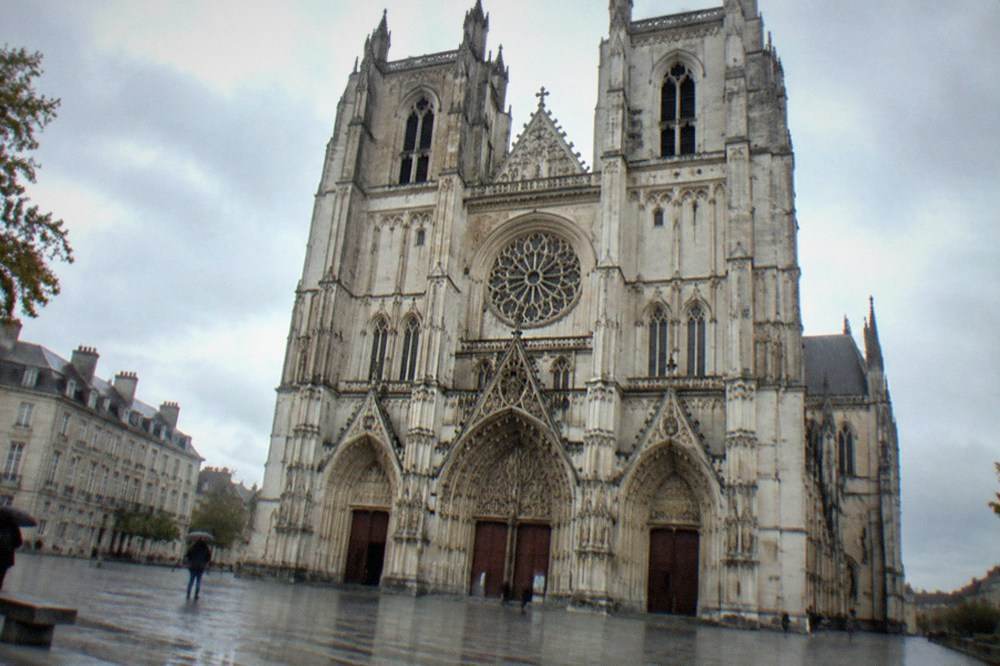
Begin in Bouffay, the old town, the quarter around the place du Bouffay where the medieval city started. The streets here are narrow, half pedestrianised, and lined with crêperies and biscuit shops. From there it is a short walk to the cathedral. Its full story, including the 2020 fire and the long restoration, is covered in the cathedral guide; for the itinerary, what matters is that entry is free, the nave and choir are open, and the tomb effigies of Duke Francis II and Marguerite de Foix have been visible again since around 20 February 2026, with the full tomb reinstallation expected by the end of 2026.
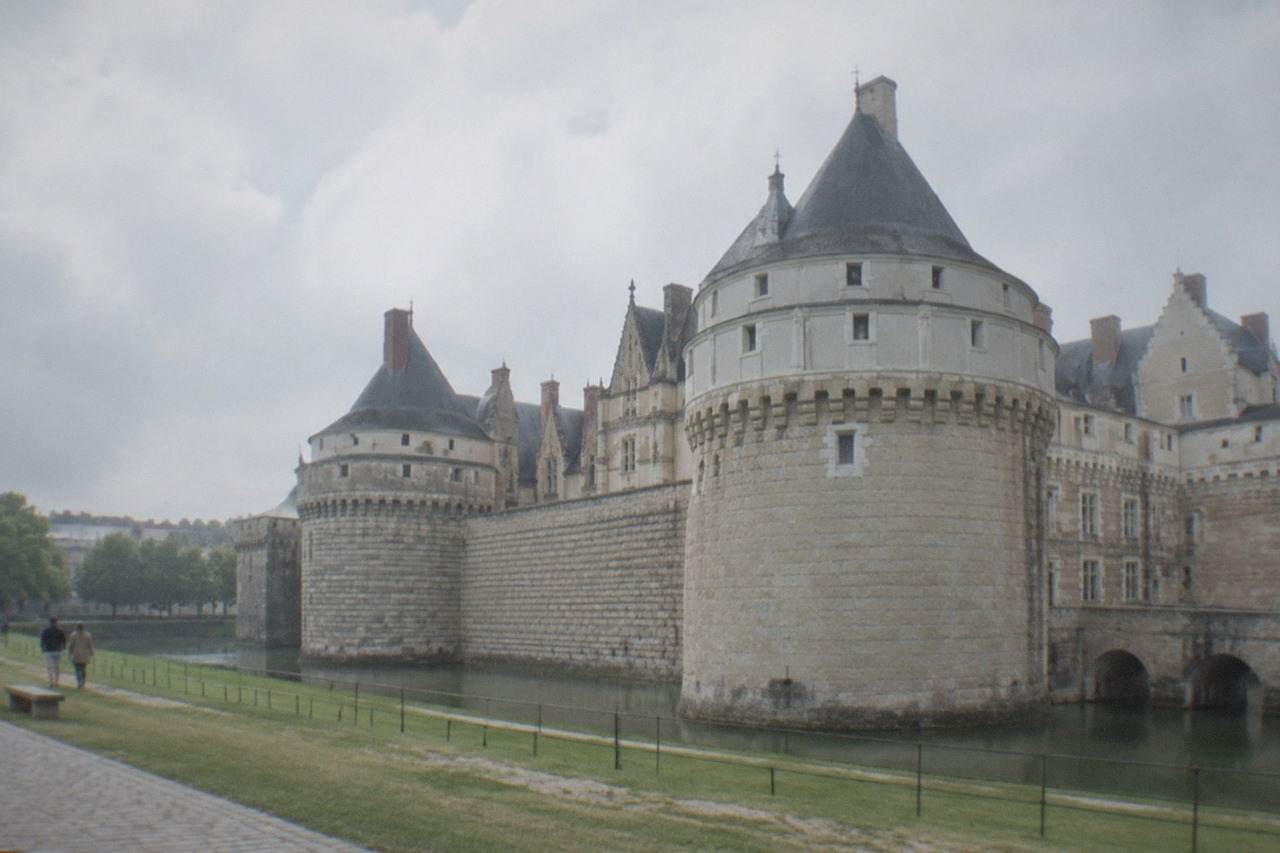
The afternoon goes to the Château des ducs de Bretagne, a fifteen-minute walk west along the Loire-side quays. The courtyard and ramparts are free and open daily 8:30 to 19:00, and the moat garden is free too. The museum inside, open 10:00 to 18:00 and closed on Mondays, holds 32 rooms and more than 1,150 objects on the city's history, including a substantial, unflinching section on the Atlantic slave trade: Nantes fitted out 1,714 of the at least 4,220 French expeditions, 43 per cent of the French trade, and withdrew from it in 1830. Full entry is 9 EUR, reduced 5 EUR, and under-18s enter free.
A first morning here can benefit from local bearings, and the ticketed options below cover the same ground in different ways. An hour with a local sets the core geography straight before you strike out alone for the rest of the three days, and the food tour in this selection is best saved for your second or third evening, once you know which quarter you want to eat in.
End the day in the 19th-century city: the Passage Pommeraye, a three-storey shopping arcade built in 1843 on a slope, unchanged since, and then Place Royale, the tidy square at the centre of the Graslin quarter. Dinner belongs in Bouffay; the full food picture, from beurre blanc to the LU Petit Beurre story, is covered elsewhere on this site, and the city's best restaurants are covered separately in depth.
Day 2 In Nantes: The Île De Nantes, Machines And Trentemoult
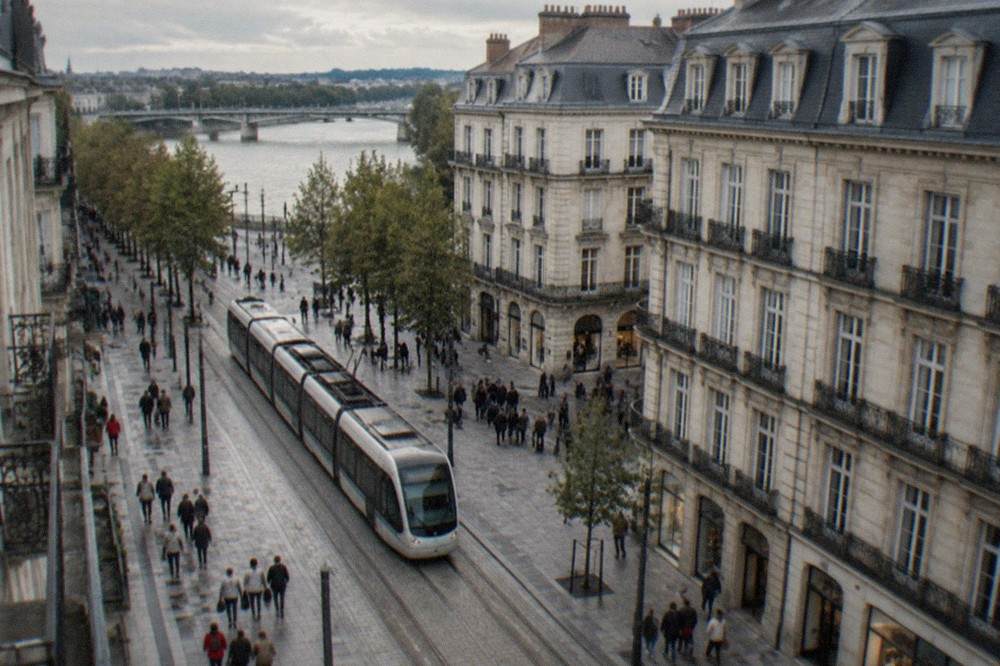
Day two crosses to the Île de Nantes, the former shipyard island in the Loire, where the Machines de l'île run the Galerie des Machines, the Carrousel des Mondes Marins and the Grand Éléphant, each priced separately at 12 EUR full fare, with the afternoon left for the Hangar à Bananes riverfront and an evening ferry to Trentemoult on the south bank. Book the elephant ride ahead, because its slots sell out. The island is reached by tram line 1 or on foot across the Loire bridges from Graslin in under half an hour.
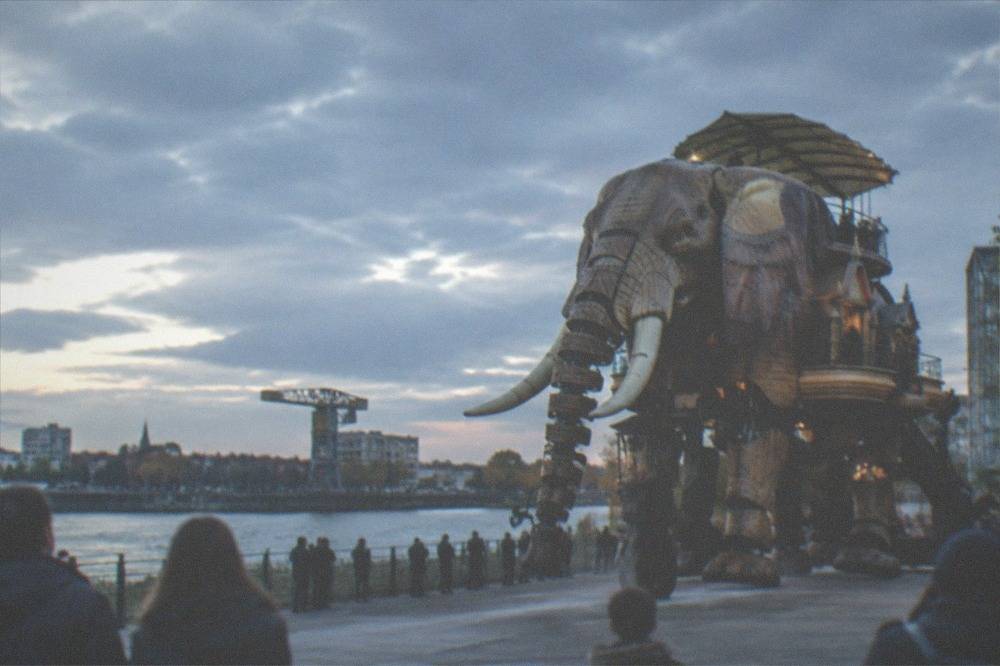
The Machines de l'île opened on 30 June 2007 with the Grand Éléphant, and the Carrousel des Mondes Marins followed in 2012. Each attraction costs 12 EUR full, 10 EUR reduced, 8 EUR for children 4 to 12, and free under 4, with a family discount of 15 per cent for groups of five and day packages at 20 EUR for two attractions or 29 EUR for three. Two maintenance windows matter for itinerary planning: the Carrousel closed 22 to 25 September 2026, and there are no elephant rides at all from 2 November 2026 to 28 February 2027. Do not plan your trip around the abandoned Arbre aux Hérons, either: Nantes Métropole dropped the project in September 2023 and only the prototype branch is visitable.
Ticketed products bundle the island's attractions with transfer and guidance, which suits visitors who would rather not coordinate trams and timed slots themselves. The product below renders the operator's live price and current availability for the island's attractions.
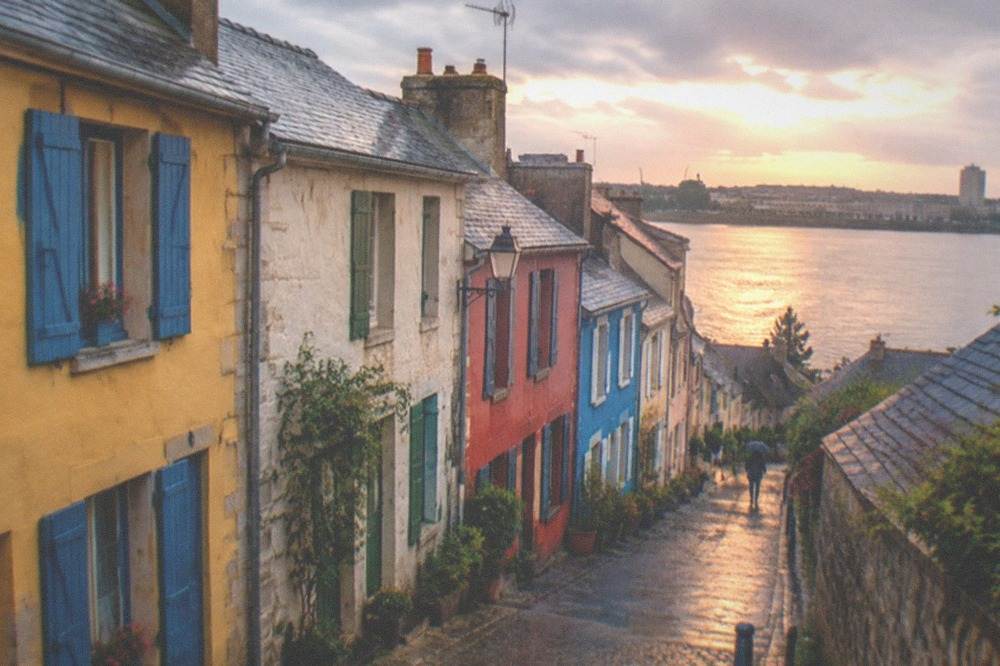
In the afternoon, walk the island's southern tip to the Hangar à Bananes, the converted banana warehouse that now holds bars, restaurants and the HAB Galerie, which ran the INTERSTELLAR exhibition from 23 May to 27 September 2026. From there, the Navibus N2 river shuttle, extended in November 2025, crosses the Loire to Trentemoult. The village of Trentemoult is a former fishing community of low houses painted in faded reds and blues, and its quays are the best place in the city for an evening drink facing the sunset over the water.
Day 3 In Nantes: The Erdre, Jardin Des Plantes And Graslin Museums
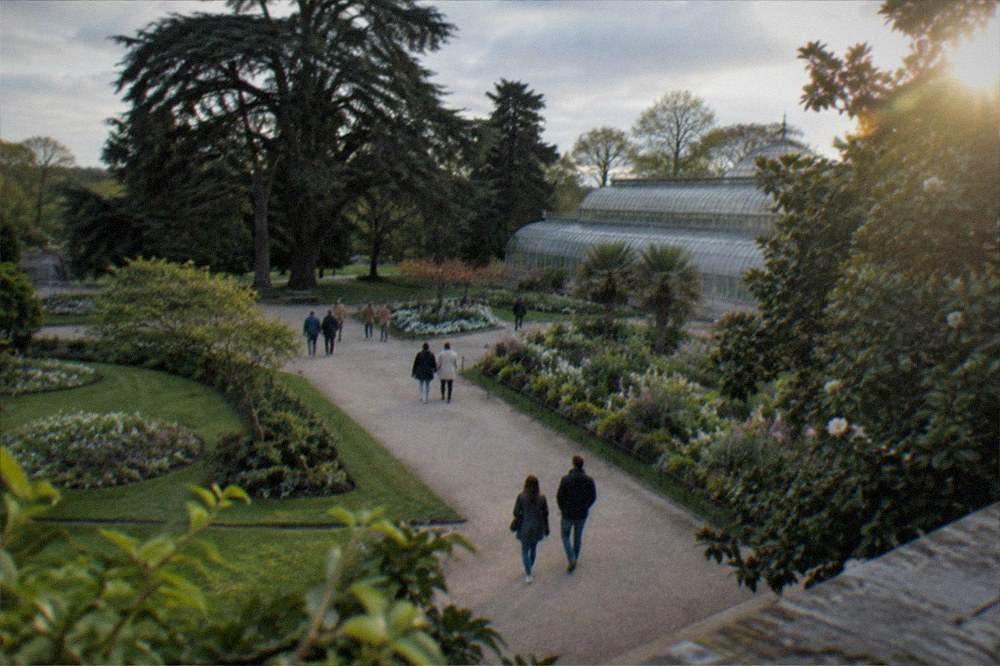
Day three is the green day: take the morning along the Erdre, the river Nantes keeps for rowing and riverside walking, spend midday in the Jardin des Plantes, one of France's finest botanical gardens, then give the afternoon to the Musée d'arts de Nantes or the Musée Dobrée, finishing with the Passage Pommeraye and the Théâtre Graslin if you did not reach them on day one. The Musée d'arts costs 9 EUR full, 4 EUR reduced, and stays free from 19:00 to 21:00 on Thursday evenings; the Musée Dobrée, reopened in May 2024 after thirteen years, costs 9 EUR full and 6 EUR reduced.
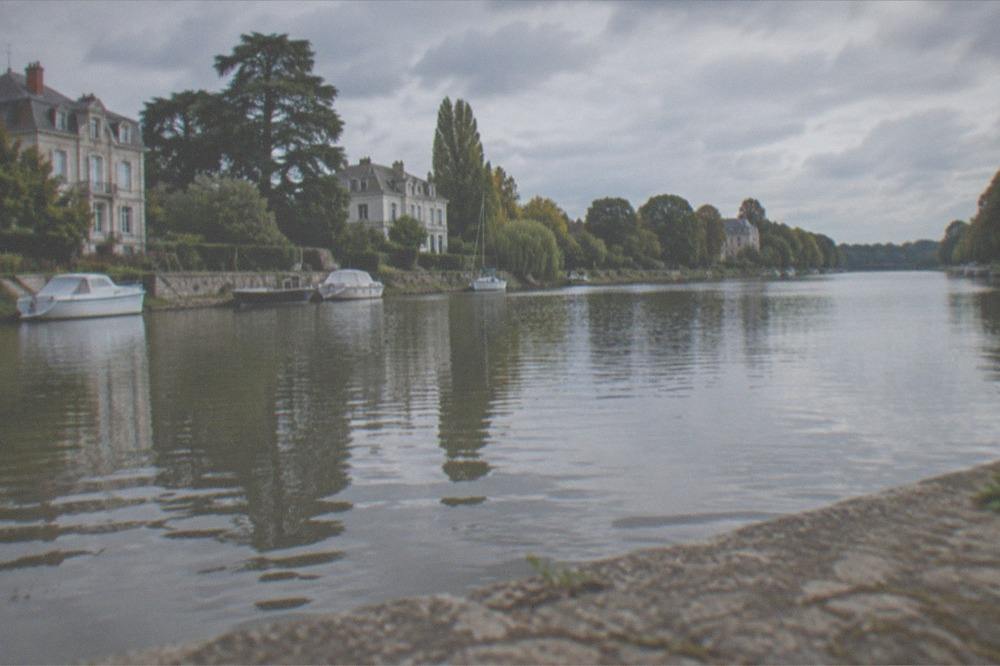
The Erdre is the quieter of Nantes' two rivers, and the best way onto it is a boat: a three-hour cruise on the Na Boa operates on the river, though the operator has not published a price. If you would rather stay ashore, the Île de Versailles, a Japanese garden on an island in the Erdre, is free to enter and open seasonally, roughly 8:30 to 17:30 in winter and later in summer.
Midday belongs to the Jardin des Plantes, a free botanical garden a short walk north of the station, followed by lunch at the Talensac market, the city's main covered market, which runs Tuesday to Friday 8:00 to 13:00 and Saturday to Sunday 8:00 to 13:30, closed Mondays except public holidays.
The afternoon split depends on your day of the week and your taste. The Musée d'arts is the stronger collection, with paintings ranging from the old masters to the present; it is open 11:00 to 19:00, closed Tuesdays, Thursdays to 21:00. The Musée Jules Verne on the Butte Sainte-Anne costs just 4 EUR, closed Tuesdays, and suits anyone who grew up on the novels: Verne was born in Nantes on 8 February 1828. A note for anyone travelling with children: the Nantes with kids guide adapts this same three-day structure for families, and the Muséum d'histoire naturelle, which once anchored rainy-day plans, is closed until 2029.
How Much Does 3 Days In Nantes Cost?
A realistic three-day budget in Nantes for sightseeing and local transport, before food and lodging, adds up from roughly three museum or attraction entries at 4 to 12 EUR each, the 12 EUR Machines attractions, and either a 72-hour Pass Nantes at 49 EUR or pay-as-you-go Naolib tickets at 1.80 EUR an hour. Cost aggregators put an inexpensive restaurant meal on the cheap end and a mid-range three-course dinner for two a clear step above it, with a pint of domestic draft beer staying inexpensive too, so food for three days adds a moderate total per person for a mix of market lunches and sit-down dinners.
The attraction prices below are the verified till prices for the main entries in this itinerary. Everything bookable through a tour platform renders its own live price in the product cards on this site, and those platform figures are never mixed with the EUR till prices in this table.
| Sight or attraction | Full price | Reduced | Free conditions |
|---|---|---|---|
| Château des ducs de Bretagne museum | 9 EUR | 5 EUR | Under-18s; first Sunday monthly Sept-June |
| Musée d'arts de Nantes | 9 EUR | 4 EUR | Under-18s; Thursdays 19:00-21:00 |
| Machines de l'île, per attraction | 12 EUR | 10 EUR | Under-4s |
| Musée Jules Verne | 4 EUR | 1.50 EUR | First Sunday monthly Sept-June |
| Musée Dobrée | 9 EUR | 6 EUR | Under-26s |
| Cathedral, Mémorial, Jardin des Plantes, Passage Pommeraye | Free | Free | Always |
Local transport is the second line of the budget. A one-hour Naolib ticket is 1.80 EUR, a 24-hour ticket is 6.80 EUR, and a 24-hour ticket for four people travelling together is 15 EUR. The ten-trip carnet runs 17.80 EUR. If your three days fall over a weekend, the whole network is free from Saturday 00:00 to Sunday 23:59, with one exception: the airport shuttle always costs 10 EUR and is excluded from the weekend scheme.
| Transport | Price | Notes |
|---|---|---|
| Naolib single ticket, 1 h | 1.80 EUR | Tram, bus, Navibus, TER within the métropole |
| 24 h ticket | 6.80 EUR | One person |
| 24 h ticket, 4 people | 15 EUR | Group travel |
| 10 x 1 h tickets | 17.80 EUR | Carnet |
| Weekend network | Free | Sat 00:00 to Sun 23:59, since 2021 |
| Airport shuttle | 10 EUR | Always charged, valid 1 h on the network |
Accommodation is the variable with the widest range, and the where-to-stay question has its own guide on this site. One cost that surprises visitors is the tourist tax, charged per person per night and tiered by hotel rating: reported 2026 rates run at 2.86 EUR for a four-star hotel, 1.87 EUR for three stars and 1.10 EUR for two stars, collected by the accommodation provider rather than paid at a desk.
Is The Nantes CityPass Worth It For 3 Days?
The 72-hour Pass Nantes at 49 EUR full fare is usually worth buying for this exact itinerary, because it includes unlimited Naolib transport, one airport shuttle return, a TER return to Clisson, and one entry each to the château museum, the Galerie des Machines and the Carrousel des Mondes Marins, which would cost more bought separately once you add even a few tram trips across three days. The catch is the Grand Éléphant: the pass covers the Galerie and the Carrousel, but the elephant ride is excluded, so budget 12 EUR extra if riding it matters to you.
The full 2026 price ladder, valid from 1 April 2026, is below. Reduced rates apply to children 4 to 17, students under 26 and disability card holders; the family rate covers two adults and two children, with the second child's pass free.
| Duration | Full | Reduced | Family |
|---|---|---|---|
| 24 h | 30 EUR | 20 EUR | 80 EUR |
| 48 h | 40 EUR | 26 EUR | 106 EUR |
| 72 h | 49 EUR | 31 EUR | 129 EUR |
| 7 days | 75 EUR | 45 EUR | 195 EUR |
For a longer stay or a slower traveller, the 7-day pass at 75 EUR compares well. There is also a separate Pass Musées at 15 EUR, a full year of unlimited entry to the Musée d'arts, the château museum, the Musée Jules Verne and the Chronographe in Rezé, which only beats single tickets if you will return to the museums more than twice, an unlikely pattern on a three-day trip.
The pass can also be bought as a bundled product with support for picking it up and using it, and the product below renders the operator's live price.
Should You Add A Day Trip On One Of Your 3 Days In Nantes?
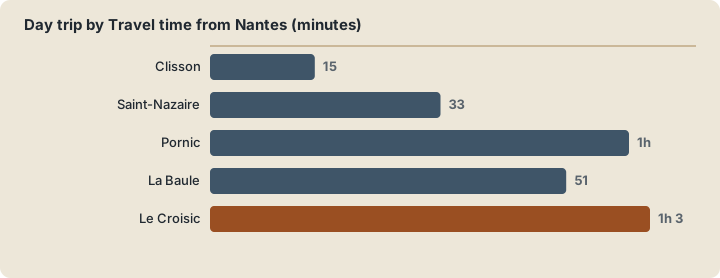
Nantes sits close enough to the coast and the vineyards that many three-day visitors trade the third museum day for a half-day trip, with Clisson the easiest swap at roughly 15 to 23 minutes each way by TER train, its return journey included in the Pass Nantes, and the Muscadet vineyards, Guérande's salt marshes and the beach at La Baule all reachable in about an hour. If your three days fall in summer, the trade is tempting; if they fall in a rainy November week, keep the museums and read the rainy day in Nantes plan instead.
| Day trip | Travel time from Nantes | What it offers |
|---|---|---|
| Clisson | About 15-23 min by TER | Italianate château town, wineries |
| Saint-Nazaire | About 33 min by TER | Escal'Atlantic liner museum, submarine base |
| Pornic | About 1 h by TER | Seaside port and castle |
| La Baule | About 51 min by TER | Long beach resort |
| Le Croisic | About 1 h 03 by TER | Old port, oyster beds, rocky coast |
The day trips guide covers all of these in detail, and the dedicated page for Clisson goes deeper. A wine day in Muscadet country, with a tasting built around the Melon de Bourgogne grape, is the most itinerary-friendly swap, because the vineyards sit between the city and Clisson and combine naturally into one loop.
Common Questions About 3 Days In Nantes
Is 3 days in Nantes enough?
Three days is enough to see the historic centre, the Machines de l'île, two or three museums and both rivers without rushing. It is not enough to add the coast or Puy du Fou; those need a fourth day.
What is the best order for 3 days in Nantes?
Put the historic centre and the château on day one, the Île de Nantes and the Machines de l'île on day two, and the Erdre plus the Graslin museums on day three. This order matches the museums' closure days to flexible days and puts the timed-ticket island attractions on the day you can book ahead.
Do you need a car for 3 days in Nantes?
No. Every sight in this itinerary is reachable on foot, by tram or by the Navibus river shuttles, and the airport is served by a 10 EUR shuttle bus running every 20 minutes from April to October. A car only helps if you trade a city day for vineyards or the coast, and even then the TER trains reach Clisson in about 15 to 23 minutes.
What should you skip if you only have 2 days in Nantes?
Cut the Erdre and one museum day, keeping the château, the cathedral, the Machines de l'île and one evening in Trentemoult. The two-day itinerary on this site makes exactly those cuts.
Is Nantes expensive for 3 days?
By French city standards, no. Sightseeing and transport for three days remain inexpensive by French city standards, an inexpensive meal is easy to find per the current cost aggregators, and several anchor sights, including the cathedral, the Mémorial, the Jardin des Plantes and the château courtyard, cost nothing at all.
When is the best time to spend 3 days in Nantes?
Late spring and early autumn suit the outdoor parts of this plan best; the best time to visit Nantes guide covers the trade-offs. The city's climate is temperate oceanic, with mean maximums from 9.3 C in January to 25.4 C in August and 819.5 mm of rain a year, so pack a light rain layer in any season.
Three days in Nantes, planned in the order above, costs less than a comparable stay in Paris and covers more ground per day, because the tram, the river shuttles and the free weekend network compress the distances. If a fourth day ever appears on your calendar, the Loire Valley and Brittany road trips both start from the city, and this site, Nantes Travel Guide, carries the full shelf of them.