Nantes Food Tour
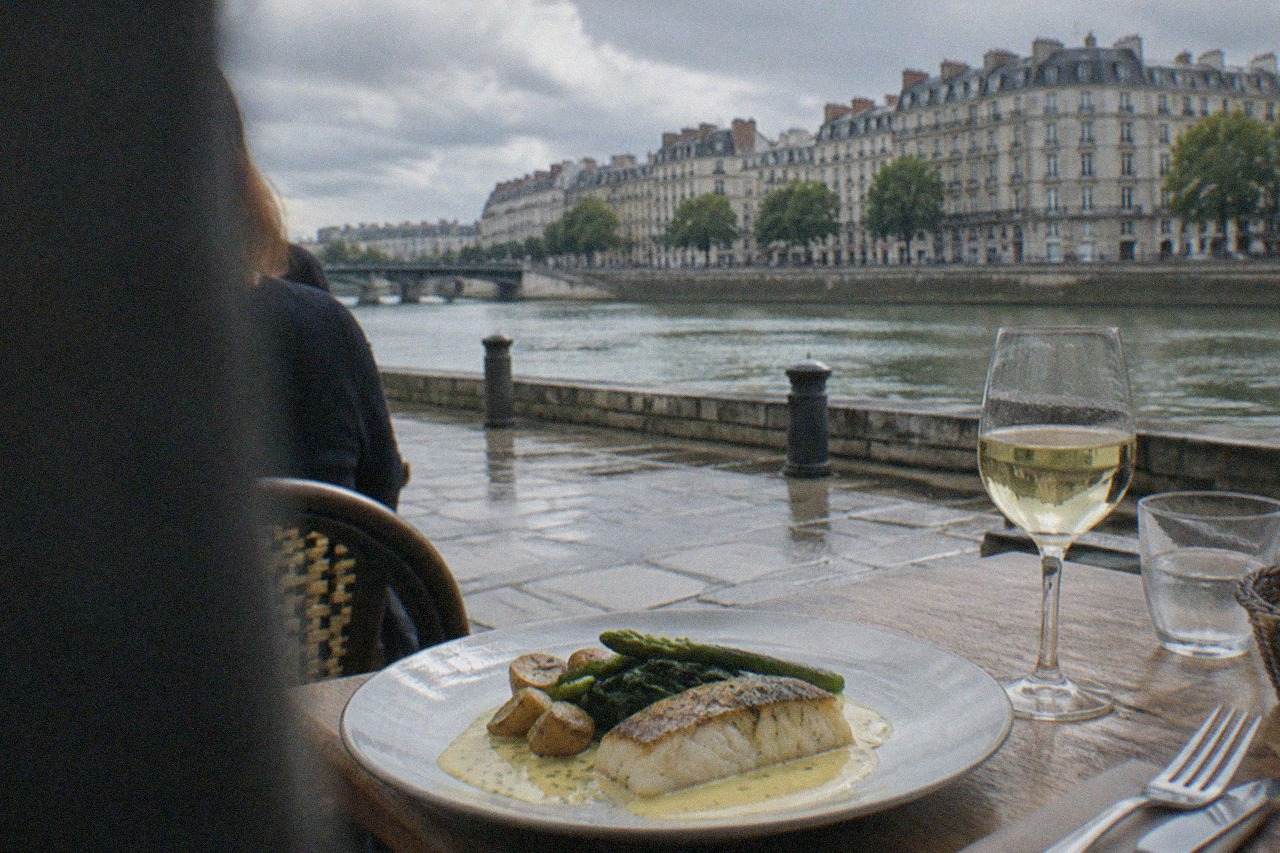
Nantes, in the Loire-Atlantique department of the Pays de la Loire region of western France, eats like a port city with a biscuit factory in its past: river fish in butter sauce, Muscadet poured by the glass, and a market that the Métropole's own pages treat as an institution.
Short answer
A Nantes food tour usually pairs the old-town lanes around Bouffay with stops for beurre blanc, Muscadet, LU Petit Beurre and gâteau nantais, and the market at Talensac is the city's reference food stop, open Tuesday to Sunday mornings and closed Monday. Guided options exist in several formats, from an all-inclusive old-town walk to a private custom tour or a Muscadet tasting, and their live prices render on this page's booking cards.
Nantes, in the Loire-Atlantique department of the Pays de la Loire region of western France, has a food identity built on three things a first-time visitor rarely expects: butter, biscuits and white wine. The city sits where the Erdre and the Sèvre Nantaise meet the Loire, close enough to the Atlantic for sea fish to reach the market the same morning, and its most famous sauce, beurre blanc, was born in exactly that setting. This page walks through what a Nantes food tour actually involves, the dishes and sweets the city is known for, what eating out costs in 2026, and how to choose between the guided formats on sale. The Nantes Travel Guide food coverage runs deeper still if you want restaurants, crêperies and markets as separate subjects.
What Is A Nantes Food Tour, And What Does One Usually Include?
A Nantes food tour is a guided or self-guided walk built around the city's food landmarks, most often the Bouffay old-town lanes, the Talensac market and the Graslin quarter, with stops for classic dishes such as beurre blanc, seafood from the Loire-Atlantique coast, LU Petit Beurre biscuits and gâteau nantais, usually paired with a glass of local Muscadet. Formats differ in depth and pace, and the live price of each bookable option renders on its card below rather than in this prose.
The typical shape is simple. A local guide leads a small group on foot, pausing at producers, counters and tables rather than monuments, though the monuments come free because the route runs through the historic core. The old town around Bouffay supplies the lanes, the 1843 covered gallery of Passage Pommeraye supplies the polished shopping, and Talensac supplies the produce. A good tour will explain why a port city 50 kilometres from the ocean eats so much fish, and why its most famous dessert is soaked in rum.
Not every format suits every traveller. Some visitors want a single concentrated loop with every tasting paid up front; others want a private walk that can be steered toward whichever foods they care about. Wine-first travellers may prefer skipping the walking entirely and starting with the Muscadet. The solo card below is the concentrated old-town option.
There is also a self-guided app-based walking route covering the city at large, which food-focused visitors sometimes use as a cheap backbone before adding a single guided tasting. The walking-tour formats are compared in more depth elsewhere on this site, and the general things to do in Nantes page situates food among everything else the city offers.
What Foods Is Nantes Actually Famous For?
Nantes is famous for beurre blanc, the emulsified butter sauce made with shallots, Muscadet and vinegar; Muscadet white wine from the Melon de Bourgogne grape; LU Petit Beurre biscuits, invented in the city in 1886; berlingots nantais, tetrahedral boiled sweets dating to the late 19th century; gâteau nantais, an almond and rum cake traced to around 1820; and the curé nantais cheese of the nearby coast. Fish from the Loire and the Atlantic anchors the savoury side.
Beurre blanc is the flagship. It is a reduction of shallots, white wine and vinegar into which cold butter is whisked until the whole thing turns into a pale, pourable sauce, traditionally served with pike or other river and sea fish. Local reporting notes that Nantes restaurateurs have been pursuing protected traditional-specialty status for the recipe, a campaign that tells you how seriously the city takes its sauce. The sauce is also, conveniently, the bridge between the two halves of Nantes cuisine: the butter of the interior and the wine of the coast.
The sweet side is unusually well documented because two of its stars were industrial. Jean-Romain Lefèvre set up as a biscuit maker in Nantes in 1846, marrying Pauline-Isabelle Utile in 1850, and the initials of that marriage, LU, still sit on the Véritable Petit Beurre, which is credited to 1886. Production left the city itself in 1986 for La Haye-Fouassière, but the brand celebrates its 180th anniversary in 2026 and the factory near Nantes turns out roughly 24,000 tonnes of biscuits a year. The former city-centre factory is now Le Lieu Unique, a cultural centre, so even the arts venues here smell faintly of biscuit history.
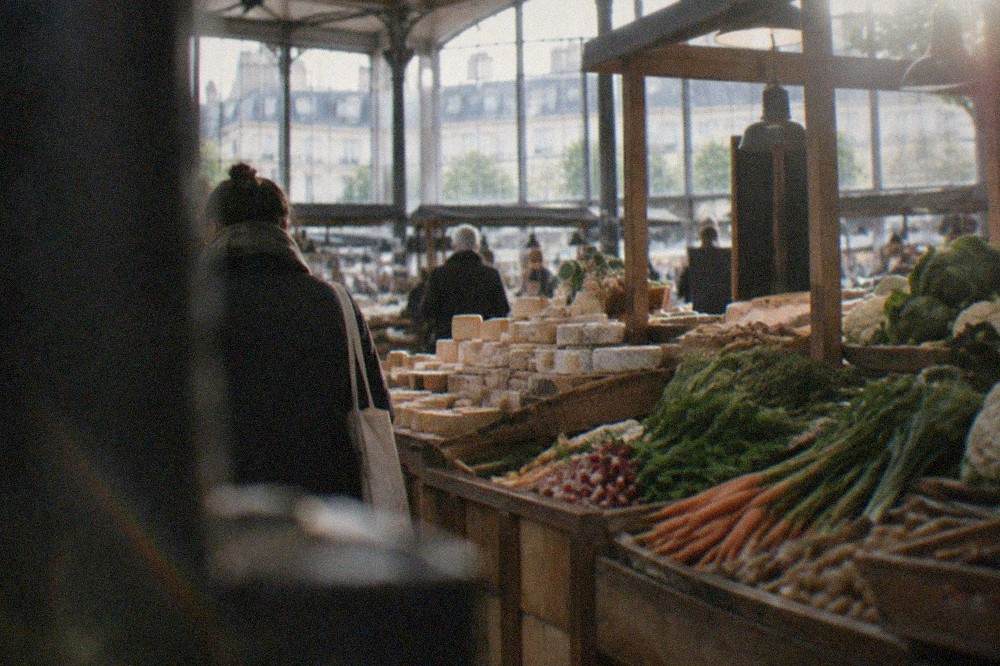
Here is the short version of the plate, in the order most tours introduce it:
| Dish or product | What it is | How it is usually served |
|---|---|---|
| Beurre blanc | Shallot, white wine and vinegar reduction emulsified with cold butter | With pike or other fish, classically |
| Curé nantais | Washed-rind cow's milk cheese from the coast west of Nantes | On a cheese board or melted over potatoes |
| Berlingots nantais | Tetrahedral boiled sweets in seven traditional flavours, dating to the late 19th century | Bought by the bag from confectioners |
| Petit Beurre | The LU butter biscuit, created 1886 in Nantes | With coffee, or as the base of desserts |
| Gâteau nantais | Almond and rum quatre-quarts cake, origins around 1820 | By the slice at patisseries, better after a day's rest |
| Muscadet | Dry white wine from the Melon de Bourgogne grape | Chilled, with oysters, fish or beurre blanc dishes |
The rum in the gâteau nantais is a port legacy: the same docks that shipped the slave trade, a history the Mémorial to the abolition of slavery documents unflinchingly, later carried sugar, coffee and spirits into the city's kitchens. Food tours in Nantes that skip that history are telling only half the story of why this city cooks the way it does. Our full guide to Nantes food unpacks each dish and where the traditions came from.
Where Do Locals Actually Buy Food In Nantes?
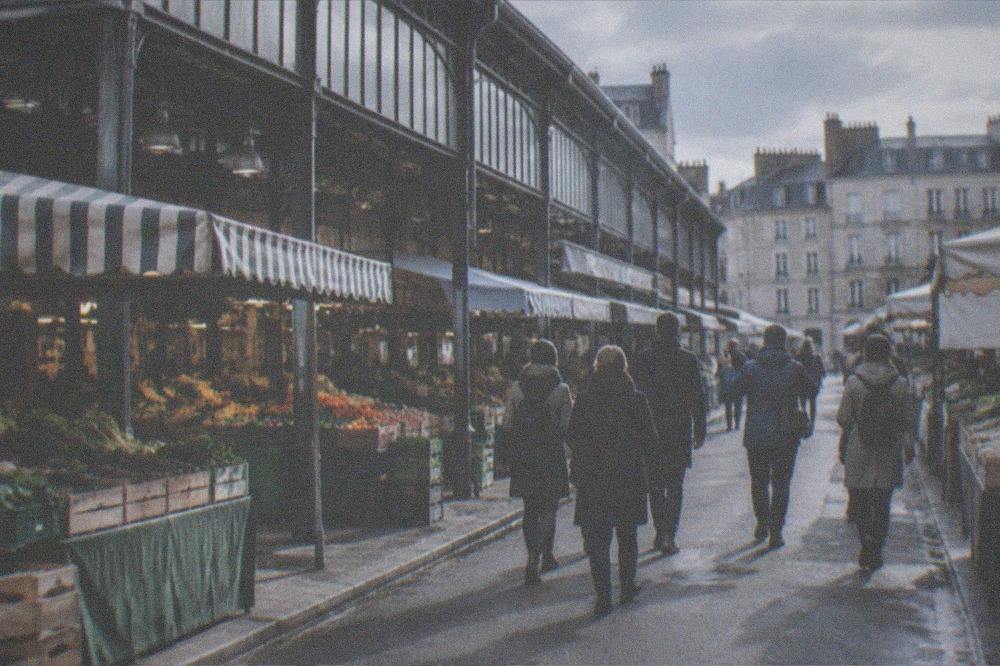
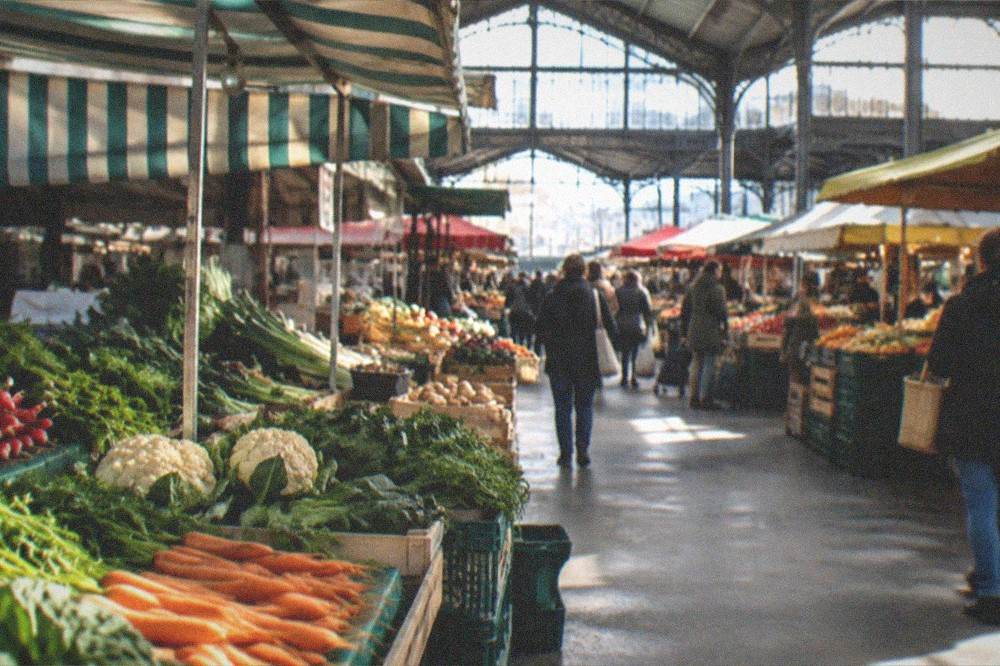
Locals buy food chiefly at the Marché de Talensac, the city's reference covered market, which Nantes Métropole's own pages list as open Tuesday to Friday from 08:00 to 13:00 and Saturday to Sunday from 08:00 to 13:30, closed Mondays except public holidays. Smaller neighbourhood markets and the revived counters of the Graslin and Bouffay quarters fill the gaps, and the market is reachable on a standard Naolib ticket.
Talensac is the one food address in Nantes that almost every source agrees on. It is the city's biggest market, a mix of covered halls and open-air rows where fishmongers, cheesemongers and vegetable stalls do their morning trade, and it empties by early afternoon, which is why every food tour that includes it starts in the morning. Tuesday through Friday it runs to 13:00; on weekends it stretches to 13:30; Monday it sleeps. That schedule matters more than any individual stall, because a visitor who arrives at 15:00 finds shutters.
Getting there is trivial. The market sits a short walk north-west of the tram lines, and a single Naolib ticket covers trams, buses and the Navibus river shuttles for an hour from validation. Two practical notes from the fare table: the standard one-hour ticket costs 1.80 EUR, and the whole network is free on weekends from Saturday 00:00 to Sunday 23:59, with the airport shuttle the sole exception. A Saturday market morning is therefore the cheap, classic local move.
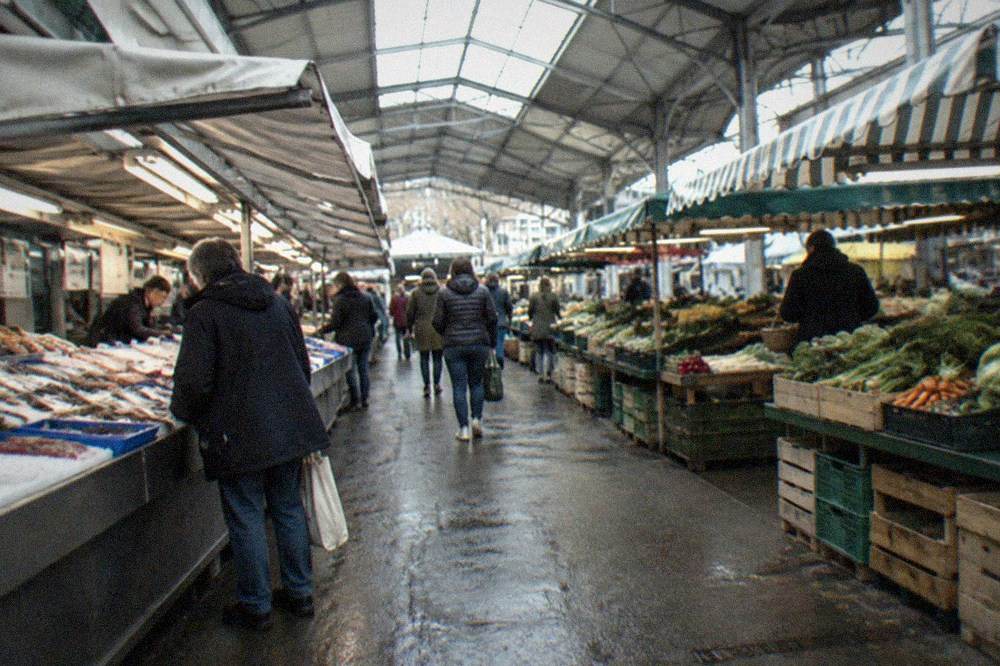
The market week, as the Métropole lists it:
| Day | Talensac market hours |
|---|---|
| Tuesday to Friday | 08:00 to 13:00 |
| Saturday and Sunday | 08:00 to 13:30 |
| Monday | Closed, except public holidays |
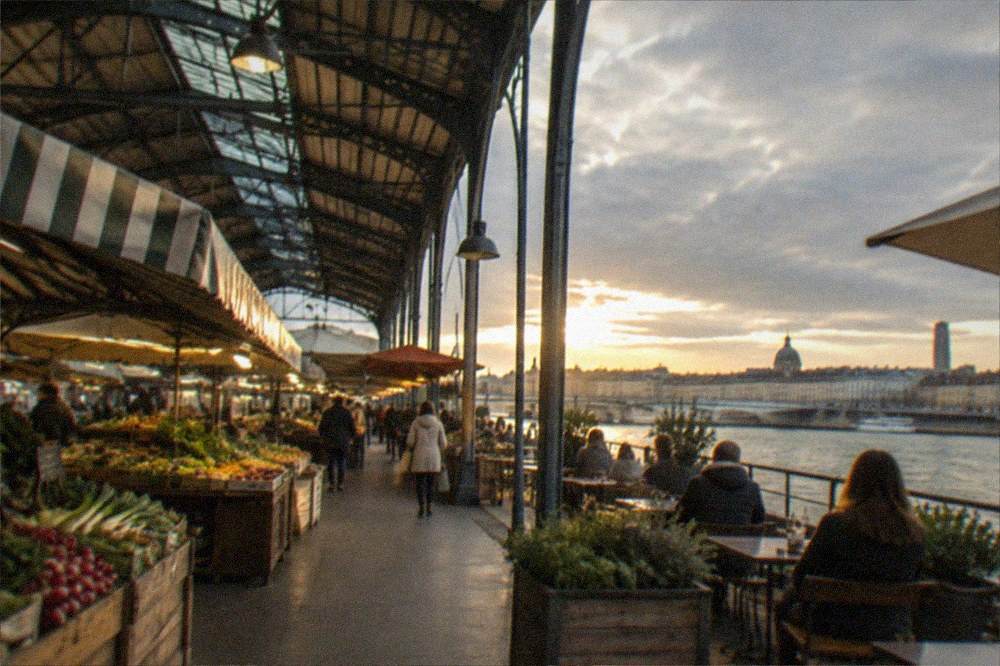
Outside Talensac, the eating geography divides cleanly. Bouffay, the medieval core, holds the densest run of crêperies, bistros and counters and is where most guided food walks spend their time. Graslin, around the theatre and Place Royale, is the more polished quarter. Across the Loire, Trentemoult is the former fishing village whose coloured houses and riverside terraces make it the fish-and-sunset option, reachable by the Navibus N1 river shuttle on an ordinary ticket.
Between those neighbourhoods sit the classic sights, so a food-focused day rarely feels wasted on a non-eating partner. The one day in Nantes itinerary sequences the château, the Machines de l'île and a market stop in a workable order.
Guided market-and-old-town eating is a very popular food format booked from this site, and the two formats below are the ones visitors tend to weigh against each other: a fixed old-town tasting walk and a private tour that can be pointed at whatever you ate and wanted more of.
How Much Does Eating Out In Nantes Cost In 2026?
Crowd-sourced price trackers suggest that an inexpensive restaurant meal in Nantes remains cheap, a three-course dinner for two at a mid-range restaurant is a step up before drinks, a domestic draft beer is inexpensive and a cappuccino is cheap, aggregates updated through 2026 that vary widely by venue. Hotel stays add a tiered tourist tax of about 2.86 EUR per person per night at four-star properties, as reported for 2026.
Those restaurant numbers come from aggregator data, not from any single venue, and this site has verified no individual restaurant's menu, hours or address. Treat them as planning ranges and check the room you actually book. A crêperie lunch in Bouffay will cost less than the aggregate mid-range figure; a table with a wine pairing near the Graslin theatre will cost more.
The tourist tax is worth knowing because it rarely appears in the advertised room rate. For 2026, reported tariffs run about 2.86 EUR per person per night at classified four-star hotels, 1.87 EUR at three stars and 1.10 EUR at two stars, with unclassified short-let accommodation charged a percentage of the nightly price, capped at 5.39 EUR. Collectors add a departmental surcharge, and the figures above are reported tariffs rather than our own verification, so expect the exact line on your bill.
| Eating-out benchmark in Nantes | Reported 2026 aggregate |
|---|---|
| Inexpensive restaurant meal, one person | varies by venue |
| Mid-range meal for two, three courses, no drinks | varies by venue |
| Average three-course dinner, one person, good restaurant | varies by venue |
| Domestic draft beer, one pint | varies by venue |
| Cappuccino | varies by venue |
| Soft drink | varies by venue |
Against those numbers, a guided food tour with tastings included is not the budget option, it is the efficient one. The trade is simple: a fixed walk bundles six or seven stops you would otherwise find, order at and pay for separately, in an afternoon, with someone explaining what beurre blanc is while you eat it. Whether that is worth it depends entirely on the live price, which is why this page never prints one in prose and lets the cards resolve it for your dates.
If you want the budget half of the ledger first, our Nantes on a budget guide covers free museums, the weekend-free transport quirk and how to eat cheaply without eating badly, and it pairs well with the site's coverage of free activities. Both are worth a skim before you commit money to any paid tour.
What Should You Drink In Nantes? Muscadet, Explained
Muscadet is the dry white wine of the Nantes region, made from the Melon de Bourgogne grape on vineyards east and south-east of the city, and it is the standard pour with the Loire and Atlantic fish that Nantes kitchens serve, including anything dressed in beurre blanc. The Maison des vins de Muscadet at Vallet is the appellation's visitor hub, reachable as a half-day trip, and tasting formats in the city itself run from a sensory Muscadet experience to vineyard van tours.
The pairing logic is local physics. The grape grows on the same watershed that feeds the fish, so by the time a plate of oysters or a beurre blanc arrives, the wine it was designed for has travelled less than the fish did. Muscadet is bone dry, light-bodied and high in acid, which makes it do the one job butter needs a wine to do: cut through. The 2026 vintage story adds a wrinkle worth knowing at the table, because an August harvest with reduced yields means the current pours are from a small, early, heat-shaped crop.
If your interest stops at a glass with dinner, any old-town counter will do. If it runs deeper, the appellation's own visitor infrastructure begins at Vallet, and the vineyards sit inside easy day-trip range of the city, as the wider day trips from Nantes pages describe. Clisson, the Italianate town at the edge of the vineyard country, doubles the trip up nicely and has its own guide.
| Muscadet fact | Detail |
|---|---|
| Grape | Melon de Bourgogne |
| Style | Dry, light-bodied, high-acidity white |
| Classic pairing | Oysters, river and sea fish, beurre blanc dishes |
| 2026 harvest | Declared 11 August 2026, record early, around eight days ahead of the 2003 mark |
| 2026 yields | Roughly 30-40 hectolitres per hectare, down on prior years |
| Visitor hub | Maison des vins de Muscadet, Vallet |
For tasting in the city rather than the vineyard, the sensory Muscadet experience is the format most booked by wine-first visitors. It sits rather than walks, trading street food for cellar context, and its live price renders on the card below rather than in this prose.
Visitors who want the vineyards themselves, rather than a tasting room, can also compare the van-based vineyard tours sold alongside the tasting formats, which cover both the short drives and the half-day loops into Muscadet country.
What Are The Sweet Specialities Of Nantes?
The sweet specialities of Nantes are the LU Véritable Petit Beurre biscuit, created in the city in 1886; berlingots nantais, the tetrahedral multicoloured boiled sweets in seven traditional flavours that confectioners have made since the late 19th century; and gâteau nantais, the almond and rum-soaked cake whose origins are traced to around 1820 and which has enjoyed a strong revival among the city's patisseries in recent years. All three are buyable in the city centre today.
The biscuit is the one with the empire attached. From an 1846 bakery beginnings, LU industrialised and the Petit Beurre became one of France's most recognisable biscuits, its scalloped edges and four corners as fixed as a postcode. The 1986 closure of the Nantes factory moved production out of the city, but the building survived as Le Lieu Unique, the national arts centre, and that conversion story is told in the site's coverage of the venue. Biscuit pilgrims can still buy the original in any city-centre grocer.
Berlingots nantais are the quieter star. They are hard, powdered, pyramid-shaped sweets in a set of seven flavours, orange, lemon, cassis, strawberry, anise, caramel and mint, and their origin story runs through the Pinson confectionery, founded in 1895 near the port where the sugar arrived. Production largely shifted out of the Nantes area to Boufféré in the Vendée around 2011, though Nantes makers remain, so the sweet is a city emblem even where the factory moved.
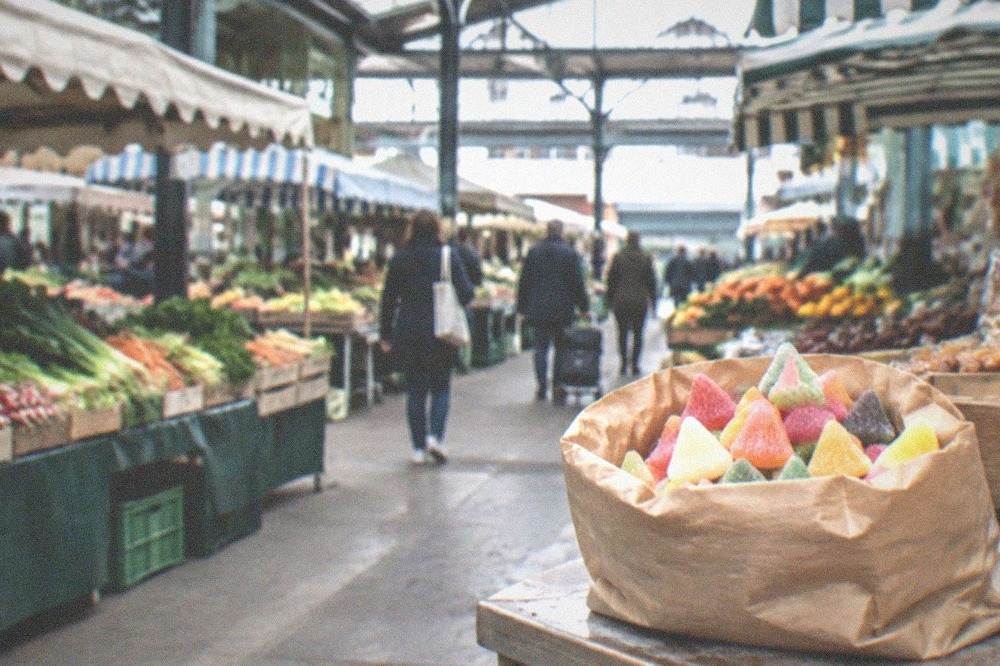
The gâteau nantais is the one locals will argue about. An almond quatre-quarts soaked in a rum and lemon syrup, sometimes glazed, it is attributed to a Nantes baker around 1820, was produced industrially by LU for much of the 20th century, and has returned to artisan patisseries in force. The received wisdom, repeated in every serious account, is that it is better after resting a day or more, so a whole cake bought on arrival and eaten on departure is not a mistake.
| Sweet | Origin story | Where the tradition stands |
|---|---|---|
| Petit Beurre | Created 1886 by LU in Nantes, from a business founded 1846 | Produced near the city since 1986; brand marks 180 years in 2026 |
| Berlingots nantais | Pinson confectionery founded 1895 near the port; seven classic flavours | Production largely in Boufféré, Vendée since about 2011; Nantes makers remain |
| Gâteau nantais | Almond and rum cake traced to around 1820 | Industrial under LU for much of the 20th century; now an artisan patisserie revival |
How Do You Choose Between Nantes Food Tour Formats?
Choose by depth and steering: the all-inclusive old-town walk suits visitors who want a fixed route with every tasting prepaid in one afternoon; a private custom walking tour suits groups who want the route pointed at their own interests, since the operator sells it in durations from two hours upward that render on its card; a Muscadet sensory tasting suits travellers who would rather sit with wine than walk with snacks; and a self-guided app route suits independents on a thin budget.
Prices are never quoted in prose.
The honest comparison is not about quality, it is about what you want to do with your afternoon. A fixed group walk maximises stops per hour and minimises decisions. A private tour minimises friction and lets a table of four spend twenty minutes on the cheese counter, but the live price reflects that. A tasting skips the walking entirely and trades street food for cellar context. The self-guided app option costs least and expects you to organise your own stops, which some travellers enjoy and others find like homework.
| Format | Best for | What you trade off |
|---|---|---|
| All-inclusive old-town food walk | First visits, fixed budget, maximum stops in one loop | Route and pace are set by the group |
| Private custom walk | Families, dietary needs, second-time visitors with a shortlist | A premium format; live price on the card |
| Muscadet sensory tasting | Wine-first travellers, wet afternoons | Little old-town sightseeing |
| Self-guided app route | Budget travellers, independent explorers | You organise every stop yourself |
For travellers combining food with the rest of the city, the practical sequencing advice lives in our itineraries: two days in Nantes and the family-focused Nantes with kids, which has its own food recommendations for younger palates.
The private format, for groups who know what they want, renders below.
When Is The Best Time Of Year For Eating In Nantes?
The best time is the shoulder season, roughly April to May and September to October, when Météo-France's normals for the Nantes-Bouguenais station show mean maxima from 16.2 C in April to 22.4 C in September, with market produce at full strength and the summer crowds gone.
Midsummer is warmest at 25.4 C mean maximum in August but carries the thinnest choice for booked tables, and the Marché de Noël from 19 November to 27 December 2026 gives winter its own food reason to visit.
The pattern behind that advice comes straight from the climate record rather than folklore. Météo-France's figures for the Nantes-Bouguenais station put December and January as the wettest months, with 101.0 mm and 87.9 mm respectively, and the summer months as the driest, with July at 44.2 mm. What that means for eating is simple: the market and the terrace season are at their best from late spring to early autumn, and a September visit gets the produce without the heat, the city having set a new all-time record of 42.2 C on 24 June 2026.
The winter counterweight is real. The Christmas market, Le Voyage en Hiver, runs 19 November to 27 December 2026 on Place Royale and Place du Commerce, with roughly 140 chalets and food stands, open 11:00 to 21:30 Monday to Saturday and 11:00 to 20:00 on Sundays, with adjusted hours on 24 December. For anyone planning around the festive season, that market plus a gâteau nantais at its December best is a genuinely good short-break formula, and our Nantes in winter and Christmas market guides cover it in detail.
| Season | Mean maximum temperature | Mean rainfall | What it means for eating |
|---|---|---|---|
| Spring, April to May | 16.2 C to 19.6 C | 58.3 mm to 61.0 mm | Produce returning, terraces opening |
| Summer, June to August | 23.0 C to 25.4 C | 44.2 mm to 50.3 mm | Peak terrace season, busiest tables |
| Autumn, September to October | 22.4 C to 17.6 C | 59.5 mm to 88.8 mm | Harvest season, Muscadet's new vintage story |
| Winter, November to January | 9.8 C to 12.9 C | 87.9 mm to 101.0 mm | Christmas market and patisserie season |
Can You Do Nantes Food On Your Own Without A Tour?
You can absolutely eat Nantes without a guided tour: the Marché de Talensac needs no booking, the old-town crêperies and bistros of Bouffay take walk-ins at most hours, the Navibus river shuttles to Trentemoult run on an ordinary 1.80 EUR Naolib ticket, and the city's sweets and Muscadet are buyable in any grocer, with the trade-off being that a guide saves you the ordering, the finding and the explaining, not the food itself.
The self-guided skeleton looks like this. A morning at Talensac, Tuesday to Sunday, on a tram or a twenty-minute walk from the centre. Lunch in Bouffay, where crêperies are thickest. An afternoon on the Navibus N1 to Trentemoult for fish on a terrace facing the city across the Loire. Coffee and a Petit Beurre somewhere in the Graslin quarter, and a slice of gâteau nantais before the day ends. Every element of that day costs only what you eat, plus a public-transport ticket, and none of it needs a booking.
What a tour adds is context and compression. A guide gets you into kitchens and behind counters, orders for the group in French, explains the slave-trade history behind the rum in your cake, and compresses a week of finding into an afternoon. Whether that is worth the price on the card is a personal call, and the honest position of this site is that both answers are correct. The self-guided app walking route splits the difference, and free walking formats have their own limits on what they include.
Whatever balance you strike, the three formats below are the ones to choose between, and their live prices render on their cards rather than anywhere in this prose.
For the full catalogue of what the city offers beyond food, the master list of things to do in Nantes is the site's home page, and every bookable category from cruises on the Erdre to the Machines de l'île is compared across the site's tours coverage.
Common Questions About Nantes Food Tours
What Food Is Nantes Most Famous For?
Nantes is most famous for beurre blanc, the shallot, white wine and butter sauce traditionally served with fish, alongside Muscadet white wine, LU Petit Beurre biscuits created in the city in 1886, berlingots nantais boiled sweets, and gâteau nantais, the almond and rum cake traced to around 1820.
Is Talensac Market Open On Mondays?
No. The Marché de Talensac is open Tuesday to Friday from 08:00 to 13:00 and Saturday to Sunday from 08:00 to 13:30, and it is closed on Mondays except when a public holiday falls on that Monday, per the schedule listed by Nantes Métropole.
Do You Need To Book A Nantes Food Tour In Advance?
For the guided formats sold through this site's cards, advance booking is how you secure a place on your chosen date, and the live availability and price render on each card. A self-guided day needs no booking at all, since Talensac, the crêperies and the Navibus shuttles are all walk-in services.
What Wine Should You Drink In Nantes?
Muscadet, the dry white made from the Melon de Bourgogne grape in the vineyards east and south-east of the city. It is the standard pairing with the fish and shellfish served in Nantes, and it is the wine traditionally used in the reduction at the base of beurre blanc.
Can Vegetarians Enjoy A Nantes Food Tour?
Yes, with a caveat. The sweet side of Nantes cuisine, from gâteau nantais to berlingots and Petit Beurre, is fully vegetarian, and the markets carry abundant produce and cheeses. Beurre blanc itself is butter-based but classically accompanies fish, so vegetarian travellers should check with the tour operator before booking whether fish-free tastings can be arranged.
How Expensive Is Eating Out In Nantes?
Crowd-sourced 2026 aggregates put an inexpensive restaurant meal at the budget end of the scale, a three-course mid-range dinner for two at a step up before drinks, and a draft beer at the inexpensive end of the range. Individual venue prices vary widely around those figures, and this site has verified no single restaurant's menu.
A Nantes food tour, guided or self-guided, is the fastest way to understand why this city cooks with butter, rum and river fish, and why its biscuits ended up on every French breakfast table. Eat the market in the morning, the old town at midday, and a terrace at Trentemoult by evening, and the city will have explained itself before you leave.