Where Do Locals Eat In Nantes?
Where Nantais actually eat in Nantes, France: the dishes they order, the customs of the bistro table, the markets and bakeries they queue at, and how to join in.
Nantes, in the Loire-Atlantique department of the Pays de la Loire region in western France, is a city where the question of where locals eat has a firm answer: close to home, close to the market, and as often as possible with a glass of Muscadet within reach. The Nantais table is built on river fish, salted butter, white wine from the vineyards just south of the city, and biscuits whose factory shaped the whole town. Visitors tend to cluster in a handful of old-town crêperies; residents spread out across the Bouffay lanes, the Graslin terraces, the Île de Nantes riverfront and the village streets of Trentemoult across the Loire. This page walks through the dishes locals order first, the unwritten customs of a Nantes bistro, and the neighbourhoods where everyday eating actually happens.
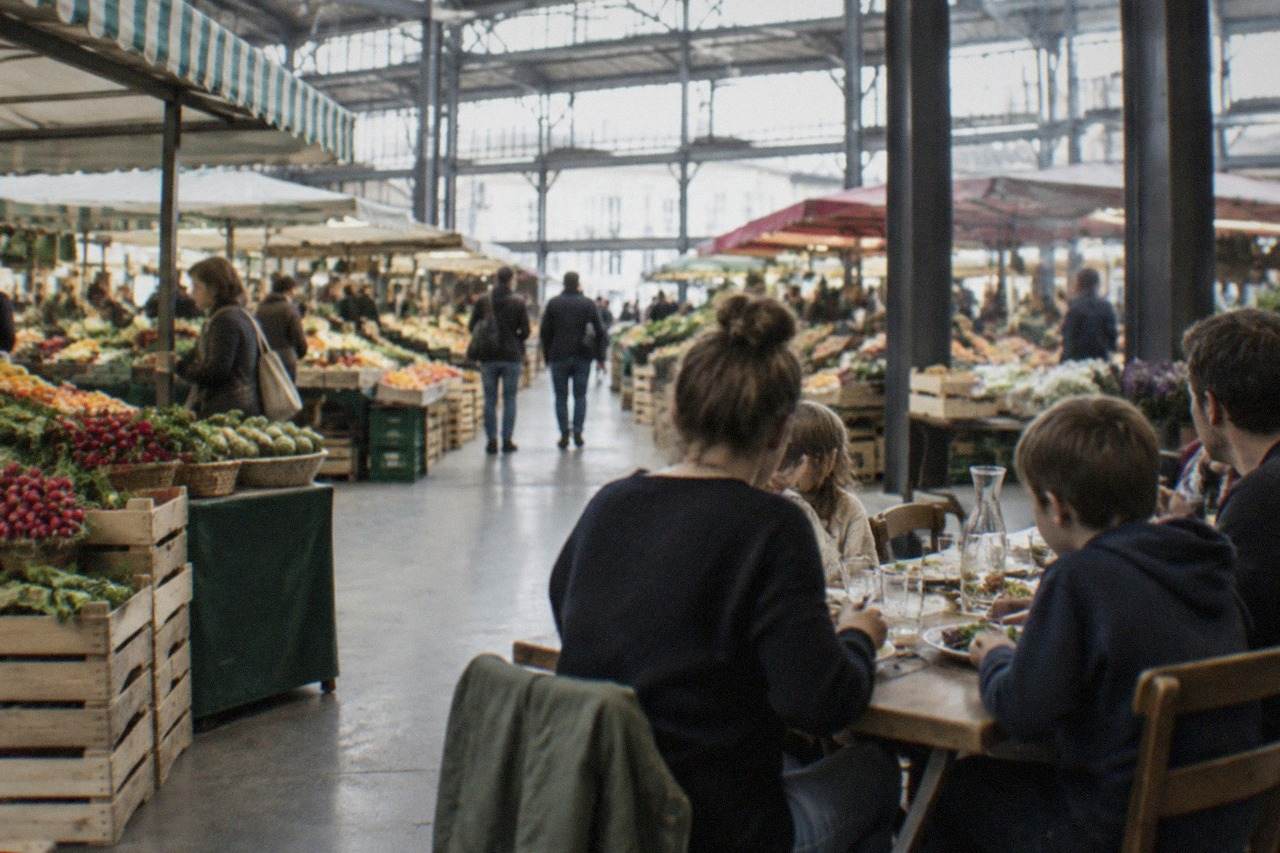
Where Do Locals Eat In Nantes?
Locals in Nantes eat in the small bistros of the Bouffay and Graslin quarters, at the Talensac market stalls in the north of the centre, on the Hangar à Bananes terraces of the Île de Nantes, and in the fishermen's-coloured lanes of Trentemoult across the Loire. Their plates lean local: river fish in beurre blanc, Muscadet from the Sèvre valley, and salted-butter biscuits the city invented. What separates a local table from a tourist one is less the address than the pace.
That last point deserves a paragraph of its own. A resident of Nantes will rarely plan a meal around a view; the view is the Loire, and it is always there. They will plan it around a short walk, a trusted kitchen, and a table booked for long enough that the evening can run its course. If you want to eat the way the city eats, the practical shift is temporal rather than geographic: go where the walkers are, at the hours they walk there, and order the things the region grows. The question what Nantes is famous for answers itself partly on the plate.
Which Local Dishes Do Nantais Order First?
The core order in a Nantes bistro is river or sea fish served with beurre blanc, the emulsified sauce of shallots, Muscadet and vinegar into which cold salted butter is whisked, followed by a Muscadet white made from the Melon de Bourgogne grape. Around those two anchors sit the gâteau nantais, an almond and rum cake with roots around 1820, the berlingots nantais, tetrahedron hard candies dating to the late 19th century, and the Petit Beurre biscuit LU invented in 1886.
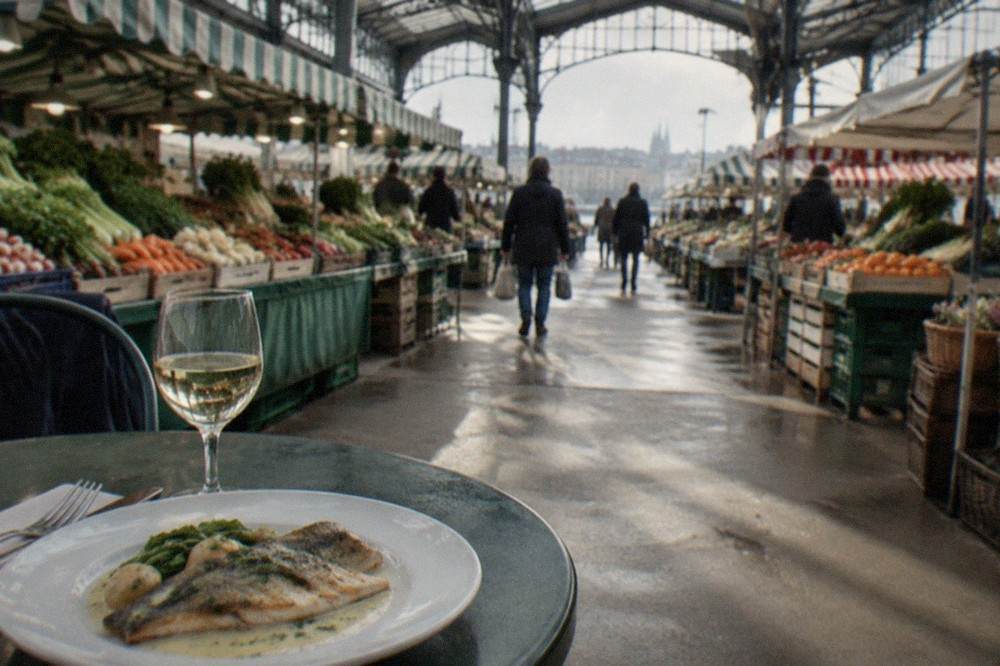
Beurre blanc is the dish to understand, because it is the one Nantes restaurateurs have taken legal-style steps to protect: as of 2025 reporting, local chefs were campaigning for protected traditional specialty status to keep the recipe from drifting. The sauce was born, by every telling, from a reduction of shallots, white wine and vinegar, finished with cold butter, and it belongs with fish. Muscadet is its natural partner, and if you are unsure what you are drinking, the answer to whether Muscadet is sweet or dry is firmly on the dry side, which is exactly why it cuts through the butter.
The biscuit story matters too, because LU shaped the city's economy as much as its palate. Jean-Romain Lefèvre set up as a biscuit maker in Nantes in 1846, married Pauline-Isabelle Utile, and the initials became a brand. Production moved to the Loire-side factory facing the château in 1886, the year the Petit Beurre was invented, and the city marks the company's 180th anniversary in 2026.
| Dish or drink | What it is | What locals pair it with |
|---|---|---|
| Beurre blanc | Shallot, Muscadet and vinegar reduction whisked with cold salted butter, served over fish | Muscadet, traditionally with pike |
| Muscadet | Dry white wine from the Melon de Bourgogne grape, grown in the Sèvre valley south of Nantes | Shellfish, river fish, beurre blanc |
| Gâteau nantais | Almond and rum quatre-quarts cake soaked in syrup, origins around 1820, now mostly patisserie-made | Coffee at the end of a meal; locals say it improves after resting a day |
| Berlingots nantais | Tetrahedron hard candies in seven flavours, tradition dating to the late 19th century | An after-school or market treat rather than a dessert |
| Petit Beurre | The scalloped butter biscuit invented by LU in 1886 | Eaten plain, at breakfast or from the packet |
How Do Eating Customs Work In Nantes?
The customs are standard French bistro customs at a slower tempo: a lunch that can run past two hours, dinner starting late, bread on the table rather than the plate, and cheese before or instead of dessert. The local variation is the market habit: many Nantais build the week around a Talensac run, buying fish, vegetables and cheese there on the days it operates rather than relying on a single big Saturday shop. Weekend transport being free sharpens the habit.
A few practical notes follow from that. Restaurant portions of the classics are generous, so locals often order a single main plus wine rather than a full menu. Booking matters more in Bouffay than anywhere else, simply because the old-town tables are few. And the weekday lunch menu, where a kitchen offers a reduced-price fixed option, is the city's own quiet economy: it is how office workers from the centre eat well without paying evening prices. You will find the same rhythm in most mid-sized French cities, but Nantes adds its own product to it.
For visitors who want the customs demonstrated rather than decoded, a walk with a local guide is the shortcut. This trio covers the main angles:
Where Do Nantais Shop And Snack Between Meals?
Locals shop for food at the Talensac market in the centre-north, at the bakeries and patisseries scattered through every quarter, and at the wine shops that stock the surrounding Muscadet vineyards. The market is the institution: Talensac is Nantes's oldest and largest covered market, and residents treat it as a weekly appointment rather than a tourist stop. Beyond it, the snacking culture is biscuit and candy based, carried by the city's own LU and berlingot traditions.
The berlingot story is a genuinely local one. The Pinson confiserie was founded in 1895 near the port, taking advantage of arriving sugar shipments, and production later shifted out of the city, with Debotté cited in local reporting as a remaining Nantes maker. The candies are recognisable by their tetrahedron shape and powdered texture, in seven flavours from orange to anise. They are what a Nantais buys to take to someone, not what they order in a restaurant, and that distinction is the whole point: the local food culture runs on edible souvenirs consumed at home. Everything else covered here is indexed on Nantes Travel Guide.
The gâteau nantais has had its own quiet revival, with Ouest-France reporting its "retour en force" in the city's patisseries after decades of industrial production. A cake attributed to a Nantes baker around 1820, made with almond meal, salted butter and a rum soak, is now as likely to be artisanal as boxed, and residents have opinions about which patisserie does it best. Ask and you will get an answer.
Can A Guided Food Walk Show You The Local Tables?
Yes, and in Nantes the most direct option is the All Inclusive Food Tour of Nantes Old Town, a three-and-a-half-hour walk with a local guide that covers the classic dishes in their home quarter. Its price is not published by the operator, so the live listing is the only place to see what it currently costs, but the format itself is the value: a guide who orders in local French and explains each plate as it lands.
The old town is the natural classroom for it. Bouffay is the medieval core around which the city grew, and its lanes hold the densest cluster of tables within walking distance of the château, the cathedral and the Passage Pommeraye. A food walk there stitches the eating culture to the streets, which is something a restaurant alone cannot do. If your instinct is to see the city on foot anyway, note that whether Nantes is a walkable city is a question with a strongly positive answer, so combining a walk with a meal costs you nothing in transport.
The same reasoning extends to wine. The Muscadet vineyards sit just south of the city, and their product is the default pour on every table in town; a tasting that explains what is in the glass turns the rest of the trip's meals into a guided experience of their own.
How Does Each Neighbourhood Eat Differently?
Bouffay eats traditionally and late, Graslin eats stylishly around its theatre and its great brasserie, the Île de Nantes eats young and riverside around the Hangar à Bananes, and Trentemoult eats like the fishing village it was, with small terraces facing the Loire. Each quarter's character is visible from its tables, and none of them requires a car or more than a tram ride to reach.
| Quarter | How locals eat there | The anchor of the table |
|---|---|---|
| Bouffay | Long bistro lunches and evening meals in the medieval lanes | Traditional dishes, beurre blanc, booked tables |
| Graslin | Pre- and post-theatre dining around place Graslin and the Théâtre Graslin | Grand brasserie culture, oysters and Muscadet |
| Île de Nantes | Riverside bars and shared plates near the Hangar à Bananes | Young, informal, walkable from the Machines |
| Trentemoult | Small terraces in the coloured fishermen's lanes, reached by Navibus across the Loire | Fish-forward, village-paced, sunset-facing |
Trentemoult deserves the extra sentence. The former fishing village on the south bank of the Loire is now part of everyday Nantes life precisely because it is easy to reach: the Navibus river shuttle connects it to the city, and the crossing itself is part of the evening. The opening of the N2 river link between Trentemoult, Bas-Chantenay and the Hangar à Bananes in November 2025 made the loop simpler still. Eating there feels like leaving the city without leaving the transport network.
Do You Need A Weekend To Eat Like A Local?
No, one well-placed evening is enough to eat like a local, but a weekend lets you add the market, a vineyard tasting and a slower second dinner. With the free weekend transport on the Naolib network, Saturdays and Sundays are the cheapest days to move between the Talensac market, the Île de Nantes and Trentemoult, so the practical answer is that a weekend is the comfortable version of the same trip rather than a different one.
For anyone planning the wider stay, how many days to spend in Nantes is the companion question, and the honest answer for food-led visitors is two at minimum: one for the old town and Graslin, one for the market and the river quarters. If you have longer, the wine country south of the city rewards the detour, and the question of what the most beautiful village near Nantes is has answers in the Muscadet country itself.
If you would rather have the local tables decoded for you, these are the three experiences that do it best:
Common Questions About Eating Like A Local In Nantes
Where do locals eat in Nantes?
In the bistros of Bouffay and Graslin, at the Talensac market, on the Hangar à Bananes terraces of the Île de Nantes, and in the lanes of Trentemoult across the Loire, ordering fish in beurre blanc and Muscadet from the vineyards just south of the city.
What is the one dish locals order in Nantes?
River or sea fish with beurre blanc, the sauce of shallots, Muscadet, vinegar and cold salted butter that Nantes restaurateurs are campaigning to have protected as a traditional specialty. A glass of Muscadet alongside it is the default.
Do locals eat dinner late in Nantes?
Yes, by northern European standards: service runs into the late evening, and the fixed-price weekday lunch menu is where many residents do their best eating instead.
What sweets is Nantes known for?
The gâteau nantais, an almond and rum cake from around 1820; the berlingots nantais, tetrahedron candies from the late 19th century; and the LU Petit Beurre biscuit invented in 1886.
Is Muscadet the local wine?
Yes. It is grown in the Sèvre valley immediately south of Nantes from the Melon de Bourgogne grape, and it is the standard pour on local tables, dry and made to accompany fish and beurre blanc.
Eat the way the city eats and the rest of the visit organises itself around the table, which is exactly how the Nantais would have it.