What Is The Most Beautiful Town In Brittany, France?
Which town takes the crown in Brittany: Saint-Malo, Vannes or Nantes, the dukes' historic capital? An honest look at the contenders and how to see them from Nantes.
Ask ten travellers to name the most beautiful town in Brittany and you will mostly hear two names: the walled corsair port of Saint-Malo and the half-timbered harbour town of Vannes. But there is a third answer worth taking seriously, and it is the one most guides skip: Nantes, the historic capital of the duchy, sitting just across the modern administrative line in Loire-Atlantique, Pays de la Loire, in western France. This page compares the honest contenders, explains why Nantes keeps being pulled into the argument, and shows how the region's beauty is easiest to reach from there.
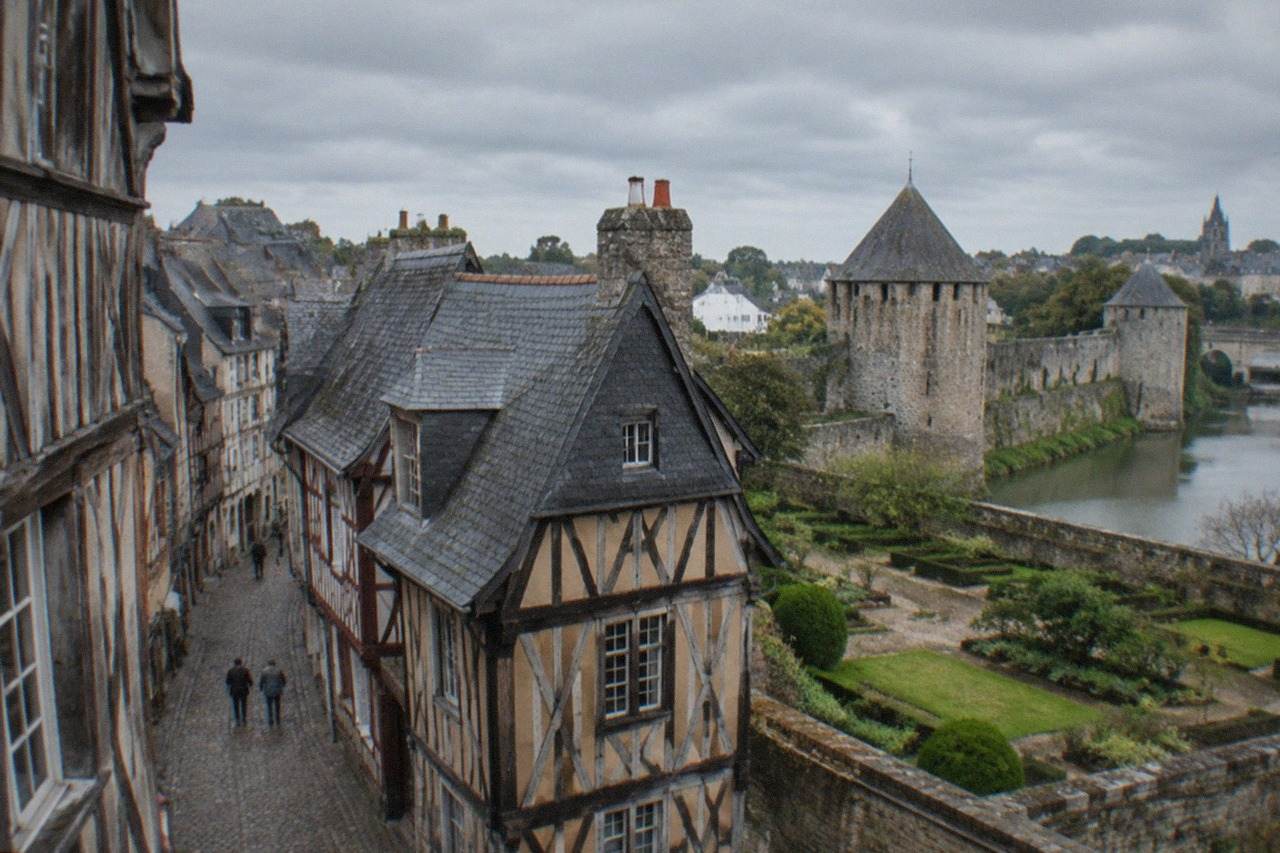
What Is The Most Beautiful Town In Brittany, France?
There is no official answer, because nobody keeps a register of Breton beauty, but the two names that dominate the conversation are Saint-Malo, the granite walled city on the Emerald Coast, and Vannes, the half-timbered harbour town on the Gulf of Morbihan. The case that is argued less often but just as fiercely is Nantes, the seat of the dukes of Brittany, which sits in Loire-Atlantique under the Pays de la Loire banner rather than inside the modern Brittany region.
The honest starting point is that "most beautiful" is a matter of what you are looking at. Saint-Malo wins for drama: ramparts, tides and fort islands. Vannes wins for charm: painted timber houses around a small harbour. Nantes wins for depth: a ducal castle, a Gothic cathedral, a 19th-century shopping passage and a machinery-studded island in the Loire, all within a walkable core. If the question means "which town should I photograph", the walled ports answer it. If it means "which town rewards three days of walking", Nantes does, and it is the only one of the three with a full transport network underneath it.
For a deeper look at the smaller settlements near the city, our piece on the most beautiful villages near Nantes covers the hamlets and riverside communes that never make these lists but probably should.
Why Nantes Stakes A Claim As Brittany's Historic Capital
Nantes was the political capital of Brittany for centuries: the Château des ducs de Bretagne was begun by Duke Francis II from 1466, Anne of Brittany was born there on 25 January 1477, and the Edict of Nantes was signed at the château by Henri IV in April 1598. The city only left the modern Brittany region on paper, when a 1941 decree moved Loire-Inférieure, later renamed Loire-Atlantique in 1957, out of it. Culturally the Breton claim never went away.
That history is not a footnote, it is the architecture. The château still stands in the city centre with its courtyard and ramparts free to walk daily, and the Musée d'histoire de Nantes inside it runs 32 rooms and more than 1,150 objects, from medieval Brittany through the port's difficult Atlantic history. Entry is 9 EUR full tariff, 5 EUR reduced, free for under-18s, and the museum closes on Mondays. The Cathedral Saint-Pierre-et-Saint-Paul, begun in 1434 and finished in 1891 after 457 years of works, partially reopened on 27 September 2025 after the 2020 fire, with full reopening planned for 2028. Those are two of the grandest medieval buildings anywhere in the historic duchy, and they share one city.
The pull is practical too. Nantes is the transport hub for the whole region, with direct trains west into the walled towns and a green, tram-served centre that makes the historic core effortless. The question of whether Nantes is a good base for exploring Brittany has a lot to do with why this city keeps entering a conversation it is not technically part of.
A private guide turns that layered history into something readable in a few hours. The Nantes Private Walking Tour With A Professional Guide runs with a professional guide, its price is unpublished by the operator, and the listing shows a 5 rating, so check availability rather than trusting a number quoted second-hand.
Which Walled Towns Do Travellers Name Instead Of Nantes?
Saint-Malo is the answer many visitors give, for its complete granite ramparts, its tidal setting and its history as a privateer port, and Vannes is the answer many Bretons give, for its colourfully timbered old quarter and its position on the Gulf of Morbihan. Both are qualitative judgements a reader can check for themselves by walking the walls or the harbour, and neither has ever been measured against the other in any official ranking.
The honest way to frame the contenders is as different kinds of beauty rather than a podium. The table below describes each on character, not on numbers, because figures were verified for Nantes and its day-trip venues only, and no statistic for the other towns belongs on this page.
| Town | What people fall for | The honest caveat |
|---|---|---|
| Saint-Malo | Ramparts you can walk all the way round, fort islands at low tide, a corsair past | Small and busy; the beauty is weather-dependent |
| Vannes | Half-timbered houses, a compact medieval core, the Gulf of Morbihan | Quieter, less dramatic skyline than Saint-Malo |
| Nantes | Ducal castle, cathedral, Passage Pommeraye, the Loire island of the Machines | Not administratively in Brittany, and not walled |
| Clisson | An Italianate château and market town on the Sèvre, 30 to 40 minutes from Nantes by train | Small enough to see in half a day |
Clisson deserves its line in that table. It is the easiest Breton-flavoured detour from Nantes, reachable by TER in roughly 15 to 23 minutes, and a return ticket to Clisson is even included in the Pass Nantes. Its château offered free entry with guided flash tours during the September 2026 European Heritage Days, and the town's Italianate architecture, built in the shadow of a Breton fortress, looks like nowhere else in the region.
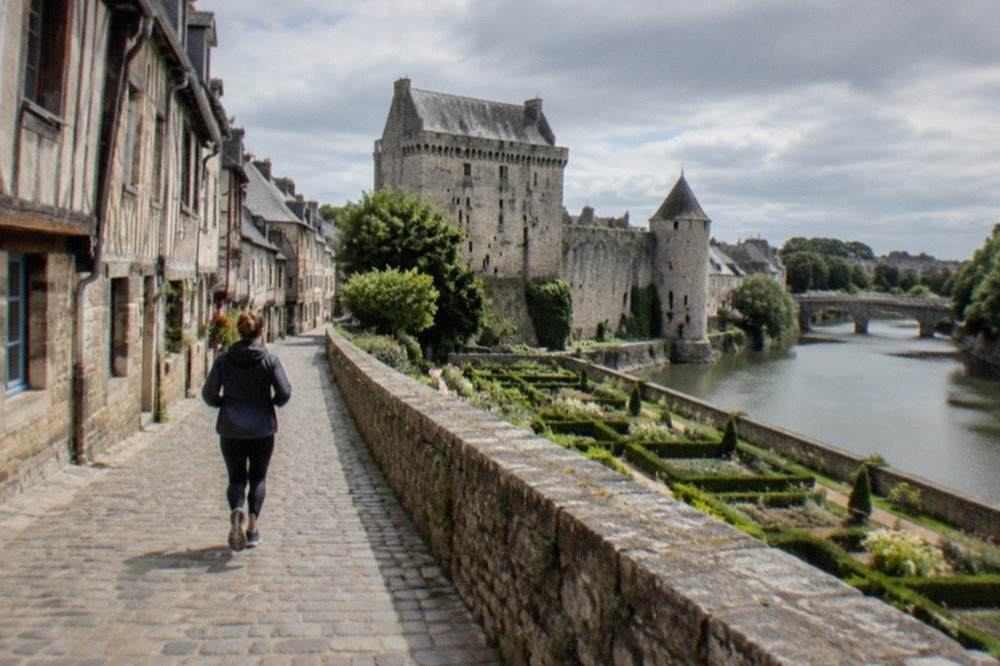
The strongest of the modern contenders is arguably easier to reach from Nantes than from almost anywhere else, which is one reason the debate keeps circling back to the Loire. For the grander châteaux that sit outside Brittany altogether, see our answer to which is the most beautiful château in France.
How Does A Brittany Beauty Contest Look From Nantes?
From Nantes, the region's famous towns are a set of short train rides or drives: Clisson in as little as 15 minutes by TER, Saint-Nazaire from around 33 minutes, La Baule from about 51 minutes and Le Croisic from roughly one hour, with Mont-Saint-Michel around 2 hours 15 minutes by road. Those times are for this city's routes and come from the SNCF and road sources in our verified pack, not from a ranking of the towns themselves.
That reach changes the question. You are not forced to choose one beautiful town and stay in it. A realistic plan is to sleep in Nantes, where the château, the cathedral and the Machines de l'île sit on one walkable spine, and to fan out for a day at a time. The figures below are the ones this site has verified for journeys starting in Nantes.
| Destination from Nantes | Verified travel time | What the pack actually says |
|---|---|---|
| Clisson | from ~15 min (avg ~23) by TER, 27 km by rail | One Clisson return included in Pass Nantes |
| Saint-Nazaire | from ~33 min by TER | Estuaire art trail ends here, 33 works on 23 sites |
| La Baule | from ~51 min by TER | Long sandy beach resort on the Atlantic |
| Le Croisic | from ~1 h 03 by TER | Small port at the tip of the Guérande peninsula |
| Pornic | ~59 to 65 min by TER | Seaside commune, part of the same rail fan |
| Mont-Saint-Michel | ~2 h 15 by road | Only practical by car from here |
Inside the city itself, the verified sight figures are unusually kind to a beauty contest. The Machines de l'île charges 12 EUR per attraction, 8 EUR for ages 4 to 12, with a 2-attraction day at 20 EUR and 3 attractions at 29 EUR, though the Grand Éléphant does not run from 2 November 2026 to 28 February 2027 for maintenance. The Musée Jules Verne is 4 EUR. The cathedral, the château courtyard, the Mémorial de l'abolition de l'esclavage and the Jardin des Plantes are all free. Few historic towns anywhere in Brittany put this much behind this low an entry cost.
Is Nantes Even In Brittany, Technically?
Administratively, no: a decree of 30 June 1941 attached Loire-Inférieure to the Angers region, separating it from Brittany, and the department was renamed Loire-Atlantique on 9 March 1957, so Nantes sits in the Pays de la Loire region today. Historically and culturally, yes: it was the seat of the dukes of Brittany until the union of the duchy with the kingdom of France in 1532, and the Breton identity of the city remains visible in its flag-flying ceremonies and its monuments.
This split is the whole reason the "most beautiful town in Brittany" question gets heated. Many Bretons consider Nantes theirs, and the city's own monuments argue the case: the château where Anne of Brittany was born, the cathedral where her father's tomb by Michel Colombe has been visible again since around 20 February 2026 during its restoration, and the Bouffay quarter that was the medieval town's heart. The counter-argument is bureaucratic and real: on today's map, the region called Bretagne stops at the Vilaine, and Nantes is not inside it.
If that boundary question interests you more than the beauty contest, we cover it properly in are Brittany and Bretagne the same? and why Brittany is different from France. For a longer trip that takes in both sides of the line, the Brittany road trip from Nantes is the itinerary this site actually recommends.
Can You Judge Several Beautiful Towns On One Trip?
Yes, and doing it from Nantes is the efficient way: the city's tram and rail network puts Clisson inside half a day, the Atlantic resorts inside a morning's travel and the wider Breton towns within a long day by car or train, so a four or five night stay can cover the capital of the dukes plus two or three walled towns. The sequencing matters more than the destination list, because each town rewards a different part of the day.
Rampart towns are at their best at dawn and dusk, when day-trippers have gone and the stone changes colour. Nantes is at its best in the middle of the day, when the Passage Pommeraye's 1843 glass roof does its work and the Galerie des machines is fully animated. A sensible pattern is therefore a full Nantes day, a half-day in Clisson on the Sèvre, then a full day on the coast at La Baule or Le Croisic, using the trains in the table above rather than a car.
One seasonal note worth planning around: the Rendez-vous de l'Erdre jazz festival, free along the river, ran 24 to 30 August 2026 for its 40th edition, and the Le Voyage à Nantes summer art trail, with its roughly 22 km green line, ran 4 July to 6 September 2026. Time a late-summer visit to either and the beauty contest partly answers itself, because the city is dressed for it.
Common Questions About The Most Beautiful Town In Brittany
What is the most beautiful town in Brittany, France?
There is no official answer. Saint-Malo, the walled corsair port, and Vannes, the half-timbered harbour town, are the two names most often given. Nantes, the historic capital of the dukes of Brittany, now in Loire-Atlantique and Pays de la Loire, is the third answer with the strongest historical case and the most to see across several days.
Is Nantes part of Brittany?
Administratively no: since the 1941 decree, Nantes has been in Loire-Atlantique, within the Pays de la Loire region. Historically it was the seat of the dukes of Brittany, and the Château des ducs de Bretagne, begun in 1466, still anchors that claim in the city centre.
Which is prettier, Saint-Malo or Vannes?
They are different kinds of beauty. Saint-Malo is dramatic, with complete granite ramparts and tidal fort islands. Vannes is charming, with painted half-timbered houses around a small harbour. Neither has been ranked above the other by any official body, so walk both if you can and decide for yourself.
Can you visit Brittany's coastal towns from Nantes?
Yes. Verified train times from Nantes include La Baule from about 51 minutes, Le Croisic from roughly one hour and three minutes, and Pornic at 59 to 65 minutes. Mont-Saint-Michel is around two and a quarter hours by road, so it is a car day rather than a train day.
What is the cheapest of the beautiful towns to visit?
Nantes: its cathedral, château courtyard, ramparts, Jardin des Plantes and Mémorial de l'abolition de l'esclavage are all free, the Musée Jules Verne is 4 EUR and the Machines de l'île is 12 EUR per attraction with a 3-attraction day at 29 EUR.
Where should you stay to see several of these towns?
Nantes is the practical base: it sits on the rail fan that reaches Clisson, Saint-Nazaire, La Baule, Le Croisic and Pornic, and it holds enough of its own, castle, cathedral, Machines and food scene, to fill the days in between. Our Brittany road trip itinerary covers the loop if you would rather drive.
The debate will never be settled, and that is fine: it sends people to three towns instead of one. But if the question is which beautiful town in historic Brittany you can actually live in for a few days, with a ducal castle, a reopening cathedral and the Atlantic an hour away, the answer from the Loire is hard to beat. For everything the city itself offers, start with Nantes Travel Guide and plan from there.