What Is The Most Beautiful Château In France?
No official title exists, but the strongest case is the Château des ducs de Bretagne in Nantes: verified history from 1466, free ramparts, a 9 EUR history museum and how to fit it into a day from Paris.
Ask a French guidebook editor to name the most beautiful château in France and the answer will usually be Chambord, Chenonceau or Versailles, all of them palaces built to flatter kings. Ask in Nantes, the city at the heart of the Loire-Atlantique department in the Pays de la Loire region of western France, and the answer is already standing in the middle of town: the Château des ducs de Bretagne, a granite ducal fortress begun in 1466 that today wraps a free public courtyard, a serious history museum and several centuries of Breton and French politics into a single site. That is the argument this page makes, using only dates, hours and prices that have been verified for the Nantes château itself.
What Is The Most Beautiful Château In France?
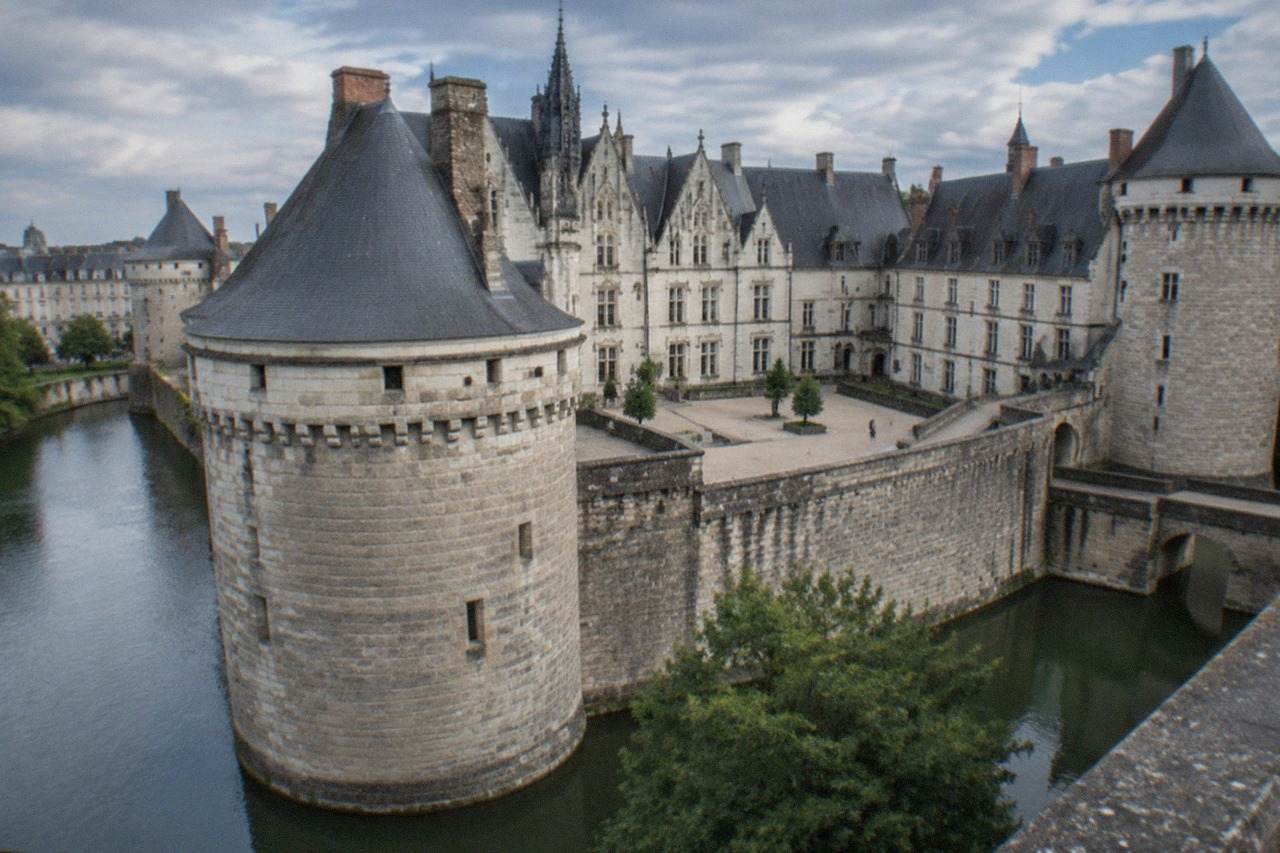
No official title exists, and taste decides: Chambord for scale, Chenonceau for romance, Versailles for sheer spectacle. The case argued from Nantes, in the Loire-Atlantique department of western France, is the Château des ducs de Bretagne, the last great ducal fortress of Brittany's lands, begun in 1466, where Anne of Brittany was born, where the Edict of Nantes was signed, and whose ramparts and courtyard are free to walk every day of the year.
The honest starting point is that France has never run this contest. There is no ministry prize, no national register of beauty, and every list you will meet online is one writer's taste dressed up as a verdict. Chambord dazzles with its double-helix staircase and its roofline of lanterns. Chenonceau arcs over the Cher like a bridge that dreamed of being a palace. Versailles does grandeur on a scale that makes every other château look like a hunting lodge. None of that is in dispute here.
What those palaces cannot offer is what the Nantes château has in surplus: a fortress that was not built to entertain a king but to govern a duchy, and that watched the whole arc of Brittany's independence play out inside its walls. Beauty, if it means anything more than decoration, is partly story. A building where a future twice-crowned queen was born, where a kingdom-changing edict was signed and where the history of a port that shaped France is now laid out across an entire museum has a claim that pure architecture cannot match. Visitors who want the wider picture of the city can start with what Nantes is famous for, then come back to the fortress at its centre.
Why The Château Des Ducs De Bretagne Makes The Strongest Case
The Château des ducs de Bretagne makes the strongest case because no other French château carries this much verifiable history in one place: Francis II began rebuilding it in 1466, Anne of Brittany was born there on 25 January 1477, and Henri IV signed the Edict of Nantes there in April 1598. The city of Nantes has owned it since 1915, and its history museum, restored between 1997 and 2007, now fills the fortress with the story of Nantes itself.
Consider the sequence. A duke rebuilds a fortress on the edge of his duchy in 1466. Eleven years later his eldest daughter is born inside it, a girl who will become duchess of Brittany and then, in turn, queen of two French kings. In 1532 the duchy she fought to protect is united with the kingdom of France. In April 1598, dated 30 April on the château's own page, a king signs the Edict of Nantes inside these walls, granting Protestants the rights that would define French politics for a century. Very few buildings anywhere in Europe can point at four events of that weight and say: here, in this courtyard.
The site's afterlife is just as strong. The city took ownership in 1915, opened a museum inside in 1924, and then spent ten years, from 1997 to 2007, restoring the whole ensemble before reopening it as the Musée d'histoire de Nantes. Today the fortress works as a public space first and a ticketed museum second: the courtyard, ramparts and moat garden cost nothing, open long hours, and sit directly on the city's tram network. The full site guide, including how the museum's galleries are arranged, is on our detailed Château des ducs de Bretagne page.
| Year | What Happened At The Nantes Château |
|---|---|
| 1466 | Francis II, duke of Brittany, begins rebuilding the ducal fortress |
| 25 January 1477 | Anne of Brittany is born at the château, eldest daughter of Francis II |
| 1532 | The Duchy of Brittany is united with the kingdom of France |
| April 1598 | Henri IV signs the Edict of Nantes at the château, dated 30 April on the château's own page |
| 1915 | The château passes into the ownership of the city of Nantes |
| 1924 | A museum opens inside the château |
| 2007 | The Musée d'histoire de Nantes opens after the 1997-2007 restoration |
If the question is which château rewards a full day best, the Nantes answer holds up: ramparts in the morning, museum through the middle of the day, moat garden at the end, all without leaving the city centre. Guided options below cover the fortress and the surrounding quarter for travellers who want a local's route through it.
How Does The Nantes Château Compare With Chambord And Chenonceau?
Set beside Chambord and Chenonceau, the Nantes château trades spectacle for substance: the Loire pleasure palaces were built to entertain visiting kings, while the Château des ducs de Bretagne was built to govern a duchy, and its walls carry the births, treaties and quiet power of a state that only joined France in 1532. This page quotes figures for the Nantes side only, because only that side has been verified here.
Be clear about what the comparison is. Chambord and Chenonceau are extraordinary buildings, and pretending otherwise would not help anyone plan a trip. Their beauty is architectural and immediate: you round a corner, see the silhouette, and the reaction is instant. The Nantes château asks for a little more patience. It is a fortress of towers, curtain walls and water, granite rather than fairy-tale turrets, and its impact grows the longer you stay, as the museum explains what actually happened here.
The differences are practical too. The great Loire palaces sit in estates reached by car or tour bus, visited by day and emptied by evening. The Château des ducs de Bretagne is a working part of a city of some 327,000 people (the commune's 2023 INSEE figure), with trams stopping nearby, a free courtyard that locals cut through on their way home, and a moat garden used as an ordinary park. You do not visit it so much as spend time inside it. That texture, a national monument behaving like a neighbourhood square, is rare in France, and it is a fair part of the beauty case.
None of the figures printed on this page describe Chambord or Chenonceau, because nothing about them was verified for this article. What is verified is the Nantes side: the dates in the table above, the prices in the sections below, and the practical fact that the whole site sits within a short tram ride of Nantes station. Travellers comparing the Loire's famous castles with a city base can also read whether Nantes is walkable before deciding how to split their time.
What Not To Miss Inside The Château Des Ducs De Bretagne In Nantes
Inside the walls, the Musée d'histoire de Nantes fills 32 rooms with more than 1,150 objects, tracing the city from the Middle Ages through its years as France's leading slave-trading port, with 1,714 recorded expeditions before Nantes withdrew in 1830, and on into the industrial and modern city. The courtyard and ramparts are free to walk daily, and the temporary exhibition Expression(s) décoloniale(s) #4 runs from 8 May to 8 November 2026.
The museum does not flinch, and that is part of why it is respected. Its galleries on the Atlantic slave trade are among the most direct in any French museum: Nantes fitted out 1,714 of at least 4,220 French expeditions, some 43% of the French trade, and the city's ships did not stop until 1830. The Mémorial de l'abolition de l'esclavage, free and open daily on the Quai de la Fosse, continues that story, and the current exhibition series Expression(s) décoloniale(s) #4 links the two sites until 8 November 2026. Everything else covered here is indexed on Nantes Travel Guide.
Elsewhere in the 32 rooms you move through the dukes' Nantes, the port's golden century, the wars and the city's reinvention as a manufacturing and then cultural capital, ending in contemporary galleries that include video work. The route is chronological, so the fortress itself works as the first exhibit: you read about the dukes inside the rooms the dukes built.
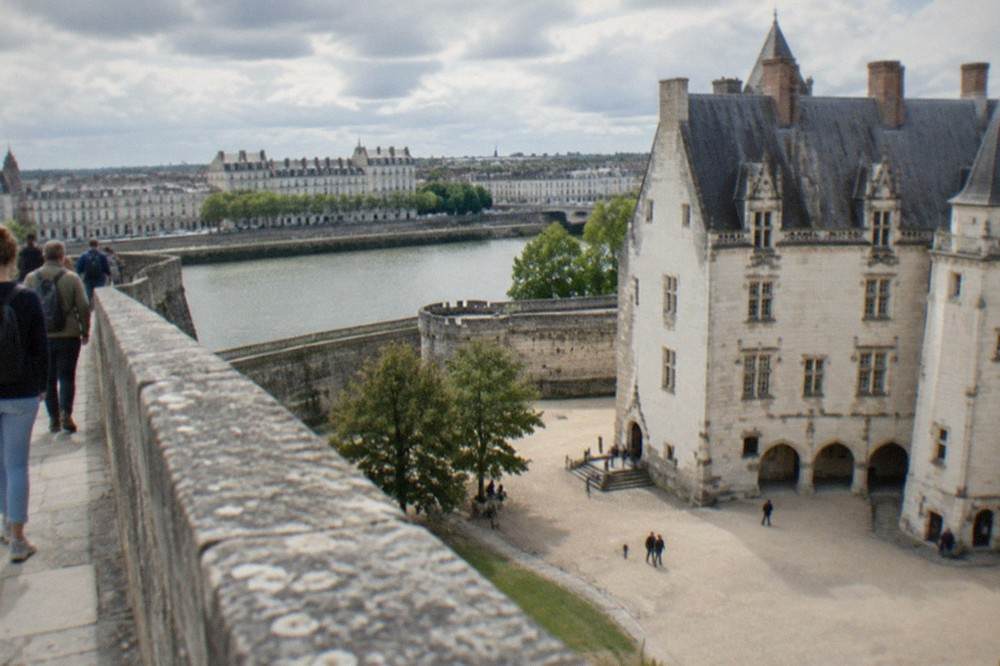
Plan the rest of the day around the walls, because the château sits at the centre of everything that makes its case. The pairing below uses verified entry costs only.
| Nearby Nantes sight | Entry cost | Why it pairs well |
|---|---|---|
| Musée d'histoire de Nantes, inside the château | 9 EUR full, 5 EUR reduced | 32 rooms covering the whole arc of the city's history |
| Nantes Cathedral | Free | Partially reopened 27 September 2025; full reopening planned for 2028 |
| Passage Pommeraye | Free | A three-floor 1843 shopping arcade, unchanged since it was built |
| Machines de l'île, Galerie des machines | 12 EUR full | Mechanical creatures on the Île de Nantes, a short tram ride away |
| Mémorial de l'abolition de l'esclavage | Free | Open 9:00-18:00 (16 Sept-14 May), 9:00-20:00 (15 May-15 Sept) |
| Jardin des Plantes | Free | One of France's notable city botanical gardens, a short walk east |
A short local-led orientation walk is a sensible first hour in the city for anyone arriving without a plan, and the option below places the château in context with the rest of the centre before you commit the bulk of your day to the museum.
When To Visit The Château Des Ducs De Bretagne And What It Costs
The courtyard and ramparts are free and open 8:30 to 19:00 daily, extending to 20:00 in July and August, and the moat garden opens from 8:00. The Musée d'histoire costs 9 EUR full price or 5 EUR reduced, is free for under 18s, opens 10:00 to 18:00 and closes on Mondays, except that July and August run daily from 10:00 to 19:00. First-Sunday free entry applies from September to June.
The pricing structure is generous by French standards, and it rewards a little planning. Arrive on the first Sunday of a month between September and June and the museum costs nothing at all. Bring anyone under 18 and they enter free every day. Pay full price once and you can add a guided visit for 12 EUR, or skip the single ticket entirely with the Pass Musées, a 15 EUR annual pass covering the château's museum, the Musée d'arts, the Musée Jules-Verne and the Chronographe in Rezé. Regular visitors and residents come out well ahead on that pass; a one-off tourist should do the arithmetic against their own itinerary.
| Part of the château site | Cost | Opening pattern |
|---|---|---|
| Courtyard and ramparts | Free | Daily 8:30-19:00, to 20:00 in July and August |
| Moat garden, Jardin des douves | Free | Daily 8:00-19:00, to 20:00 in July and August |
| Musée d'histoire de Nantes | 9 EUR full, 5 EUR reduced, free under 18 | 10:00-18:00, closed Mondays; July-August daily 10:00-19:00 |
| Guided visit | 12 EUR | By reservation through the château's own site |
| Pass Musées, four museums for a year | 15 EUR | Valid one year from purchase |
Seasons matter less here than at the rural châteaux, because the site is urban and open all year. That said, the free-courtyard hours stretch an extra hour in July and August, the museum drops its Monday closure for those two months, and the summer art trail of Le Voyage à Nantes turns the walk between the château and the river into an open-air exhibition. Winter visits are quieter and the light on granite is arguably better; the trade-off is shorter days and the October-to-January stretch that brings the heaviest rain of the year to Nantes.
Can You See The Nantes Château On A Day Trip From Paris?
A day trip is tight but workable: the fastest direct trains between Paris Montparnasse and Nantes take about two hours, and the operators' timetables list roughly 24 services in each direction on a typical day. That leaves a workable afternoon for the château, the cathedral and a walk along the river, though an overnight stay is the more comfortable plan.
The train is the whole reason the question is even fair. Two hours each way, which is how the current timetables read, means a morning departure puts you at Nantes station mid-morning, and the station sits close enough to the centre that the château is one of the first major sights you reach. Details on schedules and fares are in our guide to the TGV journey time from Paris. The trap is trying to pack too much in: the museum alone has 32 rooms, and the courtyard deserves a slow lap, not a sprinted one.
A single day is enough to understand the case this page makes. Two is enough to test it properly, with the Machines de l'île, Trentemoult across the Loire and a Clisson-and-Trentemoult excursion all reachable without a car. Our page on how many days to spend in Nantes breaks the trade-offs down, and the full complete Nantes sightseeing guide covers everything beyond the fortress walls. For the river side of the city, an Erdre cruise and the surrounding options are worth a look before you commit your second afternoon.
Common Questions About The Most Beautiful Château In France
The short answers: France has never crowned an official most beautiful château, and this guide's case is the Château des ducs de Bretagne in Nantes, whose courtyard and ramparts are free daily from 8:30 to 19:00, whose history museum costs 9 EUR and closes on Mondays, and whose story runs from Anne of Brittany's birth in 1477 through the Edict of Nantes in April 1598 to the museum's opening in 2007.
What is the most beautiful château in France?
There is no official answer, and any list claiming one is editorial taste. The famous candidates are Chambord, Chenonceau and Versailles. The case made on this page, from verified history rather than photography, is the Château des ducs de Bretagne in Nantes: a 1466 ducal fortress with free ramparts, a 32-room history museum and more verified events per stone than any of the pleasure palaces.
Is the Château des ducs de Bretagne free to visit?
Partly. The courtyard, ramparts and moat garden are free and open long hours every day. The Musée d'histoire de Nantes inside costs 9 EUR full price or 5 EUR reduced, is free for under 18s, and is also free on the first Sunday of each month from September to June.
Is the Nantes château in Brittany or in the Loire?
Historically Brittany: it was the dukes of Brittany's principal residence, and the duchy was united with France in 1532. A decree of 30 June 1941 attached the department, then called Loire-Inférieure, to a region centred on Angers, and it was renamed Loire-Atlantique in 1957. Administratively Nantes and its château now sit in the Pays de la Loire region.
How long should you allow for a visit?
Give the free courtyard and ramparts a slow circuit, then plan most of a morning for the museum's 32 rooms if history is your reason for coming. A guided visit, bookable for 12 EUR, compresses the highlights for anyone short on time. Visitors fitting the château into a Paris day trip should treat the museum as the priority and the stroll around the walls as the bonus.
Where should you stay near the château?
Central Nantes puts you within walking distance. Hotel bills in the métropole carry a tourist tax reported in the 2026 tariff schedule at 2.86 EUR per person per night for 4-star hotels and 1.87 EUR for 3-star, on top of the room rate. A budget eco-concept hotel also opened on the Île de Nantes in January 2026, adding a lower-cost option a short tram ride from the fortress.
What else should you see near the château in Nantes?
The cathedral, which partially reopened on 27 September 2025 with full reopening planned for 2028, the free 1843 Passage Pommeraye arcade, the Machines de l'île across the Loire, and the Mémorial de l'abolition de l'esclavage on the Quai de la Fosse, which pairs directly with the château museum's galleries on the slave trade. All sit on or near the city's tram lines, which run free of charge all weekend.