What Is Special About Guérande Salt?
Guérande salt, hand-harvested in the salt marshes about 80 km by road from Nantes, had a record 2026 season; here is what makes it special and how to visit from the city.
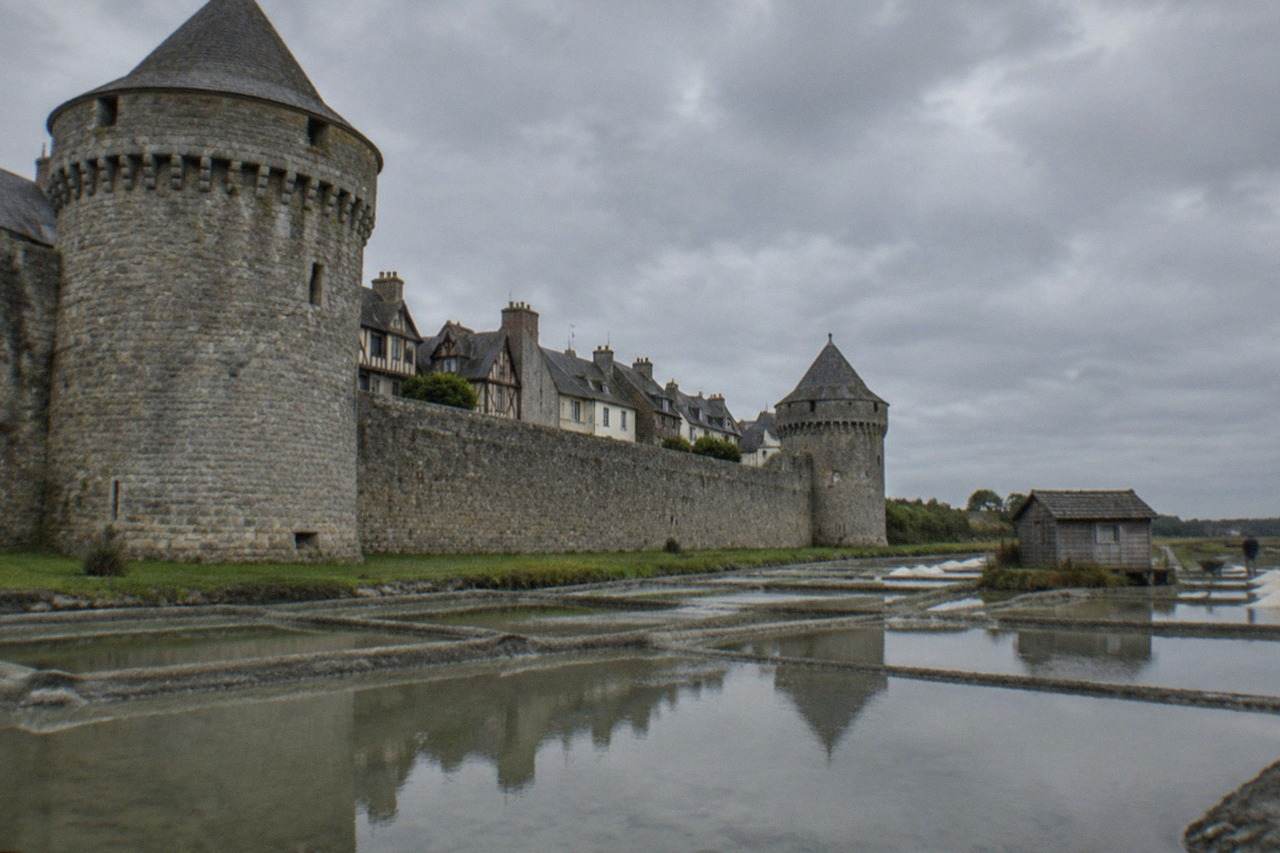
Guérande salt comes from a working coastal landscape about 80 km by road from Nantes, in the Loire-Atlantique department of the Pays de la Loire region in western France, and it is one of the few salts in Europe still harvested almost entirely by hand. The town of Guérande sits behind its medieval ramparts a short drive from the Atlantic, and around it spreads a checkerboard of shallow clay pans where seawater is moved, evaporated and raked in a cycle that has barely changed in centuries. What makes it genuinely special is a combination of three things: the traditional method, the minerals the clay pans contribute, and the unusual climate of the coast it comes from, which in 2026 produced a harvest so abundant it made national news.
What Is Special About Guérande Salt?
Guérande salt is a coarse, hand-raked sea salt produced in clay-lined evaporation pans rather than industrial evaporators, which leaves it grey-white, moist and rich in the minerals of the marsh itself, topped by the finer fleur de sel skimmed from the surface on dry days. It is harvested by salt workers known as paludiers on the Atlantic coast about 80 km by road from Nantes, in western France. Unlike refined table salt, it is neither washed nor dried, so it keeps its trace elements and texture.
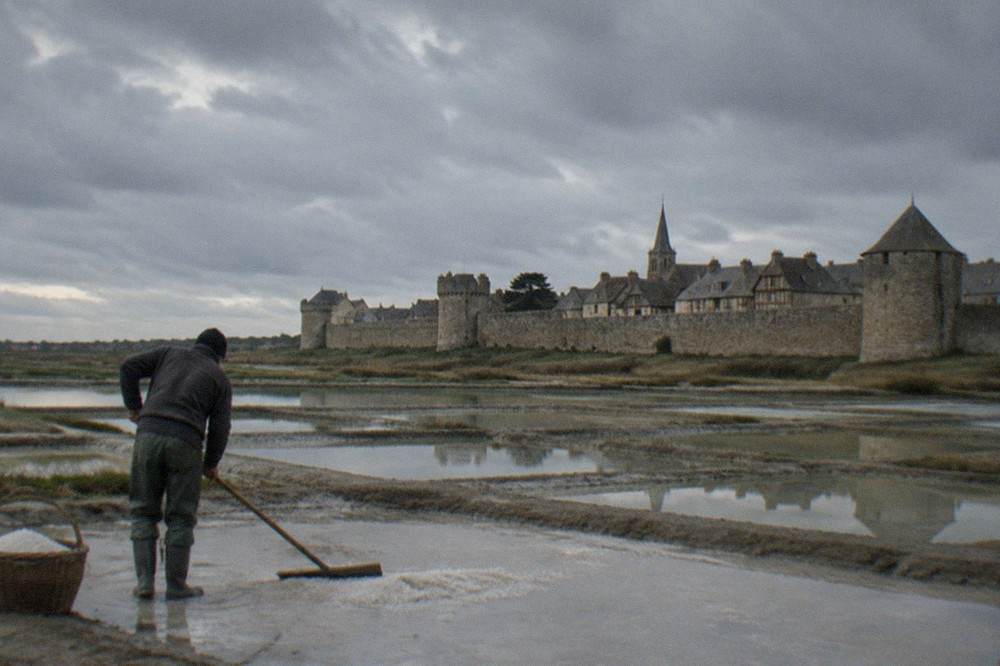
The distinction matters more than most first-time buyers realise. Ordinary sea salt is often produced by evaporating seawater in vast industrial installations, then washing and kiln-drying the crystals until what remains is close to pure sodium chloride. Guérande salt takes the slow route. Seawater is guided through a chain of ponds and pans, each one a little shallower than the last, and the sun and the Atlantic wind do the work of evaporation. The salt that settles on the clay bottom is raked up by hand with long wooden tools, drained, and sold with its natural moisture intact.
The marshes themselves are the second half of the story. The individual pans, called œillets in French, are laid out in a dense geometric grid that is striking from the roadside: the pattern you see from the observation points between Guérande and the coast is the production floor of a food that has been made this way for generations. The clay of each œillet interacts with the brine, and locals credit it, along with the hand-skimming, for the salt's slightly grey colour and its softer, less sharp finish than factory products. The tourism office for the La Baule-Guérande area notes that the marshes shelter roughly 200 bird species, which is one reason the landscape is protected rather than developed.
Fleur de sel is the premium layer of the same system. On warm, breezy afternoons a thin film of fine white crystals forms on the surface of the pans before it ever sinks, and this is skimmed by hand and sold in small quantities at a higher price than the grey coarse salt. It dissolves faster and carries a more delicate flavour, which is why chefs treat it as a finishing salt rather than a cooking salt. A pot of fleur de sel from Guérande, bought at source, is one of the most portable souvenirs a visitor to the Nantes region can take home.
How Is Guérande Salt Harvested In The Salt Marshes?
Guérande salt is harvested between roughly June and September, when sun and wind evaporate the seawater channelled through the marsh, and each paludier rakes the coarse grey salt from the clay bottom of individual pans called œillets while skimming the finer fleur de sel from the surface. The work is manual, seasonal and weather-dependent, so no two years produce the same result. Visitors can watch the harvest from paths and guided visits during the season.
The year is organised around the weather. Rain dilutes the brine and can undo days of evaporation, so a paludier's summer is a constant negotiation with the forecast: harvest hard in the dry spells, protect the pans when cloud and showers arrive. The 2026 season, as reported locally, was intense from the start and only ended when September rain closed it early, which is a perfect illustration of how tightly the crop is tied to the sky.
Guided visits run all year, not only in the harvest months. The cooperative and association Terre de Sel runs visits with options across the calendar, including the quiet winter months when the pans lie still and the birdlife takes centre stage. A guide explains the water channels, the tools and the daily routine of a paludier, and the walk covers ground you would otherwise only see from a distance. This is the kind of slow, explainer-led visit that suits the landscape well, because the marshes look simple from the road and turn out to be an intricate piece of engineering once someone walks you through it.
Tastings usually follow the tour, with the coarse salt, the fleur de sel and the local salted caramels laid out side by side so the difference is immediate. Prices for these extras vary by season and operator, so check at the point of booking rather than trusting a figure read online. For travellers coming from Nantes, the practical question is not whether the visit is worthwhile but how to fit it into a day, which is covered further down this page.
Why Was The 2026 Guérande Salt Harvest A Record One?
The 2026 Guérande salt harvest produced roughly double a normal crop because an exceptionally hot, dry summer accelerated evaporation in the pans, with an average of about 1.5 tons per œillet and some pans yielding more than 3 tons, according to reporting from September 2026. The season ended early when rain arrived in September. It was the most abundant harvest in recent memory for the paludiers.
The numbers came from the harvest reporting itself. French outlet 20 Minutes, covering the crop on 7 September 2026, described a season of doubled production driven by the summer heat, with the average œillet yielding around 1.5 tons and the best pans passing 3 tons. The same heat that strained the region's vineyards was, for once, a gift to the salt workers: evaporation is the entire engine of the process, and 2026 gave the marshes more of it than anyone could use. The wider set of guides lives on Nantes Travel Guide.
| 2026 harvest measure | Figure | Note |
|---|---|---|
| Average yield per œillet | about 1.5 tons | Roughly double a typical year |
| Top-yielding pans | more than 3 tons | Best results reported in 2026 |
| Overall production | roughly doubled | Attributed to summer heat |
| Season end | early September 2026 | Closed by rain after an intense run |
The heat behind the record is worth understanding, because it shapes the whole region around Nantes. The 2026 summer was the hottest on record at the Nantes-Bouguenais weather station: a new all-time maximum of 42.2°C was set on 24 June 2026, breaking the previous record of 42.0°C from 18 July 2022, and by late July the year had already logged 40 days at or above 30°C, a station record. The Muscadet vineyards east of Nantes started their grape harvest on a ban declared 11 August 2026, a record eight days earlier than the previous mark, with yields down. Salt and wine answered the same heat in opposite ways: less wine, much more salt.
| 2026 weather milestone, Nantes area | Date or figure | Consequence |
|---|---|---|
| All-time station record high | 42.2°C, 24 June 2026 | New record for Nantes-Bouguenais |
| Days at or above 30°C | 40 by late July 2026 | Station record count |
| Muscadet harvest ban | 11 August 2026 | Record-early start, lower yields |
| Guérande salt crop | roughly double | Average about 1.5 tons per œillet |
For a visitor, the record harvest has a practical upside. Stock at the cooperatives and shops around Guérande is plentiful, and the story of the doubled crop is a live one that the paludiers themselves are telling on visits. Buying a bag of 2026 salt at source, in the middle of a record year, is as close as food shopping gets to a dated vintage.
How Do You Visit The Guérande Salt Marshes From Nantes?
Guérande lies about 80 km by road from Nantes, in the far west of Loire-Atlantique toward the Atlantic coast, and visiting the salt marshes is best done as a half or full day trip by car or coach, since the marshes are spread across open ground between the walled town and the sea. Guided visits of the pans run year-round. Allow the best part of a day if you also want to see the town itself.
The drive west from Nantes crosses the Muscadet country and then opens out toward the coast, and Guérande pairs well with a look at the medieval town inside its ramparts, the shops selling salt at source, and the observation points over the pans. Parking near the marshes is easy compared with the coast in high summer, and the flat terrain makes the walking gentle. One planning note for late 2026: Guérande began three months of water network works on the boulevard du Général de Gaulle and the faubourg Sainte-Anne area from 28 September to 18 December 2026, so expect some local disruption around the town entrance during that window.
A guided product makes the logistics simpler, and the salt marshes visit in our roster is the natural fit for this page. The listing shows a strong rating from a large number of reviews, though the operator has not published a price, so use the live listing for the current figure and dates rather than any number quoted second-hand.
You can also check dates directly with the operator: Check availability. Booking ahead matters most in July and August, when the harvest is at its peak and demand for guided walks through the pans is highest. For more on the town itself, including the ramparts and where to eat, see the site's dedicated Guérande day trip guide, and for the broader coastal picture read how far Nantes is from the ocean.
The question of whether Guérande justifies the drive is easily answered by pairing it with something else. The resort of La Baule sits close by, and its long sandy bay makes a natural second stop; whether that combination suits you is covered in is La Baule worth visiting. If your trip is anchored on the city rather than the coast, the overall picks in this Nantes Travel Guide include a bike tour and a Segway option for the city centre alongside the salt marshes day, covering both halves of a Loire-Atlantique visit.
What Can You Combine With A Guérande Salt Trip From Nantes?
Guérande sits among several easily reached coastal and inland day trip destinations west and south of Nantes, and the most common pairing is La Baule's beach with the salt marshes in a single loop, though Clisson to the east, Saint-Nazaire at the river mouth and Pornic on the coast are all reachable by TER train from the city in under about an hour. The salt marshes anchor the western loop by car.
By rail, the alternatives to the westward drive are plentiful. Clisson, the Italianate town on the Sèvre Nantaise, is a TER ride of about 15 to 23 minutes from Nantes, and one return journey there is included in the Pass Nantes. Saint-Nazaire at the mouth of the Loire takes roughly 33 minutes by TER, La Baule about 51 minutes, Pornic about an hour and Le Croisic just over an hour, all of which makes a car-free coastal day entirely feasible if the salt marshes themselves are left for a future trip.
| Day trip from Nantes | Travel figure | Way to travel |
|---|---|---|
| Clisson | about 15-23 minutes | TER train |
| Saint-Nazaire | about 33 minutes | TER train |
| La Baule | about 51 minutes | TER train |
| Pornic | about 59-65 minutes | TER train |
| Le Croisic | about 1 hour 3 minutes | TER train |
| Guérande | about 80 km | road |
Wine is the other thread. The Muscadet vineyards east of Nantes had their record-early harvest in 2026, and the same terroir conversation that makes the salt interesting applies to the wine; whether Muscadet is sweet or dry, and what to taste, is covered in is Muscadet wine sweet or dry. If you are building an itinerary around the whole region, the site's pieces on what Nantes is famous for and how many days to spend in Nantes lay out the rest of the options, including the mechanical elephant and machines described in what the Machines de Nantes are.
Common Questions About Guérande Salt
What is special about Guérande salt?
It is a hand-raked, unwashed sea salt harvested in clay pans about 80 km by road from Nantes, which keeps its natural moisture, grey-white colour and mineral content, with the finer fleur de sel skimmed from the surface. Its 2026 harvest was roughly double a normal year thanks to the record summer heat.
Can you visit the Guérande salt marshes in winter?
Yes. Terre de Sel and other operators run guided visits year-round, including in the quieter winter months when the harvest is over but the pans, channels and birdlife are still there to explain and observe.
How far is Guérande from Nantes?
About 80 km by road, per the verified day trip figures, generally counted as a trip of around an hour to an hour and a quarter each way, so allow most of a day for the visit and back.
Why did the 2026 harvest double?
An exceptionally hot, dry summer accelerated evaporation in the pans, and the average œillet yielded about 1.5 tons, with some passing 3 tons, before September rain ended the season early.
Is Guérande salt the same as ordinary sea salt?
No. Ordinary sea salt is typically evaporated industrially, washed and dried, while Guérande salt is raked by hand from clay pans and left unwashed, which preserves the trace minerals and texture that distinguish it.
Whether you come for the record 2026 vintage of coarse grey salt, the sight of a paludier raking at dawn or simply the strange, gleaming geometry of the pans themselves, the marshes of Guérande are one of the few food landscapes near Nantes where you can watch the whole process from seawater to shop shelf in a single morning.