Nantes Boat Trip: Cruises And Ferries On The Loire And Erdre
Nantes, in the Loire-Atlantique department of the Pays de la Loire region of western France, is one of the few French cities where a scheduled ferry is part of everyday transport: three Naolib Navibus routes cross the Loire and the Erdre on ordinary tram tickets, and private cruises run the tree-lined Erdre for visitors.
Short answer
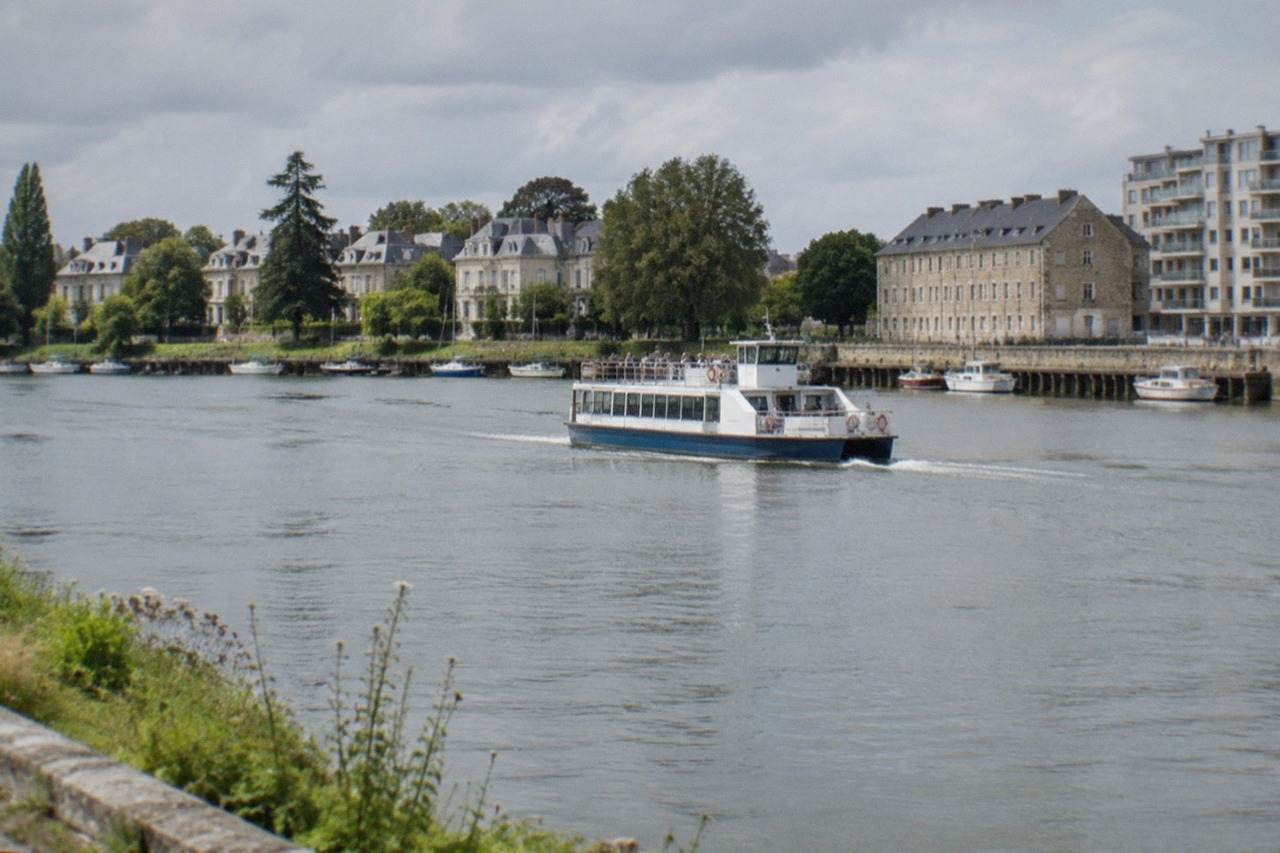
A Nantes boat trip means either the Naolib Navibus, three scheduled ferry routes using ordinary 1.80 EUR tickets, or a private three-hour cruise on the Erdre aboard the Na Boa boat, whose price is not published by the operator and renders in the booking panel below.
Nantes, in the Loire-Atlantique department of the Pays de la Loire region of western France, is built around water in a way that surprises first-time visitors. The Loire, the great river that shaped the city's history as a port, runs through its centre in a wide, island-split channel, while the Erdre joins the Loire from the north. A third tributary, the Sèvre Nantaise, meets the Loire from the south near the old port of Trentemoult.
What makes Nantes genuinely unusual is that the river is not just scenery. The local transport network runs three scheduled ferry routes, the Navibus, on ordinary tram and bus tickets, so crossing the Loire or riding up the Erdre costs the same as a bus journey. On top of that, a private operator runs a three-hour cruise on the Erdre aboard the Na Boa boat, aimed squarely at visitors. This guide covers all of it: which boats go where, what they cost, when to ride, and what you actually see from the water.
Why Is Nantes Such A Good City For A Boat Trip?
Nantes is a ferry city by design, not by tourist gimmick. Three scheduled Naolib Navibus routes cross the Loire and the Erdre on ordinary 1.80 EUR tickets, the same price as a tram ride, and the newest route between Trentemoult and the Hangar à Bananes only launched in November 2025. A three-hour private cruise on the Erdre aboard the Na Boa boat also runs from the city, and the riverside Mémorial, the Machines de l'île and the Hangar à Bananes line the banks on the way. The city grew rich on this water: the Loire carried the trade that made Nantes France's greatest Atlantic port, and the Quai de la Fosse, where slave-trade ships once berthed, is now the quayside promenade your ferry crosses.
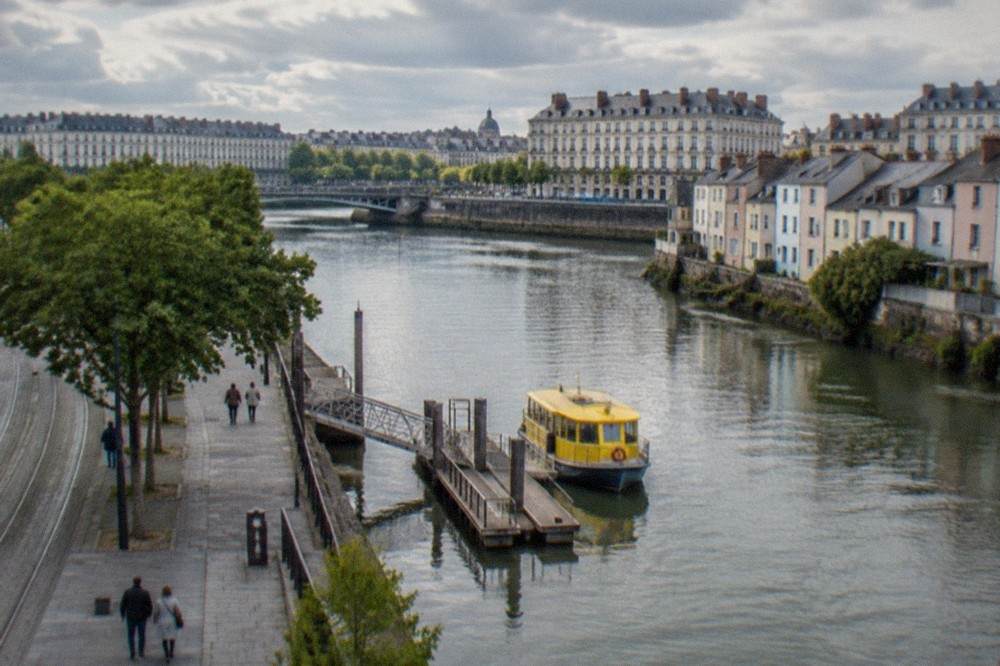
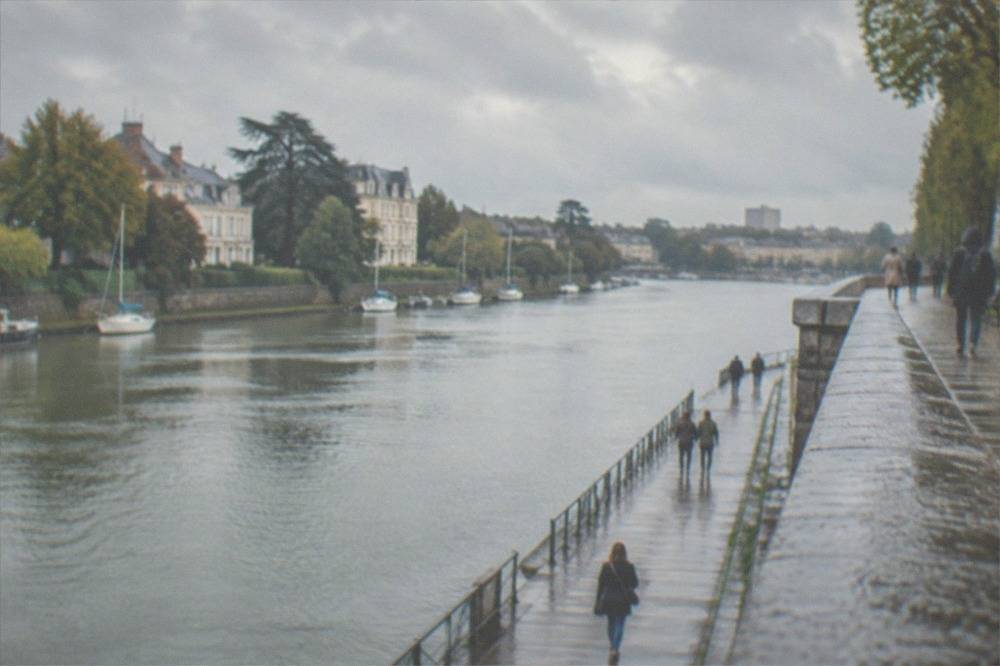
The three Navibus routes each serve a different purpose. N1 links the Gare Maritime on the north bank to Trentemoult Sablières on the south, the fishing-village-turned-neighbourhood with coloured houses. N2 runs from the Hangar à Bananes on the Île de Nantes across to Bas-Chantenay and on to Trentemoult. N3 leaves the Loire entirely and runs up the Erdre, the quiet, tree-lined river to the north, between the Gachet and Grimaudière stops.
| Route | Runs between | River | What it is for |
|---|---|---|---|
| Navibus N1 | Gare Maritime and Trentemoult Sablières | Loire | Crossing to the Trentemoult village quarter |
| Navibus N2 | Hangar à Bananes, Bas-Chantenay and Trentemoult | Loire | New link between the island quay and both banks |
| Navibus N3 | Gachet and Grimaudière | Erdre | Riding the green river north of the centre |
The N2 extension is the newest piece of the network. It launched on 12 November 2025 with a new 46-metre pontoon at Trentemoult-Sablières, a 140-space park-and-ride beside the landing stage, and crossings roughly every 20 minutes at peak times, running to 20:00 in winter and midnight in summer according to the launch coverage. Before it opened, the Hangar à Bananes side of the river was the awkward one to reach by water.
What Boat Trips Can You Take In Nantes?
Your realistic options in Nantes are the three Navibus ferry crossings on the Loire and Erdre, which cost 1.80 EUR each on standard Naolib tickets, and the private three-hour cruise on the Erdre aboard the Na Boa boat, whose price the operator has not published. Beyond the city, the Muscadet vineyard tours by van reach the Sèvre Nantaise valley, and the green-line art trail of Le Voyage à Nantes strings the riverside sights together on foot between crossings. In practice a Navibus hop to Trentemoult pairs well with an afternoon cruise up the Erdre, and the ferries work as transport rather than a tour.
The trio above covers the packages that pair naturally with a day on the water: a private custom walk to anchor the geography before you board, cathedral tickets for the interior landmark that the quays lead back towards, and a half-day vineyard van tour for the river country south of the city. The Na Boa cruise itself sits in the next section, because its details deserve their own treatment.
A sensible water-based day looks like this. Cross to Trentemoult on N1 in the morning, when the terraces along the quay are quiet and the light is on the coloured houses. Walk the lanes, then take N2 across to the Hangar à Bananes for lunch under the former banana warehouses, now bars and galleries. In the afternoon ride N3 up the Erdre, or book the full three-hour cruise if you want the river explained rather than just crossed.
What Is The Three-Hour Erdre Cruise Aboard The Na Boa?
The Na Boa cruise is a three-hour sightseeing trip on the Erdre, Nantes's quiet northern river, run by a private operator whose price is not published on the listing and whose boat carries no published rating yet. It is the only dedicated visitor cruise on the Erdre departing from Nantes itself, and it turns the river from a transport corridor into the main event, with the crew pointing out the riverside châteaux and parks that the scheduled N3 ferry passes without stopping. Bookings run through the operator's live listing, and the button below reads the live price and availability rather than a figure typed on this page.
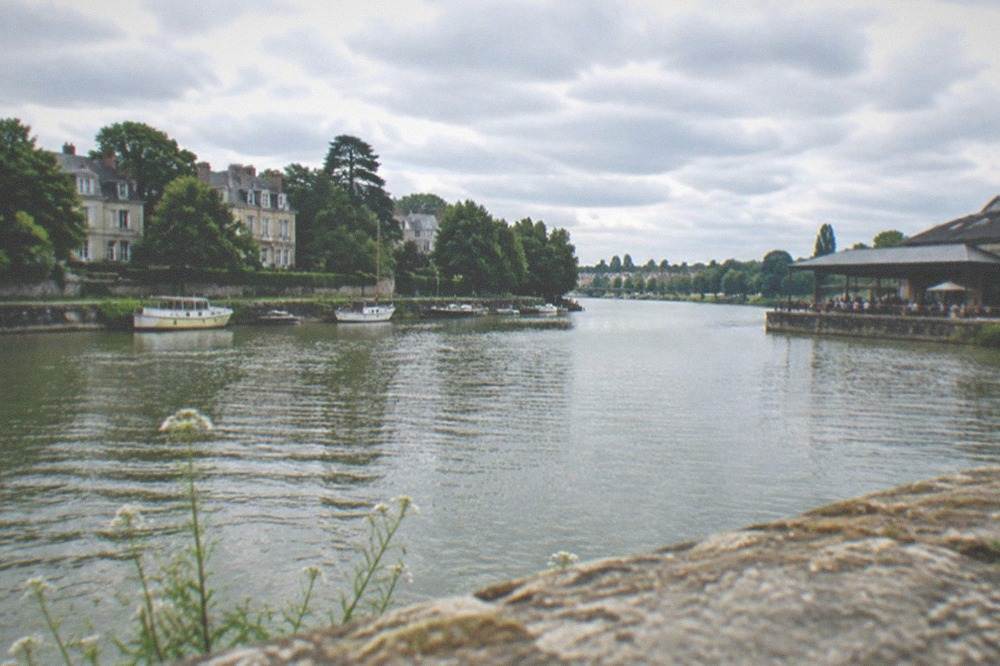
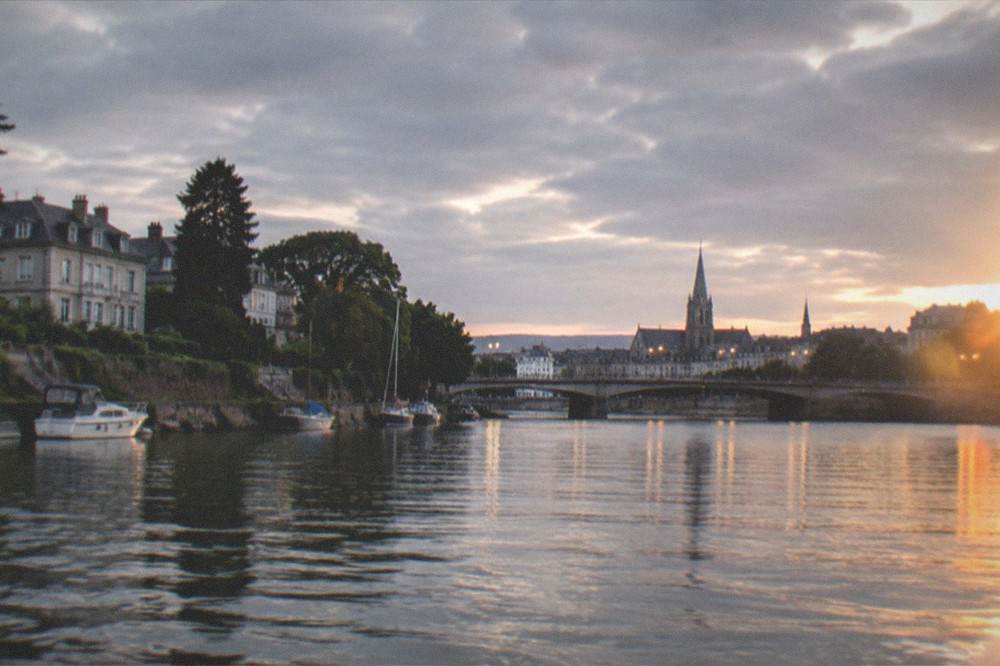
The Erdre is a different river from the Loire: narrow, slow, and shaded by lines of mature trees, with parks and mansions along its banks. Where the Loire crossing is about the city skyline, the Erdre cruise is about leaving it behind. The cruise gives the boat time to reach the open stretches north of the ring road, past the Île de Versailles and the moored pleasure craft that give the river its character.
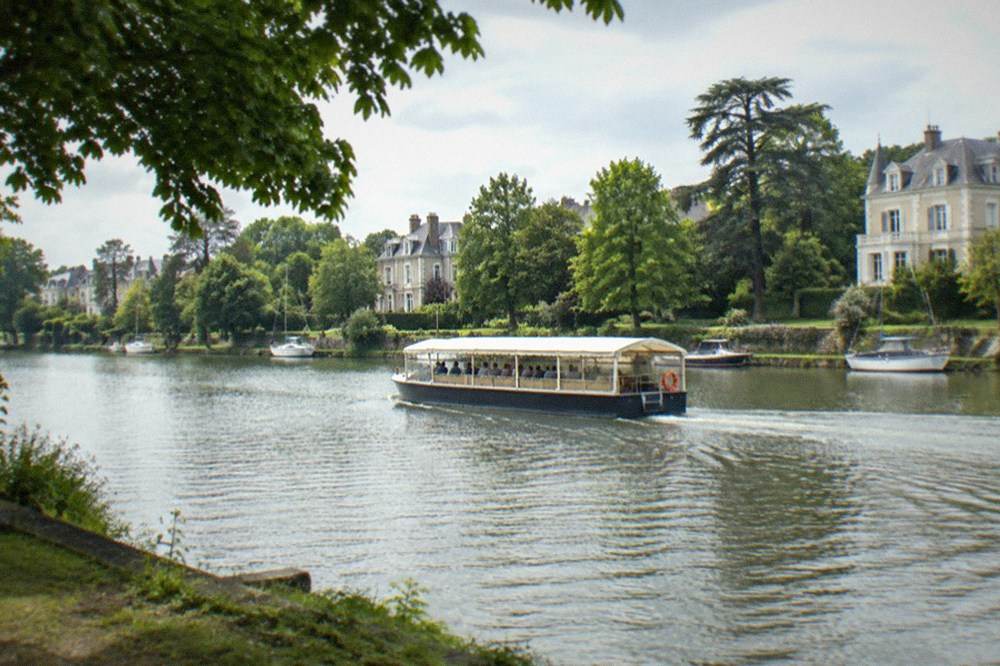
Because the cruise is a single operator's product, its slot availability changes with the season and the day of the week, and the operator has not published a headline price or a rating on the live listing. That is a genuine gap rather than a hedge: this article will not invent a figure the operator does not state. The booking panel above and the availability link below are the honest route to the current number.
For planning purposes, treat the cruise as an afternoon commitment. Three hours on the water, plus boarding and the walk to the departure point, absorbs the heart of a day. Pair it with a light morning: the Jardin des Plantes, or a Navibus crossing, rather than a museum that demands two hours indoors.
What Does The Navibus Cost, And When Can You Ride It?
Navibus crossings use ordinary Naolib tickets: a single one-hour ticket is 1.80 EUR, a 24-hour ticket is 6.80 EUR, and a 24-hour ticket valid for four people travelling together is 15 EUR. At weekends the whole network, ferries included, is free for everyone from Saturday 00:00 to Sunday 23:59, with one exception: the airport shuttle, which always costs 10 EUR and is never covered by the weekend rule. The ferries therefore cost less than a coffee on weekdays and nothing at all on Saturdays and Sundays.
| Naolib ticket | Price | Validity |
|---|---|---|
| Single 1-hour ticket | 1.80 EUR | One hour on trams, buses, Busway and Navibus |
| Carnet of 10 single tickets | 17.80 EUR | Ten one-hour journeys |
| 24-hour ticket | 6.80 EUR | One person, 24 hours |
| 24-hour group ticket | 15 EUR | Four people travelling together |
| Airport shuttle | 10 EUR | One way, valid one hour on the network, never free |
The weekend free-travel rule has run since 2021 and applies to visitors as much as residents: no registration, no local card, just board and ride. The airport shuttle is the standing exclusion, and it is worth being clear about because the two facts sit close together on the fare page. The shuttle runs every 20 minutes from April to October and every 30 minutes from November to March, taking about 20 minutes between the station and the terminal.
The Pass Nantes, the tourist pass valid from 1 April 2026 at 30 EUR for 24 hours and 49 EUR for 72 hours full rate, wraps the network into its coverage: unlimited Naolib transport including the Navibus, one airport-shuttle return, and one entry per partner site such as the château museum and the Machines' Galerie and Carrousel, though not the Grand Éléphant ride. The pass FAQ also lists some cruises, visits and bike or kayak rentals among its partner inclusions, which makes it the one product that can pre-pay a mixed water day.
When Is The Best Month For A Nantes Boat Trip?
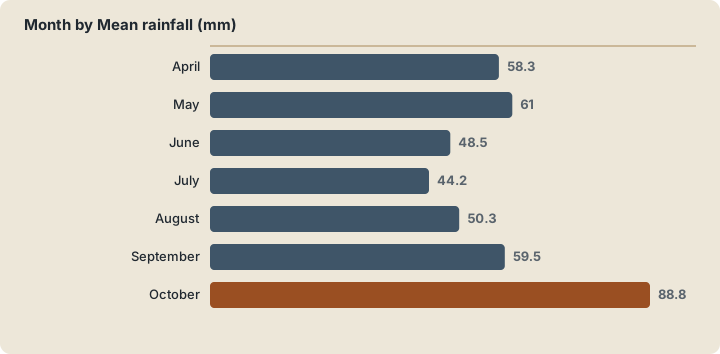
The warmest, most reliable months for being on the water in Nantes are mid-June to mid-September, when Météo-France's 1991-2020 normals for the Nantes-Bouguenais station show mean daily maxima of 23.0, 25.1 and 25.4 degrees in June, July and August; outside that window, April and September, at 16.2 and 22.4 degrees mean maximum, are the comfortable shoulder months, and October to January are grey, wet and better spent indoors. The same normals give the city 819.5 mm of rain a year, so no month is dry, but the ferries run whatever the sky does.
| Month | Mean daily max (C) | Mean rainfall (mm) | Verdict for the water |
|---|---|---|---|
| April | 16.2 | 58.3 | Good, fresh |
| May | 19.6 | 61.0 | Very good |
| June | 23.0 | 48.5 | Excellent |
| July | 25.1 | 44.2 | Excellent, busiest |
| August | 25.4 | 50.3 | Excellent, busiest |
| September | 22.4 | 59.5 | Very good, quieter |
| October | 17.6 | 88.8 | Changeable |
The calendar matters as much as the thermometer. The last week of August belongs to the Rendez-vous de l'Erdre, the free jazz festival that ran from 24 to 30 August 2026 for its 40th edition and is fixed for 23 to 29 August in 2027, when the river fills with classic wooden boats and the banks fill with concert audiences. Riding the Erdre that week is a different experience: busier, louder, and memorable for it. Le Voyage à Nantes, the summer art trail that ran 4 July to 6 September 2026 on its "Earth" theme, installs works along the quays, several of them visible from a ferry deck. Other pages covering the same trip are gathered on Nantes Travel Guide.
One counterweight for late-winter planning: in February 2026 the Loire reached 8.18 metres at the Pont Anne-de-Bretagne, its first reading above 8 metres in about fifteen years, closing low-lying quays and prompting evacuations in places. Floods at that scale are rare, but the Mémorial on the Quai de la Fosse states it closes during Loire floods, and high water can interrupt river services generally. Check conditions if you travel between November and March.
What Do You See From The Water In Nantes?
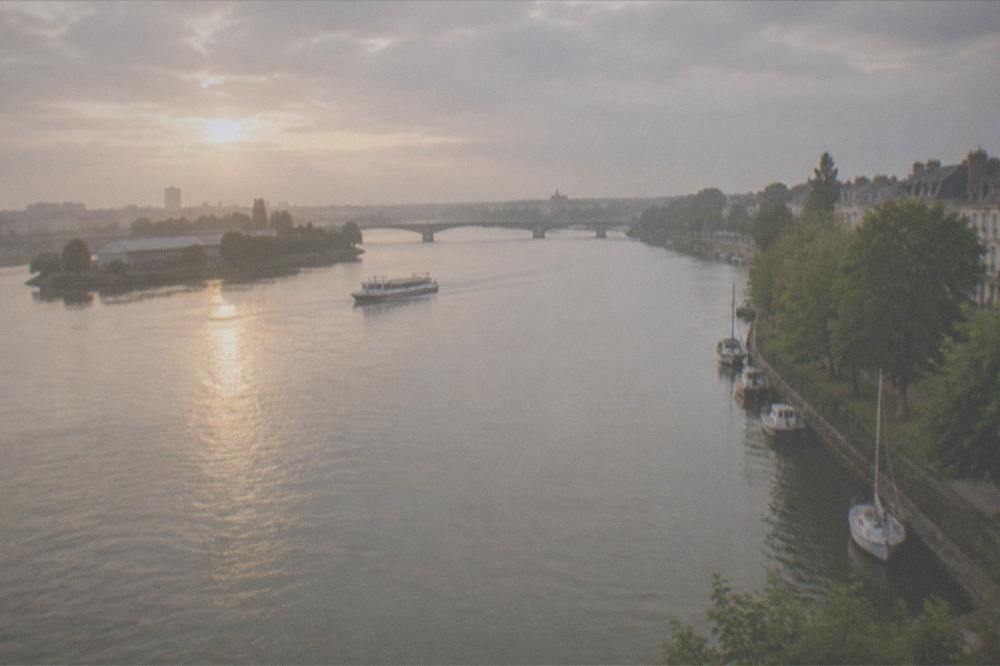
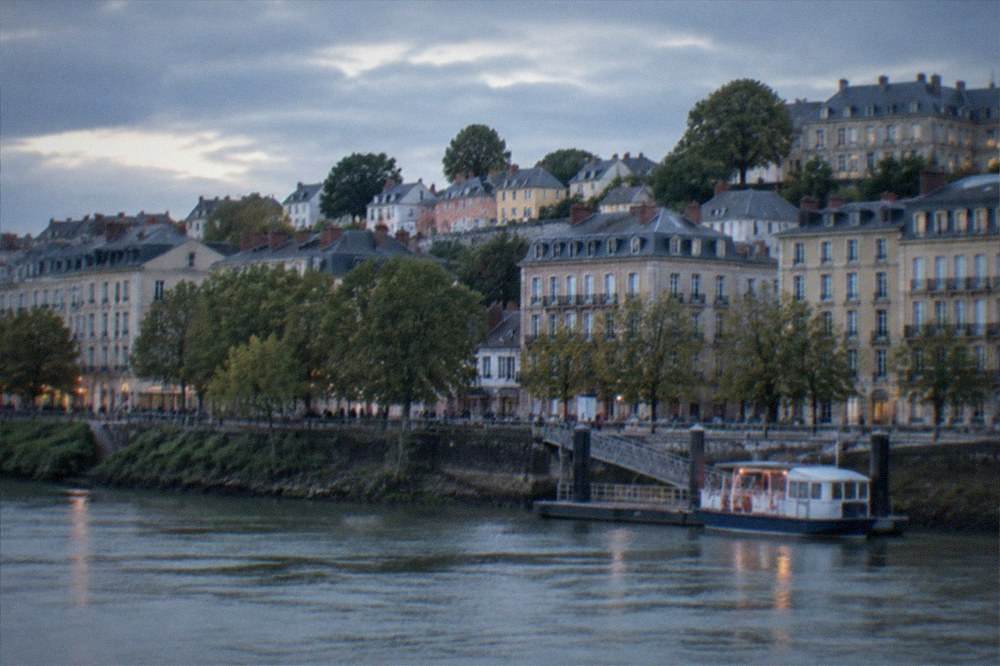
The Loire crossing at Nantes passes the city's whole commercial history in ten minutes: the Quai de la Fosse with the free Mémorial to the Abolition of Slavery cut into its bank, the Île de Nantes with the Machines de l'île and its 12 EUR attractions, and the Hangar à Bananes, the former banana warehouses now holding bars, the HAB Galerie and a club, while the Erdre offers parks, mansions and moored wooden boats instead of skyline. Every one of these sits within a short walk of a landing stage, which is why the ferries double as a sightseeing line.
| Riverside sight | On which bank or route | Entry | Note |
|---|---|---|---|
| Mémorial de l'Abolition de l'Esclavage | Quai de la Fosse, N1 | Free | Open 9:00-18:00 mid-September to mid-May, to 20:00 in summer; closes in Loire floods |
| Machines de l'île | West end of Île de Nantes | 12 EUR per attraction | Galerie and Carrousel covered by Pass Nantes; elephant ride not |
| Hangar à Bananes | South quay of Île de Nantes, N2 | Free to walk | Bars, HAB Galerie, Warehouse club |
| Trentemoult | South bank, N1 and N2 | Free to walk | Coloured fishermen's houses, quayside terraces |
| Île de Versailles | North of the centre, near the Erdre | Free | Japanese garden on the Erdre |
The Mémorial deserves the stop that most ferry riders skip. Its underground gallery is cut into the quay wall itself, and it commemorates the slave trade that Nantes led in France: the memorial's own documentation gives 1,714 expeditions out of at least 4,220 French ones, 43% of the French total, with the city's traders withdrawing in 1830. You board the ferry a few metres from where those ships were armed. The fuller story is told at the château's history museum, and the context is worth reading before or after any trip along this quay.
On the island side, the Machines de l'île is the signature sight: the Galerie des Machines and the Carrousel des Mondes Marins each cost 12 EUR full price, with a day package of two attractions at 20 EUR or three at 29 EUR, and the operator states no elephant rides from 2 November 2026 to 28 February 2027 for maintenance. The Grand Éléphant is the one Machines attraction the Pass Nantes does not cover. For the river-level view, arrive by N2, walk the quay to the Hangar à Bananes, and let the ferry do the return leg.
How Does A Boat Trip Fit Into A Longer Nantes Visit?
A boat trip works best as the spine of day two in Nantes rather than a standalone outing: ride the Navibus to Trentemoult for the morning, cross to the Hangar à Bananes for lunch, spend the afternoon on the Erdre cruise or the N3 ferry, and you have covered both rivers and three neighbourhoods without a single metro ride.
A two-day stay absorbs that easily, and the riverside thread continues on foot afterwards along the green line, the painted trail that Le Voyage à Nantes maintains for about 20 km through the city. If the water day is your anchor, book the cruise first and build around its departure time.
The practical pairing that often goes unnoticed is between the rivers and the city's walkable core. The quays deposit you within fifteen minutes of the Bouffay old town and the cathedral, which partially reopened on 27 September 2025 after the 2020 fire with full reopening planned for 2028. A private guide can compress that geography into a single structured walk, which is why the custom walking tour below is the natural complement to a day spent crossing the rivers: one half of the day on water, the other on the streets the ferries connect.
For a longer stay, the water logic extends outward. The Loire Valley road trip from Nantes follows the same river east to the château country, and the Brittany road trip heads north and west from the city. Closer in, the getting around Nantes guide covers the trams and buses your ferry tickets plug into, the Pass Nantes guide works through the pass arithmetic for museum-heavy stays, and the best time to visit guide sets the boat season in the wider year.
If you are deciding between the cruise and the ferries rather than combining them, the honest dividing line is time and purpose. The Na Boa cruise gives you three hours of the Erdre's quietest stretches with commentary, which suits a leisurely visit or a special afternoon. The ferries give you the Loire's working river and Trentemoult in minutes, which suits a short stay or a tight budget: at weekend prices of exactly zero, the crossing is the cheapest sightseeing in the city, and the free things to do in Nantes guide picks up the thread from the far bank.
Where Should You Stay To Be Near The Boats In Nantes?
Stay in the Graslin and Commerce quarter, between the Passage Pommeraye and the Gare Maritime, and every Navibus departure point sits inside a fifteen-minute walk, with the N1 landing at the Gare Maritime closest of all; the Château and Bouffay side of the centre adds only a few minutes and puts the evening restaurants nearer, while the Île de Nantes puts you between the N2 stop and the Machines but a tram ride from the old town. The one November 2025 hotel opening on the island, the 86-room Eklo, is the notable new budget option if riverside proximity matters more than historic walls.
The full neighbourhood breakdown, with the trade-offs priced out, lives in the where to stay in Nantes guide. For a water-focused trip the deciding factor is simply which bank you want to wake up on: the north bank for the old town and the Erdre, the island for the quays and the N2, or Trentemoult itself, across the river, for the fishing-village atmosphere at the cost of a ferry commute that is, on weekends at least, free.
Common Questions About Nantes Boat Trips
Can you take a boat trip in Nantes?
Yes. Three scheduled Naolib Navibus ferry routes cross the Loire and the Erdre on ordinary 1.80 EUR tickets, and a private operator runs a three-hour cruise on the Erdre aboard the Na Boa boat, with the price shown on the live listing rather than published in advance.
How much is the Navibus in Nantes?
A single one-hour Navibus ticket costs 1.80 EUR, the same as any Naolib tram or bus ticket, a 24-hour ticket is 6.80 EUR, and a 24-hour ticket for four people travelling together is 15 EUR.
Is the Navibus free at weekends?
Yes. The whole Naolib network, Navibus ferries included, is free for everyone from Saturday 00:00 to Sunday 23:59, a rule in place since 2021. The airport shuttle is the only exception and always costs 10 EUR.
Where does the Nantes Navibus go?
N1 crosses the Loire between the Gare Maritime and Trentemoult Sablières, N2 links the Hangar à Bananes, Bas-Chantenay and Trentemoult, and N3 runs up the Erdre between the Gachet and Grimaudière stops.
What is the three-hour Erdre cruise?
It is a private sightseeing cruise on the Erdre, Nantes's tree-lined northern river, aboard the Na Boa boat. The operator has not published a price or a rating on the live listing, so the booking panel is the source for the current figure and available dates.
When is the best time of year for a Nantes boat trip?
Mid-June to mid-September, when mean daily maxima run from 23.0 to 25.4 degrees, is the prime window, and the last week of August adds the Rendez-vous de l'Erdre jazz festival, confirmed for 23 to 29 August 2027. April, May and September are comfortable shoulder months.
The rivers made Nantes, and the ferries and cruises running on them today are the simplest way to understand the city's shape: an island-split Loire, a quiet Erdre to the north, and a south bank that was fishing villages and shipyards a century ago. Whether you spend 1.80 EUR on a crossing or three hours on the Erdre, the water is the one vantage point from which the whole of Nantes makes sense at once.