Where Did The Dukes Of Brittany Live?
The dukes of Brittany lived chiefly at the Château des ducs de Bretagne in Nantes, Loire-Atlantique, western France. Their castle's ducal history, hours, prices and how to visit it today.
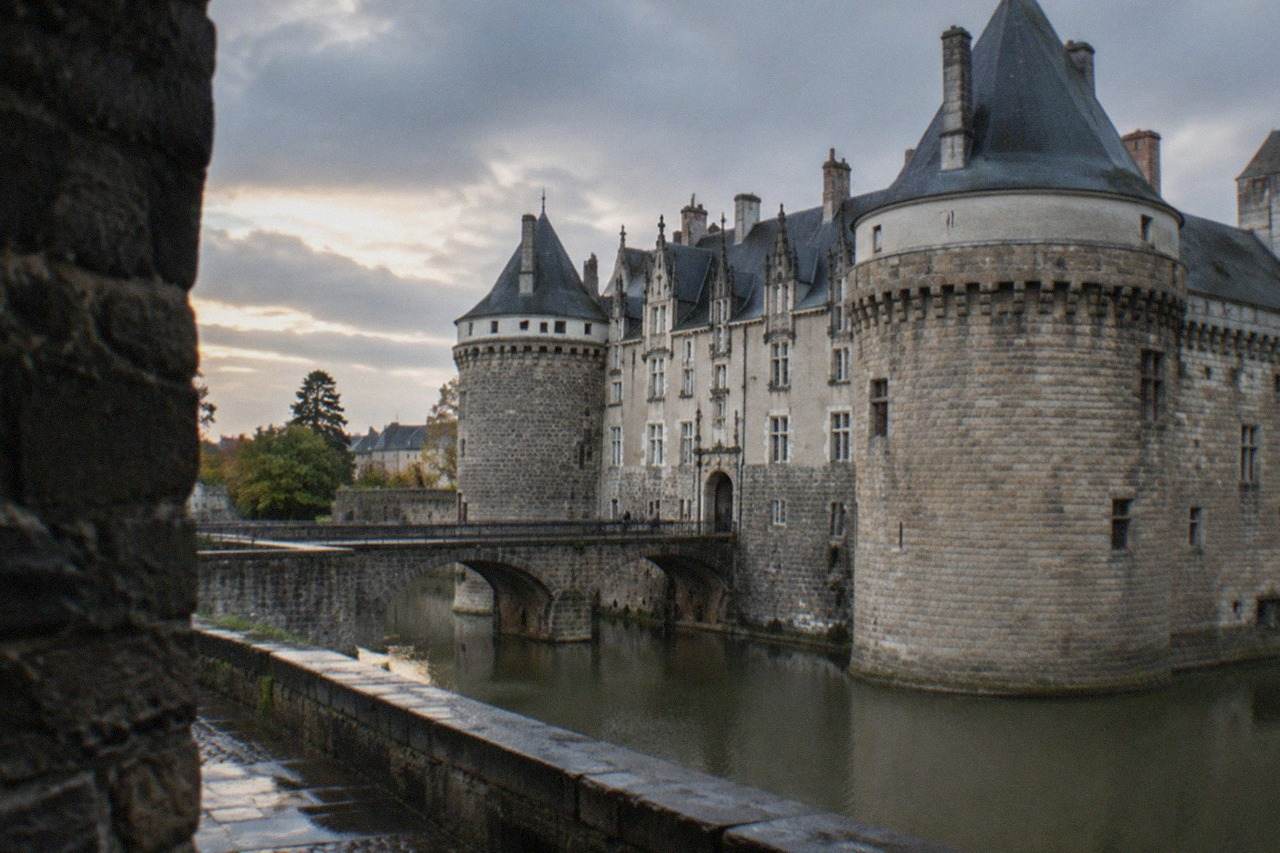
The question sounds simple, but it carries five centuries of Breton history inside it. The dukes of Brittany lived, above all, in Nantes: the city in the Loire-Atlantique department of the Pays de la Loire region of western France where the Château des ducs de Bretagne still occupies the centre of town, ramparts, moat and all. Francis II, the penultimate duke, began rebuilding that castle in 1466, and his daughter Anne, one of the most consequential women in French history, was born inside it in 1477. This page explains where the dukes actually resided, which of their homes survive, and what a visitor to Nantes can walk through today.
Where Did The Dukes Of Brittany Live?
The dukes of Brittany lived chiefly at the Château des ducs de Bretagne in Nantes, in today's Loire-Atlantique department of western France, where Francis II began rebuilding the ducal castle in 1466. His daughter Anne of Brittany, eldest daughter of the duke, was born inside its walls on 25 January 1477. The castle served as the dynasty's principal residence until the duchy's permanent union with the kingdom of France in 1532, and it is the great surviving monument of their rule.
Nantes was the powerhouse of the duchy. Its position on the Loire, with the Erdre flowing through the city itself, made it the dukes' commercial engine and their political capital in practice, whatever the duchy's other towns claimed. The castle they built was not just a fortress: it was a statement of independence, a palace designed to receive ambassadors and hold a court that rivalled the French crown's.
The building still does that job in a strange, modern way. Seven towers linked by curtain walls, a dry moat now planted as a garden, a courtyard open free to anyone who walks in off the street. The dukes have gone, but their residence has become the most visited historic monument in the city and the home of the Musée d'histoire de Nantes, which tells the dukes' story alongside the city's harder chapters, including the Atlantic slave trade that later made Nantes rich.
For visitors planning a wider Breton itinerary, our piece on Brittany's distinct identity explains why the duchy kept its own rulers so long, and the guide to Nantes and its region untangles the city's contested place in Brittany today.
Who Built The Château Des Ducs De Bretagne In Nantes?
Francis II, duke of Brittany, ordered the great rebuild of the Nantes castle from 1466, transforming an older medieval fort on the same site into a residential palace faced in white stone and dark slate. His daughter Anne of Brittany was born there on 25 January 1477, and died on 9 January 1514 at the Château de Blois, by then a royal residence. The Nantes castle stayed in ducal hands until the 1532 union of Brittany with France.
The 1466 date matters because it marks the moment the castle became a palace rather than a purely military work. The Renaissance arrived in the decorations, most famously in the tomb of Francis II and Marguerite de Foix carved by Michel Colombe, a masterpiece that still stands inside the castle complex. The sculptor's effigies of the duke and duchess were visible to the public again from around 20 February 2026 after a restoration, with full reinstallation of the monument expected by the end of 2026, according to the cathedral and heritage reporting that tracks the work.
The dates below trace the castle's path from ducal seat to city monument.
| Year | What happened at the Nantes castle |
|---|---|
| 1466 | Francis II begins the rebuild that created the residential ducal palace |
| 25 January 1477 | Anne of Brittany born at the château of Nantes |
| 9 January 1514 | Anne dies at the Château de Blois, aged 37 |
| 1532 | Union of the Duchy of Brittany with the kingdom of France |
| April 1598 | Henri IV signs the Edict of Nantes at the château, dated 30 April by the castle's own page |
| 1915 | The castle passes to the city of Nantes |
| 1924 | It becomes a museum |
| 2007 | The restored Musée d'histoire de Nantes opens after ten years of restoration |
One irony runs through all of it: the castle built to assert Breton independence is now the best place in France to understand what Breton independence meant. The Edict of Nantes connection adds another layer, since Henri IV chose this ducal capital, the last city that had held out against him, as the place to grant Protestants their rights in April 1598.
If the ducal streets of the Bouffay old town around the castle appeal to you more than a museum interior, a guided walk is the efficient way to cover them. The options below include local-led walks and food tours of the quarter the dukes knew.
Can You Visit The Dukes' Château In Nantes Today?
Yes, and much of it is free. The courtyard and ramparts of the Château des ducs de Bretagne open daily from 8:30 to 19:00 at no charge, and the moat garden from 8:00 to 19:00. The Musée d'histoire de Nantes inside costs 9 EUR full tariff and 5 EUR reduced, is free for under-18s, and closes on Mondays outside summer, when it opens daily until 19:00. The château's own tarifs page lists guided visits at 12 EUR.
That pricing structure rewards a little planning. The reduced 5 EUR tariff covers 18 to 25 year olds, teachers and large families, and the last hour before closing. Free entry applies on the first Sunday of each month from September to June. A Pass Musées at 15 EUR covers a full year of unlimited access to the castle museum, the Musée d'arts, the Musée Jules Verne and the Chronographe in Rezé, which makes sense if your Nantes trip is part of a longer stay in the Pays de la Loire region.
| What | Price | Hours and notes |
|---|---|---|
| Courtyard and ramparts | Free | Daily 8:30-19:00, until 20:00 in July and August |
| Moat garden (Jardin des douves) | Free | Daily 8:00-19:00, until 20:00 in summer |
| Musée d'histoire de Nantes | 9 EUR full, 5 EUR reduced | 10:00-18:00, closed Monday; daily until 19:00 in July and August |
| Guided visit | 12 EUR (about 7.50 EUR reduced in some cases) | Book via the castle's own site |
| Pass Musées | 15 EUR | One year, four metropolitan museums |
The annual closures to remember are 1 January, 1 May, 1 November and 25 December, with early closing on 24 and 31 December. The castle's reception and shop areas were reorganised over the summer of 2026, with the ticket desk and bookshop swapping places, so first-time visitors follow a slightly different flow than in past years.
The current exhibition programme is worth a look before you commit to a date. Expression(s) décoloniale(s) #4 runs at the castle and the Mémorial de l'abolition de l'esclavage from 8 May to 8 November 2026, pairing contemporary works by Rosana Paulino and Omar Victor Diop with the permanent collection's difficult history galleries. The ticket for the museum plus a temporary exhibition is the 9 EUR full price.
A themed walk is also one of the better ways to reach the castle's stories if museums are not your idea of a holiday. The surprise walk below is led by a local and can be shaped around the ducal quarter, and you can check dates through the operator's live listing.
The walk generally suits visitors who want the narrative rather than the detail, so if your interest is specifically Anne of Brittany and the ducal court, pair it with the museum. The castle's own history pages fill in what a brief walk cannot, and the museum's 32 rooms hold more than 1,150 objects tracing the city from the dukes through the slave trade to the present. Booking in the same week as your visit keeps the option flexible: Check availability.
Why Does A Breton Dukes' Castle Sit In A French City?
Because Nantes was the duchy's greatest city, not a French one, until the union of 1532 attached Brittany to the kingdom of France. A Vichy decree of 30 June 1941 then moved the department, by then called Loire-Inférieure, into the Angers region, separating it administratively from Brittany. Renamed Loire-Atlantique on 9 March 1957, the department sits today in the Pays de la Loire region, which is why a castle of the dukes of Brittany stands in a city many visitors do not realise was Breton.
The short version of the argument runs through the castle gates. Nantes was where the dukes held court, where Anne was born, and where the Edict of Nantes was signed. The union of 1532 turned the castle into a royal fortress, and the French state used it accordingly. But the emotional geography never quite followed the administrative one: people in Nantes still debate whether the city belongs to Brittany, and the departmental border drawn under Vichy remains one of the most resented lines on the French map among Breton regionalists.
The longer version lives in the museum. The castle's history galleries do not soften the transition from independent duchy to French province, nor the role Nantes played in the Atlantic slave trade from the mid-17th century to 1830, when the port fitted out 1,714 of at least 4,220 French slave-trade expeditions, 43 per cent of the French total, according to the Mémorial de l'abolition de l'esclavage, which stands on the quays a short walk away.
| Date | The constitutional story of Brittany and Nantes |
|---|---|
| 1532 | Union of the Duchy of Brittany with the kingdom of France |
| 30 June 1941 | Vichy decree attaches Loire-Inférieure to the Angers region |
| 9 March 1957 | Loire-Inférieure renamed Loire-Atlantique |
| Today | Nantes is the capital of the Pays de la Loire region, not of Brittany |
If that puzzle interests you, the pages on Brittany and Bretagne and on châteaux across Brittany take it further, and a full Brittany road trip from Nantes shows how the dukes' old duchy fits together on the ground.
Thinking of turning the history into a proper itinerary? This mid-article box is the practical version of that impulse.
How Does The Château Keep The Ducal Past Alive In 2026?
The Musée d'histoire de Nantes uses 32 rooms and more than 1,150 objects to tell the city's story from the dukes onward, and 2026 has added two draws: the effigies of the tomb of Francis II and Marguerite de Foix, viewable since around 20 February 2026, and the Expression(s) décoloniale(s) #4 exhibition running until 8 November 2026. A 15 EUR Pass Musées covers a year of entry for anyone staying longer in the region.
The tomb is the emotional centrepiece. Michel Colombe's marble effigies of Francis II and Marguerite de Foix, Anne's parents, rank among the finest Renaissance sculptures in France, and their dismantled restoration, delayed by the 2020 fire elsewhere in the city's heritage, finally brought them back before the public this year. Full reinstallation of the monument is expected by the end of 2026, according to heritage reporting on the works.
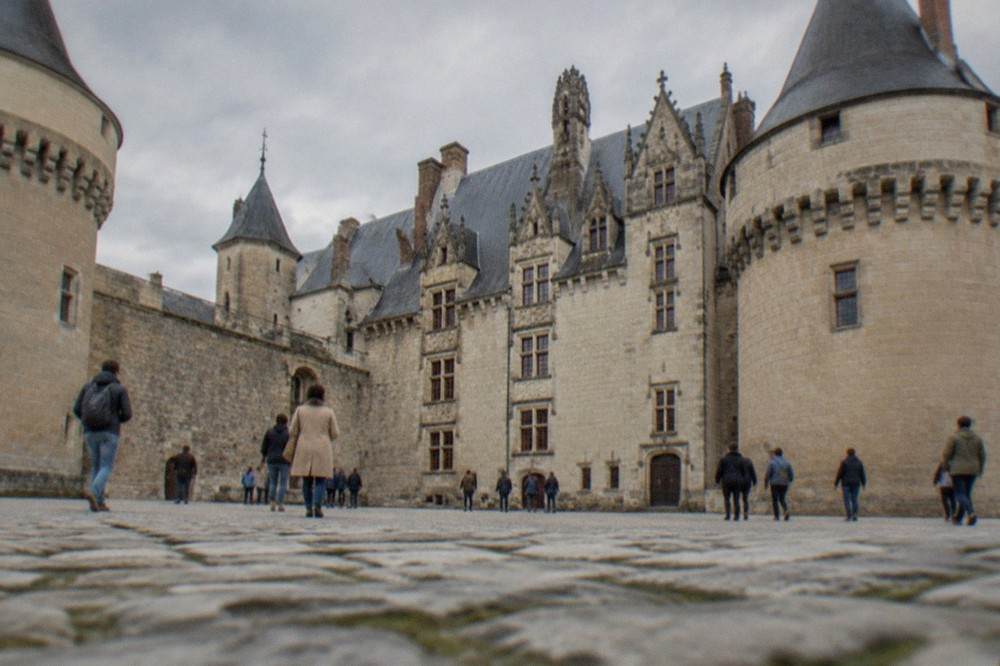
Around the tomb, the museum's permanent path runs from the ducal period through the city's industrial and colonial centuries to a contemporary finale with video works by Pierrick Sorin. The castle courtyard itself, free to enter, hosts the green line of the Voyage à Nantes art trail in summer, and in 2026 the edition's 14-metre metal palm tree by Louis Guillaume stood in the moat, an intentionally jarring contemporary gesture against the ducal masonry.
For anyone deciding how to spend limited hours in Nantes, the castle is the anchor: it combines the ducal architecture for free, a serious museum for the price of a restaurant main course, and a walkable old town around it. The selections below pair the castle with the city's other headline sights and its food scene, the two things that round out a first itinerary.
Common Questions About The Dukes Of Brittany And Nantes
Where did the dukes of Brittany live?
The dukes of Brittany lived chiefly at the Château des ducs de Bretagne in Nantes, in what is now the Loire-Atlantique department of western France. Francis II rebuilt the castle from 1466, and Anne of Brittany was born inside it on 25 January 1477. The castle remained the dynasty's principal seat until the union of Brittany with France in 1532.
Was Anne of Brittany born in the castle?
Yes. Anne of Brittany, eldest daughter of Duke Francis II, was born at the château of Nantes on 25 January 1477, according to the city of Nantes's own history of the duchess. She died on 9 January 1514 at the Château de Blois.
Can you see the tomb of Francis II?
Yes. The effigies of Francis II and Marguerite de Foix, carved by Michel Colombe, have been visible again since around 20 February 2026 following restoration, with the full reinstallation of the tomb monument expected by the end of 2026.
Is the Château des ducs de Bretagne free to enter?
The courtyard, ramparts and moat garden are free, opening daily from 8:30 to 19:00 (the garden from 8:00). The Musée d'histoire de Nantes inside costs 9 EUR full tariff, 5 EUR reduced, and is free for under-18s and on the first Sunday of each month from September to June.
Why is Nantes not in Brittany if the dukes lived there?
Nantes was the leading city of the independent duchy of Brittany until the union of 1532. A Vichy decree of 30 June 1941 then attached the department to the Angers region, and it has stayed administratively separate from Brittany since, sitting today in the Pays de la Loire region as Loire-Atlantique.
How long do you need at the ducal castle in Nantes?
Allow an hour for the free courtyard, ramparts and moat garden, and two to three hours for the Musée d'histoire de Nantes if you read the displays. The museum closes on Mondays outside the summer, so check the day of the week before planning a visit.
The dukes' residence has outlived the duchy, the kingdom that absorbed it and the empire that Nantes later served, and it remains the single best place in western France to stand where the last independent rulers of Brittany actually stood. For more on the city they ruled, start with Nantes Travel Guide and the question of what Nantes is famous for.