Was Nantes Bombed In WWII?
Yes, Nantes was bombed in WWII: Allied raids struck the city in September 1943, and the cathedral was damaged in 1944 bombing. A clear account of what happened and what survives to see.
Nantes, in the Loire-Atlantique department of the Pays de la Loire region of western France, sits on the Loire far enough inland that visitors assume the Second World War passed it by. It did not. Allied aircraft bombed the city in September 1943, raids that the French Wikipedia entry for Nantes records as the bombardements de septembre 1943, and further bombing in 1944 left its cathedral partly damaged. The war also brought occupation, Resistance activity and reprisals to streets that tourists now cross without a second glance. This page sets out what actually happened, stated at the level of precision the record supports, and points to the places in the modern city where the wartime story is still visible.
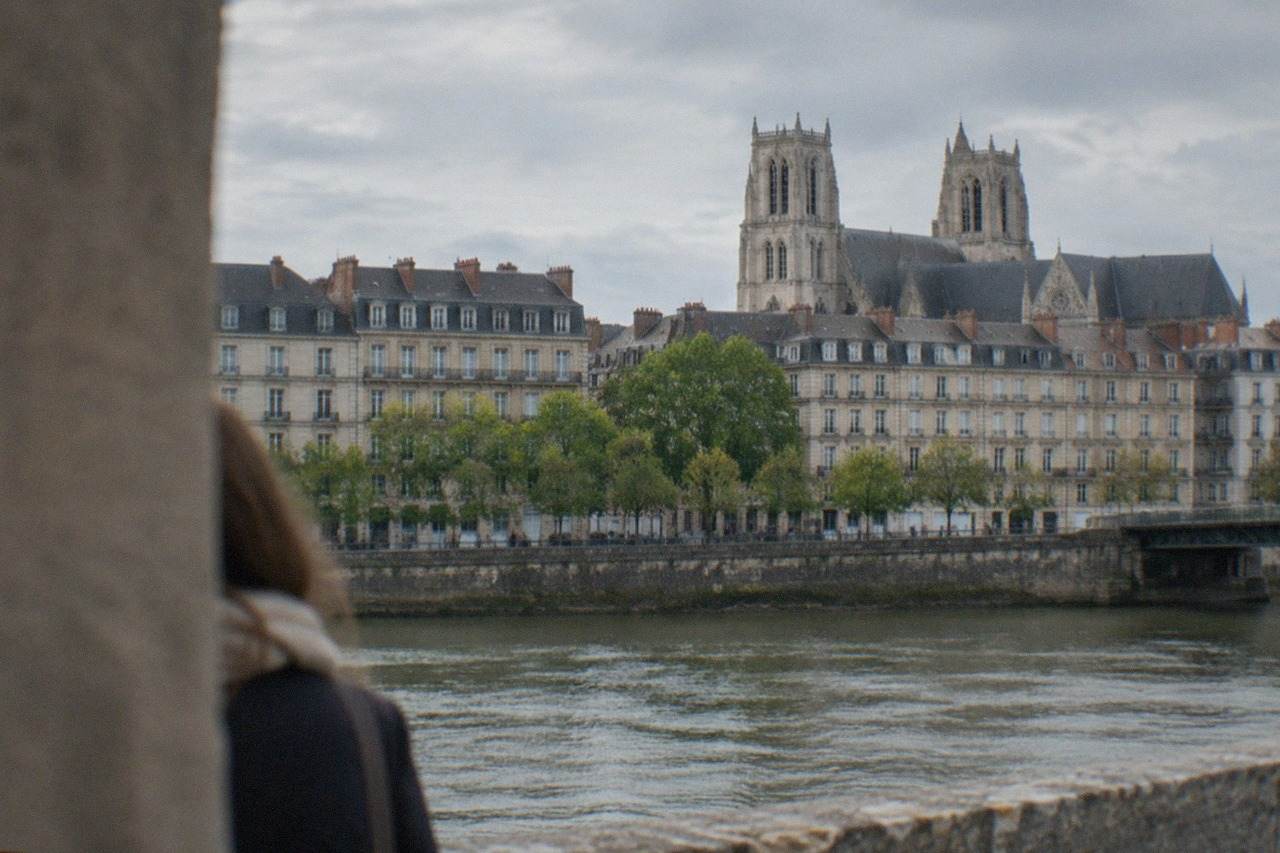
Was Nantes Bombed In WWII?
Yes, Nantes was bombed during the Second World War. Allied aircraft carried out bombings of the city in September 1943, a fact recorded in the city's French Wikipedia history, and the Saint-Pierre-et-Saint-Paul cathedral was partly damaged by bombing in 1944. The raid dates within September 1943 are given as 16 and 23 September in some accounts, though the day-level detail is less firmly sourced than the month itself, so September 1943 is the safest wording.
The raids formed part of the wider Allied air campaign against occupied France, which targeted ports, rail junctions and industrial sites across the country. Nantes mattered to that campaign for the same reasons it had mattered as a port for centuries: the Loire gave it a route inland, and its rail links made it a node for moving goods and troops. Where a rail network is useful to an occupier, it becomes a target to a liberating air force, and the civilian city around the tracks pays the price.
It is worth being honest about the level of detail that survives in reliable sources. The verified research behind this page confirms the month of the 1943 bombings and the 1944 cathedral damage, but day-level dates for the September raids rest on a single search pass rather than a page read directly. History written responsibly says what the record supports and stops there. Plenty of city guides printed online carry confident casualty counts and raid-by-raid timings for Nantes; the verified facts file behind this site does not support them, and this page will not either.
What is certain is the scale of the wider war in Nantes. The city lived under German occupation until the summer of 1944, and the occupation was not quiet. Resistance networks operated in the region, reprisal executions followed Resistance action, and the population endured rationing and curfews for four years before liberation.
What Did The September 1943 Bombings Do To Nantes?
The September 1943 bombings struck the city of Nantes as part of the Allied campaign against occupied France, damaging buildings and infrastructure in and around the city. The verified historical record confirms the month of the raids but not a precise casualty figure, so any confident number of deaths circulating online should be treated with caution. What the record does show is that the damage joined a longer chain, since the cathedral was partly damaged by bombing again in 1944.
For a sense of sequence, the wartime and post-war years in Nantes can be laid out as a timeline. Every date below comes from the verified facts file for this site, and the table marks where a detail rests on weaker sourcing.
| Date | Event in Nantes | Sourcing strength |
|---|---|---|
| September 1943 | Allied bombings of Nantes, month confirmed | Wikipedia (month) |
| 16 and 23 September 1943 | Specific raid dates sometimes given | Single search pass, weaker |
| 1944 | Cathedral partly damaged by bombing | Verified |
| 12 August 1944 | German forces leave Nantes before the US 3rd Army arrives | Wikipedia |
| 1972 | Cathedral fire destroys the 16th-century roof frame | Verified |
| 18 July 2020 | Arson fire in the cathedral destroys the 1619 grand organ | Verified |
| 27 September 2025 | Cathedral partially reopens after restoration | Verified |
The 1944 damage to the cathedral deserves a note of its own, because the building had already suffered badly and would suffer again. A fire in 1972 destroyed its 16th-century roof frame, long after the war, and the arson fire of 18 July 2020 destroyed the grand organ, which had stood from 1619 until that day. So a visitor asking about scars on the cathedral today is looking at a layered history of damage: bombing in 1944, fire in 1972, fire again in 2020. The restoration that followed the 2020 fire is a project funded by the French State at roughly 32 to 35 million EUR, and the cathedral partially reopened on 27 September 2025, with full reopening planned for 2028.
The departure of the Germans on 12 August 1944, before the US 3rd Army arrived, spared Nantes the street fighting that devastated some French cities during liberation. That is one reason the historic core of Nantes, from the Bouffay quarter to the Passage Pommeraye of 1843, reads as intact to visitors today. Cities that fought their way free often lost the very fabric that later drew the tourists, and Nantes largely avoided that fate.
How Did Nantes Live Through The Occupation?
Nantes spent four years under German occupation, ending with liberation in the summer of 1944, with Resistance activity, reprisals and rationing marking daily life. The occupation ended when German forces left the city on 12 August 1944, shortly before the US 3rd Army arrived, an account confirmed on the city's French Wikipedia page. The war years sit inside a much longer history, as the Chateau des Ducs de Bretagne's museum covers the world wars directly in its permanent collection.
The museum inside the Chateau des Ducs de Bretagne is the single best place in the city to understand the period. Its permanent collection runs to 32 rooms and more than 1,150 objects covering Nantes history from medieval times through the world wars to the present day, with dedicated sections on the conflicts of the 20th century. Full admission to the museum and its temporary exhibitions is 9 EUR, the reduced tariff is 5 EUR, and under 18s enter free, prices verified on the chateau's own tarifs page. The museum is open 10:00 to 18:00 and closed on Mondays, with last ticket sales 30 minutes before closing, and the courtyard and ramparts outside are free to walk daily.
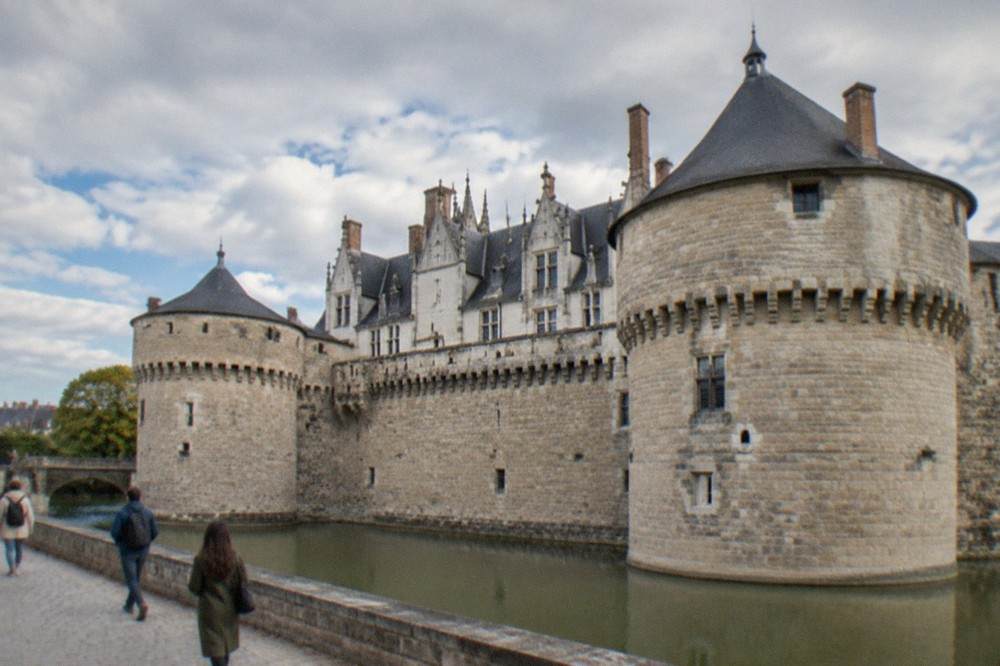
The château building itself carries the longer story. Francis II began rebuilding it in 1466, and Anne of Brittany, Duchess of Brittany and twice Queen of France, was born there on 25 January 1477. The city has owned the château since 1915 and the museum has been housed there since 1924, which means the site was already a civic museum during the war years it now documents. A building that has watched five centuries of the city's history is a fitting place to read about its worst four years.
For visitors piecing the wartime city together on foot, a guided walk is an efficient first move. The Nantes Travel Guide site's recommended option is below.
A guided walk with a local guide covers the central streets where the occupation, the bombings and the liberation left their trace, and the operator's live listing carries current price and availability. It pairs well with a self-guided afternoon spent tracing the rest of the historic centre at your own pace, from the Bouffay quarter to the quays of the Loire.
If you prefer to plan around a bundle, the trio below gathers the walk, a food tour of the old town and the city's multi-attraction pass in one place, each with live pricing from the operator's listing.
Where Can You See Nantes Wartime History Today?
The best places to see wartime history in Nantes are the Musee d'Histoire de Nantes inside the Chateau des Ducs de Bretagne, which treats the world wars in its permanent collection, and the cathedral itself, whose fabric records the 1944 bombing damage alongside later fires in 1972 and 2020. The museum is open 10:00 to 18:00 and closed on Mondays, with last ticket sales 30 minutes before closing.
The table below pulls together the sites that carry the wartime story, with the current practical details from the verified facts file.
| Site | Wartime relevance | Entry cost | Key hours |
|---|---|---|---|
| Chateau des Ducs de Bretagne, museum | Permanent collection covers the world wars | 9 EUR full, 5 EUR reduced | 10:00-18:00, closed Monday |
| Cathedral Saint-Pierre-et-Saint-Paul | Partly damaged by bombing in 1944 | Free | Partially reopened Sept 2025, works to 2028 |
| Chateau courtyard and ramparts | Fortress predating the war by centuries | Free | 8:30-19:00 daily |
| Memorial de l'abolition de l'esclavage | Later history, free riverside memorial | Free | Daily, seasonal hours |
Two cautions for planners. First, the Museum d'histoire naturelle is closed for works until 2029 and must not be counted on as a stop. Second, the cathedral's west facade remains under scaffolding, with access through side portals; the partial reopening since 27 September 2025 covers the nave, choir and transept, and full reopening is targeted for 2028. Anyone building a wartime itinerary around the cathedral should also check its current status before travelling, because the restoration works continue on an open-site basis.
Beyond the sites, the street pattern itself is wartime evidence. Areas of Nantes rebuilt after 1944 stand apart in their architecture from the medieval Bouffay quarter, and the city's tram network, which returned in 1985 as the first modern tram network in France, reflects a post-war reinvention of a city that had taken heavy blows. Walking from the reconstructed streets toward the timber-framed lanes around the cathedral, the contrast between what was lost and what survived becomes legible without a single plaque.
For those who want the itinerary handled, the same trio of products covers the essentials: a local-led walk, an old-town food tour, and the pass that bundles entry to the city's headline sites.
Common Questions About Nantes In WWII
Was Nantes bombed in WWII?
Yes. Allied bombings struck Nantes in September 1943, and the cathedral was partly damaged by bombing in 1944. The month of the 1943 raids is firmly sourced; the specific day-level dates are less secure.
Was the Nantes cathedral damaged in the war?
Yes, the cathedral was partly damaged by bombing in 1944. It suffered further destruction from a roof fire in 1972 and the arson fire of 18 July 2020, which destroyed the 1619 grand organ. It partially reopened on 27 September 2025, with full reopening planned for 2028.
When was Nantes liberated?
German forces left Nantes on 12 August 1944, before the US 3rd Army arrived, which spared the city the street fighting seen elsewhere in France during liberation.
Where can I learn about the war in Nantes?
The Musee d'Histoire de Nantes inside the Chateau des Ducs de Bretagne covers the world wars in its permanent collection of more than 1,150 objects across 32 rooms. Admission is 9 EUR full price, and the museum is closed on Mondays.
Is the wartime damage still visible in Nantes?
Partly. The cathedral retains the record of 1944 damage in its fabric, and the contrast between rebuilt post-war areas and the intact medieval Bouffay quarter is visible in the street pattern, though the city avoided large-scale wartime destruction of its historic core.
The wartime layer of Nantes is best understood on foot, with someone who can point at a street and say what happened there, and the walk below does exactly that.
For a fuller sense of what the city offers around this history, see what Nantes is famous for, how many days to spend in Nantes, and whether Nantes is a walkable city. The wartime story is one layer among many in a city whose history stretches from the dukes of Brittany to the mechanical elephant of the Machines de l'ile, and it rewards the visitor who walks it slowly.