Do They Speak English In Nantes, France?
A practical answer to whether English is spoken in Nantes, France: where you will find English speakers, how museums and transport handle English, and how to get by with a few French words.
Nantes, in the Loire-Atlantique department of the Pays de la Loire region of western France, is France's sixth most populous commune and the largest city in the west of the country. It is a university city, a port city on the Loire, and an administrative capital, which means the English you encounter is usually the English of people who use it at work: hotel receptionists, museum staff, younger cafe workers, students. It is not a resort town where every menu arrives in three languages, and visitors who arrive expecting Paris-level English coverage are sometimes caught out. The honest answer is that yes, you can visit Nantes comfortably in English, but you will meet plenty of people whose English is limited or hesitant, and a few French words change the tone of every interaction.
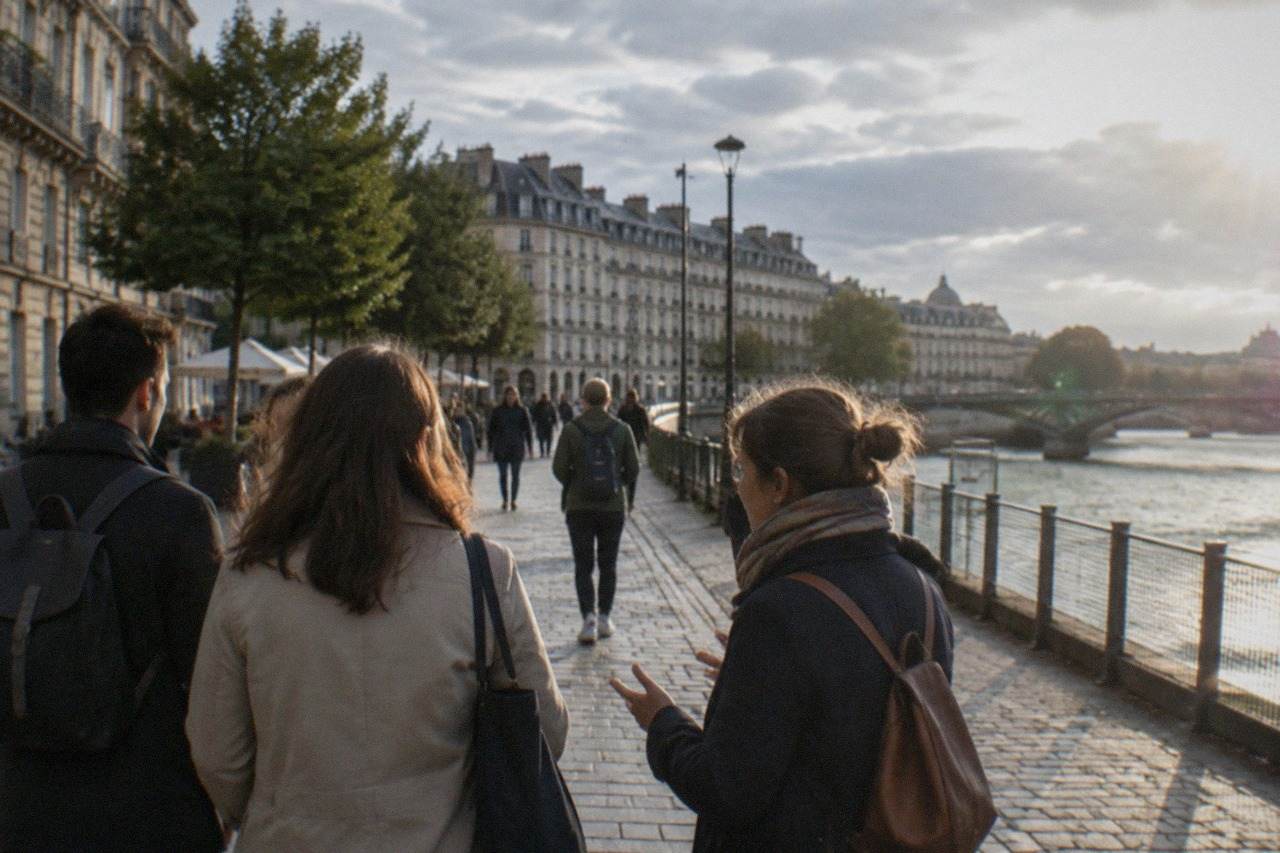
Do They Speak English In Nantes, France?
Yes, English is spoken in Nantes, France, but not universally and not everywhere. Most people under about 40 have studied English at school, since it is compulsory in the French school system, and staff at hotels, the main museums, the tourism office and the airport generally manage English without trouble. In ordinary bakeries, market stalls, small restaurants and some taxi or tram situations, English is thinner, and a little French goes a long way.
The starting point is the French education system itself. English is a compulsory subject through secondary school in France, and most people in Nantes under forty have had years of it. That does not mean they are fluent, and it does not mean they feel confident. A common pattern in France, and Nantes is no exception, is that people who studied English at school will understand you far better than they can speak back, and some will tell you outright, apologetically, that they do not speak English even when they can follow most of what you say. Patience and simple sentence structure solve more of this than switching languages does.
Nantes also has a large student population. The city is home to a major university community, and students in France learn English as a matter of course, so districts with student life, cafes and bars tend to be easier in English than residential outer neighbourhoods. The same applies to the tourism economy. The people whose jobs involve visitors, receptionists, guides, ticket counters, the Voyage à Nantes reception office on rue des États, deal with English speakers every week and handle it without drama.
Where you should not expect seamless English is the everyday layer of the city. At the Talensac market, which runs Tuesday to Sunday mornings, many stallholders work primarily in French. In small neighbourhood restaurants, in shops away from the centre, and with some older residents, English may simply not be available. This is the same in most French cities of Nantes's size, and it is less of a barrier than visitors fear: pointing, politeness and a handful of words carry most transactions.
Where Will You Actually Hear English In Nantes?
English in Nantes clusters around the visitor economy and the student population. You will find the most reliable English at the airport, the tourism office, the larger hotels, the main museums such as the château museum and the Musée d'arts, and among students and younger staff in the Bouffay and Graslin central districts. You will find the least in markets, small suburban shops and with older residents.
The airport is the easiest entry point. Nantes Atlantique handled 7,189,480 passengers in 2025, according to the airport's own annual report, and its signage and its airport shuttle information are published in both French and English. The shuttle itself costs 10 EUR, is bought on board by bank card, and connects to the Gare routière at the south of the railway station, so the first leg of a visit can be done without a word of French.
The tourism office is the other anchor. The Voyage à Nantes reception office at 9 rue des États is open daily, from 9:00 to 19:00 in July and August and 10:00 to 18:00 the rest of the year, with shorter Sunday hours, and its staff deal with international visitors as a core part of the job. Maps, the green line guide and the Pass Nantes information all exist in English. This site's own guide to getting around Nantes covers the practical side of moving through the city once you have your bearings.
A note on attitude, because it matters more in France than grammar does. Opening any interaction with "bonjour" before switching to English is close to mandatory in French social norms, and skipping it is read as rudeness, not efficiency. "Parlez-vous anglais?" asked in French, however badly, almost always gets a warmer response than launching straight into English. Nantes is a friendly city for visitors, but it is a French city, and the social contract of greeting first applies.
If you want a first morning that removes the language question entirely, a guided walk in English is the simplest option. The short orientation walks below are run with English-speaking locals and cover the core of the centre in about an hour:
All three are bookable in English, and the food tour in particular removes the trickiest language situations of a trip, since ordering and explaining dietary needs in French restaurants is where monolingual English visitors struggle most.
How Do Nantes Museums And Attractions Handle English?
The major Nantes museums and attractions provide at least partial English information, and several are fully bilingual. The Château des ducs de Bretagne museum, Les Machines de l'île and the Musée d'arts all offer English signage, leaflets or audio material, and the cathedral is free to enter with no language barrier at all. Smaller museums, such as the Musée Jules Verne, lean more heavily on French labels, so reading ahead helps.
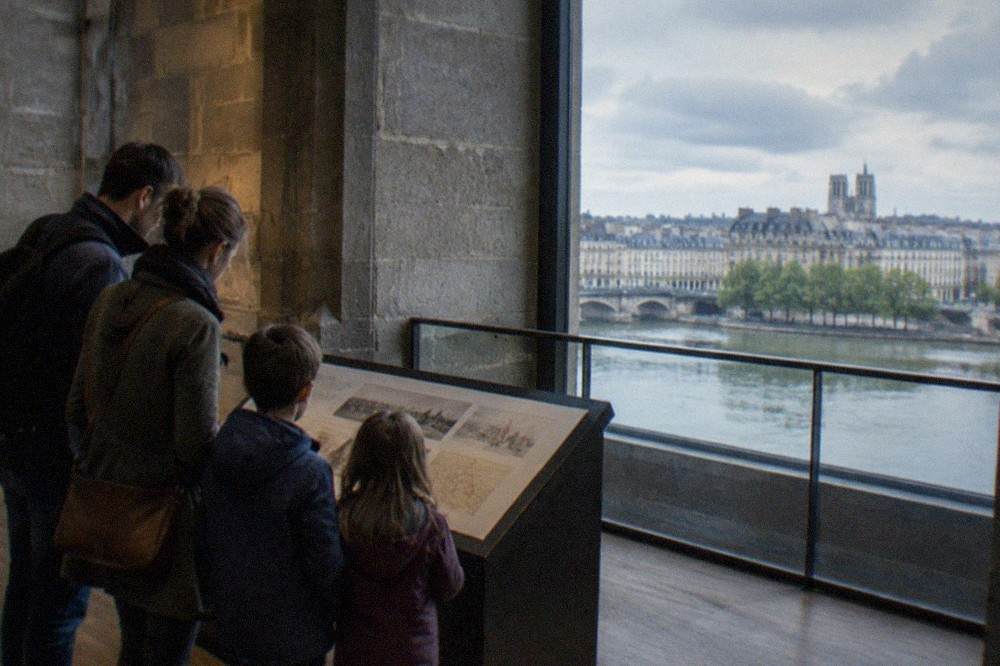
The table below summarises what to expect at the main sights, using the current prices and opening details from each venue's own published information:
| Sight | Entry price | What is in English |
|---|---|---|
| Château des ducs de Bretagne, museum | 9 EUR full, 5 EUR reduced, free under 18 | English signage and translated exhibition texts; courtyard and ramparts free |
| Cathédrale Saint-Pierre-et-Saint-Paul | Free | No ticket or language barrier; west facade still under restoration until 2028 |
| Les Machines de l'île | 12 EUR per attraction, 8 EUR ages 4-12 | Bilingual site and staff used to international visitors; note no elephant rides 2 Nov 2026 to 28 Feb 2027 |
| Musée d'arts de Nantes | 9 EUR full, 4 EUR reduced | English leaflet and translated highlights; closed Tuesdays |
| Musée Jules Verne | 4 EUR full, 1.50 EUR reduced | Largely French labels; worth reading about Jules Verne's Nantes childhood beforehand |
| Mémorial de l'abolition de l'esclavage | Free | Quayside memorial, mostly self-explanatory; underground passage has translated material |
The Muséum d'histoire naturelle is closed for works until 2029, so it appears on no current itinerary. The cathedral, partially reopened on 27 September 2025 after the 2020 fire, costs nothing and needs no booking, which makes it the easiest stop in the city for a visitor with no French at all. Its interior speaks for itself, and the scaffolding on the west facade is part of the restoration story rather than a reason to stay away. The rest of the planning pages sit on Nantes Travel Guide.
Museum ticketing deserves one practical note. Buying tickets online in advance, through each venue's own site or through a reseller, removes the need to explain anything at a counter. At Les Machines de l'île, the Galerie and the Carrousel are included in the Pass Nantes, though the Grand Éléphant ride is not, and pre-booking the elephant is recommended because slots sell out. None of that requires French.
If your first day in Nantes would benefit from a local who handles the language side for you, the orientation walk below is the site's recommended starting point:
Do You Need French For Restaurants And Food In Nantes?
You do not need French to eat well in Nantes, but you need more effort than in Paris. Central restaurants around Bouffay and Graslin are used to English speakers and often have translated menus, while small neighbourhood places and market stalls often do not. Knowing the local specialities by name, beurre blanc, Muscadet, gâteau nantais and LU's Petit Beurre, helps you order even when the menu is French-only.
The regional food vocabulary is small enough to learn on the train. Beurre blanc is the classic Nantes emulsion of shallots, white wine and butter, traditionally served with fish, and local restaurateurs have even campaigned for protected status for the traditional method, according to France 3 reporting. Muscadet is the local white wine, made from Melon de Bourgogne grapes in the vineyards south and east of the city; this site covers the question is Muscadet sweet or dry in detail. Gâteau nantais is the almond and rum cake that has returned to strength in the city's patisseries. The Petit Beurre biscuit was born here, from the Lefèvre-Utile company founded in 1846, and LU marked its 180th anniversary in 2026.
A handful of restaurant phrases covers most of what a menu cannot:
| French | English | When to use it |
|---|---|---|
| Bonjour | Hello | On entering any shop or restaurant, always |
| L'addition, s'il vous plaît | The bill, please | Ending a restaurant meal |
| Parlez-vous anglais? | Do you speak English? | Asked before switching to English |
| Je voudrais... | I would like... | Ordering |
| Sans... | Without... | Dietary needs |
| Carte bancaire? | Bank card? | Checking payment before ordering |
The All Inclusive Food Tour of Nantes Old Town listed above is another good workaround: it is led with English-speaking visitors in mind and walks you through the old town's food culture with someone else doing the translating.
Does English Work On Day Trips From Nantes?
English becomes thinner on day trips out of Nantes, especially in rural and small-town Loire-Atlantique, but the main organised destinations cope well. Clisson, Guérande, La Baule, the Muscadet vineyards and Puy du Fou all receive international visitors and have at least some English provision, while village bakeries and rural bus routes are essentially French-only. Plan the countryside legs with bookings made in English and the day runs smoothly.
Clisson, about 15 minutes from Nantes by TER train with an average journey of around 23 minutes, is a small Italianate town with a château that has been holding free-entry events for European Heritage Days. Guérande, roughly 80 km away by road, is the walled medieval town at the heart of the salt marshes; its 2026 salt harvest was exceptional thanks to the summer heat, with the Terre de Sel guided visits running year-round, and the marshes' visitor offer is built for out-of-region guests. La Baule is a major beach resort whose tourism economy is long accustomed to British and Dutch visitors. This site's coverage of the most beautiful village near Nantes goes deeper on where to point the car.
The vineyards are the one countryside trip where booking an English-language experience in advance makes a real difference. The Muscadet appellation begins at the city's edge, and the sensory tasting and vineyard van tours in the trio above are delivered for English-speaking visitors, with prices and current availability shown on the operator's live listing.
Puy du Fou, the historical theme park about an hour's drive, ran its 2026 season from 4 April to 1 November with a Christmas extension from 19 December to 3 January, and its shows are largely wordless spectacle, which makes it unusually language-proof. Escal'Atlantic in Saint-Nazaire, the liner museum at the mouth of the Loire, publishes its prices and timings for international visitors and can be reached by TER in around 33 minutes.
Common Questions About Speaking English In Nantes
Do they speak English in Nantes, France?
Yes, but unevenly. Hotels, museums, the tourism office, the airport and younger people generally manage English, while markets, small shops and some older residents may not. A few French phrases, starting with bonjour, make every interaction easier.
What language do they speak in Nantes?
French is the everyday language of Nantes. The local variety includes words and expressions from Gallo and the historical Breton-influenced region, though standard French is what you will hear everywhere. This site's page on the languages of Nantes covers the detail.
Is Nantes a good city to visit if you speak no French at all?
Yes. The city's main sights have bilingual information, public transport signage is simple, and the green line painted on the pavements guides walkers between attractions with no commentary needed. The green line runs roughly 20 km through the city.
Do people in Nantes speak English as well as in Paris?
Generally not. Nantes has a large international student population and a well-developed visitor economy, but it is a regional capital rather than a global capital, so English coverage is solid in visitor-facing roles and thinner elsewhere.
Should I learn some French before visiting Nantes?
A small amount helps and is appreciated. Greetings, please and thank you, ordering phrases and numbers cover most situations. Locals respond warmly to effort, and switching to English after a French greeting is the accepted pattern.
For a city whose main attractions, from the Machines de l'île to the Passage Pommeraye, from 1843, are built for mixed international audiences, Nantes handles English-speaking visitors comfortably as long as you meet it halfway: greet in French, book ahead where it matters, and carry the handful of phrases above.