What Language Do They Speak In Nantes?
The language spoken in Nantes, in the Pays de la Loire region of western France, is French. Here is what that means in practice for visitors, plus the Gallo story and how much English you can expect.
Nantes is a city of about 327,734 people in the Loire-Atlantique department, in the Pays de la Loire region of western France, and the language spoken there is French. It is worth stating plainly because the question hides a more interesting story: Nantes sits at the linguistic seam between northern and southern France, and its historic regional language, Gallo, belongs to the same family of langue d'oïl dialects as standard French rather than to the Celtic family that many people assume comes with the name Brittany. This page sets out what you will actually hear in the streets, how much English you can lean on, and which French phrases earn their space in your pocket.
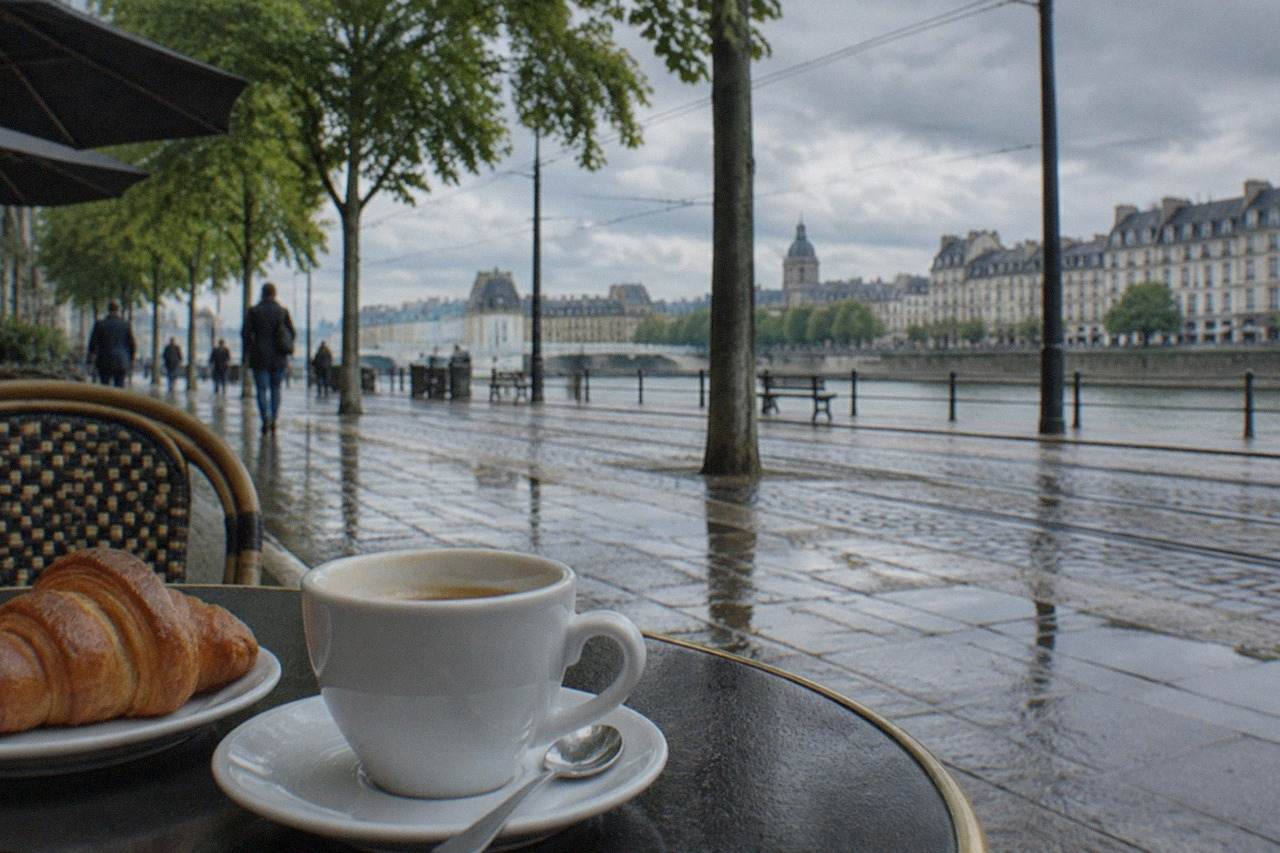
What Language Do They Speak In Nantes?
The language spoken in Nantes is French, standard metropolitan French, and it is the only official language of France. Nantes sits in the Loire-Atlantique department of the Pays de la Loire region in western France, and in shops, tram stations, museums and restaurants, everyone communicates in French first. A historic regional language called Gallo was once spoken across the countryside around the city, but everyday speech in Nantes today is unambiguously French, taught in schools and used in every official setting.
That single answer covers nearly every situation a visitor will face. The French you hear in Nantes is the same standard variety used in Paris, in signage, in school textbooks and on the Naolib transport network's announcements, which carried 154 million trips in 2024. There is no distinct Nantais accent a learner needs to prepare for, no separate dialect to decode, and no second official language on any public document. France has legislated French as the language of the Republic, and that law is felt in daily life here more than in many neighbouring countries, where regional languages enjoy visible official status.
The nuance comes from history, not from the present. Nantes was the capital of the dukes of Brittany, and the department of Loire-Atlantique was historically part of Brittany before a 1941 decree attached it to the Angers region and, later, the modern Pays de la Loire. That political divorce is why questions about language and identity in Nantes get tangled: the city's Breton heritage is real, but its linguistic heritage is not Breton. If you are weighing the regional question in full, our page on why Brittany is different from France goes deeper into that story.
Do They Also Speak Breton Or Gallo In Nantes?
Breton is not the traditional language of Nantes, and almost nobody in the city speaks it as a daily language today. The historic regional language of Nantes and its surrounding countryside is Gallo, a Romance langue d'oïl language related to French, not to the Celtic Breton tongue. Gallo survives mainly through cultural associations, bilingual street signage in some Loire-Atlantique communes, festivals and a small number of enthusiasts, rather than as a community language.
The geography explains it. Breton belongs to Lower Brittany, the western half of the peninsula, and its eastern linguistic border stopped well west of Nantes. Gallo country covers eastern Brittany, including the Nantes area, where it was the everyday rural speech for centuries. The 30 June 1941 boundary change and the 1957 renaming of Loire-Inférieure to Loire-Atlantique are administrative facts, not linguistic ones, and they did not move where Gallo was spoken. You can read the fuller territorial story in are Brittany and Bretagne the same?.
What does this mean practically? Very little for a visitor, and that is the honest answer. You will not need to recognise a word of Gallo, and the odds of hearing it spoken in a Nantes cafe are low. Where you might brush against it is in place names and in cultural events that celebrate the region's langue d'oïl heritage alongside its Breton identity. Nantes also absorbed words from its port history, its trade links and generations of immigration, as any large Atlantic port city has, but the language of the city remains straightforwardly French.
How Well Do People In Nantes Speak English?
People in Nantes generally speak English more willingly than the national reputation suggests, and younger residents, tourism workers and museum staff usually manage a workable conversation. Nantes is a university city with a large student population, and English is compulsory in French schools, so basic English is close to universal among people under about 40. Even so, French remains the first language of every counter, menu and tram announcement, and opening in French, even with a single word, changes the tone of every exchange.
The pattern is predictable by setting. Hotel receptionists, the Machines de l'île ticket desks and the main museums handle English routinely. A traditional bakery in the Bouffay old town or a stall at the Talensac market, open Tuesday to Friday 08:00 to 13:00 and Saturday and Sunday to 13:30, may not, and a polite "bonjour" before anything else matters more than vocabulary. Our dedicated page on whether they speak English in Nantes breaks this down setting by setting.
A local-led walk is one of the best ways to hear the city's French as it is actually spoken, with a guide who can switch to English when needed.
Will You Manage With English At Nantes Attractions?
Yes, English speakers manage comfortably at Nantes's major attractions, because the main museums, the Machines de l'île and the castle museum all provide English-language signage, audio guides or printed material alongside French. Menus in central restaurants frequently carry English translations, and the tourist office at 9 rue des États stocks English maps and guides. Difficulties appear mainly in small neighbourhood shops, at markets and on the phone, where French is the only practical option.
The one habit that transforms a trip is the greeting. In France, entering a shop silently is genuinely rude, and a clear "bonjour" buys goodwill instantly, even before you switch to English. Nantais staff in tourist areas are used to English and rarely take offence at it; what they react badly to is being assumed to speak it. Ask "parlez-vous anglais?" and the answer is very often yes. The city is also notably compact and walkable, which reduces the number of spoken transactions you need at all, something our page on is Nantes a walkable city covers in detail.
If you want a guided experience with the language barrier handled entirely for you, a photo-spots walk with a local is the easiest option on the menu.
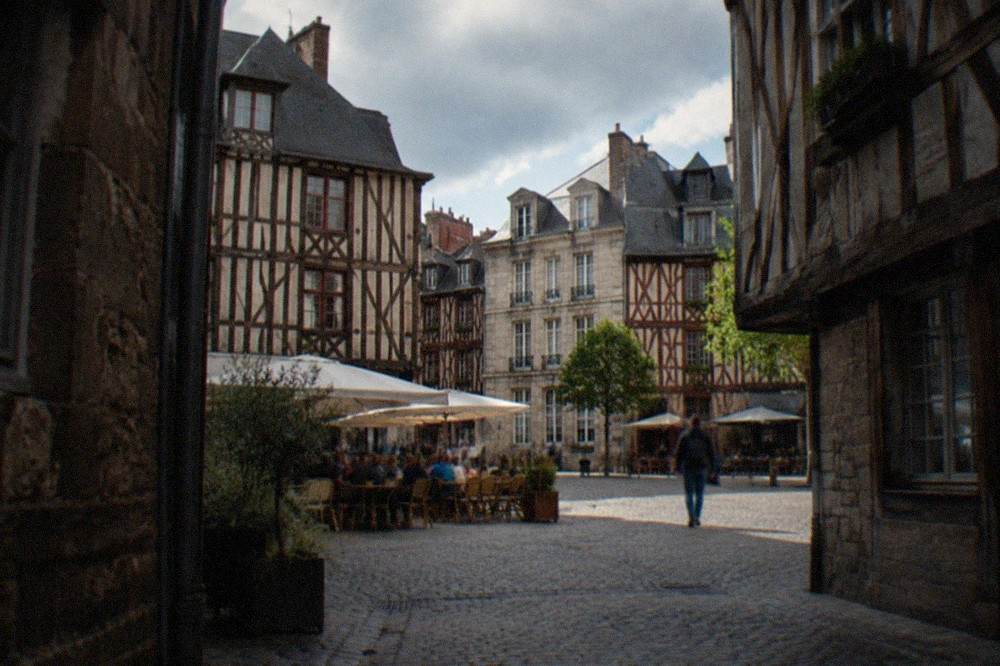
Which French Phrases Help Most In Nantes?
A short list of French phrases covers almost every visitor interaction in Nantes: the greeting, the polite request, the apology for switching to English, and the essentials of ordering and paying. French politeness formulas carry more weight than grammar, so "bonjour" and "merci" alone will smooth most transactions, while "parlez-vous anglais?" is the respectful way to change language. The phrases below are the ones that actually get used in shops, markets and restaurants across the city.
| French phrase | Rough pronunciation | What it does for you |
|---|---|---|
| Bonjour | bohn-ZHOOR | The mandatory greeting on entering any shop |
| Parlez-vous anglais ? | par-lay voo on-GLEH | The polite way to ask for English |
| Merci | mehr-SEE | Thanks; add "beaucoup" for emphasis |
| S'il vous plaît | seel voo PLEH | Please, when asking for anything |
| L'addition, s'il vous plaît | lah-dee-SYOHN | Asking for the bill in a restaurant |
| Je ne comprends pas | zhuh nuh kom-PRAHN pah | I don't understand, said slowly |
| Excusez-moi | ex-koo-zay MWAH | Getting attention or squeezing past |
| Au revoir | oh ruh-VWAHR | The matching goodbye on leaving a shop |
Two notes on using them. First, French numbers cause real confusion at till points, and the quickest fix is handing over a card or coins rather than parsing "quatre-vingt-dix" at speed. Second, the greeting pair matters at closing time too: "bonsoir" replaces "bonjour" in the evening, and using it marks you as someone who has paid attention. Nantes rewards the attempt at French warmly, and even a mangled phrase usually earns a smile and then a switch to English wherever staff can make it.
Does Nantes Have Its Own Words And Expressions?
Nantes does contribute words to French, though the city's best-known linguistic exports are brand and food names rather than street slang. The Petit Beurre biscuit, the berlingot nantais candy, the gâteau nantais cake and beurre blanc, the emulsified butter sauce born of the local cooking tradition, all carry the city's name into everyday French vocabulary nationwide. Local speech otherwise follows standard French, with the mild western intonation of the region.
The food words are the fun part. Beurre blanc, so the story goes, was a botched béarnaise that a Nantais cook rescued into legend, and Nantes restaurateurs have been campaigning for protected traditional status for it. The berlingot nantais, a tetrahedron-shaped hard candy with late 19th century origins in the city, still appears in confectioners' windows. LU, founded in Nantes in 1846, gave France the Petit Beurre, produced since 1986 at La Haye-Fouassière near the city. All of it is French vocabulary that happens to be stamped with the city's name, which is about as far as local linguistic distinctiveness goes in 2026.
Common Questions About Language In Nantes
What language do they speak in Nantes?
French. Nantes is in the Loire-Atlantique department of the Pays de la Loire region in western France, and French is the country's only official language, used in every shop, museum and transport announcement in the city. The historic regional language of the area is Gallo, a Romance langue d'oïl tongue related to French, but it is no longer a community language in Nantes.
Do people in Nantes speak Breton?
Almost nobody in Nantes speaks Breton as a daily language. Breton, a Celtic language, belongs to western Lower Brittany, west of the linguistic border that stopped well short of the Nantes area. The regional language historically spoken around Nantes is Gallo. Some cultural associations and signage in Loire-Atlantique keep Gallo and Breton heritage visible, but everyday life runs in French.
Can I get by in Nantes with only English?
Largely yes, with effort. Younger residents, hotel staff, museum workers and tourist-facing businesses in Nantes usually manage English, and menus and attraction signage often carry translations. Markets, small neighbourhood shops and older residents are less reliable, so a greeting in French followed by "parlez-vous anglais?" gets you through almost anywhere.
Is French harder to understand in Nantes than in Paris?
No. The French of Nantes is standard metropolitan French, with the mild western intonation typical of the region. There is no distinct Nantais dialect a learner needs to prepare for, and written French is identical everywhere in France, from signage to menus to museum captions.
What does Nantes mean in French?
The name Nantes predates modern French and reaches back to the Gallic people of the area, the Namnetes, though the city's own modern name is simply "Nantes" with no accent and no alternate French spelling. The fuller etymology is covered in our page on what Nantes means in French.
The short version, then, is simple: French, everywhere and unambiguously, with a layer of regional history underneath that makes the answer more interesting than the question suggests. Say "bonjour", try "parlez-vous anglais?", and the city of Nantes, France, meets you more than halfway, whether that is at the door of a Bouffay bakery or the deck of the Machines de l'île. For everything beyond language, the Nantes Travel Guide homepage is where the rest of the city starts.